
What is PPC management, in plain English. It’s the weekly work of running paid search and paid social accounts on Google, Microsoft, or Meta so every ad dollar drives more revenue than it costs. The job covers keyword research, bid strategy, ad copy, landing page testing, negative keyword pruning, conversion tracking QA, and monthly reporting that ties spend to signed deals. Founders bring in a PPC manager once the account spends more than $2,000 per month and a small team can no longer give it the 5 to 10 hours a week it needs.
The numbers in this guide come from real client work. A Home Services client, a residential and commercial services shop we support, restructured their Google Ads campaigns and rebuilt service pages with our team. Google Ads conversions climbed 99% and cost per acquisition dropped 67% inside 12 months, and organic users grew 75% in the same window. Those results came from disciplined weekly account work, not from a shiny AI bidding tool. The rest of this guide walks through what the work covers, what it costs, what a PPC manager does day to day, and how to tell if an account is being run well or getting glanced at once a month.
What is included in a real PPC management engagement
At the engagement level, what is PPC management on paper breaks into four buckets. Setup and audit in week one. Weekly operations in every week after that. Monthly reporting that ties spend to leads and revenue on a single page. And a quarterly strategy revisit that resets budget allocation and channel mix. Every proposal should spell out each of the four with real deliverables and a real cadence. Anything short of all four is a monthly account glance dressed up as management.
Initial account audit and setup work
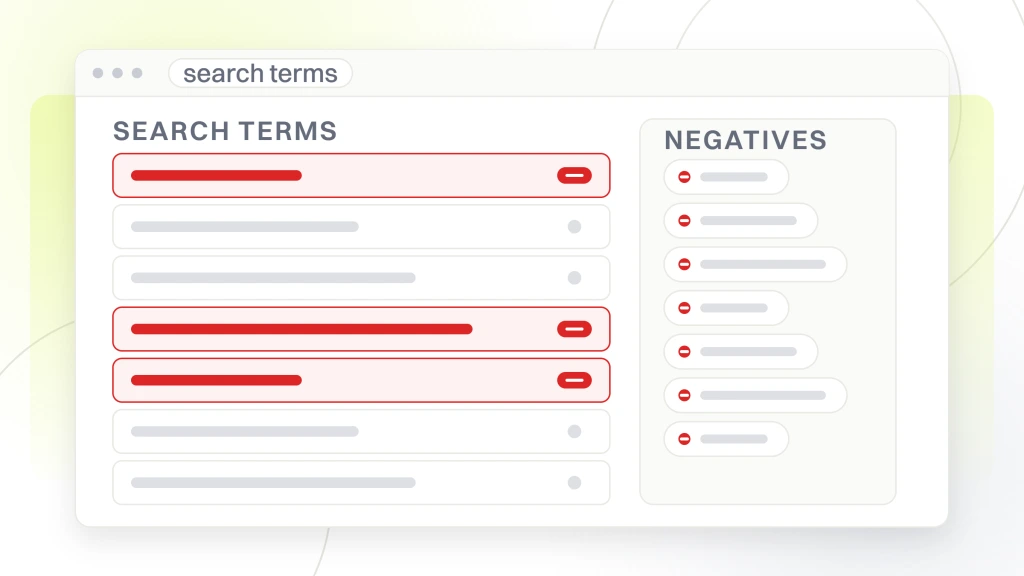
Week one begins with a full account audit. That means a campaign structure review, conversion tracking QA, quality score analysis, historical search term audit, competitor teardown, and a landing page speed pass. The audit produces a written 30 to 60 day plan the client can hold the agency to. Setup work then covers fresh campaign builds when the existing structure is broken, keyword research on the gaps, negative keyword lists imported from tested pools, and ad copy rewrites on every low-CTR ad group before the first bid change gets made.
Weekly operations that move the numbers
Weekly operations cover the search term report, negative keyword additions, bid adjustments by device and geo, budget pacing checks, ad copy variants, and landing page A/B tests once the account has the traffic to earn a decision, all part of disciplined PPC campaign management. Every campaign gets touched at least once per week. Accounts spending more than $20K per month get touched daily on the top 3 campaigns. Conversion tracking gets QA’d every Monday to catch any GA4 or Google Ads pixel break before the week starts. A tight Slack summary keeps the client in the loop without pulling them into every micro-decision, which respects the founder’s time and keeps the work honest.
PPC management across Google, Meta, and Microsoft
The what is PPC management question changes shape by channel. Google Ads pulls the largest share of paid search spend for most small accounts, so the weekly work leans on search term reports, quality score, and Smart Bidding tuning. Meta Ads (Facebook and Instagram) leans on creative testing every 14 days and audience refreshes every 30 days as CPMs climb on stale hooks. Microsoft Ads costs 25 to 40% less on average and captures older, higher-intent B2B buyers. A real PPC management retainer covers the channels that fit the business, not every channel out of habit.
A real client story on what PPC management delivers
A Home Services client, a residential and commercial services shop we support, came to Redefine Web with a single-page website, a messy Google Ads account, and thin organic coverage. Their cost per acquisition ran high, lead quality ran low, and every dollar of ad spend fought against a slow landing page and vague keyword targeting. Classic small business PPC problems, and the account had been quietly bleeding budget for a year.
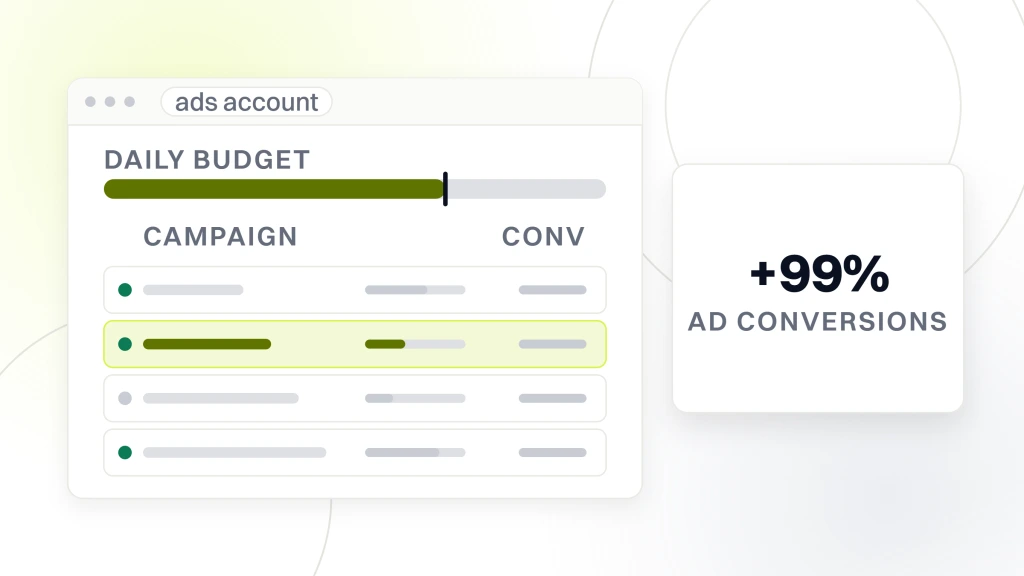
We restructured the Google Ads campaigns, rebuilt the service pages, tightened negative keyword lists by service line, and layered Local Service Ads alongside search. Ad conversions climbed 99% inside 12 months. Cost per acquisition dropped 67%, freeing budget for a Meta remarketing push. Organic users climbed 75% through the technical SEO work that ran in parallel. None of this required exotic tools. It required weekly discipline and a clean account structure that matched query intent to landing page. The full A Home Services client case study lays out the tile-by-tile breakdown.
The three account changes that mattered most
The first change was campaign structure. We separated emergency services keywords from planned service keywords into different campaigns with different bid strategies. Emergency queries close fast and tolerate higher bids. Planned service queries convert slower and need aggressive negative filtering. Bundling them into one campaign wasted budget on both sides. The second change was landing pages. We swapped the single-page site for service-specific pages that matched query intent, which pulled quality score up across the board. The third change was Local Service Ads. Adding LSAs as a parallel channel captured booking-ready calls at a lower cost per lead than search.
What the retainer looked like month by month
Month 1 was audit, restructure, ad copy rewrites, and landing page rebuilds. Month 2 was the launch of the new structure with tight budget pacing and aggressive negative pruning. Months 3 through 6 were weekly optimization, ad copy testing, geo bid adjustments, and LSA layering. Months 7 onward were scaling spend on winners, cutting spend on underperformers, and adding remarketing on Meta for warm leads. Nothing exotic in the playbook. The work was clean, boring, and disciplined, which is what real PPC management looks like inside a well-run agency.
PPC management done in-house versus outsourced to an agency
Every founder eventually asks if PPC management should live internally or at an agency. The honest answer sits at the intersection of account spend, the founder’s technical appetite, and if the business has the volume to keep a specialist busy year round. Below $10K in monthly ad spend, an agency retainer usually wins on cost and depth of expertise. Above $50K, a hybrid model or an in-house lead paired with agency oversight usually wins on speed and control.
Why small business PPC almost always goes to an agency
A senior PPC specialist costs $85,000 to $130,000 in salary in the US market. That’s roughly $8,000 per month all-in with benefits, tooling, and PTO. Our affordable PPC management retainer tiers start at $999 per month, run through $1,499 and $2,499, and top out from $4,500 per month for accounts spending $100K or more on ads. Ad spend is billed separately. The math favors the agency until the account grows into a full-time role, and that milestone typically arrives at $100K per month in ad spend or higher. Our B2B PPC agency team runs into this decision often with mid-market clients.
When to bring PPC in-house
Bring PPC in-house once the account spends more than $50K per month, when the business has custom conversion logic that only makes sense with daily internal collaboration, or when the founder wants a permanent capability sitting on the team. Even then, an oversight arrangement (fractional PPC director, quarterly audits) usually catches blind spots that a solo in-house lead misses. Full replacement of external oversight rarely pays off below $200K in monthly ad spend, and at that level the agency partnership tends to add more value than it costs.
Conversion tracking makes PPC management possible
Every optimization decision inside a paid account rests on conversion tracking. So what is PPC management without clean tracking? Guesswork. Broken tracking hides which keywords drive booked jobs and which just burn budget on curious clicks. The specialist ends up bidding harder on the wrong terms and cheaper on the right ones, and the account slowly drifts backward for months before anyone notices. Broken tracking equals blind optimization, and blind optimization burns budget on cheap leads that never close. More than half the accounts we audit have some kind of tracking break. Duplicate conversions counted twice. Missing thank-you page pixels. GA4 not passing revenue values. Google Ads offline conversion imports never wired up in the first place. Every serious PPC management engagement opens with a tracking QA pass in week one, before a single bid gets changed.
What clean tracking really looks like
Clean tracking means every conversion fires once, in the right place, with the right value assigned, and passes back to Google Ads and GA4 in under 24 hours. Phone calls get tracked via CallRail or a call extension. Form submissions fire on the thank-you page load, not on button click. E-commerce revenue passes from the checkout confirmation through GA4 ecommerce tags with product IDs. According to the Google Ads conversion tracking documentation, accounts with clean cross-device tracking see 20% to 30% higher measured conversion volume than accounts running on basic pixel-only setups.
Offline conversions for real lead-gen businesses
Lead-gen businesses need offline conversion tracking to close the loop between click and closed deal. A form submission is a raw lead. A qualified lead is worth 10x an unqualified one. A closed sale is worth 100x. Wiring the CRM back into Google Ads via offline conversion imports tells Google’s Smart Bidding which lead types became real revenue and which never converted past the intake form. Skip this step and Smart Bidding will optimize for cheap leads that never close, wasting 30 to 50% of spend on low-quality clicks that look great on the surface report.
Red flags in a PPC management proposal
Every founder has read a PPC proposal that sounded great until they compared it against a second one. The gaps are usually in the numbers the first proposal quietly leaves out. Below are the five clearest red flags to catch before signing anything, and the five that show up on almost every proposal walked out the door in favor of a cleaner competitor.
- No dedicated conversion tracking audit in month one. Every serious engagement starts here.
- Fees below $999 per month paired with a promise of full PPC management. That budget covers 4 to 5 hours per month at senior rates, which is a monthly glance.
- Vague reporting cadence. If the proposal says regular reports without a specific weekly and monthly schedule, expect none.
- No mention of landing page testing. Ads without landing page testing hit a low performance ceiling fast.
- Account owned by the agency rather than the client. A serious agency spins up a Google Ads MCC and gives the client full ownership of the underlying account.
Every founder gets one really tempting pitch that promises a 15x return in month one for $199 with no contract. Then the founder gets a second call with a discount that drops the price to $99. The math says the specialist is either working for $3 an hour or the account will get pointed at Google’s default recommendations and forgotten by week 3. Neither ends with a good return.
Questions to ask on the sales call
Ask for 3 case studies from the last 12 months with real numbers on spend, leads, cost per lead, and closed revenue. Ask how many accounts each specialist manages (above 12 accounts per person is a red flag). Ask what tools the agency runs on (Optmyzr, Adalysis, or a real in-house dashboard are green flags). Ask how the account gets handed off if the primary specialist leaves the agency. Any answer hiding behind a proprietary process is an answer the specialist cannot explain. The specialist’s grasp of quality score levers is the real interview inside the sales call.
Contract terms that protect the client
The contract must give the client ownership of the Google Ads account, the tracking pixels, and every piece of historical data. A 30 to 60 day exit clause protects both sides and keeps the work honest. Kill fees above 30 days of retainer are a warning sign. Any language that gives the agency IP rights to the ad creative is a warning sign, since that ad creative is the client’s brand voice. Read the contract twice, and ask a lawyer if the language is fuzzy on ownership or exit.
Realistic outcomes to expect from PPC management
Founders walk into PPC management with wildly different expectations about outcomes. Some expect a 20x return in month one. Others expect nothing and get pleasantly surprised. Real outcomes sit inside a narrow window shaped by industry, spend level, tracking quality, and how disciplined the manager is week over week. The bands below come from the 40 accounts we currently run or have audited across the last 18 months.
Typical returns by industry
Home services (services, HVAC, electrical) sees 4x to 7x on ad spend after 6 months of disciplined management. Legal (personal injury) sees 3x to 5x with high cost per lead paired with high closed-case values. Healthcare (dental, med spa) sees 3x to 6x once landing pages get rebuilt around the specific service. E-commerce depends heavily on product margin. 2x to 4x at the low-margin end. 6x to 10x on high-margin niche products. According to Think with Google’s paid search benchmarks, disciplined accounts consistently outperform the industry average by 40 to 60% on cost per acquisition.
Timeline to real results
Month 1 shows setup and tracking work with modest volume changes. Month 2 shows the first real optimization signal as new negative keywords compound and Smart Bidding starts learning off cleaner data. Month 3 is when most accounts hit break-even against the retainer plus ad spend. Months 4 through 6 are where compounding kicks in and cost per acquisition drops meaningfully. Any account that expects a 10x return in week two is running on hope, not math, and will look disappointing by month 3.
One extra note on timeline expectations. B2B lead-gen accounts run on longer sales cycles, so the pipeline data catches up to the ad data 30 to 60 days later than most reports show. Judge B2B accounts on booked demos and pipeline value at day 60, not on cost per lead at day 30. Local service accounts run on much shorter cycles, so weekly performance already reflects real revenue and the founder can trust the trend inside 3 weeks. Matching the review cadence to the sales cycle is one more thing a disciplined PPC management retainer does that a monthly glance never will.
Wrapping up what is PPC management
PPC management is the discipline of running paid ad accounts every week so every dollar returns more than it costs. It spans Google Ads, Microsoft Ads, Meta Ads, LinkedIn, TikTok, and Amazon depending on the business and the audience. The work is unglamorous by design. Search term reviews, negative keyword pruning, bid adjustments, ad copy tests, landing page swaps, and monthly reporting that ties spend to signed deals. Anyone selling PPC management as a magic bidding tool is selling smoke, and the account will show it inside 6 weeks. See our take on AI PPC management for a fair read on where automation actually helps.
If the account spends more than $2,000 per month on ads, professional PPC management usually pays for itself inside 3 months. Ask 3 vendors for line-item scopes, look for the four table-stakes deliverables above, and pick the one that gives full account ownership to the client. Redefine Web runs a fixed-scope package on our PPC management services page, and a Google Ads specific package on our Google Ads management services page. Book a call and we’ll walk through the last 3 PPC accounts we turned around, line by line. Our broader search engine optimization services pair with PPC on most retainer programs.