Dental PPC advertising takes up a large slice of most practice marketing budgets, and a large slice of that budget quietly goes to waste. The pitch is simple. Pay Google or Meta, and new patients arrive. The gap between a well-run dental PPC advertising account and a badly-run one is a factor of 3 to 5 in cost per new patient. This guide covers what you actually buy and how to tell if your agency is running ads or burning budget.
You will get the ad platform breakdown, the honest cost benchmarks by procedure, the audit questions that expose weak accounts, and a monthly cadence you can hold your agency to. Read through, then compare it to what your ads look like in the account tomorrow morning.
Dental PPC advertising what you actually buy
Dental PPC advertising is a bidding market for top ad slots on Google, Meta, YouTube, and a few smaller networks. You bid to show up when a patient searches or scrolls. You pay when someone clicks. You do not automatically get patients. You get a chance at a patient once they land on your site or call your practice. The value chain runs bid, click, landing page, form or call, appointment, and treatment plan. Every step has a point where patients drop off.
What separates a strong dental PPC advertising account from a weak one is how much click volume turns into booked appointments. A practice paying $8 per click at 12 percent conversion outperforms one paying $4 per click at 3 percent. Cost per click is a vanity metric. Cost per new patient is the number that pays your team.
The three main ad platforms for dental
Google Ads runs search, display, YouTube, and Local Services Ads. Meta runs Facebook and Instagram. Microsoft Ads runs on Bing. For dental PPC advertising, Google search accounts for 60 to 80 percent of most well-run accounts. Meta accounts for 15 to 30 percent, mostly for cosmetic, orthodontic, and implant procedures where visual before-and-after content converts. Microsoft accounts for 5 to 10 percent and often gets skipped, though it can be a solid channel for older patient groups.
Choosing the right platform mix
General family PPC leans hard on Google search and Local Services Ads. Cosmetic and implant PPC benefits from a heavier Meta mix because visual content pays off. Emergency dental leans almost entirely on Google search and mobile-first LSA because intent is immediate. Pediatric often sees Meta perform well. Match the mix to your case types.
Dental PPC advertising cost benchmarks by procedure
Dental PPC ads cost benchmarks vary by procedure, market, and campaign quality. The numbers below reflect what a well-run US dental PPC advertising account produced in 2025 and 2026 at the growth tier. Weak accounts sit 40 to 80 percent above these numbers. Elite accounts run 20 to 30 percent below.
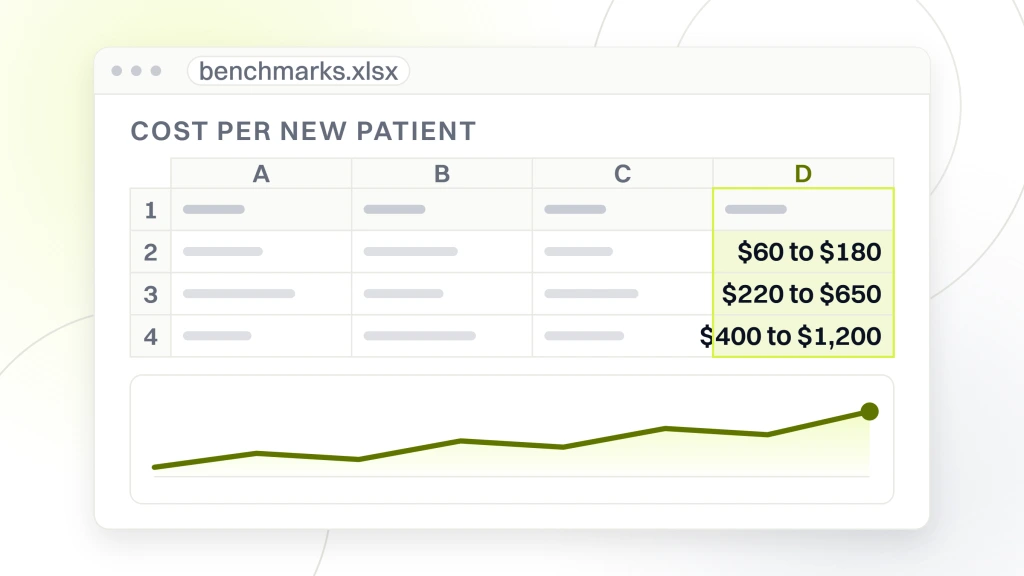
Cost per click is what you pay per search ad click. Cost per lead is what you pay per call or form submission. Cost per new patient is what you pay per patient who actually shows up. Ignore any account that only reports cost per click.
| Procedure category | Cost per click | Cost per lead | Cost per new patient |
|---|---|---|---|
| General family dentistry | $3 to $8 | $20 to $60 | $60 to $180 |
| Cosmetic and Invisalign | $6 to $18 | $60 to $180 | $220 to $650 |
| Dental implants | $12 to $35 | $80 to $260 | $400 to $1,200 |
| Emergency dentistry | $8 to $22 | $25 to $80 | $70 to $220 |
Case value that justifies the cost
Cost per new patient is only half the equation. The other half is case value. An implant patient at $600 acquisition cost who books a $28,000 all-on-four case is a great outcome. A family patient at $150 acquisition cost who books a $250 cleaning is fine if they stay 5 years. Match your dental PPC advertising budget to the case values you serve. Our dental marketing roi post covers the math.
Adjustments for quality accounts
Quality accounts pay less per click, less per lead, and less per new patient for the same case type. Google Quality Score rewards relevance, landing page experience, and expected click-through rate with lower auction prices. A dental PPC advertising account averaging Quality Score 8 to 9 pays 30 to 50 percent less than one sitting at 4 to 5. Fixing Quality Score is one of the fastest efficiency gains in most dental PPC accounts.
Dental pay per click ads structure that actually works
Dental pay per click ads structure decides whether your budget goes to high-intent queries or to broad-match spend on irrelevant searches. The structure that consistently outperforms in dental is a service-first build with tight ad groups and specific landing pages per procedure. The structure that consistently underperforms is a single catch-all campaign that dumps every keyword into one bucket.
A strong dental PPC advertising account has 4 to 8 campaigns split by procedure and intent. Family, cosmetic, implants, emergency, pediatric, orthodontics if offered, plus a brand campaign that defends your practice name. Each campaign has 3 to 6 ad groups mapped to specific keyword themes. Each ad group has 2 to 4 responsive search ads and points to a specific landing page.
Keyword match type strategy
Modern Google Ads match types blend more aggressively than they used to. Phrase and broad match with automated bidding often outperform strict exact match because Google surfaces high-intent searches you would not have targeted. The tradeoff is that broad match without strong negatives spends money on irrelevant queries. Run phrase and broad, but audit the search terms report weekly. Our dental google ads keywords covers the keyword layer in depth.
Bidding strategy for dental
Automated bidding through Maximize Conversions or Target CPA usually beats manual bidding once your account has 30-plus conversions per month per campaign. Below that, manual CPC often performs better. New accounts should start on Maximize Clicks for 30 days, then move to Maximize Conversions once conversions track cleanly, then Target CPA once volume justifies it. Rushing to Target CPA without conversion data is the most common cause of blown dental PPC budgets.
Dental PPC advertising landing pages that convert
Dental PPC advertising landing pages decide whether paid clicks turn into booked patients or bounce back to Google. Sending PPC traffic to your homepage is one of the fastest ways to waste budget. The homepage introduces your practice. It does not convert a specific procedure query. Every campaign needs a landing page built for the query it targets.
A converting dental PPC landing page carries a specific H1 matching the query, a first-fold call to action, a booking form or phone number above the fold, real photos of the practice, before-and-after photos with patient consent, and a short trust block. Everything else on the page is a distraction. Every second of load time past 3 seconds cuts conversion rate by 15 to 25 percent on mobile.
Landing page anatomy that books patients
Hero with H1, subhead, and CTA above the fold. Trust bar with credentials, reviews aggregate, and years in practice. Problem statement acknowledging the patient real question. Solution overview. Proof section with before-and-after photos and review pulls. FAQ addressing the top 4 concerns. Final CTA repeating the booking offer. Length 1,200 to 2,000 words for cosmetic and implants, 600 to 1,000 for general family. Our dental ppc landing pages covers the anatomy in depth.
Landing page speed that keeps conversions
Target 2.5 seconds or less for Largest Contentful Paint on mobile. Compress hero images to WebP, defer non-critical scripts, and inline critical CSS. Skip page builder plugins that inject 400KB of unused CSS. A dedicated PPC landing page template built for speed outperforms a generic WordPress theme page every time. The web.dev Core Web Vitals guide covers the current thresholds.
PPC dental marketing tracking that closes the loop
PPC dental marketing tracking is the difference between an account that improves and one that just spends money. Without clean tracking, automated bidding cannot optimize, reporting cannot attribute new patients, and budget decisions become guesses. The tracking layer is the account.
Conversion tracking needs to cover phone calls, form submissions, chat, and booking widget completions. GA4 events for forms and clicks. Call tracking with dynamic number insertion by source. CRM integration to pass appointment-booked and appointment-completed status back into Google Ads for offline conversion imports. Skipping any cuts optimization quality in ways you feel in the monthly numbers. Our call tracking for dentists post covers the phone side.
Call tracking with dynamic number insertion
Dynamic number insertion swaps the phone number on your site based on where the visitor came from. Google Ads gets one number, organic gets another, direct traffic gets a third. Every call is logged with source attribution. Without DNI, your call volume gets black-boxed and ROI reporting is guessing.
Offline conversion imports
Google Ads accepts offline conversion imports through the API or a data feed. When a lead becomes a booked appointment, your CRM pushes that update to Google Ads. When they complete the appointment, another push. When they close a case, a third push with revenue value. Automated bidding uses these signals to optimize for actual patients, not just leads. Accounts running offline conversion imports outperform accounts that stop at form-fill tracking by 20 to 40 percent.
Auditing your current dental PPC ads for waste
Auditing your current dental PPC ads takes 2 to 4 hours and surfaces 20 to 50 percent of waste in most accounts. The audit is a series of questions asked in the account. Each passes or fails, and failed questions become the fix list.
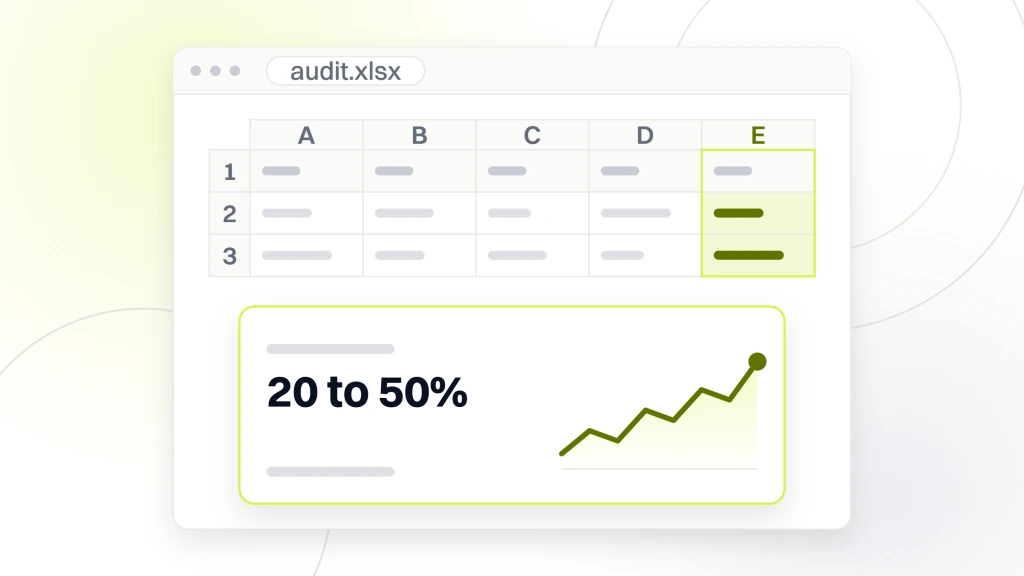
If your agency has run the account for more than 6 months, budget an afternoon and work the list below. Every account we audit for a new client has at least 3 items failing. Fixing them typically improves performance by 15 to 40 percent inside 60 days.
The audit question list
- Is conversion tracking installed and firing correctly on every form and phone number
- Is dynamic number insertion active on the site for phone-call attribution
- Are search terms being reviewed weekly with negative keywords added
- Are ad groups tightly themed with fewer than 20 keywords each
- Are landing pages procedure-specific, or is everything sent to the homepage
- Are Quality Scores averaging 7 plus across the account
- Is the bidding strategy matched to conversion volume in each campaign
- Are demographic and location targeting refined to actual patient geography
- Is offline conversion import running from your CRM back to Google Ads
- Are ad extensions all filled out including sitelinks, callouts, structured snippets
Turning audit findings into fixes
Prioritize fixes by cost impact. Tracking problems come first because they multiply every other decision. Ad group and landing page mismatches come next because they hurt Quality Score across the account. Negative keyword gaps come third. Bidding adjustments come last because they need conversion data. Most audit-driven improvements show up within 30 to 45 days, and the compound effect over 6 months is a 25 to 50 percent efficiency gain.
Dental PPC advertising case study from Smile Design Dentistry
Smile Design Dentistry runs 50-plus offices across the US as a mid-market DSO. Before Redefine Web engaged, their dental PPC advertising accounts were structured at the office level with inconsistent tracking, broad targeting, and no paid social. Cost per call was inflated. Landing pages were generic across every office. Attribution was fragmented enough that leadership could not see which campaigns paid back.
We restructured the paid accounts, added full-funnel paid social, and built a separate landing page per location. Cost per call dropped 30 percent across the network. PPC conversion rate climbed 20 percent. Fifty-plus locations went live on the unified system, and the reporting layer let leadership see cost per new patient by campaign, office, and procedure. The efficiency gain paid for the retainer many times over inside two quarters.
Dental PPC advertising with an agency versus in-house
Dental PPC advertising sits with an agency, an in-house specialist, or a hybrid team. The right choice depends on practice size, budget, and complexity. Single-office practices almost never justify a full-time in-house PPC role. Multi-office groups often benefit from in-house strategy with agency execution. Mega DSOs typically run majority in-house with agency support.
Agency management typically runs 12 to 25 percent of ad spend under $20,000 per month, dropping to 8 to 15 percent for larger accounts. In-house management costs $60,000 to $110,000 per year in salary and benefits plus tools. The math favors agency until you hit around $50,000 to $80,000 per month in ad spend. Our dental ppc management covers the model.
Questions to ask a dental PPC agency
Ask about specific dental PPC advertising experience. Ask for anonymized before-and-after reporting. Ask who actually manages the account day to day, not just who pitched you. Ask about reporting cadence, onboarding audit process, and trial period. Ask about ad account ownership. Your practice should own the Google Ads account, not the agency. Any agency that resists that should be walked away from.
Red flags in dental PPC agencies
Watch for agencies that report on impressions and clicks but not cost per new patient. Watch for accounts hosted under the agency MCC without transfer options. Watch for management fees under 8 percent, which usually means no real attention. Watch for onboarding shorter than 2 weeks, which skips the audit. Watch for agencies that lock content or creative so you cannot take them with you if you switch. The Google Ads healthcare and medicines policy informs how a serious agency runs the account.
Seasonality patterns in dental PPC ads
Dental PPC has real seasonality. Q1 sees a surge because insurance benefits reset. Q4 sees a surge because end-of-year benefit use kicks in. Summer sees strong pediatric and back-to-school volume. Each cycle needs budget flexibility and campaign adjustments. A flat monthly budget through the year underinvests during peaks and overinvests during troughs.
Seasonality varies by procedure. Cosmetic dentistry peaks around holidays and weddings, roughly November through February and again May through July. Implant work peaks in Q4 and Q1 as insurance and HSA dollars flow. Emergency stays roughly flat. Pediatric peaks in Q3. Adjust budgets and creative to match.
Budget flexibility for peaks
Set a base monthly budget and hold 20 to 30 percent as flex capacity for peak periods. When Q1 hits and search volume climbs, deploy the flex budget to capture demand. When summer troughs, pull it back. Practices that hold flat budgets miss 20 to 40 percent of the peak-period conversion opportunity.
Creative refresh cadence
Ad creative fatigues after 4 to 8 weeks. Click-through rates drop, conversion rates soften, and Quality Scores slide. Refresh headlines, descriptions, images, and offer language monthly. Keep one baseline ad running for reference while new creative gets tested. Practices running the same ad copy for 6 months lose 20 to 35 percent of potential efficiency.
Google Local Services Ads for dental practices
Google Local Services Ads sit above the map pack and the regular search ads. They are pay-per-lead, not pay-per-click, and carry the Google Guaranteed or Google Screened badge. For dental practices, LSA keeps growing as a strong channel for family and emergency queries because the card format shows the practice, reviews, and phone number.
Setup involves passing Google background check, uploading insurance, and connecting your GBP. Lead pricing runs $20 to $80 for family leads and $50 to $180 for specialty. Because you only pay for leads, the math is often better than traditional search for practices with strong intake teams. Weak intake teams put the LSA math underwater. The Google Local Services Ads help covers the current rollout.
Setup and verification
Verification takes 2 to 6 weeks. Google runs a background check on the practice owner and requires proof of licensing and insurance. Practices with a clean record and current malpractice insurance pass without issue. Practices with pending disciplinary matters or lapsed insurance get held up. Do the paperwork first, then plan for a 4-week gap between setup and going live.
Optimizing for lead quality
Local Services Ads let you dispute bad leads. Every wrong-number, spam, or clearly-irrelevant lead should be disputed inside 30 days. Google refunds the disputed leads that qualify. Practices that dispute nothing overpay by 15 to 30 percent. Practices that dispute honestly keep healthy lead-quality metrics. Our local services ads for dentists covers the LSA layer in detail.
Wrapping up dental PPC advertising
Dental PPC advertising is a serious channel when it is run seriously. The gap between a well-run account and a badly-run one is a factor of 3 to 5 in cost per new patient, which is tens of thousands of dollars of monthly revenue for a busy practice. The audit questions in this guide surface most of the waste inside an afternoon, and fixing them typically pays back inside a quarter.
If you want the full audit and rebuild run by a team that has done it for practices from single-office to 50-plus locations, our dental PPC advertising services page covers what a full engagement includes. Otherwise, work the audit list and track cost per new patient monthly. The practice that wins the paid search fight is the one that treats dental PPC advertising as an ongoing operation, not a set-and-forget expense.