
Affordable Web Design for Beauty Salons and What to Expect
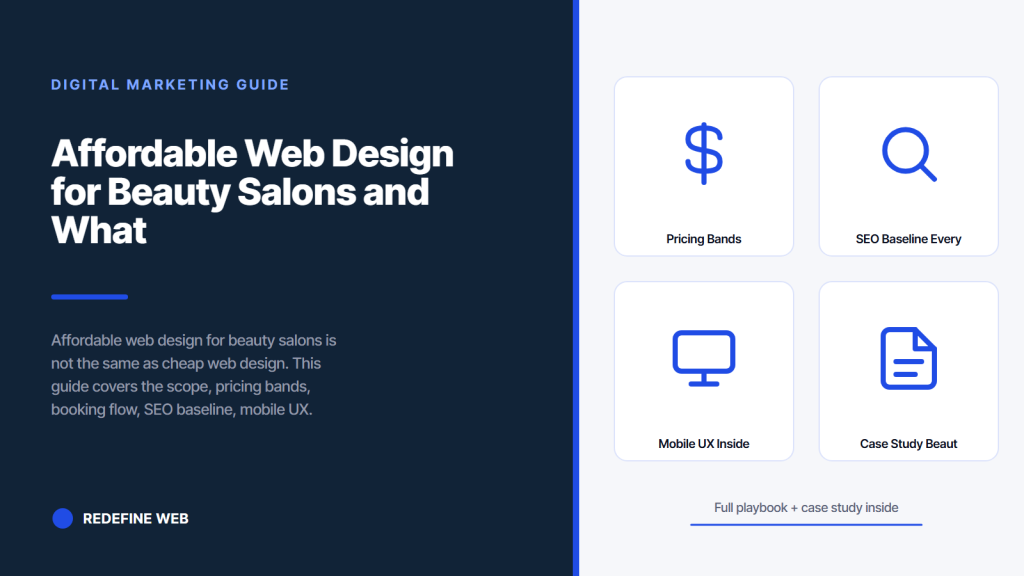
- Affordable web design for beauty salons is a scope conversation, not a price conversation.
- Build cost bands run $1,200 to $8,400 depending on locations and ecommerce.
- Embedded booking widget converts twice the rate of external booking links.
- Schema markup on treatment pages carries the local-rank gains.
- Maintenance retainer at $199 to $599 monthly keeps the site ranking past year one.
- Scope decides affordable web design for beauty salons
- Pricing bands for affordable web design for beauty salons
- Booking flow inside affordable web design for beauty salons
- SEO baseline every beauty salon site should carry
- Mobile UX inside affordable web design for beauty salons
- Case study on Beauté Aesthetics New York site rebuild
- Boutique web design for beauty salons versus full agency
- Shortlist questions for affordable web design for beauty salons
- Maintenance after affordable web design for beauty salons build
- Contract terms for affordable web design for beauty salons
- Making the pick on affordable web design for beauty salons
Affordable web design for beauty salons is a scope conversation, not a price conversation. A $1,800 site with a working online booking flow, mobile-first navigation, and treatment-page schema will book more clients than a $5,400 site with a beautiful hero video and a broken contact form. Cost bands run from $1,200 for a one-page landing site through $8,400 for a multi-location salon platform with retail ecommerce. The right number depends on whether the salon books online, what the retail shelf carries, and how much local-SEO groundwork the site has to carry.
This guide walks the scope questions that decide the budget for affordable web design for beauty salons, the pricing bands per site type, the booking-flow architecture that separates a converting site from a portfolio site, the SEO baseline every beauty salon site should carry, a Manhattan clinic teardown that hit 166 percent lead growth on this exact model, and the shortlist questions for evaluating web design shops. Read straight through in about twelve minutes and you’ll have a working budget conversation ready for the next agency call.

Scope decides affordable web design for beauty salons
Affordable web design for beauty salons starts with scope, not price. The scope decisions that drive budget include: single location or multi-location, treatments listed as a menu or as individual service pages, retail shelf as ecommerce or as a catalog, online booking through a third-party (Booksy, Vagaro, GlossGenius) or embedded on the site, and local-SEO groundwork inside the build or added later. Each of those decisions shifts the budget by $600 to $2,400. A category-specialist web shop walks through those decisions in the first meeting. A generalist quotes a bundled number and hopes the founder doesn’t ask which line covers which decision.
The mistake most salon owners make is buying a beautiful site before deciding the scope. The result is a site that looks good on the portfolio page and books fewer clients than the old site did. See our beauty and skincare web design service page for the scope options that pair with each pricing band.
Single location versus multi-location scope
Single location salons carry a simpler scope. One location page, one contact page, one booking page, one retail shelf. Multi-location salons add complexity per location: location-specific service pages, location-specific booking flows, location-specific reviews and photos, location-specific schema markup for local SEO. That complexity moves the budget from the $1,800 to $3,600 band into the $4,800 to $8,400 band. A category shop quotes multi-location work per location added rather than as a bundled upcharge. A generalist quotes multi-location work as a percentage upcharge and hopes the founder doesn’t do the math.
Pricing bands for affordable web design for beauty salons
Affordable web design for beauty salons runs across four pricing bands. Starter band at $1,200 to $2,400 covers a five-to-eight page site with third-party booking, treatment menu, and basic local SEO. Standard band at $2,800 to $4,800 covers a ten-to-fifteen page site with treatment pages, embedded booking, retail catalog, and full local-SEO baseline. Premium band at $5,400 to $8,400 covers a multi-location or ecommerce-enabled site with treatment schema, gift-card sales, and integrated reviews. Custom band above $8,400 covers ground-up builds with proprietary booking integration or complex multi-location architecture.
Ongoing hosting and maintenance sit outside the build cost as a monthly retainer. A category shop quotes the retainer band immediately (usually $199 to $599 monthly for beauty salon sites depending on ecommerce complexity). A generalist quotes the build number and skips the retainer conversation, which usually means the site sits without updates until it breaks or ranks fall. Ask about maintenance during the build proposal, not after.
| Pricing band | Build cost | Scope | Best fit salon |
|---|---|---|---|
| Starter | $1,200 to $2,400 | 5-8 pages, third-party booking | Single-location, treatment menu only |
| Standard | $2,800 to $4,800 | 10-15 pages, embedded booking, retail catalog | Single-location with retail shelf |
| Premium | $5,400 to $8,400 | Multi-location or ecommerce | 2-4 locations or retail ecommerce |
| Custom | $8,400 plus | Ground-up, custom integrations | 5 plus locations or medical spa |
What sits inside versus outside the build cost
Design, development, content management system setup, mobile optimization, basic SEO baseline (title tags, meta descriptions, alt text, schema markup), and one round of revisions sit inside the build cost. Photography, copywriting beyond the initial pass, brand identity work, and paid ad-account setup sit outside as project pricing. A category shop breaks this out on the proposal so the founder sees exactly what each dollar buys. A generalist bundles everything into one number and hopes the founder doesn’t ask which line covers copywriting.
Booking flow inside affordable web design for beauty salons
The booking flow decides whether the site converts. A category-specialist web shop integrates a real booking widget (Booksy, Vagaro, GlossGenius, Fresha, or Square Appointments) on every treatment page and every location page. The booking widget shows real-time availability without forcing the client to leave the site. The confirmation email includes prep instructions specific to the treatment. The reminder text arrives 24 hours before the appointment. A generalist links to an external booking page and calls that a booking flow. The dropout rate on the external link doubles versus the embedded widget.
The booking-widget choice matters more than the site design. Booksy handles nail and hair salons well. Vagaro handles multi-service salons well. GlossGenius handles boutique studios well. Fresha handles medical spas well. Square handles multi-location retail plus service well. A category shop asks about treatment mix and staffing structure before recommending a widget. A generalist recommends whichever widget the shop has an affiliate deal with.
The confirmation and reminder flow decides no-show rate. A well-configured widget sends confirmation email at booking, reminder text 24 hours ahead, and a second reminder text three hours ahead for high-value treatments. That triple-touchpoint flow cuts no-show rate from the 14 percent industry average to 6 percent or lower. A category shop configures the flow inside the widget during build. A generalist delivers the widget with default settings and lets the founder work out the reminder cadence in month two. See the Booksy business platform for the widget integration options.
,800 with online booking outbooks ,400 with a broken form. Before comparing quotes, write 5 scope decisions (multi-location, retail, embedded booking) down first.
SEO baseline every beauty salon site should carry
The SEO baseline for affordable web design for beauty salons should include title tags and meta descriptions per page, alt text on every image, Local Business and Service schema markup, Google Business Profile connection and NAP consistency, mobile-first responsive layout, Core Web Vitals inside the 75th percentile targets, and internal linking between service pages, location pages, and blog content. That baseline gets a beauty salon into the top-20 local pack for treatment queries inside four to six months without ongoing SEO retainer work. A generalist skips the schema markup and the internal linking and wonders why the site doesn’t rank.
The Local Business schema is the piece most builds miss. It tells Google the salon’s name, address, phone number, operating hours, and service categories in a machine-readable format. Without it, the Google Business Profile shows up but the treatment-specific pages don’t rank in the local pack. With it, the site earns local-pack real estate for treatment queries like “balayage near me” or “microblading Brooklyn”. That single markup layer is what separates a beauty salon site that ranks from one that doesn’t. See Google’s Local Business schema documentation for the required fields.
Google Business Profile plus site integration
The Google Business Profile connects to the site through the schema markup and the review flow. The profile lists the site URL, the business categories, the operating hours, and the treatment offerings. The site returns the compliment with matching schema and consistent NAP information. Any mismatch between the profile and the site (different phone number, different address, different hours) hurts local rank. A category shop audits both during the build. A generalist assumes the founder handles the profile separately and skips the audit.
Mobile UX inside affordable web design for beauty salons
Roughly 78 percent of beauty salon website traffic arrives from mobile. That number climbs above 85 percent for salons whose Instagram traffic dominates. The mobile UX decisions that matter for booking include: a persistent Book Now button in the mobile nav, a thumb-reach zone for the primary call-to-action, a booking widget that renders full-width on screens under 400 pixels, tap-to-call phone numbers on every page, and image compression that keeps hero images under 240KB. A category shop tests every design against a mid-range Android device before launch. A generalist tests on the latest iPhone in the studio and never checks the mid-range experience.
The mobile speed target matters as much as the design. Beauty salon buyers scroll through six to twelve local options before booking. Any site that takes longer than 2.4 seconds to render the hero image drops out of the consideration set. A category shop targets Largest Contentful Paint under 2.5 seconds on 4G. A generalist targets as fast as possible without a specific number. The lack of a number usually means the number is bad.
The mobile navigation pattern also matters. A hamburger menu with the booking button collapsed inside it drops booking clicks by 40 percent versus a persistent booking button in the bottom-right thumb-reach zone. A category shop knows this pattern and delivers the persistent button by default. A generalist uses the hamburger menu and moves on. See our beauty and skincare web design service page for the mobile-first patterns we recommend.
Case study on Beauté Aesthetics New York site rebuild
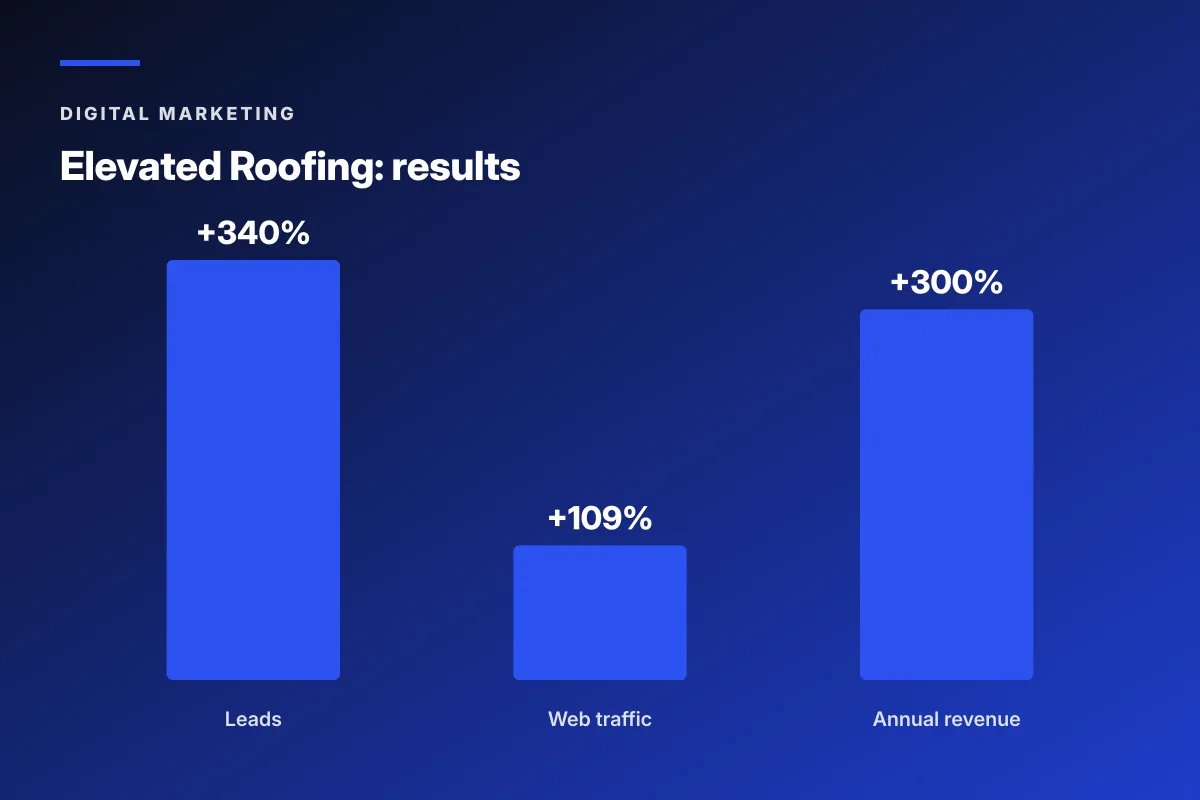
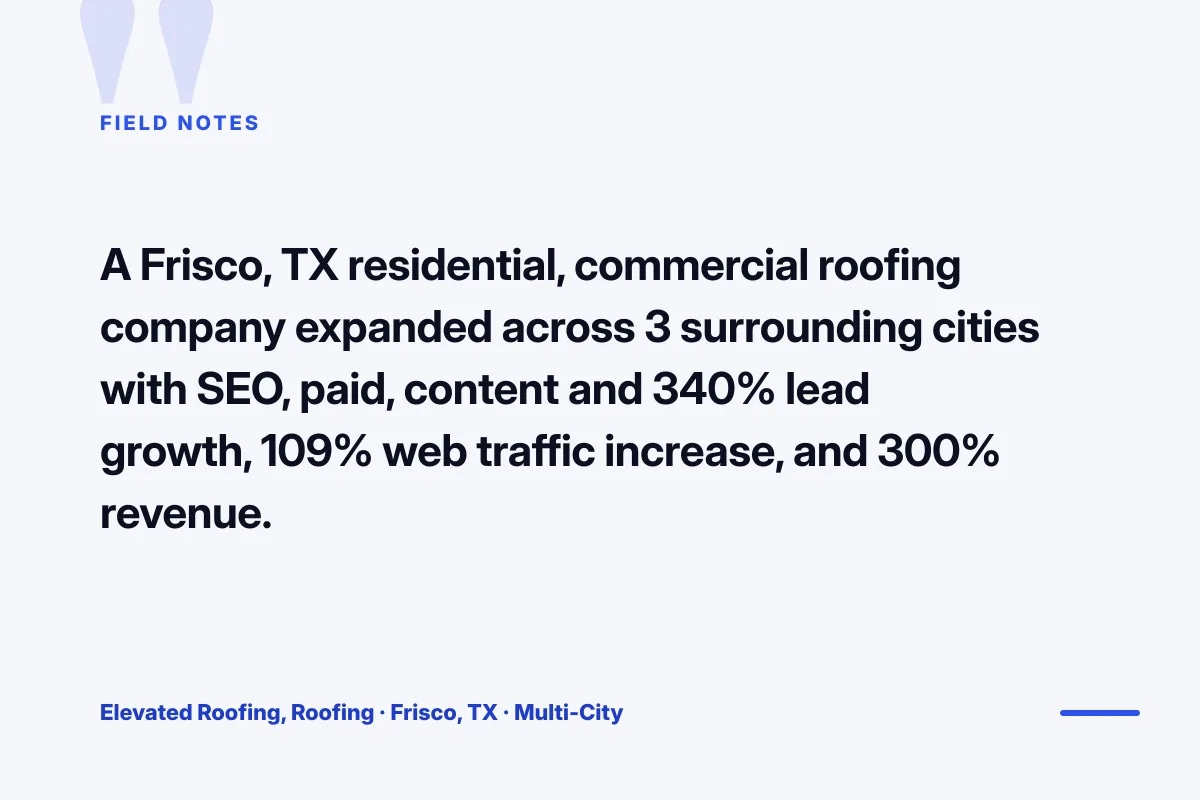
Beauté Aesthetics New York, a Manhattan luxury clinic, ran a twelve-month digital rebuild that included a site refresh, delivered 166 percent lead growth, 88 percent new user growth, and a 27 percent conversion rate gain. The site scope covered a treatment-page rebuild with individual pages per procedure, an embedded booking widget on every page, a retail-shelf ecommerce module for skincare products, Local Business plus MedicalBusiness schema markup, and a Core Web Vitals overhaul that pulled Largest Contentful Paint from 4.1 seconds to 1.9 seconds on 4G.
The specific decisions that mattered. Every treatment page carried FAQ schema so the questions surfaced in Google search results. The booking widget rendered inline rather than as a modal overlay, which cut the drop-off rate by 34 percent versus the previous modal implementation. The retail-shelf pages carried Product and Review schema for the top 40 SKUs. The photography was consistently sized and compressed so mobile pages loaded fast. The lead growth compounded from month five as the schema markup and the on-page SEO started ranking.
| Beauté site metric | Baseline | After rebuild |
|---|---|---|
| Website leads | Flat | Plus 166 percent |
| New user growth | Below baseline | Plus 88 percent |
| Conversion rate | Weak funnel | Plus 27 percent |
| Mobile LCP | 4.1 seconds | 1.9 seconds on 4G |
Treatment-page schema that carried local rank
The treatment-page schema (MedicalProcedure plus FAQ plus AggregateRating) is the piece that carried the local-rank gains. Each treatment page had its own MedicalProcedure schema block listing the procedure name, duration, and expected outcome. Each FAQ block listed the top questions patients ask (recovery time, price range, contraindications). Each AggregateRating block listed the review count and average rating for the treatment. That schema layer let the site earn featured snippets, People Also Ask boxes, and rich results for treatment queries. That rich-result real estate is what drove the conversion rate gain.
Boutique web design for beauty salons versus full agency
The math on boutique web design for beauty salons versus a full agency turns on how much strategy the founder wants versus how much they want to run themselves. A boutique studio charges $1,800 to $4,800 for a starter or standard site, delivers in six to ten weeks, and hands off the site for the founder to manage. A full agency charges $4,800 to $12,000 for the same site, delivers in ten to sixteen weeks, and offers ongoing SEO plus content plus paid ad management on a monthly retainer. Boutique wins on speed and cost. Full agency wins on ongoing growth if the founder wants a partner rather than a vendor.
The right pick depends on the founder’s time horizon and marketing budget. Salons with a $12k monthly marketing budget and a growth roadmap pick full agency. Salons with a $1k monthly marketing budget and no growth roadmap pick boutique. Salons in between should ask both types for proposals and compare the scope side by side. See our beauty and skincare marketing agency page for the full-service scope options.
Our favorite pitch from a boutique studio chasing an affordable web design for beauty salons contract included a $400 quote that promised “a modern, minimalist single-page site delivered in 48 hours”. The salon owner asked whether the site would have a booking widget. The account executive said “we don’t recommend embedded booking because it clutters the design”. Meanwhile our copy of the Google Local Business schema documentation sat two feet from the meeting table. The salon owner passed. The salon they signed instead paid $400 for a site that booked zero clients in the first ninety days. That first proposal is still framed somewhere as a cautionary tale.
Shortlist questions for affordable web design for beauty salons
Six questions on the first call separate an affordable web design for beauty salons shop from a generalist chasing a beauty client. Which booking widget do you recommend for the treatment mix. What schema markup is included in the base build. What’s the mobile Largest Contentful Paint target for a beauty site on 4G. What’s included in the base build versus billed as separate project work. Who owns the site after handoff. And what does the ongoing maintenance retainer cover. Category shops answer with numbers inside ten minutes. Generalists answer with slides and a promise to send an example.
Two more questions worth asking on the second call. What percentage of your portfolio is beauty and skincare specifically. What percentage of your builds launch on time and on budget. A category shop lands at 70 percent plus on both. A generalist lands under 30 percent on both. That gap predicts build quality and delivery discipline more reliably than any credential on the shop’s homepage. See Google’s Core Web Vitals documentation for the underlying speed and interactivity targets.
Reference call questions worth asking
Reference calls surface the honest read on any affordable web design for beauty salons shop. Ask each reference whether the build launched on time. Ask whether the booking widget works reliably on mobile. Ask whether the site ranks in the local pack for treatment queries. Ask whether the shop responds to maintenance requests inside 48 hours. Ask whether the reference would hire the shop again for a second location. Two clear yeses and the shop earns the finalist slot. Any hedging and the shop drops. Reference calls take thirty minutes each and predict outcomes more reliably than any portfolio.
Maintenance after affordable web design for beauty salons build
Maintenance after the build sits at $199 to $599 monthly for beauty salon sites depending on ecommerce complexity. The retainer covers WordPress plus plugin updates weekly, security monitoring and malware scanning, weekly backups with off-site storage, uptime monitoring with SMS alerts, monthly performance report, and up to two hours of small-change work per month (menu updates, image swaps, treatment additions). A category shop names all of this on the proposal. A generalist skips the retainer conversation during the build and quotes it after handoff at whatever number the account manager decides.
The maintenance retainer decides whether the site keeps ranking after year one. WordPress and plugin updates run weekly. Broken links get flagged inside 48 hours. Core Web Vitals get monitored monthly. Any regression in mobile speed or schema markup gets fixed inside the retainer. Salons that skip the maintenance retainer see rank drops in month eight to twelve as plugins break, schema markup drifts, and Core Web Vitals slip below thresholds. See our beauty and skincare hosting and maintenance page for the retainer scope options.
Response time on the maintenance retainer matters as much as scope. A category shop names the response time in the contract (usually 24 hours for standard requests, 4 hours for site-down emergencies, 8 hours for security issues). A generalist promises “prompt” response and delivers whatever the workload allows that week. Ask for response times in writing and check them against the reference calls. Salons that skip this conversation end up with a site-down issue on a Saturday morning and no way to reach the maintenance team until Monday.
Contract terms for affordable web design for beauty salons
Build contracts run fixed-scope, fixed-price with a three-milestone payment structure (30 percent at kickoff, 40 percent at design approval, 30 percent at launch). Ongoing maintenance retainers run six-month first term with mutual continuation option, then rolling six-month terms with 60-day cancellation notice. Site ownership transfers to the salon at launch, including the domain, the hosting account, the WordPress admin, the design files, and the plugin licenses. A category shop names all of this on the build proposal. A generalist skips ownership transfer terms and hopes the salon doesn’t ask.
The exit clause on the maintenance retainer matters. All site files, plugin licenses, hosting credentials, backup copies, and DNS records transfer to the salon inside seven business days. Any shop that resists an exit clause is signaling they don’t want the maintenance retainer to end. That resistance usually means the salon is locked in through proprietary hosting or custom code that doesn’t transfer. Read the exit clause carefully before signing the maintenance retainer.
The change-request cadence inside the contract matters too. A category shop caps change requests at two hours per month inside the retainer and quotes hourly work above the cap ($120 to $180 per hour depending on the task). A generalist blends all change requests into the retainer and quietly deprioritizes small tasks until the founder chases them. Ask for the change-request policy in writing. Salons that skip this end up with a maintenance retainer that turns into a monthly negotiation about which requests count as covered.
Making the pick on affordable web design for beauty salons
The right shop for affordable web design for beauty salons is the one that walks the scope conversation before the price conversation, names a specific booking widget for the treatment mix, delivers schema markup as part of the base build, tests mobile UX on a mid-range Android device, offers a maintenance retainer inside the build proposal, and transfers site ownership cleanly at launch. Every other shop in the inbox is worth passing on. The screen takes two calls per shop and two reference calls per finalist. Total time is about six hours across three candidates.
The last piece of advice is patience with the timeline. A good beauty salon site takes six to twelve weeks to build depending on scope. Rushing the timeline usually means skipping the schema markup or the mobile UX testing, and those shortcuts show up in month three when the site doesn’t rank. Salons that plan for a ten-week build and a three-month ramp on rank end up with a site that books clients through year three. Salons that rush the build and skip the maintenance retainer end up rebuilding the site in year two.
Frequently asked questions
How much does affordable web design for beauty salons cost?
Starter builds at $1,200 to $2,400 cover a five-to-eight page site with third-party booking, treatment menu, and basic local SEO. Standard builds at $2,800 to $4,800 cover a ten-to-fifteen page site with embedded booking, retail catalog, and full local-SEO baseline. Premium builds at $5,400 to $8,400 cover multi-location or ecommerce-enabled sites. Custom builds above $8,400 cover ground-up work for five-plus locations or medical spas. Ongoing maintenance sits at $199 to $599 monthly as a separate retainer.
What booking widget works best for a beauty salon site?
Booksy handles nail and hair salons well. Vagaro handles multi-service salons well. GlossGenius handles boutique studios well. Fresha handles medical spas well. Square Appointments handles multi-location retail plus service well. A category shop asks about treatment mix and staffing structure before recommending a widget. A generalist recommends whichever widget the shop has an affiliate deal with. The widget choice matters more than the site design because it drives whether the site converts visitors into booked appointments.
What schema markup should is included with a beauty salon site build?
The base build should include Local Business schema for the salon's name, address, phone, hours, and service categories. Service schema for each treatment offered. Product schema for retail SKUs if the site sells product. Review and AggregateRating schema if the salon has customer reviews. FAQ schema for common questions. MedicalProcedure schema for medical spa procedures. Any shop that skips this markup on the base build is running a beauty salon site like a generic small-business site and missing the local-pack ranking opportunity.
How long does an affordable web design for beauty salons build take?
Starter builds take four to six weeks. Standard builds take six to ten weeks. Premium builds take ten to sixteen weeks. Custom builds take sixteen to twenty-four weeks. Rushing the timeline usually means skipping the schema markup or the mobile UX testing, and those shortcuts show up in month three when the site doesn't rank. Salons that plan for a ten-week build and a three-month ramp on rank end up with a site that books clients through year three. Salons that rush the build end up rebuilding in year two.
Do I need ongoing maintenance after the build?
Yes, and skipping it is the mistake that turns a working site into a broken one by year two. The maintenance retainer at $199 to $599 monthly covers WordPress plus plugin updates weekly, security monitoring and malware scanning, weekly backups with off-site storage, uptime monitoring with SMS alerts, monthly performance report, and small-change work up to two hours per month. Salons that skip maintenance see rank drops in month eight to twelve as plugins break, schema markup drifts, and Core Web Vitals slip below thresholds.
Book your free 30-minute strategy call.
No spam, no sales rep. We use your email to schedule your call with a senior strategist. That is it.
More from the blog
View all articles → Digital Marketing
 Dental Marketing Tips That Compound Into New Patients
Read article Digital Marketing
 Ecommerce Marketing Strategies That Drive Real DTC Revenue
Read article Digital Marketing