5.0 · verified April 2026
"They kept the process simple and focused. Understood our goals as a dental practice and stayed focused on improvements that would make the website and ad campaigns more effective."

We run marketing for DTC and omnichannel apparel, accessories, and fashion brands. Custom Shopify and WooCommerce storefronts, apparel-native SEO, Meta and TikTok media buying, and Klaviyo lifecycle. Every campaign reports on return-adjusted revenue and repeat rate. Not clicks. Not impressions.


























These are the specific issues our first audit finds on most apparel + fashion sites. Any of them familiar?
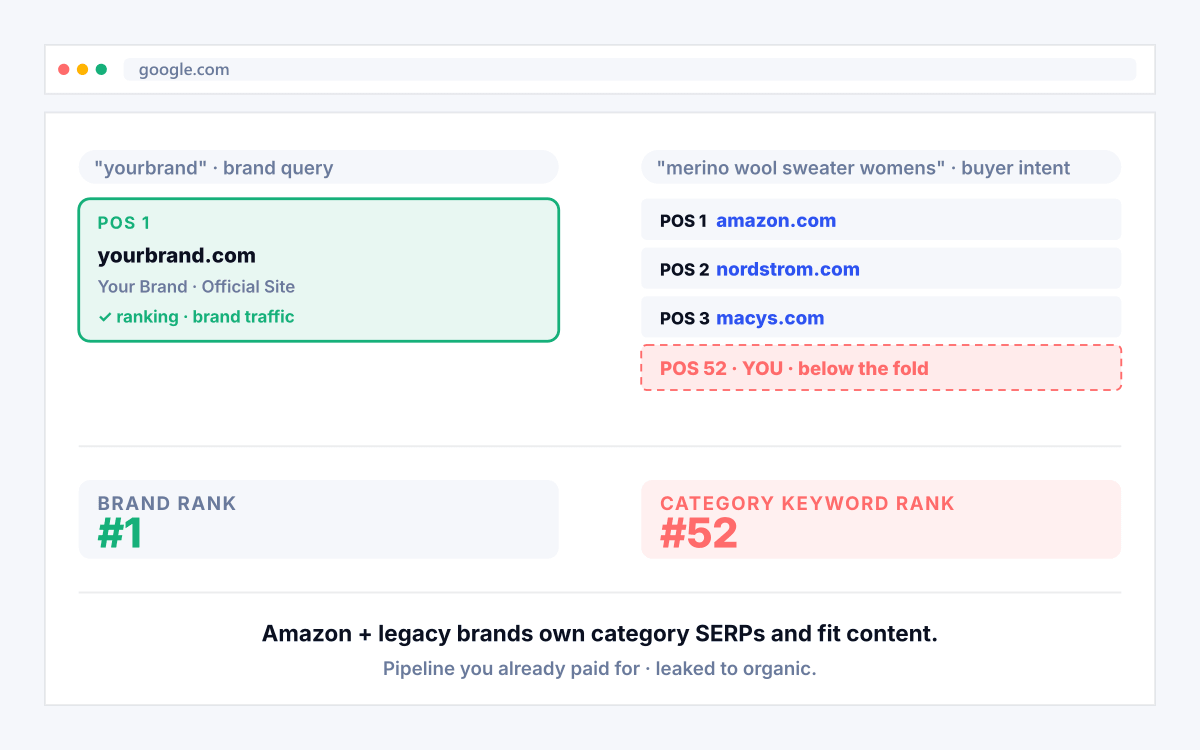
"Merino wool sweater", "linen shirt womens", "dad shoes" hit legacy brands and Amazon. Your collection pages target the wrong keywords + have no size + fit content that ranks.
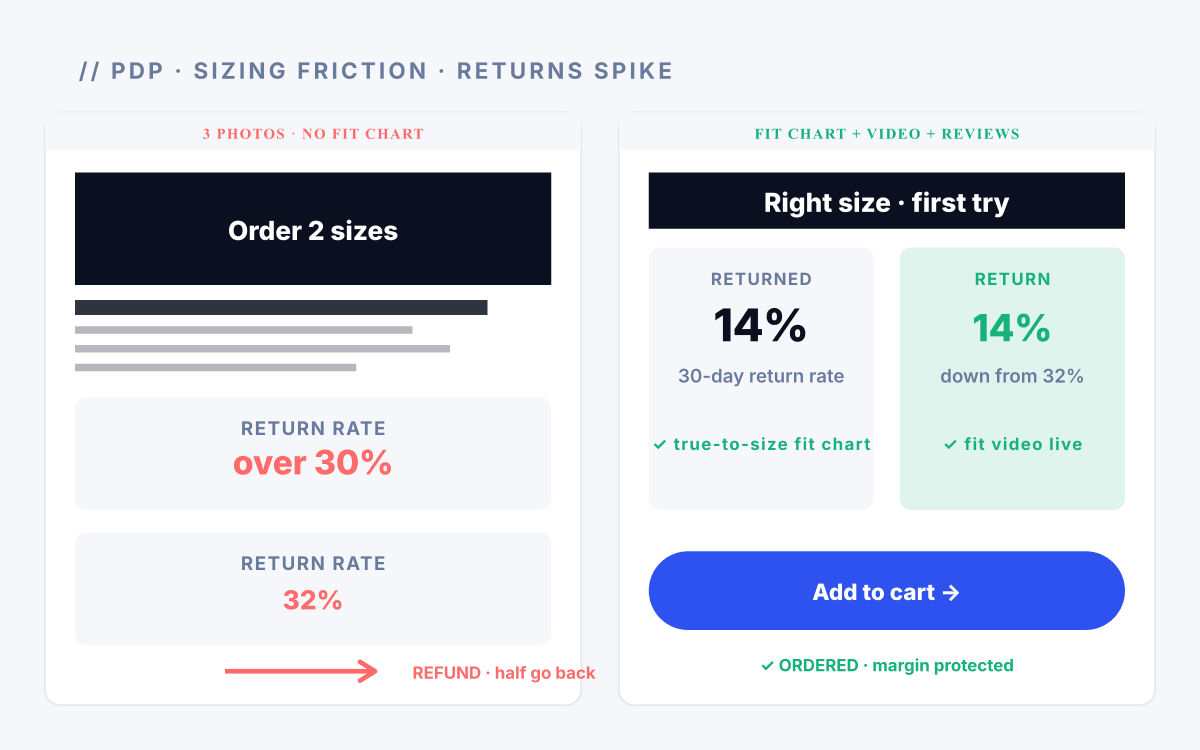
PDPs show 3 photos, no video, no true-to-size fit chart. Buyers order two sizes to "compare". One goes back. Free returns policy makes it worse but marketing keeps buying more traffic.
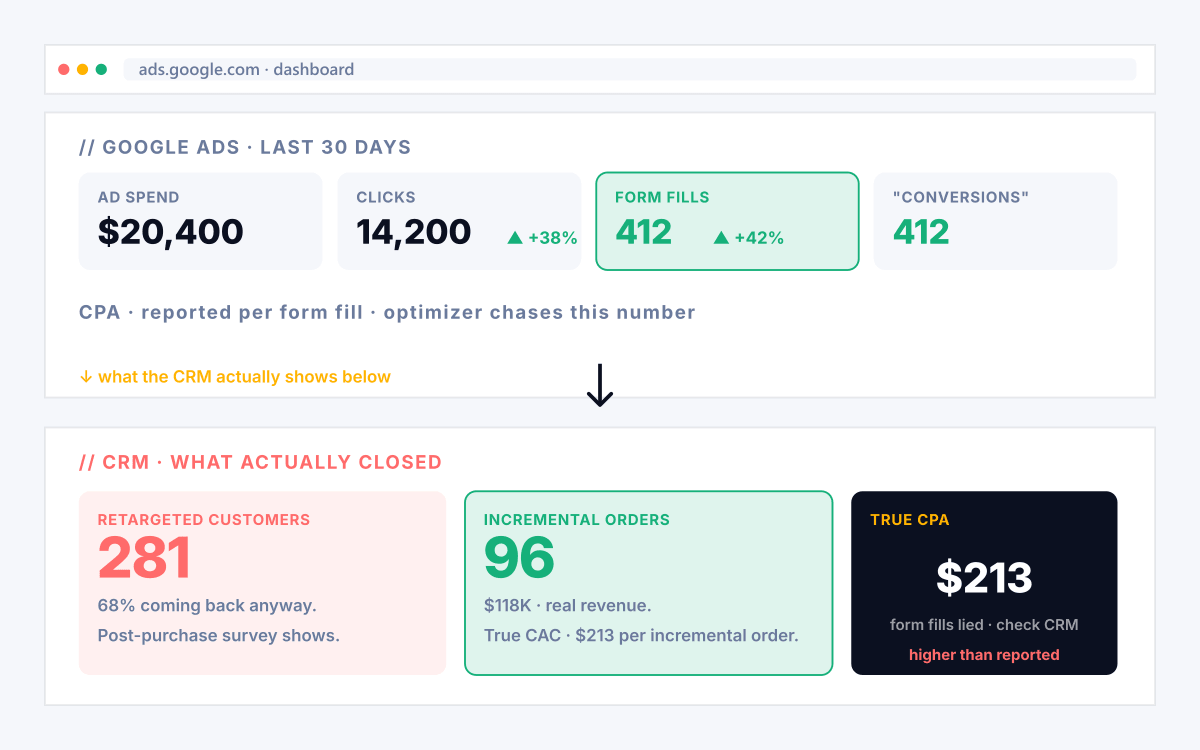
Meta CAPI reports 4.1x ROAS on retargeting. Post-purchase surveys show 68 percent of those buyers were "coming back anyway". Ad budget scales, incremental revenue does not.
Each pillar is a full program. Run separately or bundled into one retainer with a single fashion marketing lead. All measured against orders placed and revenue per customer.
Storefronts built to convert around your target buyer categories, fit finder, and returns UX. Not a Dribbble entry, an orders machine. Owned by you at handoff.
Technical fixes, intent-mapped apparel + fashion content, and digital PR. Programs that pay back inside twelve months.
Explore apparel + fashion SEO →Google, Meta, TikTok, and Pinterest media buying by fashion media buyers. Every campaign tied to orders placed and revenue per customer, not to click-through rate.
Explore apparel + fashion PPC → Website MaintenanceLiteSpeed hosting, weekly security scans, monthly optimization, plus small content edits included. Zero worry about page-speed or broken plugins.
Explore maintenance plans → Marketing RetainerBundled monthly retainer covering on-store SEO, Klaviyo, Meta and TikTok, return-rate CRO, sizing tools, VIP tier programs, and seasonal launch waterfall under one apparel growth lead. with no long contract.
See tier pricing →Same rhythm on every brand. Audit before we spend a dollar. Position before we launch an asset. Build against the offer. Scale against orders placed and repeat rate, not blended ROAS.
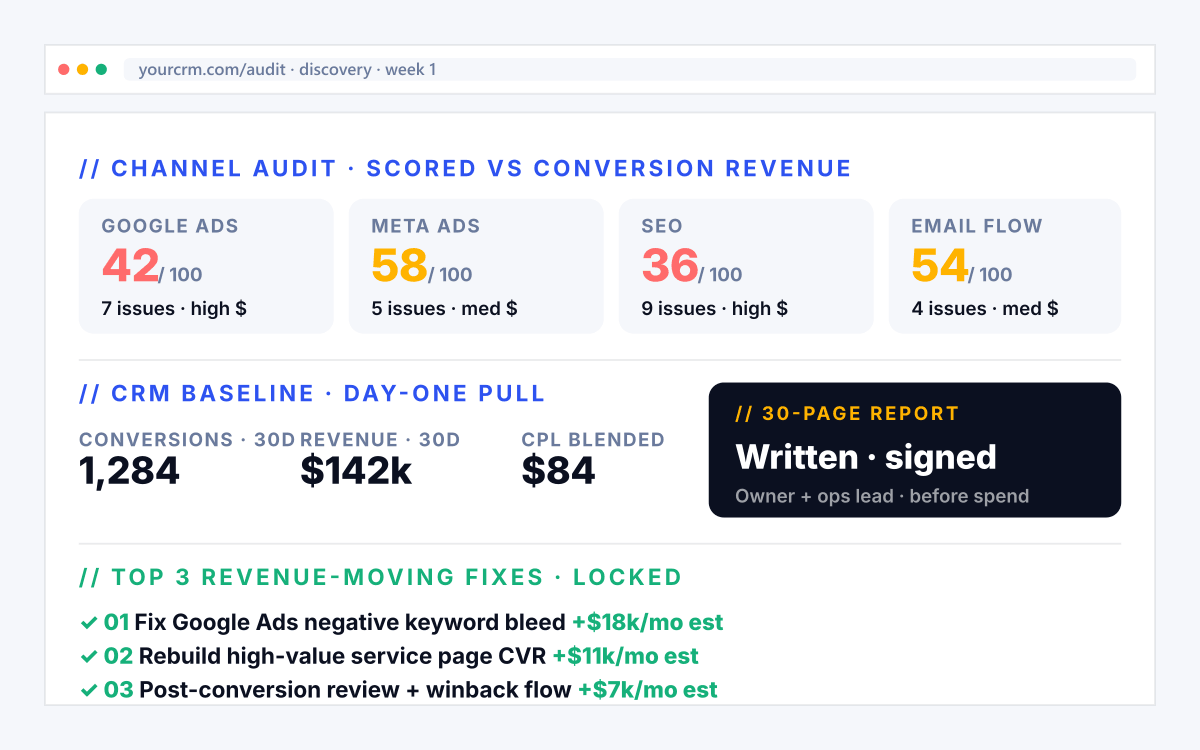
Site, Shopify, ad accounts, email flows, and post-purchase surveys. Channel-by-channel teardown against orders placed, return rate, and repeat rate.
Nail the hero SKU mix, size and fit story, and target buyer. Every PDP, ad, and email built off one positioning brief.
Launch the storefront, PDPs, funnels, and Shopify-linked tracking. Weekly written notes, nothing stalled in draft.
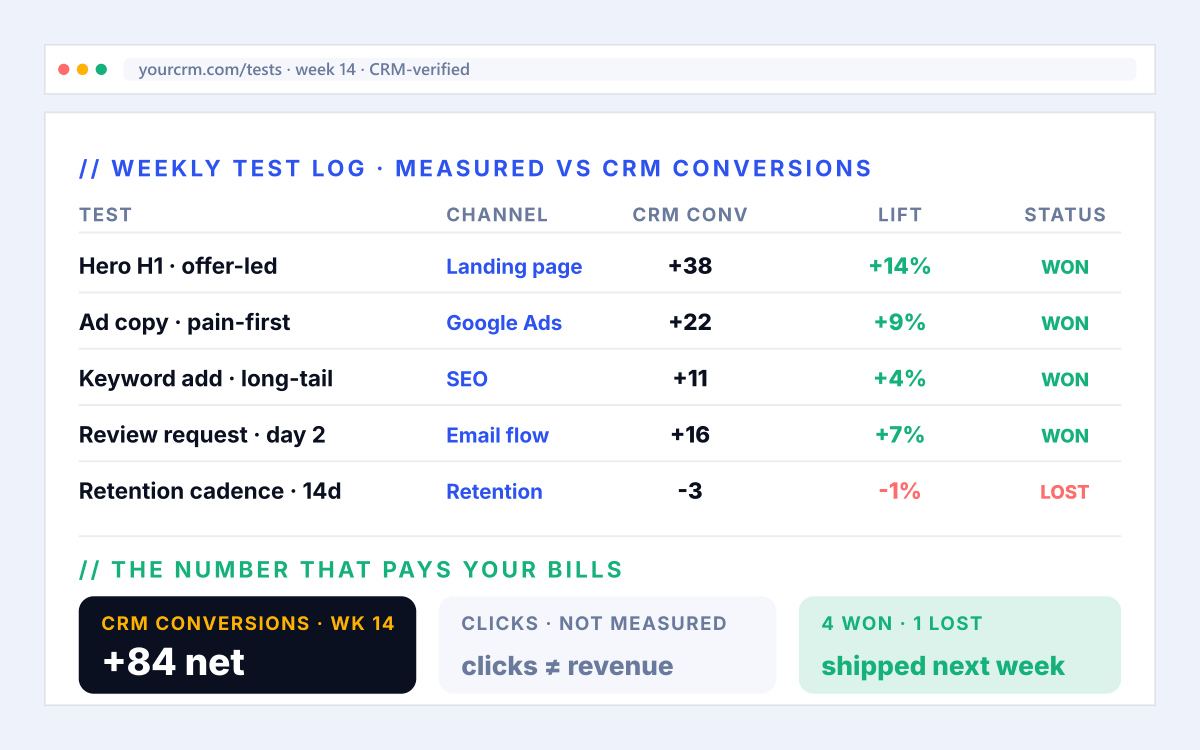
Compound paid, SEO, retention, and creator wins. Weekly review tied to orders placed and repeat rate, not clicks.
Every quote below is verified by Clutch through a direct call with the client. No cherry-picking.
Three engagements where we tied the work to orders placed. Numbers verified with the brand owner.
Slide in your store numbers. Assumes a 20% relative conversion improvement, which is what our first audit typically finds on non-optimized DTC sites.
If your question is not here, book a 30-minute call. A fashion marketing lead answers on the call directly, not through a sales rep.
A fashion marketing agency runs the full acquisition, retention, and content stack for apparel, accessories, and luxury brands: Meta, TikTok, TikTok Shop, Pinterest, Google Shopping, Amazon, Klaviyo lifecycle, SEO, storefront design, and creator affiliate. At Redefine Web every fashion marketing agency account runs under one roadmap tied to returns-adjusted revenue and keeping-rate LTV, not headline ROAS.
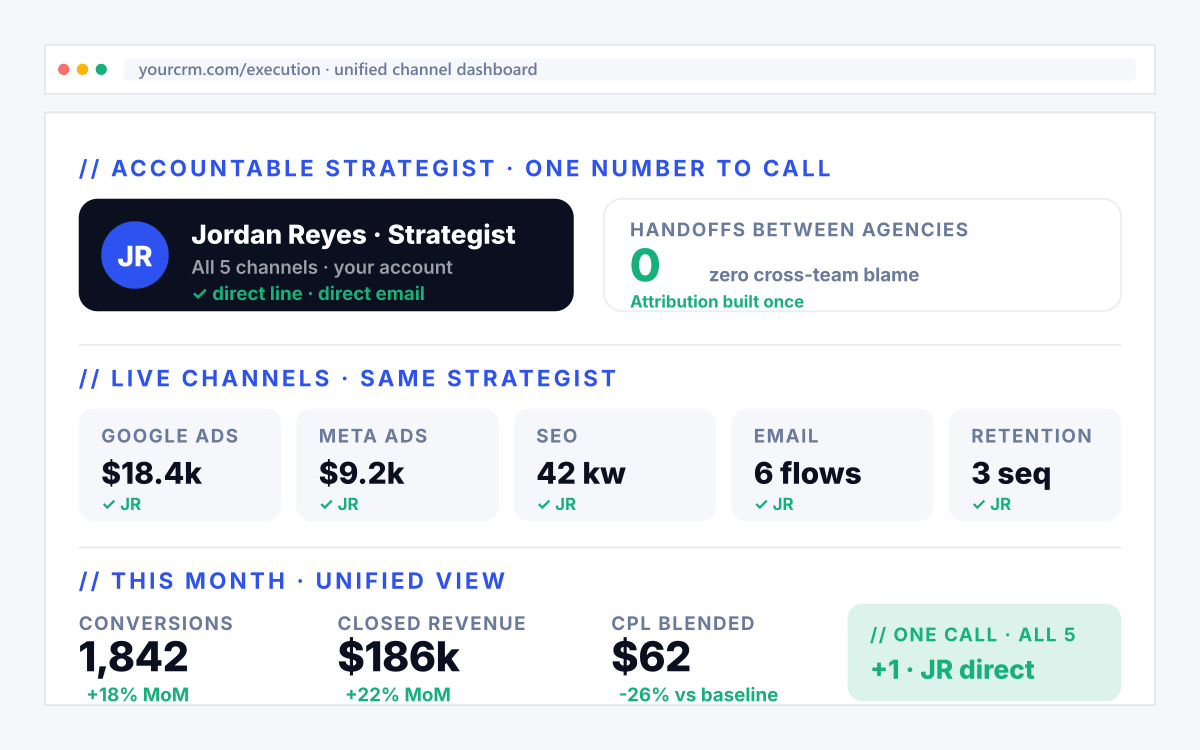
A fashion strategist who has operated apparel DTC brands directly runs your program. Return rate math, size-and-fit UX, collection-drop cadence, and seasonal inventory turnover are understood from day one. You get one weekly written report tied to keeping-rate CAC and net revenue after returns.
Managed fashion marketing agency retainers at Redefine Web run $999 to $6,500 per month depending on channel mix and ad spend under management. Storefront rebuilds are quoted separately as fixed-price projects starting at $1,500.
Emerging apparel brands under $500K annual revenue usually start on entry at $999 covering Meta plus Klaviyo. Growing brands between $500K and $5M sit at $2,500 to $4,000 with TikTok, Pinterest, and Google Shopping layered on. Scaling brands above $5M land at $4,000 to $6,500 with full-stack DTC plus Amazon plus creator affiliate. Ad spend goes straight to Meta, TikTok, Pinterest, Google, and Amazon and is not part of the retainer.
An apparel marketing agency has to measure returns-adjusted revenue and keeping-rate CAC, not headline ROAS. Fashion return rates run 20 to 40 percent industry-wide, and headline ROAS lies by a factor of 30 to 50 percent when returns get netted out later.
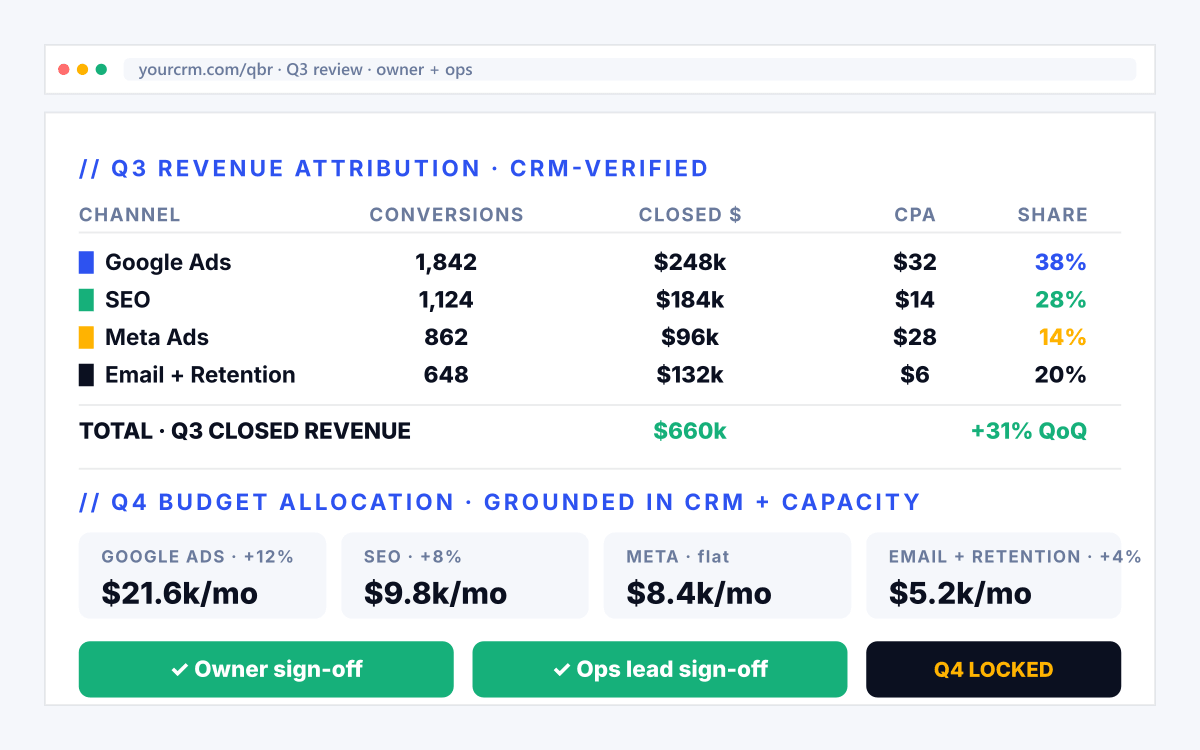
At Redefine Web every apparel account reports returns-adjusted revenue, keeping-rate CAC, and 30/60/90-day repeat rate. Return data from Loop, Happy Returns, or Returnly feeds back into Meta CAPI and TikTok Events API so the platforms bid toward customers who keep, not customers who order and return. This alone drops blended CAC by 20 to 35 percent inside 60 days on most fashion accounts.
Meta and TikTok adjustments produce measurable returns-adjusted CAC movement inside 30 days. Klaviyo flow rebuilds produce LTV gains inside 60 to 90 days. SEO on category, style, and comparison keywords takes 90 to 180 days to move meaningful organic traffic. Pinterest hits stride in 21 to 45 days once shoppable pin catalogs feed properly.
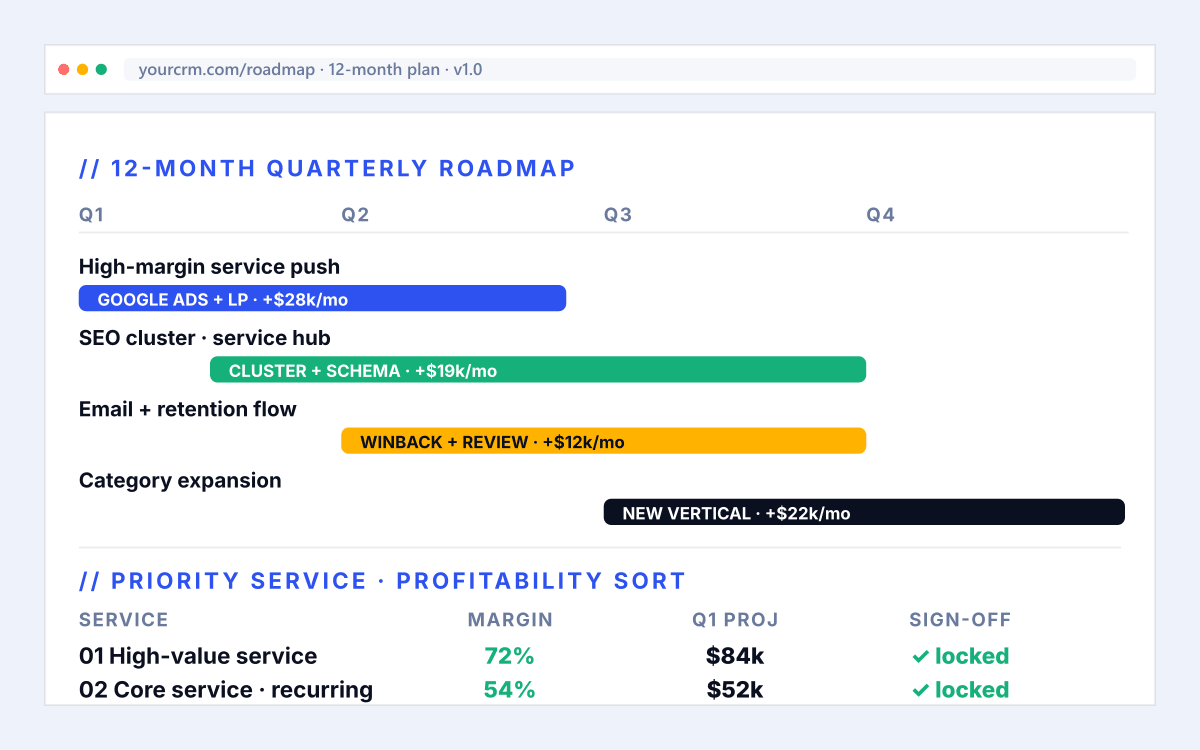
Every retainer opens with a 90-day plan and a 30-60-90 milestone tracker. Fashion moves on collection cadence, so seasonal launches (spring drop, fall drop, holiday) get pre-staged 30 to 45 days ahead of go-live.
Apparel marketing services run collection drops on a dedicated playbook. Pre-launch waitlist SMS through Postscript or Attentive. Seed content dropped to 50 to 150 creators 30 days before launch. Day-of paid media through Meta, TikTok, Pinterest, and Google Shopping with retargeting to waitlist and repeat customers.
Drop-hour Klaviyo flow with lookbook education and hero SKU. Post-drop replenishment sequence tuned to sell-through velocity. Every launch runs on a launch scorecard reviewed 24 hours, 7 days, and 30 days after go-live. Slow launches trigger targeted follow-up flows and paid social boost, not panic markdowns that train the brand into a discount pattern.
Yes. Pinterest is a top-3 channel for fashion because Pinterest buyers convert at higher rates than most social platforms and stay on-platform through purchase. Pinterest shoppable pins, product feed sync from Shopify, and Pinterest promoted pins run on every fashion marketing agency tier from Growth up. TikTok Shop management runs on Scale and Enterprise. TikTok Shop reports against returns-adjusted CAC alongside Meta and Google.
Creator affiliate onboarding runs 15 to 40 new creators a month, weighted toward mid-tier (50K to 500K follower) fashion and style creators who ship more sales per dollar than mega-influencers. Style-integrated try-on content outperforms brand-produced ads by 30 to 60 percent on CAC.
Yes. Size and fit UX is the highest-impact return reduction work in fashion brand marketing, and it is included from Growth tier up. Fit finder integration (True Fit, Fit Analytics, Kiwi Sizing) reduces size-related returns by 20 to 40 percent. Size charts get built with real measurements, not vanity sizing.
Model photography includes size call-outs (model wears size M, is 5'8) so buyers can extrapolate. Reviews pull in with fit feedback (runs small, true to size, runs large). Post-purchase Klaviyo flows include fit confidence content to reduce buyer's remorse. Most brands see return rate drop 15 to 30 percent inside 90 days once fit UX is dialed in.
Google Shopping is often the top revenue channel for established fashion brands. Product feeds get built for every variant (size, color, style) with real photography, GTIN or MPN identifiers where possible, and structured product titles that match how buyers actually search.
Performance Max runs asset-grouped by collection or category so the algorithm does not blend styles that should stay separated. Non-brand Search targets category and style-comparison searches (best white t-shirt, wide-leg jeans, oversized blazer) where SEO has not caught up yet. Every fashion Google Ads account gets returns-adjusted conversion values feeding back through Enhanced Conversions so bids optimize toward keeping-rate revenue.
Yes. We work Shopify 2.0, Shopify Plus, Loop Returns, Happy Returns, Yotpo, Klaviyo, Recharge on subscription capsules, Postscript and Attentive on SMS, and Pinterest catalog. Read-only access to whichever stack you run is enough to start.
Once returns data is flowing through Loop or Happy Returns back into Meta and Google, the platforms stop bidding for high-return customer segments (specific age ranges, specific style categories, specific price bands). Most fashion brands see keeping-rate CAC drop 15 to 25 percent inside 60 days once return data feeds the ad platforms.
We do not take two direct-competition brands in the same fashion subcategory. A women's minimalist basics brand does not sit alongside another women's minimalist basics brand. A men's streetwear brand does not sit alongside another men's streetwear brand. This protects your creator overlap, your Meta audience overlap, and your Pinterest keyword bid position from us cannibalizing our own accounts.
Category exclusivity is written into the retainer. It expires 90 days after your account offboards. Adjacent categories (women's contemporary and women's activewear, men's tailoring and men's outdoor) coexist on our book because their creators, keywords, and audiences do not overlap.
Yes. Luxury and prestige fashion brands run on a slightly different playbook than contemporary DTC. Cold prospecting on Meta and TikTok gets throttled to protect brand equity. Pinterest, Google Search on aspirational keywords, and creator affiliate on style-authority creators carry more of the budget.
Klaviyo lifecycle emphasizes brand story, craftsmanship, and heritage over promo. Amazon usually stays off the plan because prestige positioning is fragile on the platform. Returns get treated as service, not friction. Most luxury fashion accounts run at higher AOV ($400 to $2,000) and lower conversion (1 to 2.5 percent) than contemporary DTC, but higher retained-customer LTV over 24 months.
You do. Every Meta, TikTok, Pinterest, Google, and Amazon account is built in your brand name with your logins. GA4, Klaviyo, Shopify admin, and every tracking pixel are in your name. Redefine Web has agency access, not ownership. If you leave, you leave with everything: creative files, audience files, keyword lists, negative keyword lists, Klaviyo flows, and current campaign structures.
This is written into the retainer. It costs us nothing to keep this rule, and it stops the single biggest fight in the agency business: who owns the account when the relationship ends.
Fashion marketing lead on the call. Three vertical-specific growth fixes you can apply, with or without us. Written summary in your inbox the next business day.
Drop your email. A fashion marketing lead reviews your funnel and books the 30-minute audit within one business day.