5.0 · verified April 2026
"They kept the process simple and focused. Understood our goals as a dental practice and stayed focused on improvements that would make the website and ad campaigns more effective."

We run marketing for CPG, snack, beverage, and natural-food brands from launch through national retail. Shopify or WooCommerce builds, SEO, Meta and TikTok Shop media, and Klaviyo lifecycle programs. Every campaign reports on subscription LTV and blended cost per new customer, not clicks or impressions.
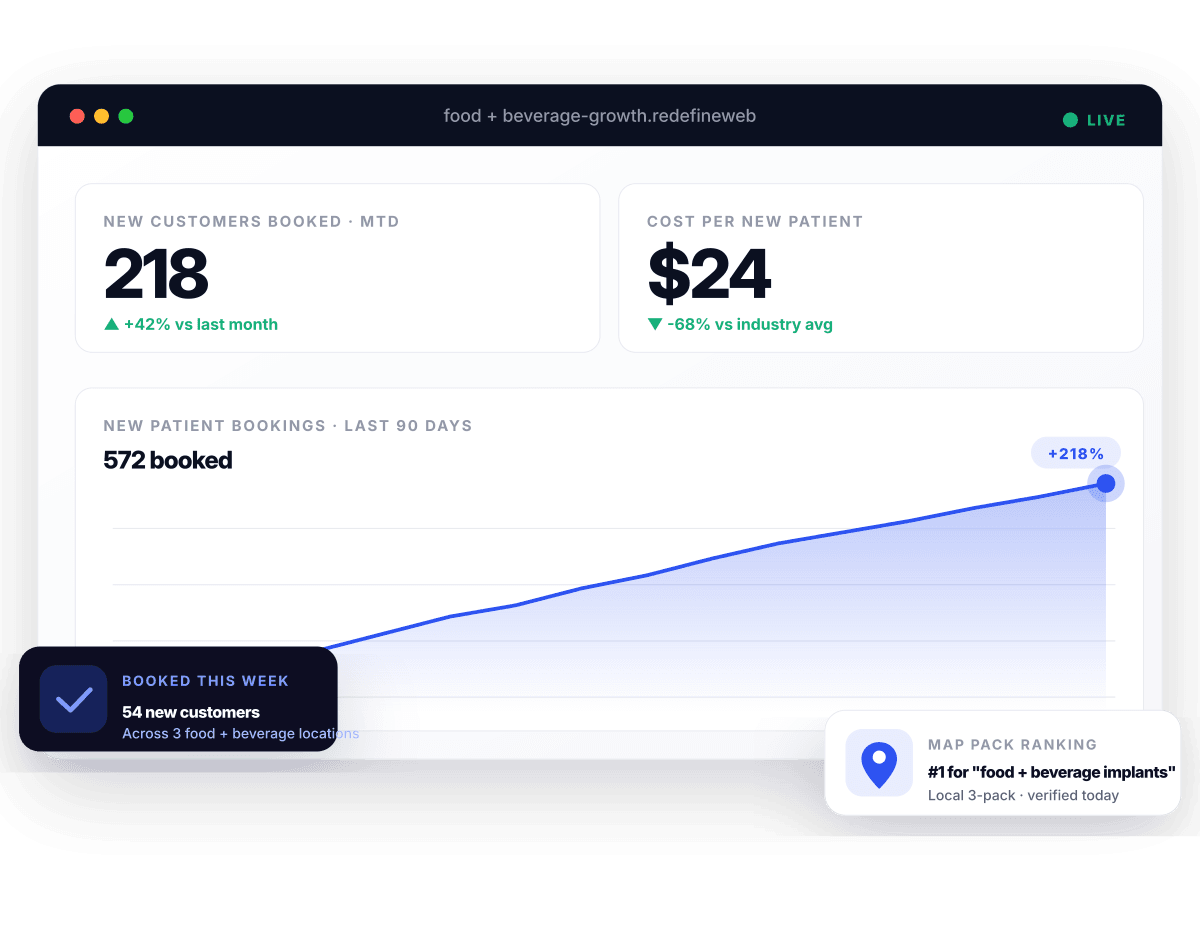


























These are the specific issues our first audit finds on most food + beverage sites. Any of them familiar?
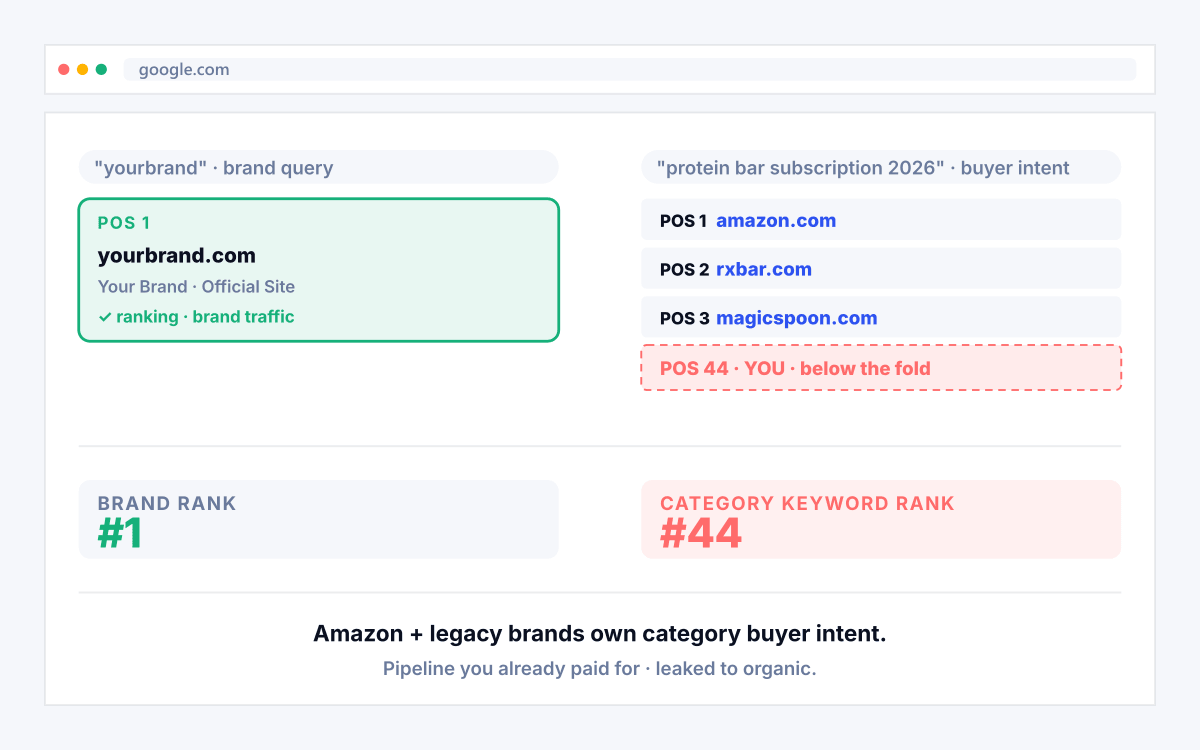
"Protein bar subscription", "energy drink alternatives", "clean snacks for kids" send buyers to Amazon and legacy brands. Your Shopify collections are page 3 or worse.
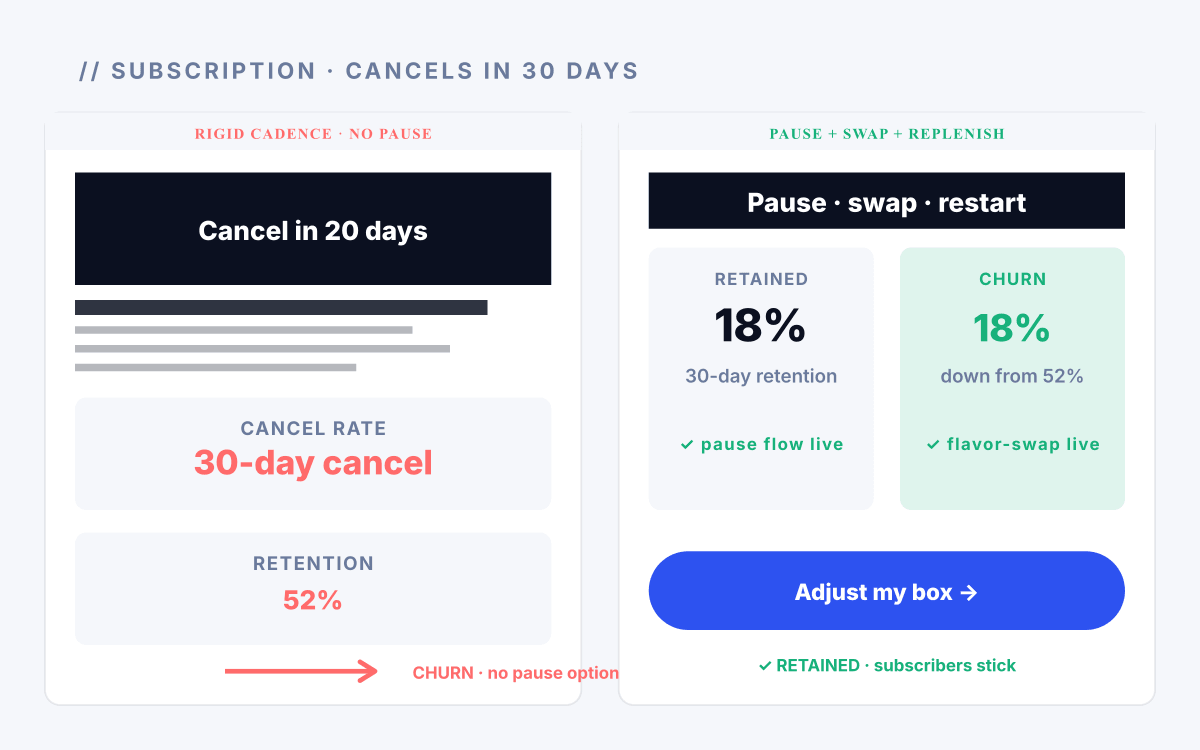
First shipment ships in 5 days. Second shipment ships too fast, in cadence with "still finishing the first pack". Cancels spike at day 20. No pause option, no flavor-swap flow.
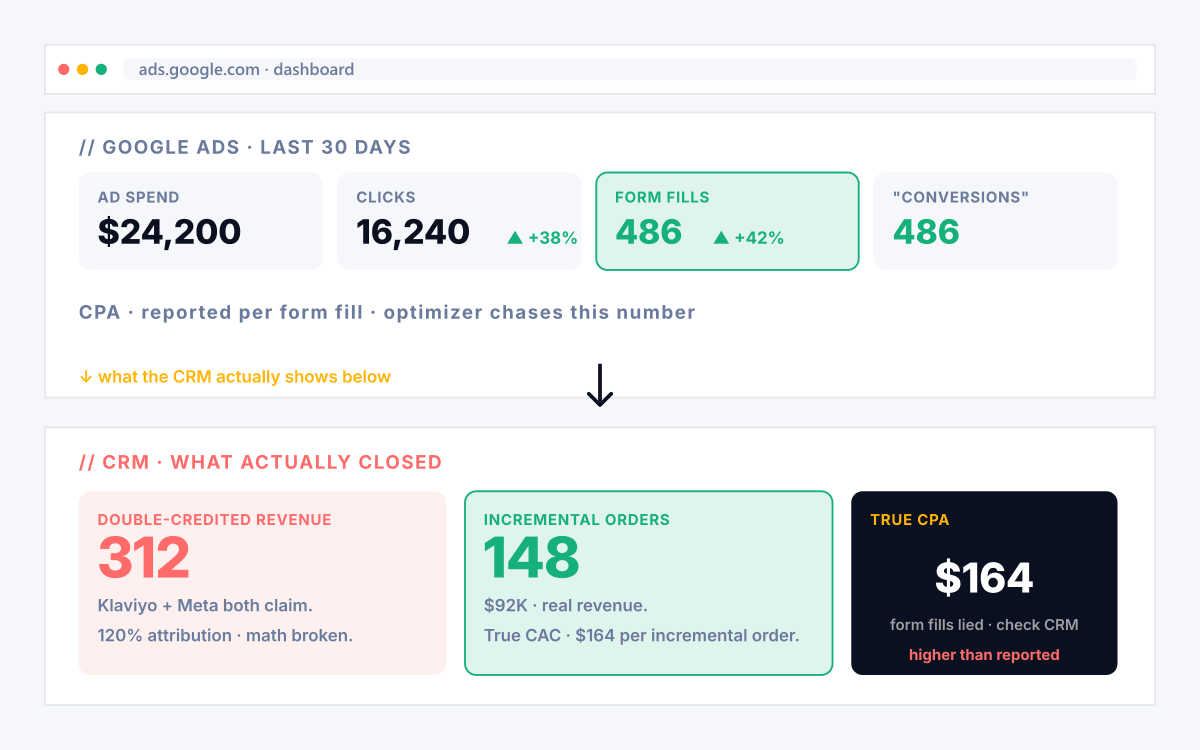
Klaviyo reports 32 percent revenue from email. Meta reports 4.2x ROAS. Add them together and the math says 120 percent of revenue is from marketing. Retention math is broken.
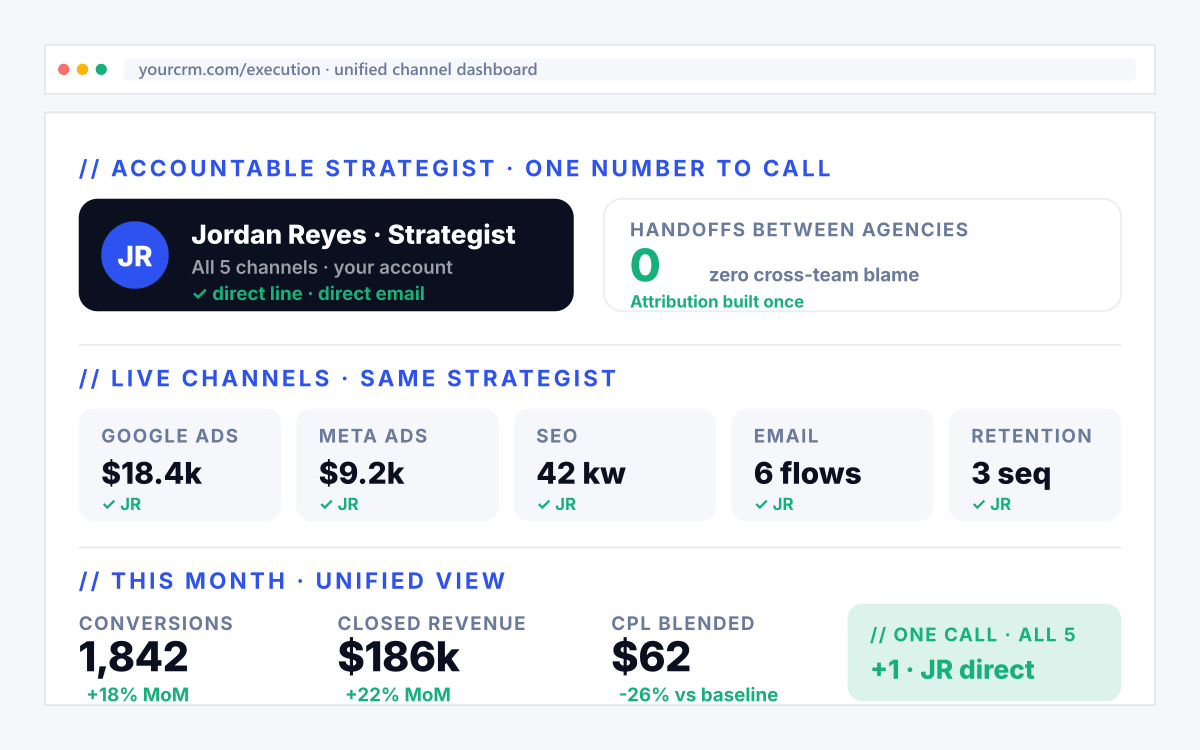
Each pillar is a full program. Run separately or bundled into one retainer with a single CPG strategist. All measured against subscription LTV and orders placed, not vanity metrics.
Shopify and WooCommerce builds engineered around your hero SKU mix, subscription flow, and store locator, built to convert your target buyer. Not a Dribbble entry, a revenue engine. Owned by you at handoff.
Technical fixes, intent-mapped food + beverage content, and digital PR. Programs that pay back inside twelve months.
Explore food + beverage SEO →Meta, TikTok Shop, Amazon, and Google Shopping media buying by CPG media buyers. Every campaign tied to first-order revenue and subscription LTV, not click-through rate.
Explore food + beverage PPC → Website MaintenanceLiteSpeed hosting, weekly security scans, monthly optimization, plus small content edits included. Zero worry about page-speed or broken plugins.
Explore maintenance plans → Marketing RetainerBundled monthly retainer covering on-store SEO, Klaviyo, Meta and TikTok Shop, Amazon, Instacart advertising, retail sell-through, and sampling tracking under one CPG strategist.
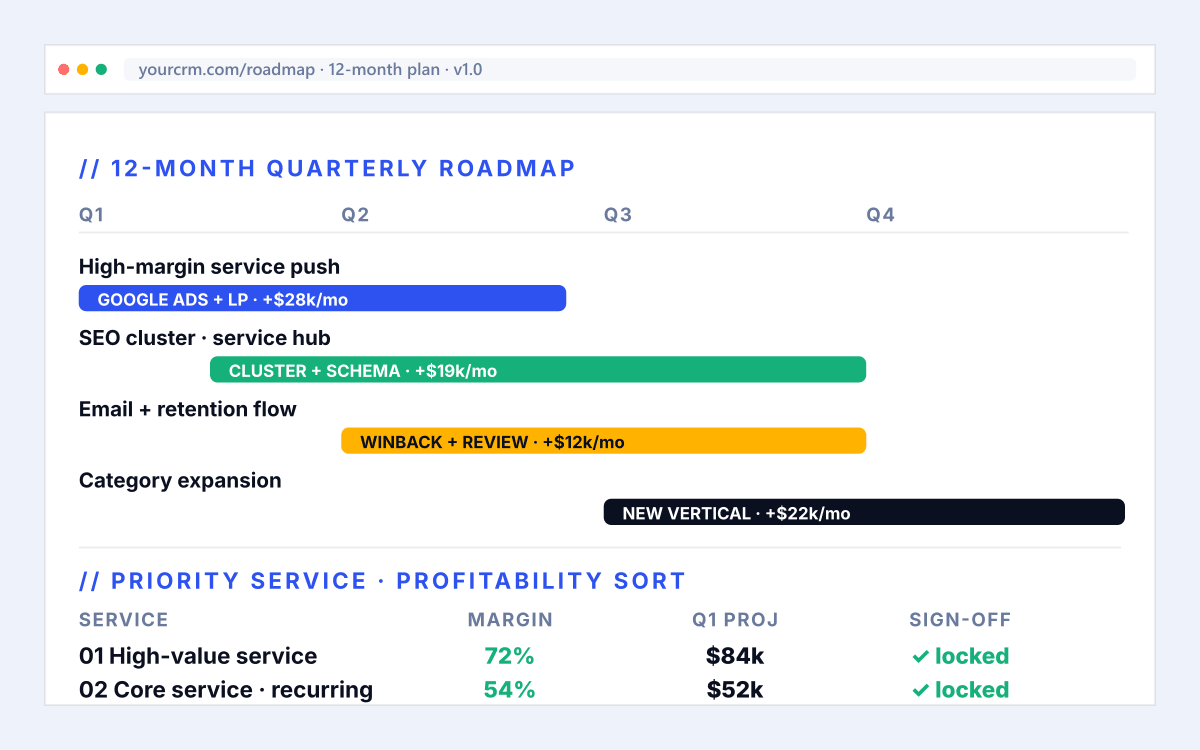
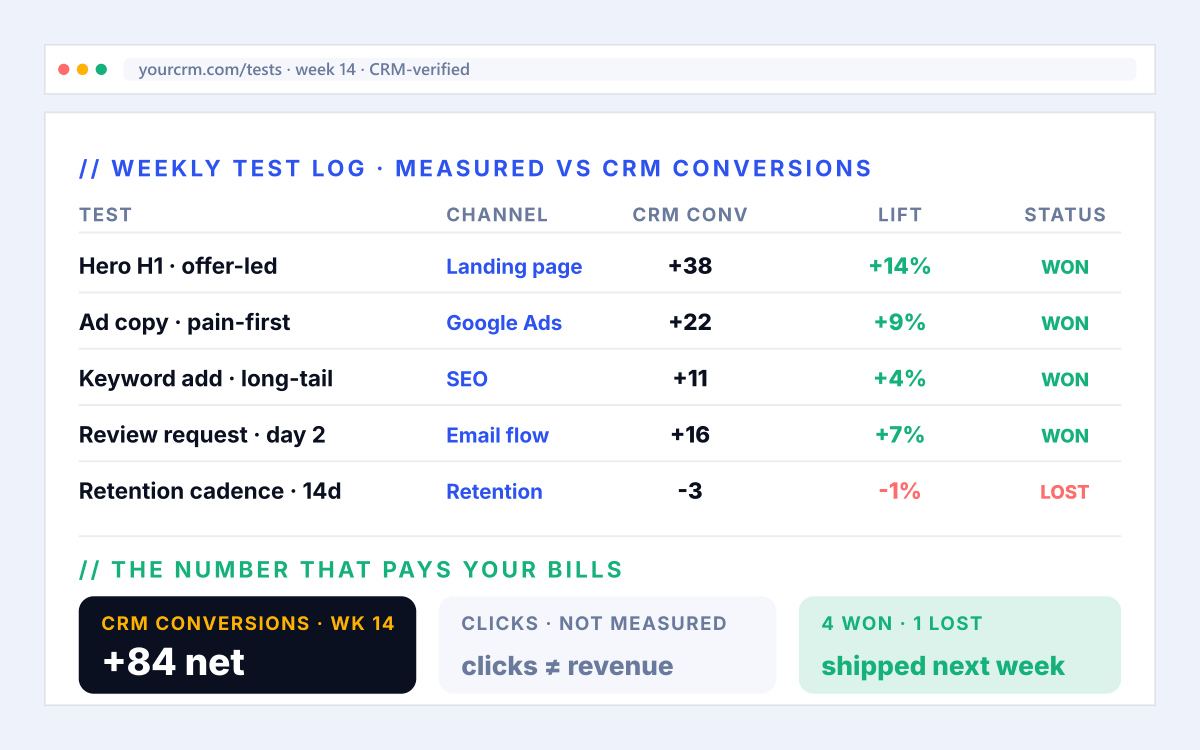
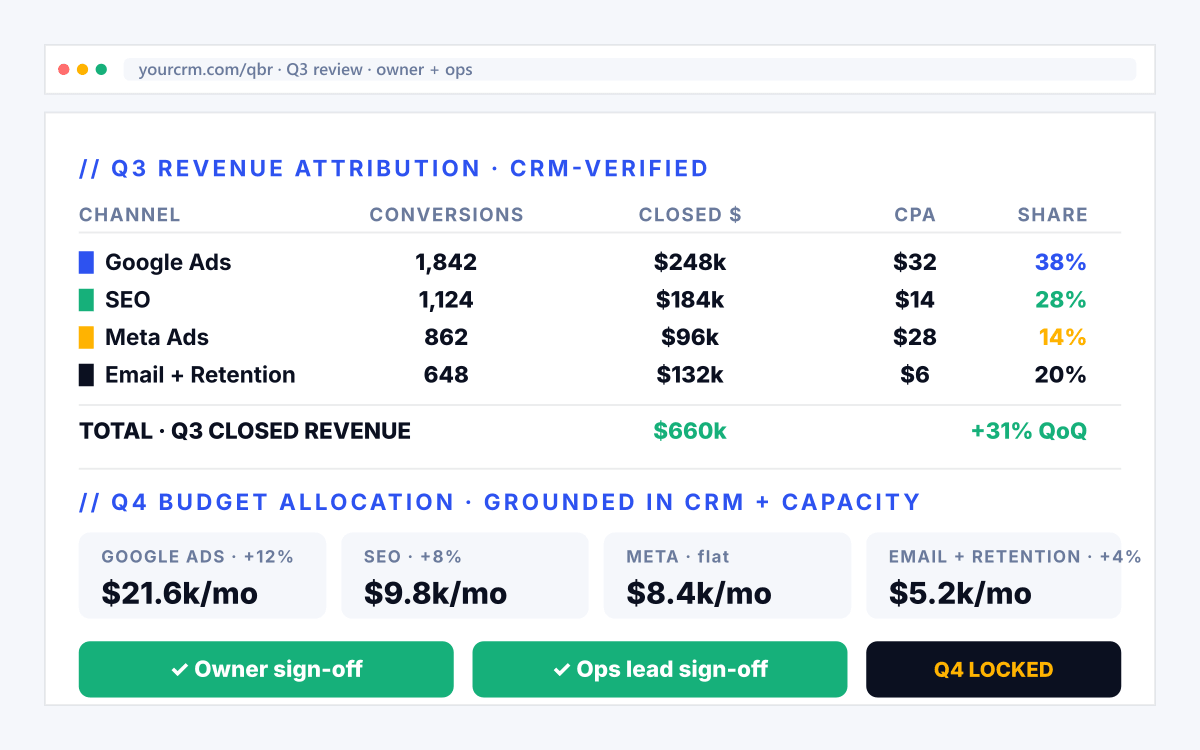
See tier pricing →Same rhythm on every brand. Audit before we spend a dollar. Position before we launch an asset. Build against the offer. Scale against orders placed and subscription retention, not blended ROAS.
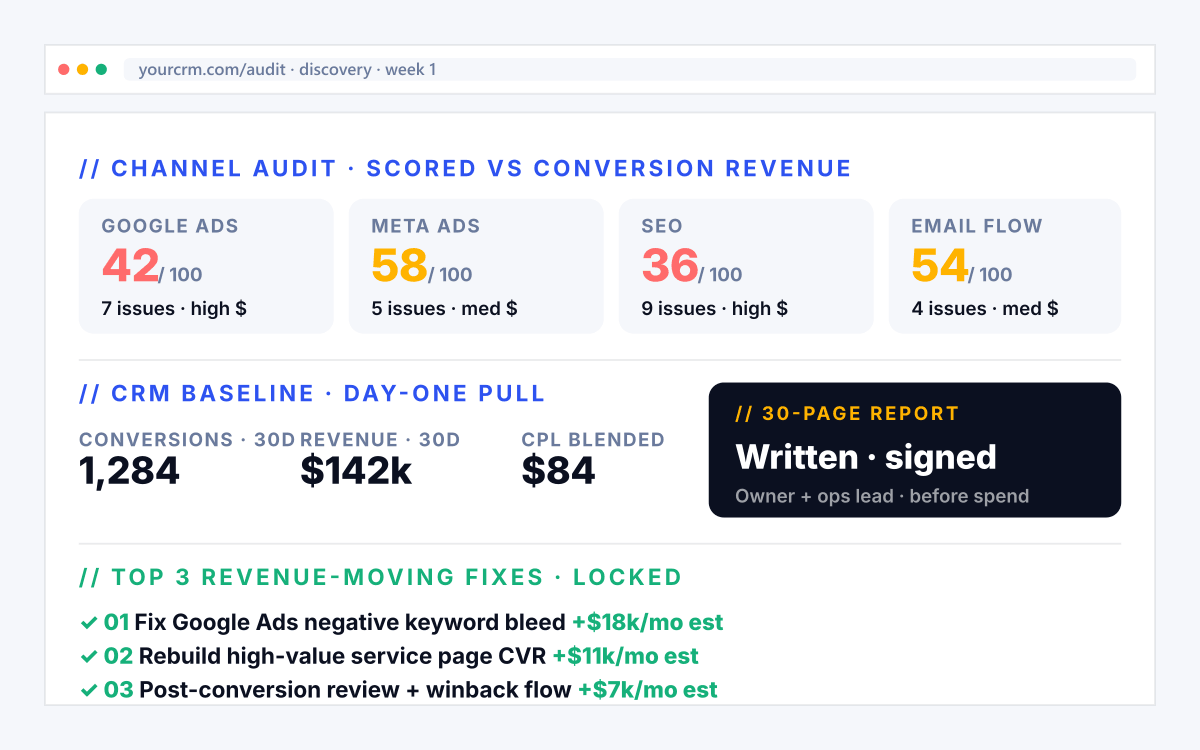
Site, Shopify, ad accounts, email flows, and post-purchase surveys. Channel-by-channel teardown against orders placed and subscription retention.
Nail the hero SKU mix, subscription posture, and target buyer. Every PDP, ad, and email built off one positioning brief.
Launch the storefront, PDPs, subscription flow, and Shopify-linked tracking. Weekly written notes, nothing stalled in draft.
Compound paid, SEO, retention, and creator wins. Weekly review tied to orders placed and subscription retention, not clicks.
Every quote below is verified by Clutch through a direct call with the client. No cherry-picking.
Three engagements where we tied the work to booked appointments. Numbers verified with the practice owner.
Slide in your store numbers. Assumes a 20% relative conversion improvement, which is what our first audit typically finds on non-optimized DTC sites.
If your question is not here, book a 30-minute call. A CPG strategist answers directly on the call.
A food marketing agency runs the full acquisition, retention, and content stack for CPG, snack, beverage, and natural-food brands: Meta, TikTok, TikTok Shop, Google Shopping, Amazon, Klaviyo lifecycle, SEO, storefront design, retail syndication support, and creator affiliate. At Redefine Web every food marketing agency account runs under one roadmap tied to subscription LTV and blended CAC.
A CPG strategist who has operated food or beverage brands directly runs your program. Cold-chain shipping math, expiration date logistics, retail syndication (Whole Foods, Sprouts, Erewhon, natural channel), and DTC-to-retail brand hand-off are understood from day one. You get one weekly written report tied to blended CAC, subscription CM3, and repeat rate.
Managed food and beverage marketing retainers at Redefine Web run $999 to $6,500 per month depending on channel mix and ad spend under management. Storefront rebuilds are quoted separately as fixed-price projects starting at $1,500.
Emerging CPG brands under $500K annual revenue usually start on entry at $999 covering Meta plus Klaviyo. Growing brands between $500K and $5M sit at $2,500 to $4,000 with TikTok, Google Shopping, and Amazon layered on. Scaling brands above $5M land at $4,000 to $6,500 with full-stack DTC plus Amazon plus retail syndication support. Ad spend goes straight to Meta, TikTok, Google, and Amazon and is not part of the retainer.
A CPG marketing agency should measure subscription LTV, blended CAC, and 30/60/90-day repeat rate, not headline ROAS. Headline ROAS is a bad number when subscription cancels get excluded and shipping costs get netted out later.
At Redefine Web every CPG account reports against subscription CM3 (contribution margin after platform fees, COGS, shipping, and returns), blended CAC across Meta, TikTok, Google, and Amazon, and repeat rate on the subscription base. Meta and TikTok get fed with margin-adjusted conversion values through CAPI so the platforms bid toward customers who actually stick. Cold-chain and heavy-package shipping cost is baked into the margin math so nobody over-optimistically calls a low-margin SKU a hero.
Meta and TikTok adjustments produce measurable blended CAC movement inside 21 days. Klaviyo flow rebuilds produce repeat-purchase gains inside 45 to 60 days. SEO on recipe, ingredient, and comparison keywords takes 90 to 180 days to move meaningful organic traffic.
Amazon PPC produces first-order movement in 7 to 14 days on established ASINs and 30 to 45 days on new launches. TikTok Shop hits stride in 21 to 30 days. Every retainer opens with a 90-day plan and a 30-60-90 milestone tracker. Marketing leadership sees what should have launched by when and which channel is driving the gain.
Yes. Beverage marketing agency work coordinates Amazon and DTC as one plan, not two. Amazon Seller Central, Amazon PPC, and A+ Content run on Enterprise tier. DTC storefront, subscription flow, and lifecycle run across every tier.
The rule is simple: never bid on your own brand keyword on Amazon PPC if organic already owns position 1 for the same term. Every dollar there is wasted. Pricing floor between Amazon and DTC gets set on a shared calendar so promotions do not undercut subscription base. Most F&B brands with both channels coordinated see Amazon carry 25 to 45 percent of net-new customer revenue while DTC carries the subscription base.
Food and beverage marketing has to respect shipping economics that beauty and apparel do not. Cold-chain shipping ($15 to $35 per order on refrigerated SKUs), heavy-package shipping on 12-pack beverages, and expiration date math on short-shelf-life products all shape the paid media plan.
We do not run Meta cold prospecting to zip codes outside your same-day or 2-day shipping range without a shipping cost overlay in the creative. We do not push subscription frequency below the honest usage cadence just to move a headline number. Shipping cost gets netted out of the margin-adjusted CAPI value going back to Meta, so the platform never over-bids for orders that lose money.
Yes. Functional beverages, supplements (where FDA-permitted claims are respected), and better-for-you natural food are a growing share of our F&B book. Claim compliance is treated as a floor, not a project. Meta and TikTok both restrict certain functional and health claims, so creative goes through a compliance check before any ad runs.
Structure-function claims stay on the front-of-pack and inside FDA guardrails. Every account gets a claim inventory at kickoff so we know what we can say on the landing page, in the paid ad, and on the Amazon listing without stepping on FDA lines. If a claim needs a clinical citation to run, we hold the creative until the citation is filed.
Yes. TikTok Shop management, creator affiliate onboarding, spark ads, and TikTok Shop-native content production are included from Scale tier up. TikTok Shop reports against blended CAC alongside Meta and Google.
Creator affiliate onboarding runs 15 to 40 new creators per month, weighted toward mid-tier (50K to 500K follower) food and beverage creators who ship more sales per dollar than mega-influencers. Sample fulfillment respects cold-chain constraints where they apply. Top-performing creators get promoted to whitelist ads where their handle runs paid budget behind their organic content. Food creators pull higher CTR than most categories because product demos and recipe integration ship native.
Yes. Retail syndication support is included on Scale and Enterprise tiers. That covers retailer-facing content (line-review sell sheets, Whole Foods brand pages, Sprouts brand landing content, Erewhon roundups), retail-specific paid media (geo-fenced Meta ads around chain locations, in-store QR-code activation), and coordination between DTC promotional calendars and retailer trade promotion.
The rule is simple: never run a 20 percent off DTC promo the same week Whole Foods runs a 15 percent scan-down. Retailer buyers see the underpricing and pull the brand. Trade content lives on a shared retail calendar the buyer and the paid media team can both see.
Yes. Product launches and limited seasonal SKUs run on a dedicated playbook. Pre-launch waitlist SMS through Postscript or Attentive. Seed content dropped to 50 to 150 creators 30 days before launch (or shorter for perishable SKUs). Day-of paid media through Meta, TikTok, TikTok Shop, and Google Shopping with retargeting to waitlist and repeat customers.
Drop-hour Klaviyo flow with usage education, hero SKU, and pairing suggestions. Post-drop replenishment sequence tuned to actual consumption cadence. Every launch runs on a launch scorecard reviewed 24 hours, 7 days, and 30 days after go-live. Slow launches trigger a follow-up playbook, not a panic price cut.
We do not take two direct-competition brands in the same F&B subcategory. A clean protein bar brand does not sit alongside another clean protein bar brand. A prebiotic soda brand does not sit alongside another prebiotic soda brand. This protects your creator overlap, your Meta audience overlap, and your Amazon PPC bid position from us cannibalizing our own accounts.
Category exclusivity is written into the retainer. It expires 90 days after your account offboards. Nobody games it. Adjacent categories (snack and beverage, natural food and supplements) coexist on our book because their creators, keywords, and audiences do not overlap.
You do. Every Meta, TikTok, Google, and Amazon account is built in your brand name with your logins. GA4, Klaviyo, Shopify admin, and every tracking pixel are in your name. Redefine Web has agency access, not ownership. If you leave, you leave with everything: creative files, audience files, keyword lists, negative keyword lists, Klaviyo flows, and current campaign structures.
This is written into the retainer. It costs us nothing to keep this rule, and it stops the single biggest fight in the agency business: who owns the account when the relationship ends.
A CPG strategist runs the call. You leave with three specific growth fixes you can apply with or without us. Written recap hits your inbox the next business day.
Drop your email. A CPG strategist reviews your storefront and books the 30-minute audit within one business day.