
Agencies Specializing in Luxury Beauty Marketing That Protect Equity
- Agencies specializing in luxury beauty marketing balance editorial PR against paid media.
- Editor relationships and Sephora VIB retail media protect long-term brand equity.
- Restrained retention cadence beats aggressive discount cycles for premium buyers.
- Beauté Aesthetics grew qualified leads 166 percent through luxury-aligned rebuild.
- Retainer bands run 15,000 to 60,000 dollars per month by brand stage.
- Monthly pricing bands for agencies specializing in luxury beauty marketing
- A luxury beauty marketing agency case study from a Manhattan clinic
- PR seeding calendars agencies specializing in luxury beauty marketing maintain
- Retention marketing agencies specializing in luxury beauty marketing run monthly
- Red flags in an agencies specializing in luxury beauty marketing proposal
- Timeline from signed contract to compounding luxury results
- In-house team versus agencies specializing in luxury beauty marketing
- Wrapping up agencies specializing in luxury beauty marketing selection
Agencies specializing in luxury beauty marketing operate in a category with rules that mass beauty ignores. Editorial credibility carries the same weight as paid ROAS. Sephora VIB Rouge shelf position outranks TikTok Shop GMV. A print placement in Vogue or Elle is still a real growth channel. Agencies specializing in luxury beauty marketing know when to spend on editorial versus performance media, when to seed the Met Gala versus the New York City Marathon, and how to price a 400-dollar serum against a 40-dollar drugstore substitute without dropping into promotion cycles that torch the aspirational brand equity a luxury founder spent years building.
This guide walks the working scope of agencies specializing in luxury beauty marketing in 2026. Editorial media strategy, Sephora VIB tier positioning, PR seeding calendars, retention email tone, retainer bands, red flags, and the Beauté Aesthetics case study on 166 percent lead growth through a luxury-aligned rebuild. If you are picking a partner in the next 60 days, this is the filter that separates a real luxury operator from a mass-beauty agency with a prestige-clients-welcome line on the pitch deck.
Monthly pricing bands for agencies specializing in luxury beauty marketing
Agencies specializing in luxury beauty marketing retainers run 15,000 to 60,000 dollars per month depending on brand stage and channel scope. The floor is 15,000 for an emerging luxury brand under 3 million annual revenue with editorial PR plus PDP work only. The mid-range is 25,000 to 40,000 for an established luxury brand between 3 million and 15 million running full-stack across editorial, retail media, and paid. The upper range is 45,000 to 60,000 for brands above 15 million running full-service including international expansion and prestige retail buildout.
Retainer tiers by brand stage
| Brand stage | Monthly retainer | Channels covered | Editor relationships maintained |
|---|---|---|---|
| Emerging luxury under $3M | $15,000 to $22,000 | PR + PDP + creator | 15 to 25 editors |
| Growth luxury $3M to $8M | $22,000 to $32,000 | Add Sephora + Ulta media | 25 to 45 editors |
| Established luxury $8M to $15M | $32,000 to $42,000 | Full stack + paid | 45 to 65 editors |
| Prestige luxury $15M to $50M | $42,000 to $55,000 | Full stack + international | 65 to 90 editors |
| Ultra-prestige above $50M | $55,000 plus | Full custom + brand studio | 90 plus editors |
Percent-of-revenue versus flat retainer
Percent-of-revenue pricing at 3 to 6 percent of annual revenue fits established luxury brands past 8 million annual revenue where a flat retainer no longer covers the labor volume required to maintain editor relationships plus retail buyer relationships plus paid media plus retention. Flat retainer pricing fits emerging luxury brands under 8 million where percent-of-revenue would starve the agency. Hybrid pricing (flat retainer plus performance bonus tied to editorial coverage volume) fits brands scaling through their first international expansion window.
A luxury beauty marketing agency case study from a Manhattan clinic
Beauté Aesthetics New York, a leading luxury beauty and aesthetics clinic in Manhattan, engaged Redefine Web as an integrated marketing partner across web design, SEO, and creator content coordination. The clinic served a Manhattan clientele that treated aesthetic services as a luxury purchase decision on par with a Hermès handbag. The digital presence undersold the brand. Landing pages read like a clinical brochure. Metadata was thin. There was no editorial engine feeding the top of the funnel.
The twelve-month program layered a full website rebuild with luxury-aligned visual identity, treatment-specific landing pages, editorial photography, technical SEO cleanup, schema markup implementation, and a targeted local creator seeding cohort of 40 New York beauty and lifestyle creators plus editorial samples to 22 named beauty editors covering wellness and aesthetics. Every workstream reported into the same weekly dashboard.
Across twelve months, the program grew qualified leads 166 percent, new users 88 percent, and website conversion rate 27 percent. The integrated stack we ran for Beauté Aesthetics New York now runs inside our beauty SEO service at maintenance cadence, with the internal marketing lead operating the ongoing program. Editorial samples continue quarterly against the beauty editorial calendar and the clinic tracks placements alongside consultation bookings as a paired KPI on the monthly review deck. Every photography asset from the buildout doubles as an editorial submission asset and a paid social variant, which compounds the initial investment across every acquisition channel the clinic runs today. The clinic now refreshes the roster of local creators quarterly on top of the same foundation without touching the underlying technical stack.
PR seeding calendars agencies specializing in luxury beauty marketing maintain
PR seeding calendars for luxury beauty brands anchor on cultural moments: Met Gala (early May), Cannes Film Festival (mid-May), New York Fashion Week (early September), Paris Fashion Week (late September), holiday gift guide season (October to November), and awards season (January to March). Each moment gets a dedicated product seeding cohort with editor samples, celebrity gifting to talent stylists, and creator kits shipped 4 to 8 weeks ahead of the moment. Missing a cultural moment cycle costs the brand 90 days of editorial pull.
Talent stylist gifting for red carpet moments
Talent stylist gifting for red carpet moments follows a working discipline: identify the top 40 celebrity stylists working the red carpet season, build monthly kits with the brand hero SKUs, and send the kits 6 to 8 weeks ahead of major awards ceremonies (Golden Globes in January, Oscars in March, Met Gala in May). A single hero SKU placed on a talent look on the red carpet drives 40 to 90 percent revenue growth on the featured product for the following twelve weeks and unlocks editorial coverage that would otherwise take six months of relationship work.
Editor sample kits four times per year
Editor sample kits ship four times per year against the Spring, Summer, Fall, and Holiday editorial calendars. Each kit includes the brand hero SKU, texture samples of adjacent products, an ingredient dossier printed at editorial quality, and a handwritten note from the brand founder or creative director. Kits that skip the handwritten note usually end up in the office giveaway pile within a week. Kits that include it tend to sit on the editor personal desk and drive editorial mention rates 4 to 7 times higher than digital-only samples.
Editorial still runs luxury. Ask any agency for their editor rolodex at Vogue, Allure, and Elle. If they can't name three, you're paying for mass-beauty tactics.
Retention marketing agencies specializing in luxury beauty marketing run monthly
Retention marketing for luxury beauty runs on a tighter, more curated cadence than mass beauty. A working program sends 4 to 6 emails per month per subscriber, not the 12 to 20 typical of mass DTC. Discount codes are rare, restricted to loyalty tier milestones and never to first-time buyer capture. The retention voice reads more like a curator note than a promotional email, and the segmentation logic runs on purchase behavior and product usage curves rather than aggressive urgency.
Klaviyo tone that fits luxury buyers
Klaviyo tone for luxury buyers reads as an editor voice, not a sales voice. Copy runs long, references ingredient science plus applied usage rituals, and links to editorial articles the brand published rather than direct product pages when possible. This is a pattern we also carry into our beauty PPC service. According to Klaviyo ecommerce email benchmarks, luxury and prestige beauty accounts see 30 to 45 percent open rates versus 20 to 30 percent for mass beauty on the same category, driven primarily by more restrained send cadence and higher editorial value in the copy.
Loyalty tier structure for premium buyers
Loyalty tier structure for premium buyers runs three tiers instead of the four or five typical of mass beauty: an entry tier at first purchase, a mid tier at 500 dollars annual spend, and a top tier at 2,000 dollars annual spend. Top tier benefits include early access to launches, private consultations, and complimentary editorial event access rather than points-and-discount mechanics. Discount-heavy loyalty programs erode a luxury brand fast and get flagged as promotional inside three quarters. Experience-heavy loyalty programs compound brand equity across every touchpoint.
Red flags in an agencies specializing in luxury beauty marketing proposal
Every luxury beauty founder reads at least three proposals a quarter promising Sephora placement plus Vogue coverage at 8,000 dollars per month with a full-stack team. The red flags below catch most of these proposals. One agency pitched us proprietary editor relationships across 200 titles that turned out to be a mailing list bought from a PR database vendor and a Gmail address three editors marked as spam. The mailing list is not the relationship.
- Retainer under 15,000 dollars per month with a promise of full-stack luxury marketing plus editorial PR. That budget covers 45 to 60 hours of specialist labor. Real luxury programs need 180 to 260 hours per month.
- No named beauty editors or publications inside the proposal. Real luxury agencies name the specific editors and publications where relationships are active.
- Guaranteed editorial placements at named publications. Editors do not sell placements. Agencies that promise guaranteed Vogue coverage are usually selling a paid sponsored content slot as if it were earned editorial.
- No mention of Sephora VIB or Ulta Diamond retail media inside the workflow. Prestige retail media is where luxury brands defend shelf position.
- Aggressive discount promotion cadence inside the retention plan. Discount cycles erode luxury brand equity fast. Anything past two site-wide sale cycles per year signals a mass-beauty playbook.
- Case studies with generic industry benchmarks instead of named luxury brands with specific editorial coverage volume and retail sell-through numbers.
Green flags in a real luxury pitch
Green flags: a written scope naming specific editors and publications the agency has active relationships with, a stated editorial calendar coverage plan tied to Spring, Summer, Fall, and Holiday close dates, a Sephora or Ulta buyer relationship the agency can name, a restrained retention cadence with clear tier structure, at least two luxury beauty case studies with real brand names and editorial coverage volume, and a monthly reporting cadence with editorial pull as a paired metric alongside revenue.
Timeline from signed contract to compounding luxury results
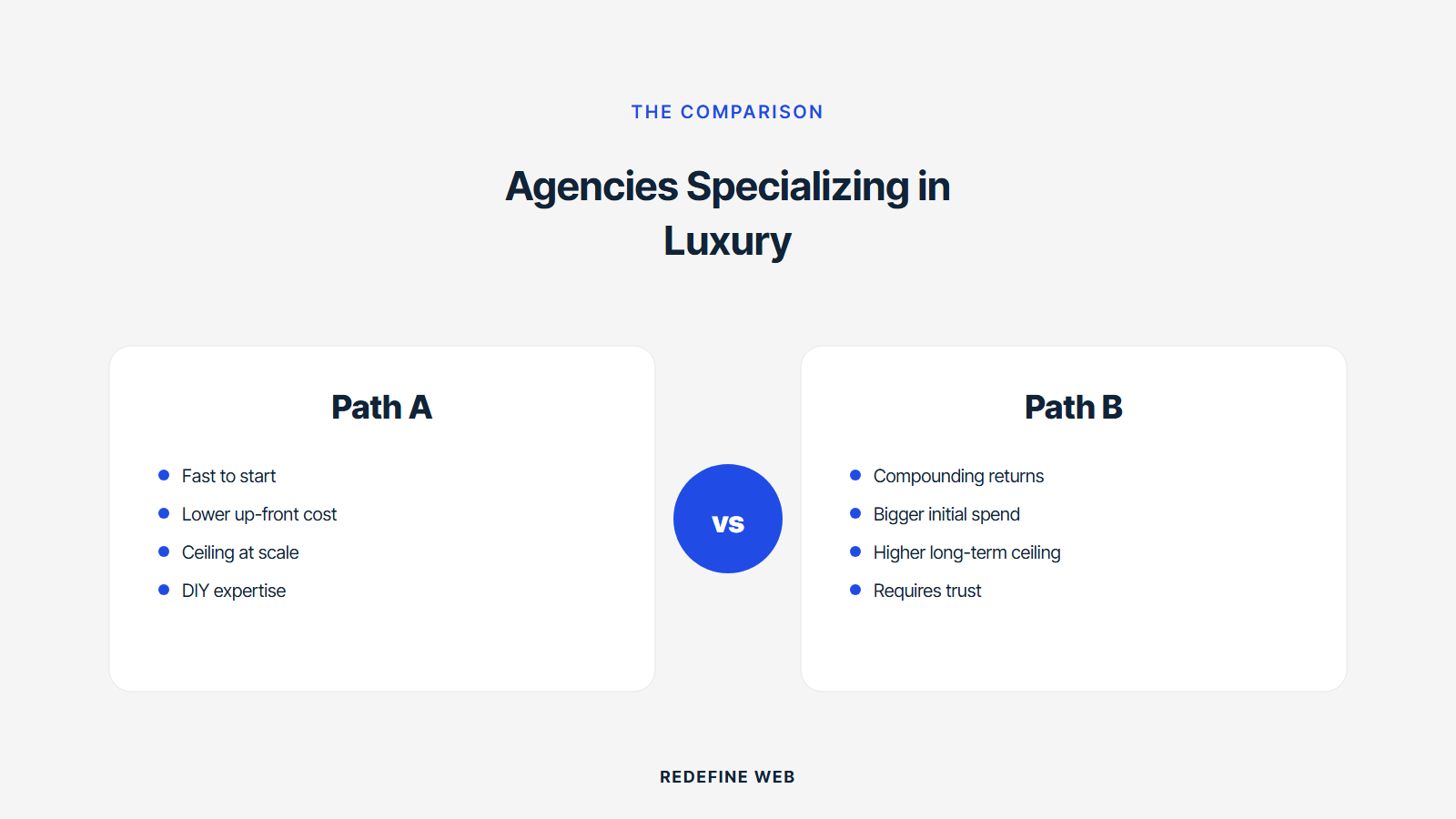
Luxury beauty founders arrive with wildly different expectations on timeline. Some expect a Vogue placement inside the first 30 days because a competitor caught one last quarter. Others expect nothing for six months because prior agencies never delivered on editorial pull. Real timelines sit in a narrow window shaped by brand stage, editorial coverage baseline, and how tightly the seeding calendar runs in month one across editor relationships the agency inherits or builds.
Month one is editor mapping and sample kit design
Month one is editor mapping and sample kit design. Every relevant beauty editor across ten publications gets mapped to a specific SKU and a specific editorial slot. The first quarterly sample kit gets designed, produced, and shipped inside week four. No editorial pull should be expected in month one because editorial calendars run 45 to 60 days ahead and the first samples do not land on editor desks until week five at earliest. Agencies that promise coverage in month one are usually paying for sponsored content, not earning editorial.
Compounding kicks in around month five
Compounding kicks in around month five as the first editorial mentions land in print and digital publications. Sephora buyers notice the editorial coverage and open new endcap conversations. Creator seeding cohorts produce their first library of usable content assets. Between month five and month twelve, most luxury brands see editorial coverage volume climb 2 to 5x versus baseline and Sephora sell-through climb 20 to 40 percent on the SKUs receiving editorial pull. Skip the editorial cadence and the compounding curve stalls at paid media alone.
In-house team versus agencies specializing in luxury beauty marketing
Every luxury founder eventually asks whether to build an in-house team or partner with a luxury agency. The honest answer depends on brand stage, editor relationship maturity, and whether the founder wants to manage a full PR plus creative plus retail media pipeline in addition to product, ops, and finance. Below 8 million dollars in annual revenue, an agency partnership wins on math because the total labor cost of a full-stack in-house luxury team runs 700,000 to 1,200,000 dollars per year fully loaded.
The in-house team salary math
A full-stack in-house luxury beauty marketing team runs nine people minimum: a marketing director, a PR director, an editorial coordinator, a paid media specialist, a designer, a photographer, a copywriter, a retail media specialist, and an ops coordinator. Fully loaded salaries plus benefits plus tool licenses lands the annual cost at 700,000 to 1,200,000 dollars. Below 8 million in annual revenue, that labor cost eats 8 to 15 percent of revenue at a category where gross margin already sits under pressure from packaging and formulation costs.
Hybrid model for brands past 15 million
Hybrid teams win for brands past 15 million in annual revenue. Marketing director, PR director, and paid media specialist come in-house. Editorial coordination, creative production, and retail media stay with an agency partner. This split gives the founder direct control on strategic decisions while keeping the labor-intensive relationship maintenance work off the internal payroll. Most brands past 40 million eventually pull PR in-house too, but retain agency partnerships for creative production and international editorial expansion. Our beauty marketing retainer plans support both fractional and full-service arrangements.
Wrapping up agencies specializing in luxury beauty marketing selection
Picking among agencies specializing in luxury beauty marketing in 2026 comes down to six things: named editor relationships across ten publications, editorial calendar coverage discipline, Sephora and Ulta retail media integration, restrained retention cadence, sample kit and PR seeding operational quality, and named luxury case studies with real editorial coverage volume alongside revenue. Programs that run all six produce compounding editorial pull, growing retail shelf position, and revenue growth that compounds year over year without erosion of aspirational brand equity that mass discount cycles quietly destroy.
Real programs like the twelve-month Beauté Aesthetics New York engagement produce 166 percent qualified lead growth by pairing luxury-aligned website rebuild, editorial photography, and creator content on the same team reporting into the same weekly dashboard. If your luxury beauty brand is picking a partner in the next 60 days, ask three agencies for line-item scopes with named editors, named editorial coverage plan, named retail buyer relationships, and case studies with real luxury brand names. Book a call and we will walk through the last three luxury beauty programs we ran end to end.
Frequently asked questions
What do agencies specializing in luxury beauty marketing actually do?
Agencies specializing in luxury beauty marketing run an integrated stack across editorial PR, restrained paid media, top-tier creator seeding, retail media inside Sephora and Ulta prestige aisles, retention email tuned for premium buyers, and packaging photography at editorial standards. The scope is protecting margin and equity at a price point where every discount cycle erodes both. A working agency maintains monthly relationships with 40 to 80 named beauty editors across ten publications and ships editorial sample kits four times per year against the Spring, Summer, Fall, and Holiday calendars.
How much do agencies specializing in luxury beauty marketing cost per month?
Agencies specializing in luxury beauty marketing retainers run 15,000 to 60,000 dollars per month depending on brand stage and channel scope. The floor is 15,000 for an emerging luxury brand under 3 million annual revenue with editorial PR plus PDP work only. The mid-range is 25,000 to 40,000 for an established luxury brand between 3 million and 15 million running full-stack. The upper range is 45,000 to 60,000 for brands above 15 million running full-service including international expansion. Percent-of-revenue pricing at 3 to 6 percent fits established brands past 8 million annual.
How does editorial PR still move luxury beauty units in 2026?
A single beauty editor pick in Allure or a hero placement in Vogue.com drives 12 to 40 percent of week-over-week growth on the featured SKU for six to ten weeks. Prestige beauty consumers over-index on print and digital editorial versus social platforms as the primary discovery channel. A working luxury agency keeps monthly relationships with 40 to 80 named beauty editors across ten publications and ships product plus sample kits eight weeks ahead of every editorial calendar deadline. Winning an Allure Best of Beauty award drives 20 to 40 percent revenue growth on the SKU across twelve months.
How long until agencies specializing in luxury beauty marketing show results?
Month one is editor mapping and sample kit design. Every relevant beauty editor gets mapped to a SKU and editorial slot. No editorial pull should be expected in month one because editorial calendars run 45 to 60 days ahead. Compounding kicks in around month five as the first editorial mentions land in print and digital publications, Sephora buyers notice the coverage and open new endcap conversations, and creator seeding cohorts produce their first library of assets. Between month five and month twelve, editorial coverage climbs 2 to 5x versus baseline and Sephora sell-through grows 20 to 40 percent on SKUs receiving editorial pull.
What are red flags in agencies specializing in luxury beauty marketing pitches?
Red flags include a retainer under 15,000 dollars per month with a promise of full-stack luxury marketing plus editorial PR (budget covers 45 to 60 hours of specialist labor only), no named beauty editors or publications inside the proposal, guaranteed editorial placements at named publications (editors do not sell placements), no mention of Sephora VIB or Ulta Diamond retail media inside the workflow, aggressive discount promotion cadence inside the retention plan, and case studies with generic industry benchmarks instead of named luxury brands with specific editorial coverage volume.
Should a luxury beauty brand hire in-house or a luxury marketing agency?
Below 8 million dollars in annual revenue, an agency partnership wins on math. A full-stack in-house luxury beauty marketing team runs nine people minimum: marketing director, PR director, editorial coordinator, paid media specialist, designer, photographer, copywriter, retail media specialist, and ops coordinator. Fully loaded, that stack costs 700,000 to 1,200,000 dollars per year. Below 8 million, that labor cost eats 8 to 15 percent of revenue. Hybrid teams win past 15 million: marketing director, PR director, and paid come in-house while editorial coordination, creative production, and retail media stay with an agency partner.
Book your free 30-minute strategy call.
No spam, no sales rep. We use your email to schedule your call with a senior strategist. That is it.
More from the blog
View all articles → Digital Marketing
 Dental Marketing Tips That Compound Into New Patients
Read article Digital Marketing
 Ecommerce Marketing Strategies That Drive Real DTC Revenue
Read article Digital Marketing