
Benefits of Combining SEO and PPC for Healthcare. Unified Search Strategy
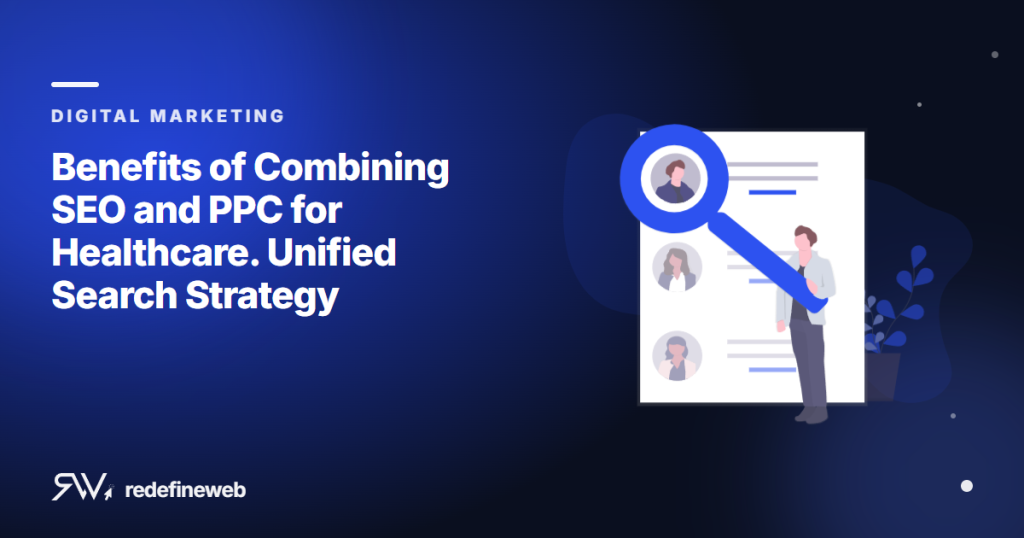
Benefits of Combining SEO and PPC for Healthcare. Unified Search Strategy
Most healthcare practices approach SEO and PPC as a choice. Budget is limited, so they pick one. The practices that consistently outperform their local markets treat SEO and PPC as two components of one unified search strategy, not competing line items. This guide explains why the combination works, how the two channels reinforce each other in healthcare specifically, and how to allocate budget between them based on your timeline and service mix.
The False Choice Most Practices Make
The either/or framing comes from a budget conversation: we have $3,000 a month for marketing, should we spend it on SEO or PPC? That framing treats the two channels as interchangeable. They’re not. SEO and PPC operate on different timelines, generate different types of traffic, and produce different data. The practices getting the most from their marketing budgets understand this and structure their investment accordingly.
How SEO and PPC Complement Each Other in Healthcare
Timeline Offset. Immediate Results Plus Long-Term Compounding
SEO takes 4 to 6 months to generate meaningful organic traffic. During those months, your content is being indexed, your domain authority is building, and your local citations are accumulating. PPC generates traffic from day one. A properly configured Google Ads campaign starts driving appointment requests the first week it runs.
Running both simultaneously means you have immediate pipeline from PPC while the SEO foundation builds. Then, as organic traffic starts converting consistently, you reduce PPC spend on terms where you now rank organically and reallocate that budget to higher-value elective services where paid ads continue to outperform organic.
SERP Coverage. Dominate the Search Results Page
A practice appearing in both the paid ads section and the organic results for the same query occupies significantly more of the search results page. Patients see your practice twice for the same search. Combined paid and organic visibility increases total click share measurably, and the repeated exposure builds familiarity that single-channel presence doesn’t generate.
For highly competitive terms in your market where a large health system dominates the organic top 3, your PPC ads appear above the organic results regardless of domain authority. You get the premium placement that SEO can’t win in the near term, while continuing to build toward organic presence for those terms over time.
Keyword Intelligence. Use PPC Data to Focus SEO Investment
PPC campaigns generate keyword-level conversion data that no SEO tool can replicate. After 60 to 90 days of running Google Ads with conversion tracking, you know exactly which search terms drove appointment form submissions and phone calls, and what the cost per conversion was for each term.
That data tells your SEO strategy which keywords are worth pursuing with content investment. Keyword research tools estimate search volume. PPC data tells you which searches actually convert patients at your practice, in your market, for your specific service mix. Applying that insight to SEO content prioritization is a significant competitive advantage that practices running PPC alone or SEO alone both miss.
Retargeting Organic Visitors
Someone who found your practice through organic search, spent time on your service page, but didn’t submit a form or call has demonstrated clear interest. PPC display and remarketing campaigns let you show ads to this audience as they browse other websites, reminding them to book. Organic traffic feeds your remarketing audience. PPC converts a portion of that audience that organic alone wouldn’t recapture.
Brand Protection
Competitors can bid on your practice name in Google Ads. If someone searches for your practice specifically and you’re not running a branded PPC campaign, a competitor’s ad can appear above your organic listing. Running a branded campaign (bidding on your own practice name and variations) protects your branded search and ensures patients searching specifically for you reach your site rather than a competitor’s.
Healthcare-Specific Unified Search Strategy
Three-Layer Local Presence
For local patient acquisition, a unified strategy creates three distinct layers of presence on the search results page:
- Local Service Ads (LSAs). These appear at the very top of results for service searches with location intent. Healthcare LSAs show a verified badge and generate direct calls. They’re billed per lead rather than per click.
- Google Search Ads. Standard PPC text ads appear below LSAs and above organic results. These capture appointment-intent queries with specific service and location targeting.
- Organic Local Pack and Organic Listings. SEO drives placement in the Google local map pack for “near me” queries and organic blue link results for service and informational queries.
A patient searching for a service in your area can encounter your practice three times before clicking. This visibility advantage is only available when you’re running both paid and organic strategies.
Budget Allocation Framework
The right split between SEO and PPC investment depends on your timeline and service type. Here is a practical framework:
Elective Procedures With Longer Decision Cycles
Cosmetic surgery, LASIK, orthodontics, and similar elective services involve patients who research extensively before deciding. For these services: invest heavily in PPC early for immediate pipeline, invest in long-form SEO content (procedure guides, comparison pages, FAQ content) for long-term organic authority. Patients who find your content organically during the research phase are primed for the PPC retargeting that converts them.
Primary Care and Urgent Need Services
Patients searching for primary care or urgent care make faster decisions. The search intent is more transactional and location-driven. For these services: prioritize local SEO and Google Business Profile optimization for long-term local pack presence. Use lighter PPC investment to fill gaps in organic coverage for competitive local terms. Once strong local pack presence is established, PPC spend on non-branded terms can often be reduced significantly.
Sharing Data Between Channels
The full value of running both channels only materializes when the teams or the agency managing each channel actually share data between them. In practice, this means:
- Share SEO keyword performance data with whoever manages PPC. Which organic keywords drive appointments? Add those to PPC campaigns or increase bids on existing campaigns for those terms.
- Share PPC conversion data with whoever manages SEO. Which keyword intents convert at high rates? Prioritize those terms for SEO content investment.
- Use PPC landing page test results to inform organic page copy. If a PPC landing page with a specific headline and CTA converts at 12% and the organic version converts at 4%, apply the PPC learnings to the organic page.
This data exchange is the core reason practices that run both channels through a single agency with visibility into both tend to outperform practices that run the channels separately through different vendors. The intelligence from one channel doesn’t automatically inform the other when different vendors manage each.
Real-World Results From a Unified Approach
Redefine Web’s work with Pain Cure Clinic illustrates what this looks like in practice. The clinic saw a 205% increase in appointments and 289% organic traffic growth through a combined approach that developed SEO authority while maintaining paid search presence during the organic growth period. The paid and organic channels worked in parallel rather than sequentially.
For deeper coverage of each channel individually, read our guides on healthcare SEO, PPC for healthcare, and local SEO for healthcare practices.
Book your free 30-minute strategy call.
No spam, no sales rep. We use your email to schedule your call with a senior strategist. That is it.
More from the blog
View all articles → Digital Marketing
 Do You Need a Beauty Social Media Marketing Agency?
Read article Digital Marketing
 How Emerging Beauty Brands Should Choose a Marketing Agency
Read article Digital Marketing