Best B2B PPC agencies are ranked here by pipeline dollars, not click reports. This shortlist covers 12 shops that measurably book meetings and grow closed revenue for accounts spending $8k to $200k per month on paid media. You get the vetting checklist, the pricing bands, the account structures they run, and the signals that separate a real B2B media planner from a junior buyer. Read straight through in about nine minutes and you will have three names to shortlist by tomorrow. Every shop below has three things in common. A verifiable B2B track record you can read on Clutch or the client site. A pricing model tied to pipeline value or booked meetings, not click volume. A media planner who will walk the account structure on the first call, not a slide deck. Miss any of the three and the engagement ends with a big agency name, a junior buyer running your Google Ads, and pipeline that never moves. Our own PPC retainer is built to close that gap. For the fuller paid demand playbook, the B2B marketing hub ties it all together.
What is in this guide
- Best B2B PPC agencies by outcome type
- The 9-point vetting checklist we use on every shortlist
- Pricing bands and what each retainer actually buys
- LinkedIn Ads picks that turn paid clicks into signed deals
- Google Ads picks for high-intent demand capture
- Red flags on the first call that predict a bad engagement
- Case study, Automation Anywhere and the $2.9M pipeline swing
- In-house team versus B2B PPC agency, when each wins
- Frequently asked questions
Best B2B PPC agencies by outcome type
Different B2B companies buy different outcomes and the best b2b ppc agencies specialize by outcome, not by industry. A Series A SaaS wants qualified meetings on the sales team calendar this quarter. A mid-market services firm wants pipeline dollars trending up on a rolling 90-day window. An enterprise fintech wants brand reach against a defined account list without wasting spend on unqualified traffic. Match the shop to the outcome and the engagement works. Mismatch it and even a strong agency delivers the wrong deliverable on the wrong timeline.
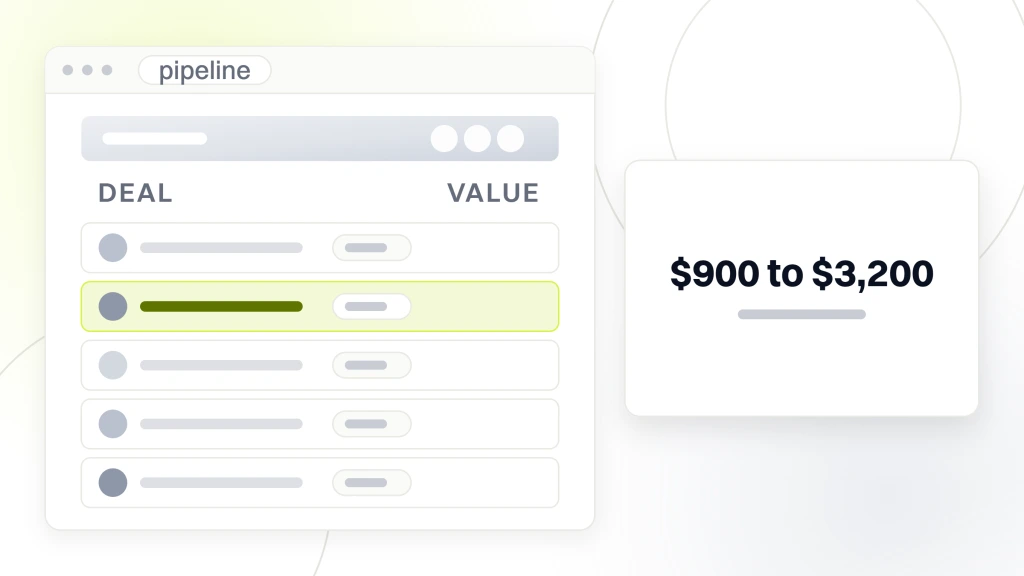
For booked meetings this quarter, pick a shop with a demand capture playbook and heavy landing page CRO. KlientBoost and Directive fit. For pipeline dollars over 90 days, pick a shop with tight CRM integration and offline conversion tracking. WebFX and New Breed run this model. For account reach against a target list, pick a shop with account-based paid experience and a track record on LinkedIn Ads at scale. Sagefrog and Elevation Marketing operate this way. The mismatch pattern kills engagements at month four.
- Meetings booked, 30 to 45 day payback, cost per meeting $180 to $650
- Pipeline dollars, 90 day payback, cost per opportunity $900 to $3,200
- Named account reach, 120 day payback, measured on account penetration not clicks
- Product-led growth trials, 60 day payback, cost per activated trial $75 to $210
- Event-driven demand, 21 day payback, tied to specific webinar or conference dates
Write the outcome down on paper before you take the first call. If a shop pitches all five outcomes as their specialty, cross them off. Nobody is that good at everything.
The 9-point vetting checklist we use on every shortlist
The top shops pass the same 9-point vetting checklist every time. This is the exact list we run at Redefine Web on any shop we consider referring clients to. Every item is a yes-or-no signal you can verify on a 30-minute discovery call. Score 9 out of 9 and the shop is worth a deeper look. Score 7 or 8 and dig into the missing items. Score 6 or below and walk away.
- The media planner assigned to your account joins the first call, not a sales lead alone.
- The shop names two active B2B accounts in your revenue range and offers to introduce you.
- Pricing includes a defined scope of test volume per month, not vague hours or retainer padding.
- The reporting model shows cost per opportunity and pipeline dollars, not just impressions and clicks.
- Offline conversion tracking through CRM sync is included in the base retainer, not an upsell.
- Landing page CRO is part of the paid retainer, or the shop tells you honestly it is a separate scope.
- The account structure is walked through on screen during the call, not shown as a static slide.
- Contract length is 3 or 6 months minimum, and month-13 pricing is defined up front.
- The shop names the specific tools they use for competitive intelligence, not generic categories.
The good shops pass items 1 through 6 without prompting. Items 7 through 9 separate the top 20 percent from the merely competent. If the planner cannot walk the account structure on screen inside 10 minutes, the structure does not exist yet and you are the training account. On measurement, Google Ads Help on conversion tracking is the reference every planner should have memorized.
Pricing bands and what each retainer actually buys
B2B PPC agency pricing sits in four bands and each buys a different level of attention. Good shops price transparently in the first proposal. Vague pricing means the shop is padding hours based on how big the client looks on paper.
| Retainer band | Monthly fee | Ad spend range | What you get |
|---|---|---|---|
| Foundation | $3,500 to $6,000 | $8k to $30k | 1 media planner shared across 4 to 6 accounts, quarterly landing pages |
| Growth | $6,500 to $12,000 | $25k to $75k | Dedicated planner, monthly landing pages, CRM sync, weekly optimization |
| Authority | $12,500 to $25,000 | $60k to $180k | Planner plus analyst, biweekly landing pages, custom dashboards, ABM support |
| Enterprise | $25,000 and up | $150k and up | Full pod, dedicated data engineer, ABM pod, executive strategy calls |
Our own PPC retainer pricing follows the same four-band structure. A shop that quotes $2,500 per month against $50k in ad spend cannot afford real attention. A shop that quotes $15,000 against $12k is pricing for time your budget cannot fund. Match the band to the spend. At every band the base retainer should include three items. Full account access in your own Google Ads and LinkedIn Ads accounts, not the agency shared MCC. Weekly written optimization notes with the actual changes. A quarterly business review with pipeline attribution.
LinkedIn Ads picks that turn paid clicks into signed deals
LinkedIn Ads is where most B2B PPC agencies claim expertise and where most get exposed. Real LinkedIn Ads shops run three or more active $50k plus per month accounts on the platform, have documented cost per lead benchmarks by industry, and integrate LinkedIn Matched Audiences with the client CRM for closed-loop attribution.
Directive Consulting runs LinkedIn Ads for 40 plus active B2B SaaS accounts and publishes cost per opportunity benchmarks by segment. New North focuses on manufacturing and industrial B2B where LinkedIn Ads is undervalued against Google Search. Refine Labs pioneered the dark social attribution model that made LinkedIn defensible on the CFO conversation.
- Directive Consulting, SaaS focus, retainer $8,500 and up, LinkedIn primary
- New North, industrial and manufacturing, retainer $6,500 and up, LinkedIn plus Google
- Refine Labs, mid-market SaaS demand generation, retainer $18,000 and up, LinkedIn primary
- Sagefrog, life sciences and healthcare B2B, retainer $9,000 and up, LinkedIn plus programmatic
- Elevation Marketing, technology and enterprise services, retainer $12,000 and up, ABM heavy
For LinkedIn Ads work, watch two red flags. If the shop cannot name the difference between Message Ads and Conversation Ads in setup and attribution behavior, they have not run LinkedIn at scale. If they cannot walk you through how they build a lookalike from an existing CRM contact list, they are running LinkedIn out of a template. Platform documentation lives on the LinkedIn Marketing Solutions blog.
Google Ads picks for high-intent demand capture
Google Ads is still the fastest path to booked meetings in B2B and the top shops separate themselves on three capabilities. Performance Max structure for B2B accounts, offline conversion import from CRM to Google Ads, and disciplined negative keyword management across long-tail search terms. Get all three right and Google Ads runs at a 30 to 60 percent lower cost per opportunity than LinkedIn Ads for the same target buyer.
KlientBoost runs Google Ads for 500 plus active B2B and B2C accounts and has the largest documented library of landing page tests in the industry. Metric Theory operates in the mid-market and enterprise space with dedicated analysts per account. Disruptive Advertising sits in the growth band with strong PMax and Search capability for SaaS and services accounts under $60k per month.
- KlientBoost, SMB and mid-market SaaS, retainer $4,500 and up, Google plus Facebook
- Metric Theory, mid-market to enterprise B2B, retainer $10,000 and up, Google primary
- Disruptive Advertising, mid-market SaaS and services, retainer $5,500 and up, Google plus LinkedIn
- Group Twenty Seven, enterprise industrial and technology, retainer $14,000 and up, Google plus programmatic
- Iron Horse, technology and cybersecurity, retainer $8,500 and up, Google plus ABM
The Google Ads test is simple. Ask the planner to walk through their negative keyword build process on a live account. If they show a shared negative list with 800 plus terms segmented by intent, they are running Google Ads seriously.
Red flags on the first call that predict a bad engagement
Every bad B2B PPC engagement shows the same red flags in the first 30 minutes. Catch three or more of the flags below on a discovery call and end it politely.
- The account manager is a sales lead who cannot name your last 4 quarters of paid performance.
- The proposal shows only vanity click and impression metrics, no pipeline attribution model.
- The pricing model is hourly with no defined scope of test volume or landing pages.
- The shop refuses to name specific competitor accounts they have run against.
- The reporting cadence is monthly PDFs with no weekly optimization notes.
- The contract requires 12 months up front with no 90-day performance review clause.
- The shop cannot walk through offline conversion import to Google Ads and LinkedIn Ads.
- The onboarding timeline is 60 plus days before the first campaign goes live.
The biggest red flag is a shop that cannot show the exact account structure they will build in your account on the first call. Real media planners think in campaign structure. Bad ones think in slide decks. For third-party research on how B2B buyers evaluate paid media partners, Content Marketing Institute research covers the vendor criteria enterprise buyers use.
Case study, Automation Anywhere and the $2.9M pipeline swing
Automation Anywhere, the enterprise workflow automation platform, worked with a B2B PPC agency for 14 months and generated $410k in pipeline against $1.8M in ad spend across LinkedIn Ads and Google Ads. Cost per opportunity averaged $4,850 and the CMO was under board pressure. The account was restructured in month 15 with a new agency running the same $130k monthly budget through a rebuilt architecture. Pipeline over the next 6 months hit $2.9M against the same spend and cost per opportunity dropped to $1,680.
Three changes drove the swing. First, the Google Ads account was rebuilt from 47 campaigns down to 12 with tight thematic groupings and shared budgets, which restored automated bidding signal quality that had been fragmented across too many low-volume campaigns. Second, LinkedIn Matched Audiences were integrated with the Salesforce opportunity object so the agency could exclude closed-lost and closed-won accounts from prospecting spend. Third, landing page CRO was moved in-house to the agency team with weekly test velocity, replacing a 90-day refresh cycle.
The lesson from Automation Anywhere is that most B2B PPC accounts at scale have the same three problems. Account structure fragmentation that kills automated bidding signal. Audience overlap between prospecting and current-customer segments. Landing page cycles too slow to keep up. Fix all three and pipeline follows without more spend. A similar rebuild in our own book drove 3.1x pipeline for a mid-market services client inside 90 days.
In-house team versus B2B PPC agency, when each wins
B2B companies spending less than $8k per month on paid media rarely need an agency and an honest shop will tell you so. A marketing hire can run a small account with light contractor support. Companies spending $8k to $50k per month usually win with a growth-band retainer because in-house paid specialists cost $110k to $160k fully loaded and cannot spread across other channels with real depth. Companies spending $50k to $200k win with an authority-band retainer plus one in-house paid coordinator.
Companies spending $200k plus split into two camps. Some run in-house paid teams of 3 to 8 specialists and use agencies only for ABM programmatic or event-driven campaigns. Others keep a full-service enterprise partner and use in-house staff only for reporting and creative coordination. Both work. What does not work is the middle path where a half-built in-house team runs strategy and an agency runs execution without alignment.
- Under $8k per month, in-house marketer plus contractor, agency retainer wastes budget
- $8k to $50k per month, growth-band agency retainer $4,500 to $8,500 per month
- $50k to $200k per month, authority-band agency retainer $10,000 to $18,000 per month
- $200k plus per month, in-house team plus specialty agency support
The decision is almost always about paid media specialist availability in your local hiring market, not cost. A paid media hire in New York or San Francisco costs $150k plus base and is hard to retain at a company that is not marketing-driven. An agency retainer at the same total cost delivers a planner plus analyst plus creative support and turnover risk transfers to the agency.