Google ads vs linkedin ads for b2b is one of the most common conversations we walk into on a new engagement. Marketing wants to know which channel to fund. Sales wants to know which channel produces leads they can actually close. Finance wants to know which channel has the better ROAS. Both platforms do different jobs, and the right mix depends on your category, sales cycle, and deal size. Anyone selling you one over the other is selling a channel, not a strategy.
This post compares google ads vs linkedin performance in b2b on the metrics that matter. Cost per qualified lead. Targeting precision. Sales cycle fit. Pipeline generated per dollar spent. You get real numbers from live accounts, a B2B lead generation framework for picking the mix, and the exact situations where one channel outperforms the other. Every section maps to live accounts we run from $8K to $180K a month across both platforms.
Cost per lead for google ads vs linkedin ads for b2b
Cost per lead in the google ads vs linkedin ads for b2b debate varies more inside each channel than between them. Raw CPL benchmarks are worthless without context on ICP fit and lead quality. Still, the shape of the curve is consistent enough to plan against.
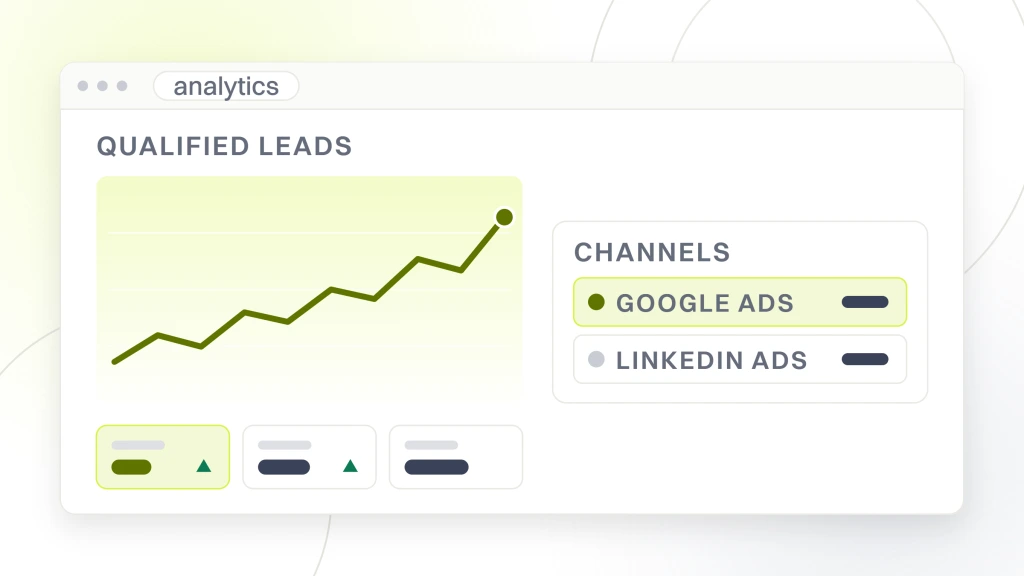
Google Ads CPL for mid-market B2B software usually lands between $85 and $340 depending on category competition. LinkedIn Ads CPL for the same buyer typically lands between $170 and $520. On the surface, Google looks cheaper. Once you filter for qualified leads that actually make it to a first sales call, the gap narrows fast. LinkedIn form-fills are pre-qualified by job title. Google form-fills need scoring in the CRM. On accounts we run, LinkedIn’s cost per qualified lead often ends up 15 to 25% higher than Google’s rather than 2x.
Cost per MQL after CRM scoring
Once the CRM scores leads for fit, the google ads vs linkedin ads for b2b picture shifts. Google Ads MQL rate on generic search terms typically runs 20 to 35%. LinkedIn Ads MQL rate on tightly targeted job-title campaigns typically runs 55 to 75%. Apply those rates to the raw CPL and the true cost per MQL flips depending on category. In categories where Google search intent is strong, Google wins on cost per MQL. In categories where the buyer isn’t searching yet, LinkedIn wins.
Sales cycle fit for google ads vs linkedin ads for b2b
Sales cycle length changes which channel produces the better ROAS for your business. Short cycles favor Google Ads, since the buyer is already searching. Long cycles favor LinkedIn Ads, since you need multiple touches over months to warm the buyer. The wrong channel for your cycle burns budget and teaches nothing.
The rough cutoff is 90 days. Sales cycles under 90 days usually see stronger Google Ads ROAS, since the search-to-close window fits within the attribution window and the buyer is already in-market. Sales cycles over 90 days often see stronger LinkedIn ROAS at the account level, since the multi-touch nature of LinkedIn matches the multi-touch nature of the sales process. Here is the fit matrix we use.
Sales cycles under 90 days
Under 90 days, tilt the budget toward Google Ads. Typical split is 70 percent Google Ads, 30 percent LinkedIn. Google Ads picks up buyers ready to evaluate. LinkedIn plays a supporting role for brand awareness and account-based plays. Industrial B2B and small-business SaaS often sit here. Payback windows are short. ROAS visibility is fast. Optimization cycles run quick, since attribution completes within a month.
Sales cycles over 90 days
Over 90 days, balance the budget more evenly. Typical split is 50/50 or 60/40 depending on category. Google Ads captures the buyer once they start searching. LinkedIn warms the buyer during the 60 to 180 days before they start searching. Enterprise SaaS, cybersecurity, and enterprise services often sit here. ROAS visibility takes 6 to 12 months. Attribution complexity increases. Reporting needs first-touch and last-touch source captured on every lead so you can credit both channels correctly.
A real linkedin vs google ads for b2b case study
Automation Anywhere is a global leader in Robotic Process Automation, serving over 2,800 companies and 1,600 enterprise brands across financial services, healthcare, technology, manufacturing, logistics, and telecommunications. When they engaged us, campaigns were chasing too many goals at once. Impression share, lead volume, and awareness all sat in the same account. Cost per lead had climbed to $1,936, which made acquisition unviable even with a strong product. Their main call-to-action, a plain contact form, could not compete with analyst reports, whitepapers, and free trials from larger competitors.
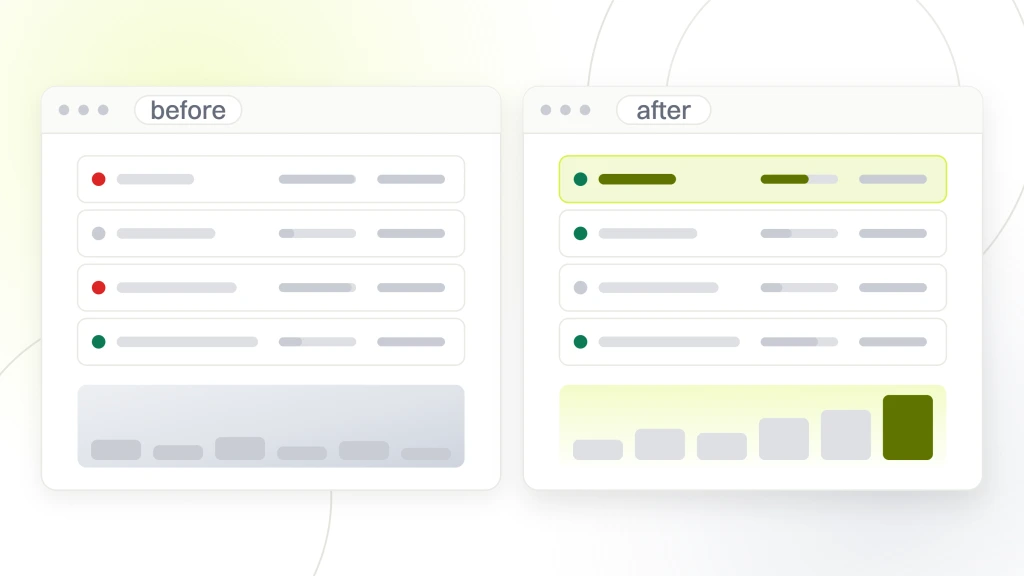
We split the account into three distinct campaign types by goal, rebuilt landing pages to match keyword intent, and introduced persona-driven ad copy focused on problem-solution messaging instead of feature lists. Bid strategy shifted from paying for rank to paying for conversion efficiency. A free-trial funnel replaced the weak contact form. On LinkedIn, we layered job-title and industry targeting focused on IT decision-makers at RPA-relevant firms, with localized per-region landing pages, since what worked in North America was not what worked in APAC. Cost per lead dropped from $1,936 to $63, a 97% cut. Monthly customer acquisition scaled 100 times, from 150 per month to nearly 8,000 leads monthly. Ad impressions climbed 300% across key global markets.
| Metric | Before | After |
|---|---|---|
| Cost per lead | $1,936 | $63 |
| Customer acquisition | 150/month | ~8,000/month |
| Ad impressions | Baseline | +300% |
| Google Ads structure | Mixed goals | Goal-split campaigns |
| LinkedIn Ads | Underused | Job title plus ICP by region |
Every google ads vs linkedin ads for b2b conversation we sit in eventually surfaces the same argument. Somebody insists LinkedIn is dead, since their $6K test three years ago produced two leads and both ghosted. Somebody else asks the fair question, do Google Ads work for B2B, and insists Google Ads is dead, since their agency spent $18K a month and never showed a pipeline number. Both stories are usually true. Both channels can produce awful results when set up wrong. Neither channel is dead. The setup is the problem. Sometimes the highest-ROI move is admitting the last agency ran the account into the ground and starting over.
Creative that works on each channel
Creative for google ads vs linkedin ads for b2b differs enough that copying one to the other kills performance. Google Ads copy responds to intent capture. LinkedIn Ads copy responds to disruption of a scroll. Same buyer, same brand, different creative jobs.
Google Ads responsive search ads win when headlines name the buyer’s role, a specific outcome with a number, or flip a common objection. LinkedIn ads win when the creative interrupts the scroll with a specific hook that makes the buyer curious. Here are the patterns that work on each channel in real accounts we run every week.
Google Ads creative patterns
- Headlines that name a role: For CFOs, For RevOps Leads, For CTOs
- Headlines with a specific number: Cut Demo No-Shows 40%, Book 3x More SQLs
- Headlines that flip an objection: No 6-Month Contract, Integrates in a Week
- Descriptions with proof: 400+ B2B teams operational in 90 days
- Sitelinks answering discovery questions: Pricing, Integrations, Case Studies, Demo
LinkedIn Ads creative patterns
- Hook copy naming a specific pain: Your finance team spends 32 hours a month reconciling
- Single-image ads with a bold statement, not a stock photo of a laptop
- Video ads under 30 seconds with captions on and a specific outcome
- Document ads sharing a real playbook page-by-page with a soft CTA at the end
- Conversation ads for late-funnel prospects with sales rep names
Targeting precision on google ads vs linkedin ads for b2b
Targeting for google ads vs linkedin ads for b2b is where the two channels differ most, and the difference maps directly to buyer stage. Google Ads targets intent through keywords and search terms. LinkedIn Ads targets identity through job title, seniority, company size, industry, and function. Intent tells you the buyer is ready. Identity tells you the buyer fits. Both matter, and neither replaces the other.
On Google, the audience layer is thin by comparison. Custom audiences, in-market signals, and remarketing lists give you some identity data, but the primary lever is the keyword and the match type. Broad match with smart bidding and clean conversion data now performs surprisingly well on B2B queries, but only after 30 to 50 conversions per campaign train the model. Cold broad match without offline conversion imports usually torches the budget in the first 6 weeks.
On LinkedIn, the audience is the campaign. A tightly built matched-account list of 400 target companies plus a job-title filter of Director-or-above in RevOps is a campaign in its own right. Creative and offer sit on top. Wrong audience beats wrong creative every time on LinkedIn, since a great ad against a bad list still burns the budget. Build the list first.
Attribution across google ads and linkedin ads
Attribution decides whether google ads vs linkedin ads for b2b is a productive conversation or a religious argument. Without proper multi-touch attribution, last-touch alone decides credit for both channels, and last-touch systematically favors Google Ads, since Google Ads is often the final click before conversion. That distorts every budget conversation.
Proper attribution captures first-touch source and last-touch source on every lead in your CRM. It uses UTM tagging on both platforms. It imports offline conversions back into Google Ads and LinkedIn Campaign Manager for smart bidding. It runs a first-touch report and a last-touch report side by side in monthly leadership reviews. Our SaaS PPC Services page covers multi-channel attribution for SaaS teams.
CRM fields every B2B needs
Every lead in the google ads vs linkedin ads for b2b funnel needs at least four attribution fields in the CRM. First-touch source. First-touch campaign. Last-touch source. Last-touch campaign. Without those, you cannot credit Google Ads and LinkedIn Ads correctly, and you end up defunding whichever channel touches the buyer earlier. Add the fields in HubSpot, Salesforce, Pipedrive, or Zoho before you spend another dollar on either channel. Setup takes 2 to 4 hours and pays for itself inside a month.
Attribution windows aligned to sales cycle
Set Google Ads click-through attribution window to match your sales cycle. A 90-day cycle needs a 90-day window. LinkedIn Campaign Manager lets you set conversion windows up to 90 days on click and 7 to 30 days on view. Match both to your sales reality. Default 30-day windows truncate B2B pipeline and cause both platforms to under-report conversions, which then leads to premature budget cuts on whichever channel takes longer to close.
Picking the right mix for your B2B account
The mix decision, and the wider B2B Google Ads strategy question, comes down to three variables. Sales cycle length. Category search demand. Total paid budget. Here is the decision framework we run for new B2B accounts weighing google ads vs linkedin ads for b2b.
Start with the diagnostic questions. If your category has strong search demand and your sales cycle is under 90 days, tilt Google Ads. If your category has weak search demand and your ICP is precisely definable by job title, tilt LinkedIn. If both conditions are strong, run 60/40 or 50/50 splits. If both are weak, the problem is bigger than channel selection and needs a category or ICP refresh.
Strong search demand, short sales cycle
Tilt 70 to 80 percent of paid budget to Google Ads. Mid-market SaaS, industrial B2B, and small business services usually sit here. Google Ads scales with search demand up to a ceiling. LinkedIn plays a supporting role for account-based remarketing and awareness. Payback window is short. Reporting is clean. Optimization cycles run monthly. This is the most straightforward B2B paid setup, and the one where Google Ads dominates the budget conversation.
Weak search demand, precise ICP
Tilt 60 to 75 percent of paid budget to LinkedIn Ads. New-category B2B, enterprise cybersecurity, and specialized vertical software sit here. Google Ads plays a brand defense role and captures the few buyers who do search. LinkedIn does the demand generation work. Payback window is longer. Reporting requires first-touch attribution. Optimization cycles run quarterly. This is where most new B2B companies live before category demand matures.
Balanced demand, long sales cycle
Run 50/50 or 60/40 splits. Enterprise SaaS, mid-market fintech, and services with multi-quarter cycles sit here. Both channels do real work. Multi-touch attribution matters. Reporting shows both first-touch and last-touch credit. This is the most operationally intense B2B paid setup, since both platforms need active management, yet it is the setup that produces the most pipeline per dollar spent when done well.
Pitfalls in the google ads vs linkedin ads for b2b comparison
Most B2B teams pick the wrong channel, since they run bad comparisons. Here are the pitfalls we see most often. Each of them warps the picking decision and costs 3 to 12 months of avoidable budget.
- Comparing form fills across channels instead of qualified leads or opportunities
- Using last-touch attribution only, which systematically undercredits LinkedIn
- Running LinkedIn tests below $8K a month, which does not clear the learning threshold
- Running Google Ads without offline conversion imports, which distorts smart bidding
- Comparing 90-day tests to 12-month baselines and calling one channel the winner
- Copying creative between channels instead of building for each channel’s job
- Testing both channels on the same offer without differentiating for buyer stage
Minimum viable test budgets
Minimum viable test budget for Google Ads is $4,500 to $7,500 per month per campaign, since smart bidding needs 30 to 50 conversions per campaign to work. Minimum viable test budget for LinkedIn is $8K to $12K per month across a campaign, since LinkedIn CPMs are higher and the auction needs volume to stabilize. Testing below these thresholds tells you nothing about channel performance. It tells you your test was under-funded. Anyone calling a channel dead after a $2K test cannot read a data volume constraint.
Test duration for fair comparison
Fair channel comparison needs 90 days minimum, and 180 days is better for long sales cycles. LinkedIn typically shows leading indicators inside 45 days and pipeline attribution inside 120 days. Google Ads shows form fills inside 7 days and pipeline attribution inside 60 to 90 days. Calling a winner inside 30 days is a lot like calling a race at the second turn. Google Search Central has coverage of paid attribution at the Google Ads help hub and LinkedIn’s official docs live at the LinkedIn Marketing solutions best practices, and the LinkedIn conversion tracking guide covers offline conversion imports.
Integrating both channels operationally
Running both google ads and linkedin ads for b2b together produces the best results, but only when the operations are integrated. Both channels feeding into the same CRM. Both channels tagged with UTMs that CRM captures. Both channels reporting into a shared dashboard leadership can compare on the same page. Anything less than that operational integration turns two channels into two silos.
The reporting layer needs three views. Channel-level view showing spend, form fills, qualified leads, opportunities, and pipeline for each channel. Campaign-level view showing top and bottom campaigns within each channel. Multi-touch view showing first-touch and last-touch credit split across both channels. Every view answers a different leadership question. Missing one means budget conversations happen without the right context.
Shared dashboard structure
Page one shows Google Ads and LinkedIn Ads side by side on spend, form fills, qualified leads, opportunities, and pipeline. Trend against prior month and quarter. Page two shows attribution split by first-touch versus last-touch. Page three shows what changed and what is planned for next month. Anything beyond page three is optional detail. If leadership never reads past page two, the summary structure is working. The most common mistake in shared dashboards is leading with platform metrics instead of pipeline metrics.
Team structure that supports both
Running google ads vs linkedin ads for b2b well typically takes one dedicated paid marketer plus a shared operations resource for tracking, or an agency partner running both channels under one roof so the channels stay coordinated. Splitting Google Ads and LinkedIn between two agencies rarely works, since the agencies fight for credit and the reporting stops being trustworthy. Our Google Ads Management Services and our B2B SaaS Marketing Agency pages cover the integrated approach.
Wrapping up google ads vs linkedin ads for b2b
The google ads vs linkedin ads for b2b question is a portfolio question. Both channels do real work when set up properly. Both waste budget when set up poorly. The right mix depends on category search demand, ICP specificity, sales cycle length, and total budget. Any answer that ignores those four inputs is guessing.
Pick 4 to 6 diagnostic questions from this google ads vs linkedin ads for b2b post that match your account’s biggest gaps right now. Answer them honestly with your sales team and finance team. That conversation decides the next 12 months of your paid strategy. Then wire the CRM fields and offline conversion imports both channels need to prove what worked.