
Chiropractor PPC ads are the single fastest lever a practice can pull to book new patients this week. Local SEO takes six to nine months to fully compound. Google Ads produce calls and form fills the same afternoon the campaign goes live, as long as the ad copy actually passes Google’s health advertising review and the landing page matches the ad promise word for word. The math works when the copy leans on services, credentials, and booking convenience rather than promising pain relief or treatment outcomes that Google’s healthcare policies quietly reject.
This guide covers chiropractor PPC ads the way we build them for solo and multi-location practice clients. You get the headline templates that pass review on the first submission, the responsive search ad structure Google’s machine learning actually rewards, the extension mix that adds 30 to 60% to click-through rate at zero incremental cost, the landing page match discipline that separates 5% conversion pages from 15% conversion pages, and the ROI math a two-provider clinic hits in a mid-sized metro. Read straight through in twelve minutes and you have the plan a competent PPC operator should execute on your behalf.
Chiropractor PPC ads extensions that grow click-through rate
Chiropractor PPC ads extensions add real estate on the SERP without additional cost per click. Every enabled extension typically pulls click-through rate 5 to 15 percentage points higher than the same ad without extensions. Turn on every extension the account supports. Missing extensions is a free performance gain the account walks past every day the campaign runs.
- Sitelink extensions. 6 links to specific service pages like Sciatica Care, Sports Adjustments, Auto Injury Care, Book Online, About Dr. Chen, Insurance Accepted.
- Callout extensions. 6 short benefit statements like Same-Day Booking, Board-Certified DC, 15 Years Serving Park Slope, Insurance Accepted, Free 15-Minute Consult, Family Care Available.
- Structured snippet extensions. Service categories like Sports Chiropractic, Auto Injury Care, Sciatica Treatment, Family Chiropractic, Corporate Wellness, Massage Therapy.
- Call extensions. Tracked phone number that routes through CallRail or WhatConverts so the call attribution ties back to the specific keyword and ad that triggered the click.
- Location extensions. Pulled directly from the linked Google Business Profile so the address, hours, and driving-directions link appear inline with the ad.
- Image extensions. 3 to 5 real photos of the practice interior, the doctor, and the exam room that make the ad visually distinct from competing text-only ads.
Why extensions pay for themselves fast
Extensions pay for themselves the first week the campaign runs since they raise both the click-through rate and the Quality Score at the same time. Google’s ad auction reads extension usage as a positive signal on account quality. A fully extended ad on the same bid ranks higher and gets more impressions than a stripped ad. On accounts we have audited that were running ads without extensions, turning on the full extension stack grew total clicks 40 to 65% inside the first 21 days at the same daily budget, which meant a proportional gain in booked patients on the same ad spend.
Chiropractor PPC ads landing page match discipline
Chiropractor PPC ads landing page match discipline is where most practices leave the biggest booking gain on the table. Sending paid traffic to the general home page cuts conversion in half compared to sending it to a dedicated landing page that matches the ad copy word for word. Home pages convert at 3 to 5% for PPC traffic. Dedicated landing pages convert at 8 to 15%. That two to three times conversion gap turns the same $2,000 monthly budget into 16 to 30 booked patients rather than 8 to 15.
The matching structure works since the patient who clicked a Sciatica Chiropractor ad wants to land on a Sciatica Care page, not a homepage that lists 12 unrelated services. Every ad group needs its own landing page. Sciatica ads go to a sciatica landing page. Adjustment ads go to an adjustment landing page. Auto injury ads go to an auto injury landing page. Brand keyword ads go to the home page since brand searches expect the home page. That matching structure is worth the extra design and build effort. It doubles the booking rate on the same ad spend without touching the ads themselves.
H1 must mirror the ad headline
The landing page H1 must mirror the ad headline the patient just clicked. If the ad said Sciatica Chiropractor in Park Slope, the H1 says Sciatica Chiropractor in Park Slope. Not Welcome to Our Practice. Not Full-Service Chiropractic Care. The mirror produces two effects at once. Google reads the message match as high landing page relevance and boosts Quality Score. The patient reads the H1 and confirms they landed on the right page, which cuts the bounce rate 20 to 40% versus mismatched pages.
Booking widget above the fold
A booking widget above the fold captures the moment when the patient is highest intent. Integrate the practice management system’s real booking widget so patients can pick a time and confirm without ever leaving the landing page. Add a click-to-call button on mobile that dials the tracked phone number. Add a short form fill option for patients who prefer email over calls. Three visible conversion paths above the fold produce two to four times the bookings of a single form buried below the fold. Our writeup on chiropractor PPC services covers the landing page build sequence for a practice starting the first paid campaign.
Chiropractor PPC ads bidding strategy that avoids the wasted spend trap
Chiropractor PPC ads bidding strategy sits at the center of the account’s cost per booked patient. The three bidding strategies practices actually run are Manual CPC for the first 30 days once tracking gets clean, Maximize Conversions after 30 conversions per month land, and Target CPA once the account has 60 conversions per month and a stable historical cost per patient. Skipping the ramp and jumping straight to Target CPA on day one starves the algorithm and produces wildly inconsistent results. For a broader take on cost, budget, and ROI benchmarks that apply across service verticals, see our full answer in the real estate PPC cost, budget, and ROI benchmarks writeup. The bidding math translates cleanly.
Manual CPC in month one
Manual CPC in month one gives the operator direct control over the maximum bid per keyword during the first 30 conversion data points. Set the initial max bid at 80% of the estimated first-page bid from the Google Ads Keyword Planner. Adjust upward on keywords producing bookings and downward on keywords producing clicks with no bookings. Manual CPC in the first 30 days keeps the operator honest and prevents the smart bidding algorithms from spending the entire test budget on the first ad variant that shows a click-through rate.
Smart bidding after 30 conversions
Smart bidding after 30 tracked conversions is when the account is finally ready to hand bid decisions to Google’s algorithms. Maximize Conversions is the working default. The algorithm targets the maximum number of tracked conversions inside the daily budget. Once the account crosses 60 monthly conversions, switch to Target CPA at 90% of the historical average cost per booked patient. That target holds the account to a specific per-patient cost during the volume climb. Reference reading on smart bidding sits at Google’s Quality Score documentation for context on how the auction reads bid signals.
Chiropractor PPC ads tracking that closes the ROI loop
Chiropractor PPC ads tracking closes the ROI loop by attributing every click and every dollar to specific booked appointments. Install Google Ads conversion tracking on the booking widget confirmation page, on form submissions, and on phone call durations over 60 seconds. Add call tracking with dynamic number insertion through CallRail or WhatConverts to attribute phone bookings to specific keywords and ads.
Practices that skip conversion tracking cannot optimize the campaign since Google Ads bids on keywords based on the tracked conversions. Without tracking, the campaign runs blind and burns through the budget on keywords that never book. Install tracking in week one before scaling ad spend. The setup takes a competent web team 4 to 8 hours across Google Tag Manager, the booking system integration, and the CallRail configuration. That work pays back inside the first month once the account can finally optimize toward the keywords that actually produce booked patients rather than the keywords that produce cheap clicks.
Offline conversion imports
Offline conversion imports are the tracking upgrade most practices skip and most agencies underuse. When a patient books a call today but does not show up for the appointment for 5 to 12 days, the raw tracked conversion is the booking, not the arrival. Importing the actual completed appointment back into Google Ads through the offline conversions API teaches the algorithm to bid on keywords that produce shown-up patients rather than keywords that produce booking cancellations. Accounts that wire offline conversion imports typically see the cost per shown-up patient drop 15 to 30% inside 90 days.
Chiropractor PPC ads negative keyword lists that save budget
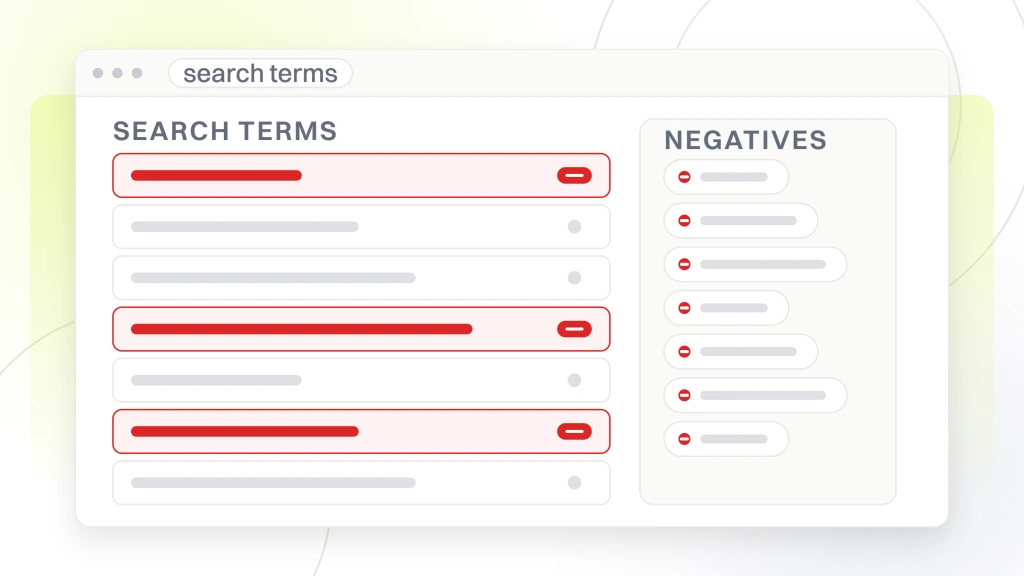
Chiropractor PPC ads negative keyword lists stop the campaign from spending budget on searches that will never book a patient. Add job seekers, school programs, insurance career searches, and unrelated conditions to the negative keyword list. A tight negative keyword list saves 15 to 25% of the ad budget from being spent on searches that were never going to convert into an appointment.
- chiropractor jobs, chiropractor careers, chiropractor salary, chiropractor school, chiropractic school tuition
- horse chiropractor, animal chiropractor, veterinary chiropractic, dog chiropractor
- free chiropractor, cheap chiropractor, discount chiropractor (unless you actually run a discount offer)
- chiropractor lawsuit, chiropractor complaints, chiropractor scam, chiropractor bad reviews
- chiropractor history, chiropractic history, who invented chiropractic, chiropractic wikipedia
- chiropractor near me insurance, chiropractor accepting Medicaid (unless you accept Medicaid)
- Any competitor practice names you have decided not to bid on for ethical or retaliation reasons
Search terms report review cadence
Search terms report review cadence is the weekly work that keeps the negative keyword list current. Every Monday, pull the search terms report for the past seven days and add every irrelevant query to the negative keyword list. Solo practices typically add 15 to 40 new negatives per week during the first three months and 3 to 10 per week after month four once the list matures. Skipping the weekly review is how accounts silently waste 10 to 20% of the budget on search queries that were never worth bidding on. The weekly discipline pays for itself inside the first month.
Chiropractor PPC ads formats compared side by side
The four ad formats a chiropractor PPC account runs are Responsive Search Ads on the search network, Performance Max for broader reach, Display remarketing for prospects who visited but did not book, and Local Services Ads for practices that have completed Google’s screening. Each format serves a different funnel stage and carries different economics. The table below compares the four side by side on the numbers a solo practice actually cares about.
| Ad format | Where it shows | Cost per click | Booking rate per click | Best used for |
|---|---|---|---|---|
| Responsive Search Ads | Google search results top and bottom | $4 to $12 | 8 to 15% | High-intent transactional keywords, main workhorse |
| Performance Max | Search, Display, YouTube, Gmail, Maps combined | $2 to $6 | 3 to 7% | Broader reach beyond exact-match keywords |
| Display remarketing | Websites in Google’s Display Network | $0.30 to $1.50 | 1 to 3% | Following up with visitors who did not book |
| Local Services Ads | Top of local search, above Search Ads | $25 to $60 per lead (flat) | 12 to 22% | Screened practices with strong reviews |
| Bing Search Ads | Bing search results top and bottom | $3 to $9 | 7 to 13% | Adding volume once Google is stable |
The workhorse of a typical chiropractor PPC account is Responsive Search Ads on Google, carrying 65 to 75% of the total ad spend. Performance Max adds 15 to 20% for broader reach. Display remarketing takes 5 to 10% for follow-up. Local Services Ads run in parallel once the practice has passed Google’s screening, typically producing 20 to 45% of the total booked patients at a lower cost per lead than the click-based formats. Bing Search Ads enter the mix in month four once the Google account is stable.
Pain Cure Clinic chiropractor PPC ads results reference
Pain Cure Clinic ran chiropractor PPC ads alongside a parallel SEO program during a 24-month engagement. The paired approach used the paid ads to catch transactional searches on day one and let organic rankings climb the pack in parallel. The account started at a solo mid-metro budget of $2,400 monthly ad spend split 70% Responsive Search Ads and 30% Performance Max, with a Local Services Ads campaign added in month three once Google’s screening completed.
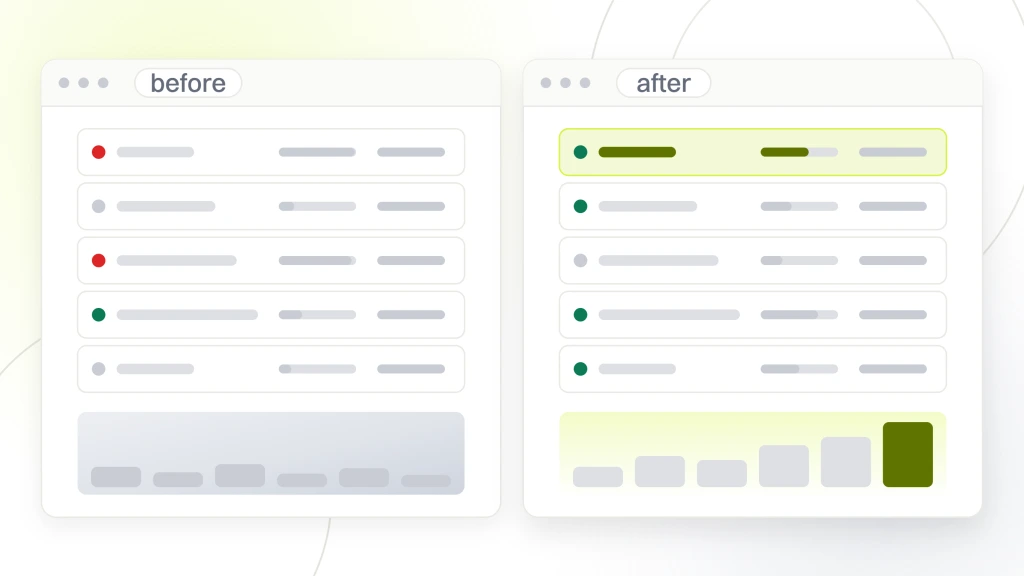
The three-headline structure with dedicated landing pages per ad group produced a first-month cost per booked patient of $118 on Responsive Search Ads and $52 per lead on Local Services Ads. By month six the account was booking 34 new patients monthly from paid channels combined at a blended cost of $71 per booked patient.
By month 24 the SEO side of the retainer was delivering the majority of the new patients at a fraction of the per-patient cost, and PPC had settled into a steady 40% share of new patient volume that filled the schedule when the organic engine was slower than usual. New patient appointments grew 205% against the pre-engagement baseline, averaging 122 monthly versus 40 previously, tracked across the paired paid and organic scope we run inside every chiropractor marketing agency engagement. Organic website traffic surged 289% over the same window and reviews climbed 162%, moving the Google rating from 4.3 to 4.9 stars.
The multi-location proof point comes from Smile Design Dentistry, which we treat as a directional reference for chiropractor PPC ads since the healthcare vertical and multi-location structure translate cleanly. PPC conversion rate grew 20% across 50-plus locations, cost per call dropped 30% over the same 12-month window, and the account scaled optimized campaigns across every location on a single scalable structure. The takeaway for a chiropractor group of 3 to 10 locations is that a shared account structure with per-location ad groups and per-location landing pages beats separate accounts on both cost per lead and management overhead.
Chiropractor PPC ads mistakes practices keep making
Chiropractor PPC ads mistakes cluster around six repeating patterns we see on almost every account audit. Fixing all six inside the first 45 days typically pulls a 30 to 50% gain in booked patients on the same ad spend. The mistakes are cheap to fix and expensive to leave alone.
- Pain relief promises in the headline. Google’s health policy rejects the ad on review. Rewrite as service plus credential plus booking.
- Home page as the landing page for every ad group. Cuts conversion in half. Build a dedicated landing page per ad group.
- Three headlines only in the responsive search ad. Starves the algorithm. Load 10 to 15 headline variants and 4 description variants.
- Extensions left disabled. Throws away 30 to 60% free click-through rate. Turn on every extension the account supports.
- No negative keyword list. Wastes 15 to 25% of the budget on searches that will never book. Add negatives every Monday.
- No offline conversion imports. Teaches the algorithm to bid for cancellations instead of shown-up patients. Wire the imports once and let them run.
- Target CPA on day one. Starves the algorithm of conversion data. Run Manual CPC for the first 30 days.
Order to fix them
Fix pain relief promise removal first since until the ad passes review, none of the other fixes matter. Fix landing page match second since it doubles the booking rate on the same clicks. Fix responsive search ad depth third since it pulls click-through rate up on the same budget. Turn on extensions fourth as a same-afternoon quick win. Build the negative keyword list in parallel from day one as a background task. Wire offline conversion imports last since they require the tracking to be clean first. Practices that batch the six fixes over 45 days rather than trying to do everything the first week see cleaner analytics on what actually moved the numbers.
Chiropractor PPC ads outlook through 2028
The chiropractor PPC ads outlook through 2028 hinges on three shifts. Local Services Ads keep growing share of the total paid budget as more practices pass Google’s screening. AI Overviews on Google’s search results start eating some of the transactional query volume that used to flow to text ads. Bing Ads pull a growing share of the older-demographic search volume as Microsoft continues investing in the ad platform against Google’s dominance.
Local Services Ads as the anchor
Local Services Ads become the anchor format for chiropractor PPC accounts through 2028. The pay-per-lead pricing model favors practices with strong review counts and clean Google screening records. Practices that pass Google’s screening in 2026 lock in a competitive advantage against practices that delay screening until 2027 or 2028. The recommended move is to complete screening now, run Local Services Ads at $25 to $60 per lead alongside the Responsive Search Ads campaign, and treat the two channels as complementary rather than competing.
AI Overviews and paid ad displacement
AI Overviews on Google Search continue expanding through 2028 and pull some percentage of transactional search volume away from text ads. Practices with strong structured data on service pages surface inside the AI Overview answers, which recovers a portion of the displaced volume through organic mentions. The paid side responds by concentrating more spend on Responsive Search Ads that appear alongside the AI Overview and on Local Services Ads that render below the Overview. Practices that keep both channels running see steadier performance through the ongoing search interface shift than practices that put the whole marketing budget on any single format.
Start running chiropractor PPC ads this week
Start with three moves this week. Install Google Ads conversion tracking and CallRail call tracking on the site so the account has clean data from day one. Build one dedicated landing page for the top service ad group with an H1 that mirrors the intended ad headline and a booking widget above the fold. Launch a small $500 test budget on 20 exact-match location plus service keywords with a 5-mile geo-targeting radius. That test produces the first booked patients in 3 to 7 days and reveals which keywords, ads, and landing pages the account should scale next.
Then plan the 90-day ramp. Month one hits 50% of target budget with 4 ad groups and 4 landing pages. Month two ramps to 75% budget with expanded keyword lists and remarketing. Month three hits 100% target budget with the full campaign structure and stable optimization. Practices that follow the ramp see stable per-patient costs and no wasted spend on unproven variants. The paired local search work that catches the same intent for free over 6 to 9 months lives inside our local SEO for chiropractors playbook, which slots in alongside the paid account from day one rather than waiting for month four.
Chiropractor PPC ads are a lever any solo practice can pull the week they decide to fill the schedule faster than local SEO alone can deliver. Get the three-headline structure right, mirror the ad copy on the landing page, turn on every extension, wire the tracking clean, and add negative keywords every Monday. That is the working brief. The rest is the weekly discipline of watching search terms, adjusting bids, and refreshing ad copy against Google’s evolving healthcare advertising policies through 2028 and beyond. Reference reading on the current healthcare policy sits at Google’s healthcare advertising policies documentation.