
Google ads management for chiropractors is the weekly work of running paid search on Google Ads so every dollar drives more new patient exams than it costs. Most practices pour money into paid search, count clicks, then watch the schedule stay flat. The gap sits between the click and the booked exam, and closing it is what disciplined google ads management for chiropractors actually delivers. This guide walks the account structure, the negatives pass, the landing page rules, the call tracking setup, and the budget math that turn paid search into a predictable stream of new patient bookings.
Every number in this guide comes from live client accounts or the Redefine Web case library, including a chiropractic and whole-body wellness practice that grew appointments 205% and organic traffic 289% inside a 12-month program. Practices that treat click volume as the scoreboard end up with expensive traffic and a quiet phone. Practices that treat booked exams as the scoreboard end up with a schedule that fills six weeks out. Same platform, different scorecard. If you want the wider context on paid search for the vertical, our chiropractor PPC services page pairs with this one on strategy and channel mix, while our google ads management services covers the retainer structure that runs the work. For a broader view of the whole channel, our chiropractor marketing agency hub covers SEO, web design, and reputation alongside paid search.
What google ads management for chiropractors actually covers
Google ads management for chiropractors is paid search advertising on Google Ads (plus Microsoft Advertising when the account has the volume) aimed at people already searching for an adjustment, a decompression session, or relief from a specific pain pattern. The work covers keyword research, account structure, ad copy, bid strategy, landing page testing, weekly negative keyword pruning, conversion tracking QA, and monthly reporting that ties spend to booked exams and revenue. A practice owner brings in a manager once the account spends more than $1,500 a month and the front desk can no longer give it the 5 to 10 hours a week it needs to run clean.
The four buckets of real weekly work
At the engagement level, the work breaks into four buckets. Setup and audit in week one. Weekly operations every week after that. Monthly reporting that ties spend to leads and booked patients on a single page. And a quarterly strategy revisit that resets budget allocation and channel mix. Every proposal should spell out each of the four with real deliverables and a real cadence. Anything short of all four is a monthly account glance dressed up as management, and the account usually drifts 15 to 30% on cost per booked exam inside 90 days.
Where paid search sits in the wider marketing plan
Paid search is the fastest channel to activate for a chiropractic practice. You can spin up a campaign on Monday and take booked calls by Friday. That speed earns it a spot in every plan and the tightest weekly attention. It sits alongside chiropractor SEO, review generation, Google Business Profile work, and email nurture. SEO carries the long-term compounding, reviews carry the trust, and paid search carries the immediate volume. Running paid without any of the other three is like pouring water into a bucket with holes in the bottom.
The google ads management for chiropractors account structure that produces booked exams
An account that books exams cleanly has four campaigns and no more. Branded search catches people already Googling your practice name. Non-branded local search catches “chiropractor near me” and “chiropractor in [city]” queries. Condition-specific search catches “back pain relief,” “sciatica treatment,” “pinched nerve chiropractor,” and similar high-intent terms. Performance Max fills the gaps with remarketing and lookalikes trained on your booked-patient list, and only after the search campaigns have collected 30 real booked exams. Anything beyond four campaigns fragments the budget and hides where the exams actually come from.
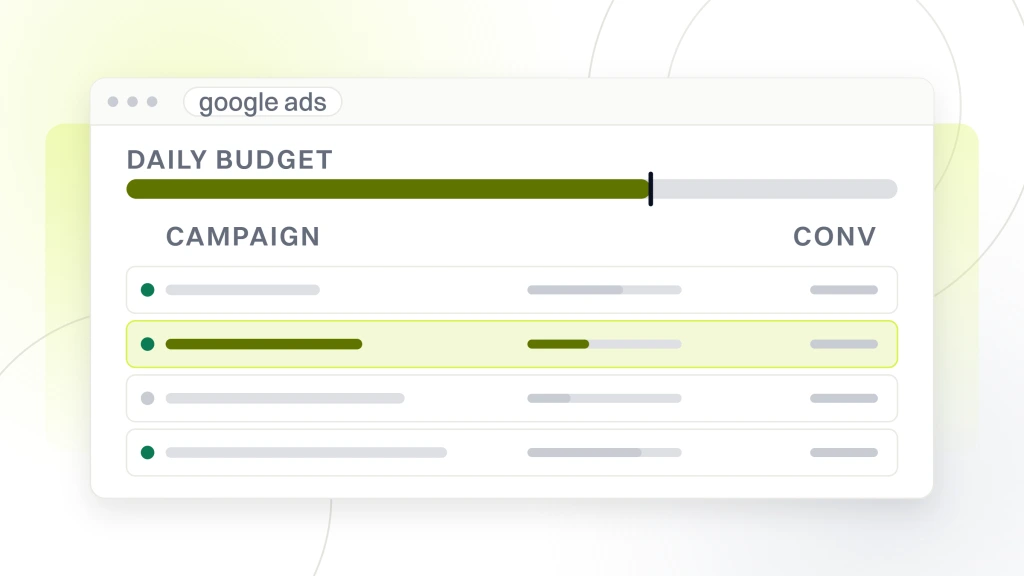
Each campaign runs 2 to 4 ad groups, each ad group runs one theme, and each theme has 15 to 20 negatives from day one. Google’s own match type documentation covers how phrase, exact, and broad match interact with negatives, and staying inside phrase and exact match on chiropractic terms is how most accounts avoid burning budget on irrelevant queries. Cramming everything into a single campaign under the belief that Google’s Smart Bidding handles it is the fastest way to overspend on the wrong searches. Pain Cure Clinic, the chiropractic and whole-body wellness practice we support, ran this same four-campaign structure across its 12-month program and grew new patient appointments from roughly 40 monthly to 122 monthly. The account structure was the base layer that let every other lever compound.
Why branded search matters more than owners think
Owners often skip branded search since the practice already ranks first organically for its own name. The math still favors running it. Competitors bid on your name to poach the click, and a $0.35 branded click that converts at 40% costs less per booked exam than any other channel in the account. Skip it and you pay a premium later to defend the same query, or lose 8 to 15% of monthly booking volume to a nearby clinic that noticed your gap and stepped in.
The condition-page alignment rule
Every condition-specific ad group needs a landing page that matches the condition. Sending “sciatica treatment” clicks to your homepage cuts conversion rate in half. Sending them to a page titled “Sciatica relief in [city]” with a photo of a real patient, a description of the technique, and a short booking form doubles it. This is the single biggest lever in most chiropractic paid accounts, and it costs nothing to fix beyond the writing and photography time. Practices that need help building the pages themselves can start with our chiropractor website design services which include condition-page templates built for paid traffic.
Only turn on a Performance Max campaign after the search campaigns have collected 30 booked exams. Firing it earlier trains the model on the wrong signal and burns budget on cheap clicks that never book.
The cost per new patient exam math for google ads management for chiropractors
The number that matters in google ads management for chiropractors is cost per new patient exam, not cost per click. A $4 click at 8% booking rate is a $50 cost per exam. A $2 click at 2% booking rate is a $100 cost per exam. The cheap click looks better inside the Google Ads interface and costs twice as much where it counts. For most chiropractic practices, a healthy cost per new patient exam sits between $65 and $180 depending on market, service mix, and average patient value.
Practices with a $2,400 patient lifetime value can spend $180 on a new exam and still print money. Practices with a $600 lifetime value need to keep the number under $80 or the account bleeds slowly. The way to know your working number is to run a 30-day baseline with honest tracking, then work the levers described in the next few sections to bring it down 20 to 40% over the following 90 days.
Why cost per acquisition drifts up when nobody is watching
Cost per booked exam creeps up week by week for three reasons. Auction competition rises as more clinics enter the market. Match types loosen as Google interprets your keywords more broadly. Ad copy fatigues and click-through rate falls. Any account left on autopilot for 90 days shows 15 to 30% cost drift by the end of it. This is the reason weekly work exists at all. Skip the weekly ritual and the account slowly walks backward, one auction at a time, until the founder notices the schedule thinning three months later.
What a clean weekly review looks like
A clean week has a single Monday review of the last seven days. Booked exams, spend, cost per exam, and search terms. Adjust bids by no more than 15% in either direction. Pause any ad group with a cost per exam that runs 2x the account average. Add 5 to 10 new negatives from the search terms report. That’s the whole ritual. It takes 30 minutes and saves 20 to 30% of monthly spend. Practices that skip the Monday review pay for the skip in wasted spend by Friday.
The weekly negative keyword pass that keeps spend honest
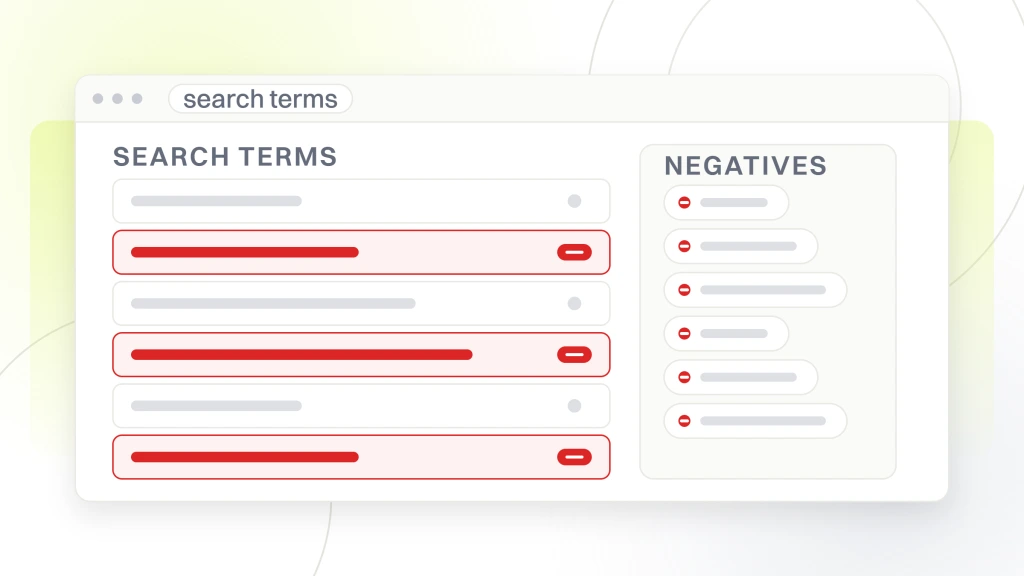
Negative keywords are the single most under-used lever in google ads management for chiropractors. Every week the search terms report shows queries that triggered your ads. Roughly 15 to 25% of those queries are wrong intent (chiropractor school, chiropractor salary, free chiropractor, chiropractor jobs near me, how to crack my own back) and every click on them is money burned. The dental account patterns in our dental Google Ads keywords breakdown map cleanly onto chiropractic search terms as well. For chiropractic accounts, the recurring waste comes from job queries, DIY queries, veterinary queries in markets where pet chiropractic exists, and price-shopping queries where the searcher is just comparing costs across the map pack.
The Monday search terms workflow
Open the search terms report every Monday, filter to the last seven days, sort by cost descending. Any query with more than $15 spent and zero conversions is a candidate for the negatives list. Read it, decide if a person searching that phrase could plausibly book an exam, and if not, add it as a phrase or exact negative. Keep the review under 20 minutes so it actually happens every Monday instead of once a quarter when the account is already 25% off pace.
The shared negative list trick
Build one shared negative list called “chiropractor evergreen” and apply it to every campaign in the account. It holds the terms that will never convert regardless of ad group. Job, school, salary, DIY, adult content, and celebrity-name variants all live here. New campaigns inherit it instantly and start clean instead of running for 30 days before someone notices “chiropractor jobs near me” burned $400. This one habit alone saves most accounts 10 to 18% of monthly spend inside the first quarter it goes live.
Landing pages for google ads management for chiropractors that book exams instead of clicks
A paid search landing page for a chiropractic practice has one job. Convert a searcher into a booked exam within 90 seconds. That means a headline that repeats the search query, a subheadline with the offer (usually a discounted first exam or a free consultation), a phone number in the top right that’s clickable on mobile, a short booking form (name, phone, best time to call), and 2 or 3 trust proofs above the fold. Everything else can wait for the second scroll. Practices that send paid traffic to the homepage typically convert at 1 to 2%. Practices that send it to a purpose-built landing page convert at 4 to 8%. That gap alone cuts cost per exam in half.
The mobile speed floor
Roughly 68% of chiropractic paid search clicks happen on a phone. If the landing page takes more than 2.5 seconds to show the main content, 20 to 40% of the click budget lands on a bounce. Google’s web.dev LCP guide covers what to measure. The practical rule is to test the landing page monthly on a real phone over 4G, not on the office wifi. If the phone number isn’t visible in under 3 seconds, the page is too slow to run paid traffic against.
The form versus call question
Chiropractic patients skew toward calling. Roughly 65 to 75% of booked exams come from a phone call, not a form fill. The form still matters for after-hours searches, but a landing page that hides the phone number below the fold cuts booking rate 25 to 40%. Put the number in the header, make it clickable via a tel link, and use the form as the secondary path for patients who search at 9pm and want to book without waiting for morning.
Practices that hide the phone number below the fold cut booked exams 25 to 40%. Put the number in the top right, make it a clickable tel link, and test it on a real phone every month.
Conversion tracking inside google ads management for chiropractors accounts
Half of the paid accounts we audit track the wrong conversion. They count form fills only and miss 70% of the booked exams that came in by phone. Or they count every phone call regardless of duration, which inflates conversion volume and hides which ads actually book patients. The honest setup counts three things. Form fills that include a real phone number. Phone calls longer than 90 seconds (short enough that most booking calls make it, long enough to filter out wrong numbers and hang-ups). Offline conversions imported from the practice management system when a caller actually shows up for the exam.
Call tracking setup that survives an audit
Wire CallRail or WhatConverts to the landing page, with a dynamic number insertion pool sized to the daily click volume so no two visitors see the same tracking number in the same hour. Our step-by-step Google Ads conversion tracking with Google Tag Manager guide covers the full wiring, and Google’s enhanced conversions documentation covers the newer first-party data method that keeps tracking alive as browser cookie restrictions tighten. Push call duration and call source back into Google Ads via the conversion import so Smart Bidding trains on booked-call signal, not raw call count. Any account that trains bids on raw click count or short calls slowly drifts toward cheap traffic that never books, and the shift is invisible inside the Google Ads UI until the practice notices the schedule going quiet 60 to 90 days later.
Offline conversion import for booked exams
Export the practice management system’s booked appointments weekly (Jane, ChiroTouch, Zenoti, and similar all export CSV), match the appointment to the click via the phone number captured on the landing page form or the CallRail record, and upload the match as an offline conversion into Google Ads. This closes the loop between spend and revenue and lets Smart Bidding train on real bookings instead of proxy signals. Skip this step and the account never learns which keywords produce paying patients versus which produce curious clicks.
Budget tiers and what google ads management for chiropractors actually costs
Our google ads management for chiropractors retainer tiers start at $999 per month, run through $1,499 and $2,499, and top out from $4,500 per month for accounts spending $80,000 or more monthly on ads. For the deeper cost breakdown across every practice size, our google ads management pricing guide walks the math for single-location practices, multi-location groups, and DSO networks. Ad spend is billed separately and paid directly to Google. The $999 tier covers a single-location practice with $1,500 to $4,000 in monthly ad spend, weekly account touches, and monthly reporting. The $1,499 tier layers in landing page A/B testing and Local Service Ads management. The $2,499 tier suits multi-location groups with $10,000 to $30,000 in monthly spend. The $4,500+ tier suits DSO-scale networks and franchises spending $80,000 or more monthly.
Why the tiers are structured this way
The tier math is straightforward. A US senior paid search specialist costs $85,000 to $130,000 in salary, roughly $8,000 monthly all-in with benefits, tooling, and PTO. The retainer tiers stay well under that number until the account grows into a full-time role, and that milestone typically arrives at $80,000 or higher in monthly ad spend. Below $50,000 monthly, the agency retainer wins on cost and depth of expertise. Above $80,000 monthly, a hybrid model with an in-house lead and agency oversight often wins on speed and control. Both models can coexist inside the same practice group as it scales across locations.
Ad spend budgets by practice stage
A single-location practice starting fresh typically works well at $1,500 to $3,000 in monthly ad spend across search plus Local Service Ads. Growing practices past $30,000 in monthly patient revenue expand into $3,000 to $6,000 monthly. Multi-location groups run $8,000 to $30,000 monthly across the network. DSO-scale chiropractic networks run $30,000 to $150,000 monthly across search, LSA, remarketing, and Performance Max once the search base has trained enough conversion signal to feed it. Every practice should model the working budget against average patient lifetime value before setting the monthly cap.
Local Service Ads pair with google ads management for chiropractors on chiropractic accounts
Local Service Ads (LSAs) sit at the top of the search results page on mobile and desktop, above the sponsored map pack, and charge per lead instead of per click. Every google ads management for chiropractors program should evaluate LSAs once search is producing booked exams. For a chiropractic practice with clean Google Business Profile signal, LSAs typically produce booked calls at $40 to $90 per lead, meaningfully cheaper than search click costs on the same query. The catch is that LSAs require Google verification (background check, license check, insurance verification) that takes 2 to 4 weeks to complete before the first lead can arrive. Layering LSAs onto a search account already producing booked exams typically grows total monthly bookings 20 to 35% without cannibalizing the search results below.
Google Screened badge and trust signal
Passing Google verification earns the Google Screened badge on the LSA listing, which measurably grows click-through rate versus unbadged competitors. The Google Local Services help center covers the verification requirements for the healthcare vertical. Practices that put the verification paperwork off until “later” leave 20 to 30% of monthly booking volume on the table, since the LSA slot above the sponsored map pack is the most valuable real estate on the mobile results page for a “chiropractor near me” query.
LSA dispute workflow for bad leads
LSAs charge per lead, but Google refunds leads that fall outside the service area, arrive from a non-patient (a spam call, a job inquiry, a wrong-number), or fail to book after two contact attempts. The dispute workflow inside the LSA dashboard takes 60 to 90 seconds per bad lead and typically claws back 8 to 15% of monthly LSA spend. Practices that skip disputes pay the full published rate on leads that never had a chance to book, which pushes effective cost per booked exam 15 to 25% higher than it needs to be.
Real chiropractic and dental case studies from the Redefine Web library
Pain Cure Clinic, a chiropractic and whole-body healthcare provider focused on natural pain management, spinal health, and wellness, engaged Redefine Web on a full digital transformation across 2023 and 2024 as one of many google ads management for chiropractors programs we run each year. Baseline patient appointments averaged around 40 monthly. The website lacked condition-focused content, had no automated email nurture, no online booking, and paid ads returned poorly against a slow site and generic landing pages. The 12-month program combined condition-specific SEO content, an educational content hub with infographics and videos, Google Business Profile optimization, targeted paid search and Facebook ads on high-intent conditions, a referral program, online booking, and segmented email automation on top of social wellness campaigns.
By month 12, Pain Cure grew new patient appointments 205% (from roughly 40 monthly to 122 monthly), organic website traffic 289%, and reviews 162% with the Google rating moving from 4.3 to 4.9 stars. The paid search work paired with SEO and reviews compounded every lever. ProCare Sports, a San Diego sports chiropractic practice, replaced an outdated 2000s-era website with a modern, SEO-optimized, Yelp-powered presence during the same period. Website engagement grew 30%, local listing accuracy hit 100% across the citation network, and the site went from sporadic traffic to 20-plus daily unique visitors as the scalable foundation for patient acquisition.
The dental proof points mirror the same discipline. Smile Design Dentistry, a 50-plus location DSO, faced inflated ad spend, poor-quality leads, and limited tracking across the network. Restructuring the paid accounts, adding full-funnel paid social, and creating per-location landing pages produced higher lead quality, better return on ad spend, and scalable growth across the DSO. VP Dental, a 20-plus year practice, unified a fragmented website and SEO under one strategy and posted a 100% increase in new monthly patients, $8,100 added monthly revenue, and 776% more search impressions inside the program window. The chiropractic-plus-dental pattern is consistent: clean account structure, real conversion tracking, and landing pages that match query intent produce booked exams that fill the schedule.
What a good google ads management for chiropractors agency does that a bad one skips
A good agency runs the weekly ritual (search terms, negatives, bid adjustments, ad copy variants), sends a monthly report that ties spend to booked exams and revenue, and holds a quarterly strategy call with the practice owner to reset budget allocation and channel mix. A bad agency logs into the account once a month, screenshots the Google Ads dashboard, changes the report header to your logo, and calls it a report. The gap between the two shows up in cost per booked exam inside 60 days, and in schedule fill rate inside 90 days.
Reporting cadence that respects a practice owner’s time
The monthly report should fit on a single page. Total spend, total booked exams, cost per booked exam, top three converting search terms, top three keywords added to negatives that week, and the one action the agency will take next month to move the number down further. Anything longer is filler. The owner does not need a 40-page PDF of screenshots from the Google Ads dashboard. The owner needs the number moving in the right direction and the confidence that someone competent is watching the account every Monday.
The quarterly strategy revisit
Every quarter, the agency and the practice owner sit down (video call is fine) and revisit budget allocation across search, LSA, and any additional channels, plus the target cost per booked exam for the next quarter based on the practice’s current capacity and staffing. This is where new services get layered onto the account (decompression, cash-pay wellness packages, corporate wellness contracts) and where underperforming channels get paused. Practices that skip the quarterly revisit end up with an account structure that matches the practice they were 18 months ago, not the practice they are today.
Should google ads management for chiropractors live in-house or at an agency
Every founder eventually asks whether google ads management for chiropractors should live internally or at an agency. The honest answer sits at the intersection of account spend, the founder’s technical appetite, and whether the practice has the volume to keep a specialist busy year-round. Below $10,000 in monthly ad spend, an agency retainer usually wins on cost and depth. Between $10,000 and $50,000 monthly, an agency retainer with a tight weekly cadence still wins for most practices. Above $80,000 monthly across a multi-location or DSO network, a hybrid model with an in-house lead paired with agency oversight often produces the best balance of speed and control.
The hidden cost of the in-house path shows up in tooling. A serious paid search stack (call tracking, bid management, competitive intelligence, landing page testing) runs $600 to $1,800 monthly on top of the specialist’s salary. Agencies spread that cost across the retainer book and pass through pricing that a single practice cannot match on its own. Add in the coverage risk (vacation, illness, resignation) and the agency model usually wins on total cost until the practice group is large enough to hire a two-person paid search team with proper backup coverage.
Locking in google ads management for chiropractors that compounds bookings
A paid search program that compounds bookings comes down to six patterns. Run four campaigns (branded, non-branded local, condition-specific, and Performance Max only after 30 booked exams). Match every ad group to a condition-specific landing page with the phone number in the header and a form as backup. Track three conversions (form fills, 90-second-plus calls, offline conversion imports from the practice management system). Run the Monday search terms and negatives ritual every single week. Layer Local Service Ads once search is producing booked exams. And publish a one-page monthly report that ties spend to booked patients and cost per exam.
Pain Cure Clinic grew new patient appointments 205% and organic traffic 289% across the 12-month program that combined paid search, SEO, content, GBP, and email automation. ProCare Sports grew engagement 30% and locked local listing accuracy at 100%. Both programs started with the same fundamentals: real conversion tracking, clean account structure, and landing pages that match the query. If the practice is spending on paid search without a weekly cadence, our google ads management for chiropractors program covers the account structure, weekly work, and monthly reporting end to end, and our retainer tiers ($999, $1,499, $2,499, from $4,500 monthly) cover practices from single-location startups through DSO-scale networks. Book a call and we’ll walk the last three chiropractic accounts we restructured end to end.
How to do google ads management for chiropractors online+
Doing google ads management for chiropractors online means running the account entirely from the Google Ads web interface plus a browser-based call tracking tool. Start with the four-campaign structure (branded, non-branded local, condition-specific, and Performance Max after 30 booked exams). Wire CallRail or WhatConverts for dynamic number insertion on the landing page. Set up conversion actions for form fills, 90-second-plus calls, and offline conversion imports from the practice management system. Run the Monday search terms review, add 5 to 10 negatives, and adjust bids by no more than 15%. Budget $1,500 to $4,000 monthly on ad spend for a single-location practice and expect a cost per booked exam of $65 to $180 depending on market.
How to do google ads management for chiropractors reddit+
Reddit threads in r/PPC and r/chiropractic consistently recommend a small handful of moves for practice owners running paid search. Build the four-campaign structure and skip Performance Max until search has trained. Turn on call extensions and lean on call-only ads for mobile. Add a shared negative list called “chiropractor evergreen” with job, school, salary, and DIY variants baked in from day one. Track calls longer than 90 seconds as the meaningful conversion, not raw call count. Run the search terms report every Monday. Budget $1,500 to $3,000 monthly to start and expect a 60 to 90 day learning window before cost per booked exam stabilizes. Reddit advice matches what we see across chiropractic accounts we audit.
How to do google ads management for chiropractors free+
Free options for running paid search yourself exist through the Google Ads Editor desktop tool (no cost), Google Analytics 4 for tracking (no cost), and Google Tag Manager for pixel deployment (no cost). Ad spend itself is never free, but the software stack for managing the account can run at zero monthly cost on the free tiers of the Google-owned tools. Set up conversion actions inside Google Ads directly. Use Google’s own call tracking (Google forwarding numbers) rather than a paid third-party if the account is small. Budget 5 to 10 hours a week for the front desk or practice owner to run the Monday review. Free stack works up to about $3,000 in monthly ad spend before a proper call tracking platform starts to pay for itself.
Do Google Ads work for chiropractors?+
Yes, when run with a disciplined weekly cadence. Chiropractic practices sit in a high-intent search vertical (patients search “chiropractor near me,” “sciatica treatment,” “back pain relief” with clear commercial intent), which is exactly the search behavior paid search is designed to capture. Practices that run the four-campaign structure, match ad groups to condition-specific landing pages, and track booked exams (not clicks) typically hit cost per booked exam between $65 and $180. Practices that pour money into a single messy campaign, send all clicks to the homepage, and count form fills only usually see cost per booked exam north of $300 and quietly conclude that paid search does not work. The strategy is the difference, not the platform.
How much should a chiropractor spend on Google Ads per month?+
A single-location chiropractic practice typically starts at $1,500 to $3,000 in monthly ad spend across search and Local Service Ads combined. Growing practices past $30,000 in monthly patient revenue expand into $3,000 to $6,000 monthly. Multi-location practice groups run $8,000 to $30,000 monthly across the network. DSO-scale chiropractic networks run $30,000 to $150,000 monthly across search, LSA, remarketing, and Performance Max. The right monthly cap depends on average patient lifetime value and current schedule capacity. A practice with $2,400 patient lifetime value can afford $180 per booked exam and still print money. A practice with $600 lifetime value needs to keep cost per booked exam under $80 or the account bleeds slowly across the quarter.
What is a good cost per lead for a chiropractor on Google Ads?+
A healthy cost per new patient exam sits between $65 and $180 for most chiropractic markets. Suburban markets with lower competition (mid-size cities in the Midwest and South) typically hit $65 to $95. Dense urban markets (major coastal metros, LA, NYC, Chicago) typically hit $110 to $180. Cost per lead numbers below $50 usually mean the account is counting cheap conversions (short calls, forms without valid phone numbers) instead of real booked exams. Cost per lead north of $220 in most markets means the account structure, landing pages, or conversion tracking needs a rebuild. Track cost per booked exam (not cost per click and not cost per raw lead) as the honest scorecard for the account.
How long before Google Ads start working for a chiropractic practice?+
A new account typically shows the first booked exams within 5 to 14 days of launch, since paid search is a demand-capture channel that reaches patients already looking for care. Cost per booked exam usually stabilizes inside 60 to 90 days as Smart Bidding trains on conversion signal and the negative keyword list gets pruned down. Practices that switch from a badly-run account to a well-run account often see cost per booked exam drop 30 to 50% inside the first 90 days of the switch, driven by cleaner campaign structure, tighter negatives, and landing pages that match query intent. Expect a full quarter before the account settles into its steady-state cost per exam and monthly booking volume.
Should chiropractors use Local Service Ads alongside Google Ads?+
Yes, once the search account is producing booked exams and the practice has completed Google verification (background check, license, insurance). Local Service Ads sit above the sponsored map pack and charge per lead rather than per click, typically producing booked calls at $40 to $90 per lead for a chiropractic practice with clean Google Business Profile signal. Layering Local Service Ads on top of a search account typically grows total monthly bookings 20 to 35% without cannibalizing search. Google verification takes 2 to 4 weeks to complete, so start the paperwork early. Passing verification earns the Google Screened badge which measurably grows click-through rate versus unbadged competitors on the same query.
What does google ads management for chiropractors cost per month at an agency?+
Agency retainer pricing for google ads management for chiropractors typically runs $999 to $1,499 monthly for single-location practices spending $1,500 to $6,000 on ads, $2,499 monthly for multi-location groups spending $10,000 to $30,000, and from $4,500 monthly for DSO-scale networks spending $80,000 or more. Ad spend is billed separately and paid directly to Google. The retainer covers the weekly cadence (search terms review, negatives, bid adjustments, ad copy tests), monthly reporting that ties spend to booked exams and revenue, and quarterly strategy revisits that reset budget and channel mix. Retainers below $299 monthly usually mean the account gets a monthly glance rather than weekly work, which produces the drift pattern (15 to 30% cost creep in 90 days) that owners eventually notice as a quiet schedule.
How do I know if my current google ads management for chiropractors is any good?+
Three signals mean the current arrangement is drifting. Monthly reports pivot from cost per booked exam to click volume. The search terms report has not been touched in more than 2 weeks. The last landing page test was more than 90 days ago. Any one is a yellow flag. Two together is a red flag. All three means the account is on autopilot and the schedule will show it inside a quarter. Two signals mean the arrangement is on track. Cost per booked exam falls quarter over quarter (or holds steady while ad spend grows), and the agency proactively raises new tests each month rather than waiting to be asked. Ask for the last four Monday search-term-review notes and the last two landing page A/B test results. If neither exists, the account needs new hands.