PPC management software is the tool layer between your ad accounts and the human who runs them. It covers bid rules, alerts, reporting, keyword research, and cross-platform automation so the paid media lead spends time on decisions, not data entry. Every 7-figure ad account runs at least 4 tool categories, and the stack tells you more about the account than any pitch deck. This guide names the platforms, prices them at every agency size, and shows the combinations that hold up.
Short version. Every serious account runs 4 tool layers. Native ad platform, bid and automation, reporting and dashboard, and keyword and intent research. Skip any of the 4 and performance drops. The rest of the guide covers what belongs in each layer, which vendors show up, and how to price the stack.
The four PPC management software layers every account needs
Every mature stack breaks into 4 layers. Native ad platform, bid and automation, reporting and dashboard, and research. Miss one and the account runs on partial information. Get all 4 right and you have a repeatable engine a new hire can pick up in a week.
Native ad platform interface
Google Ads Editor, Meta Business Manager, Microsoft Advertising Editor, and Amazon Ads Console. Every account runs on the native platform first. Serious teams use desktop editors for bulk work. Web-only workflows fit casual advertisers, not teams touching 40 accounts a week.
Bid and automation layer
Bid work runs on Google Ads Smart Bidding, Meta’s automated placements, or a third-party layer like Optmyzr, Adalysis, or Marin. Third-party ppc bid management tools mattered more before Smart Bidding matured. Now they earn their seat on rules, alerts, and audits. Teams running only native bidding miss anomalies for 2 or 3 days before the weekly review catches them. That’s the gap ppc bid management software closes.
Reporting and dashboard layer
Looker Studio, Supermetrics, and dedicated ppc management tools like Whatagraph and AgencyAnalytics. Looker Studio plus Supermetrics fits solo operators and boutique shops. Whatagraph and AgencyAnalytics wrap prettier templates around the same data feeds. Pick based on client count. Solo consultants live on Looker. Agencies past 20 clients need templated tools to keep reporting consistent.
Research layer
Semrush, Ahrefs, SpyFu, and WordStream Advisor cover the research seat. Keyword and competitor research still matters for accounts entering new verticals or geos. Semrush and Ahrefs cover SEO and PPC in one login. SpyFu narrows on the competitor angle. Skip this layer and you’re guessing at keywords competitors already know work.
Best PPC management software for agencies by size
The best PPC management software for an agency depends on account count and platforms per account. A solo running 5 Google Ads accounts has different needs than a shop running 40 accounts across 5 platforms. The table below shows what most agencies buy at each scale.
| Agency size | Bid and automation | Reporting | Research | Monthly stack cost |
|---|---|---|---|---|
| Solo, 1 to 5 accounts | Google Ads native | Looker Studio free | Semrush Pro | $140 |
| Boutique, 5 to 15 accounts | Optmyzr Starter | Looker plus Supermetrics | Semrush Pro | $400 |
| Small agency, 15 to 40 accounts | Optmyzr Pro or Adalysis | AgencyAnalytics | Semrush Guru plus SpyFu | $900 |
| Mid-market, 40 to 100 accounts | Optmyzr Pro plus custom scripts | Whatagraph or Looker enterprise | Semrush Business plus Ahrefs | $1,800 |
| Enterprise, 100 plus accounts | Marin or Skai | Custom BI plus dbt | Multi-tool | $3,500 plus |
Why Optmyzr shows up in most stacks
Optmyzr sits in most small-to-mid agency stacks for 3 jobs. Rule-based alerts, bulk edits at scale, and audit reports. The alerts alone save a paid media lead roughly 10 hours a month by flagging anomalies as they happen, not at the Monday review. Adalysis is the alternative with a stronger ad copy testing module. Both cost about the same and both earn their license fee if the team uses the rules editor once a week.
Signals that a stack is over-tooled
Warning signs. The paid media lead opens 6 dashboards to answer 1 question. 2 tools send overlapping Slack alerts every morning. Monthly reporting takes a day per client instead of an hour. The best PPC management tools trim the stack, not expand it. If a new tool doesn’t retire an old one, it adds friction. That includes AI ppc management add-ons that duplicate the native platform.
Amazon PPC management software is its own category
Amazon PPC management software is its own category. Amazon Ads works nothing like Google or Meta. Keyword auctions, ASIN targeting, sponsored brand and sponsored display formats, the daily budget cycle, and the Amazon Attribution model all demand tools built for the platform. Run Amazon accounts on generic bid tools and results stay mediocre. The specialist tools pay for themselves the first time an out-of-stock SKU triggers an automatic pause. Vertical-specific work like Amazon PPC management services lives or dies on that specialist stack.
The three tools most Amazon agencies run
Perpetua, Pacvue, and Helium 10 dominate the Amazon PPC space. Perpetua and Pacvue are the enterprise plays with full-service automation, dayparting, and cross-platform integration into Google Ads and Meta. Helium 10 is the small-seller favorite. It combines PPC management with product research and listing optimization in one seat. Sellozo and Ad Badger fill the boutique tier for brands under $50,000 a month in Amazon ad spend.
What Amazon PPC tools do that others can’t
Amazon-specific tools handle ASIN-level bidding, negative ASIN targeting, product-level budget allocation, and inventory-aware bid pausing. When a SKU goes out of stock, the tool pauses the campaigns automatically instead of burning spend. Generic PPC tools don’t have that logic. That feature alone pays for the license past $10,000 a month in Amazon spend.
Amazon PPC pricing tiers
Helium 10 starts at $39 a month for solo sellers. Sellozo runs $149 to $500. Perpetua and Pacvue start at $500 and climb with ad spend or SKU count. Enterprise Amazon platforms run $2,000 to $10,000 a month for brands managing 50 plus SKUs across marketplaces. Compare to the 3 to 5 percent of ad spend most Amazon agencies charge, and the buy-or-build call answers itself past $200,000 a month in spend.
PPC reporting and dashboard stack that clients actually read
PPC reporting is where most agencies quietly under-deliver. The client sees a monthly PDF with 3 charts. The paid media lead sees the real account. Bridging that gap takes a dashboard that surfaces the daily numbers. This is where ppc campaign management software earns its keep. Clients who trust the dashboard renew at almost double the rate of those who trust only the invoice.
Looker Studio plus Supermetrics as the baseline
Looker Studio is free from Google. Supermetrics connects Looker to every ad platform, CRM, and analytics tool for about $100 a month per client. This is the baseline every reasonable agency runs. It handles Google Ads, Meta, Microsoft, TikTok, LinkedIn, Amazon, and CRM data in one dashboard. Solo consultants live here and rarely outgrow it before 15 active clients.
AgencyAnalytics and Whatagraph for scale
AgencyAnalytics and Whatagraph exist since Looker Studio doesn’t template well across 40 clients. Both offer white-labeled dashboards, automated scheduling, and client portals. AgencyAnalytics runs $120 to $500 a month by client count. Whatagraph starts at $200. Agencies past 20 clients almost always run one. Setup time per client drops from 3 hours to 20 minutes. That’s the point where ppc campaign management tools stop feeling optional.
Custom BI for enterprise
Enterprise accounts run custom BI pipelines on BigQuery, dbt, and a visualization layer like Looker or Tableau. Real engineering work at the $100,000-plus monthly ad spend tier. Below that, off-the-shelf tools do the job. Above it, the custom pipeline gives you cross-source reporting the vendors can’t handle. Expect a 3 to 6 month build.
PPC campaign management software for in-house teams
PPC campaign management software for in-house teams sits differently than agency stacks. In-house runs one account deeply. Agencies run 20 broadly. In-house tool choice favors depth, internal data integration, and reporting a CFO can read. Tool count drops. Integration count goes up.
What in-house teams need in the stack
Native platforms plus one automation layer plus one reporting layer plus one research seat. In-house teams skip agency-scale ppc management tools like AgencyAnalytics. There are no client reports to run. Google Ads Editor, Optmyzr or a Google Ads scripts library, Looker Studio, and Semrush covers 90 percent of what a mid-market in-house team needs before spending a BI dollar.
Integration with the internal data stack
In-house teams see CRM, transaction, and customer LTV data agencies never touch. Feeding it back into the ad platforms through offline conversion imports is the biggest lever in-house teams have. Google Ads Data Manager, Meta Conversions API, and Segment or a custom pipeline handle the plumbing. Every mid-market in-house PPC operation should run this by month 6.
When in-house teams still hire an agency for tools
Some in-house teams keep an agency purely for access to enterprise platforms the company can’t justify buying alone. Marin and Skai licenses run $50,000 plus annually. An agency spreads that license across 20 clients. Buying agency access is cheaper than a direct license under $200,000 a month in spend. Above that, the direct license pays for itself inside a quarter.
PPC keyword and competitor research tools
Keyword and competitor research tools sit next to the bid layer and do a different job. Semrush, Ahrefs, SpyFu, and WordStream Advisor cover the research layer. Every serious account uses at least one. Campaign structure and negative keyword lists depend on knowing which keywords competitors bid on. Skip this seat and launches take 4 weeks instead of 4 days.
Semrush vs Ahrefs for PPC
Semrush leads on PPC-specific data with the deepest historical database of paid keyword bids and ad copy. Ahrefs is the better SEO tool, but its PPC data set is thinner. For teams running SEO and PPC in-house, one Semrush Business seat covers both. For PPC-only shops, Semrush Guru covers 90 percent at half the price. Both support ppc budget management software workflows through historical CPC and share-of-voice reports.
SpyFu and competitor intelligence
SpyFu focuses on the competitor angle. Which keywords rivals bid on, which ad copy variants they run, and where they show up in the auction. SpyFu Basic runs $39 a month. Pro runs $79. Both earn their fee when a new account launches against 3 or 4 rivals and you skip the 6-week discovery most PPC agencies charge for.
Google Keyword Planner as the floor
Google’s Keyword Planner is free and it’s the floor. Third-party tools add depth and competitor context, but Keyword Planner has the freshest search volume data, straight from the auction. Solo consultants can start on Keyword Planner alone and add Semrush once monthly revenue clears $5,000.
Automated PPC management tools worth buying
Automated ppc management tools shifted meaning in the last 3 years. What used to mean bid automation now covers alerts, anomaly detection, budget pacing, negative keyword harvesting, and cross-channel attribution. Tools that survive let the team set rules and run in the background. The ones that promise to think for you quietly overspend on your worst campaign every second Tuesday.
What automation is safe to hand off
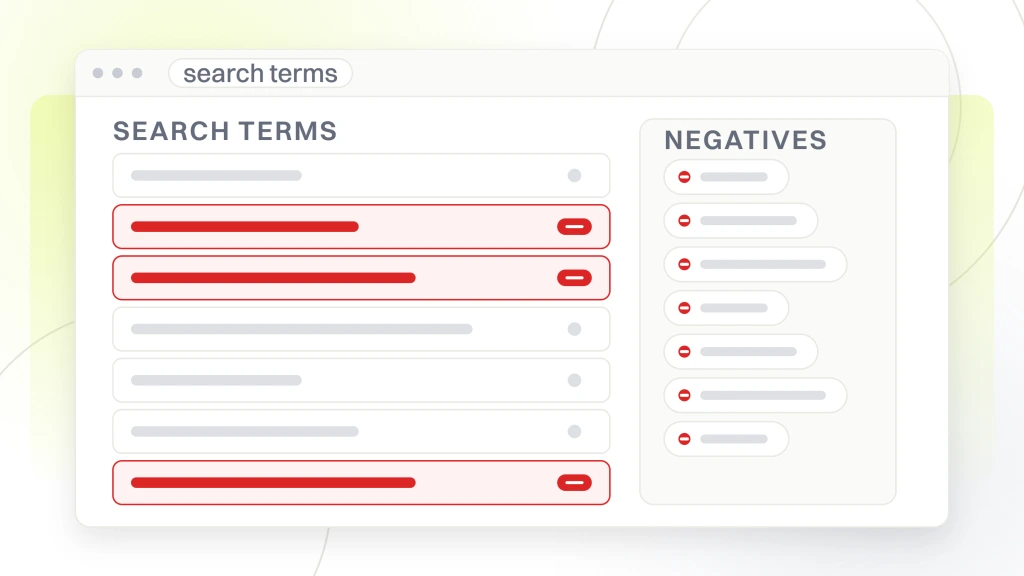
Safe to automate. Bid rules with clear guardrails, negative keyword additions from search-term reports, budget pacing alerts, ad copy A/B rotation, and pause rules for keywords under a conversion floor. That covers 80 percent of routine work. Not safe. Campaign structure changes, cross-channel budget reallocation, and landing page routing. Failure cost is 2 weeks of wasted spend, not 2 hours.
AI PPC management is not the same as automation
AI ppc management tools cover generative ad copy, audience clustering, and predictive bidding. Read the honest breakdown of AI Google Ads management tools vs a real agency before you buy on hype. Generative copy tools produce 20 headline variants in an hour. Predictive bidding tools duplicate Smart Bidding at a fraction of Google’s data volume. Use generative tools for creative velocity. Skip predictive bidding tools. The exception is when your ad platform refuses to open its own bidding models to your account.
Tools that look good but under-deliver
Not every ppc management tool ranking in sponsored search results earns the fee. Here are 5 categories that consistently under-deliver against the sales pitch. Nothing wrong with the vendors. The mismatch is between the deck and what a paid media team needs day to day.
- All-in-one platforms that promise to replace Google Ads and Meta. The native platforms are free and the automated tools sit on top, not underneath.
- AI copywriting tools sold as PPC solutions. Ad copy quality matters, but copywriting tools are not ppc management software.
- Slack alert bots that duplicate what Optmyzr does natively. A second alert layer wastes budget and creates alert fatigue.
- Full-service white-label dashboards priced above $500 a month for solo agencies. Looker Studio does the same job for free.
- Freemium tools with hard paywalls at the useful features. The free tier looks great in the demo and stops working on the first real account.
The pitch trap most agencies fall into
Every quarter a vendor pitches a new PPC tool that replaces 3 tools in your stack. The demo looks great. 6 months later the tool sits unused. The workflow never migrated. Mature paid media teams demo new tools with 1 skeptic in the room, whose only job is to ask what breaks in the current workflow for the new tool to add value. If the answer is nothing, it’s a nice-to-have.
How a UK specialty retailer won with a disciplined PPC tool stack
a UK specialty retailer, the UK’s number 1 tile specialist with 300 plus stores, ran a structured test-and-learn paid media program with our team at Redefine Web over a 6-month sprint. The tool stack was tight and boring. No AI silver bullets. Every layer earned its seat. That discipline produced 5,465 new visitors, 1.3M impressions, +7% CTR, and 33.3% unique-visitor market share and ROAS targets held.
The bid and automation layer
Google Ads Smart Bidding drove the bid decisions. Optmyzr sat on top for alerts and rules-based negative keyword additions. That automation caught cannibalization patterns that would have taken weeks to spot manually. The rule flagged when paid search overlapped other channels above a defined threshold and paused the affected keywords pending review. That test reclaimed spend being paid twice through overlapping channels.
The reporting stack
Looker Studio plus Supermetrics fed a single dashboard reviewed weekly. It showed new visitors, impressions, CTR, share of voice, and cannibalization overlap in one view. No add-ons. Clean data on a dashboard everyone read from the same page. That discipline let the team run 1 structured experiment every 2 months across cannibalization, dynamic search, and inventory-led activity.
What the tool stack proved
The a UK specialty retailer engagement proved the stack wins by discipline, not by count. 4 tools running 1 clear playbook beat 15 tools running conflicting rules. Agencies that stack tools every quarter without retiring old ones end up in the operational mess we spent 6 months cleaning up when the retailer switched to us.
PPC management software pricing at every size
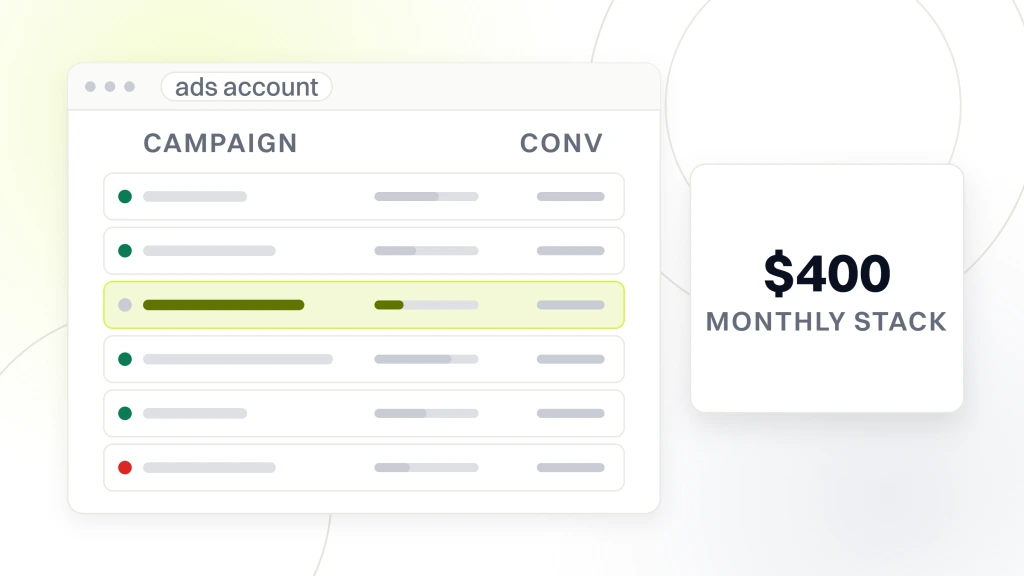
Stack pricing follows a predictable curve. For a segment-specific view, see B2B PPC agency pricing. Free tools cover the first 5 accounts. The $400 stack covers boutique work. The $1,800 stack covers mid-market. Above that, custom licenses and BI engineering set the price. If you pay an agency to run the tools, expect PPC retainer tiers from $999, $1,499, $2,499, or from $4,500 a month, with ad spend billed separately.
What the retainer buys that a tool alone can’t
A retainer buys the reading, not the software. Tools produce data. The lead interprets it, decides what to test, and writes the copy. Buying tools without hiring the reader is like buying a microscope with no lab tech. That’s why the $1,800 stack under a $999 retainer usually beats the $3,500 stack running unsupervised.
Ready to audit your PPC management software stack?
PPC management software is a means to an end. A clean account producing predictable revenue at a known cost per lead. If you want a partner to audit your current tool stack, our team at Redefine Web runs PPC management services with tool consolidation built into onboarding. Related reads. AI PPC management, PPC campaign management, what is PPC management, and PPC management cost. External references. Google Ads Editor documentation.