PPC campaign management is the weekly, hands-on work of running paid search accounts on Google, Microsoft, or Meta so every dollar of ad spend earns back more than it costs. That work covers keyword research, bid strategy, ad copy testing, landing page tests, negative keyword pruning, conversion tracking QA, and reporting that ties spend to closed revenue. A manager owns the account daily. Not just at launch. A founder can run a $2,000 per month account in five hours a week if they know what to look at. Above $5,000 per month, the account outgrows a founder’s attention span and starts wasting spend on autopilot.
The numbers in this guide come from real client accounts we run. One retail print client saw a 4.5x drop in cost per conversion after a full account restructure. A roofing client (see the home services PPC playbook) grew direct website leads 300% inside a year after a paid and organic rebuild. Neither result came from a fancy bidding tool. Both came from disciplined weekly ppc campaign management on a clean account structure. That is the story of this guide.
A real ppc campaign management story from client accounts
The retail print client came to us with an inefficient Google Ads account, thin landing pages, and shaky tracking. Cost per acquisition ran high. Lead quality ran low. Every dollar of ad spend fought against a slow page and vague keyword targeting. Classic small business PPC problems that most founders spot too late.
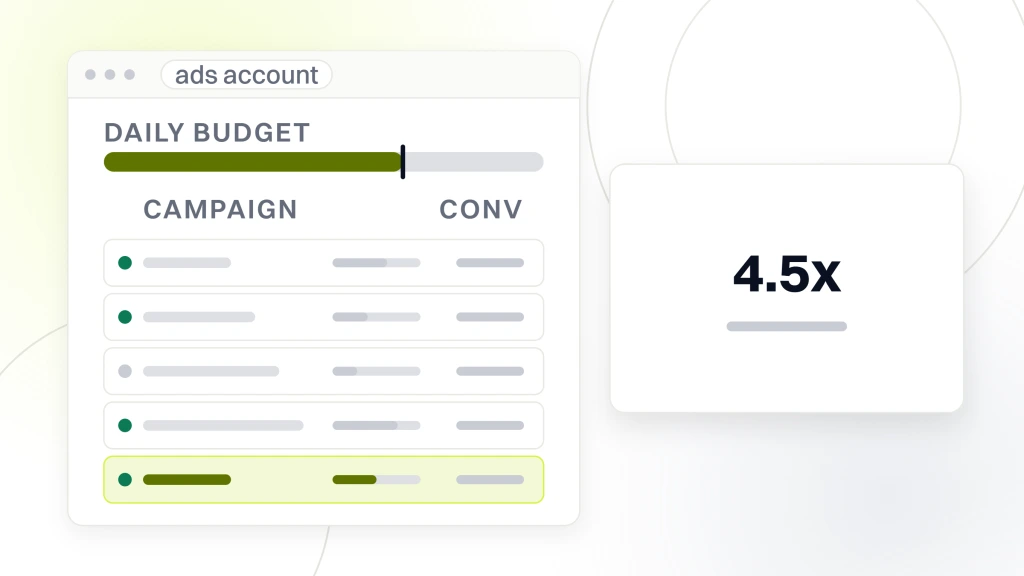
We restructured Google Ads by product line, rebuilt landing pages, tightened negative keyword lists, and layered SEO in parallel. Cost per conversion fell 4.5x. Sales volume rose 30% after the Google Ads plus SEO rebuild. The account ranked on keywords searched 1,650 times per month, feeding organic demand on top of paid. Nothing exotic. Weekly discipline on a clean account structure.
The three account changes that mattered most
Campaign structure was the first change. High-intent product queries split from browse queries into different campaigns with different bid strategies. Urgent queries close fast and tolerate higher bids. Browse queries convert slower and need aggressive negative filtering. Bundling them wasted budget on both sides. Landing pages were the second change. We replaced the single-page site with product-specific pages that matched query intent. Cross-channel layering was the third. Adding SEO alongside paid captured demand at a lower blended cost per lead.
What a roofing client looked like in twelve months
A roofing client came to us wanting fast lead flow off paid channels plus first-page rankings in three counties. Service-segmented ad groups, appointment-focused landing pages, and full call tracking produced 300% growth in direct website leads over the year. First-page rankings hit critical roofing keywords across three counties. Local business listings expanded past 400 profiles, surpassing top competitors in the region. The account did not need enterprise-scale spend to work. It needed clean structure, tracked calls, and a page that matched query intent.
Red flags in a ppc campaign management proposal
Every founder eventually reads a PPC proposal that sounds great until they compare it against a second one. The differences show up in the numbers the first proposal quietly leaves out. The five red flags below catch the majority of shallow proposals before you sign anything.
- No dedicated conversion tracking audit in month one. Every serious engagement starts here.
- Fees below $750 per month with a promise of full management. That budget covers 4 to 5 hours per month at senior rates. Not full management.
- Vague reporting cadence. If the proposal says regular reports without a specific weekly and monthly schedule, expect none.
- No mention of landing page testing. Ads without landing page tests hit a low performance ceiling fast.
- Account owned by the agency instead of the client. A serious partner spins up a Google Ads MCC and gives the client full ownership of the underlying account.
Every founder gets one tempting pitch. A 15x return in month one for $199 a month with a two-week onboarding. Then the founder gets a second call and a discount that drops the price to $99. The math says the specialist is working for three dollars an hour or living inside a shared Slack channel. Neither ends well for the account, and neither ends well for the founder who wired the deposit.
Questions to ask on the sales call
Ask for three case studies from the last 12 months with real numbers. Spend, leads, cost per lead, revenue. Ask how many accounts each specialist manages, since above 12 accounts per person is a red flag. Ask what tools the agency runs on. Optmyzr, Adalysis, or in-house dashboards are green flags. Ask how the account transitions if the primary specialist leaves. Any answer that hides behind a proprietary process is an answer the specialist cannot articulate. The specialist’s grasp of quality score levers is the real interview.
Contract terms that protect the client
The contract must give the client ownership of the Google Ads account, the tracking pixels, and the historical data. A 30 to 60 day exit clause protects both sides. Kill fees over 30 days of retainer are a warning. Any language that hands the agency IP rights to the ad creative is a warning, and that ad creative is the client brand voice. Read the contract twice, and ask a lawyer if the language is fuzzy. A six month term is standard, so plan around that.
What ppc campaign management actually costs in 2026
Retainer prices sit on a clear ladder shaped by account size and reporting depth. Redefine Web publishes four tiers for ppc campaign management. $999, $1,499, $2,499, and from $4,500 per month. Ad spend gets billed separately, so the retainer covers the labor and the tooling, not the media buy itself. Match the tier to the account size and the tracking rigor of the business, not the founder’s optimism about what the account will do next quarter.
Which tier fits which account
The $999 tier fits a single-channel Google Ads account under $3,000 in monthly ad spend, with weekly search term reviews and a monthly report. The $1,499 tier fits a two-channel program up to $10,000 in ad spend, with landing page testing inside scope. The $2,499 tier fits a three-channel program up to $25,000 in ad spend, with full call tracking, custom conversion logic, and a weekly Loom review. The Enterprise tier starts at $4,500 and fits accounts over $25,000 in ad spend with daily monitoring, custom dashboards, and a named account lead. Anything under $999 per month usually means the account gets touched once a month or runs on Google default recommendations, which optimize for Google revenue rather than the advertiser return.
In-house versus outsourced ppc campaign management
Every founder eventually asks whether to run PPC in-house or at an agency. The honest answer depends on account spend, the founder’s technical appetite, and whether the business has the volume to keep a senior specialist busy. Below $10,000 in monthly spend, an agency retainer wins on math. Above $50,000, a hybrid model or an in-house lead paired with agency oversight usually wins. In between, it depends on how much internal time exists and how patient the CFO is with hiring cycles.
Why small business accounts go to an agency
A senior PPC specialist costs $85,000 to $130,000 in salary in the US market. That is roughly $8,000 per month all-in with benefits. An agency retainer at $2,499 per month gives access to a senior specialist for 20 to 30 hours across the month, plus the tooling costs shared across the agency book. The math favors the agency until the account grows into a full-time role, and that typically means $100,000 in monthly ad spend or higher. Our B2B PPC agency team runs into this decision often with mid-market clients trying to decide when to hire.
When to bring the work in-house
Bring PPC in-house when the account spends over $50,000 per month, when custom conversion logic needs daily internal collaboration, or when the founder wants a permanent capability on the team. Even then, an agency oversight arrangement (fractional PPC director, quarterly audits) catches blind spots that a solo in-house lead misses. Full replacement of external oversight rarely pays off below $200,000 in monthly spend. Below that, the marginal cost of a second opinion is small and the marginal value is high.
Reporting the client actually reads on Monday morning
The best PPC report fits on a single page. Spend, leads, cost per lead, revenue if tracked, and a one-paragraph note on what the manager did last week and what runs next week. That is all a busy founder can read at 8 AM Monday with a coffee. Anything longer gets skimmed and the account owner loses the signal. In short, the goal of a report is a decision, not a data dump.
The one-page weekly template
Header row. Spend, leads, cost per lead, week-over-week delta. Second row. Top three campaigns and their contribution. Third row. What the manager tuned last week. Fourth row. What runs next week. Fifth row. Risks and asks. Five rows. Every Monday. No 40-slide dashboards. Founders do not have time for dashboards. They have time for a five-row summary that flags anything urgent in bold, and nothing else.
Monthly reporting that earns renewal
Monthly reporting ties spend to revenue where the data exists, calls out the three tests that ran and their results, and lines up the next 30 days of experiments. A one-page monthly summary plus a 20-minute call every fourth week is enough for most SMB and mid-market accounts. Enterprise accounts want deeper cuts, but even there the front page tells the story in six numbers. Anything else is decoration on a page nobody reads twice.
The best reporting habit we have seen for clients is a Friday afternoon Loom video of five minutes or less that walks the numbers plus the top three decisions for next week. Founders watch it Sunday night or Monday morning, come to the call with two questions, and the meeting takes 15 minutes instead of 45. Reporting should shorten conversations, not lengthen them, and a Loom always beats a slide deck for that.
Landing pages carry half the weight in ppc campaign management
Ads only get the click. Landing pages do the closing. Half the accounts we audit spend well on ads and lose the money on a landing page that was never rebuilt for paid intent. Good ppc campaign management includes landing page testing inside scope, or hands the work to a partner web team with a clean handoff. Either way, someone has to own the page and its quarterly rebuild.
Match landing page to query intent
Emergency service queries need a page that answers three questions inside three seconds. Do you fix this, do you fix it fast, and what does it cost. Planned service queries can carry a longer page with more proof, reviews, and a booking form. Brand queries can drop straight to a homepage or a category page. Mismatched intent kills conversion rate faster than any bid strategy can save. According to Think with Google paid search benchmarks, landing page quality is the single largest lever inside the quality score formula for most industries.
Split testing without breaking the campaign
Split testing works when the account has enough traffic. Below 500 conversions per month, the sample size to declare a winner takes 8 to 12 weeks per test. Above 2,000 conversions per month, a test resolves in 10 to 14 days. Below the sample threshold, focus on obvious wins. Page speed, mobile design, form length, and above-the-fold clarity. Save formal split testing for when the traffic supports the math. Anything else is guessing dressed as science, and it wastes weeks the account cannot afford.
Channel mix decisions inside a modern paid program
Google Search still dominates high-intent bottom-funnel demand for most B2C service businesses. Meta Ads and TikTok cover discovery and remarketing. Microsoft Ads runs cheaper for many B2B verticals. LinkedIn wins for high-ticket enterprise sales. A modern ppc campaign management program picks two or three channels and runs them well, instead of five channels run poorly. For instance, running paid search plus paid social plus display without a plan splits the manager’s attention and slows every channel.
Where Meta earns its slot
Meta earns a slot when the business has a warm audience to retarget, a strong visual product, or a high enough lifetime value to justify a longer nurture. Meta as a cold prospecting channel takes patience and creative velocity most SMBs cannot sustain. Refresh Meta creatives every 14 days. Wait longer and CPMs (cost per thousand impressions) climb 20 to 60% as the audience fatigues on the same three hooks. The pattern works with disciplined tracking and a strong local brand behind the paid effort.
Microsoft Ads is quietly underrated
Microsoft Ads runs 30 to 50% cheaper per click than Google Ads for many B2B verticals. The audience skews older, more corporate, and more Windows-first. Legal, financial, and manufacturing accounts often see stronger cost per lead on Microsoft than on Google. Adding Microsoft as a parallel channel costs a manager two hours per week and often produces 15 to 25% of total leads at a lower blended cost. Serious ppc campaign management programs include Microsoft on any B2B account above $5,000 in monthly spend.
Metrics a serious ppc campaign management team watches every week
Reporting suites can display 200 metrics. A working manager watches maybe 10. The rest are noise. The ten that matter split into three groups. Spend efficiency, quality signals, and revenue outcomes. Everything else is decoration. Founders who want to sanity check their agency should ask which ten metrics the manager watches every Monday. If the answer is fuzzy, the account probably runs on autopilot, and autopilot is where budgets go to die.
Spend efficiency and quality signals
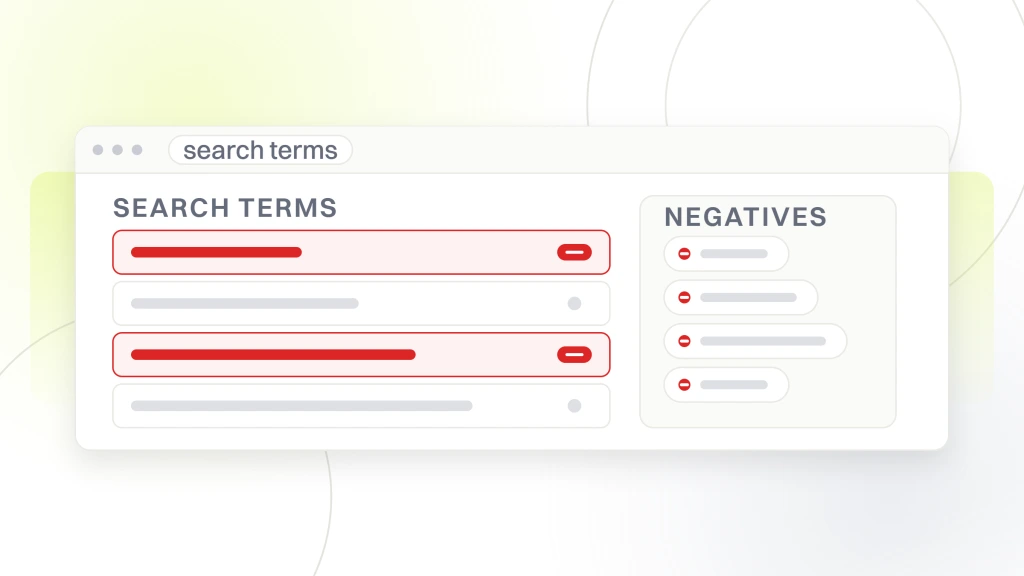
Cost per click, cost per conversion, click-through rate, quality score, search impression share lost to budget, and search impression share lost to rank cover spend efficiency and quality. Track these six every Monday. Any drift over 15% week-over-week triggers a root-cause pass. Quality score below 6 on a top-spend keyword flags a landing page or ad copy problem worth an afternoon. Impression share lost to rank flags a bid or quality score fix. Impression share lost to budget flags a budget conversation with the client.
Revenue outcomes that decide renewal
Cost per acquisition, return on ad spend, revenue attributed to paid, and cost per qualified lead are the four the client actually cares about. A weekly Slack summary with these four keeps the founder oriented. Any month the numbers slide two weeks in a row, the manager runs a mid-month strategy call rather than waiting for the monthly review. Renewal happens when these four numbers stay green over rolling quarters, not when the click-through rate looks pretty in a slide.
Realistic outcomes to expect from ppc campaign management
Founders arrive at ppc campaign management with wildly different expectations. Some expect a 20x return in month one. Others expect nothing. Real outcomes sit in a narrow window shaped by industry, spend level, and how well conversion tracking is wired up. The bands below reflect roughly 40 accounts we currently manage or have audited in the last 18 months, across home services, retail, legal, and healthcare.
Typical returns by industry
Home services (plumbing, HVAC, electrical, roofing) sees 4x to 7x on ad spend after six months. Legal (personal injury) sees 3x to 5x with high cost per lead but high closed-case values. Healthcare (dental, med spa) sees 3x to 6x after landing pages get rebuilt. E-commerce depends heavily on product margin. 2x to 4x at the low end, 6x to 10x on high-margin niche products. Disciplined accounts consistently beat the industry average on cost per acquisition.
Timeline to real results
Month one shows setup and tracking work with modest volume changes. Month two shows the first real signal as new negative keywords compound and Smart Bidding learns. Month three is where most accounts hit break-even against the retainer plus ad spend. Months four through six are where compounding kicks in and cost per acquisition drops meaningfully. Any account that expects a 10x return in week two is running on hope rather than math, and the account will disappoint by month three.
Make ppc campaign management pay for itself
PPC campaign management is the discipline of running paid accounts every week so ad spend earns back more than it costs. The work covers Google Ads, Microsoft Ads, Meta, LinkedIn, TikTok, and Amazon depending on the business. It is unglamorous. Search term reviews, negative keyword pruning, bid adjustments, ad copy tests, landing page swaps, and reporting that ties spend to revenue. Anyone selling it as a magic bidding tool is selling smoke.
Every week the account owner still has a job to do inside the engagement. Share campaign priorities. Approve budget shifts. Send screenshots of any weird lead. Send the CRM export at month end. Great ppc campaign management is a two-way partnership where the manager owns the mechanics and the client owns the truth about which leads actually closed. Skip that loop and even the best manager runs half blind for a full quarter.
If the account spends more than $2,000 per month on ads, professional ppc campaign management pays for itself inside three months in most cases. Ask three vendors for line-item scopes. Look for the five red flags above. Pick the one that gives full account ownership to the client. Redefine Web offers a fixed-scope PPC management services package, a Google-specific Google Ads management services package, and a B2B-focused B2B Google Ads services program. Book a call and we will walk through the last three PPC accounts we turned around, line by line.