AI google ads management is the loudest sell in paid search right now. Autopilot bidding. Auto-written ad copy. One-click negative harvesting. Every vendor promises 40 to 60% lower cost per lead for $79 a month. Part of that promise survives contact with a real account. Most of it does not. This guide covers where ai google ads management earns its fee, where it goes quiet, and the cost-per-outcome math that tells you whether google ads management software or a full-service agency fits the account you run today.
You will get through it in about eight minutes with a framework, a decision matrix, and hard numbers for both models. The math holds whether your monthly media sits at $1,200 or $32,000. What shifts is the ratio of AI throughput to human judgment. Mature accounts with clean tracking capture most of the benefit. New accounts, regulated verticals, and any setup with a shaky conversion signal see the tool stall inside the first month.
What ai google ads management tools really cover
Four categories cover the market. Smart Bidding inside Google Ads. Third-party bid platforms like Optmyzr, Adalysis, and Marin. AI ad copy generators. Negative keyword harvesters. Each does one job well and several jobs poorly. The AI runs a slice of the workflow and hands the rest back to whoever built the account.
Google’s Smart Bidding uses first-party auction data to adjust bids in real time. Third-party platforms layer on portfolio strategies, dayparting, and cross-account rules that Smart Bidding does not expose. AI copy generators produce headline and description variants from a product feed or a brief. Negative harvesters flag waste queries from the search terms report using pattern matching. The account still needs a human to decide which flagged queries move into the campaign.
Smart Bidding versus third-party AI
Smart Bidding beats every third-party AI on raw auction data because Google is the one sitting on the signal. Third-party tools earn their fee at the portfolio layer, cross-account reallocation, and reporting synthesis. They add nothing at the bid decision itself. Any google ads management platform claiming a proprietary AI that outperforms Smart Bidding on a per-account basis is stretching the truth. Google’s Smart Bidding documentation covers the underlying model. Any vendor claim to beat Smart Bidding on a single account should knock two points off your evaluation scorecard.
Where the AI actually wins on real accounts
An AI tool wins on four defined jobs. Bid setting at scale on stable accounts with 30 or more conversions a month. Ad copy variant generation. First-pass negative keyword flagging from the search terms report. Cross-campaign budget math. On those four, the right google ads bid management tools cut the manual workload 40 to 70% versus the Google Ads UI. That is a real hour count saved every week.
Bid setting is the biggest single lever. On a stable account with clean tracking and 30 plus conversions per month, Smart Bidding usually beats a human on efficiency inside 30 days. Smart Bidding adjusts every auction. A human adjusts once a week. Speed compounds. The catch is that Smart Bidding only works when the conversion signal is clean, and most accounts fail there before the tool has a chance to help.
| Task | AI wins by | Human still needed for |
|---|---|---|
| Bid setting on stable accounts | 40 to 60% time savings | Target CPA calibration |
| Ad copy variant generation | 10x more variants faster | Winner selection and policy check |
| Negative keyword flagging | 50 to 70% time savings | Final decision on ambiguous queries |
| Cross-campaign budget math | Instant recalc | Business-context override |
| Conversion tracking audit | Zero help | Full ownership |
| Landing page hypothesis | Zero help | Full ownership |
| Policy edge cases | Fails silently | Full ownership |
Copy generation as a real time-saver
AI copy generators produce 10 to 30 headline variants in the time a human writes 3 to 5. That is a real 5x to 10x throughput multiplier. The catch is that AI-generated copy averages to the mean of its training data. Every third variant reads like every other advertiser. A human still has to pick the winner and rewrite the ones that fall into cliché. Copy generation is a time-saver, not a replacement.
Where AI fails silently on Google Ads
AI fails on seven jobs, and the failure is silent. No error. No warning. The account quietly underperforms while the dashboard reports everything is optimizing. Conversion tracking setup. Landing page work. Vertical policy edge cases. Attribution model choice. Business-context override on budget reallocation. New campaign launch strategy. Multi-location scaling decisions. All seven need judgment the current class of tools cannot supply.
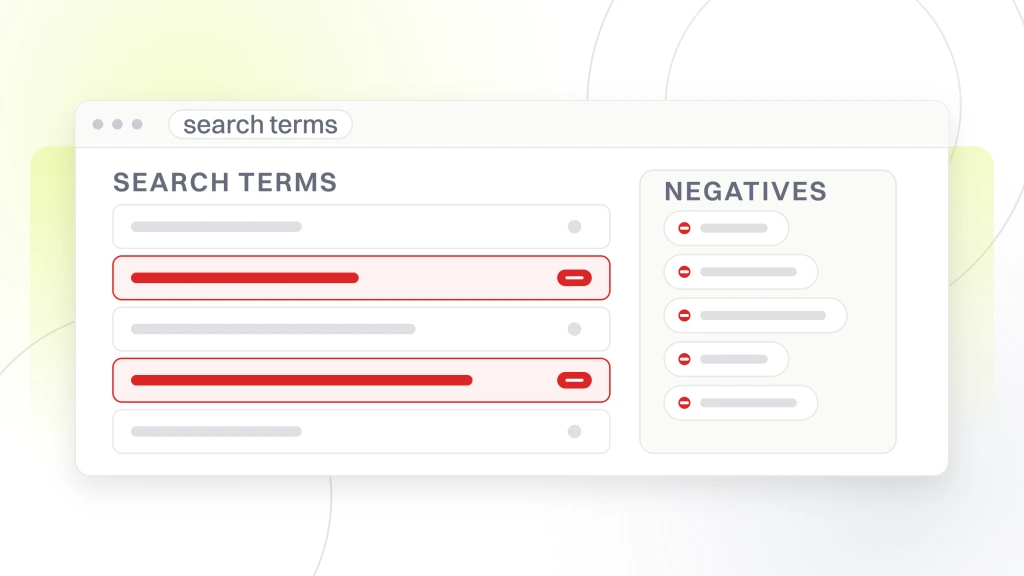
Conversion tracking is the hardest silent failure. The AI optimizes toward whatever conversion action is firing. If the tracking is misfiring on 40% of form fills, or double-counting phone calls, the tool happily optimizes toward inflated conversions. The account looks great in the dashboard and produces very few real bookings. A human catches this in a manual QA. The AI has no way to know the signal is broken because it cannot compare Google Ads conversions to real-world bookings.
- Conversion tracking setup and validation
- Landing page conversion rate work
- Vertical policy edge cases
- Attribution model choice
- Business-context override on budgets
- New campaign launch strategy
- Multi-location scaling decisions
- Cross-channel coordination with SEO and email
Vertical policy edges that break the tools
Dental, medical, legal, and financial verticals carry policy edges no AI copy generator handles well. Absolute health outcome language. Restricted content rules. Before-and-after imagery. Trademark disputes. Generators produce copy that gets disapproved because the training set was general. A human writes copy that survives review the first time because they know the policy. Regulated verticals that adopt AI copy generation typically see disapproval rates climb 15 to 30% inside a quarter.
Cost per outcome math
Compare on cost per booked outcome, never on subscription fee. A subscription platform at $79 a month looks 40x cheaper than an agency at $3,200 a month. On cost per outcome the picture inverts. If the AI-only setup lands 12 bookings a month and the agency setup lands 34 bookings a month at the same media spend, the AI-only cost per booking is $270 and the agency cost per booking is $195. Cheaper fee, pricier outcome.
Run the math on your own account with three scenarios (an honest Google Ads audit checklist makes the baseline fast). AI only. Agency only. Hybrid where the agency uses AI tools inside a managed model. The hybrid usually wins above $3,000 per month in media because the agency captures the AI muscle on bidding and copy while owning the seven jobs where AI fails. Below $3,000, AI only may work if the account is stable and the vertical is not policy-heavy.
Break-even thresholds by media spend
Below $1,500 in media, AI only wins on total cost even if outcomes are 25% lower. Between $1,500 and $3,000, the break-even depends on vertical complexity. Above $3,000, the agency plus AI hybrid wins because the outcome delta covers the retainer. Above $10,000 the hybrid win is decisive because the AI-only setup cannot absorb the strategic questions at that spend level.
Vertical complexity multiplier
Dental, medical, legal, and B2B SaaS accounts carry 2x to 3x the strategic complexity of a generic ecommerce store. AI compresses the general workflow but not the strategic layer. In those verticals the agency break-even drops to $1,800 to $2,200 per month because the gap between AI-only and human-plus-AI widens with complexity. Generic B2C sits closer to $3,000 because the tasks AI does well cover more of the workload.
Best AI tools for Google Ads shortlist
Five tools cover 90% of the market. Google Smart Bidding native to Google Ads. Optmyzr for bid management and reporting synthesis. Adalysis for statistical significance testing on ad copy. Marin for enterprise portfolio bidding. AdCreative.ai for ad copy variant generation. Each does one job well. None runs the whole account. Buying more than two of them without a human orchestrating the workflow creates conflict, not compounding value.
Optmyzr is the most useful third-party tool for accounts spending $5,000 to $50,000 per month. Its pace tracker, quality score tracker, and heat map reports save 4 to 6 hours per account per month. Adalysis pays off when the account has ad copy volume large enough for statistical significance, typically 15 plus ad groups. Marin fits enterprise portfolios with 50 plus campaigns. Below those thresholds the tool tax exceeds the return.
Optmyzr versus Google’s native reports
Optmyzr’s biggest wins over Google’s native UI are pace tracking, spend anomaly flagging, and one-click bulk actions across ad groups. Google’s native reports have caught up on the reporting side over the last two years. The tool tax runs $208 per month for the entry tier and pays back at $8,000 per month in media. Below $5,000, it is a nice-to-have rather than a break-even purchase.
Marin for enterprise portfolios
Marin fits accounts with cross-market portfolios, 50 plus campaigns, and cross-channel reporting that spans Google Ads, Microsoft Ads, and social. It is a heavy platform and requires dedicated ops to run well. Below $30,000 per month, Marin is over-tooled. Above $100,000 per month it becomes hard to run without it. The sweet spot is $50,000 to $150,000 across at least two channels.
The hybrid model most accounts should run
The hybrid operating model leans on AI powered tools for bid setting, copy variant generation, negative flagging, and reporting synthesis. Humans own conversion tracking, landing pages, campaign structure, business-context calls, and vertical policy. That split captures the real AI throughput without absorbing the silent failures. It is also the model most competent agencies now run, because tool licenses are cheap and human hours are not.
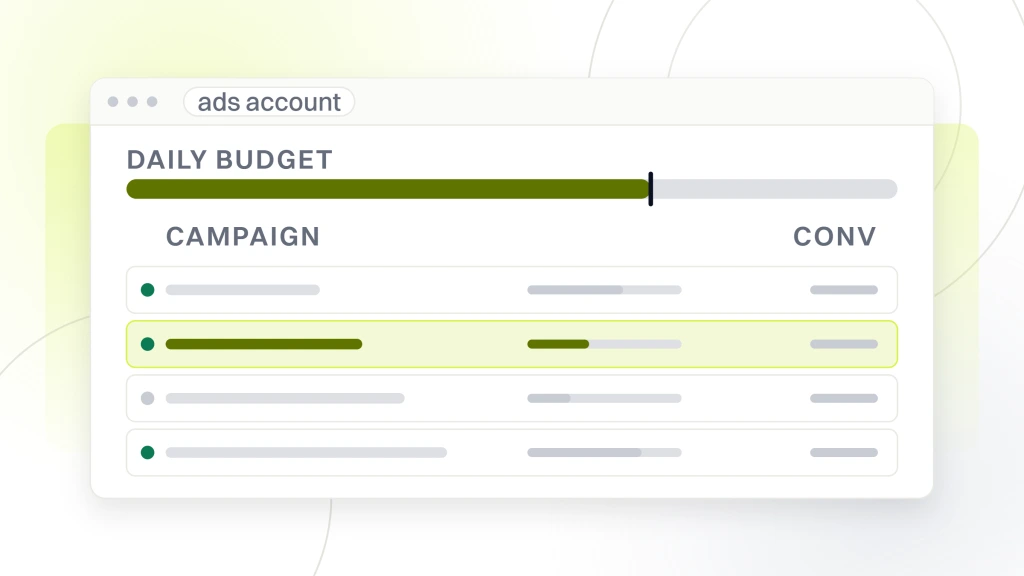
A hybrid setup for a $5,000 media account looks like this. Smart Bidding runs the bids after 45 days of manual calibration. AdCreative.ai generates 8 to 12 headline variants per ad group per month. Optmyzr flags negatives weekly. A human runs the weekly discipline, monthly reallocation, quarterly review, and every conversion tracking change. Total cost lands at $1,400 to $2,000 per month in fees, including tool costs.
- Smart Bidding for auction-level bid decisions
- AdCreative.ai for headline and description variants
- Optmyzr for pacing and negative flagging
- Human ownership of conversion tracking
- Human ownership of landing page work
- Human ownership of campaign structure
- Human ownership of policy and vertical edges
When to hire an agency instead of a subscription platform
Hire an agency when any two of six conditions apply. Monthly media above $3,000. Vertical carries policy edges. Account is new and needs conversion tracking rebuilt from zero. Multi-location or cross-market coordination. Business context regularly overrides the bid math. Internal team does not have four or more hours a week for the weekly discipline. Two of the six is enough to make an agency ROI positive against any subscription tool sold on fee alone.
Skip the agency and run AI tools only when spend is under $2,000 per month, the account is stable, the vertical is generic, and the internal team has time for the weekly discipline. That is a narrow band. Most accounts outgrow it. When they do, an agency plus AI hybrid is the natural next step. Our Google Ads management services retainer runs the hybrid model by default. For B2B, our B2B Google Ads services team layers pipeline attribution on top. If you are still weighing channels, our take on Google Ads vs LinkedIn Ads for B2B is the shortest route to a call.
Agency cost benchmarks
Agencies running the hybrid model typically charge $1,200 to $3,500 per month for a solo practice or single-location B2B account. Multi-location or enterprise accounts run $4,000 to $12,000 per month. Bundled retainers that include SEO and content often deliver better outcome per dollar because strategy across channels stops being fragmented. Redefine Web’s smallest PPC retainer starts at $999 per month bundled with SEO. For a fuller view of what agencies charge and why, see our flat-fee Google Ads pricing breakdown.
Agency red flags when evaluating hybrid pitches
Agencies that pitch AI as their proprietary edge are overselling. Every agency uses the same public tools. The differentiator is the operating model. Ask what human tasks the agency owns and which tools they use for which jobs. A clear answer means the agency has a mature workflow. A vague answer about “proprietary AI” means the pitch is dressed up. Ask for a sample workflow document. If it does not exist, the workflow does not exist.
Case study on ai google ads management in practice
Canadian Orthodontic Partners, an orthodontic network of 65 plus clinics across eight Canadian provinces, ran a mixed AI-plus-in-house setup before bringing us in as a paid media partner. The tool stack set bids well on the two campaigns that carried steady conversion volume. Other campaigns underperformed because the AI had no training signal. Cost per booked consult was climbing. Attribution across the network was patchy because the tool had no way to fix call tracking and CRM sync issues dropping bookings from the reporting layer.
We rebuilt conversion tracking across every clinic, restructured campaigns to route thin-signal ad groups through pooled Smart Bidding, layered Performance Max where the data supported it, and integrated the HubSpot data so the AI trained on real booked consults instead of raw form fills. The results across the 65 plus clinics were 97% growth in booked consults, a 58% cut in cost per consult, and 105% growth in conversion rate. The AI-only tool was not wrong. It was incomplete. The hybrid model captured its wins and closed its gaps.
The lesson is not “AI does not work.” AI works on a narrow band of the workload and needs a human orchestrating the rest. Accounts with thin conversion signal, complex verticals, or multi-location structure need a human running campaign design, tracking, and policy work. AI takes the manual work off the calendar. It does not take the strategy off the table.
Why conversion signal quality decides outcomes
Conversion signal quality decides whether the AI has any chance on the account. Smart Bidding needs 30 or more conversions per campaign each month to train reliably. AI copy generators need enough impression volume to test variants. AI negative harvesters need enough search terms volume to spot patterns worth flagging. Below those thresholds every google ads management tool on the market is guessing.
Clean conversion signal means three things. Every conversion action fires exactly once per real conversion. Every conversion action has a business value assigned. Every conversion is deduplicated across form, call, and chat. Accounts that skip any of the three get AI decisions based on inflated or missing conversions. The tool optimizes toward the corrupted number. Practices that fix tracking before turning on Smart Bidding see 20 to 35% efficiency gain inside 60 days. Turning on Smart Bidding first and fixing tracking later usually costs two months undoing bad training data.
Audit conversion tracking every 90 days. Verify each conversion action fires on the correct trigger. Verify GA4 events map to Google Ads conversions correctly. Verify call tracking numbers still route. Practices that skip the quarterly audit usually inherit a broken setup at month 12 and lose two months of ai google ads management training to the fix.
Smart Bidding training time
Smart Bidding takes 30 to 45 days to train on a new campaign and 14 to 21 days to recalibrate after a structural change. Do not touch the bid target during the training window. Push targets too fast and you lose a month getting back to baseline. Give the AI room to learn and it repays with tighter cost per outcome by day 60.
Decision matrix for choosing your operating model
Print the matrix and score the account before committing. Six inputs decide the answer. Monthly media spend. Vertical complexity. Account maturity. Multi-location or single site. Internal PPC hours per week. Conversion tracking status. Score each on a 1 to 5 scale and sum the total.
A total under 12 out of 30 points toward AI only. 12 to 20 points toward hybrid with a boutique agency or fractional strategist. Above 20 points toward a full agency plus AI operating model. Reread the matrix every quarter because account maturity and spend shift over time. What made sense at $1,800 per month in media stops making sense at $6,400 per month.
Quarterly review of the decision
Redo the matrix every 90 days. Account maturity changes as conversion history builds. Media spend changes as growth compounds. Vertical complexity changes as new services launch. Multi-location status changes with expansion. Any of the four moving up shifts the answer toward hybrid or full agency. Contraction during a slow quarter can shift the answer back toward AI only for a stretch. The right operating model is a decision you renew, not one you make once.
Switch cost between models
Switching operating models carries a real cost. Rebuilding conversion tracking takes 2 to 3 weeks. Rewriting ad copy takes 4 to 6 weeks. Re-training Smart Bidding after a structural change takes 45 to 60 days. Plan the switch during a quiet quarter, not peak. Practices that switch mid-peak lose 15 to 25% of the season’s revenue to the transition. If you inherit an underperforming AI-only account, our PPC management services team runs the transition, and our free Google Ads audit gives you the baseline to plan against.