
Real estate SEO keywords are the language your future buyers and sellers type into Google before they ever hear your name. Pick the right list and organic traffic pays for itself inside 90 days. Pick wrong and you rank for 400 industry terms that don’t move a single closing. This guide is the working list we build for agent, team, brokerage, and investor accounts, sized by search intent, competition, and how fast they show up in booked consults.
You’ll get the exact SEO keywords for real estate we prioritize on a new account, the ones we quietly drop when volume doesn’t equal revenue, and the local plus long-tail patterns that pay back the fastest. We cover keywords for real estate agents, SEO keywords for real estate investors, buyer intent terms, seller intent terms, and the neighborhood and price-band variants that fill the map pack. Read this against your last 30 days of Google Search Console before you brief a writer.
SEO keywords for real estate investors and cash buyers
SEO keywords for real estate investors flow on a different intent map. Investors are not browsing pretty homes. They’re running numbers on off-market opportunities, wholesale contracts, cash-flow properties, and distressed sales. The SEO real estate keywords list for an investor account looks nothing like the agent list.
The investor SEO keyword map has two sides. The buy-side (where investors find deals) and the sell-side (where distressed homeowners find cash buyers). Buy-side patterns include “[metro] wholesale properties,” “[metro] off-market deals,” “[metro] cash-flow rentals,” and “[metro] fix-and-flip properties.” Sell-side patterns include “sell my house fast [metro],” “cash for houses [metro],” “we buy ugly houses [metro],” and “sell house as-is [metro].”
Investor SEO shows up in the education layer too. “How to wholesale real estate in [state].” “BRRRR strategy [metro].” “Real estate investing for beginners [metro].” “1031 exchange properties [metro].” These pull mid-funnel investor traffic that either subscribes to your deal alerts or brings a partnership call inside six months. Investor content plays a longer game than agent content, and the LTV per booked call is often 5 to 10 times higher.
One investor pattern that works quietly well is the tax-strategy long-tail. “1031 exchange rules in [state]” and “depreciation strategy [state] rental property” both pull qualified investor traffic that is 3 to 6 weeks from a call. Investors respond to hard tax math the same way homeowners respond to hard valuation math. Give them the number, then give them the call.
Local modifiers that turn every real estate keyword into a ranking URL
Every real estate keyword on your list gets multiplied by local modifiers. Neighborhood name, metro name, ZIP code, school district, and specialty market names. That’s the mechanic that turns 40 primary phrases into a keyword universe of 400 ranking opportunities.
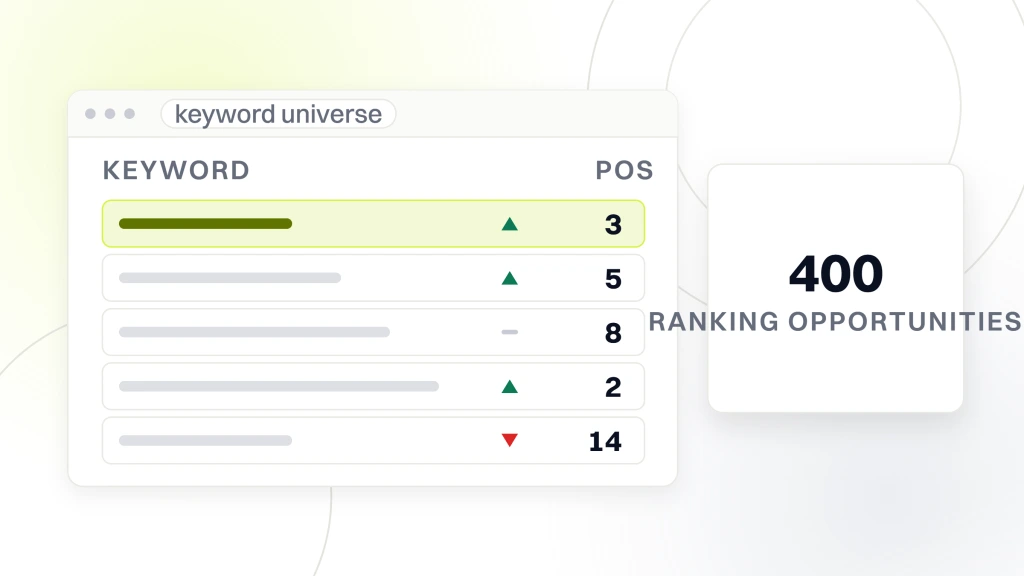
The modifier stack we work through on every new account starts with neighborhood name, the smallest local unit that has search volume in your metro, usually 8 to 25 per metro. Then metro name (Denver, Cincinnati, Portland). Then sub-metro or district name (“East Side Cincinnati,” “North Portland”). Then ZIP code, but only for the 3 to 5 ZIP codes with the highest active listing counts. Then school district name for the top 5 rated districts in the metro. Then specialty market name (“lakefront,” “downtown loft,” “mountain view,” “golf course community”) if your MLS data supports the tag as a filter.
Not every modifier deserves its own URL. Neighborhood plus property type does. ZIP code plus property type doesn’t, since ZIPs don’t map to how buyers think. Neighborhood plus price band does when the price band matches median plus or minus 30 percent. Neighborhood plus feature does when the feature is a real MLS filter buyers use. Test each combination against Google Trends and Google Search Console autocomplete before you spec the page.
For long-tail research, use Google Autocomplete plus Search Console plus your MLS’s actual filter counts. Real search behavior beats keyword-tool volume every time on real estate. Reference the Google Helpful Content guide for the intent-matching rules the crawler applies when deciding which of your 400 neighborhood pages ranks first.
Comparison of real estate SEO keywords by segment
The five segments (residential agent, luxury agent, urban team, commercial broker, investor) share almost no keyword DNA. Building the right list for your segment saves you 6 weeks of content wasted on the wrong intent. The table below sizes the primary phrase targets by segment.
| Segment | Primary intent | Sample real estate SEO keywords | Volume band | Conversion window |
|---|---|---|---|---|
| Residential agent | Buyer + seller | [neighborhood] homes for sale, home valuation [neighborhood] | 90 to 2,900/mo | 30 to 90 days |
| Luxury agent | High-net buyer | [metro] luxury homes over 3 million, [neighborhood] estates | 40 to 1,000/mo | 60 to 180 days |
| Urban team | Multi-neighborhood buyer | [neighborhood] condos, [neighborhood] lofts with parking | 110 to 4,400/mo | 21 to 60 days |
| Commercial broker | Business + investor | [metro] office space for lease, [metro] retail for sale | 50 to 1,300/mo | 90 to 240 days |
| Investor | Off-market buy + distressed sell | sell my house fast [metro], [metro] wholesale deals | 110 to 8,100/mo | 14 to 45 days |
Pick the row that matches your business before you brief a writer or hand keywords to a designer. Every downstream decision (URL structure, H1 language, internal link graph, schema markup type) flows from the segment call. Real estate SEO projects that skip the segment call produce a site that ranks page 3 for 40 mixed-intent terms.
Cross-segment notes worth writing down. Residential agent and urban team keyword sets overlap on the buyer side but split hard on the seller side, since urban teams rarely run valuation pages. Luxury and investor sets share the “specific number” pattern, where buyers over 3 million and cash buyers both search with hard price signals. Commercial broker is the outlier, since the search behavior mirrors B2B lead gen more than consumer real estate. Do not mix the lists on a single site or the URLs cannibalize.
How to prioritize your keyword list in month one
A new real estate SEO account has 90 days to prove the model or the retainer conversation gets awkward. Month-one keyword picks decide the pace of that proof. The three-part priority order we work through on every account is close-to-conversion terms first, easy wins second, portfolio content third.
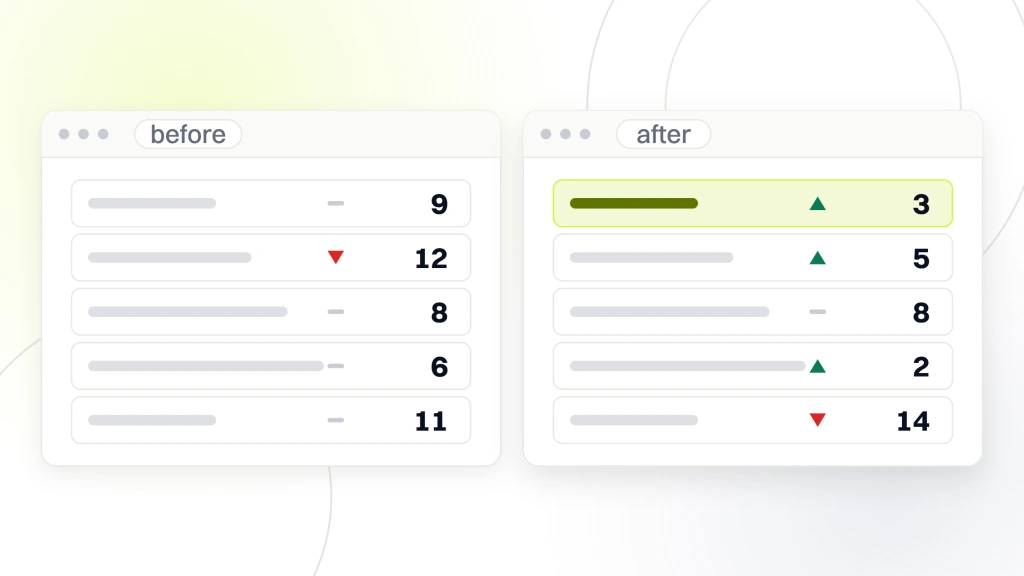
Close-to-conversion means keywords where your site is already ranking positions 5 through 15 in Search Console, with clear on-page or backlink fixes needed to get to positions 1 through 3. These are the fastest wins, since Google has already validated the URL as a candidate. Ten of these fixes in month one usually produces the first booked consults from organic in weeks 4 to 8.
Easy wins means low-competition phrases with clear intent match, where a single new well-built page can reach top-10 inside 60 days. Neighborhood plus feature terms sit here. Neighborhood plus school district sits here. Long-tail seller valuation terms sit here. These build the second wave of ranked URLs and start feeding compounding traffic from months 3 to 6.
Portfolio content means the mid-funnel content that supports the transactional pages. Buyer guides, market reports, first-time buyer FAQ pages, relocation guides. These do not rank inside 90 days on their own, and they build the topical authority signal Google uses to rank your transactional pages higher. Portfolio content is the slow burn that makes months 6 to 18 look inevitable in hindsight.
First 20 keyword picks to run in month one
- Top 5 sitting-close-to-money terms from Search Console (positions 5 to 15).
- 3 neighborhood plus “homes for sale” pages for your top 3 neighborhoods.
- 2 neighborhood plus price-band pages matched to your median-plus-30 percent band.
- 3 neighborhood plus home-valuation seller pages.
- 2 first-time buyer guides for your top 2 buyer neighborhoods.
- 2 neighborhood market-report pages with real MLS-pulled sales data.
- 2 school-district plus “homes for sale” pages for your top 2 rated districts.
- 1 relocation guide covering your top 3 employer neighborhoods.
That gives you 20 pages in month one. Each page targets 1 primary phrase plus 4 to 8 close variants. Total keyword coverage across the 20 pages usually sits around 140 unique phrases. That’s the working batch size for a new account.
Volume math for keywords for real estate SEO in your market
Volume math is where most real estate keyword lists go quiet. A brokerage in Cincinnati and a brokerage in Manhattan pull different search volume on the same phrase pattern. Sizing your list against your local market before you commit to 20 pages avoids the 6-month conversation where nothing is ranking, since the terms had 15 searches a month.
The floor we use on a new account is any phrase targeted for a dedicated URL needs a minimum of 30 monthly searches on the exact phrase in Google Keyword Planner, state or metro-scoped. Terms below 30 monthly searches can get covered inside a broader page but shouldn’t earn their own URL. That threshold shifts up for competitive markets (100 monthly searches minimum for Manhattan, Miami, Los Angeles neighborhoods) and shifts down for smaller markets (15 monthly searches minimum for markets under 200,000 population).
Cross-check the Keyword Planner number against Google Search Console impressions once you have any, and your MLS’s actual filter count for the phrase (how many buyers filter for that neighborhood plus feature in the last 90 days). Where all three signals point the same way, you have a keyword worth its own URL. Where one is high and two are low, dig into the mismatch before you commit.
One agent we onboarded last year insisted on ranking for “luxury homes.” Just those two words. Monthly volume was 22,000. His site was authority score 8. Zillow’s authority score was 91. Six weeks later he emailed the update. “Ranked page 4. Zillow moved. It was them.” Sometimes the SERP is telling you exactly what it thinks of your keyword pick, and the message is not personal.
Three market-sizing sanity checks run on every list. Phrases with monthly searches below your floor get covered in a broader page, not a dedicated URL. Keywords with the floor met but Zillow, Redfin, and Realtor locked in positions 1 to 3, skip the direct fight and target the long-tail modifier variant. Keywords with the floor met and the SERP dominated by other independent agent sites, that’s your opening. Move fast.
Real numbers behind targeted keyword picks
Segment-first keyword targeting compounds. McCarthy Court, a 7-unit luxury Sidcup development, hit 100 percent occupancy in 3 months of completion off an immersive virtual showcase site, 60 qualified buyer leads, and 10K campaign visits during the pre-construction launch. The keyword set carrying that traffic led with neighborhood-plus-property-type, lifestyle long-tails, and eco-feature filters (solar, EV charging, energy-efficient). Every one of those terms had a clear buyer intent signal and a small enough SERP for a new development site to rank inside 90 days. That’s the same pattern we brief on every new agent, team, and brokerage account.
A second cross-vertical proof point on the compounding side. A long-running Redefine Web client scaled from $1.5M to $6.8M in annual revenue over 9 years, a 353 percent gain, on a combined inbound stack of website, SEO, and paid media. Website traffic grew 784 percent and marketing-qualified leads grew 637 percent across the same window. The keyword list carrying that traffic was neighborhood-plus-project-type on the transactional pages, not generic industry phrases. Keyword picks that mirror this pattern (specific market plus specific buyer intent) produce the same shape of compounding on a real estate account.
Both accounts prove the same rule. The working list lives in the modifier layer, not the head-term layer. Every account we’ve grown past a hundred organic booked consults a year got there on 40 to 80 primary phrases dressed with local, price, feature, and buyer-type modifiers. Zero got there by ranking for “homes for sale.”
Common mistakes on real estate SEO keywords lists
First mistake is chasing head terms owned by portals. “Homes for sale in [big metro]” is not a real target for an independent brokerage. You can rank position 8 at best, and position 8 on a portal-dominated SERP pulls under 1 percent of clicks. Every hour you spend on head terms costs you an hour on modifier terms that would rank position 2.
Second mistake is keyword lists that ignore local intent. “Best real estate agent” without a city name pulls curiosity traffic that never books a consult. Every real estate SEO keyword on your list should have a location modifier baked in, either in the phrase itself or in the URL structure the phrase maps to. Non-local keywords belong on portfolio pages, not transactional pages.
Third mistake is duplicate URLs for near-identical keywords. Two pages both targeting “Boulder condos for sale” and “Boulder condominiums for sale” split link equity and confuse the crawler. Consolidate to one page, target both variants inside it, and use canonical tags where legacy URLs exist.
Fourth mistake is skipping seller keywords entirely. Every brokerage we audit has 40 buyer pages and 0 seller pages. Seller keywords convert at 3 to 5 times the buyer rate. Build 8 to 15 seller pages before you build the 20th buyer page. The math on booked listing consults per organic visit alone justifies it.
Fifth mistake is skipping keyword-to-consult tracking. Without call tracking and form tagging by landing page, you cannot tell which phrases deserve more budget. Install a call tracker (CallRail, or the equivalent) with dynamic-number insertion by traffic source before you scale the content pipeline. See our Real Estate PPC Agency for Brokerages for the parallel paid-search tracking playbook you’ll want mirrored on organic.
Tools that surface working real estate SEO keywords
Five tools carry most of the keyword research load on a real estate account. Each surfaces a different slice of intent, and using them together produces a working list you can actually publish against.
Google Search Console is the free foundation. Every keyword pulling impressions on your site is a candidate. Filter for positions 5 to 15 to find the close-to-conversion terms. Filter for queries with a click-through rate under 2 percent at positions 1 to 3 to find pages where your title tag or meta description is losing the click.
Google Keyword Planner is the volume sanity check. Metro-scoped monthly searches on exact phrases. Free with a Google Ads account. Use it to confirm the floor before you commit a URL.
Ahrefs or Semrush pull competitor gap analysis. Feed them your 3 biggest local brokerage competitors and pull the keywords they rank for that you don’t. That gap list is usually 30 to 60 phrases you had missed. Neither tool is required (Search Console plus Keyword Planner covers 80 percent) and the gap analysis they run beats manual research on efficiency.
AnswerThePublic pulls the question-form long-tails buyers and sellers actually type. “When is the best time to buy in [neighborhood].” “How long does closing take in [state].” These are the seed for buyer and seller guide content. Free tier is enough for a market.
Your MLS is the fifth tool and the most overlooked. Every MLS system records filter counts, saved-search counts, and property-view counts. That data tells you which price bands, features, and neighborhoods buyers actually search for in your specific market. No keyword tool matches it for accuracy. Pull the last 90 days of filter data before you brief the next batch of pages.
What to run this week on real estate SEO keywords
Three actions to finish by Friday. Pull the last 90 days of Search Console data, filter for queries at positions 5 to 15, and pick the top 10. Pull your MLS filter data for the last 90 days and list the top 10 filters buyers used. Cross-reference the 2 lists and rank the overlap by monthly search volume.
Those 3 lists become the seed set for your first 20 URL targets. Every URL you build from that seed set is defensible on both signals. Google validates it (Search Console position), and your local buyer market validates it (MLS filter count). URLs built from either signal alone rank slower and convert worse than URLs built from both.
Pricing on a working real estate SEO retainer starts at $999 per month for solo agents, moves to $1,499 per month for a growing team, $2,499 per month for a full brokerage rollout, and starts at $4,500 per month for a multi-market or enterprise account. Every tier includes the segment call, Search Console audit, MLS-filter cross-reference, and the working brief that runs the account.
For accounts that want the keyword research plus the content build handled together, our Real Estate SEO Services for Brokerages team runs the segment call, the Search Console audit, the MLS-filter cross-reference, and the first 20 pages inside an 8 to 12 week engagement. For the wider retainer motion behind a working real estate account, see our Real Estate Marketing Agency for Brokerages. And for the underlying SEO methodology used across every vertical, see Search Engine Optimization Services.
For more, see our real estate SEO services guide and the real estate website SEO checklist.