A real estate website SEO checklist is the compounding work behind every brokerage account that books consults from organic traffic instead of buying leads from portals. This is the working list we run on live sites. On-page fixes, technical setup, local signal work, IDX integration audits, and the common mistakes we see on 80% of real estate sites before we touch them. Read it against your own site with a browser tab open and you’ll find 10 to 20 fixes worth actioning inside the next 30 days.
You get real estate website SEO tips broken into on-page, technical, local, and IDX categories, per-template patterns, common mistakes in local seo for real estate websites (with the specific fix per mistake), and the priority order for actioning the list. It covers SEO for real estate sites at every scope (solo agent, team, multi-market brokerage) and every segment (residential, luxury, commercial, investor). Read against your Search Console positions 5 to 15 report before you brief any redesign work.
Real estate website SEO checklist beats a redesign
Most brokerages want a redesign when what they need is 30 hours of on-page and technical fixes. Rebuilding a site that already gets 6,000 monthly organic sessions resets the crawl history and typically drops traffic 40 to 60% for 3 to 5 months. Running the checklist against the same site typically gains 20 to 40% traffic inside 60 days with none of the rebuild risk.
The exception. Sites older than 8 years on a legacy CMS with no schema, no mobile responsiveness, and a page speed above 5 seconds on mobile. Those need a rebuild since the checklist can’t fix what the CMS won’t let you edit. Everything else, from IDX-heavy WordPress sites to modern React builds, benefits more from the checklist than from a rebuild.
Before you spend a single hour on the checklist, screenshot your Search Console traffic for the last 12 months and export the top 100 queries. That baseline is what you’re measuring against. Checklist work without a baseline turns into 6 months of retainer conversations where nobody remembers where the account started. Do the export in week one, save it to Drive, and reference it every quarterly review from that point on.
The other common trap. Agents who read one checklist article and decide to run all 40 items in parallel across a busy listing season. That never lands. Sequence the checklist across a 12-week sprint. GBP work in weeks 1 and 2. On-page template fixes in weeks 3 to 6. Technical fixes in weeks 5 to 10. Local backlink outreach ongoing from week 4. See our full methodology inside Search Engine Optimization Services.
On-page real estate website SEO checklist
On-page work sits on page templates. Every template (homepage, neighborhood hub, listing detail, seller valuation, buyer guide, agent profile, market report) has 8 to 12 checklist items that determine whether the URL ranks. Run the checklist once per template and the fixes replicate across every page built from that template automatically.
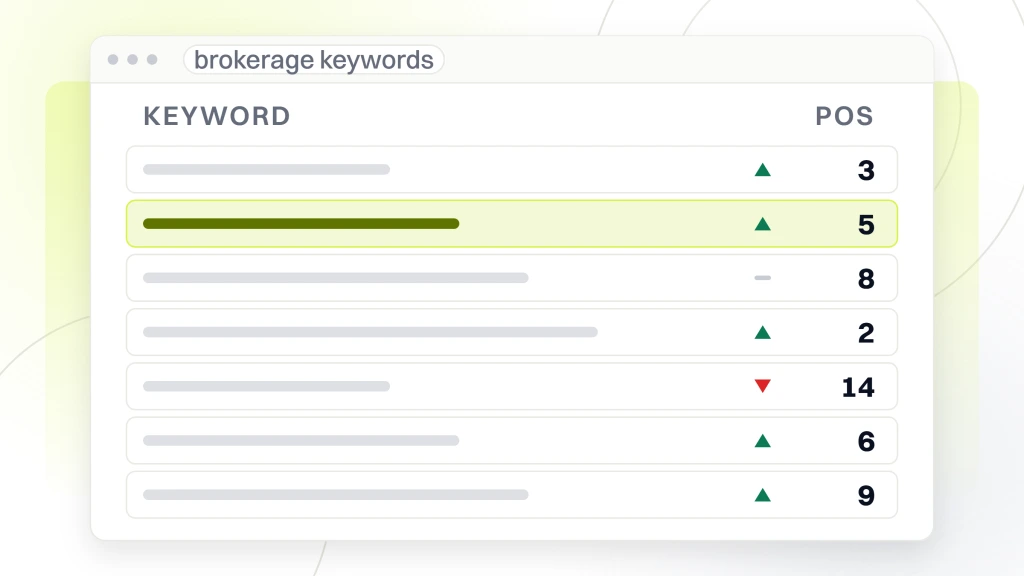
The homepage template checklist. Title tag 55 to 62 characters, primary keyword at the front, no colons. Meta description 150 to 160 characters, primary keyword in the first 100 characters. H1 with primary keyword and market name (see the best real estate SEO keywords to prioritize). Above-the-fold copy that names the market and the buyer type inside the first 30 words. LocalBusiness plus RealEstateAgent schema on the page. Internal links to the top 6 to 12 neighborhood hubs from the homepage. Load time under 2.5 seconds on mobile. GBP link and phone number in the header.
The neighborhood hub template checklist. Title tag with neighborhood name at the front. Meta description with median price data (adds click-through rate). H1 with neighborhood name plus property type. First 100 words with real market data (median price, active listing count, price range). Neighborhood description 400 to 800 words with local geographic entities (schools, parks, transit, employer names). IDX search block or featured-listing grid. Recent-sales data pulled from MLS. Testimonials from clients in the neighborhood. 4 to 6 internal links to sibling neighborhoods.
Listing detail template checklist
Listing pages are where most real estate sites lose the ranking fight against Zillow and Redfin. The listing detail template checklist. Title tag with address plus city plus for-sale pattern (123 Maple St Boulder CO for sale). Meta description with price, beds, baths, and one differentiator. H1 with the property address. RealEstateListing schema with all 20+ properties (price, address, size, features, agent, listing date). Property description 300 to 500 words unique per listing (not MLS boilerplate). Neighborhood context linking back to the parent neighborhood hub. Agent contact block. Fast property-photo gallery with WebP images under 200KB each.
Technical real estate website SEO checklist
Technical items carry more weight on real estate sites than on most verticals since the data freshness and IDX integration constraints stack against you. Six technical categories on the checklist. Crawlability, indexability, Core Web Vitals, schema markup, sitemap architecture, and mobile UX.
Crawlability. Robots.txt should not block /listings/ or /neighborhoods/ or the IDX vendor’s rendered listing URLs. Half the real estate sites we audit block their own money URLs by accident once a developer sets overly aggressive robots rules. Test with the Google Search Console URL Inspection tool on 5 randomly selected listing URLs and 5 neighborhood URLs before signing off on any crawlability fix.
Indexability. Meta robots tags on listing pages should read index, follow. Canonical tags on listing pages should point to the listing’s own URL, not a search-results page. Duplicate URLs (same listing accessible via /listings/123 and /idx/123?utm_source=xyz) should canonical to the clean URL. Real estate sites accumulate duplicate URLs faster than most verticals since IDX vendors auto-generate URL variants. Audit and clean quarterly.
Core Web Vitals. LCP under 2.5 seconds on mobile, FID under 100ms, CLS under 0.1. Real estate sites blow LCP on hero images. Compress every hero image to under 250KB, serve as WebP with a JPEG fallback, set explicit width and height attributes. Reference the web.dev LCP guide for the compression pattern. Every 500ms improvement in LCP moves mobile conversion rate 5 to 12% on real estate traffic.
Schema markup. RealEstateListing on every listing page. LocalBusiness on the homepage and every neighborhood hub. Person plus RealEstateAgent on every agent profile. Review schema tied to the RealEstateAgent for every testimonial. FAQPage on every neighborhood hub with common buyer FAQs. Reference Google’s structured data guide for the exact property list required per schema type.
Sitemap architecture
XML sitemaps segmented by content type. Separate sitemaps for /pages, /listings, /neighborhoods, /agents, /blog. Sitemap index file at /sitemap.xml pointing to all segment sitemaps. Sitemaps refresh at least daily for /listings (property inventory changes). Sitemaps ping Google Search Console on refresh. Robots.txt references the sitemap index. Every one of these is a small fix that compounds crawl efficiency. Real estate sites with one giant sitemap of 40,000 URLs get crawled 20 to 40% less thoroughly than sites with 6 segmented sitemaps of 6,000 URLs each.
Local SEO patterns for SEO for real estate sites
Local SEO carries roughly 40 to 60% of the ranking weight on a real estate site since the search intent is geographically bound by definition (see the full local SEO playbook for agents). Every fix on the local layer moves rankings faster than a comparable fix on general SEO. The local SEO patterns for SEO for real estate sites, in the order of impact.
Google Business Profile as the base signal. Verified primary category (Real Estate Agency, Property Management Company, Commercial Real Estate Agency depending on segment). 20+ real photos on the profile. Service areas set to the exact neighborhoods and ZIP codes you cover, not a 50-mile radius. Service items filled with the primary keywords buyers search. Weekly Google Posts. Review flow that pulls 6 to 12 new reviews per month.
NAP consistency across the web. Your business name, address, and phone number match exactly on your site, GBP, chamber of commerce listing, Yelp, MLS board directory, local news mentions, and every citation site. Any variant (a different phone number, a missing suite number) confuses Google’s local ranker and pushes you down the map pack. Audit citations with Moz Local, BrightLocal, or Whitespark at least once per quarter.
Local content on the site. Neighborhood hub pages with real geographic entities named (schools, parks, transit, employers, community landmarks). Market-report pages with real MLS data cited to the source. Testimonials from clients with named neighborhoods (Sarah K. from Table Mesa, closed March 2026). Local backlinks from chamber of commerce, MLS board, local news mentions, and community sponsorships. Every local signal on the site amplifies the GBP signal in the map pack.
Local citations that pay back. Chamber of commerce membership listing. MLS board directory. Local business associations. Community sponsorships (Little League, high school teams, local charities). Local news mentions (pitch a market-report angle to your metro’s business journal quarterly). Neighborhood association newsletters. Skip generic citation-building services that add 200 low-quality directory listings. Those move the needle less than one chamber listing plus one MLS board mention. Quality of citation beats quantity on real estate SERPs.
IDX audit inside a real estate website SEO checklist
IDX integration is where a lot of real estate site SEO quietly breaks. Every IDX vendor renders differently, and the wrong vendor pick or the wrong integration mode costs 30 to 60% of the potential organic traffic from listing pages.
The IDX audit checklist. Verify listings render inline in the HTML, not inside an iframe. Right-click a listing page, view source, search for the listing address. If it appears in the HTML you are inline (good). If it is missing you are iframed (bad, and losing organic traffic). Iframed listings can’t be crawled or indexed by Google, which means all your listing pages are invisible on organic search.
Verify unique URLs per listing. Each listing should have a canonical URL like /listings/[MLS-ID]/[address-slug]/ that returns HTTP 200 with the listing details in the HTML. Some IDX vendors render listings inside search-results pages with URL parameters (bad for SEO since Google treats them as duplicate). Switch to a vendor that generates static-style URLs or configure your vendor’s URL generation properly. See our Real Estate SEO Services for Brokerages for the vendor migration playbook.
Verify listing schema. Every listing page should carry RealEstateListing schema with price, address, size, features, agent, listing date, and image URLs. Some IDX vendors don’t inject schema at all, which means your listing pages compete without the structured-data signal Google uses to feature them in rich results. Add the schema at the theme level if the IDX vendor doesn’t. It is usually 30 to 60 lines of PHP or JavaScript that pays back inside the first 30 days of ranking improvement.
Verify listing freshness. Listings should update at least every 24 hours (ideally every 15 minutes for major MLS boards). Stale listings that show available for a house that sold 3 weeks ago erode trust with both users and the crawler. Configure your IDX vendor to sync at the highest frequency your MLS board allows. This is a settings toggle, not a rebuild. Check it on your first audit day.
Common mistakes in local SEO for real estate websites
The common mistakes in local seo for real estate websites we see most often, in order of frequency. Each has a specific fix, most take under 4 hours.
Mistake 1. Neighborhood pages with no unique content. 40 neighborhood pages built from the same template with just the neighborhood name swapped, no local entities named, no real market data. Fix. 400 to 800 word unique descriptions per neighborhood with named schools, parks, transit, and employer references pulled from local knowledge.
Mistake 2. No schema on any page. RealEstateListing, LocalBusiness, Person, Review schema all missing. Fix. Install a schema plugin (Yoast, RankMath, Schema Pro) and configure the four schema types across the templates. Usually 6 to 10 hours of configuration.
Mistake 3. GBP profile with 3 photos and 8 reviews. Map pack ranking capped at position 8 to 12. Fix. Upload 30 photos in week one, install a review-request SMS flow tied to closings, publish a Google Post every Monday for 12 weeks. Map pack usually moves inside 60 days.
Mistake 4. Mobile page speed above 5 seconds. Fix. Compress images, defer non-critical JavaScript, install a caching plugin, add a CDN. LCP typically drops from 5+ seconds to under 2.5 seconds. Mobile conversion rate typically gains 20 to 40% from the same traffic.
Mistake 5. No internal linking between neighborhoods. Every neighborhood hub is an orphan page. Fix. Install a related neighborhoods block on every neighborhood hub linking to 4 to 6 sibling hubs. Every neighborhood links to the homepage and the top-level industry hub. Internal link graph typically strengthens noticeably in Search Console inside 30 days.
Mistake 6. Homepage title tag reads Home Brokerage Name. Google displays that as the SERP headline for every brand-name search, which erodes brand-name click-through rate against competitors with descriptive titles. Fix. Rewrite the homepage title to name the brokerage, the market, and the primary segment. Brand-name click-through rate typically gains 4 to 6 percentage points inside 30 days.
Real estate website SEO checklist priorities by scope
Solo agent, team, and brokerage accounts run the same checklist but prioritize the items differently based on scope. The table below shows the top 5 checklist items to run first at each scope, so you can pick your first 30-day sprint by matching the row that fits your account.
| Scope | First priority | Second priority | Third priority | 30-day fix count |
|---|---|---|---|---|
| Solo agent | GBP cleanup + reviews | Homepage + 3 neighborhood pages | Basic schema | 8 to 12 fixes |
| Small team (3 to 6) | IDX audit + inline check | 6 to 8 neighborhood hubs | Full schema stack | 15 to 20 fixes |
| Brokerage (10+ agents) | Sitemap architecture + robots.txt | Neighborhood + listing templates | Local backlinks | 25 to 35 fixes |
| Multi-market | Duplicate URL audit + canonicals | Per-market neighborhood scale | Schema at scale | 40 to 60 fixes |
Pick your row before you build the sprint plan. Every checklist priority above the row is a nice-to-have. Every checklist priority in the row is the fix that most moves rankings inside 30 days at that scope. Solo agents who try to run brokerage-scope priorities burn hours on architecture work that never pays back at their content velocity.
Cross-scope notes. Solo agents get away with skipping duplicate URL audits since their site sizes are small. Multi-market brokerages cannot skip the audit since the URL problem compounds across markets. Small teams sit in the awkward middle where IDX audit is high-priority, and most teams use a shared IDX config across the team’s site. Brokerages with 10+ agents typically need sitemap architecture work before content ramp since the URL count is already too large for a single sitemap file.
Real numbers from a checklist run on live brokerage sites
Checklist work compounds. Three client examples from our portfolio.
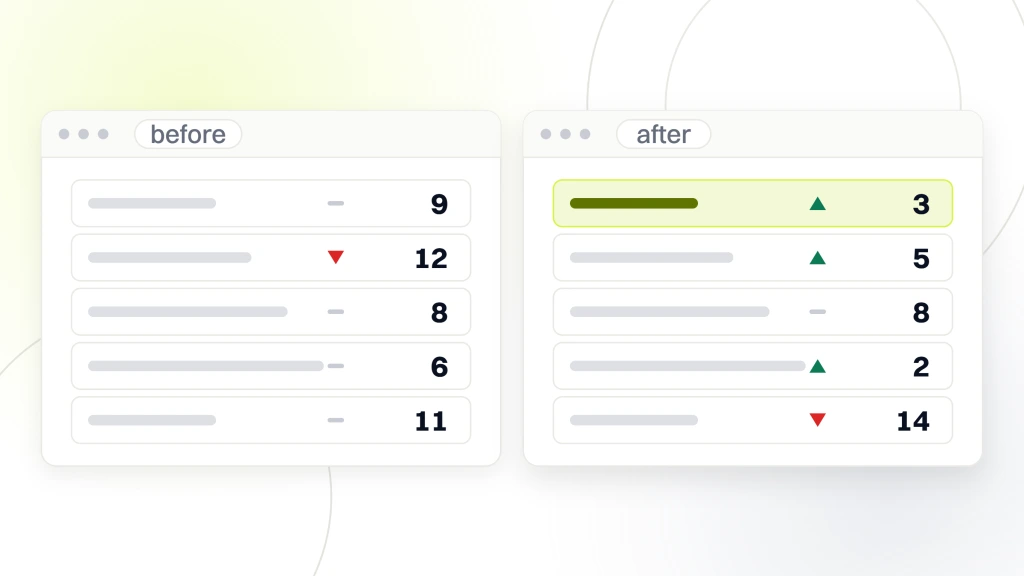
Abels Residential ran a multi-year checklist cadence covering site rebuilds, ongoing on-page audits, CRM integration, and paid media. The account books 20+ monthly rental leads on a compounding annual curve. The checklist work behind the growth targeted neighborhood-plus-property-type hub pages, real testimonial layers with named neighborhoods, and quarterly technical audits against the same 40-item list in the guide above.
McCarthy Court hit 100% occupancy in 3 months on a focused checklist run tied to local SEO and neighborhood-hub content. The signal stack behind the occupancy gain leaned on Google Business Profile cleanup, a review request flow tied to move-ins, market-report content for the surrounding neighborhoods, and a schema install (LocalBusiness, RealEstateListing on every unit, Review) that earned map-pack visibility inside 60 days.
The LA luxury real estate team ran a decade-long partnership with a fully custom rebuild, IDX integration, and long-form market-insight content. Users and pageviews both more than doubled (+100%) against the prior site baseline. The checklist behind the growth focused on neighborhood-plus-price-band pages, private consult intake pages, and technical fixes on IDX inline rendering plus schema stack completeness.
All three cases prove the model. Real estate website SEO is not a one-time project. It is a quarterly rhythm of on-page fixes, technical audits, IDX config reviews, and local signal updates that compound across years. The accounts that treat it as a compounding practice grow steadily. The accounts that treat it as a project push a site live once and watch rankings decay 30 to 40% per year until the next redesign.
Priority order for running the real estate website SEO checklist
Weeks 1 to 2. GBP audit and cleanup, homepage title and meta rewrite, Search Console baseline export, robots.txt check, sitemap check. These are the 10 to 15 fastest fixes and they set the baseline signal that everything downstream builds on. Run them before anything else.
Weeks 3 to 4. Neighborhood hub template audit, 3 to 6 hub pages rewritten to the template checklist, schema stack install (LocalBusiness, RealEstateAgent, Review). This is where the on-page work starts converting to organic traffic and where the schema stack starts pulling rich results signals.
Weeks 5 to 8. IDX audit and inline verification, listing template schema (RealEstateListing on every listing), Core Web Vitals tune-up (LCP under 2.5 seconds, CLS under 0.1), 6 to 10 additional neighborhood pages, first backlink outreach. This is the heavy work phase where most of the ranking gains materialize by month 3.
Weeks 9 to 12. Duplicate URL cleanup, canonical audit, sitemap segmentation, market-report content batch, second backlink outreach wave. The site’s technical foundation is now clean, the neighborhood hubs are ranking, and the market-report content starts building topical authority for the next quarter’s growth.
From week 13 forward the account transitions from checklist work to compounding maintenance (the full real estate SEO strategy covers the retainer motion in detail). Two to 4 new pages per week (mostly neighborhood variants and market reports), monthly GBP profile updates and Google Posts, quarterly technical audits against the checklist, and ongoing backlink outreach at a target of 3 to 6 new local links per quarter. That is the rhythm of a working retainer account past the first quarter, and the checklist becomes the reference document every audit runs against.
One thing to plan for around week 10. Google Search Console reports usually swing wildly in weeks 8 to 12 as the crawler recognizes the schema stack, the internal link graph, and the fresh content. Do not overreact to a 2-week dip in impressions or a temporary drop in a single URL’s ranking. Zoom out to the 90-day view and trust the pattern, not the daily numbers.
What to run this week on your site
Three actions to finish by Friday. Export the last 12 months of Search Console traffic and save the top 100 queries. Audit the homepage title, meta description, and H1 against the checklist. Right-click 3 listing pages and view source to check IDX inline rendering.
Those three actions produce the shortlist for your first 30-day sprint. Search Console baseline sets the measurement bar. Homepage audit surfaces the fastest possible on-page fix. IDX inline check answers the highest-impact technical question. Do them in that order and week two starts with a fix list ranked by impact instead of a redesign proposal ranked by cost.
For accounts that want the full checklist run plus the ongoing SEO work handled together, our Real Estate SEO Services for Brokerages team runs the audit, the technical fixes, and the neighborhood-hub build inside a 12-week engagement priced from $999 to $4,500 per month depending on scope. For the wider retainer motion behind a working real estate account, see Real Estate Marketing Agency for Brokerages. And for the real estate website design layer that pairs with the checklist on new builds, see Real Estate Website Design Services.