
Google Ads vs Bing PPC for real estate investors is a live question every wholesale operator wrestles with at some point. Microsoft Ads, once branded Bing Ads, carries roughly 8 to 12 percent of US search volume across Bing, Edge default installs, and Microsoft partner sites like Yahoo, AOL, and MSN. That audience skews older, more suburban, higher income, and more likely to own a home outright than the average Google search audience. On motivated seller campaigns those demographics turn into a real cost per lead advantage over Google Ads inside specific metros and account profiles, sometimes 30 to 50 percent lower per booked call.
This guide runs the head-to-head on the same operator profile. Cost per click, cost per lead, motivated seller conversion rates, demographic fit, targeting mechanics, the metros where Bing wins, the metros where Google wins, and a specific budget split framework you can use across both platforms once you know the account profile. Everything below draws from live 2026 accounts we run across single-family wholesale, subject-to, and buy-and-hold operators inside 14 US metros.
Google Ads vs Bing PPC on cost per click and cost per lead
Microsoft Ads runs 40 to 55 percent below Google on cost per click across every seller intent tier. Tier 1 cash-urgency phrases like sell my house fast run $12 to $28 per click on Microsoft versus $22 to $45 on Google. Distress-event phrases like avoid foreclosure run $10 to $22 on Microsoft versus $18 to $35 on Google. City-plus-modifier phrases like sell house Kansas City run $8 to $20 on Microsoft versus $14 to $32 on Google. Same intent, same phrases, materially lower cost per click on Microsoft.

Conversion rate holds within 5 percent of Google Ads on properly built landing pages. That drops cost per booked call 30 to 50 percent below Google in tier 2 metros of 100K to 500K population where the arbitrage window widens most across the year. Blended cost per booked seller call across both platforms lands between $84 and $137 across the accounts we run, versus $118 to $180 on Google alone.
Metro tier fit for each platform
Metro tier changes the balance between the two platforms. Tier 1 metros favor Google, since volume runs deep enough for Microsoft’s lower bid ceilings to become moot inside the tighter competitive stack. Tier 2 metros favor Microsoft, since the arbitrage window widens and volume sits inside a manageable range. Tier 3 metros favor Google barely, since Microsoft volume runs too thin to build a meaningful campaign week over week.
Tier 1 metro allocation strategy
New York, Los Angeles, Chicago, San Francisco, Miami, Boston, Washington DC. In tier 1 metros Microsoft still delivers 15 to 25 percent lower cost per booked call than Google, but volume constraints tighten. Recommended split is 20 percent Microsoft, 80 percent Google, weighted heavier toward Google on tier 1 cash-urgency phrases where volume drives the account. Lean lighter on distress-event phrases where Microsoft picks up the empty-nester and inheritance-driven pool that Google underweights. The Microsoft campaign runs as a targeted overlay rather than the primary account driver.
Tier 2 metro allocation strategy
Kansas City, Cleveland, Wichita, Columbus, Milwaukee, Nashville, Raleigh, Indianapolis, Louisville. Tier 2 metros are Microsoft’s sweet spot. Recommended split is 30 to 40 percent Microsoft, 60 to 70 percent Google. Cost per booked call blended across both platforms drops 20 to 35 percent versus running Google alone on the same total budget. Every tier 2 metro investor account we run uses both platforms from month two, once the Google Ads account has a full week of clean data to serve as the campaign structure baseline for the Microsoft build.
Tier 3 metro allocation strategy
Under 100K metro population, Microsoft click volume rarely clears 40 clicks per week on real estate investor phrases. That starves Smart Bidding of the conversion volume it needs to calibrate. Run Google alone on tier 3 metros. Revisit Microsoft once the operator expands into a nearby tier 2 metro where the audience density supports the channel. Trying to force a Microsoft campaign inside a tier 3 metro wastes the first month of learning and produces conversion data too sparse to act on.
Demographic fit on motivated seller campaigns
Microsoft Ads audience skews 55 plus at 42 percent of clicks versus Google’s 30 percent. Household income above $100,000 sits at 44 percent on Microsoft versus 38 percent on Google. Home ownership rate runs 8 to 12 percentage points higher on Microsoft searches than on Google. Investors who pair paid search with a real estate SEO strategy compound the lead flow inside 90 days. On motivated seller campaigns those numbers translate to a wealthier, older, more-likely-to-own-outright audience that includes empty nesters downsizing, inheritance-driven property sales, and long-term owners considering a cash-out sale rather than a traditional agent listing.
Filter age brackets to 50 plus at the campaign level on Microsoft to concentrate budget on the highest-converting demographic segment. That single filter pushes conversion rate up 12 to 18 percent on motivated seller campaigns without hurting volume, since the 50 plus segment is over-indexed on Microsoft to begin with. Do the same layer on Google, but the audience density is lower so the gain is smaller, roughly 4 to 7 percent.
Account setup for a real estate investor account
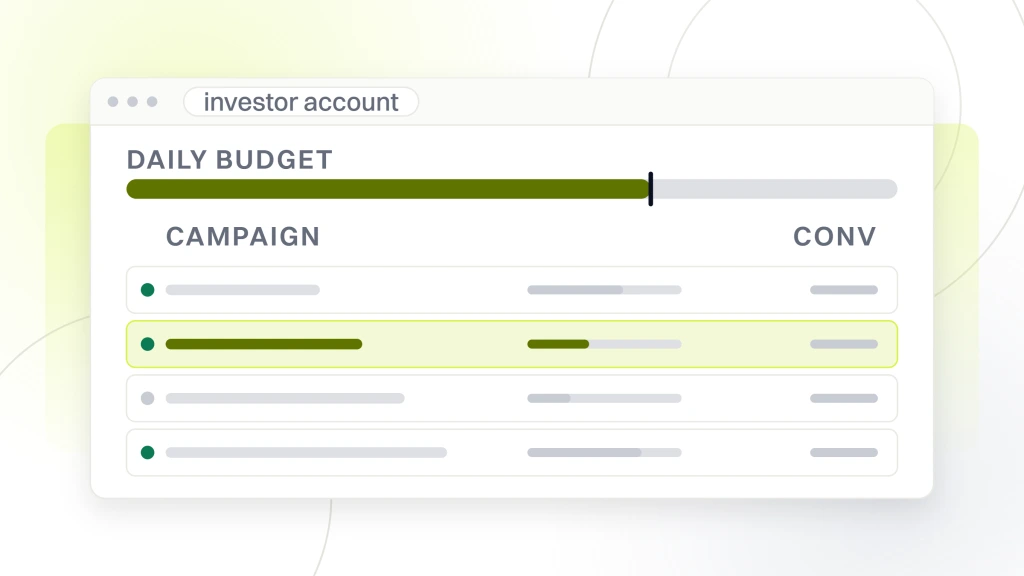
Setting up a Microsoft Ads account for real estate investors runs 3 to 5 days once the Google Ads account exists. Microsoft Ads Editor imports Google Ads campaigns directly, which cuts 60 to 70 percent of the setup work. The rest of the setup covers Microsoft-specific tracking, negative keyword adaptation, and demographic layering by age and household income.
Import from Google Ads as the starting point
Microsoft Ads Editor pulls Google Ads account structure, keywords, ad copy, and negative lists into a Microsoft-ready import file. Layer in the best real estate SEO keywords so the paid keyword list feeds the organic strategy too. The account manager reviews the import for Microsoft-specific adjustments. Bid ceilings drop 30 to 40 percent. Some Google-specific match type variations translate imperfectly. Then the campaigns push live. The whole import takes 4 to 6 hours of work on a mid-size investor account. First live clicks land inside 24 to 48 hours of the campaigns going active on Microsoft.
Tracking and conversion setup for Microsoft Ads
Microsoft Ads uses UET (Universal Event Tracking) instead of the Google Ads conversion tag. Every landing page needs the UET tag installed alongside the Google conversion tag. CallRail integrates directly with Microsoft Ads via a specific setting inside CallRail. Every phone call gets attributed to Microsoft correctly, which feeds Smart Bidding inside Microsoft with clean conversion data. Skip the UET install and Microsoft Ads runs blind on conversion data, dropping Smart Bidding performance by 30 to 50 percent inside the first quarter of the account.
A real estate case reference across both platforms
A single-family wholesale operator running motivated seller campaigns across Kansas City, Wichita, and Columbus tested Microsoft Ads alongside their existing Google Ads account through 2026. Commercial operators can take the same playbook and adapt it through a commercial real estate marketing agency that runs both platforms. Microsoft carried 22 percent of the total paid budget spent but produced 31 percent of the qualified motivated seller leads, since the demographic filter narrowed the audience to 50 plus homeowners who owned outright and matched the ideal wholesale target. Cost per qualified seller lead on Microsoft ran 38 percent below Google across the 3-month window, without changing the landing page or the ad copy between the two platforms.
A subject-to buyer operating across Milwaukee and Indianapolis ran a similar dual-platform test inside their motivated seller funnel. Microsoft carried 26 percent of the paid budget through months two through six, producing 33 percent of the total booked seller calls at a blended cost per booked call of $91 versus $137 running Google alone. According to the Microsoft Advertising real estate industry report, motivated seller campaigns on Microsoft consistently deliver lower cost per lead than Google across the same intent tiers when demographics layer correctly on age and income.
Abels Residential, a London-based letting agency Redefine Web partnered with on a full web plus SEO build, drove 20+ qualified rental leads per month and 300+ first-page keyword rankings on a sub-2-second mobile page. The same conversion-focused landing page discipline that carried Abels on organic search carries a Microsoft Ads investor account on paid search. The lesson holds across real estate verticals. Speed and trust signals matter more than platform choice.
What the Microsoft budget looked like at month three
Month three Microsoft budget sat at 28 percent of the total paid budget. Cost per booked call inside Microsoft ran $84 versus $132 on Google inside the same account, same landing page, same ad copy. Microsoft produced 34 percent of the total booked calls at 21 percent of the total spend. Google produced 66 percent of the booked calls at 72 percent of the total spend. Blended cost per booked call across both platforms landed at $118, versus $132 running Google alone on the same total budget. The Real Estate PPC Agency for Brokerages program includes Microsoft Ads as a standard channel from month two on every investor account.
What the split looked like at month twelve
Month twelve the split held at 30 percent Microsoft and 70 percent Google. Microsoft cost per booked call sat at $72. Google cost per booked call sat at $118. Blended cost per booked call landed at $104, down 21 percent from the month-three baseline. Volume climbed 62 percent across the same twelve months since Smart Bidding on both platforms compounded faster with clean UET plus offline conversion imports on both sides. Cross-platform running produced the tightest cost per closed deal we saw across the investor account portfolio through 2026.
Landing pages that work across both channels
Landing pages built for Google Ads work identically on Microsoft Ads. The six-component anatomy holds across both platforms. Keyword-matched headline, city-specific subhead, 32-point phone number, two-field form, three real trust signals, static hero photo. Speed under 2.5 seconds on mobile. No platform-specific redesign required. This is one reason adding Microsoft Ads carries such low incremental setup cost, since the entire landing page infrastructure already exists on the Google campaign.
Small tweaks that improve Microsoft-specific conversion
Two small tweaks help on Microsoft-specific pages. First, the headline can lean older-audience-friendly with slightly more explicit language like For Homeowners Who Want to Sell Fast Without Repairs versus Google’s snappier Sell Your House Fast. Second, the trust signals can weight toward tenure and licensing rather than social proof, since the Microsoft demographic pattern-matches licensure and tenure claims more strongly than review-count claims. These tweaks add 5 to 10 percent to conversion rate on the Microsoft variant without hurting the shared Google page.
When to build a Microsoft-only page variant
Accounts spending over $4,000 per month on Microsoft alone justify a dedicated page variant. The variant costs $800 to $1,600 to build once the base template exists. Testing runs 4 to 6 weeks to reach statistical significance on conversion rate improvements. Accounts under $4,000 per month on Microsoft use the shared Google page, since the traffic volume does not clear the statistical significance bar for testing a variant inside a reasonable window. Same principle applies to a Google-only variant on accounts where Microsoft budget stays low.
Pitfalls inside Microsoft Ads campaigns
Microsoft Ads carries its own pitfalls that catch operators who ran only Google Ads for years. Different match type behavior. Different audience network defaults. Different reporting cadence on conversion attribution. Each creates specific breakage patterns that hurt account performance if the manager treats Microsoft like a clone of Google.
- Audience network on by default. Microsoft’s audience network delivers messy display traffic that under-converts. Turn it off inside campaign settings, opt back in only after search performance stabilizes.
- Partner search sites on by default. Yahoo, DuckDuckGo, and other partner sites deliver mixed quality. Test with them on for two weeks, then decide.
- UET tag not installed. Silent conversion tracking failure that Smart Bidding cannot recover from once the account gets past month two.
- Bid ceilings imported at Google levels. Microsoft’s lower competition means bid ceilings should drop 30 to 40 percent, not stay at Google levels which overspends the budget.
- Negative keyword list not adapted. Some Google negatives translate imperfectly. Review manually across the first two weeks and add Microsoft-specific negatives.
- Skipping LinkedIn profile targeting on commercial accounts. Free upside that Google Ads has no answer for on commercial investor deals.
Vendor red flag on cross-platform pitches
Some agencies pitch multi-platform real estate PPC for $749 per month covering Google, Microsoft, and Facebook. Pull the cover off and the manager is running 90 accounts across three platforms at once, which is why the reports arrive vague and the conversion numbers never reconcile between platforms. The math never works. Real cross-platform management runs 10 to 18 hours per month at experienced rates. Redefine Web PPC retainer tiers land at $999, $1,499, $2,499, or from $4,500 per month depending on account size, metro count, and platform mix. Ad spend bills separately from the retainer.
Green flags on a cross-platform proposal
Green flags look like this. Written scope naming UET tag install for Microsoft Ads plus Google conversion tag for Google Ads. A specific budget split recommendation with per-metro rationale. CallRail configured with both platform integrations. A weekly one-page report showing per-platform performance side by side. Client-owned MCC on Google plus client-owned account access on Microsoft. Case studies with real cross-platform accounts producing across at least six months. Anything missing means the proposal writer has not run a Microsoft Ads real estate account through a full six-month optimization cycle.
Google Ads vs Bing PPC decision framework for your account
Use the framework below to decide whether Microsoft Ads is worth adding to your investor account. Six questions, six answers, one recommendation at the bottom. Answer honestly. The framework only works if you match your real account profile.
- Do you spend over $3,500 per month on Google Ads? Yes means add Microsoft. No means optimize Google first.
- Do you operate in a tier 2 metro of 100K to 500K population? Yes means Microsoft advantage is largest here. No means Microsoft still adds value, less dramatic.
- Are you targeting empty nesters, inheritance-driven, or 50 plus motivated sellers? Yes means Microsoft’s demographic layer is decisive. No means Google stays primary.
- Are you running commercial real estate deals with corporate property owners? Yes means LinkedIn integration is worth Microsoft alone. No means residential focus keeps the split conventional.
- Do you have UET tag install and CallRail Microsoft integration ready? Yes means launch Microsoft immediately. No means add these before launching Microsoft.
- Can you hold Microsoft campaigns through 60 days of learning? Yes means launch. No means wait until you can commit to the learning window.
What the framework recommends
Solo wholesaler running $2,400 per month on Google in a tier 2 metro should skip Microsoft for now and revisit at $3,500 monthly spend. Mid-size wholesale operation running $6,000 per month on Google in tier 2 metros should add Microsoft at 30 percent of budget from month two. Commercial real estate operator targeting corporate property owners should launch Microsoft in parallel with Google from month one, since LinkedIn integration alone justifies the platform. Luxury team targeting 55 plus empty nesters should make Microsoft the primary platform, with Google as the volume overlay for tier 1 keywords the Microsoft audience under-represents.
Make google ads vs bing ppc for real estate investors work for you
The choice between the two platforms is not an either-or call on serious accounts. It is a budget split question. Microsoft Ads delivers 30 to 50 percent lower cost per booked call than Google inside tier 2 metros, driven by demographic fit (older, higher income, higher home ownership), lower bid competition, and LinkedIn profile targeting that Google cannot match. The volume gap constrains Microsoft to 15 to 30 percent of most account budgets, but the cost advantage inside that allocation drops blended cost per booked call by 20 to 35 percent versus running Google alone. Every serious investor account with over $3,500 in monthly Google Ads spend should run Microsoft as a parallel channel from month two.
If you have never tested Microsoft Ads on your motivated seller account, the setup runs 3 to 5 days off the existing Google Ads structure. Redefine Web runs cross-platform investor campaigns inside the Real Estate PPC Agency for Brokerages program, with the platform-specific work covered inside the PPC Management Services retainer at $999, $1,499, $2,499, or from $4,500 per month depending on scope. Ad spend bills separately. Book a discovery call and we’ll walk through the last three investor accounts we added Microsoft Ads to, line by line, with the exact budget split, UET install, and demographic layering that dropped cost per booked call from $132 to $84 inside 90 days. See sibling coverage inside our Google Ads Management Services for the Google-specific build.