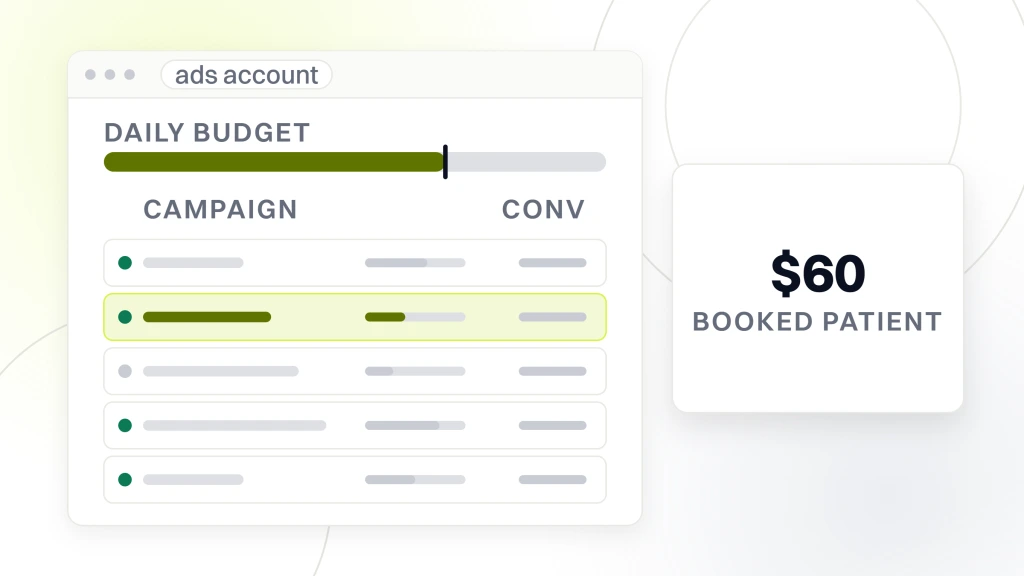
Converting dental PPC ads share five patterns. The headline promises a specific outcome. The description carries a concrete offer. The landing page mirrors the ad word-for-word. Trust signals show real reviews and named credentials. The call to action pulls the click to a booked call in under 8 seconds. Ads missing any one of the five under-convert by 30% to 60%. Ads carrying all five book patients at 5% to 12%, and that gap turns a $180 cost per booked patient into a $60 one on the same $12 click.
This guide walks the five patterns with real dental ads examples, the offer structure that works in 2026, and the landing page pairs that turn clicks into booked chairs. The framework holds whether the ad runs against implants, Invisalign, or an emergency slot. Read it once and every future ad you write carries the patterns built in.
Headline formulas inside best dental ads
Every paid dental ad opens with a headline that answers the searcher’s exact query in the first 30 characters. Google only shows 3 of your 15 headline slots per impression, so slot 1 has to promise a specific outcome. Vague headlines like Smile Brighter Today lose the click to competitors that name the city, the procedure, and a dollar figure. The best paid ads use one of four proven headline formulas.
The four formulas are procedure plus city, outcome plus timeframe, offer plus dollar anchor, and question plus direct answer. Practices that pick one formula per ad group and stack the remaining 14 headlines around it see click-through rates of 6% to 12%, versus 2% to 4% for random headlines. Google’s machine learning picks the winning combination inside that frame.
Procedure plus city headlines
Procedure plus city is the workhorse formula for local dental ads examples. Dental Implants Cincinnati. Invisalign Denver $99/mo. Emergency Dentist Vista CA. The searcher sees their exact query mirrored in the first line and knows the ad is relevant before they read the rest. Practices in competitive metros see cost per click drop 15% to 25% when the city name sits in headline slot 1, since Quality Score rewards the exact match.
Offer plus dollar anchor headlines
Offer plus dollar anchor is the strongest formula for cold traffic. $99 New Patient Exam. Free Implant Consult. $500 Off Invisalign. The dollar figure gives the searcher a reason to click today, not next week. Ads without a dollar anchor lose 20% to 35% of impressions to competitors that carry one. If a state prohibits a specific dollar figure, use a percentage or a bundled bonus, but never leave the anchor slot empty.
Description copy that carries the click
The description sits under the headline and expands the promise. Google’s responsive search ads accept 4 descriptions of 90 characters each. Every one has to carry a distinct angle. Description 1 restates the offer. Description 2 carries a trust signal. Description 3 answers the biggest objection. Description 4 pushes the call to action. Practices that publish only 2 descriptions leave 50% of the RSA capability unused.
Weak descriptions read as marketing copy. Strong descriptions read as facts. Compare Book Your Smile Today with Book Online In 60 Seconds Or Call 555-1234. The first is a slogan. The second is an instruction. High-yield paid ads carry instructions in every description, and those instructions map to a single next step on the landing page.
Google reviews at a 4.6+ average with 100+ counts qualify the ad for seller ratings roughly 40% to 60% of the time. That single extension raises click-through 8% to 14% on top of the rest of the ad.
Landing page pair that converts the click
The ad is only half the job. The landing page pair completes it. The page has to match the ad word-for-word in the H1, carry the exact offer above the fold, and reduce booking friction to a two-click flow. Practices that route paid ads to the homepage burn 40% to 60% of traffic before the visitor reads anything.
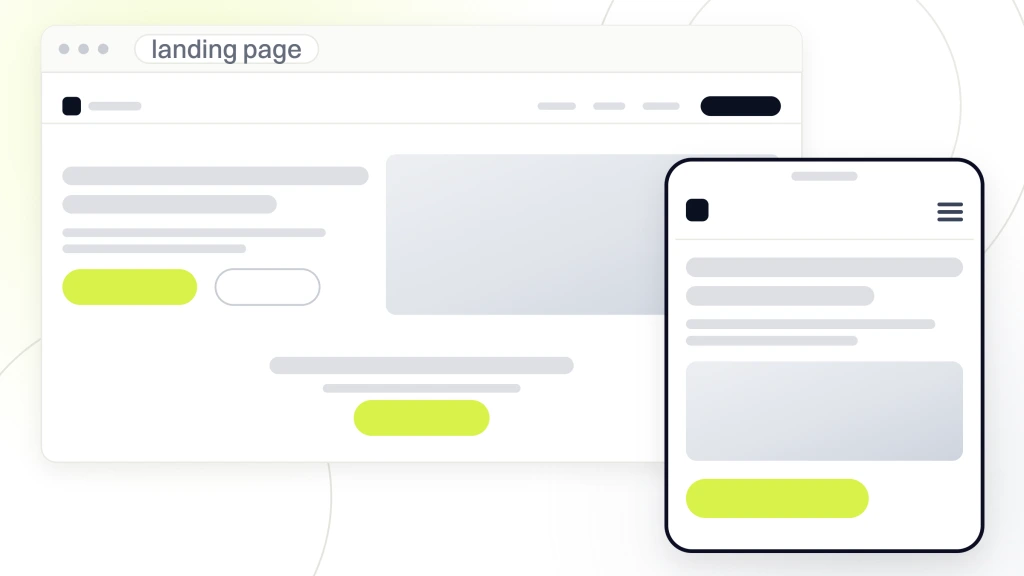
Smile Design Dentistry, a 50+ location DSO based in Dade City FL, worked with Redefine Web to build matched landing pages per location. The rebuild contributed to a 20% PPC conversion rate gain and a 30% drop in cost per call across the network. Every ad group in every metro pointed at a landing page that carried the ad’s exact promise, the same offer, and a booking-first CTA. Our dental PPC landing pages post covers the layout formula in depth.
H1 match with the ad
The landing page H1 has to mirror the ad headline. If the ad reads Dental Implants Cincinnati Book Free Consult, the H1 should read Dental Implants In Cincinnati Book Your Free Consult. Word-for-word matching lets the searcher confirm in half a second that they are in the right place. Mismatched pages create a moment of hesitation, and that hesitation costs 15% to 25% of conversions on paid traffic.
Single CTA above the fold
Above the fold, the page carries one primary CTA. Book. Call. Schedule. Not three, not five, one. Secondary CTAs like chat and form belong below the fold, but the primary needs undivided attention in the first viewport. Practices that stuff five buttons above the fold see 30% to 50% lower conversion than pages with one clear action.
Trust signals inside best dental ads
Dental patients are picking a provider for their body. Trust signals matter more here than in retail. Every high-yield paid ad and the landing page behind it use three trust signals. Google reviews with visible star rating and count. Named provider credentials like DDS, DMD, and specialty. Insurance list showing accepted PPO plans by name.
Every one is a specific fact the searcher can verify. Vague trust language like award-winning, premier, and top reads as marketing filler. Specific numbers like 4.8 stars from 240 reviews, 15 years serving Vista CA, accepts Delta Dental and Cigna read as verifiable evidence. Specifics win the conversion rate test every time we run it. Delicate Dental Group, a scratch practice launch, built 700+ Google reviews from zero in months and grew Map Pack calls 280% by making review count the moat.
- Google review count and star rating displayed with schema markup
- Provider name plus credential like DDS, DMD, DO, or specialty board
- Years serving the specific city or neighborhood
- Accepted insurance plans listed by name
- ADA membership or state dental society membership
- Before-and-after gallery for cosmetic ad campaigns
- Recent patient testimonials with first name and city
Review schema and rich results
Review schema on the landing page powers rich results in search and drives visible star ratings on the ad extensions when Google chooses to show them. Practices that keep review schema live and hold a 4.6+ rating with 100+ reviews qualify for seller ratings 40% to 60% of the time. That extension raises click-through by 8% to 14% on top of the rest of the ad. Google’s review snippet documentation covers the markup.
Insurance list as a conversion tool
Every dental patient asks one question before booking. Do you take my insurance? Answering it on the landing page removes the biggest friction point in the funnel. List the top 8 to 12 PPO plans by name. Add a searchable widget if the practice takes 20 or more plans. Practices that answer the insurance question on the page book 40% to 55% of qualified visitors, versus 15% to 25% for practices that push the question to a phone call.
Ad extensions that raise CTR
Extensions add real estate to the ad at no extra cost per click. Dental PPC ads that convert use six extensions on every ad group. Sitelinks. Callouts. Structured snippets. Call. Location. Price. Miss any one and you hand that ad real estate to a competitor bidding on the same keyword.
Sitelinks deep-link to secondary landing pages. Callouts carry practice differentiators in 25 characters each. Structured snippets categorize services. Call extensions fire click-to-call on mobile. Location extensions pull the address and Google Maps directions. Price extensions carry procedure price bands that qualify the searcher before they click.
Ads carrying all five conversion patterns book patients at 5% to 12%. Ads missing 2 or more patterns book at 1% to 3%. On a $12 click, that gap is $60 versus $180 per booked patient.
Call extensions and tracking
Call extensions on mobile fire a click-to-call action directly from the search results. Attach a call-tracking number so GA4 attributes the resulting call back to the campaign, ad group, and keyword. Our call tracking for dentists post covers CallRail setup. Practices that skip call tracking on the extension level see a huge gap between reported Google conversions and actual booked appointments, since the call from the extension bypasses the landing page entirely.
Copy testing rotation for dental ad ideas
Every ad group needs 2 to 4 active responsive search ads with distinct copy angles. Refresh one variant per ad group per month. Rotate in new headlines that lead with different value propositions. Cost-anchored. Time-anchored. Outcome-anchored. Trust-anchored. Multiple angles let Google’s ML pick the winner per query, and the four angles keep the paid ad copy library fresh across the year.
Kill the worst-performing variant when the winner reaches 95% statistical confidence at 100 conversions or more. Below that threshold, the gap is noise. Above it, the winning copy earns another 30 days until the next challenger appears. Practices that let ad copy calcify for 6+ months typically see click-through drop 15% to 25% below refreshed variants.
Document every test with a hypothesis, the variant copy, the sample size at conclusion, and the outcome. That documentation compounds into a private playbook of dental ad ideas that work for the practice. Over 12 months the playbook usually holds 40 to 80 documented tests.
Emergency dentist ads as their own category
Emergency dentist searches convert differently from every other dental ad type. The searcher is in pain, on a phone, at 10 pm on a Sunday. Emergency intent ads need three things. Same-day availability signal. Phone number front and center. Zero booking friction.
Emergency headlines should carry Open Now, Same-Day, or Tonight. Descriptions should carry the phone number and one trust signal. The landing page should be a click-to-call above the fold with a photo of a real dentist and a 30-word paragraph confirming what to do next. Practices that skip the phone number front and center see 30% to 50% of emergency traffic bounce, since pain does not wait for a booking form.
After-hours copy angle
After-hours emergency ads should say what happens after the phone rings. Answered By Real Dentist. Same Night Emergency Slot. On-Call Doctor Tonight. Vague after-hours copy like Call Us Anytime does not answer the searcher’s real question. That specificity separates ads that book emergency patients from ads that generate calls to voicemail.
Specialty procedure copy patterns
Implants, Invisalign, and cosmetic procedures each carry different searcher psychology. Specialty procedure copy needs to be tuned to the case value, the decision timeline, and the objection pattern the searcher walks in with. The same headline formula does not work across all three, and forcing one to fit all three costs 25% to 40% of conversions.
Implants searchers are ready to spend $3,000 to $6,000 per tooth but they need to overcome pain, cost, and time objections. Invisalign searchers are choosing between clear aligners and traditional braces and need to see the cost, the timeline, and the outcome. Cosmetic searchers are considering an elective procedure and need the outcome visualized. Copy angles differ. Every paid ad in each category respects the difference. Our dental implant marketing post covers implants copy in depth.
Implants copy angles
Implants copy leads with cost anchoring or timeline. $99 Implant Consult. Same-Day Implant Placement. Full Arch In 3 Days. The searcher is pricing the decision and wants to know how long the process takes. Ambiguous copy like Restore Your Smile does not answer the question. Cost-anchored copy books the consult and lets the practice quote the case in person, which is where the real close happens on a $4,500 case.
Invisalign copy angles
Invisalign copy leads with monthly payment or treatment length. $99/mo Invisalign. Straight Teeth In 6 Months. Invisalign With Free Whitening. The monthly payment removes the sticker shock of $4,500. The treatment length compresses the perceived timeline. The bundled offer adds a specific bonus. Every one converts better than Straighter Smile Awaits, which reads as marketing copy and does nothing for the ad’s Quality Score.
Compliance rules baked into dental ad copy
Dental ad copy carries specific policy exposure. Google’s healthcare and medicines policy flags absolute language, guaranteed outcomes, and misleading before-and-after claims. State dental boards regulate testimonials, specialty claims, and comparative advertising. Every dental ad has to respect both layers, or Google penalizes the ad and sometimes the entire account.
Skip absolute promises. Painless. Guaranteed. Permanent. Every one triggers Google’s misleading claims filter. Replace with softer positioning. Gentle. Predictable. Long-lasting when maintained. Never use another provider’s trademark in ad text without written permission. Never use patient before-and-after photos in the ad itself. Save those photos for the landing page, where Google ad policy does not apply. Our dental ads compliance post covers the full policy map.
Measurement that separates real conversions from noise
PPC ads only prove they convert when the measurement is real. Google Ads conversion counting is optimistic since it counts every form submit and every call over 60 seconds. The practice’s real conversion is a booked appointment that showed up. Bridge the gap with dedicated tracking.
Attach CallRail to every ad group. Route ad-driven calls to a separate tracking line. Match booked appointments to source in the practice management system. Reconcile monthly. Practices that skip this reconciliation see reported conversion rates 40% to 60% above the real booking rate. VP Dental, a 20+ year practice led by Dr. Valerie Preston, doubled new monthly patients and added $8,100 in monthly recurring revenue once web and SEO ran under one measured strategy instead of two disconnected vendors.
Show rate on booked appointments
Show rate on booked appointments is the final honest number. A booked appointment that does not show did not convert. Dental practices average a 78% to 92% show rate depending on reminder discipline. Practices that automate SMS reminders at 24 hours and 2 hours before the visit raise show rate 6% to 12%, and that gain flows straight to PPC-attributed patient count.
Scale the framework across procedures
Once one ad group hits target CPA, the next question is how to scale without diluting quality. Scaling paid search in dental means adding procedure lines, adding geo lines, or adding day-part budget, in that order. Skipping ahead to broad match on cold procedures is the fastest way to burn a monthly budget.
iSmile Dental Spa, a premium practice in Carmichael CA, scaled from 1-2 new digital patients per month to 12-14 by ranking 75 keywords on page 1 in 6 months and layering Google Ads on top. Patient volume grew 900% and marketing ROI hit 500% over the multi-year program. The scale worked once the practice fixed the secure site and the specialized service pages first, then poured paid traffic into the fixed pipes. North County Dental Care in Vista CA drove 1,000% patient growth and 500% ROI from 2021 to 2024 with the same stack, layering local SEO, Google Business Profile ads, and service pages on a rebuilt mobile-first site.
Book more patients with the five-pattern framework
The five patterns are all executable this week. Fix the headline formula. Publish the offer. Match the landing page. Load the trust signals. Measure the show rate. Any practice with a $2K to $10K monthly PPC budget can run this framework and see cost per booked patient drop 40% to 60% inside 90 days. It does not need a bigger budget, a new agency, or a new platform. It needs the five patterns in every ad group, every landing page, and every conversion report.
The best dental ads follow the dental PPC strategy by design, not by accident. Start with one ad group, prove the CPA, then scale to two, then three. Document every test. Track every call. Reconcile every booked appointment against a shown patient. In short, the practices that treat PPC as a measured system compound. The ones that treat it as a monthly bill burn out inside 12 months.