Most dental practices burn $4,000 a month on Google Ads and walk away with 6 booked patients. The offices running a real dental ppc strategy pull 22 booked patients on the same spend. Structure decides that gap, not budget. A tight campaign build, matched landing pages, HIPAA-safe conversion feedback, and a monthly review rhythm push dental ppc cost per lead under $90 for general work and hold it there for months at a time.
This dental ppc guide walks through the dental ppc strategy that gets a practice profitable inside 90 days. You’ll get the campaign types to start with, the bid model that works for a healthcare account, the negative keyword rules that block junk clicks, the landing page shape that turns paid traffic into booked chairs, the HIPAA-safe tracking stack, and the monthly workflow that catches waste before it eats the retainer. Read once, then run it against your own account with a 90-day plan and monthly review dates on the calendar.
How to Structure Keywords in a Dental Google Ads Strategy
The account map matters more than clever bidding. Split each service campaign into 2 to 4 ad groups, and load each ad group with 3 to 8 keywords that share the same searcher intent. Broad match alone drags the ad in front of dental hygiene students, dental school applicants, and insurance shoppers who never book a chair. A 60% phrase, 30% exact, 10% broad blend keeps intent tight while giving Smart Bidding room to learn on real dental ppc strategy signal.
Match keywords to intent openly. Transactional keywords (“emergency dentist near me,” “dentist open Saturday”) deserve top bids and go to booking-focused landing pages. Commercial keywords (“best dentist Miami,” “top-rated Invisalign provider”) get middle bids and go to service pages with review sections above the fold. Informational keywords (“does dental insurance cover implants”) get low bids or get dropped, since their booking conversion rate is too low for paid to make sense.
Negative keywords cut waste before it burns budget. Every dental ppc account needs a shared negative list covering dental jobs, dental hygienist school, DIY dental, dental questions, dental x-ray reading, dental insurance definition, cheap dentist under $100, and any competitor brand names you do not want to bid against. Update the negative list monthly from the search terms report. See dental google ads keywords for the starter list.
- Transactional ~ “emergency dentist near me,” “book dentist appointment”
- Commercial ~ “best invisalign provider Denver,” “top dentist Austin”
- Service specific ~ “dental implants cost,” “same day crowns”
- Location plus service ~ “dental implants Miami,” “pediatric dentist Brooklyn”
- Insurance qualifier ~ “dentist that accepts Aetna,” “Delta Dental provider near me”
Group keywords by profit, not by search volume. A single implant booking is worth $3,500 to $6,500 in first-year revenue at most practices. A single cleaning booking is worth $180 to $260. So a $260 cost per lead on implants is a great trade, while a $260 cost per lead on hygiene is a losing quarter. Set target cost per acquisition per ad group based on the service the group targets, not on an account-wide average that hides the losers inside the winners.
Writing Ad Copy That Wins Clicks From Ready-to-Book Patients
What lands in the ad decides whether the click happens. Headlines should mirror the exact query the searcher typed, follow with a practice-specific value point (specialty, hours, insurance accepted), and close on a verb the reader can act on. Description lines carry the urgency load, plus real social proof. Think 5-star Google reviews, 20+ years in practice, same-day appointments. Load each ad group with at least 3 responsive search ads and 15 headline variants so the auction has room to pick winners.
Extensions carry weight in dental ppc marketing. Every account should run sitelinks (4 to 8 pointing to service pages, insurance page, new patient specials, contact), callouts (open Saturdays, most insurance accepted, 5-star reviews, financing available), structured snippets (services, insurance plans), a call extension with a tracked phone number, and a location extension. Missing extensions leaves 15 to 25% of ad rank on the table before the auction even runs.
Ad copy compliance is unique in dental. Google Ads policies block claims like “cheapest dentist” or “guaranteed pain-free procedure.” Before/after image claims need disclaimers. Insurance mentions need to accurately reflect what the practice accepts. State dental boards regulate what ads can promise. Break these and Google disapproves ads mid-campaign, right when spend was starting to compound. Our dental ads compliance guide covers the rules side.
Ad copy testing rhythm
Test ad copy monthly at the ad-group level. Rotate in 2 new headlines and 1 new description line, mark the old ones as paused after 30 days if the new ones perform better. Never test at the campaign level, the signal gets muddy. Small, structured tests inside ad groups produce a 5 to 15% CTR gain per quarter, which compounds fast on a serious ad budget.
Write for the search intent, not for the practice. Patients type “emergency dentist Saturday” because they are in pain right now. An ad headline that reads “20 Years of Award-Winning Dental Care” misses the moment. The winning headline reads “Emergency Dentist Open Saturday, Same-Day Appointments.” Match the query, meet the moment, and CTR jumps 30 to 50% versus generic practice branding copy.
Building Landing Pages That Convert Paid Clicks Into Booked Visits
The page a paid click hits is where the money is won or lost. Route ads to the homepage or a generic service page and conversion rates drop 40 to 60% versus a dedicated landing page built for the ad group. Every service campaign gets its own landing page, matched to the ad copy, keyword, and offer, or the whole dental ppc strategy account leaks money at every step.
The landing page shape that converts. A hero with a headline matching the ad, subhead with a proof point (Google review count, years in practice), phone number in the hero, booking form above the fold, credibility strip (insurance logos, certifications), service details below the fold, real Google reviews block, FAQ, and a sticky booking bar on mobile. This shape converts at 8 to 14% for general dental campaigns versus 2 to 5% for generic service pages.
Speed is a conversion factor, not just a ranking factor. Landing pages should load in under 2 seconds on mobile. Compress images to WebP under 100KB each, defer non-critical JavaScript, and inline critical CSS. A landing page that takes 5 seconds to load loses 40% of paid traffic before the page even renders. Our dental ppc landing pages guide shows the exact templates worth copying.
One landing page detail most practices miss, the phone number in the hero must be a tracked number tied to the specific campaign, not the main office number. Otherwise attribution collapses inside a week. Every campaign gets its own CallRail number, or its own DID (direct inward dial) if the practice uses another call-tracking tool.
Trust signals belong high on the page. Practices under-index on real Google reviews, before/after image galleries, and insurance logos above the fold, then wonder why conversion rates lag. Move 3 recent five-star Google reviews and 6 insurance logos into the top third of the landing page and conversion rates rise 1.5 to 3 points on average. Small change, big payoff on paid traffic.
Setting Up Conversion Tracking Without Breaking HIPAA
Smart Bidding is only as smart as the conversion signal you feed it. Give it clean data and it optimizes toward booked patients. Give it garbage (page views, spam-bot form fills) and it will happily buy more of the wrong clicks. Every “Google Ads doesn’t work for dentists” story I hear traces back to a broken tracking stack, not a broken channel.
The tracking stack. Google Ads conversion tag on the thank-you page after form submit, Google Ads phone-click conversion for mobile click-to-call, CallRail dynamic number insertion for offline call tracking, GA4 conversion events on form submit and phone click, and imported conversions from CallRail to Google Ads at the “qualified lead” level (calls over 60 seconds). Every one of these needs a monthly verification test on live traffic.
HIPAA rules shape the tracking stack in dental. Do not send PHI (protected health information) to Google Ads. Use CallRail’s HIPAA-compliant call recording plan. Configure GA4 to redact user identifiers. Use a HIPAA-safe form tool like JotForm HIPAA or a custom implementation. Non-compliant tracking exposes the practice to HHS enforcement actions that dwarf any ad performance gain in a single settlement.
Import qualified lead conversions back into Google Ads within 30 days so Smart Bidding can optimize toward booked patients. Practices skipping this step let Google optimize toward whichever form submit comes first, spam or real. Feeding qualified conversions back trains the model on what a good lead looks like, and CPA drops 20 to 40% inside 60 days on a well-built account.
Allocating Budget So a Dental Practice PPC Strategy Actually Scales
Where the money goes matters more than how much of it there is. Floor-level spend for general dentistry sits at $2,000 per month per location. Implants and cosmetic need $4,000 per month per location, since auction prices run higher and Smart Bidding needs volume to learn. Once cost per acquisition hits target, add 15 to 25% to the budget each month. Add more than that and the algorithm loses its footing on the retrain.
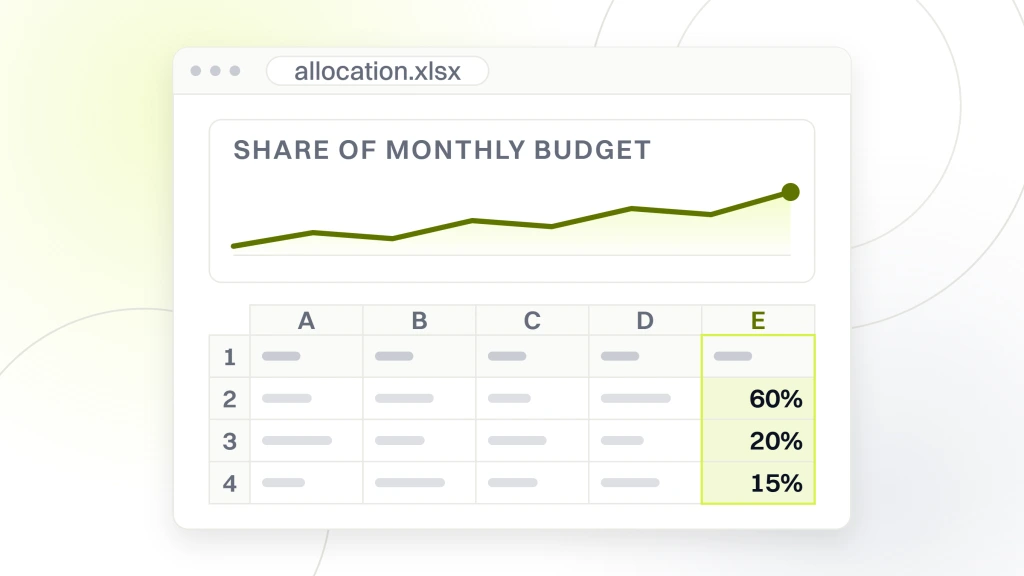
Allocate 60% to search campaigns targeting service and location keywords. 20% to Local Services Ads. 15% to Performance Max once tracking is clean. 5% to remarketing for warm audiences (site visitors who did not book). Adjust these percentages monthly based on CPA and conversion volume, not on gut feel or last month’s charts.
| Campaign type | Typical spend share | Cost per lead range | Best for |
|---|---|---|---|
| Search (service) | 60% | $45-$90 general, $90-$260 implants | Direct-intent bookings |
| Local Services Ads | 20% | $30-$70 per lead | Emergency and general |
| Performance Max | 15% | $50-$120 | Practices with clean tracking |
| Remarketing | 5% | $25-$60 | Site visitors not booked |
Multi-location groups should allocate per office based on capacity, not evenly. An office with 2 open new-patient slots per week gets a lower budget than an office with 15 open slots per week. Practices allocating evenly across offices end up with waitlists at some offices and empty chairs at others, and the ad account gets blamed for a scheduling gap.
Seasonal shifts matter too. Q1 (January through March) is peak dental search demand as insurance benefits reset and patients book cleanings. Increase budget 20 to 30% in Q1 to capture the search bump. Q3 is slower, hold budget flat or drop 10% while keeping campaign structure live. Q4 rebounds in November as patients rush to use benefits before year-end.
Case Study. Smile Design Dentistry Drops Cost per Call by 30%
Smile Design Dentistry runs 50+ offices across Central Florida and Tampa Bay. When we first looked at the account, the paid build was fragmented, targeting was loose, and most leads never turned into visits. Cost per acquisition was high, return was thin, and front-desk staff were burning hours on people who never showed up for a first appointment.
We restructured the PPC accounts by funnel stage and geography, so high-intent leads got routed to offices with open capacity. Dedicated landing pages matched ad creative for each service, local trust plus national brand consistency. CallRail was integrated to sort leads that booked from leads that did not. Bid logic ran per neighborhood, not per office, to capture patients searching from drivable distance. Continuous A/B creative testing kept the account fresh through the year.
Results. PPC conversion rate up 20%, cost per call down 30%, and full campaign coverage across 50+ locations. The practice group’s spend went from producing waste to producing measurable bookings, and the VP of marketing gained a per-office view of paid performance for the first time. See high roi dental google ads for the deeper case-study breakdown.
The lesson. Restructured accounts plus per-neighborhood bid logic plus landing pages that matched ad copy plus qualified-lead feedback to Google, all four together. Any one alone would have moved the numbers 5 to 8%. Together they moved cost per call 30%. Dental ppc strategy looks like this when it works across a real multi-location group.
2026 Dental PPC Cost per Lead Benchmarks Worth Knowing
Published cost per click benchmarks for dental accounts swing widely by service line and metro, so treat any single blog-sourced average with caution. Major metros like New York, Los Angeles, Chicago, and Miami run well above suburban and rural markets, so a Manhattan practice paying a premium on cosmetic keywords is usually inside the normal band rather than being overcharged. The benchmark worth trusting is your own account, measured as cost per booked-patient lead by service line and tracked month over month.
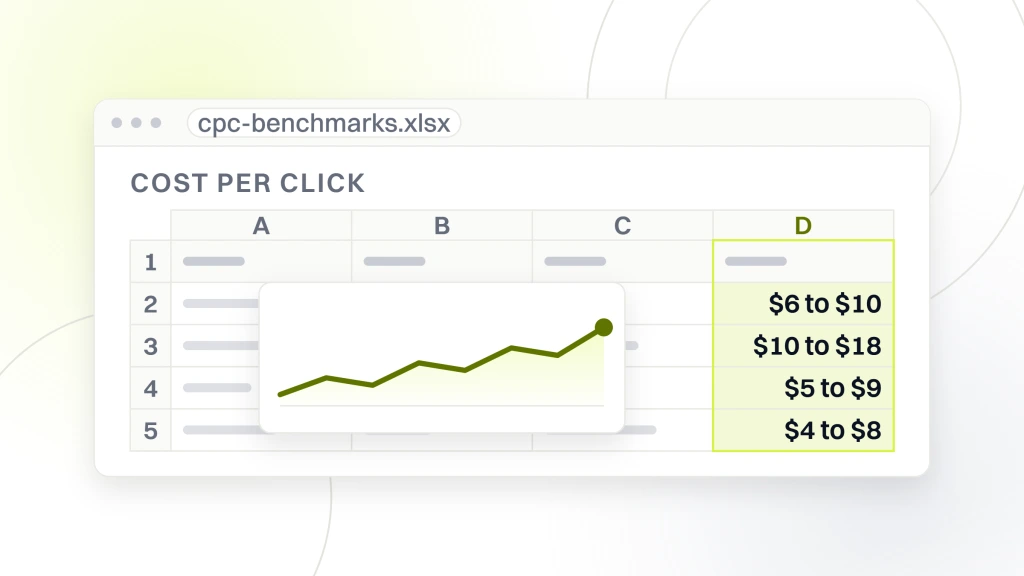
Cost per click by service line, veneers $6 to $10, implants $10 to $18, Invisalign $5 to $9, general and hygiene $4 to $8. Cost per acquisition on cosmetic sits near $75 at a 10% conversion rate. On procedure-segmented Performance Max builds, mean CPL drops to $38 to $55 for hygiene and general visit bookings, compared with $68 to $95 on undifferentiated search-only builds. That gap alone justifies rebuilding an account into procedure-segmented ad groups and PMax asset groups.
ROAS for a well-run dental account averages 5.5x across search and PMax, meaning $5.50 in booked treatment revenue per $1 of ad spend. That number pulls in cosmetic and implant lifetime values, so a hygiene-only account will see closer to 2.5x to 3.5x ROAS. Benchmark your own account against these numbers monthly, and if you are below 3x on a general dentistry account or below 4x on a mixed cosmetic-and-general account, structural work is overdue.
The Monthly Workflow That Keeps a Paid Account Profitable
What separates accounts that improve from ones that decay is the rhythm behind them. Google Ads was never “set and forget.” Search terms shift every week, competitors bid up popular keywords, ad fatigue creeps in, and landing page conversion rates drift as browsers push updates. A repeatable monthly cadence keeps the account ahead of the drift instead of chasing it.
Week 1, pull the search terms report. Add every wasteful term to the negative keyword list. Review new patient calls from CallRail and mark quality (booked, not booked, spam). Import qualified leads back to Google Ads. Week 2, refresh ad copy with 2 new headlines per top ad group, pause ads under 3% CTR. Week 3, review landing page conversion rates, run one A/B test per top campaign, verify page speed under 2 seconds. Week 4, adjust budget allocations based on CPA by campaign, report to the practice owner.
Quarterly, run a full account audit, keyword expansion for new services or locations, competitor analysis on Google Auction Insights, and a landing page redesign for any page under 8% conversion rate. Annual, review lifetime value per acquired patient and reset target CPA for the coming year based on real numbers, not estimates. See dental marketing roi for the LTV framework.
Delegate the monthly rhythm to whoever owns the account, the agency, freelancer, or in-house lead. Do not spread it across three people. Ad accounts drift when nobody owns the weekly rhythm. Even a solo dentist running DIY should block 90 minutes every Friday for the four-week rotation, and treat that block as non-negotiable on the calendar.
Mistakes That Push Dental PPC Cost per Lead Past 200
The single most expensive mistake is running Google Ads with no conversion tracking at all. The algorithm optimizes toward whatever signal is available. Give it none and it defaults to clicks. Practices spending $3,000 a month with no tracking are effectively handing Google a blank check. Sort tracking first, before any keyword or copy work.
Second mistake, driving all traffic to the homepage. Homepages rank for brand queries but convert badly on service intent. Every ad group needs a dedicated landing page matching the ad. Third mistake, one broad match keyword per ad group with no negatives. This is the fastest way to burn $1,500 on “dental hygienist salary” clicks in a single month.
Fourth mistake, letting Google auto-apply “recommendations” for 6 straight months. Auto-apply pushes budget higher and adds keyword variants without checking whether they book patients. One Central Florida practice owner ran the auto-apply setting on for 6 months, watched his monthly spend climb 40%, and gained zero new booked patients from the extra dollars. Turn auto-apply off in every dental account and review recommendations by hand.
Fifth mistake, not integrating call tracking. Roughly 60% of dental leads come by phone, not form. See common dental PPC mistakes for the full list. Without call tracking every optimization decision is half-blind. CallRail, WhatConverts, or a similar tool is non-negotiable for any dental practice spending over $1,500 per month on paid search.
- Running Google Ads without conversion tracking
- Driving all traffic to the homepage instead of dedicated landing pages
- Broad match keywords with no negative keyword list
- Letting Google auto-apply “recommendations” without review
- Ignoring call tracking when 60% of leads come by phone
Pro Tip. Import CallRail Qualified Leads to Google Ads Weekly
The single change that moves dental ppc cost per lead the fastest is feeding qualified-lead conversions back into Google Ads on a weekly cadence, not monthly. Weekly imports tighten the learning loop, cut Smart Bidding’s optimization window from 4 weeks to 1, and drop CPA another 10 to 15% on top of the 20 to 40% drop you get from monthly imports. Set up an automated CallRail-to-Google Ads sync at the “call over 60 seconds, tagged as booked” level and let the algorithm do the compounding work.
Get a Dental PPC Strategy That Books Patients Under $90 per Lead
If the paid account is running well above your target cost per booked-patient lead, the answer is structural, not budgetary. Redefine Web rebuilds dental Google Ads accounts around HIPAA-safe conversion feedback, per-service landing pages, and the monthly rhythm covered above. Every retainer starts at $999/mo and includes account restructure, landing page build, CallRail integration, and monthly reporting.
Book a call to walk through the current account, or read the dental PPC service page for the full scope.