Dental PPC landing pages that convert at 12 to 18% share a single design pattern every time. Not the homepage. Not a generic services page. A dedicated page built for one service, one offer, one call to action, and one phone number. Every element on the page earns its pixels or it comes off. Practices that point dental PPC ads at the homepage convert at 2 to 5%. The same practice on a proper landing page converts at 12 to 18%. That is 3 to 5 times more booked patients on the same ad spend, and targeting has not moved a single click yet.
In the next few minutes you will get the 5 design rules for dental PPC landing pages, the form fields that book calls, the proof stack that clears first-visit doubt, the mobile spec most dental traffic hits, and the quarterly A/B tests that keep the page fresh. Read straight through in 10 minutes. Compare against your current pages while you read. Every gap becomes a conversion opportunity for the next campaign refresh.
Why homepage traffic from dental PPC ads never converts
The homepage acts as a menu, and that is exactly why these pages exist as a separate build. A homepage lists every service, every doctor, every location. A visitor who clicked an Invisalign ad in Cincinnati wants Invisalign, not a directory. Bounce rates on ad-to-homepage traffic run 68 to 85%. A dedicated landing page built for one offer books 3 to 5 times more calls from the same clicks.
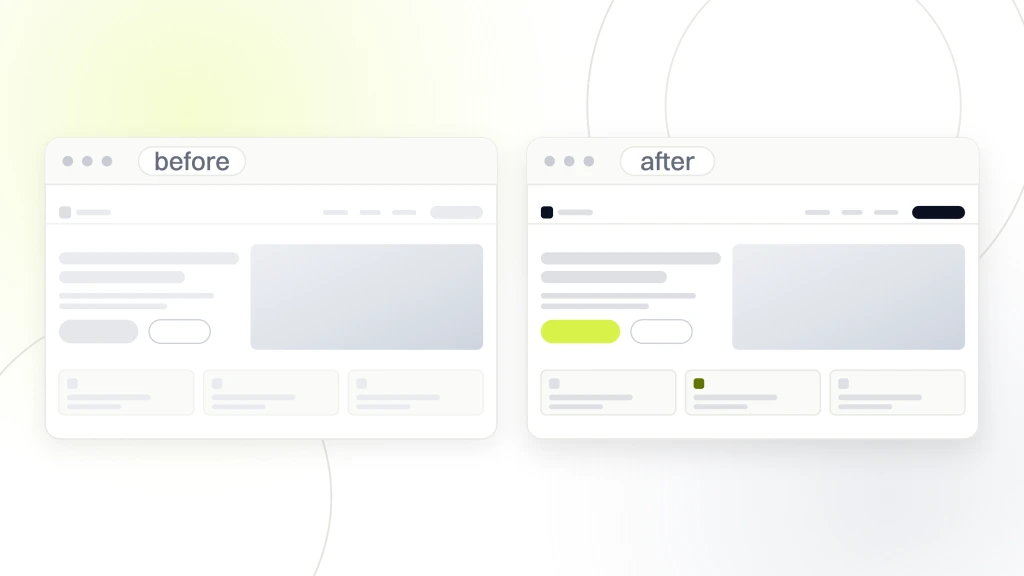
A dedicated dental PPC landing page removes the menu problem. One service. One offer. One phone number. One booking form. The visitor arrives, reads the headline that matches the ad, scans the proof, clicks the phone number or fills the form. Time on page climbs from 40 seconds to 90 seconds. Bounce rate drops from 75% to 35%. Conversion rate climbs from 3% to 14% on average across the 40 plus dental campaigns we have benchmarked. Same traffic, same ad spend, 3 to 5 times more booked calls.
The attention tax on a homepage
On paid landing pages, every extra menu item burns attention. A homepage with 8 top-nav items, 6 service cards, 4 doctor bios, and 3 location tabs forces 21 micro-decisions before the visitor reaches the Invisalign section. Most paid-ad visitors quit at decision 3 or 4. A dedicated dental practice landing page cuts all of it. No top nav, no secondary services, no doctor picker. One decision, one action, one booked call.
Message match between ad and landing page
If the ad promises Invisalign in Cincinnati starting at $89 per month, the landing page headline repeats that promise word for word. Marketers call this scent match, and it decides whether the visitor stays past the first 3 seconds. Homepage headlines say “Welcome to Our Practice.” Dental landing pages headlines say “Invisalign in Cincinnati starting at $89 per month, free consult.” One is a menu. The other is the answer to the search intent.
Why message match feeds Quality Score
Google reads the string match between ad, keyword, and landing page directly into Quality Score. A page that mirrors the ad headline word for word scores 6 to 9. A mismatched homepage scores 3 to 5. That gap flows straight into cost per click. Practices that fix message match on 6 pages watch cost per click drop 15 to 40% inside 2 weeks with no bid changes.
Five design rules for dental PPC landing pages
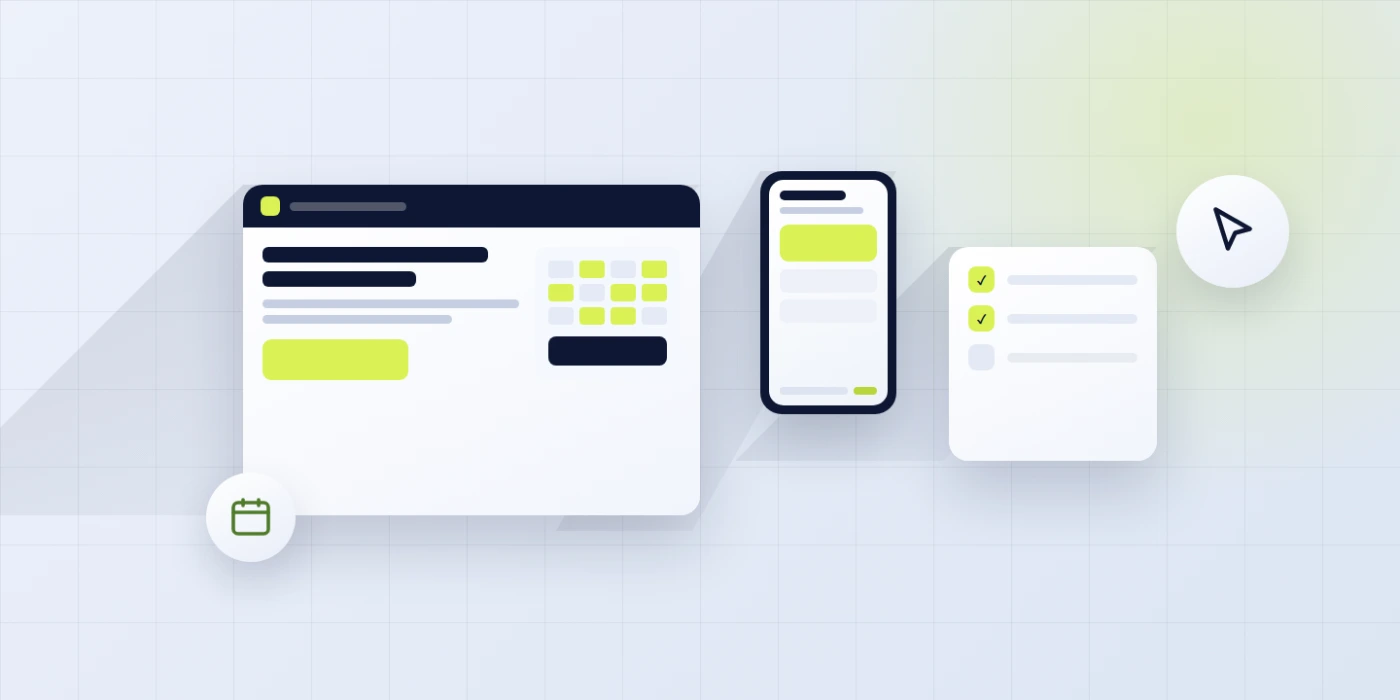
Every high-converting set of ppc landing pages for dentists follows the same 5 rules. Message-match headline. Above-the-fold phone number that stays sticky on mobile. Three proof elements in the first 800 pixels. Short form with 4 fields maximum. One primary call to action repeated 3 times down the page. Break any one of them and conversion drops 30 to 50% inside the same week.
- Headline matches ad copy word for word, includes service plus city plus offer
- Phone number visible above the fold on mobile, sticky as visitor scrolls
- Three proof elements in the first 800 pixels. Review count, star rating, insurance logos
- Short form maximum 4 fields. Name, phone, service, availability window
- One primary CTA repeated 3 times. Hero, mid-page, sticky footer on mobile
The headline formula that converts
Service plus city plus offer plus proof number. “Invisalign in Cincinnati Starting at $89 Per Month. Free Consult. 340 Reviews.” Reads like a headline, not a mission statement. Contains the exact phrase the patient searched. Includes the specific offer from the ad. Includes proof that quells first-visit skepticism. Landing pages that lead with “Your Smile is Our Passion” or “Excellence in Dentistry” convert 40 to 60% lower than the formula above. Patients are running a 3-second gut check, and abstract brand copy fails that check.
Phone number placement rules
The phone number sits above the fold on mobile, at 24 to 32 point font, tap-to-call enabled, and sticky in the header on scroll. About 60 to 75% of dental PPC conversions come from calls on mobile, not form fills. A phone number buried in the footer costs the practice 30 to 50% of its potential conversions. The number is the primary CTA on dental landing pages. The form is the backup for after-hours patients who cannot call yet.
Proof stack placement
Three proof elements sit in the first 800 pixels below the hero. Review count and star rating pulled from Google. Insurance logos of the top 5 insurers the practice accepts. One line of doctor credentials. Testimonial quotes appear lower on the page. Named awards or associations sit in the footer. The 3 above-the-fold proof elements quell the first-visit skepticism a paid ad visitor arrives with. Without them, conversion drops 25 to 35% because trust never gets established fast enough to hold attention.
Form design for dental PPC landing pages
On these pages, a 4-field form books 3 to 5 times more calls than an 8-field form. Every extra field shaves 8 to 12% off the conversion rate. The 4 fields that produce booking-ready leads are name, phone number, service interest, and availability window. The rest belongs in the follow-up call, not on the landing page. Practices that ask for insurance info, date of birth, and full address up front kill conversion for zero data value.
| Field | Purpose | Impact on conversion |
|---|---|---|
| Name | Personalizes callback | Neutral |
| Phone | Enables call, matches ad intent | Positive |
| Service interest | Routes lead to right desk | Neutral |
| Availability window | Sets callback expectation | Slight positive |
| Follow-up nurture | Negative, 10 to 15% drop | |
| Insurance carrier | Front desk qualification | Negative, 20 to 30% drop |
| Date of birth | Chart pre-population | Very negative, 30% drop |
| Full address | Chart pre-population | Very negative, 35% drop |
Progressive disclosure for longer forms
Some dental landing pages need more data at the lead stage for scheduling or insurance verification. Progressive disclosure solves this. The first screen asks for name and phone only. After submission, a second screen asks for insurance and preferred appointment window. The first screen conversion rate stays at 14 to 18% because it looks short. The second screen completes at 65 to 80% because the patient has already committed. Total lead value grows without killing the top-of-funnel volume.
Form error states that keep the patient
On paid landing pages, bad error messages cost 15 to 25% of form submissions. “Invalid input” tells the patient nothing. Inline validation with a specific message like “Please enter a 10-digit phone number” catches the patient before they leave the field. Red borders on the errored field. Green checkmark when it validates. A clear button to reset all fields and start over. Every one of these micro-interactions holds the patient through the moment where a generic error would send them back to the search results page.
Proof elements that overcome skepticism on dental PPC ads
Paid ad visitors on ppc landing pages for dentists carry more doubt than organic visitors. They know an ad brought them and they expect a hard pitch. Proof elements defuse that in the first 3 seconds. A review count above 200 signals real practice volume. A star rating above 4.7 signals real quality. Insurance logos signal financial fit. Doctor credentials signal clinical fit. Miss any one and doubt wins.
The proof stack works in a specific order. First. Quantifiable trust in the form of review count and star rating. Second. Fit indicators like insurance logos and a price starting point. Third. Personal credibility, so doctor credentials and one testimonial. Fourth. Risk reduction, such as money-back on consult if it applies or a free x-ray with the first visit. Pages that put testimonials in the hero without the quantifiable trust element convert 20 to 30% lower because the first-visit skeptic dismisses the testimonial as marketing copy.
Real review integration
Pull the review count and star rating from Google via the Places API and display them live. Static “340 reviews” text at the top of the page is fine, but a live widget that shows the actual review count is 15 to 25% more effective at holding the skeptic. Add 3 real review quotes below the fold with reviewer first name and last initial. Not stock quotes. Real Google review quotes that a patient can verify with a click.
Insurance logo placement
On dental practice landing pages, the top 5 insurance carriers the practice accepts sit as small color logos below the hero. Delta Dental, Cigna, MetLife, Aetna, Guardian. About 60% of dental PPC visitors care whether the practice takes their insurance. Answering that question in the first 800 pixels prevents 20 to 30% of visitors from bouncing to search a competitor. Include a “See full insurance list” link that opens a modal with the full list. That combination hits the fast filter without cluttering the hero.
Doctor credibility signals
One line of doctor credentials sits below the insurance logos on dental practice landing pages. Board certifications, years in practice, dental school. Keep it to a single line. The point is not a full bio, it is a proof snippet that quells the “is this a real dentist” question. Patients making a first-visit choice want that reassurance in 3 seconds. A full bio belongs on a dedicated About page linked from the footer of the landing page, not competing for hero attention.
Mobile-first specs for dental PPC ads landing on phones
Roughly 78% of dental PPC traffic arrives on mobile, so these pages have to be built mobile-first. Every design choice starts from a 375-pixel viewport and scales up from there. Desktop is the second-priority build. Tablets get responsive spillover. The mobile hero fits the headline, phone number, and one CTA button above the fold with no scrolling. Below the fold sits the 3 proof elements, the form or click-to-call, and the map. Every element scales with the viewport.
- Hero fits 375px width with headline, phone, CTA button, no scroll needed
- Phone number tap-to-call, 24 to 32 point font, sticky in header on scroll
- Proof stack in first 800 pixels below hero
- Form or click-to-call button large enough for thumb touch (44px minimum)
- Below-fold. Map, hours, one testimonial, secondary CTA
- Page weight under 400 KB for sub 2-second load on 4G
- Core Web scores. LCP under 2.5s, CLS under 0.1, INP under 200ms
Touch target sizing rules
On dental landing pages, every interactive element sits at 44 pixels minimum touch target. Phone button. CTA button. Form field. Insurance list link. Anything under 44 pixels causes mis-taps and drop-offs. Google’s mobile UX guidelines set 48 pixels as the recommended target. Landing pages that ignore touch target sizing convert 15 to 25% lower on mobile because patients quit after 2 mis-taps. See more dental PPC mistakes to avoid. Test on real thumbs, not desktop dev tools.
Page weight and load time
Total page weight sits under 400 KB total. That covers hero image (150 KB WebP), CSS (30 KB inlined critical), JavaScript (100 KB), fonts (60 KB subset), and everything else combined (60 KB). Pages above 800 KB lose 20 to 40% of mobile conversions because load time crosses the 3-second threshold on 4G connections. Sub 2-second Largest Contentful Paint is the target. Practices that host landing pages on bloated WordPress themes with 20 plugins never hit that number.
Matching dental ad copy to landing page structure
The dental ad copy and the landing page share 3 things word for word. The service name. The city name. The specific offer. If the ad promises “Free Invisalign Consult in Vista” then the landing page headline says “Free Invisalign Consult in Vista.” Not a paraphrase. The exact string. Google measures ad-to-landing-page relevance in the Quality Score calculation. Message match feeds Quality Score. Higher Quality Score cuts cost per click 15 to 40%.
Practices that write clever ad headlines then send traffic to a homepage with a different pitch pay a Quality Score penalty on every click. That penalty compounds monthly. Fixing message match is a one-hour job that pays back for the life of the campaign. Every dental online ads campaign should have a dedicated landing page URL with headline copy that mirrors the ad. The template is repeatable across 20 to 40 ad variants once the underlying structure is nailed.
Dental ad copy templates that fit landing pages
Three dental ad copy templates work reliably. Service plus city plus offer. “Invisalign Cincinnati from $89 Mo.” Problem plus solution plus proof. “Missing Teeth. Same-Day Implants, 340 Reviews.” Offer plus urgency plus proof. “Free Whitening with New Patient Exam, 5-Star Reviews.” Each template maps to a landing page headline pattern. Templates work because they compress the pitch into 30 characters. Longer ad copy pads word count without adding pressure to click.
Quality Score fix via message match
Quality Score sits at 6 to 9 on well-matched dental campaigns and 3 to 5 on mismatched ones. That gap translates to 20 to 40% higher cost per click on the mismatched account. Fixing message match by editing 6 landing pages to mirror the ad copy takes one afternoon. The account cost per click drops within 7 to 14 days. Practices that skip this fix pay the Quality Score penalty forever. It compounds over 12 months into thousands in wasted spend on the same campaign volume.
Case study. Smile Design Dentistry landing page rebuild
Smile Design Dentistry runs 50+ dental offices as a single group. Back in 2022, every paid campaign pointed at one shared brand homepage across all 50 locations. Cost per call ran high. Lead quality dropped. Tracking gaps blocked attribution. Multiple vendors owned different pieces with no unified reporting. Nobody could tell which office was profitable in paid search because the landing path was identical for every campaign.
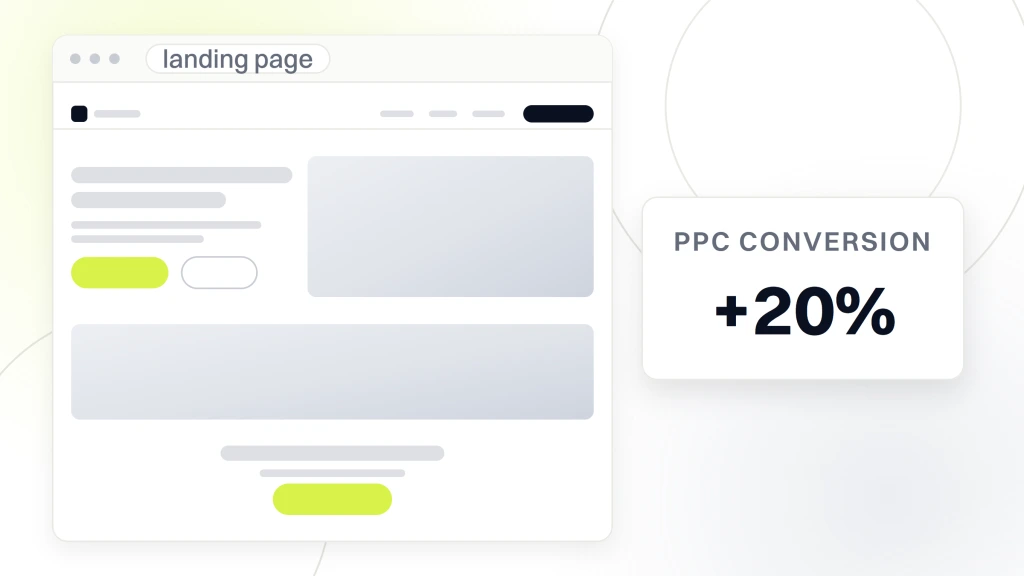
We built per-office dental ppc landing page design across the DSO with location-specific hero copy, per-office phone numbers, and location-specific proof stacks (reviews and insurance networks). We wired call tracking across every location under CallRail. We restructured PPC accounts under a unified taxonomy. Twelve months later, PPC conversion rate was up 20%. Cost per call down 30%. All 50+ offices ran on the same reporting framework. The CFO could see which offices were profitable in paid search and which needed different tactics.
Two lessons from Smile Design
First, per-office landing pages beat a shared brand page even inside a national DSO. Local relevance moves conversion 25 to 45%. Second, unified reporting was the biggest lever. Multi-location groups burn money in the gaps between different tools. One reporting framework across every location surfaces the real winners inside 60 days. Solo practices reading DSO cases should copy the discipline, not the scale.
What a solo practice copies from Smile Design
A single-office solo practice does not need 50 landing page variants. What the solo practice copies is the discipline. One landing page per active service. One call tracking number per campaign. One reporting dashboard tied to booked patients. Scale changes with location count. Discipline stays the same. Practices that copy DSO scale without the underlying discipline end up with 12 landing pages nobody optimizes and reporting nobody reads.
A/B testing dental PPC landing pages for compounding gains
A/B testing on paid landing pages compounds monthly. The gains stack across every quarter these pages stay live. One winning test per quarter adds 5 to 10% conversion rate. Four winning tests per year compound to 25 to 40% higher conversion at the same traffic volume. Practices that never A/B test freeze the conversion rate at the launch-day setting and leave 20 to 30% of potential booked patients on the table over 12 months.
- Test the headline. Offer-first versus problem-first framing
- Test the CTA button. Phone number versus form CTA copy
- Test the form. 3 fields versus 4 fields versus progressive disclosure
- Test the proof stack order. Review count first versus insurance logos first
- Test hero imagery. Real doctor photo versus stock photo versus illustration
- Test the sticky footer CTA. Always on versus scroll-triggered at 40%
Test priority order
Headline test first. Headlines move conversion 15 to 40% when the framing is wrong. Form field test second. Form friction is the second biggest single lever. Proof stack test third. CTA copy test fourth. Hero imagery test last. Every test needs 300 to 500 conversions for statistical significance, which usually takes 3 to 6 weeks on a well-funded dental campaign. Rushing to a decision at 100 conversions produces false positives that waste the next quarter’s tests.
A/B test tool selection
Google Optimize was sunset. VWO, Optimizely, and Convert are the current top 3. Unbounce and Instapage include native A/B testing that works well for dental landing pages. Cost runs $79 to $299 per month depending on tool and traffic. Practices with under 2,000 monthly landing page visitors can run A/B tests inside their landing page builder without paying extra. Above 5,000 monthly visitors, a dedicated A/B tool pays back in test velocity and reporting depth.
HIPAA and dental online ads compliance on landing pages
Paid dental landing pages collect protected health information the moment a patient types “tooth pain” into a form. That data cannot flow through third-party tracking pixels without a Business Associate Agreement. Meta Pixel, Google Analytics, LinkedIn Insight, and TikTok Pixel all trigger this issue. Landing pages that fire pixels on form submit without a BAA in place risk HIPAA violations that can cost $10,000 to $500,000 per incident.
The fix is server-side conversion tracking with hashed identifiers and no PHI in the payload. Google’s server-side conversion tracking with hashed email works if configured correctly. Meta’s Conversions API works with the same discipline. Every dental landing page in 2026 should be audited quarterly for pixel behavior. Practices running old Facebook Pixel implementations on dental landing pages are one lawsuit away from a bad quarter. See the HHS guidance at hhs.gov for the current rules.
Server-side conversion tracking
Server-side tracking sends the conversion event from your server to Google Ads or Meta directly, without a browser pixel. The patient’s PHI never leaves your servers. The ad platform gets the conversion event with a hashed identifier for optimization purposes. Setup takes 4 to 8 hours per platform. Cost runs $0 (self-hosted with Google Tag Manager server-side) to $250 per month for managed hosts. Every dental practice running paid ads in 2026 should have this setup live.
Cookie consent on landing pages
Dental landing pages need a cookie consent banner that defaults to “analytics only” for California, Colorado, Virginia, and Connecticut patients. Google Consent Mode v2 handles the mechanics. Setup takes 2 to 3 hours per landing page. Practices that ignore consent get flagged by browser vendors and see their tracking break in silent ways. Setting up Consent Mode also enables Google Ads modeled conversions when a patient declines cookies, which recovers 15 to 25% of the conversion data.
Testing a new dental PPC landing page before launch
Test the page before spending a dollar on ads. Check every field on desktop and mobile. Submit the form and confirm the lead lands in the CRM and the practice email inbox. Click the phone number and confirm it forwards correctly through call tracking. Run the page through Google PageSpeed Insights. Confirm Core Web scores hit green. Run a Lighthouse accessibility scan and fix any critical issues. That checklist takes 90 minutes.
- Desktop. All form fields work, form submits, lead lands in CRM and email
- Mobile. Hero fits above fold, phone tap-to-call works, form submits
- Call tracking. Number rings the practice, records the call, attributes to campaign
- PageSpeed. Mobile score above 90, desktop above 95
- Core Web scores. LCP under 2.5s, CLS under 0.1, INP under 200ms
- Accessibility. No critical issues, alt text on every image, form labels present
- Cross-browser. Works on Safari iOS, Chrome Android, Chrome desktop, Safari desktop
Lead routing and speed to lead
Every form submission routes to 3 places. The CRM for tracking. The practice email inbox for immediate notification. A SMS to the front desk manager for follow-up inside 5 minutes. Practices that respond to a landing page lead within 5 minutes book 22 times more of them than practices that wait 30 minutes. Lead routing that includes an SMS is the single highest-return automation on a dental landing page. Setup takes 45 minutes with Zapier or n8n.
Analytics and conversion verification
Fire a test lead 24 hours before launch. Verify the conversion event lands in Google Ads. Verify GA4 shows the event. Verify the call tracker attributes the phone call to the paid campaign. Half of the dental landing pages we audit have broken conversion tracking that the practice never noticed because the numbers still showed “conversions” in a dashboard somewhere. Verify end to end before launch. Verify again 48 hours after launch when real ad traffic starts flowing.
Where to start on dental PPC landing pages today
Audit your current dental PPC ads and the pages each one lands on. Open Google Ads. Click each ad. Land on the destination URL. Score each page against the 5 rules above. Most practices find 3 to 6 campaigns pointing at the homepage and 1 to 2 pointing at generic service pages. Every one of those is a rebuild opportunity worth 30 to 60% higher conversion rate within 30 days of the new page going live.
When you are ready to build the landing pages properly, our dental ppc management covers the landing page work as part of the monthly retainer starting at $999 per month with ad spend billed separately. For the broader marketing view see our dental marketing playbook, our dental google ads writeup for the campaign structure that feeds the landing pages, and our converting dental ppc ads guide for the ad copy that drives clicks to these pages. The Google Ads landing page guide at support.google.com covers the Quality Score mechanics behind message match.