Dental ad ideas without a cost per booked patient attached are decoration, and this guide pins hard numbers to every concept. You get 50 plus hooks across Google Search, Meta, TikTok, YouTube, Local Services Ads, remarketing, print, and radio. Each one lists the offer, a monthly budget range, and the cost per booked patient pulled from real 2026 spend. Skip the ones that do not fit your service mix. Steal the ones that do.
Most of these ads look boring at first glance. Plain copy. Specific offer. Standard format. That is the whole point. Boring ads that book patients out-earn clever ones that do not, every day of the week. Copy the format, match the offer to your service line, and run 2 to 4 dental ad ideas at once across 30 days. Kill the losers. Scale the winners.
Dental ad ideas for general cleaning and hygiene
General cleaning hooks live or die on a price anchor plus a trust proof. These 6 produced $52 to $180 cost per booked general patient in tracked 2026 campaigns. Idea one, “$89 New-Patient Exam and Cleaning.” Idea two, “New to the Area, First Cleaning $99.” Idea three, “Rated 4.9 Stars, 620 Reviews.” Idea four, “Insurance Accepted, We File for You.” Idea five, “Book Online in 30 Seconds.” Idea six, “Same-Day Cleaning Slots Open.”
Every general cleaning hook belongs on Local Services Ads plus Google Search plus a Meta lead form. LSA books cheapest at $52 per booked patient once the practice has 300 plus reviews at 4.8 stars. Search runs $85 to $180. Meta runs $95 to $180 with $89 offer copy. A combined $2,400 to $6,800 monthly across those three channels books 30 to 60 new general patients per month. Our local services ads for dentists post walks the LSA setup step by step.
Price anchor idea
The price anchor names the exam and cleaning price up front. Headline, “$89 New-Patient Exam, Cleaning, X-Ray.” Description, “Rated 4.9 stars by 620 patients. Book in 30 seconds. Most insurance accepted, and we file for you.” That earned $28 cost per lead on Meta and $85 cost per booked general patient across markets. Ads that hide the price with “call for pricing” book 40% to 60% fewer patients, since patients research price before they call anyway.
Insurance-friendly idea
The insurance-friendly hook speaks to the 40% to 60% of patients who avoid booking because insurance paperwork feels heavy. Copy names the top 4 plans accepted, plus one line, “and we file for you.” That specificity earned 32% to 44% more booked general patients than vague “most insurance accepted” copy. Named carriers build trust that a generic phrase cannot.
Dental ad ideas for implants and full-mouth
Implant ads convert on trust and financing, not on total price. These 5 hooks produced $34 to $220 cost per booked consult in tracked 2026 campaigns. Idea one, “Dental Implants From $89 Per Month.” Idea two, “Free 3D Scan and Implant Consult.” Idea three, “20 Years of Implant Experience.” Idea four, “Same-Day Teeth With All-On-4.” Idea five, “Missing Teeth, Fixed in One Visit.”
Every implant hook pairs with remarketing after the first landing page visit. Cold implant search runs $180 to $340 cost per booked consult. Remarketing to the warmed pool runs $34 cost per booked consult, roughly 8x to 10x cheaper. Practices that skipped implant remarketing lost 60% of the eventual bookings to competitors. Our dental implant marketing post covers the full remarketing funnel.
Rule of thumb. If your practice has fewer than 40 Google reviews at under a 4.6 average, fix reviews before running a single implant ad. LSA plus review base cuts every downstream ad cost 30% to 50%.
Financing-first idea
The financing-first hook leads with the monthly payment, not the total price. Headline, “Dental Implants From $89 Per Month.” Description, “20 years placing implants. Free 3D scan. Financing available with 0% options through CareCredit and Lending Club.” That booked consults at $110 to $180 each versus $340 to $560 on total-price implant ads. Reference the FTC medical financing consumer guidance for disclosure requirements.
Remarketing implant idea
The remarketing implant hook uses a 6-second animated clip of an implant snapping into place. Text overlay reads, “You looked at implants last week. Ready for a free 3D scan.” That ad ran to the retargeting pool built from the practice’s implant landing page. Cost per booked consult landed at $34, roughly 8x lower than cold search. Cap the retargeting window at 14 to 21 days on implants, since intent decays fast on high-consideration procedures.
Dental ad ideas on Local Services Ads
Local Services Ads hooks do not live in creative. They live in review generation plus phone-answering discipline. LSA impression share turns on Google review count, review recency, star rating, response time to leads, and Google Guaranteed badge status. Practices with 300 plus reviews at 4.8 stars hold 55% to 80% of qualified searches in their zip code. Practices below that threshold see swings of 30% to 60% week over week depending on competitor review velocity.
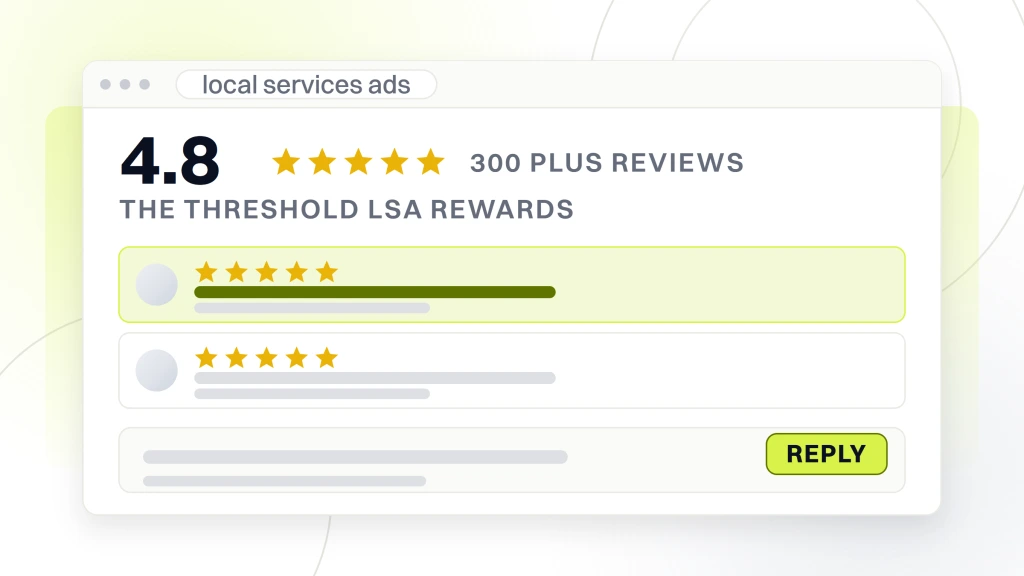
The strongest LSA hook is a 3-touchpoint review generation workflow. Text review request 6 hours after appointment on green-tagged patients only. Email review request 3 days after appointment as backup. In-office QR code that patients scan before checkout. Together, those 3 touchpoints produce 60 to 90 reviews per month at 4.9 star average. Delicate Dental Group used this exact workflow from day one, built 700 plus verified Google reviews from zero, grew Map Pack calls 280%, and tripled Maps impressions. Our dental review generation post covers the full SMS-plus-email workflow.
Review base as an LSA idea
The review base hook puts spend on review generation instead of ad creative. Practices that spent $600 to $1,400 monthly on review software plus staff time saw LSA impression share climb 40 to 70 points across 6 months. That bump produced 40 to 90 additional booked patients per month at zero increase in LSA ad spend. Review count is the lever nobody talks about because it is not glamorous.
Phone answering as an LSA idea
Phone answering backs up front desk hours with a 24-hour live answering service. LSA leads route as phone calls, and Google penalizes practices with poor answer rates. A Charleston practice that turned on a 24-hour live answering service pulled answer rate from 68% to 96% inside 30 days. LSA impression share climbed 24 points inside 60 days. Booked patient volume followed.
Dental ad ideas on video and social
Video and social hooks need platform-native creative to convert. These 6 formats produced strong results across YouTube, TikTok, and Meta Reels in 2026. Idea one, doctor holds a ceramic veneer against a patient’s smile. Idea two, hygienist walks a nervous kid through a cleaning. Idea three, patient describes an emergency visit that fixed severe pain in one appointment. Idea four, doctor snaps a clear aligner on and off. Idea five, before-and-after cosmetic dental marketing photo carousel with 15 seconds of doctor narration. Idea six, treatment room from an overhead angle showing the workflow.
Every video hook has to match the platform-native aesthetic. Phone footage on TikTok. Slightly polished on Meta Feed. Moderately polished on YouTube pre-roll. Practices that tried to run TV-quality production on TikTok saw watch-through 3x to 5x lower than platform-native creative. Reference the TikTok for Business best practices guide for platform-native creative constraints.
Threshold. Refresh Meta and TikTok dental ad creative every 14 days. Wait longer and cost per booked patient climbs 20% to 60% as the audience fatigues.
TikTok hook idea
The TikTok hook opens with the doctor holding a physical object patients recognize. Aligner tray. Veneer. Waterpik. Model tooth. That 2-second visual comparison stops the scroll and earns algorithmic push. Practices that ran doctor-holds-object hooks saw watch-through 3x to 5x higher than doctor-face-only hooks. Our dental TikTok ads post covers the hook rotation cadence.
YouTube testimonial idea
The YouTube testimonial runs 30 seconds. A real patient describes a specific treatment, the outcome, and a book link. That format converts at 5x to 8x the rate of doctor-only YouTube ads on cold audiences. It also requires HIPAA-compliant consent releases per patient, per platform, per time window. Practices that filmed 3 to 5 testimonials per year built a video library that ran profitably for 18 to 24 months on the same footage.
Dental ad ideas on print and traditional
Print and traditional formats still book patients in specific markets. Small suburbs, rural markets, and retirement-heavy neighborhoods respond at 2x to 4x the rate of digital. These 4 hooks produced $173 to $340 cost per acquired patient with 3-year retention of 5 to 7 years. Idea one, single-photo postcard with $99 exam offer. Idea two, quarter-page local newspaper ad with 4 testimonial quotes. Idea three, morning-drive radio ad voiced by the doctor with a mnemonic phone number. Idea four, local billboard on the commute corridor with a book code.
Every print hook has to match the demographic on the receiving end. Postcards work on 55 plus homeowners. Radio works on morning commuters aged 45 to 65. Newspaper works on retirement-heavy readership. Billboards work on high-traffic corridors when the phone number is mnemonic enough to stick. Skip print in urban markets and for younger demographics. Our dental print ads post covers the market fit criteria.
| Category | Best channel | Cost per booked patient | Monthly budget |
|---|---|---|---|
| Emergency | Google Search + LSA | $47 to $95 | $1,800 to $4,400 |
| Cosmetic and Invisalign | Meta + TikTok | $87 to $260 | $2,400 to $6,800 |
| Pediatric and family | YouTube + Reels | $62 to $145 | $1,600 to $4,200 |
| General cleaning | LSA + Meta | $52 to $180 | $2,400 to $6,800 |
| Implants | Search + remarketing | $34 to $220 | $2,800 to $7,600 |
| Postcard + radio | $173 to $340 | $2,400 to $8,400 |
Postcard idea
The postcard uses a single-focus design. Front, one photo of the doctor plus one line, “Now accepting new patients.” Back, list of accepted insurances, 4 testimonial quotes, and a $99 exam plus cleaning plus x-ray offer with a code to mention. Mailed 12,000 times per drop in a 4-mile radius to households 55 plus, homeowner, income above $65,000. Response rate lands at 0.8% to 1.4%. Cost per acquired patient, $221. Retention at 3 years, 91%.
Morning-drive radio idea
The morning-drive radio ad uses a 30-second spot voiced by the doctor herself with a mnemonic phone number ending in something patients remember. Runs 4 times per morning on the top-rated news-talk commute station across 52 weeks. Cost per acquired patient at a Wichita practice, $173. Lifetime value on acquired patients, $5,200 average. Voice-actor delivery produced call volume 60% lower than doctor-voiced ads on the same station and spot count.
Dental ad ideas on remarketing
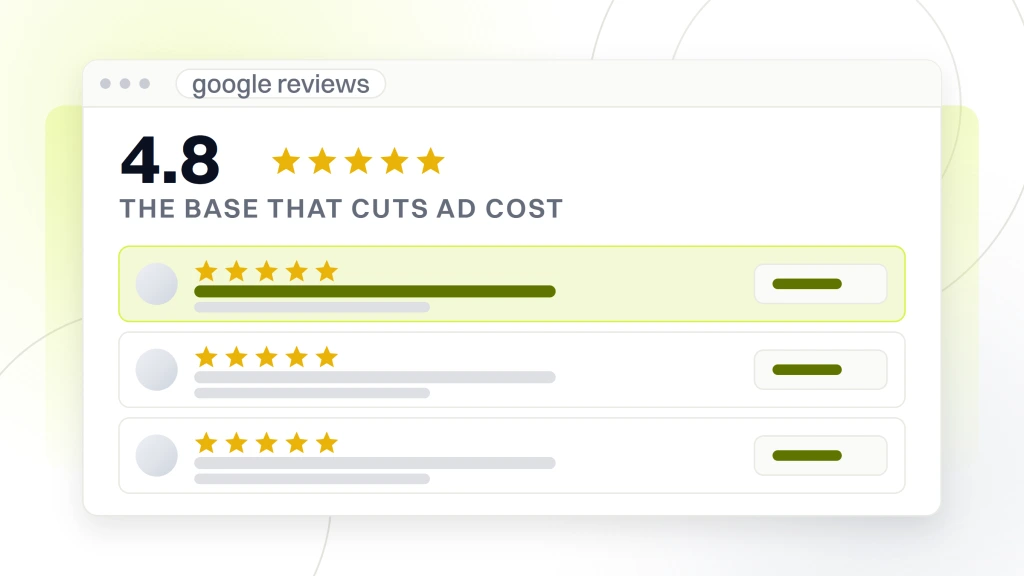
Every dental ad idea in this guide pairs with tracked cost per booked patient across LSA, Google Search, Meta, TikTok, YouTube, print, and remarketing channels.
Remarketing hooks close the bookings that first-touch ads warmed up. Cost per booked patient on remarketing runs 4x to 8x lower than cold traffic because the audience already knows the practice. These 4 formats produced strong results in tracked 2026 campaigns. Idea one, website visitors who did not book, targeted with a $89 new-patient offer for 30 days. Idea two, implant landing page visitors targeted with a free 3D scan for 14 days. Idea three, cosmetic landing page visitors targeted with a free digital preview for 21 days. Idea four, missed-appointment patients targeted with a soft rescheduling reminder for 14 days.
Every remarketing hook needs a frequency cap of 3 to 5 impressions per person per week. Uncapped remarketing burns out the audience inside 4 weeks and drops click-through 60% to 80%. Reference the Google Ads remarketing best practices guide for cap configuration. Our dental remarketing ads post covers the full retargeting workflow.
Warm audience offer idea
The warm audience offer uses a lower-friction offer than the cold audience saw. Cold search saw $89 exam. Warm remarketing sees free 15-minute consultation. That escalation invitation converted 4% to 6% of the warmed pool inside 21 days across tracked accounts. Friction reduction matters more than offer size on remarketing audiences.
Missed-appointment reminder idea
The missed-appointment reminder targets patients who booked a consult but did not attend. Ad copy reads, “Missed your appointment. Reschedule below in 30 seconds.” That soft rescheduling reminder converted 14% to 22% of missed-appointment patients back into scheduled visits within 14 days. Practices without missed-appointment remarketing lost 40% to 60% of those patients to competitors within 90 days. Every missed appointment is a warmed audience worth pursuing once.
Budget and testing across dental ad ideas
Dental ad ideas need budget discipline to sort winners from losers. Rule one, test 2 to 4 at once across 30 days minimum. Rule two, budget $600 per idea at minimum to hit statistical significance. Rule three, judge cost per booked patient, not cost per lead. Rule four, kill any idea missing target cost by more than 40% after 30 days. Practices that scaled without hitting the 30-day threshold watched cost per booked patient jump 40% to 80% inside 30 days as they scaled past natural saturation.
Baseline total ad budget for a solo practice runs $3,600 to $8,400 monthly across 2 to 3 channels. Group practices at $2M to $5M annual revenue run $7,200 to $18,000 monthly across 4 to 5 channels. DSOs run $18,000 to $65,000 monthly across every channel. Smile Design Dentistry ran the DSO scale across 50 plus locations with a combined ad budget above $45,000 monthly at peak, cutting cost per call 30% and growing PPC conversion rate 20% under a per-location bid structure. Our dental marketing cost post covers the budgeting framework.
If then decision. If you cannot fund $600 per idea for 30 days on your two strongest hooks, drop to one and run it clean. Underfunded splits waste both.
Budget per idea
Every idea needs $600 minimum across 30 days to reach statistical significance. Below that, click volume runs too thin to separate signal from noise. Ideas tested at $200 to $400 per 30 days produce anecdotal results that mislead the practice into scaling losers and killing winners. Every one gets $600 minimum, or it does not run at all.
Attribution per idea
Attribution runs through unique UTM parameters plus a dedicated call tracking number per idea. Every hook gets a unique campaign ID that ties to the specific offer and channel combination. Cost per booked patient logs per idea per week. Practices without per-idea attribution scale losers and kill winners because the data hides which hook truly produced the booked appointment. VP Dental doubled new monthly patients, added $8,100 in monthly recurring revenue, and grew search impressions 776% once web and SEO consolidated under one team. Our call tracking for dentists post covers the attribution setup.
Make these dental ad ideas book patients this month
Pick 2 hooks that match your service mix. Fund each at $600 minimum for 30 days. Tag each with a unique UTM and a dedicated call tracking number. Log cost per booked patient weekly. Kill the loser. Scale the winner. Repeat with the next 2 the following month. That cadence is how the practices in this guide moved cost per booked patient from $220 down to $47 across 6 to 9 months without adding budget. Redefine Web has run this exact playbook across dental practices from scratch launches like Delicate Dental Group to 50-location DSOs like Smile Design Dentistry. If you want a partner running the dental ad ideas that fit your practice, book a strategy call and bring your current 30-day ad spend.