Dental implant marketing is the highest-stakes paid work in dentistry. A single full-arch case is $18,000 to $52,000 in revenue. A missed consult from a slow phone or a broken booking form is a $30,000 mistake nobody tracks. The practices that win this category treat the funnel like a project, not a channel. You have search, Meta, YouTube, and email all working together, or you have one channel dumping clicks into a leaky form and you wonder why the phone is quiet.
This guide is the honest stack you run for dental implant marketing that actually books full-arch consults. You get the SEO structure that pulls high-intent traffic, the Google Ads account shape that avoids the tooth-fairy negative-keyword nightmare, the Meta remarketing sequence that catches the 4 to 12 week research window, the landing page section by section, and the case study math for how North County Dental Care grew patient volume 1,000% from 2021 to 2024. Read straight through in about 12 minutes.
Marketing for dental implants with Google Ads that converts
Marketing for dental implants on Google Ads is where the fastest bookings come from and where the biggest waste happens. Implant keywords cost $18 to $52 per click in competitive metros. A single wasted month is $4,000 to $14,000 of spend that produced tire-kickers. The account structure has to be tight from day one. The cost of learning slowly gets measured in five-figure mistakes.
| Campaign type | Monthly spend | Cost per consult | Notes |
|---|---|---|---|
| Search brand plus implants | $2,400 to $4,800 | $140 to $220 | Primary intent channel |
| Search full-arch specific | $1,200 to $3,600 | $220 to $340 | Higher ticket, higher CPC |
| Meta remarketing | $800 to $2,200 | $85 to $160 | Catches research window |
| YouTube pre-roll | $600 to $1,800 | $180 assisted | Awareness for cold audience |
Account structure that avoids the negative-keyword nightmare
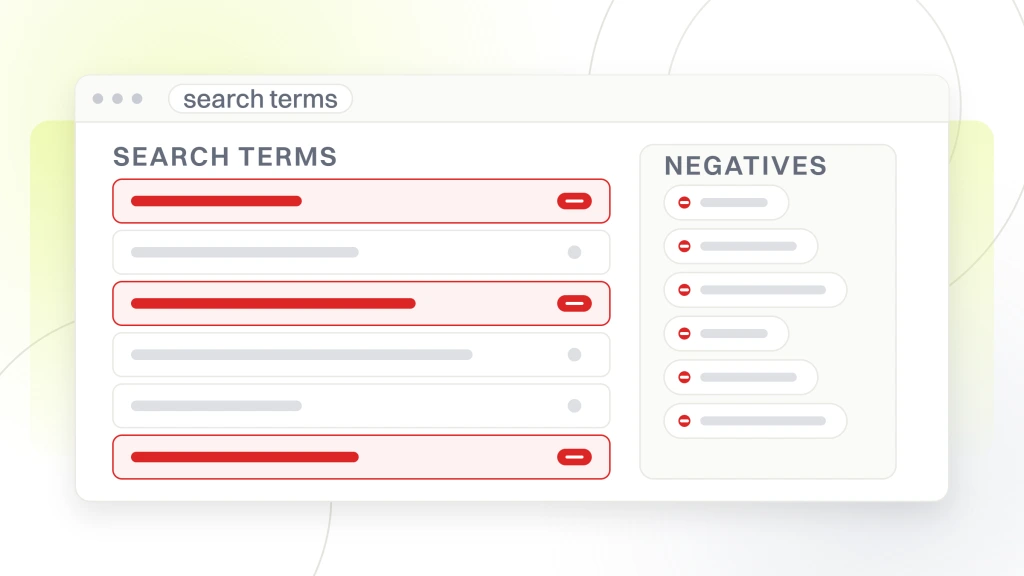
Your implant Google Ads account splits into three campaigns. One for brand terms plus generic implant queries. One for full-arch and All-on-4 queries. One for competitor and comparison queries. Each campaign carries a starter negative list of 240 to 380 phrases including free, cheap, DIY, Reddit, forum, jobs, school, salary, and every insurance-only variant. Skip the negative list on day one and you burn 45% of the first-month budget on queries that will never book a case. See our dental google ads guide for the full account map.
Bidding strategy for the long research window
Manual CPC is a mistake for implants. The click volume is too low to tune bids by hand across 40 to 60 keywords. Maximize conversions with a target CPA at $220 to $280 works well after the account has 30 conversions in the last 30 days. Before that threshold, run Maximize Clicks with a max CPC cap at $32 and let the account gather baseline data. Switching bid strategies too early is why most implant accounts stall at $500 cost per consult and never come back down.
Meta and dental implant Facebook ads that catch the research window
Meta ads for implants play a different role than Google Search. Search catches high-intent moments. Meta catches the long tail of research, the second click, the seventh visit, the reminder that this practice exists when the patient finally makes the call. Meta remarketing is the single highest ROI ad type in the implant funnel. The audience already visited your site and knows what you offer, so the ad closes the loop instead of opening it.
Your Meta funnel has three stages. Cold audience with interest and demographic targeting for awareness. Warm audience with video views and site visitors for consideration. Hot audience with page-specific remarketing for booking. Practices that only run cold Meta traffic pay 3 to 5 times more per consult than practices that layer all three. Our dental implant facebook ads post covers the creative angles that work at each stage.
Remarketing audiences that book
Build 5 remarketing audiences on Meta for implants. All site visitors last 180 days. Implant treatment page visitors last 90 days. Cost page visitors last 90 days. Video view 50% complete last 60 days. Form starters who did not submit last 30 days. Each audience gets its own creative and offer. The form-starter audience converts at 8 to 14% since they were already halfway to booking. Nobody else in the market is talking to them, so your ad wins by default.
Cold audience creative that stops the scroll
Cold audience creative for implants uses three angles that consistently outperform stock messaging. The eat-what-you-want angle, the no-more-adhesive angle, and the twelve-week timeline angle. Each angle runs as a 15 to 30 second vertical video of a real patient or provider, not stock footage. Meta rewards native-feeling creative and punishes ads that look like ads. Practices that use their actual provider as the on-camera talent see cost per lead drop 30 to 50% versus a hired actor. Trust reads on camera.
Dental implant landing pages that book consults
A dental implant landing page carries different weight than a general dentistry page. The visitor is older, the ticket is higher, and the trust bar is higher. Your page loads in under 2.5 seconds, the phone number sits above the fold, the form asks for name plus phone plus preferred contact time only, and the first two sections are the offer restated and social proof. Everything else lives below the fold. See our dental ppc landing pages guide for the section pattern.
- Above the fold. Offer headline restated from the ad, three-field form, click-to-call, review count, provider photo.
- Section two. Real patient before-and-after gallery with treatment tags and outcome dates.
- Section three. Cost transparency with band pricing and financing options spelled out.
- Section four. Provider credentials with implant training, case volume, and specialization.
- Section five. Video patient testimonial with real-name attribution and treatment specifics.
- Section six. FAQ covering pain, recovery, timeline, insurance, and consult expectations.
- Section seven. Second CTA with same-week availability and phone plus form options.
Segment landing pages by implant persona
One implant page cannot answer four patient questions well. Split the traffic. A single-tooth page for 35 to 55 patients replacing one tooth after a failed root canal. A multi-tooth or bridge-alternative page for 50 to 70 patients whose bridge failed. A full-arch or All-on-4 page for 55-plus patients ready for a permanent solution, often deciding with a spouse. A denture-to-implant conversion page for the high-intent segment that most implant pages ignore. Each page carries its own hero, its own cost band, and its own social proof stack.
Form fields that convert older patients
Every added form field costs you 5 to 12% of conversions on a mobile page. Implant patients skew 55-plus, so thumb accuracy on a phone is slower and patience with forms is thinner. The three-field form of name, phone, and preferred contact time converts at 12 to 18% on cold traffic. Add insurance, referral source, and preferred provider and conversion drops to 4 to 7%. That is a 60% drop in bookings for data the practice manager can gather in the confirmation call anyway.
Cost transparency without scaring the patient
Publishing a $22,000 to $34,000 range on your All-on-4 page feels risky. It is not. Patients researching implants for four weeks have seen a dozen practice sites. The ones that hide pricing get skipped for the ones that tell the truth. Pair the cost band with a monthly payment plan starting at $340 per month and the anchor number stops shocking the visitor. Practices that added cost transparency see form fills climb 25 to 40%. Qualified patients feel respected and tire-kickers self-select out before booking the consult.
Dental implant marketing case study on a 20-year practice
North County Dental Care in Vista, California had served the community for 20 years with a strong offline reputation and a nearly invisible online presence. No top-10 search positions. Inconsistent directory listings. Weak Google Business Profile. Fragmented marketing across multiple agencies with no measurable return. New patients from digital ran at 1 to 2 a month. The practice was losing revenue since the digital foundation had never been built.
The rebuild was three years of steady, structured work. A secure HTTPS mobile-first website with conversion-focused service pages. Advanced local SEO with NAP cleanup and citation consistency. Broken link repair, schema markup, and crawlability fixes. A GBP-driven PPC campaign for high-intent implant and general dentistry queries. Local video marketing that built community trust. The outcome was a 1,000% jump in patient volume, 385% organic traffic growth, 500% marketing ROI, and 12 to 16 new patients monthly on a repeatable schedule.
| North County Dental Care metric | Baseline | After 2021 to 2024 program |
|---|---|---|
| Patient volume | Low, sporadic | +1,000% |
| Organic traffic | Minimal | +385% |
| Marketing ROI | Undefined | +500% |
| New patients per month | 1 to 2 | 12 to 16 sustained |
Foundations first, campaigns second
The North County Dental Care result did not come from a bigger ad budget. It came from fixing the foundation the ad budget had been landing on. Secure HTTPS, mobile-first, working schema, clean citations, complete GBP. Once those were in place, paid campaigns started booking patients. That order of operations, foundation before campaign, is the top lesson from three years on a single account. If you spend on ads before the site is ready, you subsidize a slow experience for every visitor.
Local video marketing that built trust
Practice-led video shot at the actual office with the actual providers built trust and local visibility. Patients saw the real staff and felt the practice was real before they ever called. Trust reads on camera in a way a Facebook post never captures.
Tracking a dental implant marketing funnel end to end
Implant tracking has more moving parts than general dentistry since the sales cycle runs longer and the touchpoints are more numerous. Your stack has four components. GA4 with custom events for every meaningful action. CallRail with dynamic number insertion. A CRM or spreadsheet that tags consults with source. A monthly reconciliation between reported conversions and actual booked cases in the practice management system.
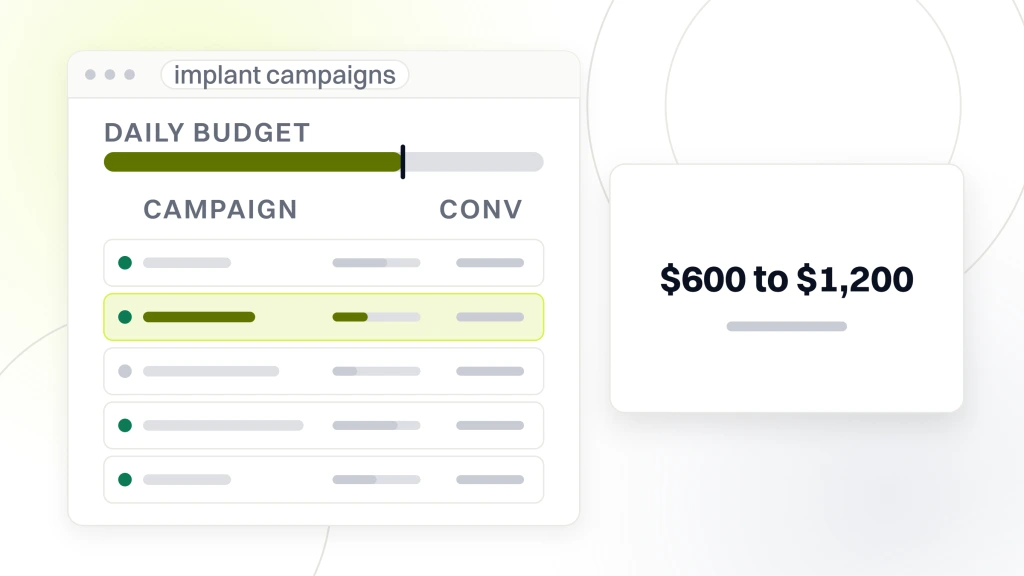
The number that pays the bills is cost per booked case, not cost per form. A form fill is not a case. A consult is not a case. A booked full-arch is a case. Practices that stop at cost per lead in reporting celebrate numbers that never touch the bank account. Cost per booked case on paid runs $600 to $1,200 across channels. Cost per booked case blended with organic and referral runs $220 to $480 at practices with a mature paid and organic stack. See our dental marketing roi guide for the full attribution model.
Multi-touch attribution for the 4 to 12 week window
Last-click attribution kills implant campaigns. The last click is almost always brand search. 9 out of 10 booked implant patients search the practice name after seeing 4 to 8 other touchpoints across Google Ads, Meta, YouTube, and organic search. If your attribution model gives 100% credit to brand search, you kill the top-of-funnel campaigns that fed it. GA4 with a modeled attribution setting corrects for this and shifts credit back to the channels that actually did the work.
Call recording and consult quality scoring
CallRail records every inbound call and lets you tag calls as consult, question, wrong number, or spam. Practices that score 3 to 5 calls per week manually gain a picture of where the booked consults actually come from versus where the leads look good on paper. The scoring flags front-desk failures too. If 20% of qualified callers ask the same question the receptionist has not been trained to answer, you fix the training before you spend another dollar on ads. See our dental ppc post for the tracking stack that ties these tools together.
Meta ads lead generation for dental implant consults
Meta lead generation for implants runs as native lead forms inside Facebook and Instagram, not as click-out traffic to a landing page. The native form fills at 3 to 5 times the rate of a landing page since the patient never leaves the app. The tradeoff is lead quality. Native leads are lower intent since they never saw your practice site. Practices that run Meta lead generation without a fast follow-up sequence see 40 to 60% of leads go cold before the front desk calls.
The follow-up window that works is 5 to 15 minutes from form submission. After 30 minutes, the conversion rate drops by 60 to 70%. Your practice needs a receptionist watching the notification queue during business hours or a text-based auto-responder that opens the conversation until the human catches up. Practices with a same-day text-then-call cadence book 25 to 40% of Meta leads into consults. Practices that call twice and email once book 6 to 12%. Speed is the entire game. Our meta ads lead generation for dental practices post covers the follow-up automation stack.
Native form fields for pre-qualification
Native Meta lead forms allow custom questions before the submit. Use them. Two questions cut the tire-kicker rate by 50 to 70% without dropping conversion below the healthy 8 to 14% range. Ask about missing teeth versus considering implants, and ask about preferred consult window. Both questions read as service, not friction, and both give the front desk a real conversation starter on the follow-up call. Skip questions about income or insurance in the native form. Those go in the confirmation call.
CRM integration for the 15-minute callback
Meta leads have to hit your CRM or practice management system within 30 seconds of form submission or the callback speed math falls apart. Use Zapier or a direct integration to push the lead into the receptionist’s queue with a phone notification. Attach the source campaign, the answers to the two custom questions, and a suggested opening line for the callback. Practices that run the 30-second CRM push plus a text-then-call cadence book 30 to 45% of Meta lead volume into confirmed consults.
Local signals that carry dental implant marketing
Local signals decide whether your implant page ranks in the map pack for dental implants near me. That single phrase drives 22 to 34% of implant traffic in most metros, and the map pack takes 44% of clicks on that phrase. Winning the map pack for implants is a longer game than winning it for general dentistry. Your competitors include oral surgeons, periodontists, and implant specialty centers, not just general dentists.
Your local stack has 5 components. Complete Google Business Profile with implant listed as a service, weekly posts, and 40-plus review responses. Location-specific implant page on the site with local schema. NAP consistency across 30 to 50 citations. Review velocity of 3 to 8 new reviews per month with implant-specific keywords in the responses. Photo uploads at 4 to 8 per month tagged with GPS metadata. Practices that run all five see map-pack rank climb inside 60 to 90 days. See our google business profile for dentists guide for the GBP configuration.
Google Business Profile service menu
The GBP service menu is underused on 80% of dental practices. Add every implant treatment as a service item with a 200 to 400 word description, a price band, and photos. Google reads these entries as ranking signals for the specific treatment. Practices that populated their service menu for implants saw treatment-specific queries convert at 3 to 5 times the rate of a generic dentist listing. The patient landed already knowing the practice offered the exact service they were searching for.
Review velocity and treatment-tagged responses
Reviews are the single biggest lever on map-pack rank for implants. Not review count. Review velocity. A practice with 340 reviews gathered over 8 years ranks lower than a practice with 120 reviews gathered in the last 12 months. The response text matters too. Responses that include the treatment name naturally, thanks for choosing us for your dental implant consult, feed keyword signals to the algorithm. Practices that raised review velocity from 1 per month to 5 per month for a full year saw map-pack rank climb 4 to 9 positions on average.
Budget allocation for a dental implant marketing campaign at each stage
How you allocate a dental implant marketing budget changes based on where the practice is today. A new practice building demand splits budget differently than a mature practice defending share. Getting this split wrong wastes 20 to 40% of spend on the wrong channel for the stage. Read the stage first, then decide the mix. Every stage has a target cost per case and a target case volume attached, and every channel earns its slot only when it hits both.
Stage one is 0 to 2 implant cases per month. Put 70% of spend on Google Search plus LSAs to catch existing demand. 20% on Meta remarketing to convert warm site traffic. 10% on GBP optimization and citation cleanup. Skip YouTube and cold Meta until you clear stage two. Stage two is 3 to 7 cases per month. Add cold Meta at 15%, shrink Google Search share to 55%, and start a YouTube pre-roll test at 10%. Stage three is 8-plus cases per month. Full-funnel active at 40% search, 25% Meta cold, 20% Meta remarketing, and 15% YouTube.
Stage one budget mix
Stage one budgets run $3,500 to $6,000 monthly total. The goal is to book 3 to 5 consults per month and close 1 to 2 cases. Every dollar has to be traceable to a consult booked in the calendar. LSAs at $800 to $1,500 monthly produce 4 to 8 leads at $60 to $110 CPL. Google Search at $1,800 to $3,200 monthly produces 3 to 5 booked consults at $220 to $360 each. Meta remarketing at $600 to $1,200 monthly produces 2 to 4 bookings from warm audiences at $110 to $180 each. GBP cleanup is a one-time $800 investment that keeps returning for years.
Stage three budget mix
Stage three budgets run $9,000 to $18,000 monthly total. The goal is to book 20 to 40 consults and close 8 to 14 cases. This is where full-funnel matters. Google Search takes $3,600 to $7,200 to catch high intent. Cold Meta takes $2,250 to $4,500 to build the audience that fuels remarketing. Meta remarketing takes $1,800 to $3,600 to convert. YouTube pre-roll takes $1,350 to $2,700 to keep the top of the funnel warm. Every channel reports weekly to a single dashboard, and the budget rebalances monthly based on cost per booked case by channel.
Content marketing that compounds your dental implant marketing spend
Content is the compound engine that carries the acquisition cost down over 18 to 36 months. A blog post that ranks on page one for how much does a dental implant cost sends 400 to 900 organic visits monthly, of which 25 to 60 book a consult over a year. That single post replaces $18,000 to $42,000 in equivalent paid spend. Write 6 of those and the paid budget can shrink 40% without losing case volume. This is why mature implant programs always fund content on top of paid.
Your implant content plan has three tiers. Cost content answers the money questions. Treatment content explains procedures. Comparison content answers the versus queries. Publishing weekly for 12 months produces 50 to 60 posts that together cover the full implant search intent map. Practices that commit to the plan see organic implant traffic double or triple inside 18 months and stay there. See our dental content marketing guide for the topical cluster structure.
Comparison content that converts
All-on-4 versus All-on-6. Dental implants versus dentures. Single-tooth implant versus bridge. Full-arch versus removable implant-supported denture. Those 4 comparisons carry 15 to 25% of implant research traffic. Each post ranks for 40 to 90 long-tail queries and converts at 4 to 8% since the visitor is already close to a decision. Write with honest tradeoffs, not sales pitches, and Google rewards the depth. Patients recognize the fair comparison and book with practices that helped them decide.
Insurance and financing content
Does insurance cover dental implants. Payment plans for dental implants. HSA and FSA for implants. Care Credit for implants. Those 4 topics answer the money-follow-through questions and rank inside 60 to 90 days. Most practices refuse to write them, so the SERP is thin. The content also serves the front desk. When a caller asks about financing, the receptionist can text them a link to the specific page instead of explaining plans on the phone. That single workflow saves 4 to 8 hours a week and closes 15 to 25% more consults into cases. Sources like the American Academy of Periodontology and the ADA Science and Research Institute are the citation backbone you use when you write these posts.
Make dental implant marketing work for your practice
The practices that win at dental implant marketing pick a stage, fix the foundation, run a tight paid stack, and let content compound behind it. Skip the negative list and you burn 45% of spend. Skip cost transparency and you lose form fills. Skip Meta remarketing and you pay 3 to 5 times more per consult. Skip content and you stay dependent on paid forever. Do all four and the funnel books consults every week at a cost per case your accountant is happy with. That is the whole game, and it is repeatable.