
Ecommerce PPC Management Services
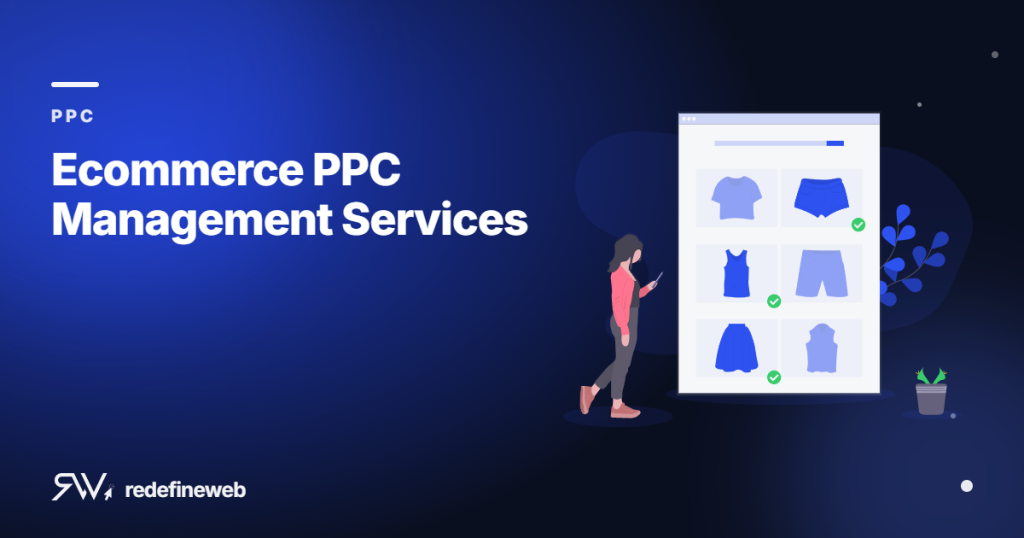
Ecommerce PPC Management Services
Ecommerce PPC is a revenue channel, not a traffic channel. Every dollar in ad spend should trace to a purchase, a product category, or a customer segment with a measurable return on ad spend. When ecommerce paid campaigns are managed correctly, you know which products, which audiences, and which campaign types produce profit. When they are not, you generate revenue but cannot tell whether it exceeds what you spent to get it.
Redefine Web manages PPC for ecommerce businesses across Google Shopping, Performance Max, Search, and paid social. We build and optimize campaigns with product-level profitability in mind, not just aggregate ROAS.
Google Shopping Campaigns for Ecommerce
Google Shopping is the primary paid channel for most ecommerce businesses. Shopping ads display your product image, price, and store name at the top of Google search results before text ads appear. They drive high-intent traffic from buyers who have already seen the product and price before clicking.
Shopping campaign performance depends heavily on product feed quality. Your Google Merchant Center feed determines when your products show up, for which queries, and how your listings appear relative to competitors. A well-optimized feed with accurate titles, detailed descriptions, correct attributes, and strong images outperforms a generic export from your ecommerce platform without any optimization.
Feed optimization priorities: product titles should include brand, product type, key attributes, and size or color variants in a consistent format that matches how buyers search. Descriptions should include material, use case, and differentiators. Images should be clean, high-resolution, and product-focused without excessive backgrounds or watermarks. Custom labels should segment products by margin tier, seasonality, or inventory status so bidding reflects profitability.
Performance Max for Ecommerce
Performance Max is Google’s fully automated campaign type that serves ads across Search, Shopping, Display, YouTube, Gmail, and Discover from a single campaign. For ecommerce, Performance Max with a product feed essentially replaces traditional Shopping campaigns in Google’s recommended architecture.
Performance Max works best for ecommerce when the product feed is clean, conversion tracking passes transaction values, and there is sufficient historical conversion data for Google’s algorithm to learn from. We set up Performance Max with distinct asset groups for major product categories, provide strong audience signals from customer lists and website visitors, and monitor the insights panel for search theme and audience performance data.
Performance Max has limited transparency compared to traditional Shopping campaigns. We use placement exclusions, branded keyword controls, and URL expansion settings to maintain appropriate control over where budget is allocated.
Search Campaigns for Ecommerce
Search campaigns complement Shopping for ecommerce by capturing branded queries, high-intent product category searches, and competitive comparison queries that Shopping campaigns do not cover effectively. A buyer searching “[brand] discount code” or “[competitor] alternative” is showing intent that a Shopping ad cannot address with a product image.
We use Search campaigns for three primary ecommerce purposes: brand protection (capturing your own brand searches before competitors do), high-intent category keywords where product listing ads underperform text ads, and competitor conquest campaigns for buyers actively comparing options. Each purpose gets separate campaign structure and budget allocation based on volume and margin contribution.
Remarketing for Ecommerce
Ecommerce remarketing is one of the highest-ROI applications in paid advertising because you are targeting buyers who have already expressed purchase intent. Cart abandoners convert at 3-5x the rate of cold audiences. Product page viewers convert at 2-3x. Homepage visitors convert at slightly above cold traffic rates.
We build ecommerce remarketing across multiple layers. Dynamic Product Ads on Meta (Facebook and Instagram) show visitors the exact products they viewed, creating personalized re-engagement at scale. Google Dynamic Remarketing serves product-specific ads on the Display Network. Cart abandonment campaigns on both channels serve urgency-focused ad copy to buyers who got closest to purchasing.
Remarketing audience segmentation: 1-day abandoners (highest intent, most recent), 3-7 day abandoners (still warm), 30-day past purchasers (candidates for upsell or repurchase), and 90-day lapsed customers (re-engagement with new product introductions or seasonal promotions).
Paid Social for Ecommerce
Meta Ads (Facebook and Instagram) are the primary paid social channel for ecommerce. They drive both direct purchases and top-of-funnel awareness that feeds into Google Shopping and Search conversions. For most ecommerce businesses, Meta and Google work together in the attribution picture rather than independently.
Meta ecommerce campaigns we manage: Catalog Sales campaigns that pull products from your Facebook catalog and serve them dynamically to relevant audiences, Advantage+ Shopping campaigns that automate audience expansion and creative testing, and manual ad sets for brand-specific prospecting with controlled creative and targeting.
Creative testing is the primary lever in Meta ecommerce. We test image vs. video, lifestyle vs. product-only creative, short vs. long copy, and different value propositions until we identify the angle that drives the lowest cost per purchase from your target audience. Winning creative gets scaled; underperforming creative gets replaced.
ROAS Measurement and Profitability Analysis
Return on ad spend (ROAS) is the primary ecommerce PPC metric: revenue generated per dollar of ad spend. A ROAS of 4x means every $1 in ads produces $4 in revenue. But ROAS alone does not tell you whether a campaign is profitable. A product with a 15% gross margin needs an 8x ROAS to break even on ad spend. A product with a 60% margin can be profitable at a 2x ROAS.
We configure ecommerce PPC reporting to include both ROAS and a profitability estimate based on the margin data you provide. Campaigns that show strong ROAS on low-margin products may be generating revenue but not profit. Campaigns that show moderate ROAS on high-margin products may be your most profitable traffic source. Optimizing purely for ROAS without margin data leads to budget allocation decisions that look good on paper but shrink your actual profit.
Ecommerce Conversion Rate Optimization
Average ecommerce conversion rates on paid traffic range from 1% to 4% depending on category, device, and landing page quality. A 1% improvement in conversion rate has the same financial impact as a 1% reduction in CPC across your entire paid budget. Landing page optimization is as high-leverage as campaign optimization for ecommerce.
We review landing page alignment monthly. Key issues that hurt ecommerce conversion rates on paid traffic: product pages that do not load fast enough on mobile (above 3 seconds), checkout flows with too many steps, missing trust signals (reviews, return policies, secure checkout badges), and product images that do not match the ad creative that drove the click. We identify these issues and provide specific recommendations for each page underperforming against benchmarks.
Seasonal Campaign Strategy
Ecommerce PPC requires proactive seasonal planning. Q4 is universally competitive and expensive for most categories. CPCs rise significantly in October through December as retail advertising spend surges. Businesses that wait until November to plan their Q4 strategy are bidding against advertisers who set up campaigns in September.
We build seasonal campaign calendars 6-8 weeks in advance for major events: Black Friday, Cyber Monday, Valentine’s Day, Mother’s Day, and back-to-school depending on your product categories. Seasonal campaigns use dedicated landing pages with season-specific offers, adjusted bidding to account for higher competition, and creative that matches the seasonal context.
Ecommerce PPC Management Pricing
Redefine Web’s ecommerce PPC management starts at $599 per month. Ecommerce accounts typically require more active feed management and creative testing than service-based businesses, which affects scope and pricing for larger catalogs. Multi-platform ecommerce management covering Google and Meta is available as a bundled engagement.
Read more about our ecommerce PPC management approach, or contact us for a review of your current campaigns and a proposal for your catalog.
Frequently Asked Questions
What is a good ROAS for ecommerce PPC?
A “good” ROAS depends on your product margins. As a rule of thumb, divide 1 by your gross margin percentage to find your break-even ROAS. A product with a 25% gross margin needs a 4x ROAS to break even on ad spend. Target ROAS should be above break-even to account for overhead. Most ecommerce businesses target 3-6x ROAS depending on category and margins.
Should I use Performance Max or Standard Shopping for ecommerce?
For most accounts, Performance Max with a product feed is the current recommended approach. Standard Shopping campaigns give more granular control over bidding and query matching. In practice, well-structured Performance Max campaigns with clean feeds and strong conversion data tend to outperform Standard Shopping at scale. We evaluate both for new clients and recommend based on your catalog size, conversion volume, and how much control versus automation is appropriate.
How important is the product feed for Google Shopping?
Critical. The product feed determines what queries your Shopping ads show for, how your products appear relative to competitors, and whether Google approves your listings. A poorly optimized feed with generic product titles and low-resolution images will consistently underperform a well-optimized feed in the same category with the same budget. Feed optimization should be done before launching or significantly scaling Shopping campaigns.
How do I reduce cart abandonment through PPC?
Remarketing to cart abandoners is the most direct paid media response to cart abandonment. Serve urgency-focused ads (limited stock messaging, expiring cart reminders) to people who added items to cart but did not purchase. On Meta, Dynamic Product Ads automatically show the exact products the user abandoned. On Google, Dynamic Remarketing pulls product data from your feed to serve personalized display ads.
What ecommerce platforms does Redefine Web work with for PPC?
We work with ecommerce businesses on Shopify, WooCommerce, BigCommerce, Magento, and custom platforms. Product feed setup and Google Merchant Center integration vary by platform. Shopify and WooCommerce have native integrations that simplify feed management. Custom platforms typically require feed configuration via a third-party feed management tool or direct API integration.
Book your free 30-minute strategy call.
No spam, no sales rep. We use your email to schedule your call with a senior strategist. That is it.
More from the blog
View all articles → PPC
PPC Home Services PPC Marketing: What a Strong Campaign Looks Like
Read article PPC
PPC PPC for Home Service Businesses: How to Lower Cost Per Lead
Read article PPC
PPC