
Fast Food Marketing Agency for QSR Chains and Franchise Growth
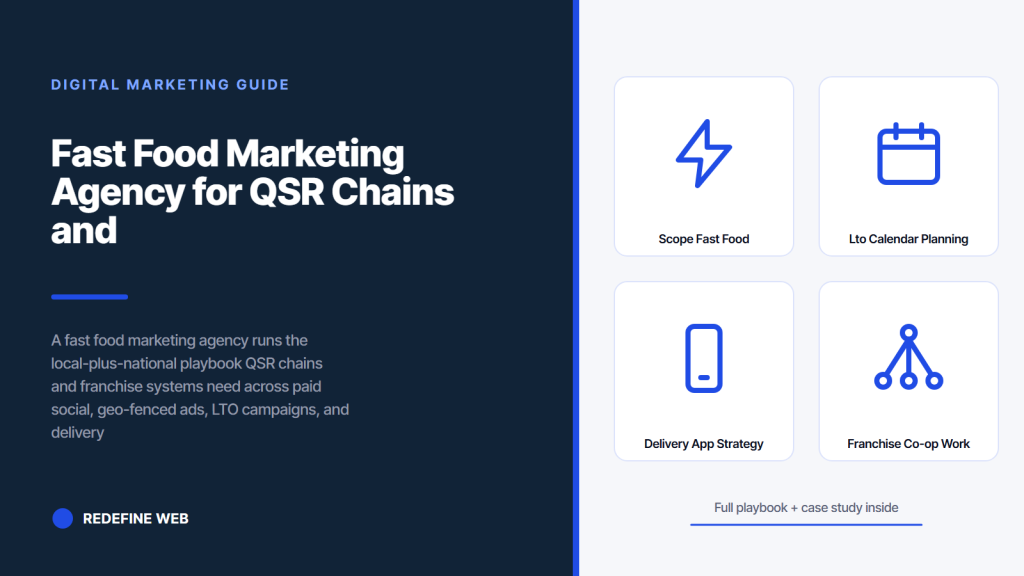
- A fast food marketing agency covers six workstreams on one retainer.
- National and local media split runs 70/30 or 60/40 by ad fund.
- LTO calendar runs 18 months rolling with two LTOs live at once.
- Delivery apps sit at 15 to 40 percent of the QSR sales mix.
- Fees run 3K to 60K per month with a 12 month minimum.
- Scope a fast food marketing agency carries
- How a fast food marketing agency splits national and local media
- LTO calendar planning inside the retainer
- Delivery app strategy for a fast food marketing agency
- How Brightway Insurance maps to a QSR marketing playbook
- Comparison of fast food marketing agency archetypes
- Fee ranges for a fast food marketing agency
- Franchise co-op work inside the retainer
- Where a QSR chain should start this month
- Reporting cadence a fast food marketing agency runs
A fast food marketing agency is the partner a QSR chain, a franchise system, or a growing regional quick-service brand hires to run the local-plus-national growth stack across every channel a hungry buyer touches inside the two-hour window before ordering. The category has more moving pieces than most restaurant work because the buyer opens DoorDash, checks Instagram, reads a Google review, and drives past a billboard on the same lunch break, and every touch has to point back to the same offer running that week on the LTO calendar. Any fast food marketing agency that runs Meta creative alone and leaves the geo-fenced push, the delivery app placements, and the franchise co-op media to internal partners is running a fraction of the mix a real QSR brand needs.
This guide walks the retainer scope a fast food marketing agency should carry, the media mix by channel, the LTO calendar rhythm, the franchise co-op work, and the fees to expect across QSR sizes. It names how Redefine Web scopes the work when a chain walks in with 20 locations and a delivery app relationship in play.
Scope a fast food marketing agency carries
A fast food marketing agency carries six workstreams on one retainer. National paid social and video on Meta, TikTok, and YouTube. Local paid search and geo-fenced display on Google and Programmatic. Delivery app placements on DoorDash, Uber Eats, and Grubhub with sponsored listings and in-app promotions. LTO campaign creative and calendar planning. Franchise co-op media planning across the ad fund. And the reporting layer that ties system-wide media spend back to same-store sales and average unit volume on the operator dashboard.
Every workstream needs QSR-specific creative volume. Meta and TikTok need 40 to 80 concepts per quarter with a hook-plus-payoff structure inside 12 seconds because the food category loses attention faster than most DTC verticals. Delivery apps need cover photos, item photos, and category header images updated on the LTO cadence every four to six weeks. Geo-fenced display needs static creative sized to every DOOH and mobile placement in the local market plan. Franchise co-op needs templated creative operators can request and localize inside a self-serve portal.
Redefine Web scopes the six workstreams into one retainer with a strategy lead who has run at least one franchise system in the last two years. The QSR calendar runs on LTO windows, franchise convention cycles, and delivery app promo tiers the generic DTC agency simply does not track on the weekly report. Read the food and beverage marketing hub for the parent scope on how the QSR workstream fits inside a full restaurant retainer.
How a fast food marketing agency splits national and local media
A fast food marketing agency splits national and local media on a 70/30 or 60/40 basis depending on the system size and the ad fund structure. National carries the brand-level creative, the LTO announcements, and the paid social prospecting. Local carries the market-specific offers, the geo-fenced display, and the franchise co-op push.
The national side runs Meta, TikTok, YouTube CTV, and national programmatic display on the ad fund budget the franchise council approves each quarter. Creative for national has to work in every DMA the brand operates in, which means broad enough visuals to survive the market variation and specific enough offers to drive a same-week visit. National LTO announcements land on the ad fund the week the LTO launches and run for the four to six week window the operations team can staff. Any national push that runs beyond the LTO window pushes traffic to a menu item the operator has already reset.
The local side runs geo-fenced display around the trade area of each unit, local paid search on branded and category head queries, and delivery app placements sized to the market’s competitive set. Local ad dollars come from the operator’s local marketing spend plus the co-op ad fund the operator can request against. A real fast food marketing agency runs a self-serve portal for the operator to request local media pushes, submit local offers, and track spend against the co-op budget on a real-time dashboard. Read the Nation’s Restaurant News coverage for the QSR trade-side data every serious agency should track on the category weekly.
LTO calendar planning inside the retainer
LTO calendar planning is the piece of the retainer that turns a QSR menu into a rolling promotion engine every four to six weeks across the year. A real fast food marketing agency runs an 18-month LTO calendar with two LTOs live at any given time, a hero LTO on the national push and a supporting LTO on the local plus digital push. The calendar cadence keeps the news cycle fresh, the delivery app placement warm, and the media budget spent against a specific promotional message every week of the year.
Every LTO ships with a media plan built four to six weeks before launch. The plan covers the paid social creative queue, the geo-fenced display flight, the delivery app placement calendar, and the franchise operator kit. The operator kit includes localized print, in-store signage assets, drive-thru menu board updates, and email templates the operator can send to a local list. Any LTO that lands without a full plan built ahead of launch runs on media the first week and stalls out on the second because the operator side never gets the kit that supports the store execution.
The LTO calendar also plans against the delivery app promo tier the brand runs. DoorDash and Uber Eats offer sponsored placement and in-app promo tiers the brand pays into for higher basket visibility during the LTO window. A real fast food marketing agency negotiates the tier on the ad fund side, sequences the tier upgrades against the LTO calendar, and measures the incremental basket gain against the tier cost every promo cycle. Skipping the tier work leaves the LTO with lower delivery app visibility on the window the brand needs it most.
QSR chains lose when Meta doesn't match this week's LTO. Pull your LTO calendar and your ad manager. If the top ad hasn't updated in 3 weeks, you're paying for stale offers.
Delivery app strategy for a fast food marketing agency
Delivery app strategy is a core workstream inside a fast food marketing agency retainer because delivery app orders sit at 15 to 40 percent of the total sales mix for most QSR chains today. DoorDash, Uber Eats, and Grubhub each have their own promo systems, their own creative specs, and their own reporting dashboards that sit outside the general media stack. A retainer that treats delivery apps as a bonus channel leaves 15 to 40 percent of the sales mix underserved.
Every delivery app needs a menu audit, a photo refresh, and a promo tier plan on the same monthly cadence. The menu audit checks the item list, the item descriptions, the price ladder against local competition, and the category placement inside the app. The photo refresh updates the hero item photos, the category header, and the cover image on the same LTO cadence as the national push. The promo tier plan sequences the sponsored placements, the boost campaigns, and the in-app promo codes against the LTO calendar and the local market plan.
Reporting on delivery apps has to blend into the same dashboard as the paid media and same-store sales report. A real fast food marketing agency ties delivery app revenue, promo tier spend, and app conversion rate into the weekly Monday morning report the operator team reviews. Any retainer that runs delivery app reporting as a separate deck is a retainer running two reports that never reconcile. See the QSR Magazine coverage for the delivery app share data every fast food marketing agency should be tracking on the category quarterly.
How Brightway Insurance maps to a QSR marketing playbook
Brightway Insurance is a specialty restaurant insurance agency that replaced an absent digital presence with a responsive site, SEO and SEM, and active social. The engagement transfers to a QSR marketing playbook because the digital work covered a three-part fix a QSR chain needs on a modern retainer.
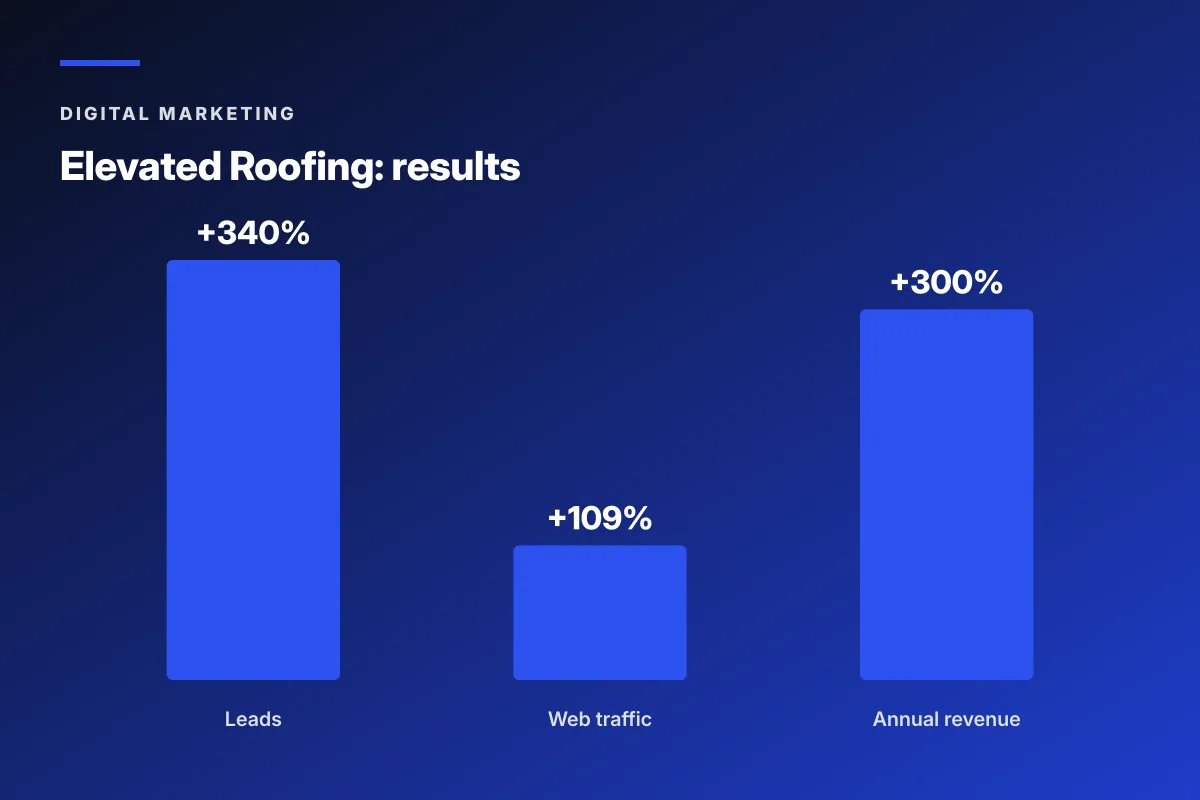
Brightway Insurance hit 63 percent more traffic, 129 percent more social-driven users, and 153 percent more website-generated leads inside six months of the program launch. Every play in the engagement transfers to a QSR retainer without much modification. Responsive site rebuild that carries the local unit search and menu discovery. SEO and SEM that captures local branded plus category queries near each unit. Social presence that carries the LTO announcements and the community push on the operator side. A QSR chain that runs the same three-part fix on a delivery-app-integrated site plus a modern paid stack lands in the same growth curve inside six months on the same shape of program.
The transfer point for a QSR chain is the buyer specificity. Brightway had a narrow buyer set inside the restaurant insurance niche. A QSR chain has a broader buyer but a shorter conversion window because the lunch-hour decision closes inside two hours of the first touch. The paid stack has to catch the buyer inside a two-hour intent window with a local offer, a delivery app promo, and a nearest-unit CTA on every ad. Brightway focused on niche depth. QSR focuses on intent window compression. The digital fix carries the same three moves either way on the account.
Comparison of fast food marketing agency archetypes
The table below compares the common fast food marketing agency archetypes a QSR founder or franchise ad fund sees on the first pass through the shortlist. The fit column names the QSR system size the archetype actually works for. The gap column names the workstream the archetype typically drops from the retainer scope inside the first quarter. Use the table as a filter on the first three names on any pitch shortlist to cut the field before the working sessions start on the finalists.
| Archetype | Best fit QSR system size | Typical scope | Common gap | Monthly fee range |
|---|---|---|---|---|
| Local restaurant marketing shop | Under 10 units | Local social, review sites | Delivery apps, franchise co-op | 3K to 8K |
| Franchise marketing specialist | 10 to 100 units | Co-op planning, operator kits | National paid, delivery apps | 8K to 20K |
| Delivery app specialist | Any size QSR | DoorDash, Uber Eats, Grubhub | Brand creative, franchise | 4K to 12K |
| Full-service QSR shop | 50 to 500 units | All six workstreams | Deep national TV buys | 20K to 60K |
| Enterprise QSR holding company | 500 plus units | All workstreams plus TV | Franchise access, agility | 75K to 300K |
Two mistakes QSR founders and ad fund councils make on the shortlist. First, hiring a local restaurant marketing shop at 30 units and asking them to run the national paid stack plus franchise co-op planning inside six months on the same team. The local shop does not have the national media muscle or the franchise operator interface, and the founder pays for the ramp on the ad fund inside the quarter. Second, hiring the enterprise holding company at 40 units because the pitch deck looked polished on the sales cycle.
The right archetype for most 50 to 500 unit systems is the full-service QSR shop with all six workstreams on one retainer. The scope covers national paid, local paid, delivery apps, LTO calendar, franchise co-op, and the blended reporting layer under one strategy lead. The team stays small enough that the ad fund council can reach the strategy lead on a Monday morning without going through an account manager on the retainer side. See the food and beverage marketing retainer page for the fixed-fee scope Redefine Web runs on QSR accounts every month.
Fee ranges for a fast food marketing agency
Fee ranges for a fast food marketing agency run 3,000 to 60,000 dollars per month depending on the system size and the workstream count on the retainer. A sub-10 unit local QSR starts at 3,000 to 8,000 with a local social plus review site scope. A 10 to 50 unit chain adding franchise co-op planning runs 8,000 to 20,000 on the retainer. A 50 to 200 unit chain adding delivery app strategy runs 20,000 to 35,000. A 200 to 500 unit chain adding national programmatic runs 35,000 to 60,000 on the pure agency retainer.
Media spend sits on top of the retainer and does not flow through the agency invoice on most modern QSR deals. The franchise ad fund pays the media platforms directly and the agency invoices the retainer fee separately every month on the ad fund cycle. This split protects the ad fund from a mark-up on the pass-through and keeps the platform relationships in the ad fund’s name. Any retainer that insists on running the media through the agency and takes a percentage on the spend is running a legacy holding company model that costs 15 to 25 percent more than the pure retainer arrangement.
Contract length runs 12 months minimum for QSR work because the LTO calendar runs an 18-month rolling plan and the franchise co-op sequencing takes 90 days to steady state on the operator side. Any agency willing to sign a 90-day pilot is not planning to hit the LTO cadence or franchise co-op sequence inside the pilot window on the timeline. A real fast food marketing agency retainer starts at 12 months, extends to 24 after the first quarter, and rebalances the workstream mix every quarter based on same-store sales and delivery app share on the account.
Franchise co-op work inside the retainer
Franchise co-op work inside a fast food marketing agency retainer is the piece that separates a QSR shop from a general restaurant marketing agency on the shortlist. Franchise co-op runs a self-serve operator portal, templated local creative operators can request and localize, and a reporting layer that ties co-op spend back to same-store sales at the unit level on the ad fund cycle every quarter across the system.
The operator portal has to run on a modern self-serve stack, not a shared drive folder. Operators log in, browse templated creative for the current LTO, localize the offer with a unit address and phone number, submit for approval, and receive the approved asset back inside 48 hours. The templated creative covers paid social ads, geo-fenced display, print flyers, drive-thru menu board updates, and email templates. A shared drive without approval workflow means operators use stale creative and the brand consistency drops across markets.
Co-op reporting has to tie every dollar of co-op spend back to a specific unit and a specific same-store sales gain on the reporting cycle. Ad fund councils that approve co-op budget without the reporting layer approve blindly and cut co-op the first year sales dip on any market. A real fast food marketing agency runs the co-op reporting on a weekly dashboard the ad fund council reviews on the same Monday morning cycle as the national spend. The number of QSR ad fund councils that approve a seven figure co-op budget with a quarterly PDF summary as the only reporting is roughly one in three every audit I have sat through, and the fix is a real dashboard not a bigger PDF.
Where a QSR chain should start this month
Where a QSR chain should start this month depends on the current system size and the current LTO cadence on the calendar. A sub-10 unit local chain should start with a delivery app audit, a review site sweep, and a local paid social pilot in the top three markets. The retainer covers the three workstreams for six months while the operations team stabilizes the LTO calendar and the franchise agreement structure across the current unit set.
A 10 to 50 unit chain should add franchise co-op planning and geo-fenced display in the second quarter of the retainer. The channels layer on top of the existing paid social and delivery app structure without disrupting the current cohort or the current attribution stack across quarters. The retainer covers five channels with a blended reporting layer and a monthly LTO planning cadence on the six-week window the LTO cycle runs against.
A 50-plus unit chain should add national programmatic display and national paid social prospecting in the same quarter as the franchise co-op rebuild on the operator portal. The national push takes 12 weeks to tune from launch to steady state, and the ad fund council needs the ramp period built into the retainer plan across the quarter. Read the food and beverage PPC page for the paid channel scope that pairs with the QSR national push on the retainer plan.
Reporting cadence a fast food marketing agency runs
Reporting cadence a fast food marketing agency runs covers three views the ad fund council needs on the same Monday morning cycle every week. A live dashboard covering same-store sales, delivery app share, blended CPA on new visits, and co-op spend against budget by unit. A weekly written pulse covering wins, misses, tests running, and asks for the ad fund council inside 300 words. A monthly deep review covering the LTO cadence outcomes and the next-quarter national plan.
The dashboard has to pull data from Meta Ads Manager, Google Ads, DoorDash Merchant Portal, Uber Eats Manager, and the POS system at the same time. Any dashboard that runs on Meta alone reports one channel and calls the reporting complete. Real QSR reporting needs the delivery app share and the POS same-store sales number on the same view every week. The unification takes two to four weeks of engineering at the start of the retainer and pays back every Monday morning for the length of the contract.
The monthly deep review carries the LTO retrospective and the next-quarter planning session with the ad fund council on the calendar. The retro covers the LTO sales versus plan, the delivery app promo tier return, and the paid social CTR per creative concept on the last cycle. The next-quarter session locks the LTO calendar for the coming three months, the national media plan, and the franchise co-op budget by market on the ad fund cycle. See the food and beverage SEO page for the organic scope that pairs with the QSR paid stack, and read the Hootsuite social benchmark data for the current QSR social engagement rates every retainer should index against on quarterly reviews.
A fast food marketing agency runs six workstreams on one retainer with a strategy lead who knows the LTO calendar, the franchise co-op flow, the delivery app promo tiers, and the national plus local media mix at the same time. Brightway Insurance hit 153 percent more website-generated leads on the same shape of one-partner strategy plus execution across six months. A QSR chain that runs the three-filter test on category depth, LTO planning, and franchise co-op work lands with a partner that closes the same growth math inside 12 months on the same-store sales side and the delivery app share side at the same time on the retainer scope.

Frequently asked questions
What does a fast food marketing agency actually cover?
A fast food marketing agency covers six workstreams on one retainer. National paid social and video on Meta, TikTok, and YouTube. Local paid search and geo-fenced display on Google and programmatic. Delivery app placements on DoorDash, Uber Eats, and Grubhub with sponsored listings and in-app promotions. LTO campaign creative and calendar planning. Franchise co-op media planning across the ad fund. And the reporting layer that ties system-wide media spend back to same-store sales and average unit volume on the operator dashboard the ad fund council reviews weekly.
How much does a fast food marketing agency cost per month?
Fee ranges run 3,000 to 60,000 dollars per month depending on system size and workstream count. A sub-10 unit local QSR starts at 3,000 to 8,000 with a local social plus review site scope. A 10 to 50 unit chain adding franchise co-op planning runs 8,000 to 20,000. A 50 to 200 unit chain adding delivery app strategy runs 20,000 to 35,000. A 200 to 500 unit chain adding national programmatic runs 35,000 to 60,000. Media spend sits on top of the retainer and does not flow through the agency invoice.
How should a QSR chain split national and local media?
A QSR chain should split national and local media 70/30 or 60/40 depending on system size and ad fund structure. National carries brand-level creative, LTO announcements, and paid social prospecting on Meta, TikTok, YouTube CTV, and programmatic display. Local carries market-specific offers, geo-fenced display, franchise co-op push, and delivery app placements sized to the market's competitive set. Local ad dollars come from operator local marketing spend plus co-op ad fund the operator can request against on a self-serve portal every quarter.
How often should a QSR chain launch LTO campaigns?
A QSR chain should launch LTOs every four to six weeks on a rolling 18-month calendar with two LTOs live at any given time. One hero LTO on the national push and one supporting LTO on the local plus digital push. The cadence keeps the news cycle fresh, the delivery app placement warm, and the media budget spent against a specific promotional message every week. Every LTO ships with a media plan built four to six weeks before launch covering paid social, geo-fenced display, delivery apps, and operator kits.
What share of QSR sales runs through delivery apps?
Delivery app orders sit at 15 to 40 percent of the total sales mix for most QSR chains depending on brand category and average check. DoorDash, Uber Eats, and Grubhub each have their own promo systems, creative specs, and reporting dashboards. A retainer that treats delivery apps as a bonus channel leaves 15 to 40 percent of the sales mix underserved. Every delivery app needs a menu audit, a photo refresh, and a promo tier plan on the same monthly cadence tied to the LTO calendar.
How does franchise co-op work inside a fast food marketing agency retainer?
Franchise co-op work inside a fast food marketing agency retainer runs a self-serve operator portal, templated local creative operators can request and localize, and a reporting layer that ties co-op spend back to same-store sales at the unit level. Operators log in, browse templated creative for the current LTO, localize the offer with a unit address, submit for approval, and receive the approved asset back inside 48 hours. Co-op reporting ties every dollar of co-op spend back to a specific unit and a specific same-store sales gain on the weekly dashboard.
Book your free 30-minute strategy call.
No spam, no sales rep. We use your email to schedule your call with a senior strategist. That is it.
More from the blog
View all articles → Digital Marketing
 Dental Marketing Tips That Compound Into New Patients
Read article Digital Marketing
 Ecommerce Marketing Strategies That Drive Real DTC Revenue
Read article Digital Marketing