
A franchise site is not one website. It is one template, one brand, and anywhere from a dozen to several hundred near identical location pages, most of them written once and never read again. A franchise website audit checklist has to account for that, because almost every check that matters is about the relationship between pages rather than the quality of any single one.
That is the part general audit advice misses. Run a standard crawl against a franchise site and it will report that the template is fine, which it usually is, while saying nothing about forty location pages sharing the same three paragraphs with the place name swapped out. If you want the single site version first, our guide to which site check you actually need covers what applies to any site, and the website audit hub sits behind both. This page covers only what appears when one site serves many places at once.
What a franchise website audit checklist has to do that others do not
A normal site audit asks whether each page is good. A franchise audit asks whether the set of pages is coherent, which is a different question and a harder one, because no single page has to be broken for the set to be failing.
Three structural facts create the difference. The pages are generated from one template, so a template defect repeats everywhere at once and a template fix lands everywhere at once. The pages describe different places, so they compete with each other in a way that pages on an ordinary site do not. And the pages are often not controlled by one person, because the brand owns the template while the operator of each unit may own the listing, the hours, the photos and sometimes the copy.
That last fact is the one most checklists skip entirely, and it is the one that decides whether your findings turn into changes. A finding nobody is permitted to action is not a finding, it is a complaint. So the order below puts ownership before technique, and treats duplication, canonicals and listings as the three places where a many location site fails in ways a single site cannot.
Map who can edit what before you check anything
This takes an afternoon and it changes what the rest of the audit is for. Until you know who holds each control, you cannot tell a problem from a policy.
- Who owns the domain and the hosting, and who can deploy a template change.
- Who owns each business listing, the brand centrally or the operator locally, and whether anyone has a record of which.
- Who can edit the body copy on a location page, and whether that is the same person who can edit its title and description.
- Who can change hours, phone numbers and photos, and how fast that reaches the live page.
- Who responds to reviews, and whether anybody is required to.
- Who can publish a new location page when a unit opens, and who retires one when a unit closes.
Write the answers down as a table with one row per control and one column per role. The gaps in that table predict most of what the audit will find, and two of them are worth noticing immediately. A control nobody owns is the one that has drifted furthest. A control everybody owns is the one with the most inconsistent output across the network.
The duplicate location page problem, and how to find it
This is the characteristic franchise failure and it is rarely deliberate. Somebody wrote a good location page, the next forty were made by copying it, and the only edits were the address block and a place name in the heading.
Ignite Visibility, whose franchise checklist ranks at the top of this search, names the same thing. It says one of the most common issues seen with franchise SEO is the use of multiple pages of duplicate content, particularly when developing location specific landing pages, and that every page should consist of unique content to avoid potential cannibalization in search engines.
Finding it does not need a tool. Take five location pages from different parts of the network, strip the header, footer and address block, and compare what is left. If the remaining body text is identical apart from proper nouns, you have your answer and you have it in ten minutes. Then count how much text is genuinely unique per page rather than how much text exists, because a long page of shared boilerplate reads as a long page to a crawler and as nothing at all to a reader deciding between two units.
The fix is not to spin variations. It is to work out what is actually different about each unit, the parking, the hours, the staff, the services it does and does not offer, and let the page say that.
Which location page ranks for the brand plus a place name
Ask anybody running a franchise network which of their pages ranks when somebody searches the brand and a place name, and you often get a guess. The guess is the finding.
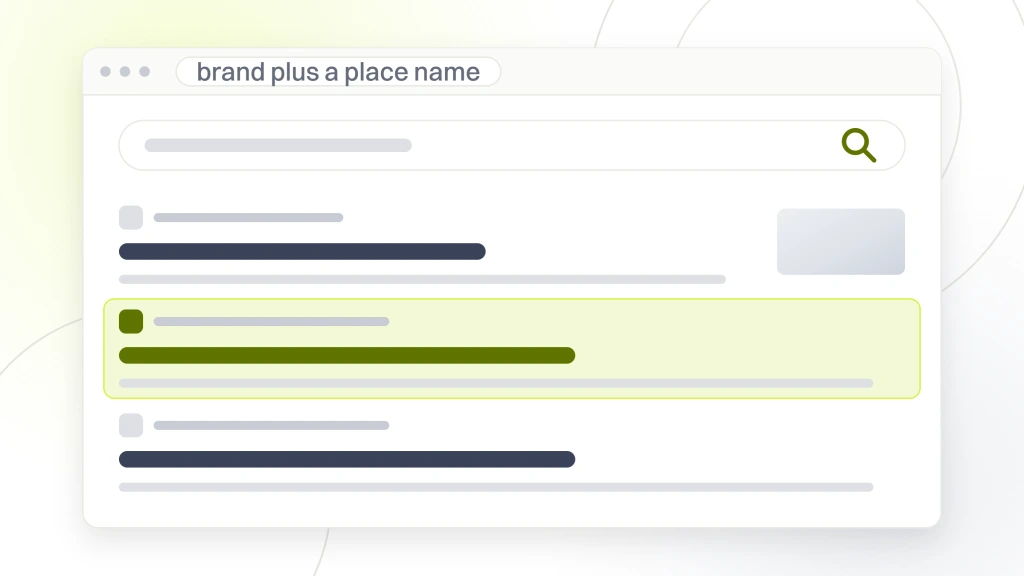
When several pages are near identical, something has to decide which one represents the group, and if you have not decided, Google does. Its documentation on duplicate URLs is explicit about this. It says that if you do not specify a canonical URL, Google will identify which version of the URL is objectively the best version to show to users in Search.
That is a reasonable default for an ordinary site and an expensive one for a franchise, because the page Google picks may be the one with the most links rather than the one nearest the searcher, and it is often the page for the oldest or largest unit. The rest of the network then competes against its own strongest page. Nothing looks broken in a crawl. Traffic simply concentrates somewhere that does not serve most of the customers who generated it.
So the check is not whether canonical tags exist. It is whether anybody made a decision that the tags are expressing. Those are easy to tell apart. A decision produces a pattern you can state in a sentence, such as every unit page being its own canonical and the directory page pointing nowhere. An accident produces a mixture that nobody in the room can explain without opening the template.
Check what Google chose when nobody chose for it
The declared canonical and the selected canonical are two different things, and on a franchise site they come apart more often than anywhere else. Search Console reports both, per URL, and that comparison is the single most useful check on this page.
Google publishes the methods that influence the choice and ranks them by strength. Redirects are described as a strong signal that the target should become canonical. A rel canonical annotation is described as a strong signal that the specified URL should become canonical. Sitemap inclusion is described as a weak signal. Google adds that these methods can stack and become more effective when combined, and also that none of them are required.
- Inspect a sample of location URLs and record where the declared canonical and the selected canonical disagree.
- Check whether every live location page is in the sitemap, and whether closed units are still in it.
- Check whether any location page canonicals to the main services page, which quietly removes it from the index.
- Check for old unit URLs redirecting somewhere generic instead of to the unit that replaced them.
Where they disagree, the useful question is not how to override it. It is what the disagreement is telling you about how similar those two pages really are.
Listing accuracy across dozens of separate records
Name, address and phone number consistency is a familiar idea for one business. For a network it is an arithmetic problem, because every unit multiplies by every directory that holds a record of it, and each of those records was created at a different time by a different person.
Google is direct about the standard. Its guidelines say to represent your business as it is consistently represented and recognized in the real world across signage, stationery and other branding, and that your name should reflect the real world name as used consistently on your storefront, website, stationery, and as known to customers. They also say to use a precise, accurate address, and not to include information in address lines that does not pertain to the physical location, such as URLs or keywords.
SOCi, whose multi location audit checklist also ranks for this search, frames the per unit check the same way, asking for an exact match to the storefront and website with no keyword stuffing in the business name field.
Audit this as a spreadsheet, one row per unit, one column per source, and the site column first. The drift is almost never random. It clusters around units that changed hands, changed phone systems or moved, and the pattern tells you which process failed rather than which record is wrong.
One profile per unit, and what a second one does
Duplicate business profiles are common in franchise networks for an ordinary reason. A new operator cannot get access to the existing profile, so they create one, and now there are two records competing to represent the same door.
Google’s guidelines for representing a business say not to create more than one page for each location of your business, either in a single account or multiple accounts. The same document says there should only be one profile per business, and that having more can cause problems with how information displays on Maps and Search.
The audit check is to search for each unit by name and place, and by phone number, and see how many records come back. Reviews are the reason this matters more than it sounds. Reviews attach to a profile rather than to a business, so a duplicate does not merely confuse a searcher, it splits the review history of that unit into two piles, neither of which reflects how the unit has actually performed.
Record the duplicates with their URLs before anybody starts resolving them, because that evidence disappears the moment a merge goes through.
Audit the template once, then sample the pages
Nobody hand checks three hundred pages, and an audit that pretends otherwise either did not happen or took a month and arrived after the decision it was meant to inform.
Split the work honestly. Template level checks are done once and apply everywhere, which covers markup, heading structure, the address block, schema, the internal linking pattern between units, and performance, since a template that loads slowly loads slowly in every place at once. Our guide to what website speed tests measure and what they miss covers that side, and our comparison of website checker tools and what each score means covers the automated template level checks that sit alongside it.
Page level checks are sampled, and a deliberate sample beats a random one. Take the oldest page and the newest, the highest traffic unit and the lowest, one unit that recently changed hands, and one that recently moved. Six pages chosen that way will surface nearly every content and ownership defect in the network, because each of those categories corresponds to a moment when a process was supposed to run and may not have.
Report sampled findings as sampled. Saying that four of six checked pages had a defect is honest and actionable. Saying the network has that defect is neither.
What an operator can change, and the fields they break
Local editing rights are usually the right call. Somebody at the unit knows the hours changed, and head office does not. The cost is that the fields most likely to be edited locally are also the ones with the strictest rules.
The business name field is where this shows up first. Adding a service or a place name to it makes the record easier to find in the eyes of whoever edited it, and it contradicts Google’s requirement that the name reflect the real world name used on the storefront. The address lines are the second, since Google’s guidelines say not to put URLs or keywords in them. Categories are the third, because a local edit that broadens the category to catch more searches usually dilutes the one that was working.
Audit these as a diff rather than a judgment. Pull the current values for every unit, compare them against the brand standard, and list the ones that differ. Most will have a sensible local reason behind them, which is exactly why the conversation is worth having with the person who made the change rather than about them. The exception is the name field, where the rule comes from Google rather than from the brand, and a local preference does not change what is permitted.
Reviews and prominence, which head office cannot fake
Most of a franchise audit is about consistency, which head office can enforce. This part is not, and it is worth separating because the remedy is different.
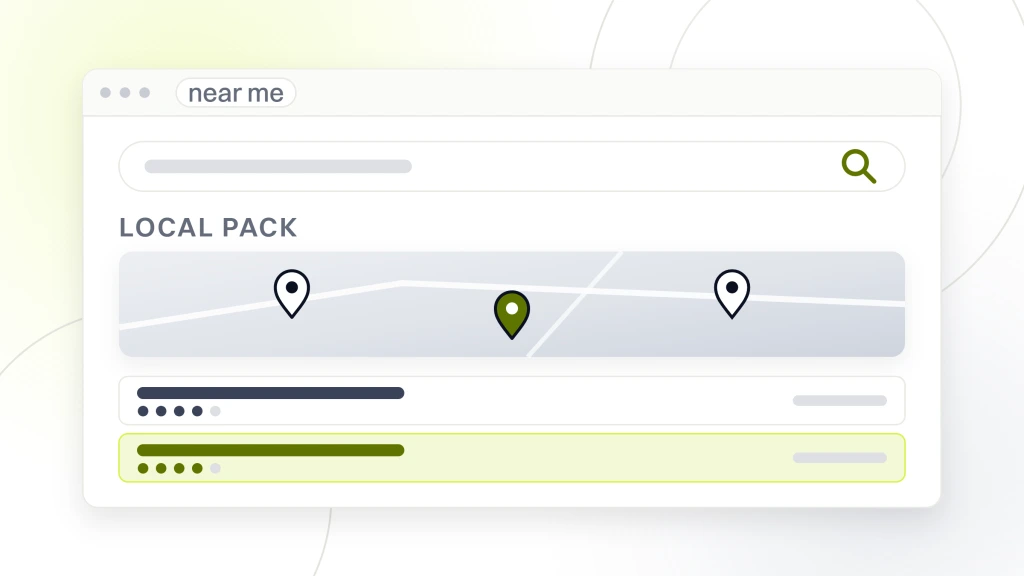
Google’s own explanation of local ranking says local results are mainly based on relevance, distance and popularity. Its definition of prominence says it means how well known a business is, that prominent places are more likely to show up in search results, and that the factor is also based on information like how many websites link to your business and how many reviews you have, with more reviews and positive ratings able to help local ranking.
Read that against a network and the consequence is clear. Two units with an identical template, identical copy quality and identical listings will still rank differently, because reviews and local links are earned at the unit and cannot be deployed from the center. Our explainer on what a URL rating measures takes apart what a link based score can and cannot tell you about that.
So audit review coverage per unit, not as a network average. An average hides the two units with none, and those two are the entire finding.
Subfolders, subdomains and separate domains
Every network has made this decision, often years ago, often by accident, and it constrains everything else the audit can recommend. So establish which one you are looking at before you write findings that assume another.
Ignite Visibility’s position is that in most cases franchise locations should use subfolders branching from the main domain rather than separate domains, so that local pages inherit the main domain’s trust signals and link equity, while noting that subdomains may be appropriate where an individual location needs a genuinely separate presence.
The audit question is narrower than the strategy question and more useful. Is the structure consistent, or has the network accumulated a mixture, with most units in folders and a handful on their own domains because an operator built a site before the brand had a policy. A mixture is the finding worth reporting, because it means link equity, analytics and the listing that points at each unit are all pulling in different directions, and because it is usually the residue of a governance gap rather than a decision anybody defends.
Changing structure is expensive and rarely the first thing to do. Knowing which one you have is free and always the first thing to do.
How to report a franchise audit so somebody acts on it
A single site audit goes to one person who can fix everything in it. A franchise audit goes to several people who can each fix a different part, which means an undifferentiated list of findings gets read by everybody and actioned by nobody.
- Split every finding into template level, which the brand fixes once, and unit level, which somebody local fixes many times.
- Put the number of units affected beside each finding, because that number is what decides the order of work.
- Name the control rather than the person, so the finding survives a change of operator.
- Say plainly which findings were sampled and how large the sample was.
- Separate what is broken from what is merely inconsistent, since the second is often a policy question rather than a defect.
Then agree the measurement before the work starts rather than after. Our guide to measuring SEO performance step by step covers that, and what free tool scores actually mean is worth reading first if any of the findings came out of a scoring tool, because a score and a problem are not the same object.
What we would check first
We sell audits, so weigh this accordingly and apply the same test to us that this page applies to anybody. Nothing here requires our involvement, and the first two steps cost nothing but an afternoon.
The checks bulleted on this page come to fifteen, with more described in the prose around them. That count is ours and nobody else’s. No standard defines what belongs in a franchise audit, so any number you are quoted, including this one, describes whoever wrote the list rather than the subject, and a longer list is not a more complete audit.
Faced with a network, the order we work is short. Build the table of who controls what, because it decides which findings can become changes. Compare five location pages with the boilerplate stripped, because duplication is the most common defect and the cheapest to confirm. Then check declared canonicals against selected ones, because that is where a network quietly competes with itself. Everything else on this page is worth doing and none of it outranks those three.
If you would rather have somebody run that against a specific network, our free website audit is where that is set out, and the report is yours whatever you decide to do next.