
Healthcare website classification is the bucket regulators and search engines drop your site into based on the services you offer, the data you collect, and the trust signals you send. That bucket sets your HIPAA scope, your Google YMYL treatment, your Google Ads tier, your state privacy load, and the ranking growth curve for the next 12 months. Miss the bucket and you spend a full year fighting invisible penalties. Nail it and every downstream call gets cheaper.
This guide walks the healthcare website categories web teams actually use in the brief, the criteria each classifying body applies (Google, HHS, FTC, ad platforms), the SEO consequences of every bucket, and the compliance triggers you inherit when your site crosses into a stricter class. You’ll leave with an 8-item audit checklist and a clear read on which medical website classification books more patient visits under current search and ad rules.
Ad platform tiers that shape your paid search
Google Ads splits healthcare advertising into 3 restrict tiers. Healthcare and Medicines covers general practice. Restricted Healthcare covers prescription treatments, telehealth prescribing, and sensitive conditions. Prohibited covers unapproved substances and misleading claims. Meta splits its healthcare category into general practice ads (allowed with targeting limits) and health and pharma ads (blocked from most interest-based targeting). Microsoft Ads applies its own certification bar for online pharmacies and telehealth prescribers. Each platform classifies your site independently, using keyword bids, landing page copy, and category selection during ad setup.
The wrong tier blocks your ads with no warning. A general dental practice bidding on “emergency dental care” trips the healthcare restrict tier and needs to certify. A telehealth mental health group bidding on “psychiatrist near me” trips Restricted Healthcare and needs LegitScript certification first. A weight loss clinic bidding on branded medication terms trips a prescription tier that needs a separate FDA-facing review. Not knowing which tier applies wastes the first 30 to 60 days of an ad account on rejected campaigns during the approval crawl.
Restricted tier map by treatment type
- General dental, primary care, physical therapy, chiropractic. Healthcare and Medicines tier. No pre-certification, but landing pages get scanned for medical misinformation.
- Mental health, addiction treatment, telehealth prescribing. Restricted Healthcare tier. LegitScript certification required before ads run.
- Weight loss medications, hormone therapy, IV therapy. Restricted Healthcare tier with extra FDA-facing review.
- Online pharmacies, pharmaceutical manufacturers. Prohibited without full LegitScript pharmacy certification.
- Cosmetic surgery, aesthetic dermatology. Healthcare and Medicines tier, but before-and-after imagery gets policy-scanned.
- Cannabis, CBD, kratom. Prohibited on most platforms regardless of state legality.
State privacy law layer on top of HIPAA
State privacy laws stack on top of HIPAA. California’s CCPA and CPRA class most healthcare sites as businesses subject to consumer privacy rights, on top of the HIPAA scope you already carry. Washington’s My Health My Data Act extends protections to consumer health data (wellness apps, fertility trackers, non-covered wellness clinics) that HIPAA never touched. Nevada, Connecticut, and Virginia each carry their own consumer health data class with their own opt-in and consent structures. Your site may fall under HIPAA plus one or more state laws depending on where your patients live.
The practical effect is simple. Your privacy policy, cookie banner, opt-out flow, and data retention plan have to satisfy the strictest law you fall under. A California-facing site collecting patient data needs a Do Not Sell or Share opt-out link plus a limited-use consent for health data. A Washington-facing site collecting any consumer health data needs affirmative opt-in consent and a separate signed authorization before selling or sharing that data. Skip the state layer once and you’re patching under an enforcement letter, not on your own schedule.
Ignoring the state layer, on the assumption HIPAA covers everything, is the mistake state Attorneys General see in enforcement actions. Fines under Washington’s MHMDA scale with the volume of consumer health data touched. California’s CPRA lets patients bring private causes of action for certain breaches. The compliance stack for a healthcare site in 2026 has to plan for a federal HIPAA baseline plus every state law in every market you serve. Skipping one is expensive, and the state Attorney General’s letter arrives before the HHS letter does.
Healthcare website categories web teams brief against
The healthcare website categories web teams brief against differ from the regulatory ones. When a design team scopes a project, the working buckets below show up in the brief. Each maps to a specific set of compliance needs, tech stack choices, and SEO patterns. The category you belong in is not up for debate. It is set by the services you offer, the states you operate in, and the data you collect on every page. Getting this on paper before the design phase is what keeps the project on schedule.
| Category | Typical scope | HIPAA posture | YMYL treatment | Ad tier |
|---|---|---|---|---|
| Solo practice site | 10 to 20 pages, single provider | Full covered entity | Yes | Healthcare and Medicines |
| Group practice site | 20 to 60 pages, multiple providers | Full covered entity | Yes | Healthcare and Medicines |
| DSO or multi-location group | 60 to 300 pages, location silos | Full covered entity | Yes | Healthcare and Medicines |
| Telehealth or online prescribing | Purpose-built portal plus marketing site | Full covered entity with e-prescribe scope | Yes | Restricted Healthcare |
| Wellness or aesthetics clinic | Boutique service site, non-clinical | Depends on services offered | Partial | Healthcare and Medicines with policy scan |
| Health information publisher | Editorial content, no patient booking | Not a covered entity | Yes | Healthcare and Medicines with editorial policy |
Knowing which of these healthcare website types you fall into changes every downstream call. A solo practice site does not need patient portal infrastructure, but it does need HIPAA-safe forms and full YMYL content signals. A telehealth prescriber needs LegitScript certification, e-prescribe integration, and every other layer stacked on top. Misclassifying yourself as a wellness clinic when you actually treat mental health conditions is how ad accounts get suspended and rankings quietly slip. The gap between actual scope and declared scope is the exact gap regulators and search engines flag.
How healthcare website types map to medical website classification buckets
The mapping from healthcare website types to medical website classification buckets is not a marketing exercise. A solo dentist calling itself a wellness clinic still gets classified as a full covered entity the moment it stores patient records. A wellness clinic offering IV therapy still gets pulled into Restricted Healthcare on Google Ads. A publisher accepting patient bookings on-site jumps from editorial to covered entity in a single page release. The class follows what the site does, not what the site calls itself, and every ad platform, state AG, and search engine reads the site by that same rule.
SEO consequences of getting the class wrong
Google reads the mismatch between what your site claims to be and what its signals prove. A site producing medical content without provider credentials, without named reviewers, without primary source citations, and without MedicalOrganization schema gets treated as low-authority YMYL and pushed down accordingly. The Google guidance on E-E-A-T spells out what raters look for on medical pages. The demotion arrives with no notification. You watch rankings drop over 3 to 6 months, and a competitor with proper E-E-A-T signals climbs past you on the same terms.
The 2024 core update and the 2025 helpful content refinements sharpened this pattern. Medical content without author bylines lost visibility across the health vertical. Sites relying on ghostwritten SEO content with no clinical review saw traffic drops that took a full year to claw back. The pattern held across dental, primary care, mental health, and physical therapy. Practices with real named authors, real credentials, real reviewer dates, and real citations kept ranking. Practices with template content and generic bylines lost their positions.
The signal is a hard threshold, not a soft weighting, and crossing it in the wrong direction gets expensive fast. A dental group that watched organic sessions fall 40% through the 2024 update spent 9 months clawing back after rewriting every clinical article with named reviewers and real citations. A primary care group that fixed schema and bylines before the update kept climbing through the same window. Same market. Same services. Different healthcare site classification criteria posture. Different traffic curve. That gap is the healthcare website classification tax on lazy trust signals.
A real classification audit that moved rankings
Pelvic Rehabilitation Medicine runs 14 locations treating pelvic pain and endometriosis across 10 states. Before the audit, the site was caught between YMYL classification and thin E-E-A-T signals. Provider bios existed, but credentials never surfaced cleanly. Symptom pages had no named reviewer. Citations pointed at generic wellness sites in place of PubMed or NIH. The site was competing in a YMYL bucket without the signals the bucket rewards, and rankings were flat every month against smaller local competitors.
The audit rebuilt the trust layer against the criteria Google’s raters use. Provider bio pages got full credential strings, board certifications, and hospital affiliations pulled to the top. Every clinical content page got a named clinical reviewer and a review date. Symptom and treatment content got citations to peer-reviewed sources and NIH pages. MedicalOrganization schema went in with medicalSpecialty, hoursAvailable, and accepting-new-patients status. HIPAA-safe forms replaced legacy contact forms with a signed BAA. Server-side conversion tracking replaced client-side pixel firing on booking confirmations.
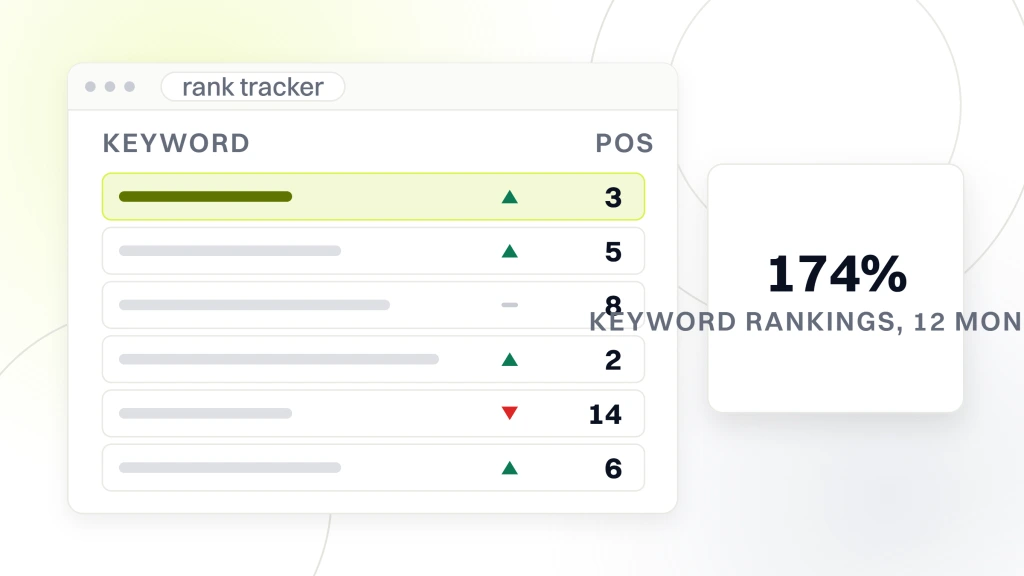
Across the 12 months that followed, organic keyword rankings grew 174% and organic traffic climbed 166%. The practice launched Worthy Warrior, a patient community platform for pelvic pain and endometriosis, that pulled additional trust signals into the ecosystem. The pattern repeats across the clinical verticals we work in. Get the healthcare website classification right and ranking growth compounds, and every trust signal you add reinforces the class you actually want to be in. That compounding is what a clean E-E-A-T posture buys you.
A working checklist for the audit
The audit takes a half day if you know where to look. Work through the 8 checks below and you get a clear picture of which bucket you’re in, whether you’re getting the treatment that bucket deserves, and where the classification gaps are hurting you. If more than 2 items fail, the signals are working against you and the fix is a rewrite plus a schema pass, not a redesign.
- Provider bios with real credentials. Every provider has a page with degree strings, board certifications, years in practice, and hospital affiliations.
- Named clinical reviewer on every medical article. Reviewer name, credentials, and review date visible above the fold on the article.
- Citations to primary sources. PubMed, NIH, CDC, or peer-reviewed journals in-text, not generic wellness sites in a footer.
- MedicalOrganization schema at practice level. Plus per-provider Physician schema, medicalSpecialty, hoursAvailable, and accepting-new-patients status.
- HIPAA-safe forms with a signed BAA. Every form provider and hosting vendor covered under a current BAA.
- Server-side conversion tracking. No client-side pixels on appointment confirmation URLs. All fires server-side.
- Privacy policy covering state laws in every patient market. HIPAA plus CCPA, MHMDA, and every other applicable state layer.
- Ad platform certifications matched to services. LegitScript and FDA-facing review present where the treatment type requires it.
The healthcare website types that show up in a working audit split cleanly along trust signals, not production budget. A practice site with a plain WordPress theme, a named MD reviewer on every article, and correct MedicalOrganization schema outranks a design-forward competitor with anonymous ghostwritten content every quarter. Google reads the credentials, not the video. The medical website classification you earn comes from the signals you send, not the launch budget you spent, and that is what makes the checklist above so cheap to run against your own site.
The fix is not glamorous. Add real bylines. Name the reviewer. Cite the primary source. Tag the schema. Sign the BAA. None of that shows up in a design mockup, and none of it pushes a hero video into position 1. All of it moves rankings the way the classification bucket rewards, and none of it takes more than 90 days if you scope it in one sprint. Every practice we run this playbook against sees the first ranking shifts inside 60 days and the sustained curve inside 6 months.
Where healthcare site classification criteria are heading
Regulatory pressure keeps climbing across every layer that touches a healthcare site. HHS released additional guidance on tracking technologies in 2024. State privacy laws expanded through 2025, with more coming in 2026. Google’s core updates keep sharpening the E-E-A-T thresholds for medical content. Ad platforms tightened certification rules across telehealth prescribing and weight loss medications. The trend line is clear. Every year, the gap between sites classified correctly and sites classified sloppily grows wider in both compliance risk and search visibility.
AI Overviews are pulling healthcare content daily from sites with strong classification signals. Sites without named authors, without primary source citations, without proper schema get overlooked. Sites with those signals get quoted and clicked. Practices that treat classification as a compliance checkbox miss the search advantage. Practices that treat it as the underlying design layer earn visibility that compounds. The healthcare website categories that win in AI Overviews right now are the same ones that pass state privacy audits without a rework, and that is not a coincidence.
If you’re not sure which bucket your site sits in, we run a 2-week audit that maps your current signals against every classifying body’s criteria. When you want to talk numbers, Healthcare Website Design Services covers HIPAA-aware builds and classification-aligned architecture. For the design-layer detail, the Healthcare Web Design (Pillar) ties trust signals into every UX decision. To fix the underlying SEO baseline, our Healthcare SEO Audit shows the ranking gaps by priority. For the strategic side of ranking under YMYL, the Healthcare SEO (Pillar) pulls content, technical, and strategy into one working plan. Everything ties back to the Healthcare Marketing Hub for the broader acquisition picture.