
Healthcare SEO is the compounding channel most practices under-invest in for years, then over-invest in for one panicked quarter, then abandon when the numbers do not move fast enough. The pattern is predictable and expensive. Done right, healthcare SEO becomes the highest-margin patient acquisition channel a practice runs, producing booked patients at 3 to 5 times lower cost than PPC and building trust that ad channels cannot replicate. This guide walks the strategy, the content, and the technical work that make healthcare SEO earn its keep across a real 12-month window.
The short version. Fix technical foundations first so Google can crawl and index the site cleanly. Build the service page layer next so high-intent searches convert. Layer patient-education content on top for top-of-funnel traffic and topical authority. Wire the local SEO signals through Google Business Profile, citations, and reviews. Measure the 4 numbers that actually matter monthly and let the compounding do the work over 3 to 9 months.
Local SEO and Google Business Profile in SEO in Healthcare
SEO in healthcare is mostly local SEO. Patients search “dentist near me,” “urgent care in Vista,” “pediatrician open Sunday.” Ranking in the map pack for those searches produces more bookings than ranking on generic informational keywords. Local SEO is the highest-yield healthcare SEO work a practice runs, and it moves the fastest, often inside 60 days of clean-up.
Google Business Profile completeness
Complete every field in Google Business Profile. Categories, services, hours, appointment link, photos, Q&A, health attributes. Practices that fill every field rank in the map pack more consistently than practices that fill just the required fields. Photo count matters. Practices with 20 or more real photos rank higher than practices with 2 stock photos and a logo. Refresh photos quarterly so the profile keeps signaling activity to Google.
Citation consistency
Name, address, and phone number consistency across every directory listing feeds the local ranking algorithm. Yelp, Healthgrades, Zocdoc, WebMD, Vitals, RateMDs, and the local chamber of commerce all need matching NAP. Inconsistent citations confuse Google’s local graph and cost ranking. Audit citations once a year and fix inconsistencies as they surface. Small NAP mismatches (Suite A vs Ste A) still count as inconsistencies at scale.
Review velocity and response
Review velocity matters more than total review count. 10 reviews last month beats 200 reviews from 3 years ago in Google’s eyes. Automate review requests via the practice management system so every recent patient gets asked. Respond to every review, positive or negative, inside 48 hours. That response pattern signals engagement to both Google and future patients reading the profile. Aim for 4 to 8 fresh reviews per month per location as a floor.
How Much Does SEO for Healthcare Industry Cost
Cost for SEO for healthcare industry work spans a wide band. Solo practices run $999 to $1,999 per month on retainer. Multi-location groups run $1,999 to $3,500 or higher depending on the number of locations and the content demand. The band under $500 per month usually buys template blog production that never moves rankings or bookings. The band over $5,000 per month rarely earns its keep unless the group runs 8+ locations or a serious content operation.
What you should not pay for
Skip agencies that sell generic blog packages, guaranteed rankings on informational terms, or PBN link-building. Those tactics look like SEO on the invoice and produce zero booked patients. Skip agencies that will not name the specialists doing the work or that hide reporting behind a proprietary dashboard. If a vendor cannot map spend to booked patients inside 30 seconds of a Zoom, they are selling a distraction.
What the retainer should include
A working retainer covers 4 buckets. Technical audit and monthly maintenance. Google Business Profile management with review workflow. On-page optimization plus location and service page depth. Content production tied to search intent, not blog quotas. Add reporting on booked patients, cost per booked patient, and cluster-level ranking movement. Anything else is optional. Ask any agency to draw this on paper before signing.
ROI math on healthcare SEO
Run the math on lifetime value, not first-visit revenue. A $2,000 retainer producing 6 new patients per month at an average lifetime value of $3,500 returns $21,000 in booked value against $2,000 spent, or roughly a 10x return. That math holds only after month 6, once the program hits maturity. Expect month 1 through month 5 to look expensive. This is the number to explain to the practice owner in writing before signing. See Pew Research on mobile search behavior for the reason mobile-first indexation matters this much in local healthcare.
Measuring Healthcare SEO Performance
Rankings alone lie. Rankings without booked patients are vanity. Real healthcare SEO measurement ties spend to appointments and to blended cost per booked patient across the funnel. That measurement stack needs consent-mode analytics wired on day 1, call tracking on every phone number, and a form-fill classification that separates new patient inquiries from existing patient portal traffic. See Google Analytics for healthcare websites for the exact tracking blueprint.
Attribution to booked patients
Every booking channel needs its own tag. Google Business Profile calls, organic form fills, direct calls, and paid clicks all need distinct source markers so the report reads clean. Practices that skip this step end up with a single organic bucket that hides 40% of paid contribution or misses 30% of local search contribution. Bad attribution kills good programs by making the SEO number look smaller than it is.
Cluster-level ranking movement
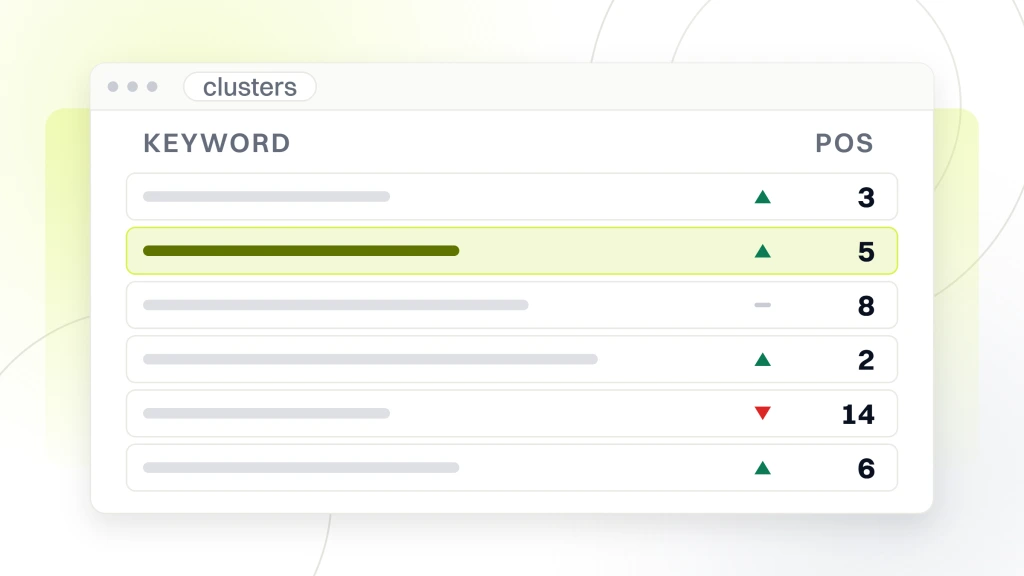
Track rankings by topical cluster, not by single keyword. A cluster of 40 pediatric-dentistry keywords moving from position 25 to position 8 tells a truer story than one keyword hitting the top 3. Cluster movement predicts booked patient volume 60 to 90 days out. Single-keyword movement predicts nothing. Report cluster averages and cluster median position monthly, then hold agencies to cluster gains, not one-off wins.
Cost per booked patient
Blended cost per booked patient is the north star. Total marketing spend divided by total booked patients across every channel, tracked monthly. Healthy healthcare practices sit at $80 to $220 blended CPBP depending on specialty and market. Cash-pay specialties tend higher, insurance-mix general practices lower. Watch the trend line quarter over quarter. Any 20% jump in blended CPBP without a matching volume jump signals a funnel or offer problem.
Common Mistakes in Healthcare SEO
Most healthcare SEO programs fail for the same 3 reasons. They chase the wrong terms, they skip the technical layer, and they get fired before compounding kicks in. All 3 mistakes are avoidable with a written plan and honest reporting. Get these right and the program pays for itself inside 9 months.
Chasing keyword rankings on informational terms
Ranking for “what causes back pain” or “symptoms of vertigo” produces traffic that rarely books an appointment. Those searchers self-diagnose and leave. High-intent terms like “chiropractor in Round Rock” or “vertigo specialist Denver” convert 8 to 12 times better and move 5 times faster to the top of the SERP. Build the service and location layer first, then layer patient-education content on top for authority and top-of-funnel reach.
Skipping the technical audit
Practices skip technical SEO since it feels invisible. That skip costs 30 to 60% of the retainer’s potential upside. Core Web Vitals, crawlability, schema markup, mobile responsiveness, and page-speed on 4G all feed both ranking and conversion. Run a full technical audit once a quarter and fix the top 20 issues each time. The healthcare SEO audit checklist walks the exact priorities.
Firing the agency at month four
Month 4 is the trough. Technical work is done, content is in production, and rankings have started to move but the booked-patient graph still looks flat. That is when practices panic and switch agencies. Every switch resets the compounding clock by 3 to 4 months. The math on switching agencies almost always loses. Set expectations at signing so month 4 does not turn into a panic conversation with the practice owner.
Real Numbers From Healthcare SEO Work
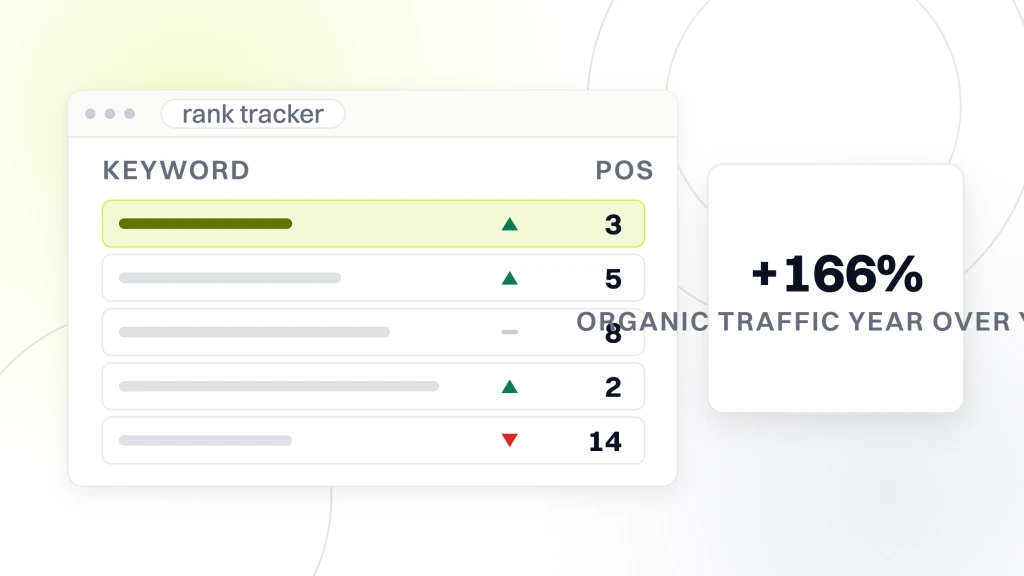
Case in point. Pelvic Rehabilitation Medicine ran a full healthcare SEO program over an annual curve and posted +174% organic keyword growth, +166% organic traffic YoY, and launched a dedicated patient support hub for pelvic-pain and endometriosis patients. Those numbers came from the same 4-bucket retainer described earlier, not from a one-off content campaign or a link-building sprint. The compounding did the work.
Ranking depth per location
Ranking depth per location, measured as the count of priority terms ranking in the top 10 for each service area, tells the truest story. A practice with 8 locations should track 25 to 40 priority terms per location. Watch depth grow month over month per location. Location-level depth predicts booked-patient volume better than any single sitewide metric.
Booked patient attribution
Booked-patient attribution needs 3 data sources fused. Practice management system data on new patient adds, marketing analytics on organic sessions, and call-tracking data on phone bookings. Fuse them monthly and report the number of booked patients attributable to organic search. That single number matters more than sessions, rankings, or backlinks combined.
What changed operationally
Practices that grow through healthcare SEO change operationally too. Front desk scripts get tighter. Online scheduling picks up 30 to 50% of new patient volume. Review requests fire automatically after every appointment. The SEO win exposes the operational bottlenecks. Fix those bottlenecks in parallel or the new patient calls will convert at the same low rate they did before the traffic showed up.
Where Healthcare SEO Fits Inside a Full Marketing Stack
Healthcare SEO is one channel inside a full stack. It compounds slower than paid search, faster than brand-building, and produces the highest lifetime value per booked patient once mature. Run it alongside PPC and content, not in place of them. The stack works when every channel has a defined role and a shared reporting layer.
SEO and PPC together
Run SEO and PPC together for the first 12 months. PPC delivers same-day patients as SEO builds in parallel. As organic bookings grow past 40% of new patient volume, shift 20 to 30% of PPC spend into content and technical scope. That rebalance keeps blended CPBP dropping quarter over quarter without starving the pipeline mid-transition.
SEO and content strategy
Content strategy sits inside the SEO retainer, not next to it. Patient-education pieces, condition explainers, and treatment comparisons all feed topical authority and top-of-funnel traffic. Read healthcare website content strategy for the exact briefing and production model. Every piece needs a target keyword, a target patient question, and a target next-step CTA.
Where the retainer fits
The retainer sits with a healthcare-specialist agency, not a generalist SEO shop. Specialists know HIPAA, patient-review workflow, YMYL content standards, and the operational quirks of medical practice management systems. See healthcare SEO agency for the vetting checklist. Ask for same-vertical case studies with booked-patient numbers, not traffic charts, before signing.
Quarterly Review Cadence for Healthcare SEO
The right cadence is monthly reporting, quarterly reviews, annual planning. Monthly reporting tracks the 4 north-star numbers. Quarterly reviews adjust priorities based on cluster movement. Annual planning sets the retainer scope and the content roadmap. Keep this cadence for at least 2 years to see the full compounding curve.
The four-number scorecard
Booked patients from organic. Blended cost per booked patient. GBP insight metrics (calls, direction requests, website visits). Cluster-level ranking depth. Those 4 numbers on one page tell any practice owner exactly how the healthcare SEO retainer is performing. Everything else feeds those 4 numbers or belongs in the appendix.
Prioritizing the next quarter’s work
Quarter-over-quarter, look at the flattest cluster and the weakest location and put 60% of the next quarter’s scope there. Move the trailing metric first. Trying to lift every cluster at once dilutes focus and leaves gains on the table. The 60/30/10 split, weakest first, keeps the whole program balanced without over-rotating on the one lagging area.
When to widen scope
Widen scope when the priority terms are ranking top 5 and blended CPBP is trending under $150. That means the base is compounding. Widen into adjacent service lines, secondary locations, and patient-education depth. Widening too early splits attention and slows the whole program. Widen too late and the practice leaves booked-patient volume on the table for a competitor to take.
SEO for Healthcare Providers, Solo vs Group
SEO for healthcare providers plays out differently by practice size. Solo providers win by dominating the local map pack for 3 to 5 priority services in a tight geographic radius. Group practices win by stacking location pages plus service depth across 8 to 40 clinics with a shared content backbone. The strategy stays the same in principle. The scope, spend, and cadence shift with the org chart.
Solo provider priorities
Solo providers should spend 70% of the retainer on local SEO signals and 30% on service page depth in month 1 through 6. SEO for healthcare providers at this scale lives or dies on Google Business Profile completeness, review velocity, and 5 or 6 tightly written service pages. Skip broad blog production in year 1. It rarely returns the spend for a single-location practice.
Group practice priorities
Group practices need a location-page template that scales cleanly to 40 clinics. Every location page needs unique intro copy, unique provider bios, unique local proof, and a service list matched to that location’s actual scope. SEO for healthcare providers in group settings breaks down when 40 near-duplicate location pages ship with a template swap. Google notices, and rankings never break out of position 15.
Next Steps for Your Healthcare SEO Program
Start with a 30-day audit. Google Business Profile, technical crawl, on-page inventory, and cluster ranking baseline. Fix the top 20 technical issues, complete every GBP field, and stand up the reporting layer in month 1. Then build the service and location page depth in month 2 and layer patient-education content from month 3 forward. Give the program 9 months of steady work, review monthly, and let the compounding earn its keep. See healthcare SEO services for a scoped engagement, or the broader healthcare marketing hub for the full stack.