
When somebody asks how do I know my SEO is working, they are almost never asking a technical question. Look at who ranks for it and the answer is obvious. Three of the top results are Reddit and Quora threads where people are asking whether their SEO guy is doing a good job, whether the agency is actually working for them, and when they should expect to see something.
That is a different question. It is not how do I measure search performance. It is how do I tell whether I am being served or billed, asked by somebody who is paying every month and cannot read the reports well enough to argue with them.
So, awkwardly, we are an SEO agency writing the article that teaches you to audit an SEO agency. There is no version of that which is neutral. What we can do is anchor these checks in something published by Google rather than in anything asserted by us, so that you can verify the standard without taking our word for it, say plainly which part is our own judgment, and then run all six at us at the end with our answers written down. If a check only worked when you pointed it at somebody else, it would be a sales pitch wearing a checklist, and it is not in here.
How do I know my SEO is working, and where the answer is published
Start with the single most useful fact in this article, which is that the platform itself publishes buyer guidance on hiring an SEO and it is free to read.
Google’s documentation carries a page on whether you need an SEO at all, and inside it is a list of questions it suggests you ask one. They include “Can you show me examples of your previous work and share some success stories?”, “What kind of results do you expect to see, and in what timeframe?”, “How do you measure your success?” and “Will you share with me all the changes you make to my site, and provide detailed information about your recommendations and the reasoning behind them?” (developers.google.com/search/docs/fundamentals/do-i-need-seo, read 16 September 2026).
Those are written for hiring, and they work just as well on somebody you already pay. Ask them of a provider six months in and the answers are more revealing than they would have been at the pitch, because by then there is a record to check them against.
The page also carries a sentence that sets the whole frame. “Ultimately, you are responsible for the actions of any companies you hire”. You cannot delegate the outcome, which is the real reason it is worth spending an afternoon learning to read this rather than trusting a monthly deck.
Five of the six checks below are built from that page and from Google’s starter guide, quoted with the URL, so you can check that we have quoted it correctly and so can whoever you are asking about. The sixth is read straight out of your own Search Console, which is Google’s record of what happened rather than ours, and the way we suggest reading it is flagged as our own judgment where it appears.
Check one, has anybody guaranteed you anything
This is the fastest check available and it is the one with the least ambiguity, because Google states the answer outright.
“No one can guarantee a #1 ranking on Google.” That is the documentation, not an opinion, and it goes on to say “Beware of SEOs that claim to guarantee rankings” and, more bluntly still, “If they guarantee you that their changes will give you first place in search results, find someone else.”
So go back through what you were sold. Not the contract necessarily, but the proposal, the pitch deck and the emails. A promise of a specific position, a promised number of first-page keywords, or a guarantee tied to a timeframe are all the same thing, and it is the thing the platform tells you to walk away from.
Two nearby claims are worth the same treatment. Google says to beware of anyone who claims a special relationship with it, and separately that “Google doesn’t evaluate or endorse third-party SEO tools, and these tools don’t have access to Google’s internal ranking data.” So a report presented as carrying Google’s authority because it came out of a named tool is carrying no such thing.
If nothing was guaranteed and nobody claimed a relationship with the platform, this check passes and it tells you something real. Plenty of providers pass it. That is not faint praise, it is the point of having a checkable standard.
Check two, can you see the underlying data yourself
Everything else in this article depends on this one, because a buyer who can only see a prepared summary is judging the summary rather than the work.
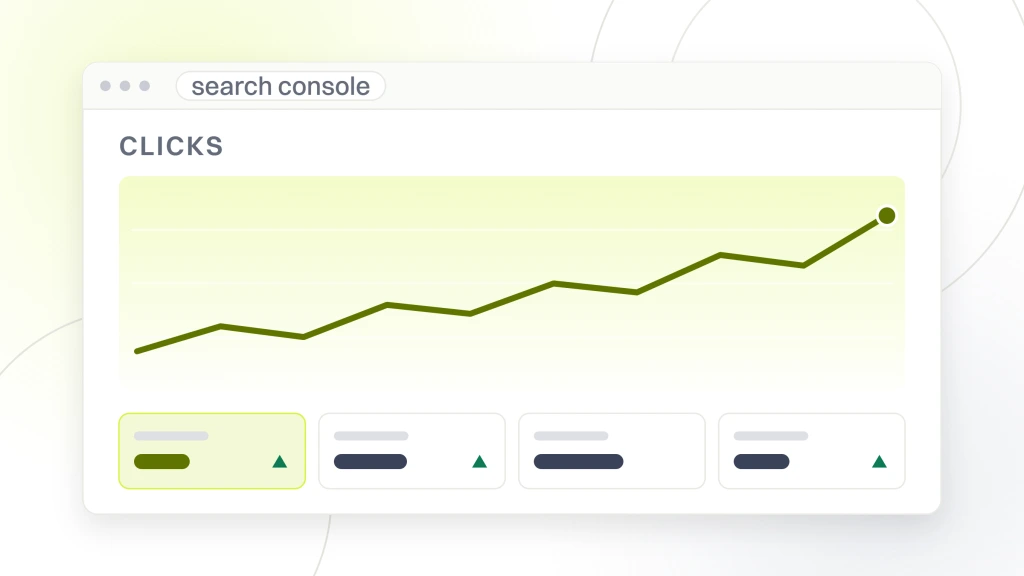
Search Console is free, it is first party, and it reports what actually happened in Google rather than what a tool estimated. If you do not have your own access to it, that is the single most valuable thing to fix before anything else, and it does not require anybody’s permission but your own if the property is yours.
Google’s guidance on granting access to a provider is specific and worth following in the other direction too. When an SEO offers to audit your site, it says to “only grant read access to Search Console (at this stage, don’t grant them write access)”. Read that as a statement about who should own the property. If your provider set it up under their own account and you have no login, ownership of your own measurement sits with the person being measured.
Ask for owner access to the property in your name, alongside whatever analytics you run. A provider who arranges that within a day has passed. A provider who explains why it is complicated has given you a different kind of answer.
Once you have it, you do not need to become an analyst. You need one screen, the one showing which queries brought people to your site, which is what the next two checks are read from.
Check three, was the timeframe you were given a real one
Almost every version of this question is really about time. It has been six months, something should have happened, and you have no way to know whether that is true.
Here is the honest position, and it is deliberately not a number we made up. Google’s starter guide says that “Every change you make will take some time to be reflected on Google’s end. Some changes might take effect in a few hours, others could take several months. In general, you likely want to wait a few weeks to assess whether your work had beneficial effects in Google Search results.” (developers.google.com/search/docs/fundamentals/seo-starter-guide, read 16 September 2026).
Notice what that does and does not say. It gives a range for a single change to register, from hours to months, and it suggests a few weeks before judging one. It does not promise business results on a schedule, and Google publishes no figure for how long a campaign takes to pay for itself. Anybody who quotes you one is quoting themselves.
The same page adds the qualifier that gets left out of proposals, that “not all changes you make to your website will result in noticeable impact in search results”. Some work correctly done produces nothing visible, and a provider who has never told you that is managing your expectations rather than informing them.
So the check is not whether results have arrived by some date. It is whether you were given a timeframe at the start, in writing, with what would count as progress inside it. Google’s own list of questions includes asking exactly that. If nobody ever answered it, the absence is the finding.
Check four, does the reporting say what changed and when
Read your last three monthly reports side by side and ask one question of them. Could somebody else reconstruct what was actually done to your website.
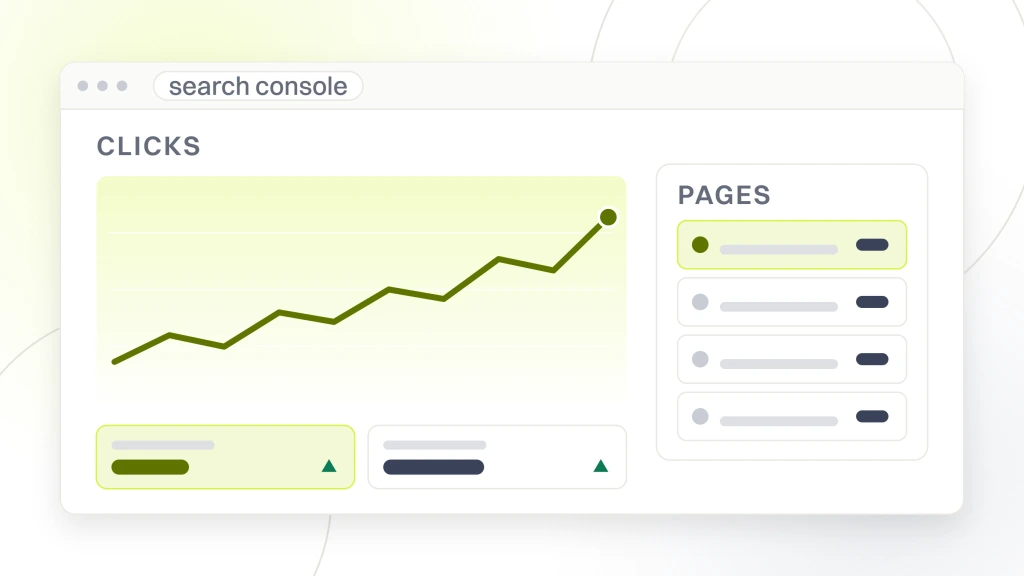
You are looking for specifics with dates attached. These pages were rewritten on this date. This was fixed. This was published. Google’s own suggested question is whether a provider will “share with me all the changes you make to my site, and provide detailed information about your recommendations and the reasoning behind them”, which sets the standard higher than a list of activities.
What fails this check is a report made of volume. Hours logged, keywords researched, links built, issues found, a score that went up. Those measure that somebody was busy, and they are trivially inflatable by anyone who wants the number to rise. A count of issues found is not an outcome, it is an inventory.
The other failure is the moving comparison. A report that measures against last month when that flatters, then against last year when that flatters, is choosing its baseline after seeing the result. Ask which comparison is being used and whether it is the same one as last time. Our breakdown of what goes in an SEO report covers what the document should contain in more detail, and our free SEO template prints the grid we use, so you can see the shape a report takes when it is built to be checked.
Check five, do the numbers move on things you actually sell
This is the check that separates a working campaign from a flattering one, and you run it yourself in the screen from check two. It is also the one check here with no published Google standard behind it, so treat the method as our judgment rather than as documentation. What is not ours is the data, which is Google’s record of what people actually searched.
Open the query list and split it in your head into two piles. Searches that contain your business name, and searches that do not. The first pile would have found you anyway. Growth that lives entirely in it is usually the result of something else you did, a campaign, a mention, a busy season, and reporting it as search performance is the most common way a mediocre engagement looks successful.
Now read the second pile as a person. Are those the things you sell, phrased the way a buyer would phrase them. Or are they informational scraps, misspellings of your name, and terms that are adjacent to your business but not in it. Volume in the second category is real traffic that will never buy anything, and it can rise for a year while nothing happens to your revenue.
Then ask which pages are receiving it. If every arrival lands on a blog post and none reaches anything you sell from, you have a content program rather than a commercial one, and that may be fine as long as it was the plan. Our explanation of SEO visibility covers reading that pattern without fooling yourself, and our walkthrough of SEO performance step by step is the full version of this measurement for somebody who wants to run it properly.
Check six, will anybody explain the reasoning
The last check is the softest and it is the one that most often turns out to matter, and again Google states the standard.
“Be careful if a company is secretive or won’t clearly explain what they intend to do. Ask for explanations if something is unclear.” That is the whole test. Pick one thing from your last report that you did not understand and ask why it was done. Not what it was, why it was chosen over the alternatives, and what was expected to follow.
A good answer is specific and it names a trade-off. We did this instead of that because your product pages had no internal links pointing at them, and we expected these pages to start appearing for these searches. A bad answer restates the activity in more words, or explains that it is technical.
Google’s page adds a related test that is easy to forget, which is whether the provider is interested in you. It says to “See if the SEO is interested in you and your business. If they’re not interested, find someone who is.” Somebody who has never asked what your margins are, which inquiries you cannot service, or which customers you would rather not have, is optimizing for traffic because traffic is all they know about you.
And take the reference check seriously, because the documentation suggests it plainly and almost nobody does it. Ask past clients whether the work was useful and whether they were easy to work with. Those two answers predict more than a case study will.
What it looks like when your provider passes
A checklist written by an agency tends to be built so that everybody fails it except the author. This one is not, and it is worth saying what passing looks like, because a good number of readers asking how do I know my SEO is working will find they are already being looked after.
A provider who passes guaranteed you nothing, gave you a timeframe in writing with what would count as progress in it, put Search Console in your name, sends reports that name changes with dates, can point at non-brand searches that are things you sell, and will explain any decision when asked. That is not an unusually high bar and plenty of people clear it.
If that is your situation and results are still slower than you hoped, the honest conclusion is usually one of two things, and neither is a reason to change supplier. Either the work is real and has not compounded yet, which the timeframe guidance above allows for. Or the constraint is not search at all, and no amount of it will fix a page that does not convert the people already arriving.
Changing provider has a real cost that rarely gets counted. The new one spends its first stretch learning what the last one already knew, and the clock you were unhappy about restarts from zero. Switching because six checks came back clean and you are impatient is usually the more expensive mistake.
Where these six checks cannot help you
Every checklist has an edge and pretending otherwise is how a useful tool becomes a bad one, so here is where this one stops.
These checks test whether you are being dealt with honestly and whether the work is visible and measurable. They do not test whether the technical judgment was any good. A provider can pass all six and still have chosen the wrong pages to work on, and telling that apart means reading the site and the market rather than reading the arrangement. Our guide to conducting a website audit and our explanation of an enterprise technical SEO audit are what that deeper inspection looks like.
They also cannot tell you whether the price is right, because that depends on scope and on your market rather than on anything in your reports. And they cannot settle whether search is the correct channel for your business at all, which is a strategy question that sits above this one.
One more limit worth naming. If you are choosing rather than reviewing, the questions change, and our guides to picking an SEO agency and running an SEO audit cover that side. This article assumes you are already paying somebody.
Now run all six at us
An article that teaches supplier-auditing and then exempts its author is worthless, so here are our answers, written down where you can hold us to them.
We guarantee no ranking and no position, and we will not, because Google says no one can. We ask for read access and we set Search Console up in your name, so that if you leave, your measurement leaves with you. We give a timeframe in writing with what would count as progress inside it, and we will tell you when a piece of work may produce nothing visible, because Google’s own guidance says that happens. Our reports name changes with dates and keep the same comparison basis when a month is poor. We report non-brand queries separately from brand. And any decision gets explained on request, including the ones you did not ask about.
Now the stricter version, which we fail in three places. Every answer in the paragraph above is our own testimony, and nothing on this page lets you check a word of it, which is the exact weakness the article tells you to look for everywhere else. Check six suggests asking past clients, and this page puts no reference in front of you, so on its own it does not clear our own sixth check. And the one question these checks cannot settle, whether the work chosen was the right work, we answer only inside our paid technical SEO audit, so on the hardest thing you need we are not free help.
So do not take any of that on trust. Every standard we quote in this article is on a page Google publishes, both named above with the date we read them. Read them yourself, then ask the six questions of whoever you are paying. If that turns out to be us, ask anyway, and if the answers are worse than what is written here, that is a finding about us and you should act on it.