
Your visibility score fell last month and nothing on your site changed. Both of those statements can be true at the same time, and working out why is most of what this number is actually good for.
A visibility score is not a measurement of your website. It is a measurement of where your pages rank across a list of searches somebody else chose, weighted by click estimates somebody else modeled. Move the list or move the model and the number moves, with your site untouched. This page explains what SEO visibility is computed from, using the vendors that publish their method rather than a mechanism anybody inferred, and why the figure drifts on its own. If you would rather have somebody look at a specific site than learn the metric, an SEO audit is the other way in.
What a visibility score is measuring, and what it is not
Visibility is an aggregate. It does not answer where you rank, it answers how you are doing across a whole set of searches at once, compressed into one figure. That compression is the point and it is also the problem.
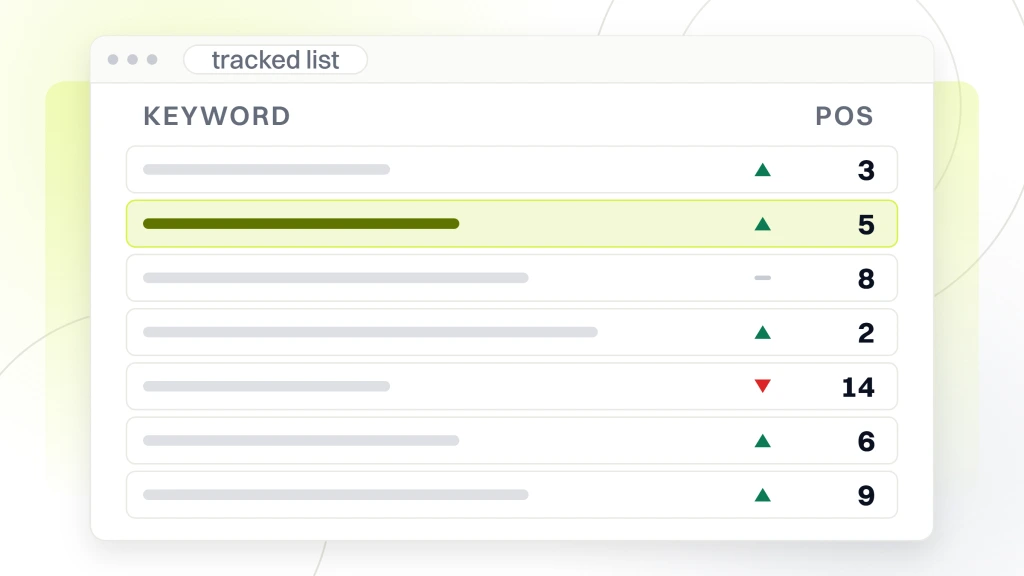
Advanced Web Ranking puts the basic shape of it plainly, that the metric is calculated from your rankings across a set of tracked keywords. Backlinko describes search visibility as the share of traffic that a website receives from its rankings in the organic search results. Semrush describes its own version as a percentage representing your visibility, usually calculated by a rank tracking tool.
Notice what every one of those definitions contains. A set of keywords, and a step that converts rank positions into something traffic shaped. Neither of those comes from the search engine. Both are the vendor’s, which is why the number belongs to the vendor rather than to you.
The phrase SEO visibility also gets used loosely enough that it is worth pinning down which sense is in play before a conversation goes far. Sometimes it means the vendor metric this page is about, a specific figure with a method behind it. Sometimes it just means being findable at all, with no number attached. When somebody tells you your SEO visibility is up, the first question is which of the two they mean, because only one of them can be checked.
The three numbers people call visibility, and which one you have
The word gets attached to three different products and they are not interchangeable. Knowing which one you are looking at decides what it can tell you.
- A points score. Advanced Web Ranking describes points based models as assigning weighted points to each ranking position. The number has no ceiling and no natural meaning, so it is readable only against its own history.
- A percentage. The same source describes percentage based models as expressing visibility as a share of total possible visibility. Advanced Web Ranking says it computes this by normalizing the weighted points against a hypothetical first place ranking for every keyword.
- An index. A market wide figure computed on a fixed keyword sample the vendor maintains, rather than on a list you supplied. You appear in it whether or not you are a customer.
The practical difference is the keyword list. Two of those are computed on keywords you chose, so they answer how you are doing at the job you set. The third is computed on a sample of the whole market, so it answers how visible you are in general, and you cannot tune it.
How SEO visibility is actually calculated, by the vendors that publish it
The common claim that nobody publishes a visibility formula is not quite right, and the exceptions are the most useful reading on the subject.
Sistrix publishes its method and says so in as many words, that the basic calculation of its Visibility Index is no secret. It sets out three steps. First it collects search results for a million search queries, chosen so they form a representative cross section of the search volume in a country, counting only organic results and usually a hundred results per keyword, which it puts at a hundred million data points. Second it weights those data points by the search volume of the keyword and the expected click through rate at the position measured. Third it adds the weighted values for all of a domain’s rankings together, and that sum is the index.
Semrush publishes less but publishes the part that matters most. Its documentation states that the metric is based on click through rate showing a site’s progress in the top hundred for keywords from the current tracking campaign, and that a figure of one hundred percent would mean ranking first for every keyword in that campaign. Its blog adds that rankings are weighted by average click through rates according to its own data.
One detail inside that weighting is worth pulling out, because it explains why two keywords sitting at the same position can contribute very differently. Sistrix notes that click through rates often differ according to the intent behind a search, observing that people looking for a particular website generally click only the first result, while people looking to know something click lower results more often as well. So the weight attached to your position depends on what kind of search it was, not only on the number.
So the method is published and the coefficients are not. No vendor in this set publishes the click through rate curve it applies, and Influize, writing about the category, says outright that there is no universal formula. That gap is the honest summary. You can know the shape of the calculation and you cannot reproduce the number.
Why the number moves when nothing about your site changed
This is the question that brings most people to the metric, usually while looking at a graph that dropped. There are five published reasons, and none of them requires your site to have got worse.
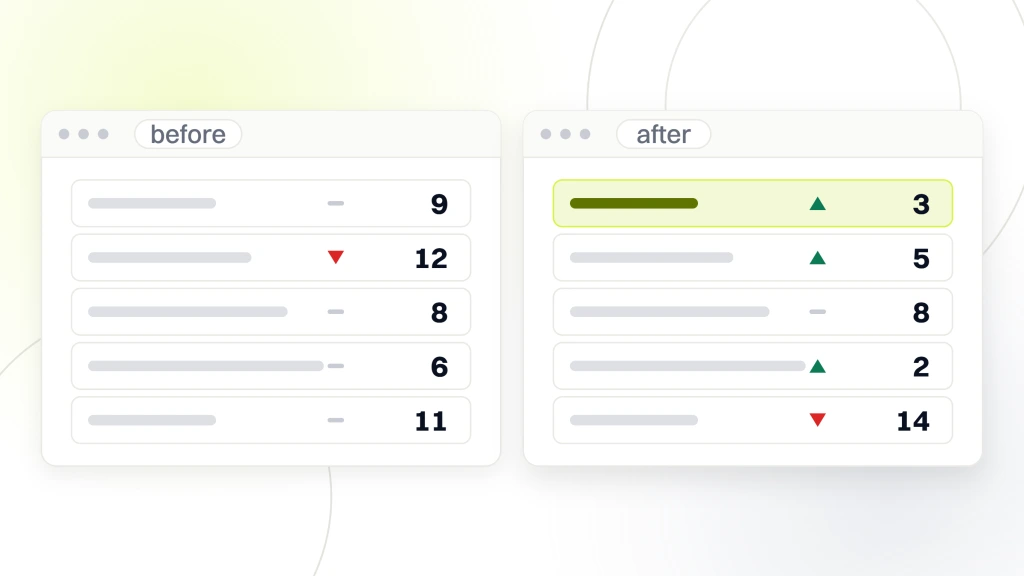
- The keyword sample was refreshed. Sistrix states that it regularly exchanges a portion of its keyword set to reflect changes in demand. If the sample moves, a domain measured against it moves too.
- It is a share, not a total. Sistrix says a hundred thousand visibility points are distributed across all the domains it finds. A distributed quantity cannot rise for everyone, so somebody else’s gain is arithmetically your loss.
- The volume estimates were revised. Weighting runs on search volume, and search volume in every tool is an estimate that gets restated. The same position on the same keyword can carry a different weight this month.
- The click model changed. The weighting uses expected clicks by position. That expectation is the vendor’s model, and when a vendor updates it every score it has ever published moves with it.
- Your own campaign changed. Where the keyword list is yours, as Semrush describes for its tracking campaigns, adding or removing keywords rewrites the denominator. A shorter list of things you already rank for is an easier score.
None of that is a reason to distrust the metric. It is a reason to check the model before you investigate the site, because four of those five have nothing to do with your pages at all.
Why two tools hand you two different numbers for the same site
People discover this the first time a new agency reports a figure that does not match the last one, and it usually gets read as somebody being wrong.
Nobody is. Advanced Web Ranking notes that while different tools use slightly different formulas, most rely on similar inputs, meaning ranking position, search demand and a weighting system. Similar inputs assembled differently produce different outputs. Two vendors running different keyword sets, different volume estimates and different click models will disagree about the same site on the same day, and both numbers can be internally correct.
There is a practical consequence the first time you change agencies or switch tools. The new one will almost always report a different starting point than the old one did, and that gap is a measurement artifact rather than evidence about either party. Agree which tool is the record before anybody reports a baseline, because doing it afterward always looks like an excuse.
What follows from that is a rule rather than a complaint. A visibility figure is comparable to its own history and to nothing else. Comparing across vendors, or against a competitor’s number from a different tool, is measuring two things with two rulers and reporting the difference as news.
What a visibility percentage cannot tell you
The metric is genuinely useful inside its limits and the limits are sharp, so it is worth listing what the figure is silent about.
- Whether anybody clicked. The weighting uses expected clicks by position, not your clicks, and your actual click through rate sits in Search Console where the vendor cannot see it.
- Whether the traffic was worth having. A keyword set weighted by search volume rewards big undifferentiated terms, and a score can rise on searches that never convert.
- Whether you were actually on screen. Advanced Web Ranking makes the point that a ranking no longer guarantees the exposure it once did, because generated answers and other result page features take the space above you.
- Whether the page that ranked is the page you wanted. An aggregate over a domain does not care which URL earned the position.
- Anything about a keyword that is not in the set. The metric is silent by construction about every search nobody put on the list.
That last one deserves more weight than it usually gets. A visibility score cannot report a gap, because a keyword you never tracked and never ranked for contributes nothing and looks identical to a keyword that does not exist.
Visibility against average position, and why they disagree
These two get reported side by side constantly and they measure genuinely different things, which is the strongest argument for keeping the harder of the two.
Semrush publishes a worked example that makes the case better than an argument does. Take two sites tracking the same two keywords. The first ranks first for one and hundredth for the other. The second ranks fiftieth for both. Both sites have an average position of fifty. The first site’s visibility is much higher, because one first place on a real search is worth more than two mid page placements that nobody reaches.
That is the whole case for a weighted aggregate. An average treats every position as equally spaced when clicks are not distributed anything like evenly. If you want the position side of this taken apart properly, including what average position in Search Console actually measures, our explainer on SEO ranking does that job, and our comparison of website ranking software covers what a tracked position is worth on its own.
An SEO rating and a health check are different products
Three things get sold with names close enough to confuse, and the row of searches around this topic mixes them freely, so it is worth separating them once.
A visibility figure is about where you appear in results for a set of searches. A rating or a score out of a hundred is about how many of a vendor’s checks your pages pass, computed without reference to your competitors or to whether you rank at all. A health check is a technical crawl looking for broken things, which is a third question again.
They are not ranked against each other, they simply answer different questions, and buying one while wanting another is the common mistake. Our explainer on SEO analytics takes apart how a score out of a hundred is computed and what it silently fails to grade, our comparison of website checkers covers the grader and rating family, and our guide to analyzing a website covers the performance checks that often get bundled into a health report.
How to check where you actually stand without paying anybody
Before you buy a visibility number, there is a free source that reports your own site using the search engine’s data rather than a model of it, and it beats any estimate for your own domain.
Search Console gives you impressions, clicks, average position and the queries they came from, for your site, because it requires you to prove you own the site before it shows you anything. That verification requirement is exactly why the numbers are real. No third party tool can get that data, which is why every third party number is an estimate built from a crawl and a model.
The practical move is to use both and let them check each other. The vendor figure tells you about your standing across a market sample. Search Console tells you what actually happened on your own property. When the two disagree, the disagreement is the finding.
There is one more reason to start here. Everything a vendor sells you as visibility is reconstructed from the outside, by reading results pages and modeling what a position is worth. Search Console is the only source in the whole category that is reporting rather than estimating, and it costs nothing to set up. Paying for an estimate while never opening the free measurement is the most common sequencing mistake in this subject.
What a good score looks like, and why nobody can give you a number
This is the most common question about the metric and it has an unsatisfying answer that is nonetheless the correct one.
There is no threshold. A points based index has no ceiling, so a value is meaningless without knowing the market it was computed in. A percentage has a ceiling, but Semrush defines a full score as ranking first for every keyword in your campaign, which makes the ceiling a property of your keyword list rather than of your performance. Shorten the list to terms you already win and the percentage climbs without a single ranking changing.
So the honest target is directional. On a keyword set you have not edited, measured with one tool you have not switched, the line should trend up over quarters. Anybody offering you a number to aim for is quoting a figure from a keyword set and a tool they have not told you about.
How to report the figure to somebody else honestly
Most of the damage this metric does happens in reporting rather than in measurement, and it is avoidable with four pieces of context.
- Name the tool. The figure is not comparable across vendors and the reader cannot know that unless you say which one produced it.
- Name the keyword set and its size, and say whether it changed since the last report. A changed list makes the comparison invalid and only you know it changed.
- Put Search Console impressions for the same period beside it. If the vendor line falls while impressions hold, say so rather than explaining a drop that did not happen.
- Give the date and say whether the vendor restated anything. Volume revisions and click model updates move history, so last quarter’s chart may not match the one you sent last quarter.
A percentage with none of that attached is not a report, it is a mood. The reader cannot check it, cannot reproduce it, and has no way of telling a real decline from a sample refresh.
The same discipline protects you in the other direction. A figure that climbed because the keyword list got shorter is not a result, and presenting it as one sets an expectation that the next quarter has to meet honestly. Whoever inherits the reporting will eventually ask what was in the set, and that answer is far easier to give when it was written down from the start.
When visibility is the wrong thing to be watching
There are situations where this metric will mislead you no matter how carefully it is computed, and recognizing them saves months.
If you sell to a small, specific audience, a market wide index is measuring searches you do not want. Sistrix acknowledges the case directly, noting that some niches have too little search volume to be represented in its keyword set and offering a project index on your own keywords instead. If your problem is conversion rather than presence, visibility will keep rising while the business does not move, because the metric stops at the result page and never looks at what happened after the click.
And if you are early, with few pages indexed and few rankings of any kind, the figure will sit near zero and stay there while genuinely important work gets done. At that stage indexing coverage tells you more, and what sits inside your own site is covered in our walkthrough of SEO performance step by step.
What we would check first
We sell audits, so weigh this accordingly and apply the same test to us that the rest of this page applies to any vendor. We do not publish a visibility score and we do not hand out a number out of a hundred. Our free audit is a written report a person produces after looking at the site, which is a different product from a scanner.
Faced with a visibility figure that has moved, the order we would work is short. Get the keyword list and ask whether it changed. Check Search Console impressions for the same window. Only if both of those come back clean does the question become what happened to the site, and at that point you are investigating something real rather than a restatement.
If you want that done on a specific site by somebody rather than by a scoring engine, our free website audit is where that is set out, and the report is yours whatever you decide to do next.