
Every local SEO audit checklist you can find runs to forty items, and that is the problem with the format rather than a feature of it. A list where everything is a checkbox tells you nothing about which three things are holding your rankings down and which thirty-seven are tidy-up nobody will ever notice.
So this one is ordered by impact, it says out loud which common checks are cargo cult, and it names the single largest factor in local rankings, which is one you cannot do anything about. That last point is the one most checklists leave out, and leaving it out is what makes the rest of them feel like they should be working when they are not.
We sell audits, so treat this as interested testimony and check it. The ranking factors below are quoted from Google’s own Business Profile documentation with the URL and the date they were read, so you can verify the standard without taking our word for any of it.
Google names three factors and one of them is not yours to fix
Start here, because it reframes everything underneath it and it is published rather than inferred.
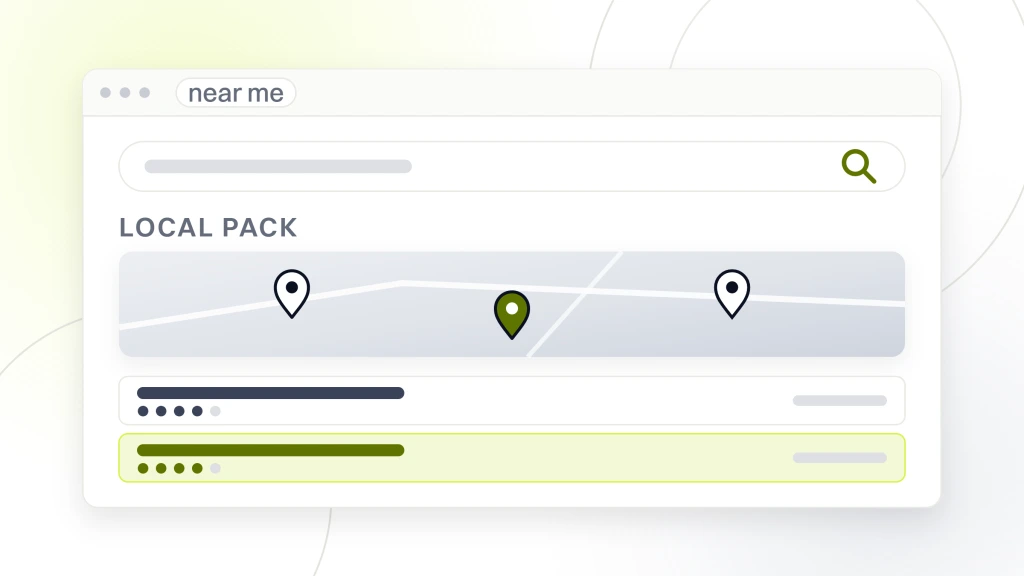
Google’s guidance on local ranking states that “Local results are mainly based on relevance, distance, and popularity” (support.google.com/business/answer/7091, read 16 September 2026). Three factors, and the second one is geography. “Distance refers to how far each business is from the customer who’s searching. If a customer doesn’t share where they are, Google uses what it knows about their location.”
Read that carefully, because it is the sentence that explains most local SEO disappointment. A material part of whether you appear is how far you are from the person typing, and no amount of auditing moves your building. Two businesses doing identical work can see completely different results for the same search, from searchers standing in different places, and neither of them has done anything right or wrong.
The same page also says something worth quoting to anybody selling you guarantees. “There’s no way to request or pay for a better local ranking on Google.” The other two factors are the ones you can work on, and the rest of this checklist is them.
One practical consequence before the list. Any tool or report showing you a single ranking position for a local search is hiding this, because the answer varies by where the search happened. A position is only meaningful with a location attached to it, and a report without one is measuring a fiction.
Check one, the profile is verified and the name is legal
This is first because it is the only check on the list where failing it can remove you from results entirely rather than lower down them.
Confirm the profile is verified and that you can actually get into it. A surprising number of businesses are working on a profile somebody else controls, created years ago by a former agency or a departed employee, and every recommendation below is unusable until that is resolved.
Then read the business name against the rule, which is published and unambiguous. Google says “Your name should reflect your business’s real-world name, as used consistently on your storefront, website, stationery, and as known to customers” (support.google.com/business/answer/3038177, read 16 September 2026). If the name in the profile contains a service you offer, or the area you cover, and that is not genuinely painted on the door, it is not compliant.
The consequence is stated on the same page. “Including unnecessary information in your business name isn’t permitted, and could result in the suspension of your Business Profile.” People add keywords to the name because it does something, and in the short term it often does, which is exactly why it is worth checking whether somebody did it to you. A suspension costs more than every ranking that stuffing was worth.
Check the address and hours in the same pass. Both feed the distance and relevance factors, both go stale quietly, and hours that are wrong are the single most visible failure a local listing can have.
While you are in there, check for a second profile you did not know about. Duplicates get created by suppliers, by staff signing up for something, and by a move that produced a new record instead of updating the old one. Two profiles for one business split whatever prominence the business has earned and frequently show different hours and a dead phone number, so finding one is worth more than most of the optimization further down this list.
Check two, the primary category, which is one field doing enormous work
If one field on the whole profile deserves an afternoon of thought, it is this one, and most audits give it a checkbox.
The primary category is the strongest statement you make about what you are, and it feeds the factor Google describes as relevance, which is “how well a Business Profile matches what someone is searching for”. Google’s advice on that factor is to “provide complete and detailed business info”, and the category is the most concentrated piece of that information.
So audit it by asking one question. Does the primary category name the thing you most want to be found for, or does it name the broadest description of your trade. Businesses routinely pick the general category because it feels safer and then wonder why they do not appear for the specific work they actually want.
Then look at what your competitors in the results use. Not to copy them, but because the set of available categories is not obvious from inside the picker, and the businesses appearing above you have frequently chosen one you did not know existed.
Add secondary categories for genuine additional services and stop there. Adding categories for work you do not really do dilutes the signal and produces inquiries you cannot service, which costs you twice.
Then fill in the rest of the profile properly, because Google’s advice on relevance is to provide complete and detailed information and most profiles are half empty. The services list, the attributes, the description, the opening date and the photographs are all information the profile is asking for, and leaving them blank is declining to answer questions you were asked. None of those is dramatic on its own. Together they are the difference between a profile that describes a business and one that merely proves it exists.
Check three, reviews, and what Google says they actually do
Reviews get discussed as a reputation matter, and they are, but Google states a ranking role for them explicitly, which changes where they sit on an audit.
Describing the third factor, Google says “Prominence means how well-known a business is” and that “This factor’s also based on info like how many websites link to your business and how many reviews you have. More reviews and positive ratings can help your business’s local ranking.” So count and rating both appear in a published sentence, which is more than can be said for most things on a local checklist.
Audit three things rather than the star average. How many reviews you have against the businesses appearing above you, which is the only comparison that means anything. Whether they are still arriving, because a profile whose last review is two years old reads as a business that stopped. And whether anybody replies, since an unanswered complaint is the first thing a prospect reads.
What not to do is obvious and worth stating because it is common. Do not buy them, do not write them, and do not filter who you ask based on how happy you think they are. The profile is the most publicly scrutinized thing you own.
The audit finding here is almost never the reviews themselves, it is that nobody asks. Most local businesses have no moment in their process where a satisfied customer is invited to say so, which is why the count sits still for years while the work is fine. Find the point where somebody is most pleased, usually right after the job is finished rather than two weeks later in an email, and make asking part of it. That is a process change rather than a marketing one, and it is why this check often belongs to the owner rather than to whoever does the SEO.
Check four, the pages on your own site
The profile is not the whole of local search, and the half that lives on your own site is the half an audit can usually improve fastest.
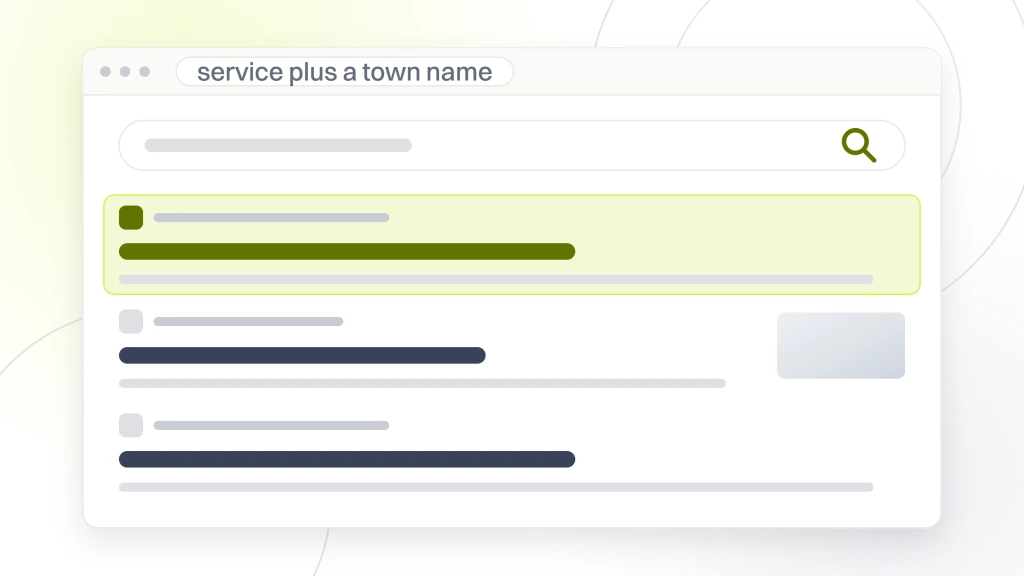
Check that you have a real page for each service you want to be found for, rather than one page listing everything you do. A combined services page competes with itself, and splitting it is frequently the largest single improvement available on a small site.
Check that the areas you serve are stated somewhere a human would read them, and that any per-area pages are genuinely different from each other. Pages generated by swapping one place name into the same template are the most common local SEO liability we find, and they are worse than having no area pages at all, because they are visibly automated to anyone who opens two of them.
Then check the ordinary things, because a local site is still a site. Whether the pages load, whether they can be used on a phone, whether the contact details in the footer match the profile. Our guide to conducting a website audit covers that side properly and it is not local-specific work.
One check on this list is worth doing even though it changes nothing, which is opening your own contact page as a stranger would. Can somebody work out where you are, when you are open and how to reach a person, without scrolling or guessing. A local search sends people who intend to make contact within the hour, and a contact page that hides the phone number behind a form is discarding exactly the visitor the rest of this list is trying to attract.
Check five, citations, and the number that is enough
Citations are listings of your business details on other sites, and they are the point where a local checklist usually turns into a shopping list.
They are not nothing. Google’s prominence sentence mentions “how many websites link to your business”, so being present in the places that matter is real. What is not real is the implied arithmetic, where more listings means better rankings without limit.
The audit question is consistency rather than count. Your name, address and phone number should be identical everywhere they appear, because contradictory records are the actual problem citations cause. One old address on a directory nobody visits can outlive the office move by years.
So check the handful of places people in your trade actually use, plus the major aggregators, fix contradictions, and stop. Then read the next section before anybody sells you a package of several hundred more.
Search your own phone number to find the records you have forgotten, rather than working from a list somebody gave you. A phone number is the detail least likely to have been updated and the easiest to search for, so it surfaces the stale listings a name search misses, including the ones created by a supplier or a trade body years ago. Write down what you find and who controls each record, because the ones you cannot edit are a different problem from the ones nobody got around to.
The cargo cult checks, and why they survive
Three items appear on almost every published local SEO audit checklist and earn their place on none of them. They survive because they are easy to sell, easy to report and impossible to disprove quickly.
Citation volume as a target. A report showing a count rising month over month is measuring an activity, not an outcome. Once the major aggregators and your trade’s real directories are consistent, the next two hundred listings are on sites with no visitors, and the number in the report goes up regardless.
Posting to the profile on a schedule. Posts are a communication feature. Publishing one weekly because a checklist says so, with nothing to communicate, produces a profile full of filler and a line item on an invoice. Post when there is something a customer would want to know.
Chasing a single ranking position. This one is the most expensive because it wastes real effort. Since Google names distance as a factor, your position varies by where the search happened, so a fixed number is an average of things that are not the same. Judge whether you appear across the area you serve, not whether one tracked number moved.
The common thread is that all three produce a number that rises when work is done, which is exactly what a retainer wants to show you. All three are also work we could bill you for, which is the reason to be suspicious of anybody recommending them, us included. Our guide to telling whether your SEO is working covers reading that pattern in any report, local or not.
The local SEO audit checklist in thirty minutes
Most people reading a checklist will not do a full audit, so here is the short version that catches most of what matters.
Ten minutes on the profile. Can you log in, is it verified, does the name comply with the rule quoted above, is the primary category the specific thing rather than the general one, are the hours right. Ten minutes on reviews, comparing your count against the businesses appearing above you and checking whether any have arrived lately.
Five minutes on your own site, checking you have a distinct page per service and that the contact details match the profile exactly. Five minutes searching for your own business details to find contradictory listings.
Write down what you find as you go rather than trusting yourself to remember it. Half an hour produces more findings than anybody holds in their head, and an audit you cannot show somebody else is an opinion rather than a document. The point of the short version is that it gets finished, and the point of writing it down is that somebody can act on it next week without running the whole thing again.
That is not a substitute for the full pass, and it will not find everything. It reliably finds the faults that are costing something, which is more than a forty-item list nobody completes. Our free SEO template gives you a grid to record what you find, one row per item with the evidence beside it.
What a local audit cannot fix
Naming the edge matters more here than on most subjects, because the biggest constraint in local search is one nobody can audit away.
Distance is the obvious one and it is worth being blunt about. If the searches you want happen a long way from where you are, a perfect profile will not produce them, and any plan that implies otherwise is selling you something. The honest options are a real presence closer to that demand, or competing on searches where distance matters less, and both are business decisions rather than audit findings.
The second is that an audit checks the inputs and not the trade. A business with few customers and therefore few reviews is at a disadvantage that no configuration change closes, and the fix is on the serving side rather than the profile.
The third is that a local audit says nothing about whether the demand is worth having. Appearing for searches in your area is only valuable if those searches are made by people who buy what you sell at a price you want, and a checklist cannot tell you that. Businesses occasionally finish this work, achieve exactly what it promised, and discover the inquiries were never the constraint. Checking that first costs one conversation and it is the one most audits skip.
The fourth is cost, which this article deliberately does not cover. What local work should run and what the packages contain is a separate question and our breakdown of what local SEO really costs answers it.
What we would check first, and what to ask us
Given an unfamiliar local business and an hour, we spend the first ten minutes on access and compliance rather than on anything that could improve a ranking.
Who controls the profile, is it verified, and is the name compliant, because a suspension risk outranks every optimization on the list. Then the primary category, then reviews against the businesses actually appearing above you. Only after that do we look at the site, and we look at whether services have their own pages before anything else. Our local SEO audit runs that order, and it is a paid engagement with a written sign-off rather than an instant report, which we would rather state plainly than let you discover.
One limit on our free offer, so nobody is misled. Our free website audit is a review of the website itself. It is not a Business Profile audit and it does not check your listings or your reviews, so if what worries you is the map results specifically, that is the paid piece of work rather than the free one.
Now point all of that at us. The test this article sets is that every ranking factor is quoted to a published Google page with a date, that the checklist is ordered by impact rather than padded to forty items, and that the factor you cannot change is named rather than hidden. Ask whoever audits your local presence which of Google’s three named factors each recommendation is supposed to move, and what they would stop doing. An answer that treats every item as equally important has not prioritized anything, and that applies to us as much as to anybody. Our breakdown of what goes in an SEO report covers what the resulting document should contain, and our SEO audit page covers the non-local version of this work.
The first move costs nothing. Open your own Business Profile, read the name against Google’s rule, and check whether the primary category names the work you actually want.