
Every article answering why SEO audit is important was written by somebody who sells SEO audits, and this one is no exception. That is not a disqualification, but it does mean you should be able to check the argument rather than take it. So every standard below comes from Google’s own documentation, and the two most useful checks are ones you run yourself, for free, before you buy anything from us or from anybody.
The short answer is that an audit earns its money when there is a specific unanswered question about whether your site can be found. That is narrower than the phrase suggests. Two of the most common versions of that question can be settled in an afternoon in a free tool, and if both come back clean, an audit is probably not what you should buy next.
This page covers the search side of the question only. Its companion on why a website audit is important takes the other side, whether the site works as a built product. The line between them gets drawn in full a few sections down, before anything is argued on top of it, because the wrong one of the two is an expensive thing to buy.
Why SEO audit is important, and the question it answers
An audit is a diagnostic. It does not improve anything by existing, which means its entire value sits in whether it answers a question somebody actually had.
The question worth paying to answer comes from a fact Google states plainly in its documentation on how Search works. “Google doesn’t guarantee that it will crawl, index, or serve your page, even if your page follows the Google Search Essentials.” (developers.google.com/search/docs/fundamentals/how-search-works, read 16 September 2026). Nothing about publishing a page entitles it to be found.
The same page sets out the shape of the problem. It says “Google Search works in three stages, and not all pages make it through each stage”, and names them as crawling, indexing and serving. So there are three separate places a page can fall out of the process, and a page that fell out at any of them looks identical from your side. It is published, it loads, you can visit it. It simply is not there when somebody searches.
That silence is the whole argument. Most site problems announce themselves, because somebody complains or an error appears. A page that never entered the index generates no error and no complaint, because the people who would have found it never knew it existed. An audit is the mechanism for looking, since nothing is going to tell you.
What an SEO audit actually is
Strip the marketing off and the definition is narrow. An SEO audit is an inspection of whether your pages can be reached by a search engine, stored by it, and matched to the things people search for. Those three correspond exactly to Google’s three stages, which is why the definition is stable even though the sales material around it is not.
Google describes the first stage as downloading “text, images, and videos from pages it found on the internet with automated programs called crawlers”, and the second as analyzing those files and deciding what to store. On storing, it is blunt about the odds. “Indexing isn’t guaranteed; not every page that Google processes will be indexed.”
What an audit is not is equally worth fixing in your head, because most disappointment with audits comes from expecting the wrong product. It is not a plan, it is not the work, and it is not a prediction of revenue. It produces a list of findings about a site as it currently stands. Turning that list into ordered work, and then doing the work, are two further jobs that are frequently priced separately and occasionally not mentioned at all.
If somebody quotes you an audit and the deliverable includes implementation, you are being quoted a project. That may well be what you want. Just price it as one, because inspecting a site and changing it are different amounts of work.
Where this stops and a website audit starts
Two things get sold under audit names that sound interchangeable, and the distinction is not vocabulary policing. They use different instruments, produce different findings and hand their reports to different people.
A website audit inspects the site as a built object. Speed, behavior on a phone, operation without a mouse, whether the forms submit, whether the words on the page are still accurate about the business. Each finding there stands or falls on its own, with no reference to a search engine in it. Our companion piece works through that list, with the published speed thresholds and accessibility criteria attached to each.
An SEO audit, this page, treats the site as a search asset instead. Did a crawler reach the page, did the index keep it, does the page Google chose for a search match the page you wrote for that search, and did any of it move after you acted. A product inspection cannot see a single one of those, and none of its findings surface here either.
The two meet at exactly one finding, which is that a page nobody can load is also a page nobody can rank. Past that single point of contact they diverge completely. A site can be immaculate as a product and absent from search, and a site can rank perfectly well while being slow and awkward to use.
The practical test is who would receive the report. Findings that turn into build tickets belong to the product audit, which our companion piece covers at length. Findings that turn into decisions about which pages exist and what they say belong here. Where the answer is honestly both, the product audit goes first, since this one routinely ends by asking for page changes and a broken template makes you pay for those twice.
The first free check, is Google indexing your pages
Here is the first of the two checks that settle most of this question without a purchase. It needs Search Console, which is free and first party, and it needs no skill beyond reading.
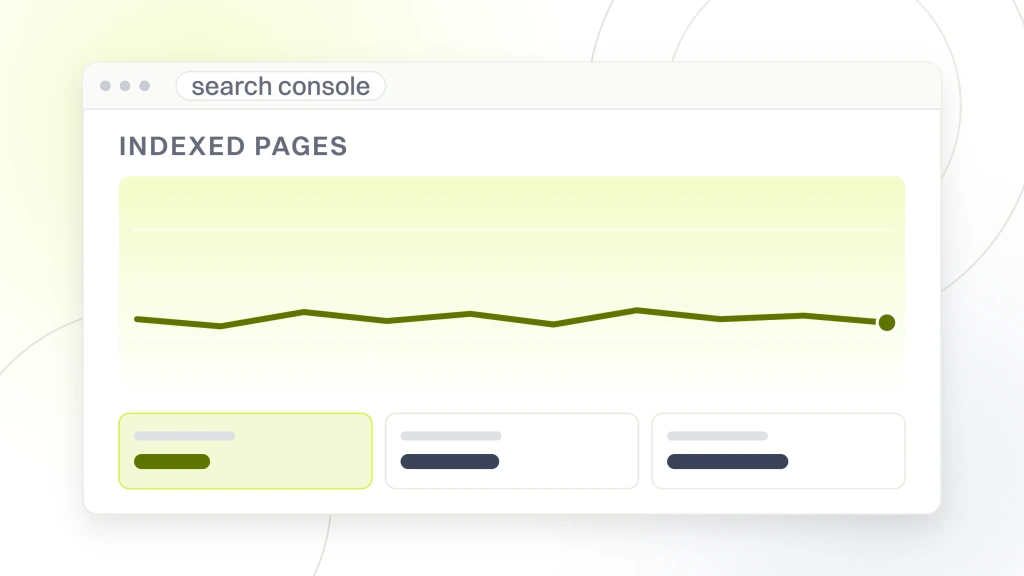
Open the page indexing report and look at what is not indexed. Google’s documentation for that report makes the crucial point before you start panicking at the number. “It’s fine for a URL not to be indexed for the right reasons”, and it lists those reasons as an expected robots rule, a noindex tag, a duplicate URL, or a page you deliberately removed (support.google.com/webmasters/answer/7440203, read 16 September 2026). A large not-indexed count is not automatically a problem. An unexplained one is.
Two statuses in that report are worth knowing by name because they mean genuinely different things. Of the first, Google says “The page was crawled by Google but not indexed. It may or may not be indexed in the future; no need to resubmit this URL for crawling.” Of the second, “The page was found by Google, but not crawled yet.” One was looked at and passed over. The other was never looked at. Those point at different problems and a report that lumps them together has lost the distinction that mattered.
For any single page you care about, the URL Inspection tool answers the question directly. Google describes it as providing “information about Google’s indexed version of a specific page”, and also allowing you “to test whether a URL might be indexable”.
Google also publishes the limit of its own tool, which is the part worth carrying away. A result of URL is on Google, it says, “doesn’t actually guarantee that your page will appear in Search results”, because “The report doesn’t check all conditions for appearing on Google”. For a definitive test, it tells you to search for the page URL on Google. A green result is evidence, not proof, and it comes from the organization with the most authority to say so.
The second free check, is the right page answering the right query
The second check is in the same free tool and it catches the failure that indexing reports cannot see, which is a site that is fully indexed and still answering the wrong questions.
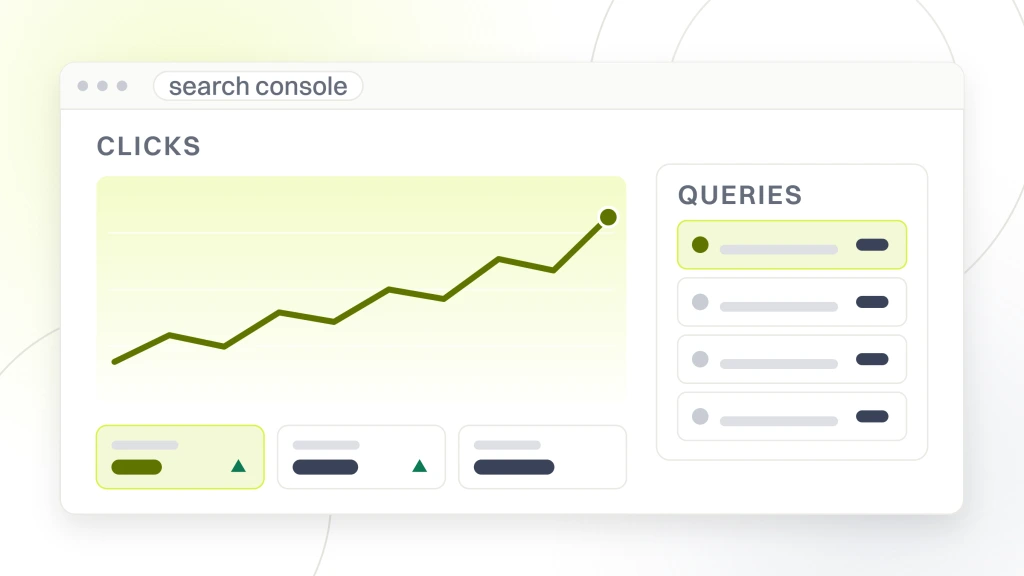
Google describes the performance report as a way to “Learn which queries are bringing traffic to your site, and use this to improve your SEO efforts” (support.google.com/webmasters/answer/7576553, read 16 September 2026). It defines its four numbers precisely, and one of those definitions is the one people misread. Average position is “The average position of the topmost result from your site”, which means it is not the position of a particular page and it never was.
The check itself takes minutes. Write down the handful of searches you would most want to win, the ones that describe what you actually sell. Then filter the report to each one and look at which page of yours Google is choosing to show.
Three answers are possible and each means something different. The page you intended, which is the case where nothing needs buying. A different page of yours, which means Google disagrees with you about which of your pages answers that query, and that is a real finding you just produced for nothing. Or no page at all, in which case the question moves back to the first check, because you cannot be matched to a query you are not in the index for.
Our walkthrough of SEO performance step by step is the longer version of this measurement, and how to tell whether your SEO is working covers reading the same screen when somebody else is being paid to move it.
What an audit finds that those two checks miss
Having argued the free checks hard, here is the honest case for the paid version, which is that the two checks above tell you a problem exists without telling you why.
The gap is causes. You can see that forty templated pages are crawled and not indexed. Working out whether that is thin content, an accidental noindex, a canonical pointing somewhere unexpected, a redirect chain, or a rendering problem where the content only exists after JavaScript runs, is a different activity from noticing the number.
Canonicalization is the clearest example, because Google’s own guidance on it lists the methods in order of “how strongly they can influence canonicalization”, with redirects named as “A strong signal that the target of the redirect should become canonical”. Several signals can point in different directions at once on the same site, and untangling which one is winning on which page is not something a report screen shows you.
The second gap is scale. Both free checks are things you do to a handful of pages by hand. A finding that exists on one page of a template exists on every page that template generates, and establishing that requires looking at pages in quantity rather than one at a time. That is the honest argument for tooling and for somebody who has seen the pattern before.
There is a limit to this argument and it should be said out loud. A cause tells you what to do about a finding. It says nothing about what that finding is costing you, so a seller who attaches a revenue number to it is working without your conversion values and presenting a guess as a forecast.
Technical, content and the levels people sell
You will be offered audits under several names at several prices, and the single most useful thing to know is that the names are not standardized between firms.
A technical audit looks at whether machines can process the site, which is the crawling and indexing half. Robots rules, sitemaps, status codes, redirects, canonical tags, rendering, site structure. A content audit looks at the matching half, whether the right page exists for the query, whether two of your pages compete for one search, and whether a page answers the question its visitors actually arrived with. The reason a technical audit is usually run first is order of operations, since a page that cannot be indexed cannot be judged on whether it answers anything.
Levels are where the vocabulary gets loosest. Basic, advanced, enterprise and comprehensive are pricing tiers rather than defined scopes, and two firms using the same word will not necessarily inspect the same things. Our explainer on the enterprise technical SEO audit covers what changes when a site is genuinely large, which is mostly sampling and crawl coordination rather than extra categories.
So do not compare tiers. Ask each firm for the list of checks it runs and compare those, because a list of checks is a factual claim about a deliverable and a tier name is not. If a seller will not put the list in writing before you buy, that answer is itself a finding.
When an SEO audit is not worth buying
Saying when a thing is not worth buying is the only part of an article like this that is worth anything, so here are the cases where we would tell you not to, and they are not rare ones.
If both free checks came back clean, meaning your pages are indexed and the right ones are matched to the searches you care about, then there is no open question and an audit will produce a document confirming it. Buy one when something is wrong or when you cannot tell, not on a schedule.
If a migration or a rebuild is coming, findings written against your current URLs expire on the day those URLs change. The work worth paying for is an inspection of the new structure and the redirect map before launch, the last moment a finding about site architecture is cheap to act on.
If a backlog of known problems is already sitting untouched, a second list changes nothing. What is missing there is somebody with time to act, and no report has ever produced one. And on a site so new that Search Console holds no history, there is almost nothing to read, since most of what this audit examines is a record of what already happened to your pages.
Take those four together and you have the real limit on why SEO audit is important as a claim. It survives in three situations, when something is demonstrably wrong, when you genuinely cannot tell whether it is, and when a change is coming that could break what currently works. Anywhere else, buying one gets you a document rather than an answer.
Set the re-check before anybody starts work
The step that gets skipped is deciding, in advance, what you will look at afterward to find out whether any of it worked. Skip it and you will be arguing from impressions later on.
Google ties its own suggested rhythm to changes rather than to a calendar. Its Search Console guidance says “There is no need to sign in to the tool every day”, and that “you might want to check your account around once every month, or when you make changes to the site’s content, to make sure the data is stable” (developers.google.com/search/docs/monitor-debug/search-console-start, read 16 September 2026). Changes are the trigger, and an audit is followed by changes.
Write down before the work starts which specific pages should become indexed, which queries should start matching the page you intended, and roughly when you will look. Then look on that date whatever the numbers say.
Google is also careful not to promise the reading will be simple. Its guide to traffic drops opens by saying “A drop in organic Search traffic can happen for several reasons, and it may not be straightforward to understand what exactly happened to your site”, and its own list of causes includes seasonality and reporting glitches alongside technical problems. Movement is evidence, not a verdict. Our breakdown of what goes in an SEO report and of the reporting tools agencies use both cover presenting that honestly.
What we would check first, and where we fail this
We sell audits, so apply this article’s own test to us rather than reading that as modesty. Nothing in the order below needs us, and its first two steps are the two free checks already described.
Read the page indexing report and separate the not-indexed pages you can explain from the ones you cannot. Then take your five most commercially important searches and find out which of your pages Google is actually showing for each. Those two produce most of the findings most sites have, they cost an afternoon, and if they both come back clean you should keep your money. Only after them does a paid inspection add anything, and what it adds is causes and scale rather than more findings.
Now the places we fail a strict reading of this page. We have told you to compare lists of checks rather than tier names, and our own free audit used to be sold as a numbered review, which is a tier name until you ask for the list behind it. The same free audit implements only its top three fixes, so it is a sample of working with us rather than a complete piece of work, and calling it an audit invites you to expect more than it delivers. And this entire page argues that the decisive checks are free, which is an odd thing for us to publish and remains true regardless of what it does to our inquiries.
With those limits stated, our free website audit is a written report with the fixes ranked, the top three pushed live, and the report is yours to keep whether you work with us afterward or not. If you would rather work through it yourself, our guide to conducting a website audit sets out the procedure step by step, and everything we publish on the subject sits under the SEO audit hub.
Every standard quoted above is on a page Google publishes, each named with the date we read it. Check them, run the two checks, and buy an audit only if they leave you with a question.