
Luxury Fashion Marketing: What Premium Brands Need to Do Differently
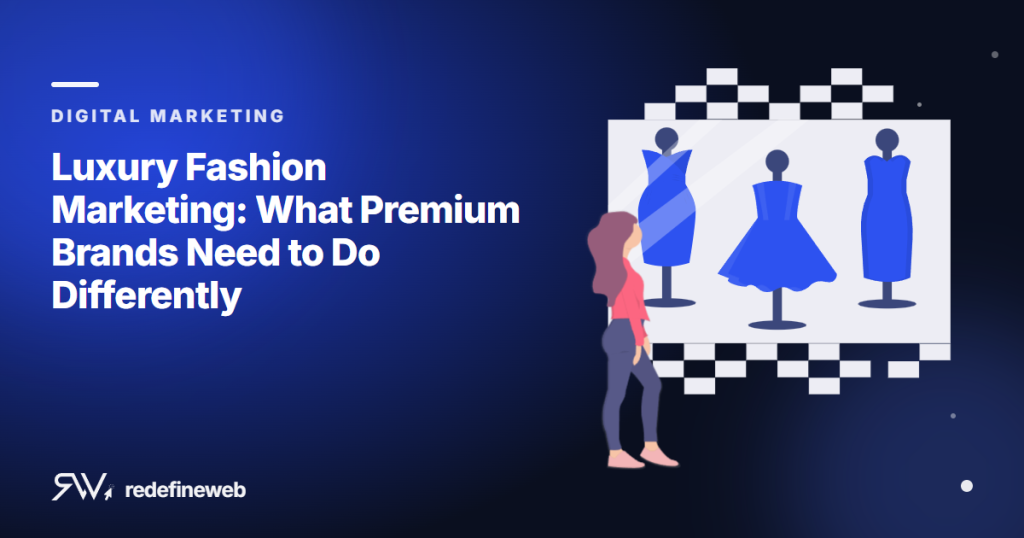
Luxury fashion marketing doesn’t follow the same rules as mass-market or contemporary brand marketing. The tactics that drive volume for a direct-to-consumer clothing brand actively damage a luxury brand’s positioning. This guide covers the specific differences in how luxury fashion brands should approach marketing, why those differences exist, and what the brands getting it right actually do.
Why Luxury Fashion Marketing Is Fundamentally Different
The core difference is that luxury purchases aren’t primarily driven by utility or value. A $4,500 handbag doesn’t carry more items than a $45 one. A $1,200 cashmere sweater isn’t four times warmer than a $300 one. The value in luxury fashion is symbolic: belonging, identity, status, and the experience of owning something rare and exquisitely made. Marketing that emphasizes utility (“this bag has 12 pockets and fits your laptop”) destroys the symbolic value. Marketing that speaks to desire, aspiration, and exclusivity preserves and amplifies it.
This has direct implications for every marketing decision. Scarcity must be real, not manufactured. Discounts are almost never appropriate. Distribution must be controlled tightly. Digital channels that work for mass brands (Google Shopping, Facebook catalog ads) are wrong for most luxury brands because they place the product in a context that signals “commodity available to anyone.” Luxury marketing requires more deliberate, controlled, context-aware approaches.
The Exclusivity Principle: Less Is More
Luxury brands that try to maximize reach damage their value. Chanel doesn’t run broad-audience Facebook ads. Hermes doesn’t have a loyalty program with discount tiers. These decisions aren’t oversights; they’re strategy. Scarcity drives desire. When anyone can access a brand with a promo code, the brand loses its luxury signal.
In practice, this means luxury fashion marketing invests in depth of engagement with the right audience rather than breadth of reach across a large audience. A brand that reaches 10,000 genuinely wealthy fashion enthusiasts with a beautifully crafted editorial campaign will outperform one that reaches 1 million general fashion followers with the same content. The targeting logic is inverse to mass marketing: narrow and deep, not wide and shallow.
This also means saying no to distribution opportunities that expand reach at the cost of positioning. A luxury brand that expands into Nordstrom Rack or TJ Maxx signals “this brand discounts” in a way that a 20-year advertising campaign can’t undo. Channel decisions are positioning decisions in luxury.
Storytelling Over Selling in Luxury Fashion Content
Luxury fashion marketing relies on storytelling because the product story is inseparable from the product value. Hermes’s leather goods carry the story of French craftspeople who train for years before touching a single Kelly bag. Brunello Cucinelli’s knitwear carries the story of a Solomeo village, Umbrian cashmere, and a philosophy of humanistic capitalism. These stories justify the price, create emotional connection, and make the buyer feel they’re participating in something meaningful rather than just buying a coat.
Luxury brands that invest in long-form video documentaries, beautifully photographed editorial campaigns, and narrative-driven email content consistently outperform those that default to product-centric marketing. The content investment is higher, but the return is a customer who buys without price resistance, recommends the brand to social peers, and returns repeatedly. According to a 2024 Bain Altagamma study, luxury consumers who feel emotionally connected to a brand spend 3.2x more annually than those who buy on product attributes alone.
Digital Channels That Work for Luxury Fashion Brands
Luxury fashion needs a filtered digital presence. Not all channels are appropriate, and the ones that work require a luxury-specific approach.
Instagram. Instagram works for luxury when used as an editorial platform. The feed should reflect the brand’s visual world with no concession to algorithmic trends. Stories and Reels can show craft process, behind-the-scenes atelier access, and editorial styling. What doesn’t work: promotional posts with price callouts, sale announcements, “link in bio” CTAs every post, and influencer takeovers with mass-market creators.
Pinterest. Pinterest is underutilized by luxury fashion brands but effective because its audience actively searches for aspiration and style inspiration. A luxury brand’s Pinterest presence should look like a curated magazine, organized by aesthetic and lifestyle category rather than product type. Boards titled “Italian Summer” and “The Modern Gentleman” outperform boards titled “Men’s Jackets” and “New Arrivals.”
YouTube. Long-form video is luxury fashion’s most powerful digital channel because it has the most space for storytelling. A 15-minute documentary on how a shoe is made at a Florentine factory builds more desire than 1,000 product photos. Luxury buyers research carefully and watch long content; they’re not swipe-past shoppers.
Email. Email to a cultivated list of existing clients and qualified prospects is one of luxury fashion’s most effective channels because it’s private, personal, and curated. Luxury email doesn’t look like an email blast; it reads like a personal note from the creative director or a magazine editorial. Segmentation should be based on purchase history, event attendance, and personal styling preferences, not demographic buckets.
Influencer Strategy for Luxury Fashion: Quality Over Scale
Luxury brands need a fundamentally different influencer strategy than contemporary brands. A mass-market brand looks for reach. A luxury brand looks for cultural authority. An influencer with 50,000 highly engaged, genuinely affluent followers who trust their style judgment is worth more to a luxury brand than an influencer with 2 million followers who posts fast fashion hauls on the same feed.
The evaluation criteria shift: instead of follower count and engagement rate, luxury brands should look at audience income indicators (type of travel they post, cars they drive, hotels they stay at), other luxury brands they work with, how they present the product in content (do they treat it as an object of beauty or an item to photograph for a fee), and whether their personal aesthetic genuinely aligns with the brand’s world.
Gifting and long-term brand ambassador relationships outperform paid single-post campaigns for luxury. A genuine long-term relationship where the influencer actually wears and talks about the brand authentically builds credibility that a paid post with #ad disclosure undermines. The disclosure doesn’t kill luxury campaigns, but repeated paid-post influencer content at scale signals “this brand is paying for endorsements” rather than “this brand is genuinely desired.”
Events and Experiential Marketing in Luxury Fashion
Luxury fashion brands invest more heavily in live events and experiences than mass-market brands because the in-person experience is irreplaceable in luxury. A private trunk show, an atelier visit, a VIP preview dinner, or an intimate styling session creates emotional memories that digital content can’t replicate. Clients who attend brand events have 2-4x higher purchase rates in the 90 days following the event compared to those who don’t.
The event format should match the brand’s world. A brand positioned around Parisian sophistication hosts intimate salon events. A brand positioned around craft and Italian heritage runs factory visit tours for top clients. A brand positioned around contemporary art aligns with gallery openings and art fair activations. The event is an extension of the brand story, not just a sales opportunity.
PR and Editorial Coverage: The Earned Media That Matters
For luxury fashion, appearing in Vogue, WSJ Magazine, or Harper’s Bazaar carries a credibility signal that no paid channel can replicate. Being selected by a fashion director for an editorial shoot signals that the brand’s aesthetic meets the publication’s standards, which are the same standards the luxury buyer respects. This is why luxury brands invest heavily in PR relationships and why getting into a major fashion editorial changes conversion rates on the brand’s own channels immediately afterward.
Independent luxury brands can pursue this through targeted outreach to fashion editors with genuinely beautiful product samples, participation in relevant trade shows (Paris, Milan, NYC Fashion Week presentations), and building genuine relationships with stylists who dress celebrities and editorial clients. A celebrity wearing your brand organically in a paparazzi photo or on a red carpet generates more desire than any paid campaign.
Pricing Communication in Luxury Fashion Marketing
Luxury brands handle price differently. In mass-market fashion, prices are prominently displayed and used as a selling point (“under $50”). In luxury, prices are often de-emphasized in marketing communications because leading with price reduces the symbolic value of the purchase. The desirability must be established before the price is revealed, not the other way around.
When prices must appear, they’re stated simply without comparative framing. “Price available in-store” or “Contact us for pricing” is appropriate for ultra-luxury. For accessible luxury, listing price after product details and benefits maintains the proper emphasis order. Never position luxury pricing as “a good value” or “competitive pricing,” both of which signal that the brand is defending its price rather than commanding it.
Luxury Fashion Marketing FAQ
Should luxury fashion brands run paid advertising?
Selectively. Paid advertising in luxury works when it’s contextually relevant, visually beautiful, and targeted to a genuinely qualified audience. A beautifully crafted display campaign on financial news sites targeting high-net-worth individuals works. A Facebook catalog ad with a sale badge does not. The channel and the creative must both signal quality, exclusivity, and desire.
Do luxury fashion brands need to be on TikTok?
Not necessarily. TikTok works for some luxury brands that can participate authentically, particularly those targeting younger luxury buyers (Gen Z and younger millennials). Brands like Valentino, Gucci, and Burberry have built TikTok presences that maintain their luxury positioning by focusing on campaign content and cultural moments rather than promotional content. If your brand can’t produce TikTok content that feels authentic to both TikTok and to your brand’s world, skip it.
How do luxury fashion brands handle discounting and sales?
True luxury brands don’t discount publicly. Hermes, Chanel, and Patek Philippe don’t run sales. Accessible luxury brands (Coach, Michael Kors, Kate Spade) have damaged their positioning through outlet store expansion and aggressive discounting. The rule: if you discount, do it privately to existing top clients, never publicly through promotional campaigns. Even one public discount event can take years of consistent full-price positioning to undo.
What metrics matter most for luxury fashion marketing?
Average order value, customer lifetime value, and repeat purchase rate matter more than volume metrics. A luxury brand would rather have 1,000 clients who spend $5,000 each annually than 50,000 customers who spend $100 once. Track customer retention rate, annual spend per client, and the ratio of full-price to discounted sales. These metrics reflect brand health in ways that traffic and follower counts don’t.
How does digital marketing affect in-store luxury sales?
Significantly. A 2023 McKinsey study found that 75% of luxury in-store purchases are influenced by digital touchpoints before the customer walks in. Luxury buyers research extensively online before purchasing offline. Digital marketing for luxury isn’t primarily about driving clicks to checkout; it’s about creating the desire and conviction that drives a client to walk into the store ready to buy.
Book your free 30-minute strategy call.
No spam, no sales rep. We use your email to schedule your call with a senior strategist. That is it.
More from the blog
View all articles → Digital Marketing
 Do You Need a Beauty Social Media Marketing Agency?
Read article Digital Marketing
 How Emerging Beauty Brands Should Choose a Marketing Agency
Read article Digital Marketing