Multi location dental SEO is not one campaign multiplied by ten. It’s one central strategy layered over ten distinct local presences, each ranking in its own map pack, citation graph, and review pool. Groups that treat the discipline as ten copies of a solo campaign burn budget and confuse Google’s local ranking system. The teams that scale run one hub-and-spoke content structure, one citation workflow, and one review workflow, then let each Business Profile earn its own map pack slot.
This is the DSO dental SEO program we ran on Smile Design Dentistry across 50 locations to grow PPC conversion 20 percent and cut cost per call 30 percent. Hub site anatomy for a group practice. Per-office landing page templates that skip duplicate content. Business Profile tuning at the office level. Central review and citation ops for local search at scale. Reporting that rolls up to the group without hiding office-level pain points. Read straight through and hand the plan to your marketing lead tomorrow.
What changes about multi location dental SEO once you cross two locations
The discipline shifts the moment you add a second office. Each office runs its own Business Profile and competes in its own map pack against different local rivals. The work has to scale with the geography, not the brand halo.
Solo SEO ranks one Business Profile in one map pack. Group SEO, which is the real work behind multi location local SEO, ranks N Profiles in N packs, each fighting different local rivals. What worked for the first office may lose to a strong solo practice inside the second office’s radius. The plan scales with geography, not the brand.
N profiles compete in N packs
Each office earns its own Business Profile, review pool, citation set, and map pack ranking inside a 2 to 5 mile radius. Google doesn’t group profiles under a brand halo. The three-location practice ranks in three separate local packs against three separate competitor sets. A real group plan allocates work to each office, not the same campaign spread across three offices hoping rankings move.
Duplicate content risk multiplies
Sites with 10 identical location pages that differ only in the address block get flagged as thin content inside 90 days. Group SEO demands real per-office content on every location page. Doctor bios, real photos, service specifics, insurance notes, and neighborhood context. Templates kill the ranking signal once Google marks the pages as near duplicates.
Watch for cannibalization between nearby offices
Two offices inside a 4-mile radius will fight each other for the same map pack slot if their location pages target the same query. Solve it by giving each office a distinct primary service focus in its H1 and meta title. Office A leads with cosmetic dentistry, office B leads with pediatric or emergency. Same NAP schema, same brand, different intent. That split protects both offices from downgrading each other in local packs.
Hub and spoke architecture for multi location dental SEO
The site architecture that wins for a DSO or group practice is a hub-and-spoke pattern. One brand hub with service pillar pages, one location page per office, and internal linking that ties services to offices to service-plus-office combos. That pattern scales cleanly from 3 offices to 50 without a rebuild. Sites that skip it end up with disconnected subdomains, broken user flows, and thin content that drags every office in the group.
- One central domain with brand identity in the primary navigation
- Service pillar pages for the 6 to 12 core dental services the group offers
- One dedicated location page per office with real photos and doctor bios
- Service plus location pages for the 3 to 5 highest revenue services per office
- Internal linking from each location page to the services offered at that office
- Reverse linking from each service page to the locations that offer it
- Consistent NAP schema on every location page pointing to its own Place ID
Pillar pages plus location pages
The service pillar page carries the brand-level authority for the topic. Dental Implants at Smile Design Dentistry. The location page carries the local relevance for the geo. Smile Design Dentistry Dade City Florida. The service plus location page ties the two together and earns the map pack slot for high-intent queries like dental implants Dade City. Those three layers form the group SEO stack. Skip a layer and you lose ranking to solo practices that cover the same query with a single strong page.
URL structure that scales
The pattern that works. /services/dental-implants/ for the service pillar, /locations/dade-city/ for the location page, and /locations/dade-city/dental-implants/ for the service-plus-location page. Every URL is scannable, keyword-anchored, and consistent across the site. Sites that use /dade-city-dental-implants/ create URL sprawl and lose internal link equity to the deeper structure. Sites that skip the location prefix confuse both users and Google’s parsing.
Dentist schema markup on every location page
Every location page carries its own Dentist schema block with unique Place ID, address, phone, geo coordinates, opening hours, and department relations to the parent brand. Wrap the schema in JSON-LD in the page head. Add sameAs links back to that office’s Business Profile URL, Yelp URL, and Healthgrades listing. That structured data helps Google connect the office’s page to its Profile, which lifts map pack visibility and enables rich result eligibility on branded queries. Validate every block through the Rich Results Test before the location page goes live. One malformed field on the parent Organization schema cascades across every child office page and quietly kills the rich result eligibility across the group.
Per office Business Profile tuning for DSO dental SEO
Group Profile ranking lives or dies at the individual office level. Each Business Profile is a standalone ranking asset. Brand halo doesn’t carry rankings across profiles. A brand with 50 offices needs 50 tuned profiles paired with 50 review workflows and 50 photo libraries. The answer is a central profile management workflow that keeps every office at 90 percent profile completeness, which is the backbone of any real group program.
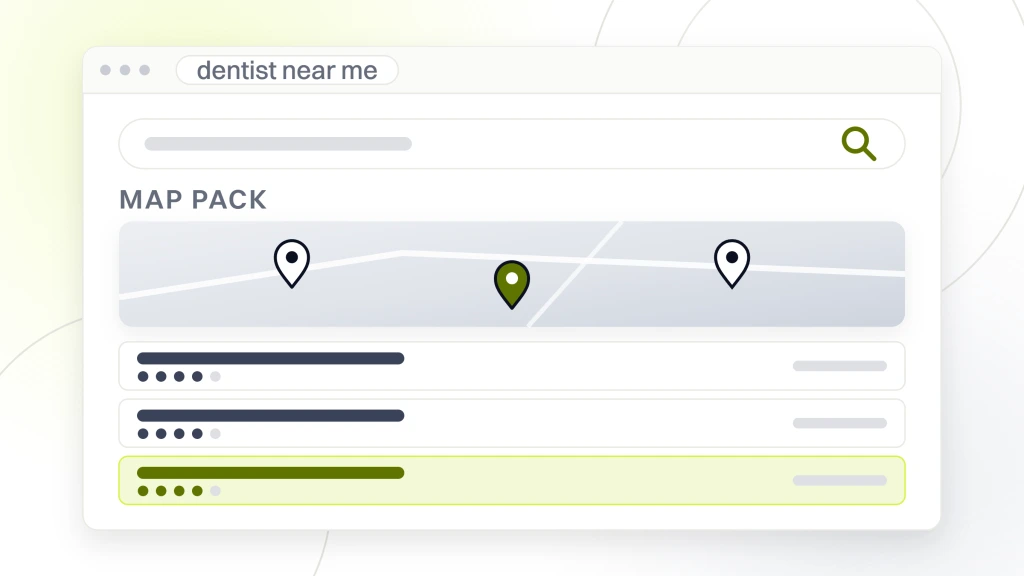
The DSO dental SEO teams that scale run one shared profile standard. Category selection standardized across the group. Service list standardized with per-office customization on the last 20 percent. Photo library refreshed quarterly with a 90-minute shoot per office. Weekly posts published from the central team with an office-specific spin. Review responses handled by the central team with escalation to the office manager on anything above three stars. The pattern is central discipline plus local flavor.
Standardize category selection across offices
Every office sets Dentist as primary. Secondary categories match the services that office runs. Cosmetic Dentist for the offices with veneer volume. Pediatric Dentist for the ones with a dedicated peds operatory. Emergency Dental Service for the ones open weekends. Standardizing the pattern lets the central team audit 50 profiles in one hour instead of 50 hours, which is exactly how the program stays sane at scale. Google reads category variance as a signal that services differ per office, which helps ranking.
Per office photo shoots
Every office needs its own photo library. Real exterior shots, real interior, real staff. Stock imagery on a multi location profile flags as a template and slows ranking. Budget a 90-minute local photographer shoot per office at $300 to $600. Refresh the shoot every 18 to 24 months. That single line feeds the freshness signal across the group without blowing the marketing budget.
Centralized citation operations for multi location local SEO
A 10-office group carries 500 to 800 citations across the visible directory graph. Managing them by hand at scale is a full-time job. The teams that run local search ops cleanly pair Yext or Whitespark for the automated distribution layer with a hand-managed spreadsheet for the top 30 citation sources per office. That combination catches automation gaps and handles the review steps pure software misses.
| Citation layer | Tool | Cost per office | What it covers |
|---|---|---|---|
| Core directories | Yext Enterprise | $45 to $99 per month | 60 major citation sources synced automatically |
| Long tail directories | Whitespark | $20 per month | Manual submission to 40 niche sources |
| Local business orgs | Manual outreach | Team time only | Chamber, BBB, health directories |
| Healthcare directories | Manual claim | Team time only | Healthgrades, Vitals, Zocdoc, WebMD Care |
| Data aggregators | Yext Enterprise | Included in tier | Foursquare, Neustar Localeze, Data Axle |
NAP audit cadence per office
Every office runs a full NAP audit twice per year. The internal marketing lead exports the citation set, spot-checks the top 30 sources, and files corrections for anything mismatched. Automation handles the volume. Human review catches wrinkles automation misses, like a mispunctuated suite number or a legacy phone that forwards but confuses Google. 2 hours per office per quarter keeps the citation graph clean and keeps every office’s local signals consistent.
Aggregator hygiene matters more at scale
Data aggregators like Foursquare, Neustar Localeze, and Data Axle feed 200-plus downstream directories with your NAP data. One bad record at the aggregator level copies across 200 destinations inside 60 days. A tuned aggregator record fixes 80 percent of the long-tail citation problems on its own. Pay for the aggregator sync tier and the citation cleanup work drops by half. See our full dental citations guide for the exact aggregator setup steps.
Review operations at scale for group practices
Review generation is the fastest ranking lever in group local search. A 10-office group at 40 reviews per office ranks below the same group at 200 reviews per office. Moving that number takes an operational workflow. The central team runs the tech stack. The office manager runs the daily patient handoff. The clinical staff handles the courteous ask right after operatory work and before the front-desk handoff.
A DSO with 50 offices adding 5 reviews per office per month generates 3,000 reviews per year across the group. That volume swings Google’s local ranking system, which reads recency and count as the two dominant review signals. Skip the workflow and reviews stall at whatever legacy count each office carries. Groups plateau at map pack positions 4 through 7 for this reason. The stack is right. The review workflow is missing.
Review tools that scale to 50 offices
Podium, Birdeye, and Weave all handle multi-office review generation with per-location reporting. Cost runs $199 to $499 per office per month depending on tier and integration depth. All three integrate with common dental PMS systems like Dentrix, Eaglesoft, and Open Dental. Central reporting rolls up review count, star average, response rate, and time to response. That single dashboard is what tells the central team which offices need help and which are running on autopilot.
Central response templates with local edits
The central team writes 8 to 12 response templates covering the common review types. 5-star with service mention. 5-star generic. 4-star with actionable feedback. 3-star and below with escalation to office manager. Local staff edits the templates before publishing to swap the reviewer name and the specific service detail. That balance keeps response time under 48 hours across 50 offices without losing the personal tone that separates a real response from a corporate copy paste.
Smile Design Dentistry case study in multi location dental SEO
Smile Design Dentistry is a 50-plus location DSO founded in 2004 in Dade City, Florida. When they came to us, the group ran fragmented paid ads with broad targeting, low-quality leads that rarely converted, high acquisition costs, and no way to measure office-level performance. Social sat idle. Landing pages read generic. No call analytics separated booked patients from junk rings. The group spent real money and couldn’t tell which offices returned the investment.
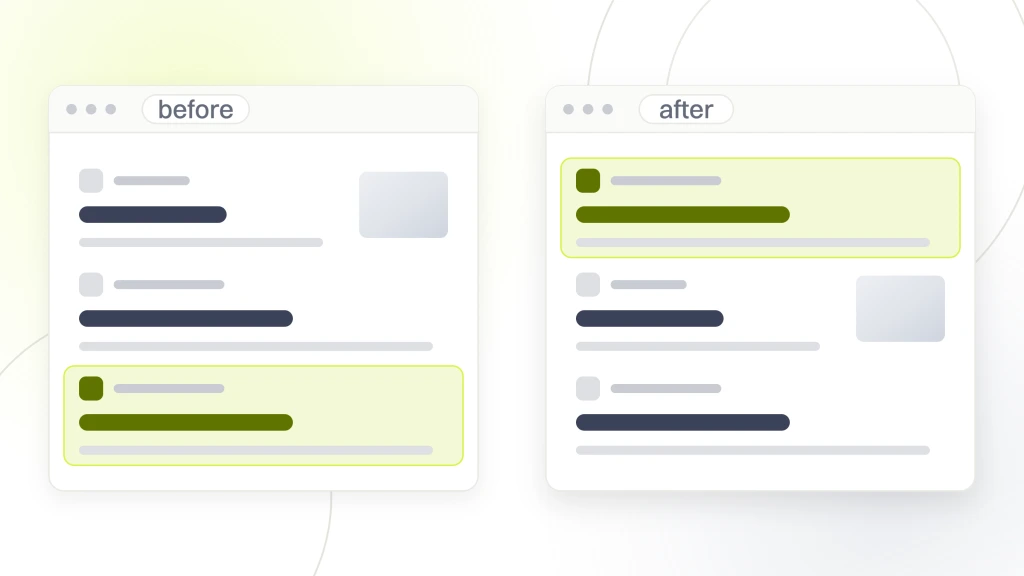
We rebuilt the paid stack under a segmented per-office funnel model as part of a full group SEO rebuild. Per-location landing pages that matched ad creative to local trust signals and brand consistency. CallRail integrated across every office for patient-quality scoring on every call. Full-funnel paid social from awareness to conversion with video-based demographic targeting. Ongoing creative iteration with capacity-aware budget allocation that funneled spend to offices with open chair time. The outcome. PPC conversion up 20 percent, cost per call down 30 percent, and coverage across all 50 locations.
The Smile Design numbers
PPC conversion rate up 20 percent across the group as landing pages matched creative and local trust signals. Cost per call down 30 percent as bid logic tuned by neighborhood targeted patients within drivable radius. Locations live and running optimized campaigns. 50 plus. Reporting cadence weekly with per-location detail so the central team saw which offices returned the spend and which needed operational help before spend increased. The design was the multiplier. The stack was the volume dial.
Lessons from the Smile Design engagement
2 lessons apply to almost every DSO reading this. First, per-office campaigns beat brand-halo campaigns every time. Google rewards local relevance, and local relevance requires per-office landing pages, per-office ad creative, and per-office bid logic. Second, tracking is the deciding factor. CallRail per office lets the central team see which markets convert calls into booked patients. Without that layer, every optimization is a guess. With it, spend flows to the offices that turn it into revenue.
Tracking and attribution across the group
A group SEO program without central tracking is guesswork. Every office needs its own call tracking number, a per-office goal in GA4, a Business Profile insights export, and dedicated local rank tracking. The central team rolls those into a group dashboard that shows per-office performance side by side. Offices that lag get resources. Offices that lead get case-studied and replicated across the group.
The tracking stack that scales looks like this. CallRail or CallTrackingMetrics with a dedicated dynamic number per office. GA4 property configured with the group’s roll-up plus per-office data streams. Local Falcon or BrightLocal geo-grid rank tracking with a grid centered on each office. A quarterly reporting rhythm that presents the group roll-up alongside the office-level detail. Skip any layer and the central team loses the ability to allocate spend rationally.
Per office call tracking and GA4
Each office gets a dedicated tracking number on the Business Profile and a matched dynamic number on the location page. GA4 runs event goals on booking form submits, click-to-call taps, and directions taps. Every conversion is attributed to a channel, a landing page, and an office. The central team reads which office monetizes cold traffic and which needs help. Data drives spend allocation. Spend drives bookings. Bookings drive revenue.
Geo grid tracking per office
Local Falcon supports multi-office geo-grid tracking with per-office grid pins reporting per-query rankings. A 10-office group runs 10 grids, each measuring the office’s map pack position across a 3, 5, and 8 mile radius. That data drives the citation cleanup priority order, the local link outreach targets, and the review generation focus. Without it, the central team can’t tell which offices need work and which are running clean.
Content and blog strategy for a DSO group
The group blog is the content engine behind the whole brand. Per-office blogs fragment authority and almost never earn back the operational overhead. Publish 4 to 8 posts per month from the central team on topics that apply across the group, then run per-office variations of the top performers when the local market has a distinct angle. That pattern keeps content velocity honest without doubling work across offices.
Topics that work at the group level cover common dental questions, service explainers, insurance guides, and patient education. Topics that need per-office variation include local events, community involvement, and market-specific promotions. 60 to 70 percent of content is central. 30 to 40 percent has a local variant. That balance covers topical authority at group level and local relevance at office level without needing a full-time writer per office.
Topic clusters for the group blog
Group each pillar service into a topic cluster. Dental implants cluster with 12 to 18 posts covering procedure explainers, recovery, cost, financing, and comparison to alternatives. Invisalign cluster with 8 to 12 posts. Emergency dentistry cluster with 6 to 10. That structure gives each service pillar page the internal linking signal to rank at group level. Cluster planning takes one focused week per year. The publishing calendar runs off that plan for 12 months.
Local content variants that earn rankings
The top three group blog posts by traffic get local variants for each office. A group post titled Dental Implants Cost in 2026 becomes Dental Implants Cost in Dade City. Same body structure, localized statistics, localized case examples, localized FAQ. That earns each office a page ranking for the local variant of a high-traffic query. 10 local variants per year per office compound over 24 months into a local content moat.
Local link building per office
Central link outreach earns brand-level authority. Per-office link outreach earns map pack lift. Every office chases 4 to 6 local backlinks per year from the chamber of commerce, sponsored community events, school PTAs, and local news mentions. Those links carry the office address and neighborhood context, which Google reads as a real local relevance signal. 50 offices at 5 links per year adds 250 fresh local backlinks to the group without any single office carrying an outsized workload.
Budget allocation across offices
The central team allocates SEO spend by office performance. Offices ranking outside the top 5 in the map pack get priority resources. Offices ranking 1 to 3 get maintenance budget. Offices in growth markets with open chair capacity get creative and content budget. Offices at capacity get review generation and reputation maintenance only. That framework keeps spend flowing toward opportunities and off flat portfolios.
- Priority tier. Offices outside top 5 map pack, get citation cleanup plus content plus links
- Maintenance tier. Offices in top 3 map pack, get review generation plus profile hygiene
- Growth tier. Offices with open chair capacity, get content and PPC
- Capacity tier. Offices at max capacity, get reputation defense and review response
- Reserve budget. 15 to 20 percent held for market shocks or new office launches
Per office budget baseline
The baseline spend per office runs $800 to $1,600 per month for a group with centralized ops. That covers per-office Profile management, citation hygiene, review generation tools, and a share of the central content team’s output. New market launches carry a 6-month ramp of $1,800 to $3,200 per month to load the citation graph, seed the review pool, and build the local content foundation. After the ramp, offices settle back to the baseline. This pattern holds across DSO clients running 10 or more offices.
Central versus office spend split
Central spend covers the group hub site, the shared content calendar, the citation management tools, the review generation platform, and the analytics stack. Office spend covers per-office landing pages, per-office photo shoots, per-office review generation, and per-office local link outreach. The rough split is 60 percent central, 40 percent office. Groups that skew too central lose local relevance. Groups that skew too office lose the operational payoff that makes group ops efficient at scale.
Reporting cadence for the group stack
Weekly reporting reads too noisy for the group level. Monthly reads too slow to react to campaign issues. The pattern that works pairs weekly office-level dashboards for the central team with monthly executive rollups for group leadership. That cadence catches office-level anomalies inside 7 days and keeps strategic discussions grounded in trends, not noise.
The monthly executive rollup covers map pack position across offices, review count and star average trends, PPC conversion rate per office, cost per call per office, and booked patient count per office. Weekly office dashboards show the same metrics at higher resolution plus the campaign changes made that week. That documentation trail lets the central team look back 2 years later and see why a particular office moved. See our full dental marketing attribution guide for the exact GA4 setup.
Per office scorecards
The office scorecard is a single-page snapshot. Map pack position for 3 primary queries, review count and star average, monthly booked patients from digital, cost per booked patient, and a ranked list of the three highest-priority tactical fixes for the next 30 days. The format is fast to read and honest about performance. Offices below the group median get the priority resources. Offices at or above the median stay on maintenance until the map pack shifts.
Quarterly strategic reviews
Every quarter the central team runs a strategic review with group leadership covering top-line trends, budget reallocation across offices, service mix shifts, and market expansion plans. That rhythm keeps the program tied to real business decisions, not siloed off from them. The 90-day cadence reacts to market shifts fast enough and shows the compound impact of citation cleanup and content publishing.
Where to start on your group SEO stack today
A group SEO rollout starts with a portfolio audit. Pull every office’s Business Profile completeness score. Pull every office’s review count and star average. Pull every office’s map pack position for three primary queries. That single-day audit produces the 90-day roadmap. Which offices need Profile tuning, which need citation cleanup, which need content, and which run clean and just need maintenance.
When you’re ready to run the full multi location dental SEO stack across 3, 10, or 50 offices, our dental seo services covers the audit, the centralized ops, and the per-office execution. For pillar-page architecture patterns beyond dental, see the Google Search Central site names guide. Layer on our full dental marketing hub.