
PPC for Pet Supply Shops That Grows Local Baskets
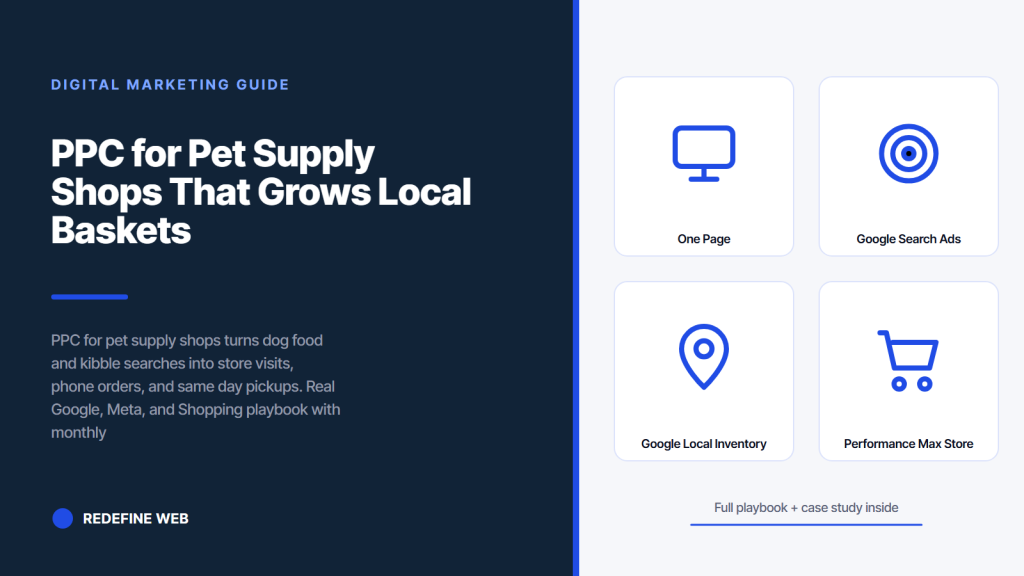
- Four channels carry pet supply PPC: Search, LIA, Performance Max, Meta.
- Local Inventory Ads carry the highest ROAS of any single channel.
- Meta remarketing captures refill cycles at 4 to 6 week intervals.
- Budget below 500 dollars per month does not train the algorithms.
- Every reported number needs a real dollar figure attached.
- PPC for pet supply shops in one page
- Google Search ads on near me and category queries
- Google Local Inventory Ads for real time stock
- Performance Max for store visits
- Meta remarketing and the second store visit
- Budget math for small pet supply shops
- Landing page structure for pet supply PPC
- How Passion Built maps to pet supply PPC
- Timeline expectations and ROAS targets
- Pick the right partner for ppc for pet supply shops
PPC for pet supply shops is the paid search work that turns a dog owner searching dog food near me at 4:15pm into a shopper walking through your door by 4:45pm. Independent pet supply shops live on the local basket. Every buyer opens Google, types a category term plus near me, and picks the shop that shows up first with clean hours and a clear ad. Paid search buys that placement on days when the map pack ranking is not yet strong enough to pull the click on its own.
This guide walks the version of PPC for pet supply shops that Redefine Web runs with independent retailers, small chains, and pet shops with a grooming bay or self wash arm. You will see the channel split by revenue line, the budget math for a $500 to $3,000 monthly spend, the Google Shopping and local inventory ads setup, the Meta and TikTok remarketing pattern, and the timeline to first store visit. Every play is field tested against real POS data and real client billing on multi year retainers.
PPC for pet supply shops in one page
PPC for pet supply shops covers four channels that work together to fill the aisle with local buyers. Google Search ads on near me and category queries. Google Local Inventory Ads that show the shop’s real time stock in Shopping results. Google Performance Max for the store visits objective. And Meta remarketing to shoppers who visited the site but did not walk in. Each channel plays a different role. Running one and skipping the others leaves basket revenue on the table every week.
Every pet supply shop starts with a channel split by revenue line. A shop that runs 80 percent retail and 20 percent grooming puts 70 percent of the paid budget on retail category and near me queries, 20 percent on grooming service terms, and 10 percent on remarketing. A shop with a strong self wash arm shifts 15 percent to self wash and dog wash queries. The split changes with the revenue mix. The four channel base holds across every shop shape.
Redefine Web tracks four numbers monthly on every PPC for pet supply shops retainer. Store visits attributed to paid search inside the Google Ads store visits report. Phone calls generated by paid ads. Online orders or curbside pickups attributed to paid. And Meta remarketing return visits that convert on a second session. If those four numbers move, PPC for pet supply shops is doing its job. If they do not, the retainer is running blind. Read the pet products marketing hub for the full retainer scope.
Google Search ads on near me and category queries
Google Search ads are the piece of PPC for pet supply shops that pulls buyers who are searching with active intent. Near me queries like dog food near me, cat litter near me, and dog treats near me carry the highest conversion rate of any query type. A shopper who types dog food near me at 4:15pm has decided to buy. They are picking the shop, not researching the category. Rank a search ad on those terms and the conversion rate sits between 8 and 20 percent.
Category queries like grain free dog food, cat litter, and freeze dried treats carry more research intent and convert at 2 to 5 percent, but volume runs 10 to 50 times higher than near me terms. A pet supply shop needs both. Near me terms produce fast basket revenue. Category terms produce top of funnel awareness that feeds Meta remarketing and repeat store visits over the next 30 days. Skipping category terms because they convert slower is why so many shops burn the budget on near me alone and stall out at $2,000 per month in tracked revenue.
Match type discipline decides whether the budget lasts the month. Use phrase and exact match on near me terms. Broad match on category terms with negative keyword lists that block food service, grooming (unless the shop offers it), and unrelated pet types like reptile or bird if the shop only stocks dog and cat. Review the search terms report weekly. Every wasted click on an irrelevant query is a walk in that never happened. See Google’s match type documentation for the current syntax.
Google Local Inventory Ads for real time stock
Google Local Inventory Ads are the piece of PPC for pet supply shops that shows real time stock inside Shopping results and drives shoppers to the specific aisle. When a shopper types Orijen puppy 25lb into Google, a Local Inventory Ad shows the price, the stock status, and the distance to your shop, right in the Shopping tab. That ad pulls a click 3 to 5 times more often than a plain search ad on the same query, because the shopper sees the exact product in stock.
The setup requires a Merchant Center account, a product feed with local inventory data, and either a POS integration for automatic stock updates or a nightly CSV upload of stock counts. Shopify shops on POS Pro handle this natively. WooCommerce shops need a plugin like Wholesale Suite or a custom feed generator. The upfront work takes 8 to 12 hours. Once live, the feed maintains itself as long as the POS stays synced. Local Inventory Ads produce the highest ROAS of any single channel on PPC for pet supply shops in most metros.
Two feed cleanup items decide performance. First, SKU level product titles need real brand and size detail, not generic labels. Orijen Original Puppy Dry Dog Food 25lb Bag, not Puppy Food 25lb. Second, product photos need a white background and 1200 x 1200 minimum resolution. Feeds with poor titles or thin photos get flagged by Merchant Center policy and drop from the auction. Audit the feed monthly. Read Search Engine Land’s PPC library for the ongoing local inventory ad research.
Pet shops running only Search lose basket revenue. Confirm your POS feeds real-time stock to Google Merchant Center. Without that, Local Inventory can't fire.
Performance Max for store visits
Performance Max is the piece of PPC for pet supply shops that runs across Search, Display, Shopping, Discover, Gmail, and YouTube in a single campaign optimized for a chosen objective. For pet shops, the right objective is store visits, tied to the Google Business Profile as the conversion goal. Performance Max on the store visits objective picks up medium and low intent queries that near me and category ads miss and pulls those shoppers to the aisle over the next 7 to 14 days.
Asset variety carries Performance Max ranking. Every campaign needs 15 to 20 headlines, 5 to 8 descriptions, 5 or more images including product shots and storefront photos, and at least 2 videos even if the videos are auto generated from the image set. Skimping on assets is why so many small shop campaigns underperform on Performance Max. Google needs the asset volume to match creative to search intent across the 6 placements. Thin asset libraries get squeezed to the low intent placements only.
Set the campaign budget at $15 to $40 per day for a single location shop. Anything under $15 does not produce enough auction volume to train the machine learning model. Anything over $40 for a single location shop wastes budget on placements the shop cannot support. Multi location shops scale the budget by the number of locations, not by increasing the daily budget on a single campaign. Each location gets its own Performance Max campaign tied to its own Google Business Profile.
Meta remarketing and the second store visit
Meta remarketing is the piece of PPC for pet supply shops that captures the second store visit and the repeat buyer cycle. A shopper who walks into the shop on a Saturday for kibble converts on Meta remarketing back to the same shop 4 to 6 weeks later when the bag runs low. This is the compounding revenue mechanic that separates a shop with a real PPC plan from a shop that only runs Google Search. Meta remarketing keeps the shop top of mind between the physical visits.
The remarketing audience stack has three layers. A 30 day website visitor audience for the general shop pool. A 60 day product page visitor audience for shoppers who researched a specific SKU. And a 180 day past purchaser audience uploaded from the POS for repeat buyer nurture. Each layer gets a different creative angle. Website visitors see a general storefront ad. Product page visitors see the specific SKU they researched. Past purchasers see a refill reminder tied to their typical bag replacement cadence.
Budget for Meta remarketing runs 15 to 25 percent of the total paid budget. Split the budget across the three audiences with 40 percent on past purchasers, 35 percent on product page visitors, and 25 percent on website visitors. Past purchasers convert highest but audience size is smallest. Website visitors have the biggest audience but the lowest conversion rate. The middle audience carries the ROAS. Every dog owner in your service area is one refill cycle away from either your Meta ad reminding them or Chewy’s mailer landing on the porch.
Budget math for small pet supply shops
Budget math for PPC for pet supply shops runs at three tiers. A $500 to $1,000 monthly spend runs Google Search on 5 to 8 near me terms plus a small Meta remarketing budget. A $1,000 to $2,000 monthly spend adds Google Local Inventory Ads and expands to category terms. A $2,000 to $3,000 monthly spend adds Performance Max for store visits and full Meta remarketing across all three audience layers. Below $500 per month, PPC does not produce enough auction volume to train the algorithms.
The table below breaks down the typical monthly split by budget tier. These are field averages across the pet supply shops Redefine Web has worked with in the last three years, not a theoretical model. Every range is verified against real POS data and reported outcomes over multi year engagements. Shops with a strong grooming or self wash arm shift 15 to 20 percent of the budget to service intent queries, which changes the split but not the total.
| Budget tier | Google Search | Local Inventory Ads | Performance Max | Meta remarketing | Expected store visits |
|---|---|---|---|---|---|
| $500 to $1,000 | 75 percent | 0 percent | 0 percent | 25 percent | 40 to 80 per month |
| $1,000 to $2,000 | 55 percent | 20 percent | 0 percent | 25 percent | 90 to 180 per month |
| $2,000 to $3,000 | 40 percent | 20 percent | 20 percent | 20 percent | 200 to 400 per month |
| $3,000 plus | 35 percent | 25 percent | 25 percent | 15 percent | 450 plus per month |
Two budget mistakes to avoid. First, do not underspend on Meta remarketing to fund extra Google Search budget. Meta captures the repeat cycle. Google Search only captures the first visit. A shop that skips remarketing pays Google every four weeks to bring the same buyer back that Meta could have brought back for a fraction of the cost. Second, do not skip Local Inventory Ads once the budget crosses $1,000 per month. LIA carries the highest ROAS of any channel and does not run at all without the Merchant Center feed. Read the pet products marketing retainer starting at 599 dollars per month for the program side base cost.
Landing page structure for pet supply PPC
Landing page structure decides whether PPC for pet supply shops produces store visits or wastes clicks. Every paid click needs to hit a page that matches the ad copy exactly. A near me ad for dog food goes to a page titled dog food that shows the top 20 SKUs in stock, the local phone number, and hours above the fold. A category ad for grain free dog food goes to the grain free category page with the same trust signals. A remarketing ad for Orijen puppy goes to the exact SKU product page.
Three trust signals belong above the fold on every landing page. Star rating with review count from the Google Business Profile. Storefront photo with the sign and hours visible. And a local phone number as a click to call button. Pages that hide these signals below the fold convert 30 to 40 percent worse than pages that show them above. The signals matter more than the copy for cold paid traffic, because the shopper is deciding whether to trust the shop before they read anything.
Loading speed matters too. A landing page that takes over 2.5 seconds on 4G mobile bleeds 30 percent of the paid traffic before the page even paints. Every plugin, every heavy image, every tracking pixel that fires on page load costs paid conversion rate. Audit landing page speed monthly. See the Core Web Vitals reference on web.dev for the current benchmarks Google uses to grade the field data set. See the pet shop marketing playbook for the organic side that reduces paid load across year two.
How Passion Built maps to pet supply PPC
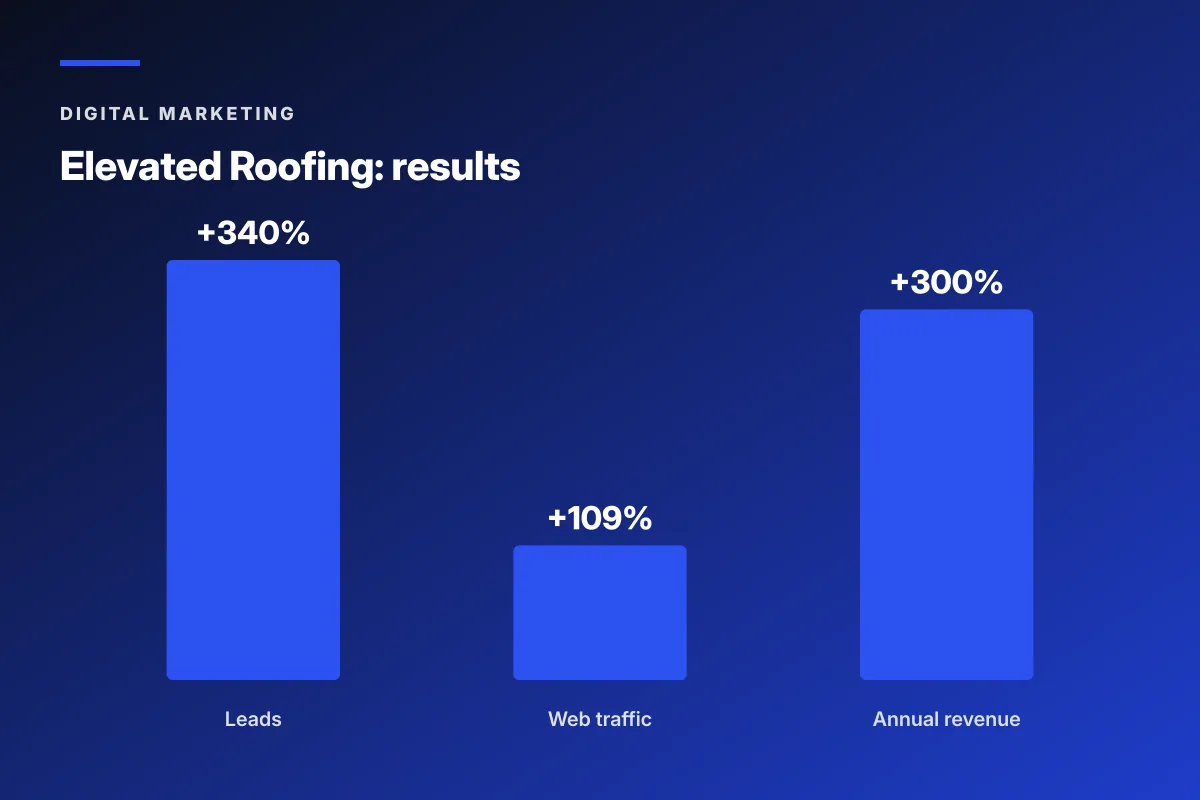
Passion Built is a local paid search story that maps cleanly to PPC for pet supply shops. The Sydney renovation brand came to Redefine Web with two underperforming sites and no paid channel, then grew paid alongside SEO to 10 percent visitor conversion and $60,000 in bookings inside twelve months.
Every play in that engagement applies to a pet supply shop without modification. Rebuild the Google Business Profile so paid ads can point at it. Run Search ads on the top 5 to 8 near me and category terms first. Add Local Inventory Ads once the Merchant Center feed is live. Layer Meta remarketing across three audience layers. Instrument every ad click, phone call, and store visit so the retainer proves itself in tracked basket revenue. Passion Built ran renovation. Pet retail runs kibble. The paid work is the same shape.
The transfer point for a pet supply shop is that pet queries have more repeat purchase intent than renovation queries. A dog owner runs out of food every three to four weeks. A cat owner runs out of litter every two. A shop that wires Meta remarketing correctly captures 30 to 50 percent of those refill cycles from the same paid traffic already brought in by Google Search. A renovation buyer does not refill. This is why a pet supply shop’s PPC ROAS climbs steadily across months 3 to 12, while renovation PPC ROAS plateaus after month 6.
Two extra plays make sense for a pet supply shop that Passion Built did not need. A price match promise on the top 20 SKUs, so paid clicks that compare price against Chewy or PetSmart still close the sale at the local shop. And a curbside pickup option wired into the site, so paid clicks that convert on the product page can pick up the same afternoon instead of waiting for shipping. Both plays raise the paid conversion rate by 15 to 30 percent across the year.
Timeline expectations and ROAS targets
Timeline expectations for PPC for pet supply shops follow a fast curve compared to SEO. Google Search ads produce store visits inside the first week of the launch. Local Inventory Ads produce visits inside the first two weeks. Performance Max needs 4 to 6 weeks to train before ROAS stabilizes. Meta remarketing needs 30 days to build audience size before the campaign scales. Full ROAS on the paid stack lands at month 3, with steady climb from month 4 through month 12 as remarketing compounds.
ROAS targets by channel are specific. Google Search on near me terms should hit 8:1 to 15:1 ROAS. Local Inventory Ads should hit 10:1 to 20:1. Performance Max should hit 4:1 to 7:1 during the training period and 6:1 to 10:1 after training. Meta remarketing on past purchasers should hit 8:1 to 12:1. Meta remarketing on website visitors should hit 3:1 to 5:1. Blended ROAS across the paid stack lands at 6:1 to 9:1 for well managed accounts by month 4.
Attach a real dollar figure to every reported number. A store visit is worth the average basket, typically $45 to $75 at an independent pet supply shop. A phone call converts to a store visit 40 to 60 percent of the time. A curbside pickup is worth the order value. Once every action carries a dollar figure, the paid retainer moves from cost center to revenue lever. Read WordStream’s pet industry PPC benchmark data for the current field averages by channel.
Pick the right partner for ppc for pet supply shops
The right partner for PPC for pet supply shops depends on the current channel mix and the shop’s revenue lines. A shop running only Google Search needs a partner strong on Merchant Center feed setup and Local Inventory Ads. A shop already running Local Inventory Ads needs a partner strong on Performance Max asset generation and audience layering. A multi location chain needs a partner strong on per site reporting and location extension setup across every campaign.
Three signals separate a real pet retail PPC partner from a generic paid search shop. Field tested experience in the vertical, meaning they can talk about the difference between a grain free and limited ingredient SKU without a Google search first. Store visit reporting, meaning they can tie paid clicks to Google Business Profile store visits inside the Ads dashboard. Access transparency, meaning the Ads, Merchant Center, and Analytics accounts sit in your name, not theirs. Two of the three is not enough on a real retainer budget.
Where to start this week depends on the current paid setup. If the shop has no paid channel running, start with Google Search on 5 to 8 near me terms plus a small Meta remarketing pool. If Google Search runs but no Local Inventory Ads, build the Merchant Center feed first. If both run but Performance Max is off, launch a store visits campaign with 15 to 20 assets. Read the PPC agency for pet brands playbook for the DTC extension of this pattern.
PPC for pet supply shops is a tight stack of paid work run every week. Google Search on near me and category. Local Inventory Ads for real time stock. Performance Max for store visits. Meta remarketing for the second visit and refill cycles. Passion Built grew paid alongside SEO to 10 percent visitor conversion on exactly this shape of program. Your pet supply shop can hit the same math once the plan is real and the paid channels run in the right proportion.

Frequently asked questions
What is PPC for pet supply shops in plain terms?
PPC for pet supply shops is the paid search and social work that pulls local buyers into the shop on dog food, cat litter, treat, and toy searches. Four channels carry the work. Google Search ads on near me and category queries. Google Local Inventory Ads that show real time stock in Shopping results. Google Performance Max optimized for store visits. And Meta remarketing to shoppers who visited the site but did not walk in. Each channel plays a different role and each contributes to the monthly basket volume.
How much should a pet supply shop spend on PPC per month?
A single location pet supply shop should spend 500 to 3,000 dollars per month on paid channels. Below 500 dollars per month, the algorithms do not get enough auction volume to train and ROAS stays flat. Between 500 and 1,000 dollars, run Google Search on near me terms plus a small Meta remarketing pool. Between 1,000 and 2,000, add Local Inventory Ads and category terms. Between 2,000 and 3,000, add Performance Max for store visits and full Meta remarketing. Multi location shops scale the budget by the number of sites, not by increasing a single campaign.
Which PPC channel produces the highest ROAS for a pet supply shop?
Google Local Inventory Ads produce the highest ROAS of any single channel for PPC for pet supply shops in most metros. Typical ROAS ranges from 10 to 1 up to 20 to 1 because the ad shows real time stock and price for a specific SKU inside the Shopping tab. The setup requires a Merchant Center account, a product feed with local inventory data, and either a POS integration for automatic stock updates or a nightly CSV upload of stock counts. Once live, the feed maintains itself and the channel pays back the setup work inside the first 60 days.
How long does PPC for pet supply shops take to produce store visits?
Google Search ads produce store visits inside the first week of launch. Local Inventory Ads produce visits inside the first two weeks. Performance Max needs 4 to 6 weeks to train before ROAS stabilizes. Meta remarketing needs 30 days to build audience size before the campaign scales. Full blended ROAS on the paid stack lands at month 3, with steady climb from month 4 through month 12 as remarketing compounds against past visitors. Weekly search terms report review and monthly ROAS review by channel keeps the trajectory on track.
Can a pet supply shop run PPC without a Merchant Center feed?
A pet supply shop can run Google Search and Meta remarketing without a Merchant Center feed, but skipping the feed leaves the highest ROAS channel on the table. Local Inventory Ads and Performance Max Shopping placements both require the feed. A shop on Shopify with POS Pro handles the feed natively. A shop on WooCommerce needs a plugin like Wholesale Suite or a custom feed generator. The upfront work takes 8 to 12 hours. Any shop spending over 1,000 dollars per month on paid should have the feed live before the second month of the retainer.
Does PPC for pet supply shops replace SEO?
PPC for pet supply shops runs alongside SEO, not instead of it. Paid channels produce fast basket revenue in the first 90 days while SEO builds the map pack ranking base that later reduces the paid budget needed to hold the same store visit volume. A shop that runs both together sees the paid budget drop by 20 to 30 percent in year two as organic ranking picks up the near me queries the shop originally paid for. Cutting SEO to fund extra paid budget stalls that transition and keeps the paid spend permanently elevated.
Book your free 30-minute strategy call.
No spam, no sales rep. We use your email to schedule your call with a senior strategist. That is it.
More from the blog
View all articles → Digital Marketing
 Dental Marketing Tips That Compound Into New Patients
Read article Digital Marketing
 Ecommerce Marketing Strategies That Drive Real DTC Revenue
Read article Digital Marketing