
A Shopify skincare brand paid $650 a month for six months to a freelancer selling seo retainers loaded with weekly blog posts, monthly backlinks, and technical fixes on the pitch deck. At month seven the founder pulled the report. Organic sessions were flat, non-branded rankings had slipped 8 positions, the backlinks were paid guest posts on DA-15 sites Google discounted in the 2024 spam updates, and the technical fixes were three edited meta titles. Total spend was $3,900. Total revenue attributable to the work was zero. That failure pattern lives inside most cheap ecommerce seo packages sold to DTC founders under $2M revenue, and it is the single most common story we hear on discovery calls with founders switching agencies. Founders comparing tier-based ecommerce website maintenance cost retainers alongside seo packages should pair the read with our ecommerce maintenance package tiers guide for a parallel tier breakdown of the ongoing store-health retainer.
This guide breaks down ecommerce seo packages the way our team scopes them for DTC stores between $200k and $20M annual revenue. Tier pricing math. Deliverables per stage. Agency versus freelancer versus in-house cost comparison. Red flags cheap packages hide behind low headline rates. Every number below runs on active accounts our team has scoped across 2024 and 2025.
Ecommerce seo package deliverables by stage
Deliverables inside these retainers break down across three staged phases. Foundation, growth, and compounding. Skipping the foundation phase is the fastest way to burn a retainer, and content and links stack on top of a broken technical base and never earn the ranking the store was paying for.
Foundation phase deliverables in months 1 to 3
- Full technical audit covering crawl, indexation, schema, canonicals, and Core Web Vitals on the top 200 URLs.
- Keyword map tied to catalog URLs with commercial, informational, and navigational intent flagged per URL.
- Site architecture review covering category page depth, faceted navigation, and internal linking density.
- Redirect map cleanup of legacy 301 chains, 404s picking up backlinks, and canonical drift from past theme changes.
- Schema rollout for Product, Offer, BreadcrumbList, Organization, and Review schema across the catalog.
- Baseline reporting with GA4, Search Console, and rank tracking configured against a documented KPI set.
Foundation phase runs in the first 60 to 90 days regardless of tier. A store on the Visibility tier gets a thinner audit than a store on the Enterprise tier, and every ecommerce seo package must clear the foundation checklist before content and links start compounding on top of it.
Growth and compounding phases in months 4 through 24
The growth phase runs months 4 through 12 and adds weekly or biweekly content, page rewrites at the tier-appropriate rate, and monthly link acquisition tied to editorial outreach or digital PR campaigns. The compounding phase from month 13 onward shifts the mix toward category page depth, product page rewrites on top-100 revenue SKUs, and technical debt cleanup as the catalog grows. Stores that hold the retainer through the compounding phase see organic revenue grow 40 to 120% year over year on top of the foundation the first year built.
Stores that quit at month 9 rarely see the growth they were paying for. Ecommerce seo compounding curves run slower than paid channel curves, and our ecommerce seo strategies writeup covers the year-two revenue math. Six-month contracts are standard, and ranking work takes at least two quarters to hold up under load. Our writeup on ecommerce seo audit checklist covers the diagnostic pass every foundation phase opens with.
Ecommerce seo cost in-house versus agency versus freelancer
Ecommerce seo cost varies less by hourly rate than by scope discipline. An in-house team, a mid-market agency, and a solo freelancer can bill roughly the same monthly total and produce wildly different outcomes based on how the hours get spent. Understanding the tradeoffs helps a DTC founder pick the model that matches their operational maturity.
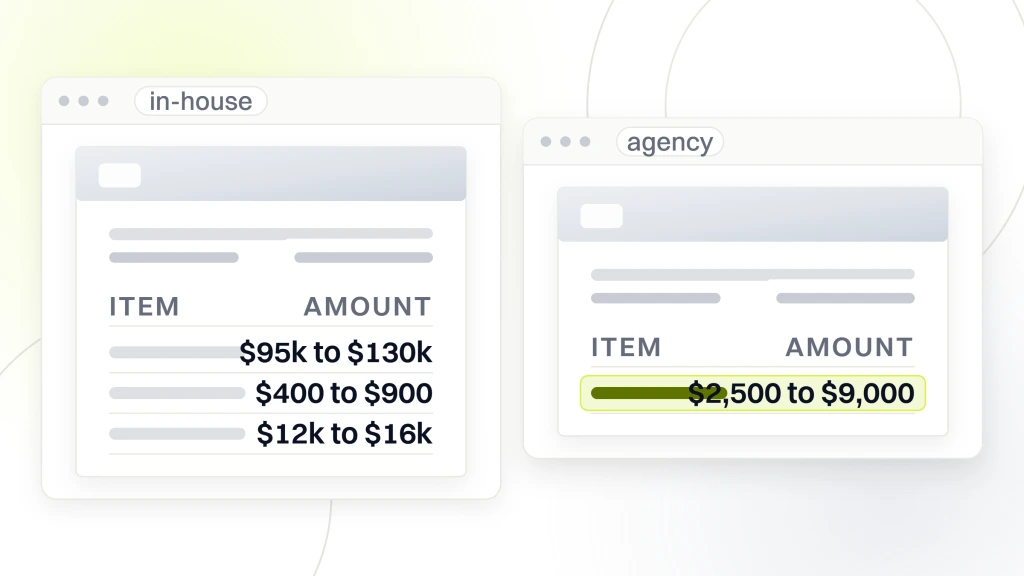
The three staffing models and their real total cost
- In-house team. 1 seo manager at $95k to $130k, plus tools ($400 to $900 monthly), plus fractional technical and content help. Real total sits at $12k to $16k monthly all-in for a functioning in-house program.
- Full-service agency. Retainer at $2,500 to $9,000 monthly covering technical, content, and outreach with tools included and a fractional strategy owner across accounts.
- Solo freelancer. Retainer at $600 to $2,500 monthly, covering 8 to 20 hours of one person doing the work personally, no team, no bench.
- Hybrid. Agency retainer at $2,000 to $5,000 monthly plus an in-house content manager at $75k to $95k managing production velocity.
- Pod model. Agency assigns a named 3-person pod (technical, content, outreach) at $6,000 to $12,000 monthly with predictable capacity per role.
- Fractional CMO plus vendor stack. Fractional executive at $4,000 to $7,000 monthly orchestrating multiple point-solution vendors under one contract.
In-house math looks cheaper on paper until a founder factors in ramp time, tool sprawl, hiring risk, and the coverage gaps a single seo manager creates on vacation or after a resignation. Agencies win on breadth and bench depth, and our ecommerce seo services rundown lays out how a full pod stacks the work each month. Freelancers win on cost efficiency for stores under $500k. Hybrid setups win at $2M to $8M revenue where content velocity matters more than technical breadth. Matching the staffing model to the revenue and operational stage matters more than the hourly rate any vendor quotes at discovery.
Affordable ecommerce seo services and what $599 monthly actually buys
Affordable ecommerce seo services sit at the $599 to $1,500 monthly price point where most DTC founders first buy retainers. What the money buys at that tier decides whether the first six months build a real foundation or drain the founder’s cash. Honest scoping at the Starter tier looks very specific.
What a $999 monthly retainer honestly delivers
Our team’s Starter tier at $999 monthly delivers8 to 10 hours of scoped work. That translates to 1 blog post per month at 1,600 to 2,000 words with keyword research and internal linking, plus 2 to 3 category or product page rewrites, plus a monthly technical hygiene pass covering crawl errors, broken links, and page speed regressions. Reporting runs monthly with a written summary of ranking changes, traffic movement, and next-month priorities. Quarterly business reviews cover deeper strategy resets. Six-month contracts start every Starter engagement, and ranking work rarely produces measurable revenue movement inside 90 days.
What packages under $500 monthly cannot honestly cover
Packages priced under $500 monthly usually cover 4 to 6 hours of work, and that cannot honestly stretch across all four workstreams. Something gets cut. The cut is almost always technical work, and content and link posts are easier to demonstrate on a report. Founders paying $299 monthly for a Shopify or WooCommerce retainer typically receive 1 short blog post and a monthly report screenshot.
Rankings do not move, and the foundation stays broken. Six months later the founder concludes seo does not work and leaves the channel entirely. The failure is not seo. The failure is buying a scope 40% below the minimum viable retainer for a DTC catalog. Every store past $200k annual revenue needs at least the Starter tier scope to see any ranking movement inside 6 months.
Red flags in cheap ecommerce seo packages
Cheap seo retainers hide the same failure patterns across the market. Spotting those patterns at discovery saves a DTC founder 6 to 12 months of wasted retainer spend and forces the vendor into honest scoping before signing.
The five red flags we see most often
- Guaranteed rankings language. Any vendor promising a page-one ranking on a specific keyword is either lying or planning to rank the site for zero-volume long-tail phrases that produce no revenue.
- Fixed backlink counts without domain quality specified. A package that delivers10 backlinks monthly at $600 monthly is buying PBN or DA-15 guest post spots Google has been discounting since 2022.
- Vague hour and deliverable counts. Retainers described as ongoing optimization or full-stack seo management with no explicit hour or unit counts usually deliver 30 to 50% less work than the founder expected at signing.
- No named team members. Packages sold by a sales rep with no named delivery team usually hand the account to a rotating pool of offshore contractors after the first month.
- Report-only monthly touchpoints. Retainers that only show up in the founder’s inbox as a PDF report each month rarely produce strategic conversation, and that caps compounding.
- Zero platform specialization. Agencies that pitch the same package to Shopify, WooCommerce, and Magento stores usually lack the platform-specific hygiene depth each stack demands.
Every red flag above shows up in our audits of failed retainers we replace. Founders who screen for the five patterns at discovery filter out 60% of underperforming vendors before signing. The remaining 40% still need scope specificity in the contract itself, and verbal promises rarely survive month three when the sales rep hands the account to delivery. Google’s search essentials documentation covers the technical fundamentals every honest package must clear before content and link work adds any revenue.
How much do ecommerce seo packages cost across the DTC market
Ecommerce seo packages across the DTC market range from $299 monthly at the freelance floor to $18,000 monthly at the enterprise ceiling. The distribution clusters around $1,200 to $3,500 monthly, and that is where most stores between $500k and $3M annual revenue land after 12 to 18 months of vendor churn.
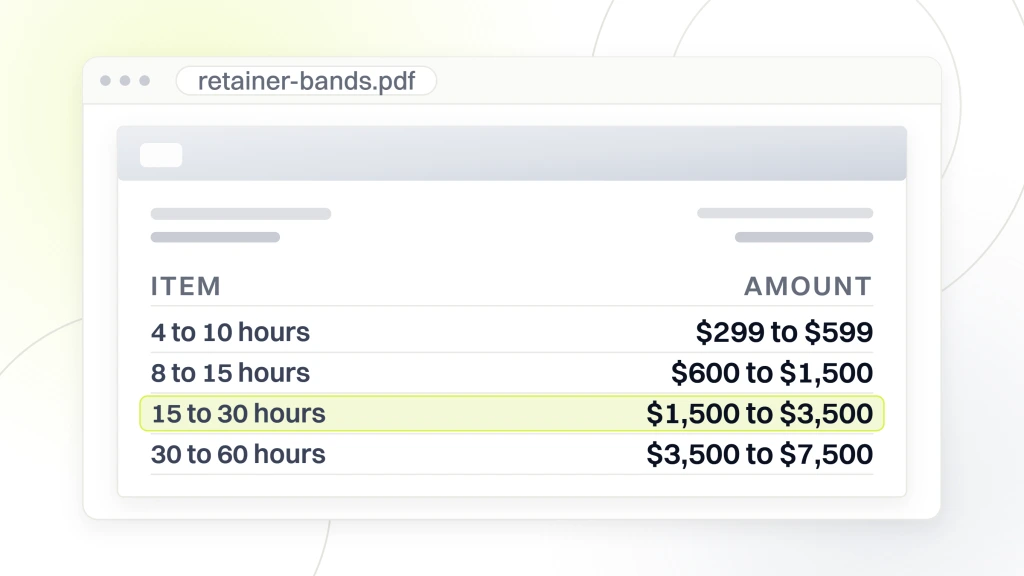
Price bands that map to real DTC store outcomes
At $299 to $599 monthly, the retainer buys 4 to 10 hours of one person’s time, usually a freelancer, covering 1 blog post and a technical hygiene pass. At $600 to $1,500 monthly, the retainer buys 8 to 15 hours across content, technical, and light outreach. At $1,500 to $3,500 monthly, the retainer buys 15 to 30 hours with a small team producing 2 to 4 blog posts, 6 to 10 page rewrites, and 2 to 4 backlinks per month.
At $3,500 to $7,500 monthly, the retainer buys 30 to 60 hours across a named pod producing content velocity plus active digital PR. Past $7,500 monthly, the retainer buys dedicated seats and specialized subject matter expertise the smaller tiers cannot support. Matching the price band to the store’s revenue stage and content absorption capacity drives ROI more than any single tactical choice inside the package, and pairing the retainer with an ecommerce sales funnel optimization pass compounds the traffic into signed orders. Our writeup on technical seo for ecommerce covers where the technical hours inside each band get spent.
What does an ecommerce seo package include at a minimum
An ecommerce seo package includes at minimum a monthly technical audit, category and product page optimization, content production at scoped word counts, editorial link acquisition, and reporting tied to KPIs the DTC founder actually cares about at a review. Scope specificity separates real packages from marketing brochures.
The minimum viable deliverable set at any tier
Every real ecommerce seo package covers technical hygiene, on-page optimization, content, off-page work, and reporting at explicit unit counts per tier. Technical hygiene means monthly crawls with Screaming Frog or Sitebulb, schema validation, and Core Web Vitals monitoring. On-page work means category page copy rewrites at 400 to 800 words per page and product page description rewrites on top revenue SKUs.
Content means blog posts at 1,500 to 3,000 words with keyword research and internal linking. Off-page work means editorial outreach or digital PR campaigns targeting DA-30-plus publications. Reporting means monthly written summaries with quarterly business reviews. Packages that document these five workstreams with explicit unit counts pass the scope specificity test. Packages that describe them in vague marketing language fail it.
What separates good tier packages from great ones
Great ecommerce seo packages add three things good packages skip. A named strategy owner who owns the account across every quarterly business review. Platform-specific technical depth on Shopify, WooCommerce, or BigCommerce that surface-level agencies lack. Attribution to downstream revenue events in GA4, not just organic session counts on Search Console. Packages carrying all three typically deliver 40 to 80% higher year-two organic revenue than packages missing them. Our writeup on ecommerce seo checklist covers the ongoing hygiene layer every great package operates against.
Measuring ecommerce seo package ROI honestly
Measurement closes the loop on any ecommerce seo package. Packages that skip downstream revenue tracking turn into perpetual expense lines a founder cannot defend at annual budget review. The right measurement stack tracks four KPIs per month at minimum.
The four ROI KPIs that hold the honest answer
The four KPIs that decide honest ROI on an ecommerce seo package. Non-branded organic sessions filtered against branded query traffic. Non-branded organic revenue tied to GA4 enhanced ecommerce events. Keyword ranking coverage across the top 100 commercial queries. Cost per organic order calculated as retainer spend divided by non-branded organic order count.
Packages producing rising rankings without rising non-branded revenue usually rank for the wrong queries. Packages producing rising branded revenue without rising non-branded revenue ride paid demand the seo work did not create. Filtering by non-branded is the single most important discipline in ecommerce seo measurement, and branded traffic is contaminated with paid, PR, and repeat-customer signal the seo retainer had nothing to do with.
A real ecommerce seo package engagement in production
RAFZ Cirkulära Interiörer, a Swedish ecommerce brand selling circular-economy interior goods, came to our team with a strong sustainability story and weak digital performance. The store ran on an outdated, plugin-heavy build that took 15+ seconds to load. Cart abandonment ran high. The homepage did not showcase products. There was no place2place API connection limiting reach.
Our team scoped a rebuilt store on a streamlined, lightweight theme with unnecessary plugins removed and replaced with efficient custom code for WooCommerce. The engagement rolled a custom repaint feature aligned with the sustainability brand, a redesigned homepage tuned for product browsing, and API integration with place2place for automatic listings. Retainers at this tier of intervention run at Growth-band pricing with monthly technical audits, category page rewrites, and quarterly strategy resets tied to non-branded revenue KPIs.
Post-launch, conversion rate climbed 28%. Fully loaded site time dropped from 15+ seconds to 2 seconds. Server requests dropped 82%. The new repaint feature plus place2place exposure delivered measurable revenue growth on top of the technical foundation. The engagement compounded across the following quarters as content stacked on top of the rebuilt store. That is the compounding pattern honest ecommerce seo packages should aim to deliver against the tier price the store paid for.
Where ecommerce seo packages fit the growth stack
Ecommerce seo packages sit right at the top of the organic growth stack. Every downstream tactic (content marketing, conversion optimization, email flows) compounds on top of the ranking foundation the package builds, or fights against it. Founders that buy a package matched to their stage compound month over month. Founders that buy a package priced against ambition three stages ahead burn retainer dollars faster than the ranking work can produce revenue.
Our ecommerce seo services hub covers the retainer scope for DTC founders who want a tier-matched package run for them across the catalog. Retainers start at $999 per month on the Visibility tier and step up to $1,499, $2,499, and from $4,500 per month on the Enterprise tier. Six-month contracts are standard, and ranking work takes at least two quarters to hold up under load.
Match the tier to the store stage. Buy scope specificity, not marketing language. Hold the retainer through at least two quarters before judging outcomes. Honest ecommerce seo packages follow that sequence.