A working saas ppc strategy pushes every paid click toward one of three destinations. A booked demo. A started trial. A booked call with sales. Most SaaS founders skip the strategy step and buy the traffic, then wonder why trial-to-paid rates sit at 3 to 5% and cost per booked demo climbs past $400 inside 90 days. The gap is not budget. The gap is a saas ppc strategy that runs brand defense, high-intent search, and remarketing loops in parallel, with tracking wired into revenue events and negatives filtering out the noise every Friday.
This guide is the exact setup the Redefine Web team runs on B2B SaaS clients from $8,000 in monthly ad spend up to $60,000, plus the 90-day rollout that turns a fresh account into a compounding channel. Read straight through, save the negative-keyword list to paste into your account today, and copy the four-band keyword split into your next weekly review. Any founder running paid without these pieces in place is leaking 30 to 60% of the budget inside the first two quarters.
The foundation of a working saas ppc strategy
A saas ppc strategy stands on four pieces that either work together or fail together. Conversion tracking that fires on the event tied to revenue, not on any signup. Landing pages that answer the ad promise inside the first scroll. A keyword build that separates brand from category from problem terms. And a bidding setup that hands Google or Microsoft the right feedback loop. Get all four right and the account starts learning inside 3 weeks. Get one wrong and Smart Bidding spends the quarter chasing noise.
The foundation matters because every subsequent optimization compounds on top of it. Bad conversion tracking pushes bid automation in the wrong direction. Weak keyword coverage leaves easy demos and trials on the table. Landing pages built for form fills instead of ICP-fit clients dilute trial quality. Monthly-only optimization means bid changes get reviewed 3 weeks late. Get the foundation right in the first 30 days and the next 60 days pay it back. Get it wrong and you spend 12 months papering over the gaps.
Conversion tracking that fires the right events
Conversion tracking should fire two events at minimum. The lead event at form submission, sent to Google Ads with a low static value. The paid event at trial-to-paid or opportunity-closed-won, sent server-side with the actual expected revenue value. The paid event is the one bid strategy should optimize toward. Without the paid event firing back to the ad platform, the algorithm optimizes toward whatever keyword produces the most form fills, and that is almost never the same keyword that produces retained subscribers.
The 90-day baseline before optimization
The first 90 days on paid are baseline collection, not aggressive optimization. Bid automation needs 30 to 50 conversion events per campaign per week to work, and most new SaaS accounts do not have that volume on day one. Start with manual CPC or maximize clicks, collect the data, layer smart bidding at day 60, then move to target CPA or target ROAS at day 90 once the data density supports it. Skipping baseline collection is the single most common mistake we see, and it costs 30 to 40% of first-quarter budget.
PPC keyword strategy for SaaS across 4 intent bands
A ppc keyword strategy for saas splits into 4 intent bands, and each band deserves its own campaign, its own landing page, and its own budget. Brand terms defend the search results page for your own name at $0.40 to $2.50 per click. Category terms catch buyers looking for the type of tool you sell. Comparison terms grab the shortlist stage. Problem terms reach the earliest, cheapest intent. Blend them into one campaign and Smart Bidding will overspend the loudest signal and starve the rest.
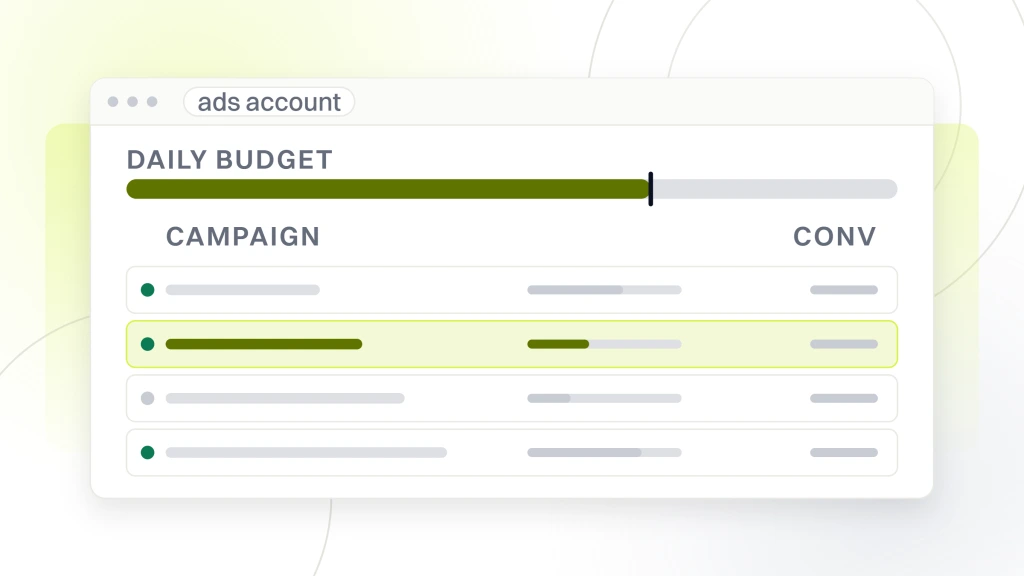
Keyword coverage across the 4 intent bands matters because each band captures a different buyer moment. Brand defends the low-cost close on existing demand. Category converts high-intent searchers already comparing solutions. Comparison intercepts prospects mid-evaluation. Problem terms are the top of funnel that seeds future demand. Skipping any one band creates a gap a competitor will exploit. In our experience, product-led SaaS accounts run 25% brand, 40% category, 20% comparison, and 15% problem. Enterprise SaaS shifts more heavily to category and comparison. Pure PLG shifts more to problem and long-tail.
| Intent band | Sample query | Typical CPC | Budget share |
|---|---|---|---|
| Brand | your product name | $0.40 to $2.50 | 20 to 30% |
| Category | revenue attribution software | $18 to $65 | 35 to 45% |
| Comparison | Segment vs RudderStack | $8 to $35 | 15 to 25% |
| Problem | how to attribute pipeline to paid ads | $3 to $12 | 10 to 20% |
Brand vs generic keywords ppc saas companies debate
Brand vs generic keywords ppc saas companies is the debate every finance team eventually raises. The math usually favors defending brand. Cost per click on your own name runs $0.40 to $2.50. Cost per conversion on brand runs $8 to $45. Competitors who bid on your name pay 3 to 5 times more than you do to appear in the same slot, so ceding the search results page invites cheap intercepts. The counter argument is that brand searches would convert anyway on organic, so paid spend is duplicative. The truth is somewhere in the middle. Test a 2-week brand pause with clean before-after comparison, measure the direct-navigation and organic-branded traffic delta, and decide from the data.
Category and comparison intent bands
Category terms like “saas ppc management platform” or “revenue attribution software” carry the highest commercial intent and the highest CPC. Comparison terms like “Segment vs RudderStack” or “HubSpot alternatives” carry high intent and slightly lower CPC. Both bands convert well when the landing page matches the exact query. A generic pricing page will underperform a comparison-specific landing page by 40 to 60% on the same traffic. Build one landing page per top-10 comparison term. The engineering cost is real, and the conversion gain usually pays back inside 2 months.
How to use PPC for SaaS free trial sign-ups
How to use ppc for saas free trial sign-ups is where most accounts leak the biggest share of budget. The signup form is cheap to build, so teams point every ad at it and let Smart Bidding chase raw volume. The result is a trial funnel packed with tire kickers, freelancers, and students. Real trial-to-paid rates hover at 3 to 8% until you rebuild the flow around 3 moves that filter for buyers before the form ever loads.
Free-trial paid funnels behave differently from demo-request funnels. The signup friction is lower, so cost per signup drops. The signup-to-paid conversion is higher friction, so the funnel bottleneck moves from click to activation. A cheap $28 signup that never activates costs more than an $80 signup that converts to paid at 22%. Every optimization decision for a free-trial funnel should trace back to trial-to-paid rate, not to cost per signup. If your reporting stack cannot show trial-to-paid by campaign inside 30 days, that is the first gap to close.
Ad copy that filters wrong-fit signups
Ad copy for a free-trial funnel should filter wrong-fit clicks before the landing page. Call out the ICP in the headline. Specify the use case in the description. Name the price band in the ad extension. Consumer-grade clicks and student clicks drop out early, and that cuts signup volume and grows trial-to-paid rate. The trade is almost always worth it. A 30% drop in signup volume with a 60% gain in trial-to-paid rate is a 12% net gain in paid conversions per dollar. That is the shape you want.
Landing pages that convert intent to trials
Trial-optimized landing pages carry 3 sections. A headline that repeats the ad copy within the first fold. A trial value section that names the use case, the outcome, and the time-to-value. And a form that asks for the minimum data needed to start the trial, plus one screening question that filters ICP. Company size, role, or use-case selection are all effective screening questions. Long forms drop conversion 15 to 40%. Short forms with one smart screener drop conversion 5 to 10% and grow trial quality significantly. Test both shapes and pick the one that maximizes trial-to-paid, not signup count.
Effective remarketing strategies for SaaS PPC campaigns
Effective remarketing strategies saas ppc campaigns depend on segmentation, not on volume. One blanket audience gets served the same creative to homepage bouncers and pricing-page abandoners, and neither converts. Split the audience by page depth and by behavior, hand each segment its own message, and cap frequency so the buyer never feels chased. That is how remarketing stops feeling like leftover budget and starts pulling 20 to 35% of demos through the same paid dollars.
Remarketing recovers the 92% of first-touch traffic that bounces before converting. The trick is to segment audiences by page visited and behavior, not to run one blanket remarketing campaign. A visitor who read 3 blog posts wants different messaging from a visitor who abandoned the pricing page. A visitor who started a trial and never activated wants different messaging from a visitor who watched a demo video and never booked one. Segment the pool by behavior, match the creative to the segment, and cap frequency to avoid burning out the audience. Frequency caps of 4 to 6 impressions per week per user work for most SaaS accounts.
Pricing-page retargeting on LinkedIn
Pricing-page visitors are the highest-intent remarketing pool for a SaaS. LinkedIn Ads with matched audiences can target these visitors by job title and company, layering B2B firmographic data on top of behavioral intent. Cost per demo booked from pricing-page LinkedIn retargeting runs $85 to $220 for a mid-market SaaS. The creative that works is usually a client proof point or a specific ROI number, not a generic “book a demo” call to action. Pricing-page visitors already know the product exists. They need a reason to move past the pricing hesitation.
Customer match for expansion and churn recovery
Customer match uploads a hashed email list to Google Ads or LinkedIn Ads and targets those specific users with creative built for that list. For SaaS, this workflow works best for 2 motions. Expansion into new modules or seat expansion on existing accounts. And churn recovery for canceled subscribers within 90 days of cancellation. Both audiences carry high intent, since the buyer already knows the product. Creative for expansion should focus on the new feature or the ROI story. Creative for churn recovery should acknowledge the reason for cancel and offer a specific hook to return. Keep customer match audiences segmented from cold prospecting.
Negative keywords for SaaS PPC campaigns
Negative keywords for saas ppc campaigns are the quietest lever on the account and the one that pays back fastest. Every wrong-fit click is a leak against the trial funnel and a bad signal to Smart Bidding at once. A launch list of 80 to 150 terms across 6 categories blocks the worst of it. A running list of 400 plus by end of quarter one, pulled from the search-terms report every Friday, is what separates a mature account from a fresh one.
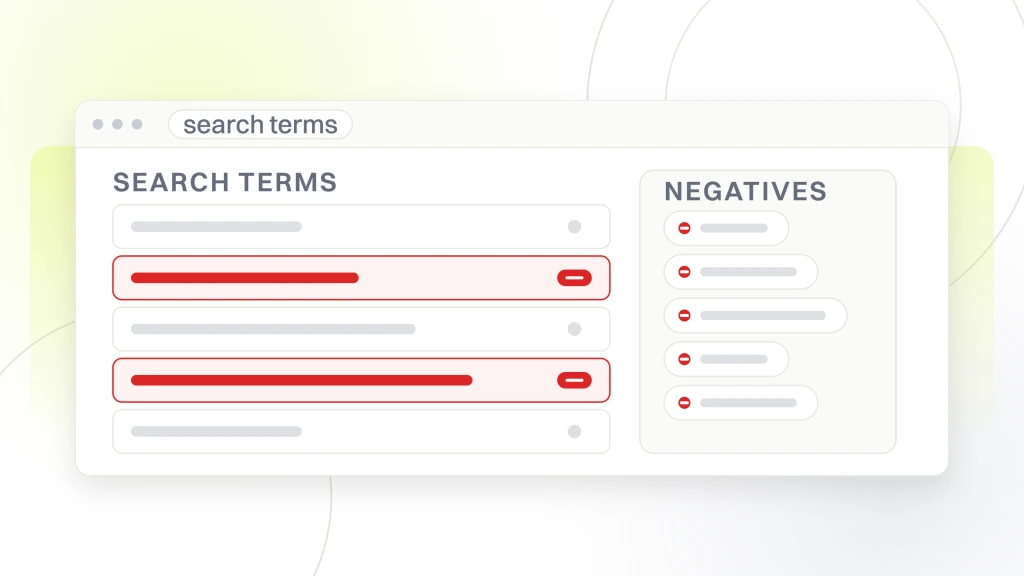
Negative keyword hygiene is the least glamorous part of paid work and the highest-impact. Every $1 of wasted spend on an irrelevant query is $1 that could compound in a working segment. Review the search terms report weekly for the first quarter of any new campaign, and biweekly after that. Add negatives across the 3 tiers as they surface. The list looks the same at almost every SaaS account we work with. The starter list below covers the most common categories of waste.
| Negative category | Sample terms | Why it drains spend |
|---|---|---|
| Job seekers | salary, jobs, career, resume, hiring | Consumes click budget with zero commercial intent |
| Free-only intent | free, download, crack, torrent | Attracts non-paying users who never activate |
| Learning intent | tutorial, course, learn, how does, what is | Top-of-funnel research, not buying intent |
| Consumer products | consumer, personal, app store, iOS, Android | Wrong buyer for a B2B SaaS |
| Support intent | login, support, help, contact, phone number | Existing clients, not new demand |
| Competitor employees | competitor careers, competitor employee reviews | Recruiters and job seekers, not buyers |
Search terms report workflow
The search terms report is the weekly hunting ground for negative candidates. Sort by cost descending, look at any term that spent more than $30 in the week without a conversion, and add it as a negative if the intent is clearly off. Sort by impressions descending to catch the low-cost high-volume queries that dilute quality score. Sort by conversions and copy the winners into new exact-match ad groups. The workflow takes 45 minutes per campaign per week and grows efficiency 8 to 15% per quarter. Compound that quarterly and it is one of the highest-impact habits on the account.
Match-type discipline for negatives
Negative keyword match types matter as much as the terms themselves. Broad match negatives block variations. Phrase match negatives block specific word orderings. Exact match negatives block only the specific term. Use broad match negatives for universal blocks like “free” or “salary”. Use phrase match for common irrelevant phrases like “how to build”. Use exact match sparingly, mostly for close-variant terms you want to segment into their own ad group rather than block entirely. Wrong match-type choices cause negatives to over-block or under-block, and both patterns waste spend or block conversions.
Best PPC strategies for SaaS software companies
The best ppc strategies for saas software companies share 5 moves. LTV-tied smart bidding on Google Ads. Account-based LinkedIn Ads on the target account list. Comparison-page landing pages for competitor terms. Server-side conversion tracking that fires paid events. And weekly search-term-report hygiene. Miss any one and the paid channel underperforms.
The 5 moves compound. LTV-tied bidding needs server-side conversion tracking to feed real revenue values back to the platform. Account-based LinkedIn ads need clean firmographic segmentation and matched-audience discipline. Comparison landing pages need engineering support to build one page per top-10 competitor. Search-term hygiene needs a weekly cadence with a documented log so the negatives compound across quarters. Any team that promises the 5 moves without the operational cadence to deliver them is selling slides. Ask about the weekly cadence during the intro call.
LTV-tied smart bidding on Google Ads
LTV-tied smart bidding uses value-based conversion tracking on Google Ads, where each paid conversion carries a dollar value tied to expected LTV cohort. The algorithm then bids to maximize total value, not conversion count. Setup requires offline conversion imports from the CRM back to Google Ads, matched by GCLID. The complexity is real. The payoff is that Google Ads starts spending more on the keywords that produce sticky clients and less on the keywords that produce churn-prone signups. Most SaaS accounts see 15 to 30% CAC (customer acquisition cost) improvement inside 90 days of LTV-tied bidding going live.
Account-based LinkedIn for enterprise motion
Account-based LinkedIn Ads target a named list of 400 to 1,500 accounts with account-specific creative sequenced by funnel stage. Awareness ads run first, thought leadership second, product ads third, retargeting fourth. The whole sequence takes 8 to 14 weeks to run through one account. Cost per demo from ABM LinkedIn runs $220 to $650 depending on ICP and geography. The trade is high cost per lead against very high lead quality, since the audience is the sales team’s target list. Enterprise SaaS with $50k plus ACV usually finds ABM LinkedIn the highest-ROI paid channel. Below $20k ACV, the math rarely works.
Automation Anywhere as the pattern for CPL restructure
Automation Anywhere is the pattern we reference most often for a SaaS PPC restructure. The global RPA (robotic process automation) leader came to Redefine Web paying $1,936 per lead across campaigns chasing 3 conflicting KPIs at once, with a weak contact form as the primary conversion. We ran an audit-led restructure that split campaigns by goal, rebuilt landing pages with pain-point copy, introduced a free-trial funnel to compete against analyst reports and whitepapers, and shifted bid strategy from rank pursuit to cost-efficiency. Cost per lead dropped 97% to $63. Customer acquisition scaled 100x, from 150 monthly to nearly 8,000 monthly leads. Ad impressions grew 300% across global markets. The pattern is the same shape as the framework in this guide, applied at enterprise SaaS scale.
Most effective PPC strategies for SaaS campaigns 2025
Most effective ppc strategies for saas campaigns 2025 pull in 2 directions at once. Tracking is getting harder, since browser signals keep degrading, so server-side conversion setup has moved from nice-to-have to table stakes. And intent search is saturating, so paid social carries more of the top-of-funnel weight. SaaS accounts that invest in both this year will hold budget efficiency into 2027. Accounts that skip either will watch cost per demo rise 20 to 40% and competitors pull ahead.
The 2 shifts change what the paid channel looks like for a growth-stage SaaS. Server-side tracking through GTM server-side or a dedicated CAPI setup on Meta and LinkedIn recovers 20 to 45% of conversions that browser tracking loses to Safari ITP, ad blockers, and iOS 17 privacy changes. Category education through paid social ads that link to long-form content earns the top-of-funnel awareness that used to come free from organic. Both are operationally heavy. Both are worth the investment. Founders who skip either lose to competitors who invest in them first.
Server-side tracking as the default
Server-side conversion tracking on Google Ads, LinkedIn Ads, and Meta works by firing conversion events from your server to the platform APIs, bypassing browser tracking entirely. Setup requires GTM server-side or an equivalent server-side tag manager, plus first-party cookie IDs for matching. The complexity is real. The payoff is 20 to 45% more conversions attributed to paid campaigns, and that flows into better bid automation and cleaner reporting. Most SaaS accounts running $30k plus monthly paid spend should be on server-side by end of 2026. Founders still relying on browser-only tracking are already losing to more mature competitors.
Paid social for category education and effective remarketing strategies saas ppc campaigns
Paid social ads that link to long-form content on your blog earn awareness at a fraction of the cost of category search terms. The play is to write a genuinely useful piece of content, run it as a paid post on LinkedIn or Meta, and let engaged readers self-select into your retargeting pool. Cost per site visit runs $1.20 to $4.80. Cost per retargeting-qualified user runs $2.50 to $9.00. That pool then converts through pricing-page retargeting and comparison-page ads at higher rates than cold traffic. Content-driven paid social is a slow build. It compounds well after month 3.
SaaS PPC tips from live account audits
Every saas ppc tips list on the internet looks the same. The tips below come from the 6 most common gaps we find in a real account audit, ranked by revenue impact, not by novelty. Founders already know 2 or 3 of them. The gap is almost always operational cadence, not knowledge. Running these 6 every week is what turns a paid channel from a slide deck into a compounding revenue line.
The tips below are the ones we surface at almost every account audit. Founders often already know 2 or 3 of them, and the operational cadence to execute all 6 every week is the gap. Reading about the workflow and running the workflow are different problems. If your team runs 4 or 5 of the 6, the paid channel probably performs well already. If your team runs 1 or 2, the paid channel is leaving 40 to 70% of its potential on the table.
- Fire the paid conversion event, not the signup event, back to the ad platforms
- Segment remarketing audiences by page visited and behavior, not by one blanket list
- Run brand as a separate campaign with tight match types and its own budget
- Build one comparison landing page per top-10 competitor term
- Add 200 or more negatives inside the first 30 days from search-term data
- Review the search-terms report weekly for the first quarter and biweekly after
The trial-to-paid conversion event
The trial-to-paid conversion event is the single event that decides whether Google Ads bid automation works or fails on a SaaS account. If Google Ads only sees signup events, it bids to maximize signups. If Google Ads sees paid events with revenue values, it bids to maximize revenue. The gap between those 2 optimization directions is 15 to 40% of paid channel efficiency. Setting up the paid event requires offline conversion imports from CRM back to Google Ads. The engineering cost is a few weeks. The payoff runs for the life of the paid channel.
Comparison landing pages as a compounding asset
Comparison landing pages built around “YourProduct vs Competitor” queries do 2 jobs. They convert paid traffic on comparison keywords at 40 to 60% higher rates than generic pages. And they rank organically for the same terms within 4 to 8 months of launch. That compound effect means the engineering cost of building 10 to 20 comparison pages pays back twice, first through paid conversions and second through organic capture. Almost every SaaS we audit has zero to 2 comparison landing pages when they should have 10 to 20. Build the pages. The payback is boring and reliable.
90-day rollout for a fresh saas ppc strategy
Ninety days is enough time to move a saas ppc strategy from audit to compounding, if the sequence is right. Weeks 1 through 4 fix the foundation. Weeks 5 through 8 rebuild the campaigns and the landing pages. Weeks 9 through 12 tune the bidding, layer remarketing, and hand the numbers back to finance. Skip a phase, or run them in parallel too aggressively, and Smart Bidding never gets the clean signal it needs to learn.
The rollout is deliberately slow at the start. Foundation work like conversion tracking and landing page builds pay dividends across every subsequent optimization. Baseline data collection with manual bidding at low cost per click surfaces the intent bands that convert. Only at day 60 does the account earn the right to smart bidding, and only at day 90 does it earn the right to aggressive scaling. Founders who push scale in month one usually burn 40 to 60% of their budget before the account has enough data to bid intelligently. Patience early pays back throughout the engagement.
Days 1 to 30 foundation phase
The foundation phase covers server-side conversion tracking setup, keyword research across the 4 intent bands, negative keyword list build to 200 plus terms, landing page builds for the top intent buckets, and initial campaign launch on manual CPC or maximize clicks. The goal is to collect 30 to 50 conversion events per active campaign before enabling smart bidding. Most SaaS accounts at $20k to $40k monthly spend hit that data density in weeks 3 to 5. Below $10k monthly spend, extend the foundation phase to 45 days.
Days 61 to 90 automation phase
The automation phase enables target CPA or target ROAS bidding on campaigns with enough conversion data, layers in customer match audiences for expansion, launches ABM LinkedIn on the target account list, and pushes remarketing across 3 audience segments. Reporting cadence moves from daily to weekly working sessions with the growth lead. By day 90 the account should show a clean payback trend, sourced MRR by campaign in the dashboard, and a documented weekly optimization log. That is the shape of a paid channel that has earned the right to scale to the next budget band.
Picking a partner to run your saas ppc strategy
Picking a partner to run a saas ppc strategy is a spend decision, not an agency decision. The wrong partner burns a quarter of runway before the reporting is honest enough to catch it. The right partner rebuilds tracking, campaigns, and landing pages in the first 30 days and starts sending clean pipeline numbers to finance by day 60. The questions below are the ones we ask founders to put on every discovery call, ours included.
Vendor selection for a SaaS PPC engagement usually goes wrong in the same 3 ways. The agency shows aggregated case studies with no named client. The pricing arrives as one flat number with no scope backing it. And the conversation stays in slide territory instead of moving to live dashboards. Any of the 3 signals a vendor rather than a partner. For a longer walk through the shortlist filters, see our companion post on the best SaaS PPC agencies in 2025. Redefine Web PPC retainers start at $999, $1,499, and $2,499 per month, with enterprise engagements starting at $4,500 per month. Ad spend is billed separately. When you are ready to talk about your specific saas ppc strategy, our SaaS PPC services engagement covers exactly the workflow described above.
Live dashboard demo as the first test
The live dashboard demo separates the specialists from the generalists in the first 15 minutes. A specialist screen-shares a live client dashboard with sourced MRR by campaign, LTV cohort curves, and payback period. A generalist explains what MRR is and offers to build a report inside 90 days. The gap between those 2 answers is the gap between a compound-return engagement and a wasted year. Ask the question early. The answer tells you whether the rest of the conversation is worth having.
Named operator with SaaS experience
The named operator on your account should have at least 3 years of SaaS PPC experience, ideally in your buyer motion. Ask for the name, the tenure at the agency, and prior accounts. If the answer is vague or gets deflected to the account manager, the agency is staffing your account against whoever has bandwidth. That is a slow-motion problem for a growth-stage SaaS. A named operator with 18 months at the agency and 3 plus years of SaaS PPC experience is the shape you want. Anything less and you are paying for a learning curve on your own budget.
The questions below cover what founders ask on discovery calls once they have a working plan sketched in a doc and want to pressure-test the pieces. If your question is not here, our SaaS marketing agency team walks it live on a 30-minute call.
For deeper reading, the Google Ads bidding strategy documentation covers the specifics of value-based bidding. Our companion post on how to choose a SaaS PPC agency walks the interview process step by step.
A working saas ppc strategy is a compounding asset when it is built like one. Tracking that reports the truth. Campaigns split by intent, not by convenience. Landing pages that keep the ad promise. Remarketing loops that pull the 92% back into demos. Six negative-keyword categories filtering the search-terms report every Friday. Ninety days to move from audit to clean pipeline, another 90 to hit efficient scale. The founders who win paid in SaaS treat the account like a product. Weekly release cadence, honest metrics, and a bias to fix rather than defend.