A real saas ppc case study looks nothing like the case study slide in a pitch deck. Real ones show the messy starting state, the specific operational moves, the numbers that moved, and the numbers that stayed flat. This guide walks through seven B2B SaaS clients we ran the paid channel for at Redefine Web (Automation Anywhere, Rocket Software, Rapyd Financial Network, Scannable, Simply.Coach, Camu Digital Campus, and Custimy), the average PPC conversion rate ranges for SaaS accounts, the metrics that carry weight for SaaS marketing success, and the measurement stack that separates real proof from spun narratives.
You’re probably reading this because a proposal just landed with a case study slide and you want to know if the numbers hold up. Or you’re running your own paid channel and want benchmarks to gauge whether your CPL and conversion rate are decent. Either way, the specific walk-throughs, average conversion rate bands, key metric definitions, and measurement stack details below will give you a working reference for what real SaaS PPC performance looks like in 2026.
Quick reference. Automation Anywhere cut cost per lead 97% from $1,936 to $63. Rocket Software drove +300% activation rate. Rapyd Financial Network tripled inbound leads and added £1.8m in pipeline. Scannable pulled 450x more webinar leads at 92% lower CPL. Simply.Coach hit +80% organic and +120% paid leads in 48 days. Camu Digital Campus lifted qualified leads 70% at 28% lower CPA. Custimy ranked for 500+ page-one keywords with 25,000 monthly visits.
A real saas ppc case study walk-through, Automation Anywhere
Four elements separate a real saas ppc case study from a slide-deck version. The specific starting state with numbers. The operational moves the agency ran. The numbers that moved and by how much. And the numbers that stayed flat or moved wrong. Case studies that skip any of the four are marketing collateral, not case studies.
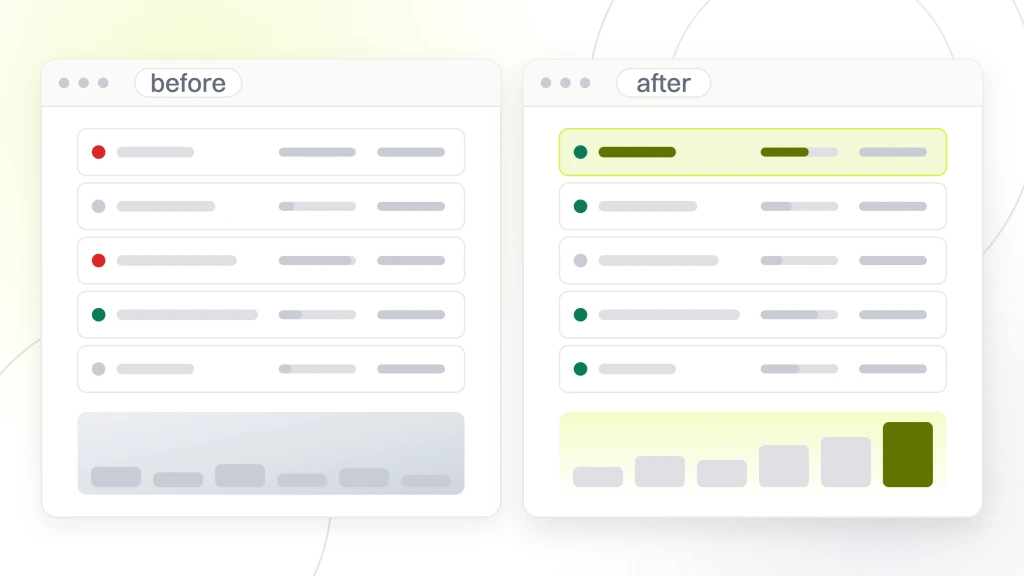
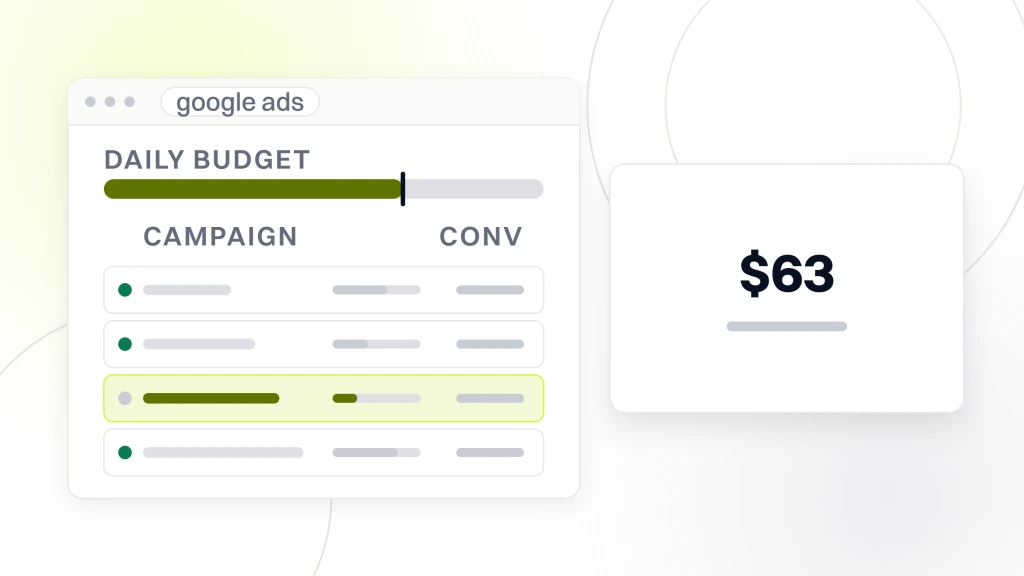
The Automation Anywhere restructure is the walk-through we point most B2B SaaS prospects to. Automation Anywhere is a global leader in Robotic Process Automation serving 2,800+ companies and 1,600+ enterprise brands. The account came to Redefine Web paying $1,936 per lead. Campaigns were chasing three conflicting KPIs at once, impression share, lead volume, and awareness. Valuable content existed but wasn’t connected to the funnel. The main call to action was a contact form, which was weak compared to competitor free-trial funnels and analyst report gates. Global campaigns had no regional segmentation. The situation was expensive and directionless.
The operational moves in the Automation Anywhere case
We ran a structured multi-phase restructure. Phase one was a strategy audit that separated campaigns by objective, so awareness, impressions, and lead-gen each had a clean KPI. Phase two was a content audit that mapped existing assets to funnel stages, so high-intent traffic finally hit pages matching intent. Phase three was a landing page rebuild with persona-driven pain-point messaging replacing feature-heavy copy. Phase four introduced a free-trial funnel to compete against competitor analyst reports and whitepapers. Phase five shifted bid strategy from rank pursuit to cost-efficiency. Phase six built per-region landing pages with locally relevant proof points, because what worked in North America did not work in APAC.
The numbers that moved for Automation Anywhere
Cost per lead dropped 97%, from $1,936 to $63. Customer acquisition scaled 100x, from 150 monthly to nearly 8,000 monthly leads. Ad impressions grew 300% across global markets. Quality score gains from campaign restructure compounded the CPL savings across the engagement. Regional performance improved most dramatically in APAC, where localized landing pages and pain-point copy replaced generic global creative that had never worked. Those are the shape of numbers a real case walk-through surfaces, with the specific operational moves that produced them.
What a good ppc case study for saas surfaces
Marketing collateral versions hide four things a good ppc case study for saas surfaces up front. Named starting metrics before the engagement. Named operator running the account. Specific creative and landing page changes with sample assets. And the honest gaps where the engagement fell short of the initial hypothesis.
Case study depth matters because most published case studies are lightly-cleaned narratives written for pitch decks. Starting metrics are usually rounded or omitted. The operator is anonymized. Creative and landing page changes are described in generalities. Gaps are left out entirely. That leaves the reader with a headline result they can’t connect to any operational reality. When you ask an agency for case studies during a proposal review, ask for the four elements above. Real specialists produce them. Vendors deflect.
Callout. A trustworthy ppc case study for saas names the client, the starting CPL or CAC, the operator, and one thing that broke or missed target. If any of the four is missing, treat it as marketing collateral.
Rocket Software, activation-first launch case
Rocket Software is a SaaS subscription tool that helps site owners grow their subscriber base. When the engagement started, drip campaigns were weak, funnel gaps were wide, and the pricing model wasn’t optimized. Runway was short. We simplified onboarding, added tutorials and video walkthroughs, polished the CMS install to reduce technical drop-off, and built automated ConvertKit drip sequences for retention and re-engagement. The launch itself was a coordinated four-channel push (email, social, paid, and influencer) with a free tier plus premium upgrades supporting growth.
Activation rate lifted 300% inside the first month. Rocket Software hit the first 3,000 customers within week one. Post-launch daily subscribers held at 400+ per day. Those are the shape of numbers a proper launch-motion write-up surfaces, with the specific operational moves that produced them.
Rapyd Financial Network, inbound plus CRM rebuild
Rapyd Financial Network is a niche fintech SaaS offering cloud-based payments and compliance tools for businesses. Growth was limited by an in-house fragmented marketing setup, a self-built WordPress site, basic ad campaigns, and inconsistent publishing. The inbound funnel was generating as few as five leads a month. Salesforce was loosely connected through Zapier, so lead attribution was unclear.
We ran a done-for-you inbound transformation with a custom WordPress redesign, HubSpot CRM implementation replacing the fragmented Salesforce + Zapier setup, Google Ads restructure that cut wasted spend, LinkedIn Ads targeting B2B decision-makers, SEO blogs plus gated PDFs, and site-wide CRO lifting form fills. Inbound leads tripled. £1.8 million in inbound sales pipeline generated. Organic website traffic grew 5x from SEO plus content plus redesign.
Average ppc conversion rate saas accounts hit in 2026
Funnel type drives most of the variance in the average ppc conversion rate saas accounts hit. Free-trial funnels see 4 to 12% click-to-signup conversion. Demo-request funnels see 2 to 6% click-to-demo conversion. Trial-to-paid rates land at 8 to 22% for tight funnels. Signup-to-SQL rates land at 10 to 30% depending on ICP filtering.
Conversion rate benchmarks matter as reference points, not targets. A 4% free-trial signup rate on a top-of-funnel keyword like “project management software” is a normal outcome. The same 4% on a bottom-of-funnel comparison keyword like “Asana vs Monday” is underperforming. Match the benchmark to the keyword intent, not to the aggregated average. Aggregated averages hide the intent variance that drives most of the conversion rate difference across a campaign. Segment benchmarks by intent band before comparing your account against category numbers.
Pro tip. When you compare your account to the average ppc conversion rate saas benchmark, segment by intent band first. Aggregated averages blend top-funnel and bottom-funnel intent and produce a number that fits nothing.
Free-trial funnel conversion benchmarks
Free-trial funnel click-to-signup conversion runs 4 to 12% for well-optimized product-led SaaS. The low end is 4% for top-of-funnel category terms. The high end is 12% for bottom-of-funnel comparison and branded terms. Trial-to-paid conversion runs 8 to 22% for tight funnels with ICP filtering and activation-focused onboarding. Below 8% trial-to-paid usually signals landing page filters that are too loose, letting in wrong-fit signups. Above 22% usually signals a trial that’s too gated, which caps signup volume unnecessarily. The 12 to 18% trial-to-paid band is the sweet spot for most self-serve SaaS.
Demo-request funnel conversion benchmarks
Demo-request funnel click-to-demo conversion runs 2 to 6% for well-optimized enterprise SaaS. Demo-to-SQL rates run 40 to 65% when the demo booking form has decent qualification. SQL-to-closed-won rates run 12 to 24% for mid-market enterprise SaaS with 30 to 90 day sales cycles. The full paid-click-to-closed-won conversion rate on a demo funnel usually lands at 0.1 to 0.4%. That number sounds small until you multiply by ACV. A $40k ACV demo funnel with 0.2% click-to-close and $180 cost per click yields a healthy payback period once the ramp is done.
Simply.Coach, 48-day organic plus paid sprint
Simply.Coach is a secure SaaS platform for executive coaches and coaching businesses (scheduling, billing, progress tracking, reporting). Paid campaigns focused on brand awareness with generic text ads. Conversions were rare, costs high, and ad creatives lacked clarity. We shipped a custom site architecture aligned with user intent, wrote new blogs targeting keyword-gap high-volume queries, restructured paid ads across Google plus LinkedIn plus Facebook with a conversion focus, integrated lead-gen forms that simplified demo requests, and replaced generic text with solution-led single-image conversion creative.
Organic leads grew 80% in 48 days. Paid leads surged 120% in the same 48-day sprint. Time-to-impact clocked at 48 days on a scalable foundation. Simply.Coach’s average ppc conversion rate saas figure moved because keyword-intent alignment and creative rebuild landed at the same time.
Key PPC metrics for saas marketing success
Most agencies don’t report the key ppc metrics for saas marketing success in the right order. Cost per lead is the third most important metric. Trial-to-paid rate, sourced MRR, and CAC payback period sit above it. Any reporting stack that leads with CPL and buries the three metrics above is measuring the wrong things.
The metric hierarchy for SaaS PPC starts with CAC payback period. That number tells the CFO whether the paid channel earns its budget. Below CAC payback sits sourced MRR by campaign, which shows which specific paid activities produced retained revenue. Below sourced MRR sits trial-to-paid rate, which is the operational lever for improving CAC payback. CPL is a leading indicator, useful for tactical optimization but not decisive on channel viability. When you evaluate an agency’s reporting stack, check that all four metrics are visible in the dashboard, ordered by strategic weight rather than by ease of measurement.
Callout. The key ppc metrics for saas marketing success ladder is CAC payback, sourced MRR, trial-to-paid, then CPL. Any dashboard that flips the order is optimizing for the easy metric, not the decisive one.
CAC payback period as the top metric
CAC payback period measures how many months of revenue it takes to earn back the customer acquisition cost. For a SaaS at $100 ARPU with $600 CAC, payback is 6 months. Under 12 months payback is healthy for most SaaS. Under 18 months is acceptable at enterprise pricing. Over 24 months signals a channel that won’t scale profitably. Payback period ties directly to unit economics and cash runway, which is why it belongs at the top of the metric hierarchy. Any agency that can’t report CAC payback period by paid channel is missing the top-of-hierarchy metric.
Sourced MRR by campaign
Sourced MRR by campaign requires CRM integration and revenue attribution. Each campaign’s contribution to monthly recurring revenue is tracked separately. Bid decisions become straightforward. Campaigns that source MRR at healthy payback get more budget. Campaigns that source low or churn-prone MRR get less. That view usually requires a warehouse layer joining ad platform data with CRM opportunity data and billing platform data. Setup takes 4 to 8 weeks. The payoff runs for the life of the paid channel.
Scannable, 450x webinar leads on Meta
Scannable is a SaaS platform for environmental asset management, serving municipalities and nonprofits with GIS-based visualization tools. The niche public-sector audience made scaling hard. Limited budget, hard-to-reach local government officials and nonprofits, an outdated CRM slowing the funnel, and low webinar attendance. Google Ads pulled some intent-driven traffic, but expanding beyond bottom-funnel was tough.
We ran a Meta audience strategy with interest-based targeting for hyper-specific decision-makers, promoted educational webinars to nurture complex prospects, enriched prospect data for sales teams, and iterated on Meta creative weekly for CPL and engagement. Webinar-generated leads grew 450x in six months. Cost per lead dropped 92%. Scannable secured 7 new clients within six months, which is the metric the CFO cared about.
How to measure ppc campaign success saas marketing programs run on
Two capabilities decide how to measure ppc campaign success saas marketing programs run on beyond the ad-platform dashboard. Server-side conversion tracking that fires paid events, not signup events, back to ad platforms. And a warehouse-level reporting layer that joins ad platform data with CRM and billing data. Without both, measurement stays surface-level.
Measurement infrastructure decides what the reporting can show. Browser-only conversion tracking captures 55 to 80% of conversions after Safari ITP, iOS 17 privacy, and ad blockers take their bite. Server-side tracking through GTM server-side or CAPI implementations recovers most of the loss. Without server-side, bid automation flies blind on 20 to 45% of conversions. Warehouse-level reporting adds another layer, joining ad platform data with CRM opportunity data and billing data so sourced MRR becomes visible by campaign. Both capabilities take 6 to 12 weeks to stand up. Both pay back for the life of the paid channel.
Pro tip. If you want to know how to measure ppc campaign success saas marketing honestly, stand up server-side tracking before you touch bid automation. Optimizing to browser-only conversions bakes measurement error into every future decision.
Server-side conversion tracking setup
Server-side conversion tracking setup runs through GTM server-side, a self-hosted Segment instance, or platform-specific CAPI implementations. GTM server-side is the most common shape for SaaS. Setup requires a GCP or AWS environment for the server container, first-party cookie IDs for user matching, and event configuration for the specific paid conversions to fire. Cost runs $200 to $800 monthly for infrastructure. Setup takes 2 to 4 weeks with an experienced engineer. Without server-side, ad platforms optimize toward the browser-visible slice of conversions, which is usually the least valuable slice.
Warehouse-level reporting layer
Warehouse-level reporting joins ad platform data through APIs, CRM opportunity data through Salesforce or HubSpot connectors, and billing data through Stripe or Chargebee connectors. The warehouse layer is usually BigQuery, Snowflake, or Redshift. A Looker Studio or Metabase visualization layer sits on top. Setup takes 4 to 8 weeks with a data engineer. Cost runs $400 to $1,500 monthly for warehouse and BI tools at mid-market scale. That stack is what makes sourced MRR by campaign visible in a dashboard the CMO can pull up at 6pm on a Wednesday.
Camu Digital Campus, LinkedIn plus Google for EdTech SaaS
Camu Digital Campus is a SaaS-based EdTech solution offering a cloud-driven LMS and SIS for K-12 and higher education. Paid campaigns lacked precision. Broad audience targeting limited efficiency. Campaigns missed key decision-makers in academic institutions. LinkedIn ads pulled impressions but little engagement from senior profiles like deans or IT heads. Persona-specific creative was missing.
We restructured Google Ads into branded, competitor, and high-intent keyword campaigns plus Performance Max for reach plus AI-driven bid adjustments plus geo-targeting. LinkedIn built persona-specific audience clusters targeting university and school leadership. Creative shifted to success stories, demos, and video. Qualified lead generation surged 70%. CPA dropped 28%. LinkedIn engagement rose from 0.2% to 1.2%, driving better B2B interactions across the funnel.
Performance benchmark table for saas ppc case study reference
Performance benchmarks for saas ppc case study reference sit in ranges, not points. Real accounts vary by ICP, vertical, and stage. The table below is the shape we see across the 20+ B2B SaaS accounts we’ve run PPC for. Use it as reference for whether your own metrics land inside or outside category norms.
Benchmark ranges below cover self-serve product-led SaaS and enterprise demo-request SaaS separately, because the two motions carry different metric ranges. Cross-referencing benchmarks against your own account is a useful sanity check, not a strategic input. If your account sits outside the range on any metric, investigate why. Sometimes the answer is a broken measurement stack. Sometimes it’s a genuinely differentiated funnel. Both answers are worth surfacing quickly.
| Metric | Self-serve product-led SaaS | Enterprise demo-request SaaS |
|---|---|---|
| Cost per click (search) | $3 to $22 | $8 to $48 |
| Click to signup rate | 4 to 12% | N/A |
| Click to demo rate | N/A | 2 to 6% |
| Cost per signup or demo | $30 to $220 | $220 to $650 |
| Trial-to-paid rate | 8 to 22% | N/A |
| Demo to SQL rate | N/A | 40 to 65% |
| SQL to closed-won rate | N/A | 12 to 24% |
| CAC payback (months) | 4 to 14 | 8 to 22 |
How to use the benchmark ranges
The benchmark ranges above are useful for two moves. First, sanity-check your own metrics against the ranges to catch obvious under-performance or measurement gaps. Second, use the ranges to challenge case study numbers on agency pitch decks. A case study claiming 40% trial-to-paid rate is either misrepresenting the funnel or has a very specific segment that doesn’t generalize. Ask the agency to explain. Their explanation reveals whether the case study is real or spun. If the numbers sit inside the ranges above, the case is probably real. If the numbers sit above the top of the range, ask for the specific segment definition.
Custimy, 500+ page-one keywords for a CDP
Custimy is a customer data platform that unifies e-commerce operations by consolidating data from CMS, email, analytics, customer service, and social. As a SaaS startup, they needed to stand out, attract investors, and convert visitors into users. The initial site lacked the robust backend for API integrations, and SEO presence was thin. We shipped a custom isometric website with modern illustrations, engineered a backend that integrated multiple APIs for real-time B2B SaaS data handling, and ran off-site SEO targeting industry keywords plus link building. Custimy earned first-page rankings on 500+ industry-relevant keywords, organic monthly traffic hit 25,000 visits, and average session duration reached 165 seconds.
Reference-checking a saas ppc case study before signing
The fastest way to reference-check a saas ppc case study before signing is a phone call with the named client and three specific questions. What did the agency do differently between month two and month six. What did they miss or get wrong. What would the client change about the working relationship if hiring again today. Answers surface whether the case study is real or spun.
Reference calls surface the operational reality behind the case study numbers. Coached references answer the three questions with generalities and vague positives. Real references answer with specifics. A specific channel that stopped working in month four, a specific conversion tracking gap that took three weeks to close, a specific decision that would have been made differently in hindsight. The gap between coached and real is easy to hear in the first 90 seconds. If the agency deflects on scheduling the reference call, or if the reference sounds rehearsed, treat the case study as marketing collateral rather than proof.
Pro tip. Book 30 minutes for the reference call and ask the three questions in order. Listen for named months, named channels, and named metric moves. Coached references stay abstract. Real references name things.
The three reference call questions
The three questions cover strategy adjustment, gaps, and relationship friction. Strategy adjustment surfaces whether the agency iterates or runs one playbook forever. Gaps surface blind spots and honesty. Relationship friction surfaces the day-to-day working reality. Ask all three and listen for specificity in the answers. The reference who says “they iterated on the LinkedIn campaigns after we saw CPL drift up in month five” is a real reference. The reference who says “they were always strategic and adaptive” is a coached reference. Book 30 minutes for the call and take notes. The signal shows up in specific words.
How the Automation Anywhere reference plays out
The Automation Anywhere reference call surfaces the specific work behind the $1,936 to $63 CPL drop. The client talks about the campaign restructure sequence, the free-trial offer development timeline, the regional landing page rollout that took eight weeks longer than planned in APAC, and the reporting cadence that pulled operational decisions into weekly working sessions. Those are the specific words a real reference uses. Any agency that won’t put you on the phone with a client of that shape is presenting case studies without proof. Move on to the next agency on the shortlist.
Signals that a saas ppc case study is fabricated or spun
Six signals give away a case write-up that’s fabricated or spun. Round-number metrics. No starting baseline. Unnamed client. Unnamed operator. Screenshot with no context. And zero mention of gaps or missed targets. Any two of the six together is enough to discount the case study.
Case study fabrication ranges from outright invention to heavy narrative spin. Outright invention is rare because it carries legal risk. Heavy spin is common and hard to spot without pattern recognition. The six signals below surface most spin-heavy case studies within 90 seconds of reading. Round numbers like “100% growth” or “cut CPL in half” usually signal a narrative that rounded aggressively. No starting baseline means the improvement can be claimed against any comparison. Unnamed clients can’t be reference-checked. The pattern is easy to spot once you know what to look for.
- Round-number metrics like “100% growth” or “cut CPL in half” without decimals
- No starting baseline metrics named, only the improved endpoint
- Unnamed client, described only as “a Series B SaaS” or similar
- Unnamed operator, no way to reference the actual work performed
- Dashboard screenshot with no context, dates, or account identifier
- Zero mention of gaps, missed targets, or things that stopped working
The gap disclosure test
The gap disclosure test is the strongest single signal for case study authenticity. Real engagements always have gaps, missed hypotheses, and things that stopped working somewhere. A case study with zero mention of any gap is either heavily sanitized for pitch use or genuinely presenting an outlier engagement. Both are worth probing during the intro call. Ask the agency what the case study left out. If they can produce a specific gap or missed target from the engagement, the case study is likely real. If they can’t, treat the case study as marketing content.
The round-number tell
Round-number metrics are a mild tell for spin. Real engagements produce metrics like “CPL dropped 63%” or “trial-to-paid rate reached 14%”. Spun narratives round to “cut CPL in half” or “doubled conversions.” The rounding lets the case study author avoid committing to a specific number. When you see three round-number metrics in one case study, treat it as narrative rather than proof. The Automation Anywhere case has a 97% CPL drop and 100x customer growth, both of which happen to be near round because the math produced those specific values. Real cases sometimes hit near-round numbers by coincidence. Fabricated cases always hit round numbers by design.
Industry benchmarks that ground a saas ppc case study
Category norms are the reference floor when industry benchmarks ground a saas ppc case study. The Google Ads platform documentation gives reference ranges that surface whether a case study number sits inside the band or is genuinely outlier. Read three sources before treating any single benchmark as gospel.
Benchmark reading discipline matters because most industry reports segment across broad categories that hide SaaS-specific variance. A generic B2B software benchmark blends product-led and enterprise motions into one number that fits neither. A vertical-specific benchmark for horizontal SaaS misses the compliance and enterprise buyer dynamics that shape CAC. When you use benchmarks to sanity-check a case study, cross-reference three sources and match the segment definitions. That practice catches most false-positive outlier claims and surfaces the genuinely differentiated cases that deserve deeper attention.
Cross-referencing three benchmark sources
Cross-referencing three benchmark sources on the same metric catches segment mismatches. Google Ads platform data segments by campaign type, which flattens funnel-motion differences. Reading only one source usually anchors you to a segment that doesn’t match your account.
Recency of benchmark data
Recency matters for benchmark reading, because privacy changes, competition shifts, and platform algorithm updates move the ranges each quarter. A 2023 CPC benchmark for SaaS category terms is stale by 15 to 30% versus 2026. A 2024 conversion rate benchmark is closer but still drifts. Read the most recent quarterly reports available. Skip benchmark blog posts older than 18 months unless you’re comparing to a very specific historical case study. Recency discipline keeps the comparison honest.
SaaS PPC pricing and scope for your first engagement
Retainer pricing for a B2B SaaS PPC engagement at Redefine Web runs $999/mo, $1,499/mo, $2,499/mo, and from $4,500/mo, depending on scope and channel count. Ad spend is billed separately and stays in your ad accounts. The $999 tier fits a single-channel test on Google Ads with weekly reporting. The $1,499 tier fits Google plus one secondary channel with landing page CRO. The $2,499 tier fits three channels with server-side conversion tracking and monthly attribution modeling. The from-$4,500 tier fits multi-region programs like the Automation Anywhere shape with per-region landing pages, CAPI, and warehouse-level reporting.
Scope matters more than tier. A $1,499/mo engagement with a tight scope beats a $2,499/mo engagement with an unfocused one. When you scope, name the specific channels, the specific reporting cadence, the specific conversions to optimize toward, and the specific quarterly KPI. Anything left vague at scope-time becomes a delivery gap by month three.
Wrapping up saas ppc case studies and benchmarks
Real saas ppc case study proof requires named metrics, named operators, named clients, and specific gap disclosure. Benchmark ranges give sanity-check context. Reference calls surface operational reality. Use all three together to evaluate the case studies on any pitch deck. The seven Redefine Web B2B SaaS clients above (Automation Anywhere, Rocket Software, Rapyd Financial Network, Scannable, Simply.Coach, Camu Digital Campus, and Custimy) each name a starting baseline, a specific set of operational moves, and the end-state numbers so you can pattern-match against your own account.
If you take one thing from this guide, take the benchmark table and use it to sanity-check case study metrics you see in agency proposals. If you take two, run the three-question reference call on any agency you shortlist. The pattern of answers separates real proof from marketing collateral inside 30 minutes. For the broader agency shortlist filters, see the best SaaS PPC agencies guide. For pricing bands and hidden costs, see SaaS PPC pricing. For the tactics once the agency is retained, see SaaS PPC strategy. When you’re ready to talk about your own SaaS growth model, our SaaS PPC services engagement covers exactly the workflow described in the Automation Anywhere case. For further reading on measurement, Google Ads Help on enhanced conversions covers the server-side setup.