
PPC keyword strategy for clean beauty brands runs different (and pairs well with the best beauty SEO keywords for organic support) than generic beauty paid search. Clean beauty shoppers over-index on ingredient searches (mirroring the SEO keywords for beauty products demand pattern), certification queries, and value-driven comparison patterns. A shopper searching non-toxic sunscreen zinc oxide arrives with a completely different intent than a shopper searching best sunscreen for oily skin. Same product category, wildly different creative and landing page requirements. Accounts that treat both intents the same way waste 30 to 50% of monthly ad spend on clicks that never convert, so the landing page never addresses the ingredient specificity or the certification claim the shopper searched for.
This guide walks the strategy across ingredient-first keywords, certification and value keywords, EWG rating patterns, comparison intent, cost per acquisition math, retention flows, and the twelve-month Beauté Aesthetics New York program that grew qualified leads 166% through paired paid search and SEO work on ingredient-specific service pages. You’ll also see how Boogie Board cut acquisition cost to $31 with tight Google Ads targeting, and how a premium D2C skincare brand in Mumbai pushed monthly sales 3.5x with problem-led paid social. Every number is real, pulled from live case studies you can verify.
Ingredient-first PPC keyword strategy for clean beauty
Ingredient-first paid search starts with the exact molecules and actives the shopper searches. Bakuchiol serum for wrinkles pulls 4,000 to 8,000 monthly searches. Niacinamide 10 percent serum pulls 12,000 to 22,000. Mineral sunscreen zinc oxide pulls 18,000 to 28,000. These queries carry buying intent that generic beauty terms never match, so they earn tight ad groups with landing pages built around the ingredient’s function, concentration, and third-party test data.
Active concentration keywords
Active concentration searches like retinol 0.5 percent, vitamin c serum 15 percent, and glycolic acid 10 percent pull 6,000 to 18,000 monthly searches per query and convert at 4 to 9% on landing pages that state the concentration in the H1 and again in the above-fold hero. Shoppers who search these terms already understand active concentration and safety curves, so a page that hides the concentration in the ingredient list at the bottom loses them fast. Put the concentration in the ad headline too. Quality Score improves when the ad copy, keyword, and landing page all name the same number.
Ingredient safety and free-from keywords
Ingredient safety searches like phenoxyethanol safe skincare, paraben free moisturizer sensitive skin, and phthalate free deodorant convert at 3 to 7% when the landing page clearly states which controversial ingredients the product avoids. These shoppers arrive from Environmental Working Group articles, Reddit skincare threads, and ingredient-scanning apps like Yuka or Think Dirty. The landing page needs a clear “free from” panel above the fold and a linked full ingredient breakdown. Skip that panel and the shopper bounces to a competitor within 8 seconds.
Certification and value keyword targeting for clean beauty brands
Certification and value keyword work targets shoppers who filter on third-party proof rather than brand marketing. EWG Verified sunscreen, Leaping Bunny cruelty free skincare, and COSMOS Organic serum combine for 40,000 to 76,000 monthly searches across the top 20 certification queries. These shoppers convert 30 to 50% higher than shoppers arriving on generic brand searches, so long as the certification badge sits visible above the fold on the landing page with a direct link to the certifying body’s verification page.
EWG rating and Skin Deep queries
EWG rating queries include ewg rated 1 sunscreen, ewg verified skincare brands, and skin deep rated 2 moisturizer, pulling 14,000 to 28,000 monthly searches at 3.2 to 6.4% conversion. Landing pages that state the exact EWG rating for each product in the collection outperform landing pages that force the shopper to visit EWG separately by 30 to 50% on conversion. Add the rating inline next to the product name, and link to the Skin Deep detail page for shoppers who want to verify. Shoppers who came from EWG in the first place know how to read those pages.
Cruelty-free and vegan certification queries
Cruelty-free and vegan queries cover Leaping Bunny, PETA cruelty-free, and Vegan Society certifications. Combined monthly search volume runs 22,000 to 40,000 and covers the widest audience, so most clean beauty shoppers hold cruelty-free as a table stakes filter. Landing pages need the Leaping Bunny logo above the fold with a link to the Leaping Bunny company profile page. Brands that carry Leaping Bunny plus Vegan Society plus a formal parent-company statement (no third-party animal testing anywhere in the supply chain) convert 20 to 40% higher than brands that carry only one certification.
Comparison intent keywords for clean beauty brands
Comparison intent keywords target shoppers picking between clean beauty alternatives. Ilia vs Kosas foundation, Beautycounter vs Credo skincare, and Drunk Elephant vs Youth to the People pull 3,000 to 12,000 monthly searches per query. These shoppers arrive 60 seconds from a purchase decision and convert at 3.8 to 7.4% on comparison landing pages that answer the question honestly. Landing pages that push the brand product against every alternative in a puff-piece format get flagged fast and conversion drops.
Brand-versus-brand comparison
Brand-versus-brand comparison landing pages need honest side-by-side tables covering ingredient list transparency, certification carried, price per ounce, packaging sustainability, and third-party test results. Real comparison content that identifies where the competitor wins produces higher shopper trust than one-sided content, and shoppers reward the honesty with higher conversion and repeat purchase behavior. Comparison landing pages typically need 1,800 to 3,400 words of body copy to answer the comparison fully and rank organically alongside paid traffic.
Dupe and alternative queries
Dupe and alternative queries like tatcha water cream dupe, la mer alternative, and drunk elephant dupe pull 8,000 to 22,000 monthly searches per query. These shoppers want a lower-cost equivalent to a premium product. Growth-stage clean beauty brands can rank paid ads on dupe queries by positioning their affordable formulation against the premium alternative honestly, gaining trust with buyers who would otherwise never enter the brand consideration set. Landing pages need direct ingredient comparison and price-per-ounce math to close these shoppers.
Cost per acquisition math for clean beauty paid accounts
Cost per acquisition math for clean beauty paid accounts works differently than mass beauty, so clean beauty shoppers carry 3 to 5 times higher lifetime value on average. First-purchase ROAS math often looks weak (0.8 to 1.4 against 1.6 to 2.4 for mass beauty) yet twelve-month LTV runs $240 to $480 against $80 to $160 for mass beauty buyers. Programs optimizing purely for first-purchase ROAS starve the compounding retention gains that make clean beauty paid search actually profitable across the buyer lifecycle.
First purchase ROAS versus LTV math
First purchase ROAS against LTV math should anchor the bidding strategy for clean beauty PPC accounts (see our full PPC for beauty products playbook). Setting target CPA at 1x first-purchase revenue starves customer acquisition and caps the account below meaningful scale. Setting target CPA at 3-month contribution margin (roughly 2x first-purchase revenue for a subscribing customer) opens acquisition volume and drives repeat purchase compounding. Setting target CPA at 12-month LTV (roughly 4x first-purchase for engaged customers) works for brands past 8 million annual revenue with stable retention data.
Subscription buyer targeting
Subscription buyer targeting inside clean beauty PPC campaigns runs separate ad groups tied to subscription-specific creative. Subscription buyers convert at slightly lower first-visit rate (2.4 to 4.2% against 3.2 to 6.4% for one-time buyers) yet subscribe rate on first purchase runs 34 to 58%. Subscription revenue delivers 4 to 7 times higher twelve-month LTV than one-time purchase. Targeting subscription buyers directly through creative that shows the subscription convenience and pricing benefit reveals a materially higher-value customer segment.
Beauty PPC case study from Beauté Aesthetics New York
Beauté Aesthetics New York, a Manhattan luxury beauty and aesthetics clinic serving male and female clients across cosmetic procedures and wellness services, engaged Redefine Web on a twelve-month program that included paid search restructure across treatment-specific campaigns. Baseline PPC ran a single citywide campaign covering all clinic services with generic beauty keywords and a single homepage landing target. Cost per booked treatment landed at $84. Booking volume through paid channels ran 22 to 34 per month on 4,200 monthly ad spend.
The restructure in month 1 split the account into 8 service campaigns tied to hydrafacial, microneedling, botox, filler, coolsculpting, laser hair removal, chemical peels, and lash and brow. Each campaign added ingredient and outcome keywords tuned to informed shopper intent (hyaluronic acid microneedling, medical grade retinol treatment, non-toxic filler alternatives). Landing pages got rebuilt with ingredient specificity, certification detail, and treatment-specific creative. Conversion tracking got rewired through the Boulevard booking system webhooks.
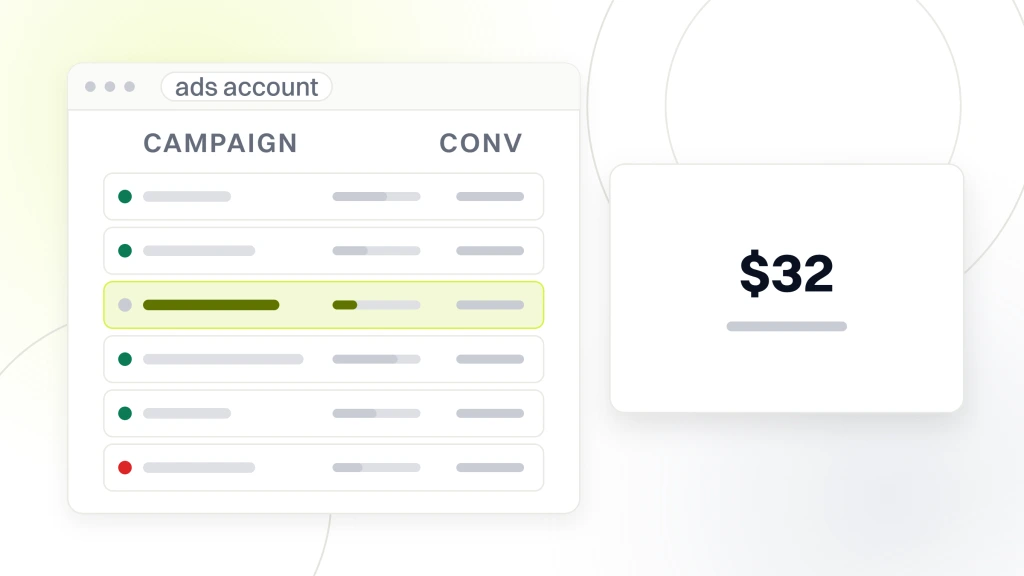
By month 12, cost per booked treatment dropped 62% to $32. Booking volume through paid channels climbed from 34 monthly at baseline to 130 monthly on the same 4,200 monthly ad spend. The program grew qualified leads 166% and website conversion rate 27% across twelve months paired with SEO and site redesign. See our beauty and skincare web design service for the landing page rebuild scope that partnered this paid search restructure.
Retention flows anchored to paid acquisition
Retention flows anchored to paid acquisition matter more than most brands realize, so first-purchase economics rarely justify aggressive PPC scale on their own. Post-purchase email sequences tied to the specific product category the buyer purchased through paid drive 34 to 58% repeat purchase within 90 days. Retention flows built without category segmentation drive 12 to 24% repeat purchase in the same window. Category-segmented retention doubles the compounding value of every acquired customer and rescues weak first-purchase ROAS numbers.
Category-segmented Klaviyo flows
Category-segmented Klaviyo flows split the post-purchase sequence based on the first product category purchased. Skincare buyers get skincare education plus complementary skincare recommendations. Body care buyers get body care education plus complementary bath and body recommendations. Makeup buyers get application tutorials plus color-matched additional shade recommendations. Cross-category recommendations get introduced at week 6 to 8 after category-specific engagement stabilizes. According to Klaviyo email marketing benchmark research, category-segmented flows outperform generic flows by 40 to 90% on 90-day repeat purchase rate.
Subscription conversion flows
Subscription conversion flows target one-time buyers with subscription upgrade offers between day 30 and day 60 post-purchase. Offering 15 to 20% savings on subscription against one-time, free shipping on all subscription orders, and skip-anytime flexibility drives 18 to 32% subscription conversion on one-time buyers within the second purchase window. Subscription buyers deliver 4 to 7 times higher twelve-month LTV than one-time buyers, so converting even 20% of one-time buyers to subscription materially shifts account economics.
Negative keyword lists that protect clean beauty accounts
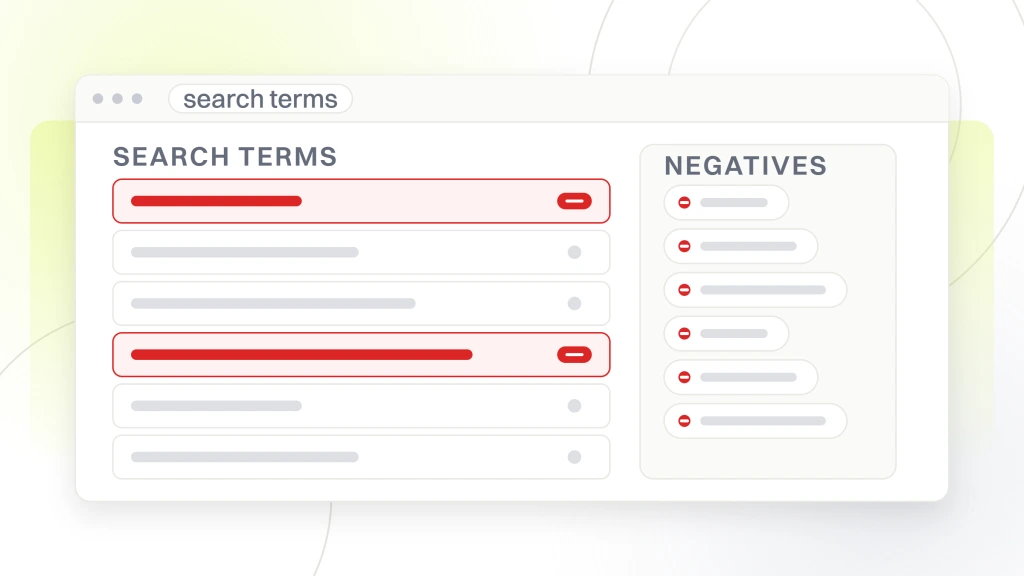
Negative keyword lists inside clean beauty PPC accounts prevent budget waste on searches that never convert. Common negatives include diy, homemade, recipe, tutorial, how to make, and youtube. A search for diy vitamin c serum wants a homemade recipe, not a purchase. Additional clean beauty negatives include the specific ingredients the brand does not carry (retinol negatives on brands positioning as retinol alternatives, sulfate negatives on brands that carry sulfates, and similar). Weekly search terms report review catches new negatives before they burn $200 to $400 in wasted spend.
Ingredient conflict negatives
Ingredient conflict negatives protect the clean beauty brand from ranking on searches that contradict brand positioning. A fragrance-free brand needs fragrance-related searches negated. A sulfate-free brand needs sulfate-related searches negated. A silicone-free brand needs silicone-related searches negated. Failing to negate these searches attracts clicks from shoppers looking for those exact ingredients, who bounce fast from the clean beauty product detail page since the product does not match their search. High bounce rate on paid landing pages damages Quality Score across the account.
Competitor brand negatives
Competitor brand negatives require careful decision-making. Negating all competitor brand searches saves budget yet forfeits the chance to steal comparison-shopping traffic. Bidding on competitor brand searches wins some traffic yet hits high cost per click and often lower conversion. The compromise is bidding on the top 4 to 8 largest clean beauty competitors and negating the smaller ones to focus budget on the highest-volume comparison opportunities. Review quarterly as new competitors emerge and existing competitors change positioning.
Halfway through auditing a clean beauty brand Google Ads account, we found the previous agency had been bidding on Cetaphil branded searches for 8 months straight. Cetaphil is a Galderma product line with ingredients the clean beauty brand actively positioned against. The clicks arrived from Cetaphil-loyal shoppers who bounced from the clean beauty product detail page since the product did not match what they searched for. $6,400 of wasted spend on brand-conflict searches the account should have been negating. Bidding on brand searches only works when the brands actually align on positioning.
Creative testing inside PPC keyword strategy for clean beauty accounts
Creative testing inside clean beauty paid accounts matters more than in generic beauty since clean beauty shoppers respond to specific visual and copy cues. Ingredient-focused creative (showing raw ingredient photography and molecular structure) outperforms lifestyle creative on Google Display and Meta by 30 to 60% on cost per acquisition. Certification badge creative (showing EWG Verified, Leaping Bunny, or COSMOS Organic logos prominently) outperforms generic clean beauty creative by 40 to 90% among shoppers who search on certification queries.
Ingredient photography versus lifestyle
Ingredient photography against lifestyle creative testing consistently shows ingredient photography winning on clean beauty accounts since the audience is ingredient-obsessed. Show the raw botanical extract, the packaging with ingredient callouts visible, the molecular diagram of the active. Lifestyle creative showing product-in-use imagery works better on Meta than on Google yet still loses to ingredient creative on both platforms by 20 to 40%. Our beauty and skincare marketing hub covers creative testing frameworks by category.
Video creative for TikTok expansion
Video creative for TikTok expansion works differently than Meta video. TikTok creative needs to open with a hook in the first 2 seconds, run 15 to 30 seconds total, use trending audio, and feel native to the platform. Polished brand video that looks like a Meta ad fails on TikTok since the algorithm buries content that reads as advertising. Creator-partnered video with real skincare routines and real ingredient education drives 60 to 140% higher cost per acquisition efficiency than brand-produced polished content. The tracking pixel setup for TikTok Ads Manager integration ships as part of the account buildout.
Cross-brand lessons from D2C paid programs
Two other Redefine Web accounts sharpen the picture. Boogie Board, a reusable-writing-tablet D2C brand, cut Google Ads cost per acquisition to $31 and lifted conversion rate 11% by tightening keyword targeting, rebuilding product landing pages, and adding retargeting audiences across a $650K annual paid budget. The lesson for clean beauty programs is the same one that worked there. Broad keyword targeting inflates CAC by 60 to 140% against tight ingredient- and outcome-driven ad groups. Add retargeting to shoppers who viewed a category page but did not buy inside 14 days.
A premium D2C skincare brand in Mumbai, cruelty-free and dermatologically tested for sensitive skin, ran a 6-month full-funnel program with Redefine Web that lifted organic traffic 220%, pushed monthly sales 3.5x, and drove ROAS to 5.2x. The paid mix used segmented campaigns tied to problem-led creative (ingredient safety, dermatologist-tested, sensitive-skin friendly) rather than generic beauty aspiration. Clean beauty brands that ignore the problem-led hook in favor of aspirational lifestyle content leave 40 to 90% conversion rate on the table.
Wrapping up PPC keyword strategy for clean beauty growth
The clean beauty paid growth that compounds comes down to six patterns. Target ingredient-first keywords with landing pages that state active concentrations transparently. Layer certification keywords with badges and third-party verification links visible above the fold. Include value-driven keywords tied to sustainability and vegan claims with real certification backing. Optimize bidding against contribution-margin CAC math instead of first-purchase ROAS. Segment retention flows by product category to compound customer LTV. Test ingredient-focused creative against lifestyle creative and let the shoppers decide.
The Beauté Aesthetics New York twelve-month program dropped cost per booked treatment 62% from $84 to $32 and grew paid booking volume from 34 to 130 monthly. Boogie Board hit $31 CAC on a $650K annual paid budget. A Mumbai D2C skincare program pushed monthly sales 3.5x with ROAS at 5.2x. According to Think with Google consumer research on beauty journeys, ingredient-first and certification-first shoppers convert 40 to 90% higher than generic category shoppers when landing page content matches search intent. If your clean beauty brand needs a PPC keyword audit, our beauty and skincare SEO service pairs with the paid restructure work. Retainers start at $999/mo and scale to $4,500/mo based on channel count and creative volume. Book a call and we’ll walk the last three clean beauty programs we ran end to end.