
White label PPC management services let one agency resell Google Ads, Microsoft Ads, and Meta campaign work under a partner agency’s brand, so the partner keeps client-facing ownership while the reseller runs the account inside a shared workspace. The scope covers campaign build, weekly optimization, reporting under the partner’s logo, and, in most contracts, a Slack or Teams channel where the reseller answers within 4 business hours. Partner agencies use white label PPC management services to expand paid media capacity without hiring an in-house specialist at $85,000 to $130,000 a year plus benefits.
Real numbers frame the math. A boutique web design agency paying a white label PPC management partner $999, $1,499, $2,499, or from $4,500 per month per client clears 30 to 60% gross margin on the resell to the end client. That margin funds the account management overhead, keeps the partner focused on design work, and gives clients paid media without the partner ever running a search term report. Ad spend is billed separately from the retainer. Boogie Board and dozens of ecommerce brands live inside partner-agency wrappers we run today across three continents.
Boogie Board proof point on white label PPC management services
Boogie Board runs a reusable writing tablet brand across ecommerce channels. The partner agency handling their brand strategy needed paid media capacity across Google Search, Meta Ads, and LinkedIn without hiring three specialists in-house. Our team took the white-label scope covering Google Ads and LinkedIn while a separate Amazon PPC vendor handled marketplace campaigns under the same partner brand.
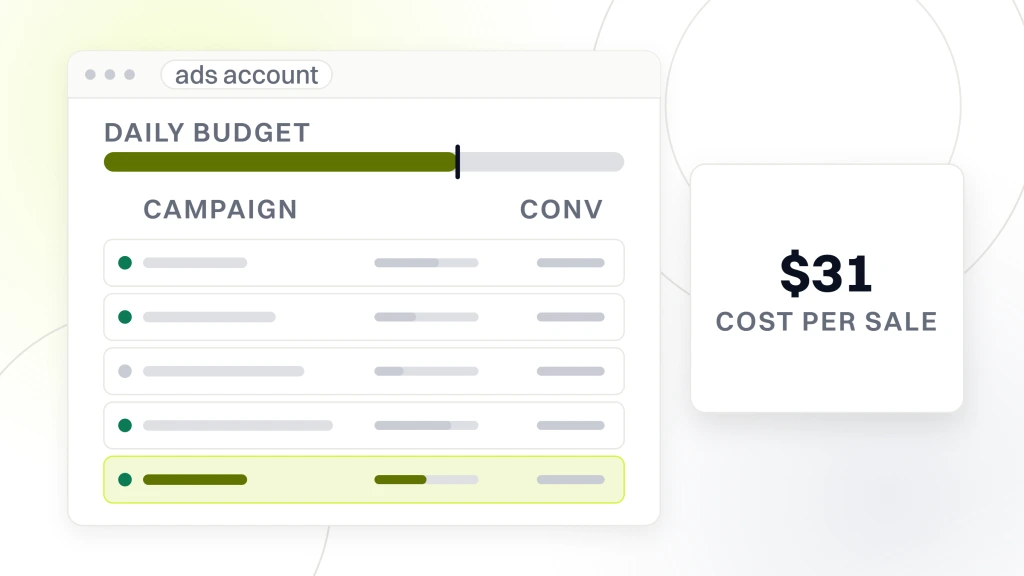
Across the engagement, cost per sale settled at $31, conversion rate climbed 11%, and total managed ad spend hit $650,000. Partner agency margins on the account cleared 55% gross, with the partner spending roughly 90 minutes per week on client-facing communication and zero time on the account itself. The partner agency signed 3 more white-label accounts within 6 months, referencing Boogie Board as the proof point.
The two changes that carried the account
Change one was campaign structure. The prior in-house build blended catalog, hero product, and remarketing into two campaigns. Our team split it into 8 campaigns by product line plus one dedicated brand campaign. Change two was Meta remarketing pool depth. The prior setup had one 7-day remarketing pool. Our team built 5 remarketing pools at 3, 7, 14, 30, and 90-day intervals, with different creative and offers at each. Those two changes drove most of the drop to $31 cost per sale and the 11% conversion gain on the direct-to-consumer catalog.
Contract terms inside white label PPC management deals
Every white label PPC management deal turns on the contract terms more than the retainer number. Term length, non-solicitation, MCC ownership, cancellation, and IP ownership on ad copy all decide whether the arrangement survives 12 months. Partners who negotiate hard on these clauses avoid the disputes that kill 30% of white-label arrangements inside the first year.
Non-solicitation and non-compete clauses
Non-solicitation prevents the reseller from approaching the end client for direct work during the engagement or for 24 months after. Non-compete restricts the reseller from serving direct competitors of the partner in the same metro. Both clauses are non-negotiable from the partner side. Resellers that push back on either signal they intend to poach eventually. Walk away from any reseller that refuses a 24-month non-solicitation clause. Get the clause in the master services agreement, not the statement of work, so it survives account rotation.
MCC ownership and cancellation rights
MCC ownership sits with the partner agency. The reseller operates under the partner’s MCC or under a partner-owned MCC delegated to the reseller. Never the other way around. Cancellation clauses give the partner 30-day termination rights with account handover included in the fee. Skip either clause and the partner risks losing account access at the exact moment they need to move the client to a new vendor. Contract language should also cover the reseller preserving 90 days of ad copy, campaign settings, and negative keyword lists in a shared drive the partner owns.
Per-account pricing bands
Per-account retainers on white label PPC management services fall into 4 bands. Launch accounts under $2,000 in monthly ad spend run at $999 per account per month, with 4 hours of hands-on time. Growth accounts at $2,000 to $10,000 in spend run at $1,499 per month with 8 hours of work. Scale accounts at $10,000 to $30,000 in spend run at $2,499 per month with 16 hours. Enterprise accounts over $30,000 in spend start from $4,500 per month with a named account owner and weekly calls. Ad spend is always billed separately. Any vendor bundling ad spend into the retainer is hiding margin inside the pass-through.
Tools inside a white label PPC management services workflow
Modern white-label workflows run on 5 core tools. Google Ads Editor for bulk campaign work, CallRail for phone tracking, Looker Studio for partner-branded dashboards, Slack for daily communication, and one project management tool for task routing. Add Optmyzr or Adalysis for advanced ad copy testing on higher-tier accounts. Every tool the reseller uses gets billed through as part of the retainer, never separately.
Bulk work through Google Ads Editor
Google Ads Editor cuts fulfillment time by 60 to 80% versus the web UI on any account with more than 5 campaigns. Bulk keyword adds, bulk negatives, and bulk ad copy edits happen in one session instead of clicking through 40 campaigns. Every reseller running white-label at scale uses Ads Editor as the primary interface. Web UI runs on secondary duties like ad copy previews and audience research.
Partner-branded Looker Studio dashboards
Looker Studio dashboards use the partner’s logo, color palette, and font stack. The dashboard pulls data from Google Ads, Google Analytics, Search Console, and CallRail into a single view the partner sends the end client. Every dashboard carries the partner’s domain in the URL through custom hostname configuration. Skip that step and the URL exposes the reseller’s identity, which breaks the white-label arrangement immediately. Custom hostname configuration takes 30 minutes on day one and prevents 6 months of headaches later.
Call tracking through CallRail
Local service accounts, dental, home services, and legal clients drive 40 to 70% of conversions through phone calls, not form fills. CallRail dynamic number insertion swaps the phone number on the client’s site based on the ad source, so every call ties back to a campaign, ad group, and keyword. Numbers pool at $45 per month on the starter tier, plus $0.05 per call. Reseller runs the tracking; partner sees the calls inside the Looker Studio dashboard. Never let the reseller expose CallRail’s default caller-ID text on outbound calls.
Red flags in white label PPC management proposals
Every white-label pitch reads promising until compared against a second one. The differences show up in operational discipline and contract clauses. Seven red flags catch most shallow pitches before signing.
- Refusal to sign a 24-month non-solicitation clause. That signals intent to poach clients eventually.
- Refusal to work inside the partner’s Slack workspace. That signals sloppy communication discipline.
- Dashboards that carry the reseller’s logo instead of the partner’s. That breaks the entire arrangement.
- Response times over 24 hours during business hours. Paid media accounts move too fast for that.
- Retainer per account under $400 with a promise of full-service work. That budget covers 2 hours per month, not full management.
- No named account owner on the reseller side. Anonymous pods rarely respond in under 24 hours.
- MCC ownership demanded by the reseller instead of the partner. Never sign that clause.
Every partner agency owner eventually gets one tempting pitch. A white-label vendor offering endless Google Ads work for $299 per account per month with no contract, no minimums, and a promise to guarantee 500% return on ad spend inside 90 days. The math says the vendor runs 200 accounts out of a co-working space, the guarantee has a footnote saying “based on Ahrefs traffic estimates,” and the specialist assigned checks the account once every 14 days. Neither of those outcomes ends well for the partner or the end client.
Green flags to look for in a real vendor
A written scope naming Google Ads, LSA, Microsoft Ads, and Meta separately with per-channel pricing. A 24-month non-solicitation clause the vendor signs without negotiation. A sample partner-branded PDF report. A sample Looker Studio dashboard under a partner-owned domain. Named account owners on the vendor side. A 4-hour business-hours response commitment written into the contract. MCC ownership clause siding with the partner. Vendors that show all 7 earn a paid pilot on one account.
First 30 days of white label PPC management services onboarding
The first 30 days of every white-label engagement set the trajectory. Get the setup right and the partner scales to 5 more accounts within two quarters. Get it wrong and the partner unwinds inside 90 days. The pattern below runs across roughly 25 white-label engagements our team has onboarded this year across design agencies, brand strategy shops, and full-service marketing partners.
Days 1 to 14 identity and access setup
Days 1 to 7 cover the identity setup. Partner Slack workspace invite. Partner-branded email alias creation. Looker Studio dashboard template branded to the partner. Partner-owned MCC delegated to the reseller. Days 8 to 14 audit the first account, wire tracking, install CallRail, and write the first white-label report template. Skipping the identity setup is the single most common early failure. Partners then get frustrated when a reseller email accidentally reaches an end client on day 20.
Days 15 to 30 first optimization pass
Days 15 to 21 run the first optimization pass on the account. Negative keyword pruning. Ad copy refresh across all responsive search ads. Landing page conversion review. Days 22 to 30 launch new campaigns where needed, wire offline conversion imports from the partner’s client CRM, and deliver the first partner-branded report. By day 30, the partner should feel confident showing the reseller’s work to the end client as their own.
How to choose a white label PPC management vendor
Choosing a white-label vendor is a 45-day exercise, not a discovery call. Ask 3 vendors for line-item scopes, one sample partner-branded PDF, and a written 30-day onboarding plan. Run a paid pilot on one account with a 90-day termination clause before signing any longer arrangement. Vendors that hide behind gated discovery calls or refuse pilot terms get scratched off the list.
Questions worth asking on the vetting call
Ask 6 questions on the first call. Who is the named account owner on the reseller side by name. What is your reseller’s response time commitment inside the partner Slack channel during business hours. What non-solicitation clause length are you willing to sign. What does your partner-branded reporting deliverable look like. What happens to MCC ownership if the partner terminates. And what pilot terms do you offer on one account before the annual commitment starts. Any vendor that dodges two of those questions gets scratched.
Pilot scope before the annual retainer
Run a paid pilot on one account for 90 days before signing an annual arrangement. Pilot fees run 25 to 40% above the standard per-account price to pay for onboarding overhead. At day 90, the partner reviews numbers with the reseller and either signs a 12-month arrangement covering 3 or more accounts or walks. That structure protects the partner from bad-fit vendors and gives the reseller a real chance to prove operational discipline before the paperwork gets serious.
Reference checks that catch weak vendors
Ask every shortlisted vendor for 3 active partner references, not case studies. Call the partner directly. Ask 4 questions on each call. How fast does the vendor respond in Slack during a live client escalation. How many accounts has the partner grown from with this vendor over the last 12 months. What was the last thing the vendor got wrong, and how did they fix it. Would the partner sign a second contract if the first one ended tomorrow. Vendors that produce polished case studies but resist live reference calls fail the operational discipline test every time.
Channels covered by white label PPC management services
Serious white label PPC management services quote each paid channel separately, not as one bundled retainer. Every channel has its own bidding logic, reporting cadence, and creative demands. Five channels dominate partner-agency scope in 2026.
Google Ads Search and Performance Max
Google Search still drives 55 to 70% of partner-agency PPC revenue. Performance Max campaigns handle catalog-driven ecommerce work at a lower cost per sale than manual shopping campaigns. Any credible white label PPC management vendor runs both, tracks search terms weekly, and prunes irrelevant asset groups every 14 days. Skip either step and Performance Max wastes 20 to 35% of the budget on off-target queries inside 3 months.
Microsoft Ads and LinkedIn
Microsoft Ads runs at 20 to 40% lower cost per click than Google in most B2B verticals, with a similar conversion rate. LinkedIn handles the enterprise B2B side at $8 to $18 per click, tied to job title and company size targeting Google cannot match. White label PPC management services running both add 15 to 25% incremental revenue to accounts that were Google-only before. Neither channel needs a full retainer band. Both bolt onto a Google-anchored account at the Growth tier.
Meta and TikTok Ads
Meta and TikTok handle the top-of-funnel work Google Ads cannot reach. Meta remarketing pools at 3, 7, 14, 30, and 90 days keep cost per acquisition inside target on ecommerce catalogs. TikTok Spark ads drive cold traffic at $0.40 to $1.20 per click on consumer accounts. Partner agencies running white label PPC management across all 5 channels see 30 to 50% more revenue than Google-only setups, at 8 to 12% higher blended cost per sale that the incremental volume covers.
Common questions from partner agencies vetting white-label vendors, drawn from live sales calls and onboarding conversations this year.
Ready to launch white label PPC management services
White label PPC management services are the discipline of one agency reselling paid media operations under a partner agency’s brand, with tight contract terms, disciplined communication routing, and partner-branded reporting. Partner agencies clear 30 to 60% gross margin on the resell while avoiding the $85,000 to $130,000 salary of a full-time paid media specialist. Boogie Board and dozens of ecommerce brands live inside this pattern today, running at $31 cost per sale on $650,000 in managed ad spend.
If the partner agency has 3 or more clients wanting paid media and no in-house specialist earning under 6 figures on paid media alone, professional white label PPC management pays for itself inside two quarters. Ask 3 vendors for line-item scopes. Look for the green flags above. Pick the one that signs a 24-month non-solicitation clause without negotiation and hands over a partner-branded reporting sample on the first call. Redefine Web offers a partner-facing PPC management services package that runs under white-label terms for design and brand agencies, plus a Google-specific Google Ads management services option. Related reading on adjacent scopes and cost bands. What is PPC management, PPC management cost, and how to choose a PPC management company. Book a 20-minute call and our team will walk through 3 white-label engagements we run today for design agencies across brand, ecommerce, and B2B verticals, with real numbers on margin, response times, and renewal rates.