You want white label google ads management that lets your agency sell paid search under your own brand without hiring a full paid team in-house. This guide covers how the model works, what the partner should deliver, the fee ranges you’ll see across the market, and the 12 vetting questions that separate a real specialist shop from a reseller slapping a coordinator on your account and calling it managed. You’ll walk out with a working scope, a fee range, and a checklist for reading the agreement before you sign.
The short version. White label google ads management is a partnership where a specialist paid-media shop runs Google Ads accounts for your agency’s clients under your brand. Partner fees run $400 to $2,500 per client per month depending on ad spend and platform mix. The best signal you found the right partner is how they handle attribution and reporting, not the rate sheet.
What white label google ads management really is
White-label google ads management sits between reselling and building. A specialist paid-media shop runs the account work. Your agency owns the client relationship and the invoice. Your client sees your brand on every report and every email. The specialist stays invisible. Your agency takes a margin on the difference between the partner fee and the price your client pays.
How the model divides the work
The specialist owns campaign setup, keyword strategy, bid management, ad copy testing, conversion tracking, and reporting deliverables. Your agency owns discovery, contracts, client communication, invoicing, retention conversations, and upsell paths. The seam sits at reporting cadence. Your account manager gets a branded report from the partner, then presents it to the client under your logo. Get that seam right and the client never suspects a third party.
Why agencies pick this model
One senior Google Ads specialist costs $95,000 to $140,000 a year before benefits and platform certifications. That salary covers roughly 10 to 15 mid-sized accounts at full utilization. Below that count the hire pays for itself only after you’ve won the accounts. White label google ads management lets you close accounts today and pay per-client, instead of pre-funding a hire that might sit idle for 6 months as your sales team catches up. That’s a real cash-flow win for boutique shops.
Where it stops being white label
In real white label google ads management, some partners quietly email your client from a shared inbox. Others show up on the QBR call under their own name. Not white label. Real white label means the partner never contacts the client directly, never appears on any deliverable, and never touches your invoicing stack. Read the contract for language on client communication first. Two lines of fine print can undo the whole positioning.
White label google ads management for agencies scaling fast
The white label google ads management for agencies model works best when you’re growing faster than you can hire. If your pipeline shows 4 new paid clients this quarter and your internal team can absorb 2 without breaking, the partner takes the overflow. You don’t say no to revenue and you don’t overbook. The model scales sideways instead of forcing a hire before the revenue justifies it.
Agency profiles that fit best
Full-service digital agencies with strong SEO or web design practices are the classic fit. You already sell to the client and Google Ads is a natural cross-sell. White label lets you close the deal today and build an in-house team later, once paid revenue holds for 8 to 12 months at target margin.
Agency sizes where the math works
Boutique agencies with 5-20 employees see the strongest fit for white label google ads management. You’re big enough to sell paid, small enough that a full-time senior hire would break the P&L. Above 50 employees the math flips in-house. Below 5 employees the sales bandwidth to close paid accounts is the constraint, not the delivery. Match spend to the real bottleneck.
When white label stops making sense
Once you’re running 12 to 15 paid clients consistently, the partner margin costs more than an internal specialist. That’s the trigger point to move the work in-house. Some agencies run a hybrid model even at scale, keeping strategic accounts internal and pushing overflow through the partner. Both structures work if you plan the transition.
White label deliverables that actually land with your clients
The deliverables your white label google ads management partner produces become the artifacts your clients see every month. A weak monthly report gets you fired regardless of how strong the campaign work behind it is. Make the deliverables list a signed appendix to the partnership contract, not a vague promise on the intake call. That single move heads off most partnership disputes.
Reporting cadence and format
Bi-weekly reporting is the mid-market minimum. Monthly reporting only flies on accounts under $3,000 in ad spend.
Reports should be white-labeled PDFs or dashboards with your agency logo, your brand colors, and zero mention of the partner. The report should show ad spend, key metrics, conversions, cost per conversion, and a written narrative on what changed and why. Anything less reads as auto-generated.
QBR support and strategy calls
Some partners join QBR calls under your brand. Others prep you with a talking points doc. Both work. Confirm the mode before you promise the client anything. A partner joining calls under your brand needs training on your talking-point tone and your reporting narrative. That prep runs 2 to 4 hours per account per quarter and should be baked into the fee.
Client-facing deliverables checklist
- Monthly or bi-weekly performance report, white-labeled with your logo and colors.
- Written narrative on wins, misses, and next month’s plan (150 to 300 words).
- Ad copy variants with performance data by variant, refreshed every 30 days.
- Landing page recommendations, not full builds if not quoted separately.
- Conversion tracking audit report every quarter, with a written pass or fail.
- QBR support materials or a partner joining the call directly.
- Emergency response window for account issues under 24 hours.
White label google ads management Australia and regional markets
White label google ads management australia looks similar to the US market with a few regional twists. Fees run 10 to 20 percent higher on average, driven by a smaller specialist pool and stronger currency. Time zone coverage matters more too. Sydney and Melbourne agencies serve clients from Perth to Auckland across a 5-hour spread. Partner selection should factor these in before price.
Regional partner options
You can pick between an Australia-based partner and a US or UK partner willing to service the AU market. AU-based partners cost more and read local buying signals better. US or UK partners cost less and often have deeper technical benches, at the cost of overnight response times for account emergencies. Both work if you set expectations clearly with the client on day one.
What to check with any AU partner
Confirm Google Partner status. Ask for AU-specific case studies since campaign behavior differs from US benchmarks on CPC ranges and quality score thresholds. Verify GST handling on invoices. Check that call tracking numbers can be provisioned in the correct state codes if your client needs regional attribution. These small checks catch problems before they become client conversations. See the Google Ads billing documentation for how invoice countries interact with tax fields.
Currency and invoicing details
Partner invoices in AUD if you’re an Australian agency serving AU clients. USD or GBP partners quote in their home currency and pass FX volatility to you. Push for a locked-in exchange rate on annual commitments, or invoice in AUD directly. Small margin details compound fast on a portfolio of 10 or more clients. A 4 percent FX swing on a $250,000 book wipes out $10,000 of margin.
How real agency paid programs perform under a white label partner
In white label google ads management, case study numbers matter more than any pitch deck. Two anonymized Redefine Web engagements show what a specialist paid-media team produces once the fee model, account attention, and reporting cadence line up. These are direct engagements, but the same delivery pattern powers the white label work our team runs for agency partners.
A B2B fintech on a full-funnel paid program
A B2B fintech client ran a fragmented setup with about 5 inbound leads a month. Our team rebuilt the funnel across paid search, LinkedIn, content, and a redesigned site. 12 months in, monthly inbound leads tripled, organic traffic grew 5 times, and pipeline generation crossed £1.8 million. The paid piece paired high-intent search with LinkedIn document ads to CFO job titles inside the target account list.
A premium ecommerce brand on paid media
A premium home decor brand ran heavy discount-led campaigns that were eroding brand positioning. Our team restructured SEO and paid media around intent-driven traffic and premium creative. Ecommerce revenue rose 179 percent. Paid search ROAS climbed to 1,588 percent. Paid social ROAS hit 3,000 percent. Zero discount banners across the program. The point for white label partners is that specialist paid work generates real numbers your agency can put on client reports.
What both accounts prove
Specialist attention beats generalist coverage every time. Your clients get that attention through a direct engagement or through your agency reselling a specialist partner. The outcome is the same. The client sees pipeline movement. Your agency keeps the relationship. The partner earns the fee. Everyone wins on a clean partnership structure.
Contract terms that protect your agency inside a white label deal
The white-label google ads management contract is where most agency-partner relationships live or die. Get 5 clauses right and you’ll never wake up regretting the deal. Miss one and you’ll spend 6 months trying to unwind a bad structure as your clients start asking questions your account manager can’t answer. Read the draft with a lawyer.
The non-solicit clause
Every white label agreement needs a mutual non-solicit clause covering both clients and employees for at least 24 months post-termination. Without it, a partner who learns your client list can approach them directly the moment your contract ends. This is the single most important line item in any white label agreement. Never sign without it. Partner pushback on this line reads as a warning.
Account ownership and access rights
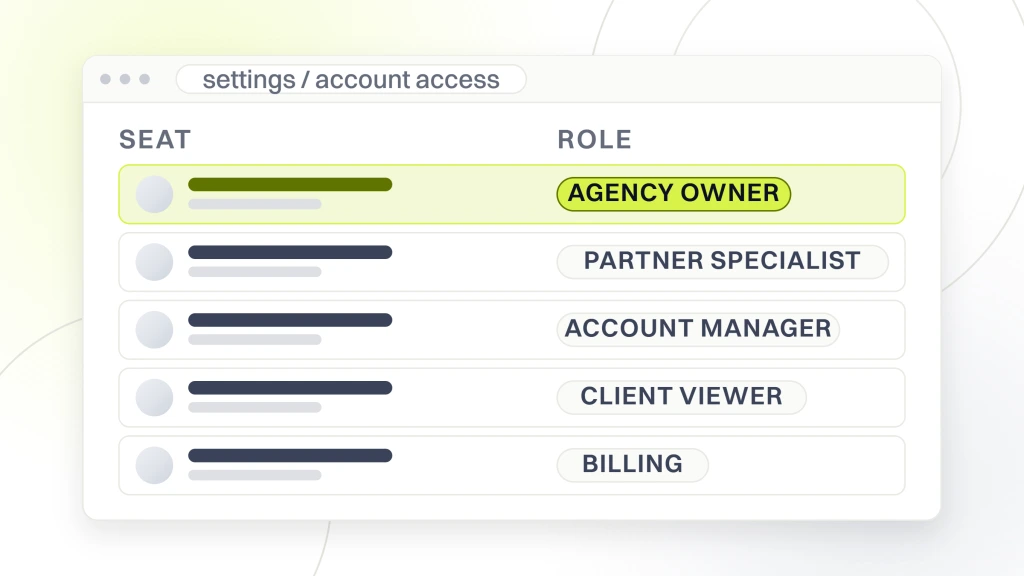
Ad accounts belong to your client or to your agency, never to the partner. The partner works under admin access, not ownership. If the relationship ends, you or your client walks away with the campaign history intact. Any partner requesting account ownership is signaling a lock-in strategy. Walk away from that structure. The paperwork you skip today buys 6 months of pain later.
Termination and transition support
Contracts should include a 60 to 90 day transition support clause when either side terminates. That period covers handing off campaign notes, transferring access, and giving your team enough runway to move the work in-house or to a new partner. Contracts without a transition clause create a cliff on day 30 that hurts your clients more than either agency.
Scaling your white label google ads book without breaking it
Growing a white label google ads management book past 3 or 4 clients requires operational discipline that most agencies underestimate. The partner handles the campaigns. Your agency still owns everything else. Miss the handoffs and clients feel it before you do. See our PPC management services page for the retainer tiers we use on direct engagements. The same operational rhythm applies to white label overflow work.
Standardize the client onboarding flow
Every new client needs the same intake. Goals, budget, target CPA or ROAS, tracking status, landing page audit, and CRM integration status. Send that intake to the partner as a standard package. Skip it and the partner spends the first 2 weeks chasing details your account manager already had. That’s 2 weeks of billed retainer wasted.
Set the reporting rhythm early
Confirm with the client on kickoff exactly when reports arrive, exactly what they include, and exactly who presents them. Match that rhythm on your side with a monthly QBR calendar. Once your account manager knows the partner delivers the report on the third Tuesday, the client review can be booked for the fourth Tuesday every month without a scramble. Predictability drives renewals.
Track partner-side performance
Keep a simple scoreboard of every partner account. CPA trend, quality score trend, response time on requests, and client satisfaction scores. Review it quarterly with your account managers, not once a year. Once a partner starts slipping on 2 or 3 accounts, address it before it hits 5. Partner performance drift is the leading indicator of a client churn wave. Catch the drift in the scoreboard and you save the account before the client hears about the CPA slide from their finance team.
Common white label google ads management mistakes to avoid
Every third agency we talk to about white label google ads management has already tried it once and been burned. The mistakes cluster around 4 repeatable failure modes. Any one of them can burn 6 months of momentum and cost you 2 to 3 clients before you spot the pattern.
Picking a partner on price alone
The cheapest partner produces cheap-looking reports and mediocre campaign work. You’ll pass those artifacts to your clients under your brand. Save $300 per client per month at the partner tier, lose $2,000 per client per year on churn. The math never works. Pick the partner on delivery quality, not on rate.
Not setting a client cap with the partner
Every white label partner has a capacity ceiling. Above that ceiling, quality drops on every account they touch. Ask up front how many accounts each specialist runs and what the total book cap is for your relationship. Once you push past that cap, you’ll feel it in report quality inside 30 days. Get the cap in writing at intake.
Undercharging your clients
Agencies new to white label sometimes match partner fees plus a 20 percent markup and price at $850 for a $700 partner cost. That’s not enough margin to cover your account manager time, the QBR prep, or the retention work. Real pricing takes partner cost, doubles it, and adds a floor of $500 for account management. Under that number, you’re losing money on paid clients yet thinking you’re growing. Our google ads management services tiers start at $999 per month and step up to $1,499, $2,499, and from $4,500 per month. Ad spend is billed separately from the retainer.
Skipping the partner audit call
Some agencies onboard a partner over email and skip the technical audit call. Then they discover in month 3 that the partner tracks conversions via URL destination only, misses form spam filtering, and reports assisted conversions as primary. The audit call takes 90 minutes and catches every gap before clients see it. Skip it once and you never will again.
In-house vs white label google ads management decision framework
The decision to run paid in-house or through a white label google ads management partner is a decision about capital allocation and team focus.
Both models produce quality work at scale. The right pick depends on where your agency sits today and where you want to be in 18 months. Pick based on client count and cash cushion.
Choose white label when
- Fewer than 8 paid clients today and inconsistent inbound flow.
- Paid is a secondary service behind SEO, web, or content.
- You can’t hire a $95,000 specialist without pre-funding the salary for 6 months.
- Client mix spread across verticals with no clear specialization.
- You want to test paid as a service line before committing to it long term.
Choose in-house when
- 10 or more paid clients with consistent new business flow every quarter.
- Paid is a headline service line, not a supporting one.
- Your P&L can absorb 6 to 9 months of hiring runway comfortably.
- Account mix concentrates in verticals where you want to build IP.
- You’ve hit the ceiling of what white label partners can deliver for you.
The hybrid model as a bridge
Many agencies run hybrid setups indefinitely. Keep 6 to 10 strategic accounts in-house where the vertical or the client relationship justifies it. Push overflow through a white label partner. This structure gives you the margin advantage on your best accounts and the flexibility to absorb pipeline surges without breaking the internal team. For B2B pipelines see our B2B PPC agency service page, and for SaaS founders see SaaS PPC services for the retainer structure we use on complex funnels.
Picking the right white label google ads partner for your agency stage
The right white label google ads management partner at 2 paid clients is not the right partner at 15. Match the partner size and specialization to where your paid book is today, not where you want it to be next year. Buying too much partner too early wastes fee. Buying too little wastes results and clients.
Under 5 paid clients, use a boutique partner
At this book size, you need a partner who treats every account like their only account. Boutique specialist shops with 20 to 40 total clients deliver better attention than mid-market partners running 200 accounts through a coordinator pool. Fees run higher per client. Retention holds stronger since the partner knows your accounts by name.
5 to 15 paid clients, mid-market partner works
At this scale, mid-market white label agencies with 50 to 150 client books fit best. You get consistent process, defined SLAs, and a partner big enough to absorb your growth without bottlenecking. Boutique partners start feeling stretched. Enterprise-scale partners feel too rigid for the flexibility you still need.
Above 15 paid clients, consider bringing in-house
At this scale, the partner margin is real money. A specialist hire pays for itself inside 6 months. Some agencies still keep a partner relationship for overflow or for verticals outside their core, but the primary delivery moves internal. The partner conversation becomes about backup capacity, not primary work.
Scale white label google ads management with Redefine Web
White label google ads management is a partnership decision before it is a price decision. Solve the partnership fit first, and the pricing follows. If you want help pressure-testing a partner shortlist, or want to talk about white label google ads through Redefine Web, our team runs full-service paid programs and supports agency partnerships. Start with the google ads management services page. For broader retainer options, see PPC management services. Agencies serving B2B clients should read the B2B PPC agency service page. SaaS-focused paid teams get value from SaaS PPC services. External reference worth reading: Google Ads billing documentation.