
How to choose a PPC management company is a decision most business owners end up making twice. The first time, you pick on price or the strongest sales pitch and regret it inside six months. The second time, you know what to ask, what to walk away from, and what a healthy agency relationship looks like from the inside. This guide gets you to that second-time confidence on the first try. You’ll leave with the questions to ask on the intake call, the red flags to spot in the proposal, the contract terms that protect you, and a 6-step vetting sequence that filters out most wrong-fit vendors before you ever sign.
Here’s the frame that works. Treat the search like a marketing director hire. You wouldn’t bring on a director from a 30-minute call and one reference check. Two meetings, three references, one paid audit. That sequence keeps you out of the bad relationships that dominate the switching stories we hear from new clients every quarter.
What a Good PPC Management Company Actually Does
A good PPC management company runs your paid search and paid social accounts against a documented strategy, iterates weekly, reports monthly, and picks up the phone when the account needs a decision. That’s the baseline. Everything above that line is where the daylight lives between an average vendor and a great one.
Before you can work out how to choose a PPC management company, you need a working definition of the job. The rest of this section spells it out so you can benchmark any prospective vendor against a clear picture instead of a vibe. Match the definition to your finalist list and gaps show up fast.
The core scope of work
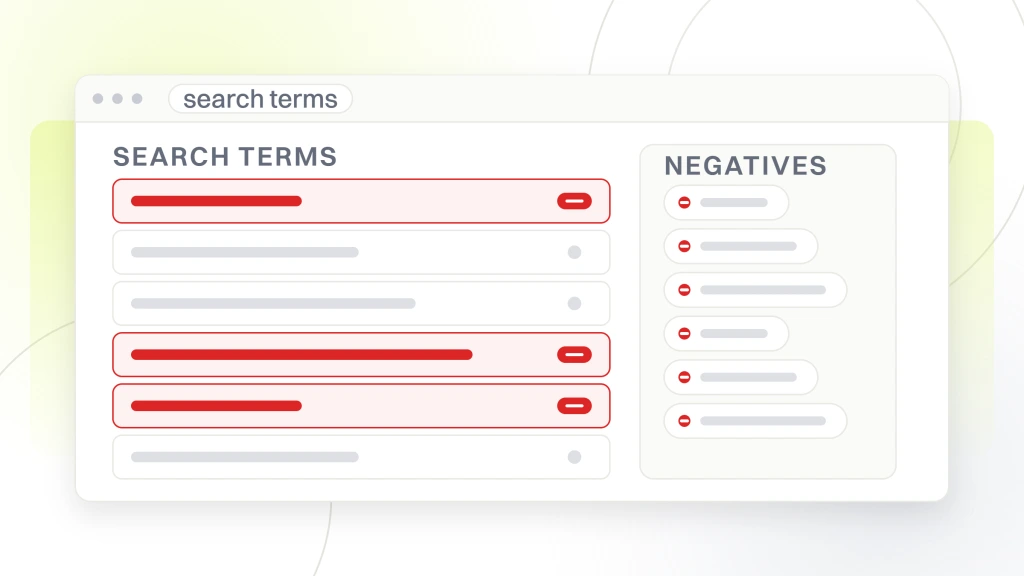
Core scope covers keyword research and expansion, negative keyword hygiene, bid strategy adjustments, ad copy rotation, audience refinement, landing page recommendations, and conversion tracking maintenance. A capable agency does this weekly without asking. If your prospective vendor treats any of the core items as add-ons, they’re pricing to win the deal and hoping you forget what you signed up for by month three.
The advanced work that separates good from great
Great agencies also run structured tests, build custom conversion actions, audit your GA4 (Google Analytics 4) and GTM (Google Tag Manager) setup, iterate landing pages against ad creative, produce short-form video for YouTube and Meta, and cross-reference your paid data with organic and CRM (customer relationship management) data. That work is the difference between an account that maintains and an account that grows. It’s rarely quoted in the standard scope. Ask for it explicitly.
What you’re not paying for
You’re not paying for the ad spend itself. That goes to Google, Meta, Microsoft, and the other platforms as media. The agency retainer covers labor only. Confusing the two produces bad conversations at year-end review. Not included in most standard retainers, landing page builds from scratch, video production, custom dashboards, and major analytics rebuilds. Those are project fees on top of the ongoing retainer.
Questions to Ask PPC Management Agency Prospects
The intake call is where the good agencies show up and the bad ones stumble. Put these questions to ask a PPC management agency on the table before you agree to any proposal. The answers filter more than the pitch does. Take notes on how they answer, not just what they say. Confident, specific, and a little boring is a great sign. Rehearsed and vague is a red flag.
- How many accounts does the PPC lead assigned to me run at once? Above 15 and the PPC lead can’t give you real thinking time.
- Who owns the Google Ads and Meta Business Manager accounts? Answer must be “you do.”
- What does month one look like versus month twelve? If they’re identical, the agency isn’t planning to evolve the account.
- What’s your reporting cadence and format? Weekly Loom plus monthly dashboard beats a static PDF every time.
- How do you handle underperformance? Ask for a specific example from a past client, not a policy statement.
- Can I speak to a current client at a similar size and industry? A yes signals confidence. Deflection signals concern.
- What’s your typical exit clause and notice period? Reasonable is 30 to 60 days after an initial term. Longer starts to feel like a trap.
Questions the sales team can’t fake
Ask to see a live dashboard from a real client with identifying information redacted. Ask what tools they use for keyword research, bid management, and reporting. Ask how they handle GA4 conversion setup versus platform-native conversion tracking. These questions separate the PPC leads from the account managers reading off a deck. If the deck-reader can’t answer, ask to talk to the PPC lead directly on a follow-up call.
Certifications and Partner status worth verifying
Ask for Google Partner or Premier Partner status and Meta Business Partner status, and verify both on the official partner directories yourself. The badges take real spend, retention, and certification volume to earn. Anyone can put a badge on a website. Only agencies with active status will still show up in the public listing. That two-minute check filters more vendors than any question on the call.
Questions to Ask Before Hiring a PPC Management Company
Questions to ask before hiring a PPC management company sit in a different bucket than intake questions. These are contract-and-onboarding questions. Once you’re leaning toward yes on a finalist, put these on the table before the SOW (statement of work) gets signed. The answers shape the first 90 days and set the tone for the whole relationship.
How the first 30 days work
Ask for a written 30-day onboarding plan. Week one should be audit and tracking verification. Week two should be strategy documentation and campaign structure. Week three should be creative and landing page recommendations. Week four should be launches and initial reporting. An agency without a written onboarding is winging it in month one, which is the most important month of the relationship.
Who your primary contact is
Name the PPC lead, the account manager, and the escalation contact in writing before the contract signs. Get email addresses and cell numbers if the account is high-value. When something breaks at 5 PM on Friday, you need to know who to call. If the agency won’t name specific humans, that’s a signal about how personal the service will feel in month four.
What triggers a change order
Every retainer has scope, and every scope has edges. Ask what triggers a change order. Adding a fifth platform? Launching a new geo? Building three new landing pages? Get the change-order triggers documented up front so you’re not surprised in month three when a routine request comes back with a $3,000 quote and a two-week timeline.
How performance disputes get handled
Talk through the disagreement scenario before it happens. If you think ROAS (return on ad spend) should be higher and the agency thinks the tracking is off, what’s the process? Who calls the fourth-party auditor? Is there a mediation clause? These are unglamorous questions. They’re also the ones that decide whether a bad quarter kills the relationship or fixes it.
How to Choose the Best PPC Management Agencies for Your Account
Every year, publications publish lists of the best PPC management agencies. Those lists are useful for shortlist inspiration and useless for selection when you’re picking the best PPC management agencies for your specific business. Working out how to choose the best PPC management agencies for your account starts with knowing your own scope. The best PPC management companies for a national ecommerce brand look nothing like the best fit for a five-location dental group. Rankings sort agencies by size, brand recognition, and awards. You’re picking on fit.
Big-agency versus specialist among the best PPC management companies
Big agencies offer bench depth, cross-vertical benchmarks, and specialists on every platform. They also come with account manager churn, minimum spend requirements, and a slower response cycle. Specialist agencies focus on one or two verticals or platforms. They know your niche cold but scale slower and lean thin on secondary platforms. Match the pick to what your account needs most in the next 12 months.
Boutique versus mid-market
Boutique agencies under 15 people give you close-to-the-founder attention and clean process. They also carry more single-point-of-failure risk if the PPC lead leaves. Mid-market agencies between 20 and 80 people have real bench depth and process. They also carry higher overhead and more layers between you and the person doing the work. Neither is universally better.
Local versus remote
Local agencies used to matter when meetings were in person. Post-2020, remote agencies with strong async communication routinely outperform local ones. Skip the geography filter unless your industry demands on-site work. Weekly Loom videos, shared dashboards, and a monthly Zoom outperform quarterly in-person meetings for most accounts under $50,000 a month in ad spend.
How to Choose a PPC Management Service That Runs SEO
Picking an agency that also runs SEO takes a different question set than picking a single-service shop. The framework for how to choose a PPC management service that bundles SEO overlaps with single-service vetting but adds three integration checks. Integrated agencies charge more and promise more. Some deliver. Some just rebadge two teams that don’t talk to each other. The difference is easy to spot if you ask the right questions on the intake call.
What questions to ask SEO and PPC management company teams together
Ask three questions any integrated agency should answer without hesitation. Who runs the weekly cross-team review? Who owns the blended CAC number in the dashboard? Which shared Slack channel do both leads live in? If the answers involve separate calls, separate reports, and separate account managers who never meet, the integration is a marketing story, not a service model.
Does the SEO team read the PPC data
Ask a direct question. Does the SEO lead read the paid search query reports weekly to find high-converting keywords worth targeting organically? Does the PPC lead read the organic ranking reports monthly to identify pages that don’t need paid spend anymore? If the answer is no on either side, you have two teams with a shared invoice, not an integrated agency.
How the shared dashboard is built
Integrated agencies build a shared dashboard that shows organic and paid together. Total revenue, blended CAC (customer acquisition cost), share of voice, keyword overlap. Ask to see the dashboard from a current integrated client. If they show you two separate dashboards, they don’t run integrated. If they show you one dashboard with commentary attached, that’s the real thing.
Pricing when both services are bundled
Bundled SEO plus PPC pricing typically discounts 10 to 15% versus buying separately. If the discount is bigger, ask what’s being cut. If there’s no discount at all, the agency isn’t truly integrating, they’re just cross-selling. A reasonable bundle for a mid-market account lands between $2,500 and $5,000 a month, both services together, with clear scope per side.
How to Choose a PPC Management Company in 6 Vetting Steps
Here’s the vetting sequence for choosing a PPC agency that consistently filters out the wrong-fit agencies before you sign anything. Six steps over two to three weeks. Skip a step and you’ll trip over the gap later. This is the vetting process we’ve refined by watching where every skipped step burned a client the following year.
- Longlist five to eight agencies. Pull from referrals, industry-specific Slack groups, and portfolio-based searches.
- Screen with a 15-minute intake call. Ask three of the intake questions above. Cut half the list here.
- Request written proposals with itemized scope. Cut anyone whose SOW fits on one page.
- Book a 45-minute strategy session with the finalist two. Meet the PPC lead, not the sales lead.
- Pay for a $1,500 to $3,500 audit or paid discovery. Get the real strategy on paper before you commit.
- Check two active references at the same size and industry. Ask about the worst month of the relationship.
Why the paid audit matters most
The paid audit is the single best filter in the vetting sequence. Agencies who charge for the audit tend to run better ongoing work because they’re not desperate to close. Free audits are a sales tool, not a strategy artifact. The number of times we’ve taken over an account from a free-audit competitor and rebuilt everything they touched in month one is depressingly consistent.
What to do if a shortlist agency fails a step
If an agency clears the intake call but the strategy session lands flat, drop them. If the strategy session was strong but the paid audit came back thin, drop them. Every step in the sequence is a filter. Cutting an agency at step four is cheaper than firing them at month six. That discipline is the whole point of writing down your criteria before you start shortlisting.
Red Flags When Choosing a PPC Management Agency
Some red flags when choosing a PPC management agency show up on the first call. Others hide inside the proposal until month two. Learn to spot both. The pattern behind every red flag is the same. The agency is optimizing for signing you, not for keeping you. Once you can name the tell, you’ll cut a bad-fit vendor in ten minutes instead of six months.
They own the ad accounts, not you
If the proposal says the agency creates and owns your Google Ads and Meta Business Manager accounts under their MCC (My Client Center), walk away. You own the accounts. The agency gets manager access. This one clause is the single biggest lock-in trap in paid media. Firing an agency that owns your accounts means starting over on day one. Reject any structure that gives them the keys.
The proposal is all deck, no numbers
A 30-page proposal with brand logos, agency awards, and stock photos of teams pointing at whiteboards, and one page of vague scope at the back. That’s a sales artifact, not a strategy. A real proposal names the campaigns, the platforms, the reporting cadence, the PPC lead by name, and the deliverables per month. Everything else is padding. Ask for a one-page scope summary and see if they can produce one.
Guaranteed results and unnamed benchmarks
Any agency guaranteeing a specific ROAS, CPA (cost per acquisition), or ranking position is either misleading you or planning to game the metric. Paid media results depend on offer, landing page, product-market fit, and seasonality, none of which the agency controls alone. Confident agencies talk in ranges and directional gains backed by past client data. Nervous agencies invent numbers to close.
Two Client Vetting Stories That Ended Well
Two clients our team at Redefine Web onboarded illustrate what a good vetting process looks like from the buyer side. a home decor DTC brand, a luxury interiors brand, and a specialty retailer, the UK’s largest tile retailer, both switched to us after documented vetting sequences that filtered out four to six other vendors. Both took longer than the incumbent would have preferred. Both produced healthy relationships that have lasted years.
a home decor DTC brand moved off discount-led strategy
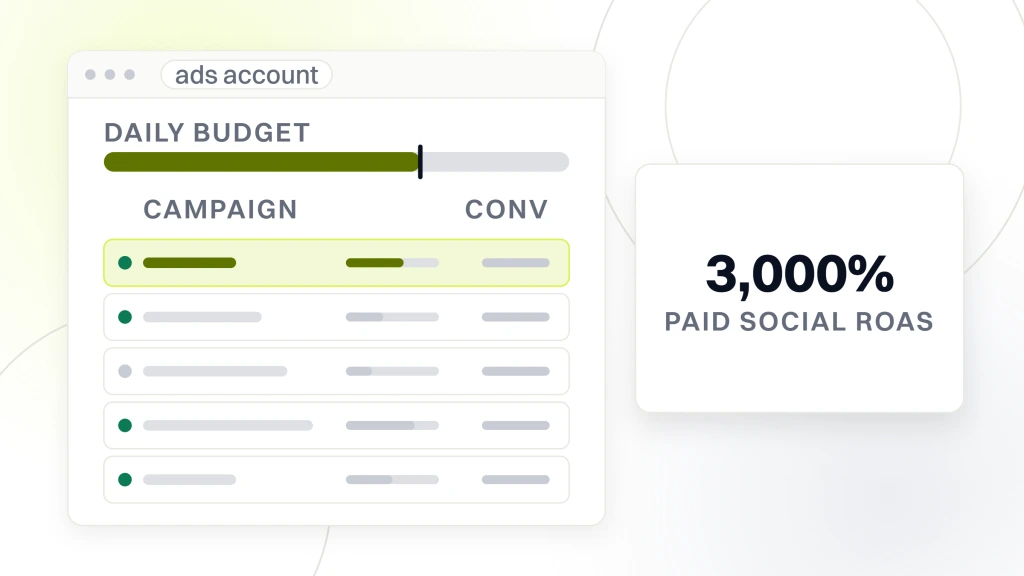
a home decor DTC brand shortlisted five agencies. Their vetting focused on which agency understood luxury positioning versus discount-driven paid media. Four proposals came back leaning into discount codes and Black Friday tactics. Ours proposed premium creative with no discount banner in sight. That single filter sorted the shortlist. The program later produced a 179% revenue increase and 3,000% paid social return on ad spend without a single sale banner running.
a specialty retailer picked on test-and-learn discipline
a specialty retailer ran a formal RFP with six agencies. Their filter was disciplined experimentation. Whoever proposed the cleanest test-and-learn schedule with statistical rigor won the account. Our proposal committed to one structured experiment every two months across cannibalization, dynamic search, and inventory-led activity. That structure delivered 5,465 new visitors, 1.3 million impressions, and 33% unique-visitor market share inside a six-month sprint.
What both stories share
Both clients wrote their own filter before they started shortlisting. a home decor DTC brand knew luxury positioning was non-negotiable. a specialty retailer knew testing discipline was the deliverable. Neither shopped on price. Both hired on fit. That’s the sequence that produces year-long relationships, not the sequence that produces cheap quotes and switching stories six months later.
Mistakes Buyers Make Choosing a PPC Agency
The mistakes buyers make on how to choose a PPC management company are predictable. Every one of them shows up in the intake calls we take from prospects already on their second or third agency. Dodge these four and you’ll avoid most of the pain that pushes people to re-shop within twelve months.
Picking on price alone
The $800 quote is exciting until you realize what $800 buys. Eight hours of real work a month is not enough to run a $10,000 ad budget. You’ll churn out of that arrangement inside six months with worse tracking than you started with. Price is a factor. It’s not the deciding factor.
Believing the case study wall
Case studies show the wins and hide the losses. Every agency has both. Ask about the accounts that didn’t work and why. Agencies who can talk honestly about a churned client have more credibility than agencies whose website reads like a highlight reel. If they claim they’ve never lost an account, they’re either brand new or lying about their track record.
Skipping the reference calls
Reference calls feel awkward and everyone skips them. The clients who take the 20 minutes to run two reference calls learn things the sales meeting hides. Response times, escalation reality, how the agency handled a bad quarter. Nobody puts those in a case study. References tell you the truth.
Signing without a written scope
The SOW you sign is the SOW you get. Verbal promises from the sales call don’t survive the handoff to the account team. Everything you care about, from reporting cadence to ad copy variants per month to landing page hours, has to be in writing. If it’s not in the SOW, assume it’s not included and price accordingly.
What to Look For in a PPC Management Provider on Pricing
What to look for in a PPC management provider on pricing is transparency, not the lowest number. Retainer structure signals how the agency staffs the work. Our own PPC retainers run $999, $1,499, $2,499, and from $4,500 a month depending on scope, platform count, and reporting depth. Ad spend is billed separately and goes straight to Google, Meta, and Microsoft. That structure is common across serious agencies, and it maps to the PPC management software stacks those teams actually run in-house, worth benchmarking against.
What each tier tends to include
Entry tiers around $999 a month usually cover one platform, biweekly optimizations, monthly reporting, and a single point of contact. Growth tiers around $1,499 add creative rotation, landing page recommendations, and weekly check-ins. Mid tiers around $2,499 add multi-platform management, structured testing, and shared dashboards. Enterprise-level engagements starting at $4,500 add strategy leadership, custom analytics, and dedicated account teams. Ask which tier your prospective agency is quoting and what moves the number.
Why percentage-of-spend pricing gets awkward fast
Percentage-of-spend pricing sounds fair on paper. In practice, it aligns the agency to grow your ad budget, not your account efficiency. When your CPA drops and you could pull spend back, the agency loses money by recommending it. Fixed retainers or tiered fees keep the incentives clean. Ask any agency quoting a percentage model how they handle the incentive gap.