
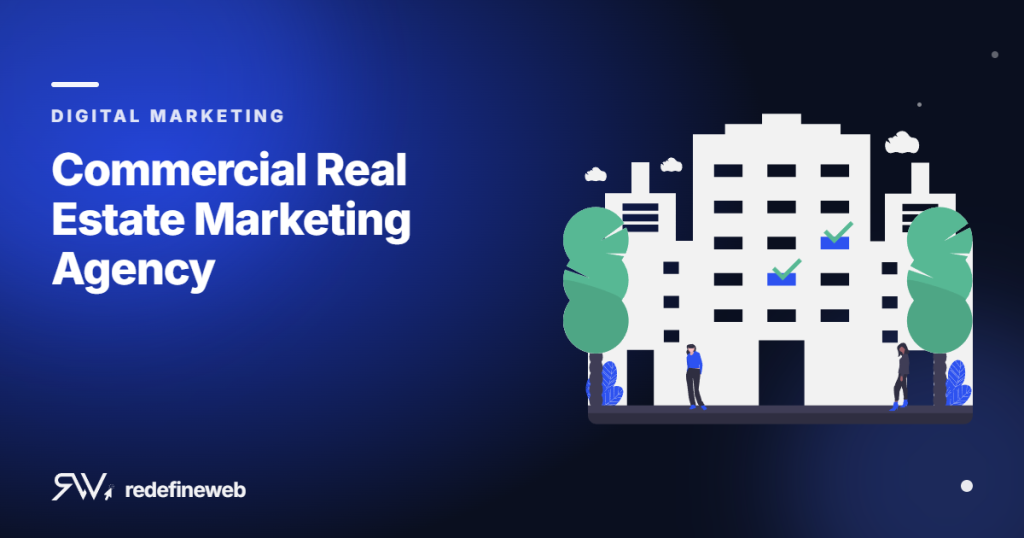
Commercial Real Estate Marketing Agency
How long does commercial real estate marketing take to produce results?
Do commercial real estate brokers need digital marketing?
Yes — increasingly so. Tenants and investors now research markets extensively online before contacting a broker. A commercial real estate firm without a professional website, current market reports, and a visible LinkedIn presence loses credibility before the first conversation. Digital marketing does not replace relationship development in commercial real estate — it amplifies it by ensuring that when prospects research your market, they find you as the authority.
How long does commercial real estate marketing take to produce results?
Paid advertising produces leads within 2 to 4 weeks of campaign launch. Content marketing and SEO take 3 to 6 months for meaningful organic traffic. LinkedIn authority-building produces inbound inquiries over 6 to 9 months of consistent activity. The full value of a commercial real estate marketing program becomes visible at 12 months, when compounding effects from content, relationships, and brand recognition produce a consistent flow of inbound opportunities alongside the immediate returns from paid channels.
Can a marketing agency help fill vacant commercial properties faster?
Yes — specifically through property-specific Google Ads targeting tenant searches for your property type and location, LinkedIn campaigns targeting businesses of the right size and industry in your target geography, and email campaigns to pre-qualified tenant prospect lists. A well-executed property-specific campaign typically reduces time-to-lease by 15 to 30 percent compared to listings-only exposure on LoopNet and CoStar. For residential marketing ideas that translate to commercial, see our guide on 25 real estate marketing ideas that generate leads.
What is the difference between commercial and residential real estate marketing?
Commercial real estate marketing targets B2B decision-makers (CFOs, corporate real estate managers, investors) rather than individual consumers. The sales cycle is 6 to 18 months rather than weeks. Credibility signals matter more than volume — a broker with 3 authoritative submarket reports converts better than one with 30 generic blog posts. LinkedIn and direct outreach outperform Facebook and Instagram for commercial audiences. The content has to be investment-grade quality to appeal to sophisticated decision-makers.
Do commercial real estate brokers need digital marketing?
Yes — increasingly so. Tenants and investors now research markets extensively online before contacting a broker. A commercial real estate firm without a professional website, current market reports, and a visible LinkedIn presence loses credibility before the first conversation. Digital marketing does not replace relationship development in commercial real estate — it amplifies it by ensuring that when prospects research your market, they find you as the authority.
How long does commercial real estate marketing take to produce results?
Paid advertising produces leads within 2 to 4 weeks of campaign launch. Content marketing and SEO take 3 to 6 months for meaningful organic traffic. LinkedIn authority-building produces inbound inquiries over 6 to 9 months of consistent activity. The full value of a commercial real estate marketing program becomes visible at 12 months, when compounding effects from content, relationships, and brand recognition produce a consistent flow of inbound opportunities alongside the immediate returns from paid channels.
Can a marketing agency help fill vacant commercial properties faster?
Yes — specifically through property-specific Google Ads targeting tenant searches for your property type and location, LinkedIn campaigns targeting businesses of the right size and industry in your target geography, and email campaigns to pre-qualified tenant prospect lists. A well-executed property-specific campaign typically reduces time-to-lease by 15 to 30 percent compared to listings-only exposure on LoopNet and CoStar. For residential marketing ideas that translate to commercial, see our guide on 25 real estate marketing ideas that generate leads.
How much does a commercial real estate marketing agency cost?
Commercial real estate marketing agencies typically charge $2,500 to $8,000 per month for a comprehensive program covering digital advertising, content, email, and analytics. Project-based engagements for website development run $8,000 to $30,000 depending on scope. Property-specific marketing campaigns for major listings are often scoped separately. The ROI is substantial: a single closed transaction from a well-executed marketing campaign typically returns 5 to 20 times the monthly marketing cost.
What is the difference between commercial and residential real estate marketing?
Commercial real estate marketing targets B2B decision-makers (CFOs, corporate real estate managers, investors) rather than individual consumers. The sales cycle is 6 to 18 months rather than weeks. Credibility signals matter more than volume — a broker with 3 authoritative submarket reports converts better than one with 30 generic blog posts. LinkedIn and direct outreach outperform Facebook and Instagram for commercial audiences. The content has to be investment-grade quality to appeal to sophisticated decision-makers.
Do commercial real estate brokers need digital marketing?
Yes — increasingly so. Tenants and investors now research markets extensively online before contacting a broker. A commercial real estate firm without a professional website, current market reports, and a visible LinkedIn presence loses credibility before the first conversation. Digital marketing does not replace relationship development in commercial real estate — it amplifies it by ensuring that when prospects research your market, they find you as the authority.
How long does commercial real estate marketing take to produce results?
Paid advertising produces leads within 2 to 4 weeks of campaign launch. Content marketing and SEO take 3 to 6 months for meaningful organic traffic. LinkedIn authority-building produces inbound inquiries over 6 to 9 months of consistent activity. The full value of a commercial real estate marketing program becomes visible at 12 months, when compounding effects from content, relationships, and brand recognition produce a consistent flow of inbound opportunities alongside the immediate returns from paid channels.
Can a marketing agency help fill vacant commercial properties faster?
Yes — specifically through property-specific Google Ads targeting tenant searches for your property type and location, LinkedIn campaigns targeting businesses of the right size and industry in your target geography, and email campaigns to pre-qualified tenant prospect lists. A well-executed property-specific campaign typically reduces time-to-lease by 15 to 30 percent compared to listings-only exposure on LoopNet and CoStar. For residential marketing ideas that translate to commercial, see our guide on 25 real estate marketing ideas that generate leads.
Commercial real estate marketing is not a volume game. One tenant relationship or one investor placement can mean a $50,000 commission or a 7-figure development deal. The agencies that understand this build strategies around precision outreach, credibility signals, and relationship cultivation — not mass traffic and generic lead forms.
This page covers what a commercial real estate marketing agency does, what services matter most for brokers and developers, and how to evaluate whether an agency is genuinely qualified to work in the commercial sector.
What a Commercial Real Estate Marketing Agency Does
A commercial real estate marketing agency builds and executes the strategies that put your properties, your brokerage, or your development firm in front of qualified tenants, investors, and property owners.
The core services include: website development with professional property presentation and submarket reports; digital advertising campaigns targeting tenant and investor prospects; LinkedIn marketing and content strategy for executive-level audiences; email marketing to segmented databases of investors and tenants; property-specific marketing campaigns with dedicated landing pages and broker outreach; SEO and content marketing targeting commercial real estate search queries; and analytics and reporting that ties marketing investment to deal flow.
The agencies that produce results in commercial real estate understand the longer sales cycle, the sophistication of the decision-makers, and the critical importance of credibility. Commercial tenants and investors do not respond to the same tactics that generate residential leads. An agency without genuine commercial real estate experience will default to residential tactics that produce wrong-fit traffic and waste your budget.
Digital Advertising for Commercial Real Estate
Paid advertising in commercial real estate requires more precise targeting and more specific landing pages than residential. A Google Ads campaign targeting “office space for lease in [city]” should lead to a landing page dedicated to office leasing — with square footage options, submarket context, and a contact form that asks for business name, required square footage, and move-in timeline. Generic real estate landing pages convert at 2 to 3 percent. Specific, commercial-focused landing pages convert at 6 to 12 percent.
LinkedIn advertising is the highest-ROI digital channel for commercial real estate lead generation. The targeting allows you to reach decision-makers by title (CFO, VP Operations, Head of Real Estate, Business Owner), company size, industry, and geography. A LinkedIn campaign targeting CFOs of 50 to 200 employee companies in a specific metro area reaches the exact profile who makes commercial lease decisions. Cost per lead is higher than Google Ads — typically $30 to $80 per lead versus $20 to $50 — but lead quality is substantially higher.
Display retargeting keeps your brand visible to people who have visited your property pages or downloaded your market reports. Commercial prospects research actively and over long periods — retargeting ads during this window reinforce your market position and keep your properties visible when the decision point arrives.
Content Marketing and Thought Leadership
In commercial real estate, content marketing builds the credibility that converts relationships into transactions. A quarterly submarket report published consistently over 12 months transforms a broker into the recognized authority for that asset class or geography. That authority is worth more than any ad campaign — it attracts inbound inquiries, speaking invitations, and media coverage that compound over time.
The content that works best in commercial real estate: submarket reports with data, narrative analysis, and forward-looking perspective; investment analysis pieces (cap rate trends, absorption rates, rent growth projections); deal studies showing how you structured and executed notable transactions; tenant profiles explaining what different industries look for in commercial space; and regulatory and zoning updates that affect market conditions in your target submarkets.
This content serves double duty: it generates search traffic from tenants and investors researching your market, and it demonstrates market knowledge during presentations and first calls with prospects who have already read your reports.
Website and Property Presentation
Your website is the credibility document that investors and tenants review before agreeing to a meeting. A commercial real estate website that looks dated or generic signals that the firm behind it operates the same way. A professional, content-rich website that reflects genuine market expertise converts visits into inquiries at 3 to 5 times the rate of a generic template site.
Key components of an effective commercial real estate website: property availability list with detailed specs, floor plans, and aerial photography; submarket reports organized by geography and asset class; transaction history that demonstrates deal volume and specialization; team profiles with relevant credentials, specializations, and transaction examples; a resource library with market reports, guides, and tools that investors and tenants find useful; and clear contact pathways for each property type and inquiry type.
For detailed design guidance, see our article on commercial real estate website design.
Email Marketing and Database Strategy
Commercial real estate email marketing requires a curated, carefully segmented database. A blast to your entire contact list about an industrial listing alienates office tenants and residential investors. Segmentation by asset class preference, deal size, geography, and relationship stage is not optional — it is the difference between a 35 percent open rate and a 12 percent open rate.
The most effective commercial real estate email campaigns: property launch alerts to targeted prospect lists matched to the specific property profile; quarterly submarket reports to investors and tenants segmented by relevant geography and asset class; investment opportunity highlights with cap rate, tenant profile, and deal structure; and re-engagement campaigns for dormant prospects who have not responded in 6 or more months.
A well-managed commercial real estate email database with 500 to 2,000 active, segmented contacts consistently outperforms a poorly managed database of 10,000 unsegmented contacts. Quality of relationships and precision of targeting determine performance in commercial email marketing.
How to Evaluate a Commercial Real Estate Marketing Agency
Most marketing agencies claim to work with “all types of businesses including real estate.” That is not the same as specializing in commercial real estate. When evaluating agencies, ask these questions:
Have they worked with commercial brokers, developers, or REITs specifically? Can they show case studies with results from commercial real estate clients? Do they understand the difference between tenant and investor marketing? Have they run LinkedIn campaigns targeting corporate real estate decision-makers? Do they have experience writing submarket reports and investment analysis content?
An agency that cannot answer these questions with specific examples will default to residential tactics and general marketing principles that do not apply to commercial real estate’s longer sales cycles and sophisticated decision-makers.
What Commercial Real Estate Marketing Results Look Like
Realistic expectations for a commercial real estate marketing program:
Months 1 to 3: Website optimized, advertising campaigns launched, database segmented, first submarket reports published. Inbound leads begin from Google Ads within 3 to 4 weeks. LinkedIn activity starts generating connection requests and profile views from target prospects.
Months 4 to 6: SEO traction begins as content indexes and ranks for target queries. Email open rates stabilize as list hygiene improves. LinkedIn retargeting campaigns layer on top of cold prospecting. First transactions attributable to marketing campaigns materialize.
Months 7 to 12: Compounding returns from SEO content, YouTube authority, and LinkedIn following. Inbound inquiries from organic search increase month-over-month. Submarket reports establish thought leadership that attracts media coverage and speaking opportunities. Deal flow from marketing investment is visible and measurable.
Frequently Asked Questions About Commercial Real Estate Marketing Agencies
How much does a commercial real estate marketing agency cost?
Commercial real estate marketing agencies typically charge $2,500 to $8,000 per month for a comprehensive program covering digital advertising, content, email, and analytics. Project-based engagements for website development run $8,000 to $30,000 depending on scope. Property-specific marketing campaigns for major listings are often scoped separately. The ROI is substantial: a single closed transaction from a well-executed marketing campaign typically returns 5 to 20 times the monthly marketing cost.
What is the difference between commercial and residential real estate marketing?
Commercial real estate marketing targets B2B decision-makers (CFOs, corporate real estate managers, investors) rather than individual consumers. The sales cycle is 6 to 18 months rather than weeks. Credibility signals matter more than volume — a broker with 3 authoritative submarket reports converts better than one with 30 generic blog posts. LinkedIn and direct outreach outperform Facebook and Instagram for commercial audiences. The content has to be investment-grade quality to appeal to sophisticated decision-makers.
Do commercial real estate brokers need digital marketing?
Yes — increasingly so. Tenants and investors now research markets extensively online before contacting a broker. A commercial real estate firm without a professional website, current market reports, and a visible LinkedIn presence loses credibility before the first conversation. Digital marketing does not replace relationship development in commercial real estate — it amplifies it by ensuring that when prospects research your market, they find you as the authority.
How long does commercial real estate marketing take to produce results?
Paid advertising produces leads within 2 to 4 weeks of campaign launch. Content marketing and SEO take 3 to 6 months for meaningful organic traffic. LinkedIn authority-building produces inbound inquiries over 6 to 9 months of consistent activity. The full value of a commercial real estate marketing program becomes visible at 12 months, when compounding effects from content, relationships, and brand recognition produce a consistent flow of inbound opportunities alongside the immediate returns from paid channels.
Can a marketing agency help fill vacant commercial properties faster?
Yes — specifically through property-specific Google Ads targeting tenant searches for your property type and location, LinkedIn campaigns targeting businesses of the right size and industry in your target geography, and email campaigns to pre-qualified tenant prospect lists. A well-executed property-specific campaign typically reduces time-to-lease by 15 to 30 percent compared to listings-only exposure on LoopNet and CoStar. For residential marketing ideas that translate to commercial, see our guide on 25 real estate marketing ideas that generate leads.
Book your free 30-minute strategy call.
No spam, no sales rep. We use your email to schedule your call with a senior strategist. That is it.
More from the blog
View all articles → Digital Marketing
 Do You Need a Beauty Social Media Marketing Agency?
Read article Digital Marketing
 How Emerging Beauty Brands Should Choose a Marketing Agency
Read article Digital Marketing