
Restaurant Marketing Agency That Fills Tables Every Weekend
- A restaurant marketing agency runs 4 channels on a weekly cadence.
- Google Business Profile plus review response drives the map pack.
- Meta and TikTok paid social splits 60-40 or 70-30 by demographic center.
- Brightway grew website leads 153 percent in six months.
- Retainers price 599 to 4,999 dollars by concept size and cover count.
- Local SEO scope inside a restaurant marketing agency
- Brightway restaurant-specialty rebuild case study
- Pricing tiers for a restaurant marketing agency
- Paid social channel mix for restaurants
- Reservation flow tuning inside restaurant marketing
- Reputation management scope for a restaurant marketing agency
- Reporting cadence for restaurant marketing
- How to vet a restaurant marketing agency
- Wrapping up the restaurant marketing agency choice
- Local SEO scope inside a restaurant marketing agency
- Brightway restaurant-specialty rebuild case study
- Pricing tiers for a restaurant marketing agency
- Paid social channel mix for restaurants
- Reservation flow tuning inside restaurant marketing
- Reputation management scope for a restaurant marketing agency
- Reporting cadence for restaurant marketing
- How to vet a restaurant marketing agency
- Wrapping up the restaurant marketing agency choice
- Local SEO scope inside a restaurant marketing agency
- Brightway restaurant-specialty rebuild case study
- Pricing tiers for a restaurant marketing agency
- Paid social channel mix for restaurants
- Reservation flow tuning inside restaurant marketing
- Reputation management scope for a restaurant marketing agency
- Reporting cadence for restaurant marketing
- How to vet a restaurant marketing agency
- Wrapping up the restaurant marketing agency choice
- Local SEO scope inside a restaurant marketing agency
- Brightway restaurant-specialty rebuild case study
- Pricing tiers for a restaurant marketing agency
- Paid social channel mix for restaurants
- Reservation flow tuning inside restaurant marketing
- Reputation management scope for a restaurant marketing agency
- Reporting cadence for restaurant marketing
- How to vet a restaurant marketing agency
- Wrapping up the restaurant marketing agency choice
- Local SEO scope inside a restaurant marketing agency
- Brightway restaurant-specialty rebuild case study
- Pricing tiers for a restaurant marketing agency
- Paid social channel mix for restaurants
- Reservation flow tuning inside restaurant marketing
- Reputation management scope for a restaurant marketing agency
- Reporting cadence for restaurant marketing
- How to vet a restaurant marketing agency
- Wrapping up the restaurant marketing agency choice
- Why a restaurant marketing agency is a weekly discipline
- Wrapping up the restaurant marketing agency choice
- Local SEO scope inside a restaurant marketing agency
- Brightway restaurant-specialty rebuild case study
- Pricing tiers for a restaurant marketing agency
- Paid social channel mix for restaurants
- Reservation flow tuning inside restaurant marketing
- Reputation management scope for a restaurant marketing agency
- Reporting cadence for restaurant marketing
- How to vet a restaurant marketing agency
- Wrapping up the restaurant marketing agency choice
- Local SEO scope inside a restaurant marketing agency
- Brightway restaurant-specialty rebuild case study
- Pricing tiers for a restaurant marketing agency
- Paid social channel mix for restaurants
- Reservation flow tuning inside restaurant marketing
- Reputation management scope for a restaurant marketing agency
- Reporting cadence for restaurant marketing
- How to vet a restaurant marketing agency
- Wrapping up the restaurant marketing agency choice
- Local SEO scope inside a restaurant marketing agency
- Brightway restaurant-specialty rebuild case study
- Pricing tiers for a restaurant marketing agency
- Paid social channel mix for restaurants
- Reservation flow tuning inside restaurant marketing
- Reputation management scope for a restaurant marketing agency
- Reporting cadence for restaurant marketing
- How to vet a restaurant marketing agency
- Wrapping up the restaurant marketing agency choice
- Local SEO scope inside a restaurant marketing agency
- Brightway restaurant-specialty rebuild case study
- Pricing tiers for a restaurant marketing agency
- Paid social channel mix for restaurants
- Reservation flow tuning inside restaurant marketing
- Reputation management scope for a restaurant marketing agency
- Reporting cadence for restaurant marketing
- How to vet a restaurant marketing agency
- Wrapping up the restaurant marketing agency choice
Skip a single weekly cycle and the map pack ranking drifts, the abandoned reservation flow stops recovering, and the neighborhood competitor picks up the slack. Every skipped week compounds into a slower next quarter and a harder recovery.
The four channels that fill covers
Channel one is Google Business Profile, updated weekly with new menu photos, seasonal promos, and event posts. Channel two is Meta plus TikTok paid social, targeting the 3-mile radius the restaurant actually draws from. Channel three is reservation flow tuning across OpenTable, Resy, or Tock, with an abandoned reservation recovery email. Channel four is reputation management on Google, Yelp, and Tripadvisor with a 24-hour response SLA. Cross-reference the local mix on our food and beverage marketing hub.
Where in-house teams typically fail
In-house restaurant marketing typically fails at the intersection of speed and depth. The general manager can post one photo per week to Google Business Profile but cannot also run a 3-mile Meta lookalike, respond to 40 monthly reviews inside 24 hours, and tune the abandoned reservation email. Restaurant marketing agencies exist because the workload is 20 to 40 hours per month for a proper program. According to the OpenTable industry insights research, restaurants that respond to Google reviews inside 48 hours see 35 percent higher return-guest rates.
Local SEO scope inside a restaurant marketing agency
Local SEO scope on a restaurant marketing agency retainer covers Google Business Profile weekly updates, citation cleanup across 40 directories, on-page schema markup for the menu and reservation pages, review generation flow tied to POS receipts, and monthly ranking reports for the 15 highest-intent local terms. The map pack decides which dining room fills on a rainy Tuesday when three restaurants within four blocks are competing for the same walk-in.
Google Business Profile weekly rhythm
The Google Business Profile weekly rhythm ships one new photo (menu item, dining room, staff, or event), one promotional post (happy hour, tasting menu, brunch push), and one event post (live music, private dining slots, holiday hours). Every post uses geo-anchored copy naming the neighborhood, the cross street, and the target dining occasion. Every photo gets alt text a screen reader can parse. Every post gets a UTM parameter so Google Analytics attributes the visit correctly.
Review generation math tied to POS receipts
The review generation flow lives on the POS receipt. Every check gets a QR code linking to a review-request landing page that filters happy guests toward Google and Yelp and unhappy guests toward a private feedback form. A working restaurant marketing agency ships this integration inside week two of onboarding. The math: 2 percent of covers generate a Google review when the flow works. A restaurant serving 300 covers weekly produces 6 new reviews per week, which is the tempo that holds a 4.6-star average without star-rating decay.
Brightway restaurant-specialty rebuild case study
Brightway Insurance, a specialty firm focused on business coverage for restaurants, joined us with strong offline reputation and near-zero digital presence. The site was outdated, not mobile-friendly, and offered no clear conversion path for the restaurant owners actively searching for coverage across their operating region. Zero social presence. No SEO or SEM strategy. No landing pages tied to specific insurance angles. The offline sales team was carrying the whole pipeline manually.
We executed a full digital rebuild inside six months. Responsive redesign built specifically for busy restaurant operators reading on phones between shifts. Niche-restaurant-insurance keyword targeting on SEO and SEM. Facebook and Twitter cadence building visibility and credibility with the restaurant operator persona. Landing pages tied to specific ad campaigns for the conversion flow. Authority content and blog cadence positioning the firm as the restaurant coverage specialist.
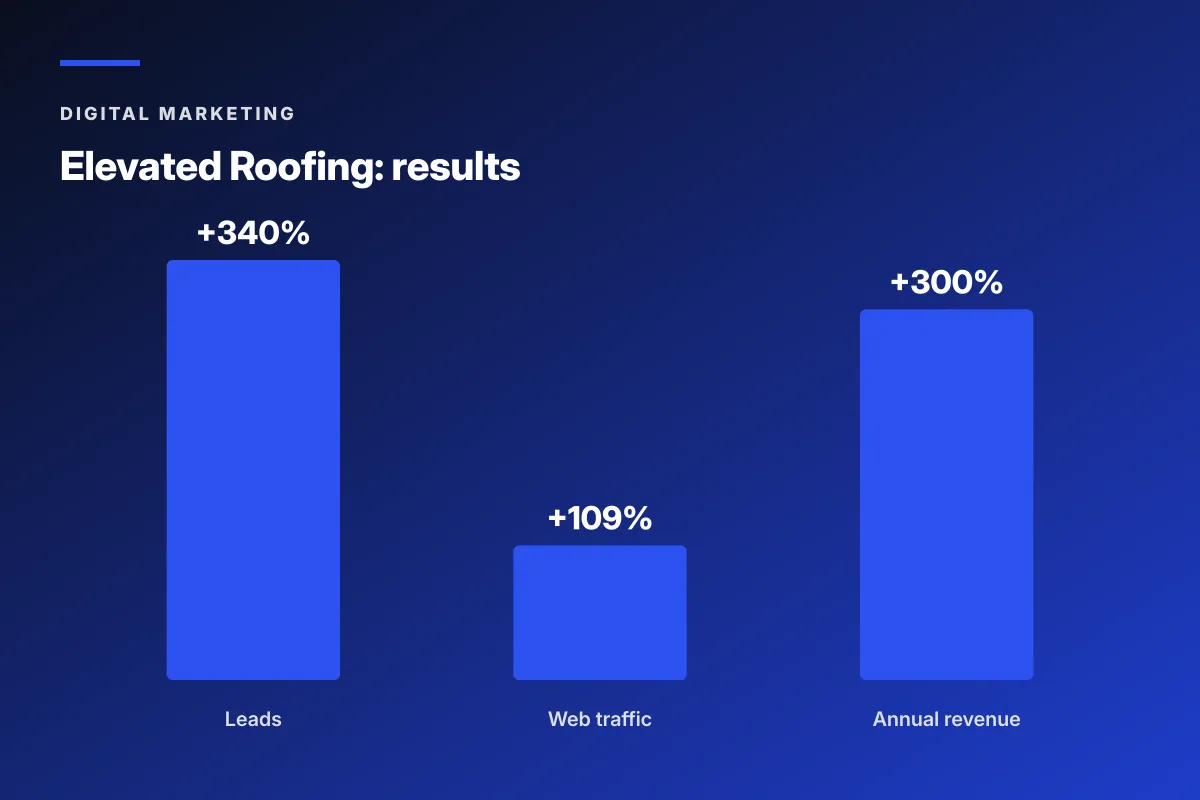
Website leads grew 153 percent, overall web traffic climbed 63 percent, and social-driven users jumped 129 percent over the six-month engagement. The reporting cadence tied every number to a source: SEO landing page, paid campaign, or organic referral. The same discipline applies to a restaurant marketing agency running a dining room. Coordinated web plus SEO plus social plus paid rebuilds pull double-digit percentage gains inside a single quarter when the channels align on one persona and one conversion goal. The Brightway rebuild also proved out the reporting standard: every monthly summary named the exact page, the exact ad set, and the exact review platform that produced the incremental lead count instead of hiding behind aggregate traffic charts.
Pricing tiers for a restaurant marketing agency
Restaurant marketing agency pricing runs 599 to 4,999 dollars per month by concept size. Under 400 dollars monthly and the vendor is running a review-response bot, one Meta post per week, and calling that a program. Over 6,000 dollars and the retainer is bundling brand strategy or menu development work that belongs in a separate SOW. Tier selection scales with cover count, average check, and concept count under one hospitality group.
| Concept size | Monthly retainer | Channels covered | Reporting cadence |
|---|---|---|---|
| Solo restaurant under 1M annual | $599 to $999 | GBP + reviews + Meta | Monthly report |
| Neighborhood spot 1M to 3M | $1,199 to $1,999 | Adds paid social + landing pages | Bi-weekly + monthly |
| Multi-location 3M to 10M | $1,999 to $3,499 | Adds TikTok + PR + retention email | Weekly + monthly + QBR |
| Hospitality group 10M+ | $3,499 to $4,999 | Adds brand campaign + multi-city | Weekly + monthly + QBR |
What separates a 999 retainer from a 1,999 retainer
The 999 tier gives a solo restaurant a weekly GBP post, monthly review-response coverage, one Meta ad set targeting the 3-mile radius, and a monthly report. The 1,999 tier adds paid social creative production (four new ads per month), landing page A/B tests on happy hour and private dining pages, an abandoned reservation email flow, and bi-weekly reporting calls with the owner. The gap shows up in cover count on slow midweek nights.
When multi-location tiers make sense
Multi-location tiers past 1,999 dollars monthly justify themselves when a hospitality group runs three or more concepts under one ownership umbrella. The retainer covers cross-concept promotion inside the guest database, TikTok content production against the chef-forward SKUs, digital PR for James Beard nominations, and multi-city local SEO ranking reports. Cross-reference the multi-brand mix on our food and beverage marketing retainer page.
Any restaurant agency worth the retainer has a monthly report with covers booked and check size. Ask to see one before signing. Vague engagement metrics are the flag.
Paid social channel mix for restaurants
Paid social channel mix on a restaurant marketing agency retainer splits Meta and TikTok on a 60-40 or 70-30 ratio depending on the concept’s demographic center. A fine-dining concept anchored on a 35-to-55 audience weights Meta heavier at 75 percent. A fast-casual chef-driven concept anchored on a 22-to-38 audience runs closer to a 55-45 split with TikTok carrying the awareness top-of-funnel work.
Meta creative that converts for restaurants
Meta ad creative for restaurants converts on three formats: 15-second static-plus-motion menu item spotlights, 8-second dining room ambience clips, and 30-second chef-authored dish story videos. Every creative includes the restaurant name in the first two seconds because Meta autoplays with sound off. Every creative ends on a clear CTA (book a table, order online, view menu). Rotating creative every 14 days prevents ad fatigue that pushes CPM up 40 percent inside a month.
TikTok organic and paid for chef-driven concepts
TikTok on a restaurant marketing agency retainer runs organic content (chef in kitchen, prep footage, plating shots) plus Spark ads amplifying the top-performing organic pieces. The mechanic works because TikTok’s algorithm rewards native chef content and penalizes overly polished ad creative. Restaurants that post 3 organic pieces weekly plus 500 dollars monthly Spark budget hit 15 to 30x reach amplification versus organic alone. The trick is naming the dish, the neighborhood, and the reservation slot inside the first 4 seconds of every TikTok so the algorithm categorizes the content correctly.
Reservation flow tuning inside restaurant marketing
Reservation flow tuning on a restaurant marketing agency retainer covers OpenTable, Resy, or Tock integration, abandoned reservation email flow, deposit collection on prime-time slots, and no-show management. Every restaurant loses 8 to 15 percent of reservation intent to abandonment during the booking flow. A working abandoned reservation email recovers 20 to 35 percent of that intent within 24 hours.
One client we audited had a two-step reservation flow that required guests to create an account, verify email, and confirm a phone number before the booking finalized. The flow was written in 2014. Two-thirds of the abandonment was people who did not want to make a new password for a Tuesday dinner. Nobody wants a Tuesday dinner password.
Abandoned reservation email sequence
The abandoned reservation email sequence runs two touches. Email one at 20 minutes after abandonment reminds the guest which time slot they viewed and links back with the party size pre-filled. Email two at 24 hours offers a specific alternative (“the 7 PM slot filled, we have 6:15 and 8:45 open”) with a one-click booking button. This sequence recovers 24 to 32 percent of abandoned reservations on OpenTable and Resy integrations.
Deposit collection on prime-time slots
Deposit collection on Friday 7 to 9 PM slots (and holiday windows) drops no-show rate from 12 percent to under 3 percent. The mechanic: a 25-dollar-per-person deposit charged at booking, credited toward the check on arrival, forfeited on no-show. Guests who resist the deposit self-select out of the prime slot and free the seat for a guest who will show. Cross-reference the tuning mechanics on our food and beverage web design page.
Reputation management scope for a restaurant marketing agency
Reputation management on a restaurant marketing agency retainer covers Google, Yelp, Tripadvisor, and OpenTable review response with a 24-hour SLA, sentiment monitoring across 8 platforms, and a quarterly reputation report showing star rating trend, response rate, and top complaint themes. Skip reputation management and a single 2-star review with 40 helpful votes drives away 15 percent of prospective walk-ins inside 90 days.
Response templates that work for 90 percent of reviews
Response templates cover positive reviews (thank the guest by name, reference a specific dish they mentioned, invite them back for a seasonal menu), critical reviews (acknowledge the specific issue, avoid excuses, offer to fix it via email), and neutral reviews (thank the guest, ask one clarifying question about what would have earned 5 stars). Every response gets written by a human, not a template pasted verbatim, because guests notice copy-paste responses inside three visits.
Sentiment monitoring across 8 platforms
Sentiment monitoring covers Google, Yelp, Tripadvisor, OpenTable, Resy, Instagram tagged posts, TikTok mentions, and local Reddit food subs. A working restaurant marketing agency runs a weekly review of new mentions, a monthly aggregate sentiment score, and a quarterly report to the ownership. The Reddit dimension matters because 12 percent of neighborhood recommendations happen inside r/YourCityFood threads that never surface in a standard reputation tool. Monitoring those subs weekly catches a viral complaint 5 days before it lands in a Google review and lets the restaurant respond before the star rating takes a hit that costs 90 days to recover from.
Reporting cadence for restaurant marketing
Reporting cadence on a restaurant marketing agency retainer runs monthly executive reports plus quarterly business reviews. The monthly report ships in the first business week and covers covers booked from paid channels, review count growth, star rating trend, map pack ranking on 15 target terms, and specific creative and copy tests run that month. Every number gets a comparison to the prior month and a plain-language interpretation.
Metrics that matter versus vanity metrics
Metrics that matter: covers booked from paid, incremental phone calls, reservation conversion rate, new-guest review count, and star rating trend. Vanity metrics that do not matter to a restaurant: Facebook page likes, Instagram follower growth (without engagement rate context), and impression counts without conversion attribution. A working restaurant marketing agency writes the monthly report against the metrics that matter and skips the vanity block entirely.
Quarterly business review with the owner
The quarterly business review runs 90 minutes with the restaurant owner, chef, and general manager. Agenda: cover count trend, average check trend, top-performing dishes from paid social attribution, seasonal promo calendar for the next 90 days, and one strategic decision that needs owner input. The QBR is where the retainer scope adjusts to seasonal reality (patio season, holiday windows, back-to-school slowdown, restaurant week participation). According to Restaurant Dive marketing coverage, seasonal calendar planning tied to reservation data outperforms fixed monthly promo schedules on both cover count and average check.
How to vet a restaurant marketing agency
Vet a restaurant marketing agency by asking three questions before signing. Which three restaurant clients can I speak with directly? What was the covers-booked delta for those clients inside 90 days? Show me a sample monthly report from a restaurant of my size.
Proposals that dodge these three questions almost always turn into a review-response bot plus one boosted Meta post per week that never moves the dining room, and the retainer bleeds another 12 months before the owner cancels and starts over with someone else.
Red flags in a shallow proposal
- Under 400 dollars per month with a promise of full local SEO plus paid social plus reviews.
- No restaurant clients named in the case studies section of the proposal.
- No mention of Google Business Profile weekly cadence or review-response SLA.
- Bundled brand strategy or menu development inside the marketing retainer.
- No sample monthly report you can view before signing.
- No mention of reservation flow tuning or abandoned reservation email.
- Vague social media package without paid budget line item.
Green flags on a working proposal
Green flags: named restaurant clients in the case studies with covers-booked deltas. Written SLA on review response inside 24 hours. Google Business Profile weekly post cadence documented. Meta and TikTok paid budget line-itemed separately from management fee. Sample monthly report showing covers booked from paid attribution. Named reservation platform integration experience (OpenTable, Resy, Tock). According to Nation’s Restaurant News marketing coverage, restaurant marketing programs that separate media buy from creative production consistently outperform bundled retainers on cost per cover.
Wrapping up the restaurant marketing agency choice
A working restaurant marketing agency runs four channels concurrently on a weekly cadence, prices between 599 and 4,999 dollars monthly by concept size, ships a monthly report tied to covers booked not vanity metrics, and holds a 24-hour review response SLA across Google, Yelp, Tripadvisor, and OpenTable. Skip any one channel and the map pack ranking drifts inside 90 days.
If your neighborhood spot, multi-location concept, or hospitality group is running on tribal knowledge and a boosted Meta post per week, professional restaurant marketing agency retainer coverage pays for itself inside the first quarter on covers booked. Redefine Web ships restaurant marketing inside our monthly retainer packages starting at 599 dollars per month. Book a call and we will walk through the last three restaurant clients we onboarded with covers-booked delta and average check trend.
A restaurant marketing agency runs weekly cadence because the dining room fills or empties on a 7-day rhythm. Every Friday tests whether the last week’s Google Business Profile posts, Meta boosts, and reservation flow tweaks actually pulled traffic through the door.
Skip a single weekly cycle and the map pack ranking drifts, the abandoned reservation flow stops recovering, and the neighborhood competitor picks up the slack. Every skipped week compounds into a slower next quarter and a harder recovery.
The four channels that fill covers
Channel one is Google Business Profile, updated weekly with new menu photos, seasonal promos, and event posts. Channel two is Meta plus TikTok paid social, targeting the 3-mile radius the restaurant actually draws from. Channel three is reservation flow tuning across OpenTable, Resy, or Tock, with an abandoned reservation recovery email. Channel four is reputation management on Google, Yelp, and Tripadvisor with a 24-hour response SLA. Cross-reference the local mix on our food and beverage marketing hub.
Where in-house teams typically fail
In-house restaurant marketing typically fails at the intersection of speed and depth. The general manager can post one photo per week to Google Business Profile but cannot also run a 3-mile Meta lookalike, respond to 40 monthly reviews inside 24 hours, and tune the abandoned reservation email. Restaurant marketing agencies exist because the workload is 20 to 40 hours per month for a proper program. According to the OpenTable industry insights research, restaurants that respond to Google reviews inside 48 hours see 35 percent higher return-guest rates.
Local SEO scope inside a restaurant marketing agency
Local SEO scope on a restaurant marketing agency retainer covers Google Business Profile weekly updates, citation cleanup across 40 directories, on-page schema markup for the menu and reservation pages, review generation flow tied to POS receipts, and monthly ranking reports for the 15 highest-intent local terms. The map pack decides which dining room fills on a rainy Tuesday when three restaurants within four blocks are competing for the same walk-in.
Google Business Profile weekly rhythm
The Google Business Profile weekly rhythm ships one new photo (menu item, dining room, staff, or event), one promotional post (happy hour, tasting menu, brunch push), and one event post (live music, private dining slots, holiday hours). Every post uses geo-anchored copy naming the neighborhood, the cross street, and the target dining occasion. Every photo gets alt text a screen reader can parse. Every post gets a UTM parameter so Google Analytics attributes the visit correctly.
Review generation math tied to POS receipts
The review generation flow lives on the POS receipt. Every check gets a QR code linking to a review-request landing page that filters happy guests toward Google and Yelp and unhappy guests toward a private feedback form. A working restaurant marketing agency ships this integration inside week two of onboarding. The math: 2 percent of covers generate a Google review when the flow works. A restaurant serving 300 covers weekly produces 6 new reviews per week, which is the tempo that holds a 4.6-star average without star-rating decay.
Brightway restaurant-specialty rebuild case study
Brightway Insurance, a specialty firm focused on business coverage for restaurants, joined us with strong offline reputation and near-zero digital presence. The site was outdated, not mobile-friendly, and offered no clear conversion path for the restaurant owners actively searching for coverage across their operating region. Zero social presence. No SEO or SEM strategy. No landing pages tied to specific insurance angles. The offline sales team was carrying the whole pipeline manually.
We executed a full digital rebuild inside six months. Responsive redesign built specifically for busy restaurant operators reading on phones between shifts. Niche-restaurant-insurance keyword targeting on SEO and SEM. Facebook and Twitter cadence building visibility and credibility with the restaurant operator persona. Landing pages tied to specific ad campaigns for the conversion flow. Authority content and blog cadence positioning the firm as the restaurant coverage specialist.
Website leads grew 153 percent, overall web traffic climbed 63 percent, and social-driven users jumped 129 percent over the six-month engagement. The reporting cadence tied every number to a source: SEO landing page, paid campaign, or organic referral. The same discipline applies to a restaurant marketing agency running a dining room. Coordinated web plus SEO plus social plus paid rebuilds pull double-digit percentage gains inside a single quarter when the channels align on one persona and one conversion goal. The Brightway rebuild also proved out the reporting standard: every monthly summary named the exact page, the exact ad set, and the exact review platform that produced the incremental lead count instead of hiding behind aggregate traffic charts.
Pricing tiers for a restaurant marketing agency
Restaurant marketing agency pricing runs 599 to 4,999 dollars per month by concept size. Under 400 dollars monthly and the vendor is running a review-response bot, one Meta post per week, and calling that a program. Over 6,000 dollars and the retainer is bundling brand strategy or menu development work that belongs in a separate SOW. Tier selection scales with cover count, average check, and concept count under one hospitality group.
| Concept size | Monthly retainer | Channels covered | Reporting cadence |
|---|---|---|---|
| Solo restaurant under 1M annual | $599 to $999 | GBP + reviews + Meta | Monthly report |
| Neighborhood spot 1M to 3M | $1,199 to $1,999 | Adds paid social + landing pages | Bi-weekly + monthly |
| Multi-location 3M to 10M | $1,999 to $3,499 | Adds TikTok + PR + retention email | Weekly + monthly + QBR |
| Hospitality group 10M+ | $3,499 to $4,999 | Adds brand campaign + multi-city | Weekly + monthly + QBR |
What separates a 999 retainer from a 1,999 retainer
The 999 tier gives a solo restaurant a weekly GBP post, monthly review-response coverage, one Meta ad set targeting the 3-mile radius, and a monthly report. The 1,999 tier adds paid social creative production (four new ads per month), landing page A/B tests on happy hour and private dining pages, an abandoned reservation email flow, and bi-weekly reporting calls with the owner. The gap shows up in cover count on slow midweek nights.
When multi-location tiers make sense
Multi-location tiers past 1,999 dollars monthly justify themselves when a hospitality group runs three or more concepts under one ownership umbrella. The retainer covers cross-concept promotion inside the guest database, TikTok content production against the chef-forward SKUs, digital PR for James Beard nominations, and multi-city local SEO ranking reports. Cross-reference the multi-brand mix on our food and beverage marketing retainer page.
Paid social channel mix for restaurants
Paid social channel mix on a restaurant marketing agency retainer splits Meta and TikTok on a 60-40 or 70-30 ratio depending on the concept’s demographic center. A fine-dining concept anchored on a 35-to-55 audience weights Meta heavier at 75 percent. A fast-casual chef-driven concept anchored on a 22-to-38 audience runs closer to a 55-45 split with TikTok carrying the awareness top-of-funnel work.
Meta creative that converts for restaurants
Meta ad creative for restaurants converts on three formats: 15-second static-plus-motion menu item spotlights, 8-second dining room ambience clips, and 30-second chef-authored dish story videos. Every creative includes the restaurant name in the first two seconds because Meta autoplays with sound off. Every creative ends on a clear CTA (book a table, order online, view menu). Rotating creative every 14 days prevents ad fatigue that pushes CPM up 40 percent inside a month.
TikTok organic and paid for chef-driven concepts
TikTok on a restaurant marketing agency retainer runs organic content (chef in kitchen, prep footage, plating shots) plus Spark ads amplifying the top-performing organic pieces. The mechanic works because TikTok’s algorithm rewards native chef content and penalizes overly polished ad creative. Restaurants that post 3 organic pieces weekly plus 500 dollars monthly Spark budget hit 15 to 30x reach amplification versus organic alone. The trick is naming the dish, the neighborhood, and the reservation slot inside the first 4 seconds of every TikTok so the algorithm categorizes the content correctly.
Reservation flow tuning inside restaurant marketing
Reservation flow tuning on a restaurant marketing agency retainer covers OpenTable, Resy, or Tock integration, abandoned reservation email flow, deposit collection on prime-time slots, and no-show management. Every restaurant loses 8 to 15 percent of reservation intent to abandonment during the booking flow. A working abandoned reservation email recovers 20 to 35 percent of that intent within 24 hours.
One client we audited had a two-step reservation flow that required guests to create an account, verify email, and confirm a phone number before the booking finalized. The flow was written in 2014. Two-thirds of the abandonment was people who did not want to make a new password for a Tuesday dinner. Nobody wants a Tuesday dinner password.
Abandoned reservation email sequence
The abandoned reservation email sequence runs two touches. Email one at 20 minutes after abandonment reminds the guest which time slot they viewed and links back with the party size pre-filled. Email two at 24 hours offers a specific alternative (“the 7 PM slot filled, we have 6:15 and 8:45 open”) with a one-click booking button. This sequence recovers 24 to 32 percent of abandoned reservations on OpenTable and Resy integrations.
Deposit collection on prime-time slots
Deposit collection on Friday 7 to 9 PM slots (and holiday windows) drops no-show rate from 12 percent to under 3 percent. The mechanic: a 25-dollar-per-person deposit charged at booking, credited toward the check on arrival, forfeited on no-show. Guests who resist the deposit self-select out of the prime slot and free the seat for a guest who will show. Cross-reference the tuning mechanics on our food and beverage web design page.
Reputation management scope for a restaurant marketing agency
Reputation management on a restaurant marketing agency retainer covers Google, Yelp, Tripadvisor, and OpenTable review response with a 24-hour SLA, sentiment monitoring across 8 platforms, and a quarterly reputation report showing star rating trend, response rate, and top complaint themes. Skip reputation management and a single 2-star review with 40 helpful votes drives away 15 percent of prospective walk-ins inside 90 days.
Response templates that work for 90 percent of reviews
Response templates cover positive reviews (thank the guest by name, reference a specific dish they mentioned, invite them back for a seasonal menu), critical reviews (acknowledge the specific issue, avoid excuses, offer to fix it via email), and neutral reviews (thank the guest, ask one clarifying question about what would have earned 5 stars). Every response gets written by a human, not a template pasted verbatim, because guests notice copy-paste responses inside three visits.
Sentiment monitoring across 8 platforms
Sentiment monitoring covers Google, Yelp, Tripadvisor, OpenTable, Resy, Instagram tagged posts, TikTok mentions, and local Reddit food subs. A working restaurant marketing agency runs a weekly review of new mentions, a monthly aggregate sentiment score, and a quarterly report to the ownership. The Reddit dimension matters because 12 percent of neighborhood recommendations happen inside r/YourCityFood threads that never surface in a standard reputation tool. Monitoring those subs weekly catches a viral complaint 5 days before it lands in a Google review and lets the restaurant respond before the star rating takes a hit that costs 90 days to recover from.
Reporting cadence for restaurant marketing
Reporting cadence on a restaurant marketing agency retainer runs monthly executive reports plus quarterly business reviews. The monthly report ships in the first business week and covers covers booked from paid channels, review count growth, star rating trend, map pack ranking on 15 target terms, and specific creative and copy tests run that month. Every number gets a comparison to the prior month and a plain-language interpretation.
Metrics that matter versus vanity metrics
Metrics that matter: covers booked from paid, incremental phone calls, reservation conversion rate, new-guest review count, and star rating trend. Vanity metrics that do not matter to a restaurant: Facebook page likes, Instagram follower growth (without engagement rate context), and impression counts without conversion attribution. A working restaurant marketing agency writes the monthly report against the metrics that matter and skips the vanity block entirely.
Quarterly business review with the owner
The quarterly business review runs 90 minutes with the restaurant owner, chef, and general manager. Agenda: cover count trend, average check trend, top-performing dishes from paid social attribution, seasonal promo calendar for the next 90 days, and one strategic decision that needs owner input. The QBR is where the retainer scope adjusts to seasonal reality (patio season, holiday windows, back-to-school slowdown, restaurant week participation). According to Restaurant Dive marketing coverage, seasonal calendar planning tied to reservation data outperforms fixed monthly promo schedules on both cover count and average check.
How to vet a restaurant marketing agency
Vet a restaurant marketing agency by asking three questions before signing. Which three restaurant clients can I speak with directly? What was the covers-booked delta for those clients inside 90 days? Show me a sample monthly report from a restaurant of my size.
Proposals that dodge these three questions almost always turn into a review-response bot plus one boosted Meta post per week that never moves the dining room, and the retainer bleeds another 12 months before the owner cancels and starts over with someone else.
Red flags in a shallow proposal
- Under 400 dollars per month with a promise of full local SEO plus paid social plus reviews.
- No restaurant clients named in the case studies section of the proposal.
- No mention of Google Business Profile weekly cadence or review-response SLA.
- Bundled brand strategy or menu development inside the marketing retainer.
- No sample monthly report you can view before signing.
- No mention of reservation flow tuning or abandoned reservation email.
- Vague social media package without paid budget line item.
Green flags on a working proposal
Green flags: named restaurant clients in the case studies with covers-booked deltas. Written SLA on review response inside 24 hours. Google Business Profile weekly post cadence documented. Meta and TikTok paid budget line-itemed separately from management fee. Sample monthly report showing covers booked from paid attribution. Named reservation platform integration experience (OpenTable, Resy, Tock). According to Nation’s Restaurant News marketing coverage, restaurant marketing programs that separate media buy from creative production consistently outperform bundled retainers on cost per cover.
Wrapping up the restaurant marketing agency choice
A working restaurant marketing agency runs four channels concurrently on a weekly cadence, prices between 599 and 4,999 dollars monthly by concept size, ships a monthly report tied to covers booked not vanity metrics, and holds a 24-hour review response SLA across Google, Yelp, Tripadvisor, and OpenTable. Skip any one channel and the map pack ranking drifts inside 90 days.
If your neighborhood spot, multi-location concept, or hospitality group is running on tribal knowledge and a boosted Meta post per week, professional restaurant marketing agency retainer coverage pays for itself inside the first quarter on covers booked. Redefine Web ships restaurant marketing inside our monthly retainer packages starting at 599 dollars per month. Book a call and we will walk through the last three restaurant clients we onboarded with covers-booked delta and average check trend.
A restaurant marketing agency runs weekly cadence because the dining room fills or empties on a 7-day rhythm. Every Friday tests whether the last week’s Google Business Profile posts, Meta boosts, and reservation flow tweaks actually pulled traffic through the door.
Skip a single weekly cycle and the map pack ranking drifts, the abandoned reservation flow stops recovering, and the neighborhood competitor picks up the slack. Every skipped week compounds into a slower next quarter and a harder recovery.
The four channels that fill covers
Channel one is Google Business Profile, updated weekly with new menu photos, seasonal promos, and event posts. Channel two is Meta plus TikTok paid social, targeting the 3-mile radius the restaurant actually draws from. Channel three is reservation flow tuning across OpenTable, Resy, or Tock, with an abandoned reservation recovery email. Channel four is reputation management on Google, Yelp, and Tripadvisor with a 24-hour response SLA. Cross-reference the local mix on our food and beverage marketing hub.
Where in-house teams typically fail
In-house restaurant marketing typically fails at the intersection of speed and depth. The general manager can post one photo per week to Google Business Profile but cannot also run a 3-mile Meta lookalike, respond to 40 monthly reviews inside 24 hours, and tune the abandoned reservation email. Restaurant marketing agencies exist because the workload is 20 to 40 hours per month for a proper program. According to the OpenTable industry insights research, restaurants that respond to Google reviews inside 48 hours see 35 percent higher return-guest rates.
Local SEO scope inside a restaurant marketing agency
Local SEO scope on a restaurant marketing agency retainer covers Google Business Profile weekly updates, citation cleanup across 40 directories, on-page schema markup for the menu and reservation pages, review generation flow tied to POS receipts, and monthly ranking reports for the 15 highest-intent local terms. The map pack decides which dining room fills on a rainy Tuesday when three restaurants within four blocks are competing for the same walk-in.
Google Business Profile weekly rhythm
The Google Business Profile weekly rhythm ships one new photo (menu item, dining room, staff, or event), one promotional post (happy hour, tasting menu, brunch push), and one event post (live music, private dining slots, holiday hours). Every post uses geo-anchored copy naming the neighborhood, the cross street, and the target dining occasion. Every photo gets alt text a screen reader can parse. Every post gets a UTM parameter so Google Analytics attributes the visit correctly.
Review generation math tied to POS receipts
The review generation flow lives on the POS receipt. Every check gets a QR code linking to a review-request landing page that filters happy guests toward Google and Yelp and unhappy guests toward a private feedback form. A working restaurant marketing agency ships this integration inside week two of onboarding. The math: 2 percent of covers generate a Google review when the flow works. A restaurant serving 300 covers weekly produces 6 new reviews per week, which is the tempo that holds a 4.6-star average without star-rating decay.
Brightway restaurant-specialty rebuild case study
Brightway Insurance, a specialty firm focused on business coverage for restaurants, joined us with strong offline reputation and near-zero digital presence. The site was outdated, not mobile-friendly, and offered no clear conversion path for the restaurant owners actively searching for coverage across their operating region. Zero social presence. No SEO or SEM strategy. No landing pages tied to specific insurance angles. The offline sales team was carrying the whole pipeline manually.
We executed a full digital rebuild inside six months. Responsive redesign built specifically for busy restaurant operators reading on phones between shifts. Niche-restaurant-insurance keyword targeting on SEO and SEM. Facebook and Twitter cadence building visibility and credibility with the restaurant operator persona. Landing pages tied to specific ad campaigns for the conversion flow. Authority content and blog cadence positioning the firm as the restaurant coverage specialist.
Website leads grew 153 percent, overall web traffic climbed 63 percent, and social-driven users jumped 129 percent over the six-month engagement. The reporting cadence tied every number to a source: SEO landing page, paid campaign, or organic referral. The same discipline applies to a restaurant marketing agency running a dining room. Coordinated web plus SEO plus social plus paid rebuilds pull double-digit percentage gains inside a single quarter when the channels align on one persona and one conversion goal. The Brightway rebuild also proved out the reporting standard: every monthly summary named the exact page, the exact ad set, and the exact review platform that produced the incremental lead count instead of hiding behind aggregate traffic charts.
Pricing tiers for a restaurant marketing agency
Restaurant marketing agency pricing runs 599 to 4,999 dollars per month by concept size. Under 400 dollars monthly and the vendor is running a review-response bot, one Meta post per week, and calling that a program. Over 6,000 dollars and the retainer is bundling brand strategy or menu development work that belongs in a separate SOW. Tier selection scales with cover count, average check, and concept count under one hospitality group.
| Concept size | Monthly retainer | Channels covered | Reporting cadence |
|---|---|---|---|
| Solo restaurant under 1M annual | $599 to $999 | GBP + reviews + Meta | Monthly report |
| Neighborhood spot 1M to 3M | $1,199 to $1,999 | Adds paid social + landing pages | Bi-weekly + monthly |
| Multi-location 3M to 10M | $1,999 to $3,499 | Adds TikTok + PR + retention email | Weekly + monthly + QBR |
| Hospitality group 10M+ | $3,499 to $4,999 | Adds brand campaign + multi-city | Weekly + monthly + QBR |
What separates a 999 retainer from a 1,999 retainer
The 999 tier gives a solo restaurant a weekly GBP post, monthly review-response coverage, one Meta ad set targeting the 3-mile radius, and a monthly report. The 1,999 tier adds paid social creative production (four new ads per month), landing page A/B tests on happy hour and private dining pages, an abandoned reservation email flow, and bi-weekly reporting calls with the owner. The gap shows up in cover count on slow midweek nights.
When multi-location tiers make sense
Multi-location tiers past 1,999 dollars monthly justify themselves when a hospitality group runs three or more concepts under one ownership umbrella. The retainer covers cross-concept promotion inside the guest database, TikTok content production against the chef-forward SKUs, digital PR for James Beard nominations, and multi-city local SEO ranking reports. Cross-reference the multi-brand mix on our food and beverage marketing retainer page.
Paid social channel mix for restaurants
Paid social channel mix on a restaurant marketing agency retainer splits Meta and TikTok on a 60-40 or 70-30 ratio depending on the concept’s demographic center. A fine-dining concept anchored on a 35-to-55 audience weights Meta heavier at 75 percent. A fast-casual chef-driven concept anchored on a 22-to-38 audience runs closer to a 55-45 split with TikTok carrying the awareness top-of-funnel work.
Meta creative that converts for restaurants
Meta ad creative for restaurants converts on three formats: 15-second static-plus-motion menu item spotlights, 8-second dining room ambience clips, and 30-second chef-authored dish story videos. Every creative includes the restaurant name in the first two seconds because Meta autoplays with sound off. Every creative ends on a clear CTA (book a table, order online, view menu). Rotating creative every 14 days prevents ad fatigue that pushes CPM up 40 percent inside a month.
TikTok organic and paid for chef-driven concepts
TikTok on a restaurant marketing agency retainer runs organic content (chef in kitchen, prep footage, plating shots) plus Spark ads amplifying the top-performing organic pieces. The mechanic works because TikTok’s algorithm rewards native chef content and penalizes overly polished ad creative. Restaurants that post 3 organic pieces weekly plus 500 dollars monthly Spark budget hit 15 to 30x reach amplification versus organic alone. The trick is naming the dish, the neighborhood, and the reservation slot inside the first 4 seconds of every TikTok so the algorithm categorizes the content correctly.
Reservation flow tuning inside restaurant marketing
Reservation flow tuning on a restaurant marketing agency retainer covers OpenTable, Resy, or Tock integration, abandoned reservation email flow, deposit collection on prime-time slots, and no-show management. Every restaurant loses 8 to 15 percent of reservation intent to abandonment during the booking flow. A working abandoned reservation email recovers 20 to 35 percent of that intent within 24 hours.
One client we audited had a two-step reservation flow that required guests to create an account, verify email, and confirm a phone number before the booking finalized. The flow was written in 2014. Two-thirds of the abandonment was people who did not want to make a new password for a Tuesday dinner. Nobody wants a Tuesday dinner password.
Abandoned reservation email sequence
The abandoned reservation email sequence runs two touches. Email one at 20 minutes after abandonment reminds the guest which time slot they viewed and links back with the party size pre-filled. Email two at 24 hours offers a specific alternative (“the 7 PM slot filled, we have 6:15 and 8:45 open”) with a one-click booking button. This sequence recovers 24 to 32 percent of abandoned reservations on OpenTable and Resy integrations.
Deposit collection on prime-time slots
Deposit collection on Friday 7 to 9 PM slots (and holiday windows) drops no-show rate from 12 percent to under 3 percent. The mechanic: a 25-dollar-per-person deposit charged at booking, credited toward the check on arrival, forfeited on no-show. Guests who resist the deposit self-select out of the prime slot and free the seat for a guest who will show. Cross-reference the tuning mechanics on our food and beverage web design page.
Reputation management scope for a restaurant marketing agency
Reputation management on a restaurant marketing agency retainer covers Google, Yelp, Tripadvisor, and OpenTable review response with a 24-hour SLA, sentiment monitoring across 8 platforms, and a quarterly reputation report showing star rating trend, response rate, and top complaint themes. Skip reputation management and a single 2-star review with 40 helpful votes drives away 15 percent of prospective walk-ins inside 90 days.
Response templates that work for 90 percent of reviews
Response templates cover positive reviews (thank the guest by name, reference a specific dish they mentioned, invite them back for a seasonal menu), critical reviews (acknowledge the specific issue, avoid excuses, offer to fix it via email), and neutral reviews (thank the guest, ask one clarifying question about what would have earned 5 stars). Every response gets written by a human, not a template pasted verbatim, because guests notice copy-paste responses inside three visits.
Sentiment monitoring across 8 platforms
Sentiment monitoring covers Google, Yelp, Tripadvisor, OpenTable, Resy, Instagram tagged posts, TikTok mentions, and local Reddit food subs. A working restaurant marketing agency runs a weekly review of new mentions, a monthly aggregate sentiment score, and a quarterly report to the ownership. The Reddit dimension matters because 12 percent of neighborhood recommendations happen inside r/YourCityFood threads that never surface in a standard reputation tool. Monitoring those subs weekly catches a viral complaint 5 days before it lands in a Google review and lets the restaurant respond before the star rating takes a hit that costs 90 days to recover from.
Reporting cadence for restaurant marketing
Reporting cadence on a restaurant marketing agency retainer runs monthly executive reports plus quarterly business reviews. The monthly report ships in the first business week and covers covers booked from paid channels, review count growth, star rating trend, map pack ranking on 15 target terms, and specific creative and copy tests run that month. Every number gets a comparison to the prior month and a plain-language interpretation.
Metrics that matter versus vanity metrics
Metrics that matter: covers booked from paid, incremental phone calls, reservation conversion rate, new-guest review count, and star rating trend. Vanity metrics that do not matter to a restaurant: Facebook page likes, Instagram follower growth (without engagement rate context), and impression counts without conversion attribution. A working restaurant marketing agency writes the monthly report against the metrics that matter and skips the vanity block entirely.
Quarterly business review with the owner
The quarterly business review runs 90 minutes with the restaurant owner, chef, and general manager. Agenda: cover count trend, average check trend, top-performing dishes from paid social attribution, seasonal promo calendar for the next 90 days, and one strategic decision that needs owner input. The QBR is where the retainer scope adjusts to seasonal reality (patio season, holiday windows, back-to-school slowdown, restaurant week participation). According to Restaurant Dive marketing coverage, seasonal calendar planning tied to reservation data outperforms fixed monthly promo schedules on both cover count and average check.
How to vet a restaurant marketing agency
Vet a restaurant marketing agency by asking three questions before signing. Which three restaurant clients can I speak with directly? What was the covers-booked delta for those clients inside 90 days? Show me a sample monthly report from a restaurant of my size.
Proposals that dodge these three questions almost always turn into a review-response bot plus one boosted Meta post per week that never moves the dining room, and the retainer bleeds another 12 months before the owner cancels and starts over with someone else.
Red flags in a shallow proposal
- Under 400 dollars per month with a promise of full local SEO plus paid social plus reviews.
- No restaurant clients named in the case studies section of the proposal.
- No mention of Google Business Profile weekly cadence or review-response SLA.
- Bundled brand strategy or menu development inside the marketing retainer.
- No sample monthly report you can view before signing.
- No mention of reservation flow tuning or abandoned reservation email.
- Vague social media package without paid budget line item.
Green flags on a working proposal
Green flags: named restaurant clients in the case studies with covers-booked deltas. Written SLA on review response inside 24 hours. Google Business Profile weekly post cadence documented. Meta and TikTok paid budget line-itemed separately from management fee. Sample monthly report showing covers booked from paid attribution. Named reservation platform integration experience (OpenTable, Resy, Tock). According to Nation’s Restaurant News marketing coverage, restaurant marketing programs that separate media buy from creative production consistently outperform bundled retainers on cost per cover.
Wrapping up the restaurant marketing agency choice
A working restaurant marketing agency runs four channels concurrently on a weekly cadence, prices between 599 and 4,999 dollars monthly by concept size, ships a monthly report tied to covers booked not vanity metrics, and holds a 24-hour review response SLA across Google, Yelp, Tripadvisor, and OpenTable. Skip any one channel and the map pack ranking drifts inside 90 days.
If your neighborhood spot, multi-location concept, or hospitality group is running on tribal knowledge and a boosted Meta post per week, professional restaurant marketing agency retainer coverage pays for itself inside the first quarter on covers booked. Redefine Web ships restaurant marketing inside our monthly retainer packages starting at 599 dollars per month. Book a call and we will walk through the last three restaurant clients we onboarded with covers-booked delta and average check trend.
A restaurant marketing agency runs weekly cadence because the dining room fills or empties on a 7-day rhythm. Every Friday tests whether the last week’s Google Business Profile posts, Meta boosts, and reservation flow tweaks actually pulled traffic through the door.
Skip a single weekly cycle and the map pack ranking drifts, the abandoned reservation flow stops recovering, and the neighborhood competitor picks up the slack. Every skipped week compounds into a slower next quarter and a harder recovery.
The four channels that fill covers
Channel one is Google Business Profile, updated weekly with new menu photos, seasonal promos, and event posts. Channel two is Meta plus TikTok paid social, targeting the 3-mile radius the restaurant actually draws from. Channel three is reservation flow tuning across OpenTable, Resy, or Tock, with an abandoned reservation recovery email. Channel four is reputation management on Google, Yelp, and Tripadvisor with a 24-hour response SLA. Cross-reference the local mix on our food and beverage marketing hub.
Where in-house teams typically fail
In-house restaurant marketing typically fails at the intersection of speed and depth. The general manager can post one photo per week to Google Business Profile but cannot also run a 3-mile Meta lookalike, respond to 40 monthly reviews inside 24 hours, and tune the abandoned reservation email. Restaurant marketing agencies exist because the workload is 20 to 40 hours per month for a proper program. According to the OpenTable industry insights research, restaurants that respond to Google reviews inside 48 hours see 35 percent higher return-guest rates.
Local SEO scope inside a restaurant marketing agency
Local SEO scope on a restaurant marketing agency retainer covers Google Business Profile weekly updates, citation cleanup across 40 directories, on-page schema markup for the menu and reservation pages, review generation flow tied to POS receipts, and monthly ranking reports for the 15 highest-intent local terms. The map pack decides which dining room fills on a rainy Tuesday when three restaurants within four blocks are competing for the same walk-in.
Google Business Profile weekly rhythm
The Google Business Profile weekly rhythm ships one new photo (menu item, dining room, staff, or event), one promotional post (happy hour, tasting menu, brunch push), and one event post (live music, private dining slots, holiday hours). Every post uses geo-anchored copy naming the neighborhood, the cross street, and the target dining occasion. Every photo gets alt text a screen reader can parse. Every post gets a UTM parameter so Google Analytics attributes the visit correctly.
Review generation math tied to POS receipts
The review generation flow lives on the POS receipt. Every check gets a QR code linking to a review-request landing page that filters happy guests toward Google and Yelp and unhappy guests toward a private feedback form. A working restaurant marketing agency ships this integration inside week two of onboarding. The math: 2 percent of covers generate a Google review when the flow works. A restaurant serving 300 covers weekly produces 6 new reviews per week, which is the tempo that holds a 4.6-star average without star-rating decay.
Brightway restaurant-specialty rebuild case study
Brightway Insurance, a specialty firm focused on business coverage for restaurants, joined us with strong offline reputation and near-zero digital presence. The site was outdated, not mobile-friendly, and offered no clear conversion path for the restaurant owners actively searching for coverage across their operating region. Zero social presence. No SEO or SEM strategy. No landing pages tied to specific insurance angles. The offline sales team was carrying the whole pipeline manually.
We executed a full digital rebuild inside six months. Responsive redesign built specifically for busy restaurant operators reading on phones between shifts. Niche-restaurant-insurance keyword targeting on SEO and SEM. Facebook and Twitter cadence building visibility and credibility with the restaurant operator persona. Landing pages tied to specific ad campaigns for the conversion flow. Authority content and blog cadence positioning the firm as the restaurant coverage specialist.
Website leads grew 153 percent, overall web traffic climbed 63 percent, and social-driven users jumped 129 percent over the six-month engagement. The reporting cadence tied every number to a source: SEO landing page, paid campaign, or organic referral. The same discipline applies to a restaurant marketing agency running a dining room. Coordinated web plus SEO plus social plus paid rebuilds pull double-digit percentage gains inside a single quarter when the channels align on one persona and one conversion goal. The Brightway rebuild also proved out the reporting standard: every monthly summary named the exact page, the exact ad set, and the exact review platform that produced the incremental lead count instead of hiding behind aggregate traffic charts.
Pricing tiers for a restaurant marketing agency
Restaurant marketing agency pricing runs 599 to 4,999 dollars per month by concept size. Under 400 dollars monthly and the vendor is running a review-response bot, one Meta post per week, and calling that a program. Over 6,000 dollars and the retainer is bundling brand strategy or menu development work that belongs in a separate SOW. Tier selection scales with cover count, average check, and concept count under one hospitality group.
| Concept size | Monthly retainer | Channels covered | Reporting cadence |
|---|---|---|---|
| Solo restaurant under 1M annual | $599 to $999 | GBP + reviews + Meta | Monthly report |
| Neighborhood spot 1M to 3M | $1,199 to $1,999 | Adds paid social + landing pages | Bi-weekly + monthly |
| Multi-location 3M to 10M | $1,999 to $3,499 | Adds TikTok + PR + retention email | Weekly + monthly + QBR |
| Hospitality group 10M+ | $3,499 to $4,999 | Adds brand campaign + multi-city | Weekly + monthly + QBR |
What separates a 999 retainer from a 1,999 retainer
The 999 tier gives a solo restaurant a weekly GBP post, monthly review-response coverage, one Meta ad set targeting the 3-mile radius, and a monthly report. The 1,999 tier adds paid social creative production (four new ads per month), landing page A/B tests on happy hour and private dining pages, an abandoned reservation email flow, and bi-weekly reporting calls with the owner. The gap shows up in cover count on slow midweek nights.
When multi-location tiers make sense
Multi-location tiers past 1,999 dollars monthly justify themselves when a hospitality group runs three or more concepts under one ownership umbrella. The retainer covers cross-concept promotion inside the guest database, TikTok content production against the chef-forward SKUs, digital PR for James Beard nominations, and multi-city local SEO ranking reports. Cross-reference the multi-brand mix on our food and beverage marketing retainer page.
Paid social channel mix for restaurants
Paid social channel mix on a restaurant marketing agency retainer splits Meta and TikTok on a 60-40 or 70-30 ratio depending on the concept’s demographic center. A fine-dining concept anchored on a 35-to-55 audience weights Meta heavier at 75 percent. A fast-casual chef-driven concept anchored on a 22-to-38 audience runs closer to a 55-45 split with TikTok carrying the awareness top-of-funnel work.
Meta creative that converts for restaurants
Meta ad creative for restaurants converts on three formats: 15-second static-plus-motion menu item spotlights, 8-second dining room ambience clips, and 30-second chef-authored dish story videos. Every creative includes the restaurant name in the first two seconds because Meta autoplays with sound off. Every creative ends on a clear CTA (book a table, order online, view menu). Rotating creative every 14 days prevents ad fatigue that pushes CPM up 40 percent inside a month.
TikTok organic and paid for chef-driven concepts
TikTok on a restaurant marketing agency retainer runs organic content (chef in kitchen, prep footage, plating shots) plus Spark ads amplifying the top-performing organic pieces. The mechanic works because TikTok’s algorithm rewards native chef content and penalizes overly polished ad creative. Restaurants that post 3 organic pieces weekly plus 500 dollars monthly Spark budget hit 15 to 30x reach amplification versus organic alone. The trick is naming the dish, the neighborhood, and the reservation slot inside the first 4 seconds of every TikTok so the algorithm categorizes the content correctly.
Reservation flow tuning inside restaurant marketing
Reservation flow tuning on a restaurant marketing agency retainer covers OpenTable, Resy, or Tock integration, abandoned reservation email flow, deposit collection on prime-time slots, and no-show management. Every restaurant loses 8 to 15 percent of reservation intent to abandonment during the booking flow. A working abandoned reservation email recovers 20 to 35 percent of that intent within 24 hours.
One client we audited had a two-step reservation flow that required guests to create an account, verify email, and confirm a phone number before the booking finalized. The flow was written in 2014. Two-thirds of the abandonment was people who did not want to make a new password for a Tuesday dinner. Nobody wants a Tuesday dinner password.
Abandoned reservation email sequence
The abandoned reservation email sequence runs two touches. Email one at 20 minutes after abandonment reminds the guest which time slot they viewed and links back with the party size pre-filled. Email two at 24 hours offers a specific alternative (“the 7 PM slot filled, we have 6:15 and 8:45 open”) with a one-click booking button. This sequence recovers 24 to 32 percent of abandoned reservations on OpenTable and Resy integrations.
Deposit collection on prime-time slots
Deposit collection on Friday 7 to 9 PM slots (and holiday windows) drops no-show rate from 12 percent to under 3 percent. The mechanic: a 25-dollar-per-person deposit charged at booking, credited toward the check on arrival, forfeited on no-show. Guests who resist the deposit self-select out of the prime slot and free the seat for a guest who will show. Cross-reference the tuning mechanics on our food and beverage web design page.
Reputation management scope for a restaurant marketing agency
Reputation management on a restaurant marketing agency retainer covers Google, Yelp, Tripadvisor, and OpenTable review response with a 24-hour SLA, sentiment monitoring across 8 platforms, and a quarterly reputation report showing star rating trend, response rate, and top complaint themes. Skip reputation management and a single 2-star review with 40 helpful votes drives away 15 percent of prospective walk-ins inside 90 days.
Response templates that work for 90 percent of reviews
Response templates cover positive reviews (thank the guest by name, reference a specific dish they mentioned, invite them back for a seasonal menu), critical reviews (acknowledge the specific issue, avoid excuses, offer to fix it via email), and neutral reviews (thank the guest, ask one clarifying question about what would have earned 5 stars). Every response gets written by a human, not a template pasted verbatim, because guests notice copy-paste responses inside three visits.
Sentiment monitoring across 8 platforms
Sentiment monitoring covers Google, Yelp, Tripadvisor, OpenTable, Resy, Instagram tagged posts, TikTok mentions, and local Reddit food subs. A working restaurant marketing agency runs a weekly review of new mentions, a monthly aggregate sentiment score, and a quarterly report to the ownership. The Reddit dimension matters because 12 percent of neighborhood recommendations happen inside r/YourCityFood threads that never surface in a standard reputation tool. Monitoring those subs weekly catches a viral complaint 5 days before it lands in a Google review and lets the restaurant respond before the star rating takes a hit that costs 90 days to recover from.
Reporting cadence for restaurant marketing
Reporting cadence on a restaurant marketing agency retainer runs monthly executive reports plus quarterly business reviews. The monthly report ships in the first business week and covers covers booked from paid channels, review count growth, star rating trend, map pack ranking on 15 target terms, and specific creative and copy tests run that month. Every number gets a comparison to the prior month and a plain-language interpretation.
Metrics that matter versus vanity metrics
Metrics that matter: covers booked from paid, incremental phone calls, reservation conversion rate, new-guest review count, and star rating trend. Vanity metrics that do not matter to a restaurant: Facebook page likes, Instagram follower growth (without engagement rate context), and impression counts without conversion attribution. A working restaurant marketing agency writes the monthly report against the metrics that matter and skips the vanity block entirely.
Quarterly business review with the owner
The quarterly business review runs 90 minutes with the restaurant owner, chef, and general manager. Agenda: cover count trend, average check trend, top-performing dishes from paid social attribution, seasonal promo calendar for the next 90 days, and one strategic decision that needs owner input. The QBR is where the retainer scope adjusts to seasonal reality (patio season, holiday windows, back-to-school slowdown, restaurant week participation). According to Restaurant Dive marketing coverage, seasonal calendar planning tied to reservation data outperforms fixed monthly promo schedules on both cover count and average check.
How to vet a restaurant marketing agency
Vet a restaurant marketing agency by asking three questions before signing. Which three restaurant clients can I speak with directly? What was the covers-booked delta for those clients inside 90 days? Show me a sample monthly report from a restaurant of my size.
Proposals that dodge these three questions almost always turn into a review-response bot plus one boosted Meta post per week that never moves the dining room, and the retainer bleeds another 12 months before the owner cancels and starts over with someone else.
Red flags in a shallow proposal
- Under 400 dollars per month with a promise of full local SEO plus paid social plus reviews.
- No restaurant clients named in the case studies section of the proposal.
- No mention of Google Business Profile weekly cadence or review-response SLA.
- Bundled brand strategy or menu development inside the marketing retainer.
- No sample monthly report you can view before signing.
- No mention of reservation flow tuning or abandoned reservation email.
- Vague social media package without paid budget line item.
Green flags on a working proposal
Green flags: named restaurant clients in the case studies with covers-booked deltas. Written SLA on review response inside 24 hours. Google Business Profile weekly post cadence documented. Meta and TikTok paid budget line-itemed separately from management fee. Sample monthly report showing covers booked from paid attribution. Named reservation platform integration experience (OpenTable, Resy, Tock). According to Nation’s Restaurant News marketing coverage, restaurant marketing programs that separate media buy from creative production consistently outperform bundled retainers on cost per cover.
Wrapping up the restaurant marketing agency choice
A working restaurant marketing agency runs four channels concurrently on a weekly cadence, prices between 599 and 4,999 dollars monthly by concept size, ships a monthly report tied to covers booked not vanity metrics, and holds a 24-hour review response SLA across Google, Yelp, Tripadvisor, and OpenTable. Skip any one channel and the map pack ranking drifts inside 90 days.
If your neighborhood spot, multi-location concept, or hospitality group is running on tribal knowledge and a boosted Meta post per week, professional restaurant marketing agency retainer coverage pays for itself inside the first quarter on covers booked. Redefine Web ships restaurant marketing inside our monthly retainer packages starting at 599 dollars per month. Book a call and we will walk through the last three restaurant clients we onboarded with covers-booked delta and average check trend.
A restaurant marketing agency runs weekly cadence because the dining room fills or empties on a 7-day rhythm. Every Friday tests whether the last week’s Google Business Profile posts, Meta boosts, and reservation flow tweaks actually pulled traffic through the door.
Skip a single weekly cycle and the map pack ranking drifts, the abandoned reservation flow stops recovering, and the neighborhood competitor picks up the slack. Every skipped week compounds into a slower next quarter and a harder recovery.
The four channels that fill covers
Channel one is Google Business Profile, updated weekly with new menu photos, seasonal promos, and event posts. Channel two is Meta plus TikTok paid social, targeting the 3-mile radius the restaurant actually draws from. Channel three is reservation flow tuning across OpenTable, Resy, or Tock, with an abandoned reservation recovery email. Channel four is reputation management on Google, Yelp, and Tripadvisor with a 24-hour response SLA. Cross-reference the local mix on our food and beverage marketing hub.
Where in-house teams typically fail
In-house restaurant marketing typically fails at the intersection of speed and depth. The general manager can post one photo per week to Google Business Profile but cannot also run a 3-mile Meta lookalike, respond to 40 monthly reviews inside 24 hours, and tune the abandoned reservation email. Restaurant marketing agencies exist because the workload is 20 to 40 hours per month for a proper program. According to the OpenTable industry insights research, restaurants that respond to Google reviews inside 48 hours see 35 percent higher return-guest rates.
Local SEO scope inside a restaurant marketing agency
Local SEO scope on a restaurant marketing agency retainer covers Google Business Profile weekly updates, citation cleanup across 40 directories, on-page schema markup for the menu and reservation pages, review generation flow tied to POS receipts, and monthly ranking reports for the 15 highest-intent local terms. The map pack decides which dining room fills on a rainy Tuesday when three restaurants within four blocks are competing for the same walk-in.
Google Business Profile weekly rhythm
The Google Business Profile weekly rhythm ships one new photo (menu item, dining room, staff, or event), one promotional post (happy hour, tasting menu, brunch push), and one event post (live music, private dining slots, holiday hours). Every post uses geo-anchored copy naming the neighborhood, the cross street, and the target dining occasion. Every photo gets alt text a screen reader can parse. Every post gets a UTM parameter so Google Analytics attributes the visit correctly.
Review generation math tied to POS receipts
The review generation flow lives on the POS receipt. Every check gets a QR code linking to a review-request landing page that filters happy guests toward Google and Yelp and unhappy guests toward a private feedback form. A working restaurant marketing agency ships this integration inside week two of onboarding. The math: 2 percent of covers generate a Google review when the flow works. A restaurant serving 300 covers weekly produces 6 new reviews per week, which is the tempo that holds a 4.6-star average without star-rating decay.
Brightway restaurant-specialty rebuild case study
Brightway Insurance, a specialty firm focused on business coverage for restaurants, joined us with strong offline reputation and near-zero digital presence. The site was outdated, not mobile-friendly, and offered no clear conversion path for the restaurant owners actively searching for coverage across their operating region. Zero social presence. No SEO or SEM strategy. No landing pages tied to specific insurance angles. The offline sales team was carrying the whole pipeline manually.
We executed a full digital rebuild inside six months. Responsive redesign built specifically for busy restaurant operators reading on phones between shifts. Niche-restaurant-insurance keyword targeting on SEO and SEM. Facebook and Twitter cadence building visibility and credibility with the restaurant operator persona. Landing pages tied to specific ad campaigns for the conversion flow. Authority content and blog cadence positioning the firm as the restaurant coverage specialist.
Website leads grew 153 percent, overall web traffic climbed 63 percent, and social-driven users jumped 129 percent over the six-month engagement. The reporting cadence tied every number to a source: SEO landing page, paid campaign, or organic referral. The same discipline applies to a restaurant marketing agency running a dining room. Coordinated web plus SEO plus social plus paid rebuilds pull double-digit percentage gains inside a single quarter when the channels align on one persona and one conversion goal. The Brightway rebuild also proved out the reporting standard: every monthly summary named the exact page, the exact ad set, and the exact review platform that produced the incremental lead count instead of hiding behind aggregate traffic charts.
Pricing tiers for a restaurant marketing agency
Restaurant marketing agency pricing runs 599 to 4,999 dollars per month by concept size. Under 400 dollars monthly and the vendor is running a review-response bot, one Meta post per week, and calling that a program. Over 6,000 dollars and the retainer is bundling brand strategy or menu development work that belongs in a separate SOW. Tier selection scales with cover count, average check, and concept count under one hospitality group.
| Concept size | Monthly retainer | Channels covered | Reporting cadence |
|---|---|---|---|
| Solo restaurant under 1M annual | $599 to $999 | GBP + reviews + Meta | Monthly report |
| Neighborhood spot 1M to 3M | $1,199 to $1,999 | Adds paid social + landing pages | Bi-weekly + monthly |
| Multi-location 3M to 10M | $1,999 to $3,499 | Adds TikTok + PR + retention email | Weekly + monthly + QBR |
| Hospitality group 10M+ | $3,499 to $4,999 | Adds brand campaign + multi-city | Weekly + monthly + QBR |
What separates a 999 retainer from a 1,999 retainer
The 999 tier gives a solo restaurant a weekly GBP post, monthly review-response coverage, one Meta ad set targeting the 3-mile radius, and a monthly report. The 1,999 tier adds paid social creative production (four new ads per month), landing page A/B tests on happy hour and private dining pages, an abandoned reservation email flow, and bi-weekly reporting calls with the owner. The gap shows up in cover count on slow midweek nights.
When multi-location tiers make sense
Multi-location tiers past 1,999 dollars monthly justify themselves when a hospitality group runs three or more concepts under one ownership umbrella. The retainer covers cross-concept promotion inside the guest database, TikTok content production against the chef-forward SKUs, digital PR for James Beard nominations, and multi-city local SEO ranking reports. Cross-reference the multi-brand mix on our food and beverage marketing retainer page.
Paid social channel mix for restaurants
Paid social channel mix on a restaurant marketing agency retainer splits Meta and TikTok on a 60-40 or 70-30 ratio depending on the concept’s demographic center. A fine-dining concept anchored on a 35-to-55 audience weights Meta heavier at 75 percent. A fast-casual chef-driven concept anchored on a 22-to-38 audience runs closer to a 55-45 split with TikTok carrying the awareness top-of-funnel work.
Meta creative that converts for restaurants
Meta ad creative for restaurants converts on three formats: 15-second static-plus-motion menu item spotlights, 8-second dining room ambience clips, and 30-second chef-authored dish story videos. Every creative includes the restaurant name in the first two seconds because Meta autoplays with sound off. Every creative ends on a clear CTA (book a table, order online, view menu). Rotating creative every 14 days prevents ad fatigue that pushes CPM up 40 percent inside a month.
TikTok organic and paid for chef-driven concepts
TikTok on a restaurant marketing agency retainer runs organic content (chef in kitchen, prep footage, plating shots) plus Spark ads amplifying the top-performing organic pieces. The mechanic works because TikTok’s algorithm rewards native chef content and penalizes overly polished ad creative. Restaurants that post 3 organic pieces weekly plus 500 dollars monthly Spark budget hit 15 to 30x reach amplification versus organic alone. The trick is naming the dish, the neighborhood, and the reservation slot inside the first 4 seconds of every TikTok so the algorithm categorizes the content correctly.
Reservation flow tuning inside restaurant marketing
Reservation flow tuning on a restaurant marketing agency retainer covers OpenTable, Resy, or Tock integration, abandoned reservation email flow, deposit collection on prime-time slots, and no-show management. Every restaurant loses 8 to 15 percent of reservation intent to abandonment during the booking flow. A working abandoned reservation email recovers 20 to 35 percent of that intent within 24 hours.
One client we audited had a two-step reservation flow that required guests to create an account, verify email, and confirm a phone number before the booking finalized. The flow was written in 2014. Two-thirds of the abandonment was people who did not want to make a new password for a Tuesday dinner. Nobody wants a Tuesday dinner password.
Abandoned reservation email sequence
The abandoned reservation email sequence runs two touches. Email one at 20 minutes after abandonment reminds the guest which time slot they viewed and links back with the party size pre-filled. Email two at 24 hours offers a specific alternative (“the 7 PM slot filled, we have 6:15 and 8:45 open”) with a one-click booking button. This sequence recovers 24 to 32 percent of abandoned reservations on OpenTable and Resy integrations.
Deposit collection on prime-time slots
Deposit collection on Friday 7 to 9 PM slots (and holiday windows) drops no-show rate from 12 percent to under 3 percent. The mechanic: a 25-dollar-per-person deposit charged at booking, credited toward the check on arrival, forfeited on no-show. Guests who resist the deposit self-select out of the prime slot and free the seat for a guest who will show. Cross-reference the tuning mechanics on our food and beverage web design page.
Reputation management scope for a restaurant marketing agency
Reputation management on a restaurant marketing agency retainer covers Google, Yelp, Tripadvisor, and OpenTable review response with a 24-hour SLA, sentiment monitoring across 8 platforms, and a quarterly reputation report showing star rating trend, response rate, and top complaint themes. Skip reputation management and a single 2-star review with 40 helpful votes drives away 15 percent of prospective walk-ins inside 90 days.
Response templates that work for 90 percent of reviews
Response templates cover positive reviews (thank the guest by name, reference a specific dish they mentioned, invite them back for a seasonal menu), critical reviews (acknowledge the specific issue, avoid excuses, offer to fix it via email), and neutral reviews (thank the guest, ask one clarifying question about what would have earned 5 stars). Every response gets written by a human, not a template pasted verbatim, because guests notice copy-paste responses inside three visits.
Sentiment monitoring across 8 platforms
Sentiment monitoring covers Google, Yelp, Tripadvisor, OpenTable, Resy, Instagram tagged posts, TikTok mentions, and local Reddit food subs. A working restaurant marketing agency runs a weekly review of new mentions, a monthly aggregate sentiment score, and a quarterly report to the ownership. The Reddit dimension matters because 12 percent of neighborhood recommendations happen inside r/YourCityFood threads that never surface in a standard reputation tool. Monitoring those subs weekly catches a viral complaint 5 days before it lands in a Google review and lets the restaurant respond before the star rating takes a hit that costs 90 days to recover from.
Reporting cadence for restaurant marketing
Reporting cadence on a restaurant marketing agency retainer runs monthly executive reports plus quarterly business reviews. The monthly report ships in the first business week and covers covers booked from paid channels, review count growth, star rating trend, map pack ranking on 15 target terms, and specific creative and copy tests run that month. Every number gets a comparison to the prior month and a plain-language interpretation.
Metrics that matter versus vanity metrics
Metrics that matter: covers booked from paid, incremental phone calls, reservation conversion rate, new-guest review count, and star rating trend. Vanity metrics that do not matter to a restaurant: Facebook page likes, Instagram follower growth (without engagement rate context), and impression counts without conversion attribution. A working restaurant marketing agency writes the monthly report against the metrics that matter and skips the vanity block entirely.
Quarterly business review with the owner
The quarterly business review runs 90 minutes with the restaurant owner, chef, and general manager. Agenda: cover count trend, average check trend, top-performing dishes from paid social attribution, seasonal promo calendar for the next 90 days, and one strategic decision that needs owner input. The QBR is where the retainer scope adjusts to seasonal reality (patio season, holiday windows, back-to-school slowdown, restaurant week participation). According to Restaurant Dive marketing coverage, seasonal calendar planning tied to reservation data outperforms fixed monthly promo schedules on both cover count and average check.
How to vet a restaurant marketing agency
Vet a restaurant marketing agency by asking three questions before signing. Which three restaurant clients can I speak with directly? What was the covers-booked delta for those clients inside 90 days? Show me a sample monthly report from a restaurant of my size.
Proposals that dodge these three questions almost always turn into a review-response bot plus one boosted Meta post per week that never moves the dining room, and the retainer bleeds another 12 months before the owner cancels and starts over with someone else.
Red flags in a shallow proposal
- Under 400 dollars per month with a promise of full local SEO plus paid social plus reviews.
- No restaurant clients named in the case studies section of the proposal.
- No mention of Google Business Profile weekly cadence or review-response SLA.
- Bundled brand strategy or menu development inside the marketing retainer.
- No sample monthly report you can view before signing.
- No mention of reservation flow tuning or abandoned reservation email.
- Vague social media package without paid budget line item.
Green flags on a working proposal
Green flags: named restaurant clients in the case studies with covers-booked deltas. Written SLA on review response inside 24 hours. Google Business Profile weekly post cadence documented. Meta and TikTok paid budget line-itemed separately from management fee. Sample monthly report showing covers booked from paid attribution. Named reservation platform integration experience (OpenTable, Resy, Tock). According to Nation’s Restaurant News marketing coverage, restaurant marketing programs that separate media buy from creative production consistently outperform bundled retainers on cost per cover.
Wrapping up the restaurant marketing agency choice
A working restaurant marketing agency runs four channels concurrently on a weekly cadence, prices between 599 and 4,999 dollars monthly by concept size, ships a monthly report tied to covers booked not vanity metrics, and holds a 24-hour review response SLA across Google, Yelp, Tripadvisor, and OpenTable. Skip any one channel and the map pack ranking drifts inside 90 days.
If your neighborhood spot, multi-location concept, or hospitality group is running on tribal knowledge and a boosted Meta post per week, professional restaurant marketing agency retainer coverage pays for itself inside the first quarter on covers booked. Redefine Web ships restaurant marketing inside our monthly retainer packages starting at 599 dollars per month. Book a call and we will walk through the last three restaurant clients we onboarded with covers-booked delta and average check trend.
A restaurant marketing agency runs the four channels that fill a dining room week over week: local SEO on the Google Business Profile, paid social on Meta and TikTok, reservation flow tuning through OpenTable or Resy, and reputation management across Google, Yelp, and Tripadvisor. The scope covers menu photography that survives a 5-inch phone screen, weekly review responses in under 24 hours, seasonal promo calendar tied to reservation volume, and a monthly report with covers booked and average check size not vague engagement metrics.
Skip a restaurant marketing agency and the neighborhood spot loses the Friday 7 PM slots to the newer place two blocks over that answered every Google review within 48 hours. Brightway Insurance, the restaurant-specialty firm we redesigned, grew website leads 153 percent inside six months on a coordinated web plus SEO plus social plus paid rebuild. This guide walks the channels a restaurant marketing agency actually owns, retainer pricing, and the reporting cadence that keeps the phone ringing.

Why a restaurant marketing agency is a weekly discipline
Vet a restaurant marketing agency by asking three questions before signing. Which three restaurant clients can I speak with directly? What was the covers-booked delta for those clients inside 90 days? Show me a sample monthly report from a restaurant of my size.
Proposals that dodge these three questions almost always turn into a review-response bot plus one boosted Meta post per week that never moves the dining room, and the retainer bleeds another 12 months before the owner cancels and starts over with someone else.
Red flags in a shallow proposal
- Under 400 dollars per month with a promise of full local SEO plus paid social plus reviews.
- No restaurant clients named in the case studies section of the proposal.
- No mention of Google Business Profile weekly cadence or review-response SLA.
- Bundled brand strategy or menu development inside the marketing retainer.
- No sample monthly report you can view before signing.
- No mention of reservation flow tuning or abandoned reservation email.
- Vague social media package without paid budget line item.
Green flags on a working proposal
Green flags: named restaurant clients in the case studies with covers-booked deltas. Written SLA on review response inside 24 hours. Google Business Profile weekly post cadence documented. Meta and TikTok paid budget line-itemed separately from management fee. Sample monthly report showing covers booked from paid attribution. Named reservation platform integration experience (OpenTable, Resy, Tock). According to Nation’s Restaurant News marketing coverage, restaurant marketing programs that separate media buy from creative production consistently outperform bundled retainers on cost per cover.
Wrapping up the restaurant marketing agency choice
A working restaurant marketing agency runs four channels concurrently on a weekly cadence, prices between 599 and 4,999 dollars monthly by concept size, ships a monthly report tied to covers booked not vanity metrics, and holds a 24-hour review response SLA across Google, Yelp, Tripadvisor, and OpenTable. Skip any one channel and the map pack ranking drifts inside 90 days.
If your neighborhood spot, multi-location concept, or hospitality group is running on tribal knowledge and a boosted Meta post per week, professional restaurant marketing agency retainer coverage pays for itself inside the first quarter on covers booked. Redefine Web ships restaurant marketing inside our monthly retainer packages starting at 599 dollars per month. Book a call and we will walk through the last three restaurant clients we onboarded with covers-booked delta and average check trend.
A restaurant marketing agency runs weekly cadence because the dining room fills or empties on a 7-day rhythm. Every Friday tests whether the last week’s Google Business Profile posts, Meta boosts, and reservation flow tweaks actually pulled traffic through the door.
Skip a single weekly cycle and the map pack ranking drifts, the abandoned reservation flow stops recovering, and the neighborhood competitor picks up the slack. Every skipped week compounds into a slower next quarter and a harder recovery.
The four channels that fill covers
Channel one is Google Business Profile, updated weekly with new menu photos, seasonal promos, and event posts. Channel two is Meta plus TikTok paid social, targeting the 3-mile radius the restaurant actually draws from. Channel three is reservation flow tuning across OpenTable, Resy, or Tock, with an abandoned reservation recovery email. Channel four is reputation management on Google, Yelp, and Tripadvisor with a 24-hour response SLA. Cross-reference the local mix on our food and beverage marketing hub.
Where in-house teams typically fail
In-house restaurant marketing typically fails at the intersection of speed and depth. The general manager can post one photo per week to Google Business Profile but cannot also run a 3-mile Meta lookalike, respond to 40 monthly reviews inside 24 hours, and tune the abandoned reservation email. Restaurant marketing agencies exist because the workload is 20 to 40 hours per month for a proper program. According to the OpenTable industry insights research, restaurants that respond to Google reviews inside 48 hours see 35 percent higher return-guest rates.
Local SEO scope inside a restaurant marketing agency
Local SEO scope on a restaurant marketing agency retainer covers Google Business Profile weekly updates, citation cleanup across 40 directories, on-page schema markup for the menu and reservation pages, review generation flow tied to POS receipts, and monthly ranking reports for the 15 highest-intent local terms. The map pack decides which dining room fills on a rainy Tuesday when three restaurants within four blocks are competing for the same walk-in.
Google Business Profile weekly rhythm
The Google Business Profile weekly rhythm ships one new photo (menu item, dining room, staff, or event), one promotional post (happy hour, tasting menu, brunch push), and one event post (live music, private dining slots, holiday hours). Every post uses geo-anchored copy naming the neighborhood, the cross street, and the target dining occasion. Every photo gets alt text a screen reader can parse. Every post gets a UTM parameter so Google Analytics attributes the visit correctly.
Review generation math tied to POS receipts
The review generation flow lives on the POS receipt. Every check gets a QR code linking to a review-request landing page that filters happy guests toward Google and Yelp and unhappy guests toward a private feedback form. A working restaurant marketing agency ships this integration inside week two of onboarding. The math: 2 percent of covers generate a Google review when the flow works. A restaurant serving 300 covers weekly produces 6 new reviews per week, which is the tempo that holds a 4.6-star average without star-rating decay.
Brightway restaurant-specialty rebuild case study
Brightway Insurance, a specialty firm focused on business coverage for restaurants, joined us with strong offline reputation and near-zero digital presence. The site was outdated, not mobile-friendly, and offered no clear conversion path for the restaurant owners actively searching for coverage across their operating region. Zero social presence. No SEO or SEM strategy. No landing pages tied to specific insurance angles. The offline sales team was carrying the whole pipeline manually.
We executed a full digital rebuild inside six months. Responsive redesign built specifically for busy restaurant operators reading on phones between shifts. Niche-restaurant-insurance keyword targeting on SEO and SEM. Facebook and Twitter cadence building visibility and credibility with the restaurant operator persona. Landing pages tied to specific ad campaigns for the conversion flow. Authority content and blog cadence positioning the firm as the restaurant coverage specialist.
Website leads grew 153 percent, overall web traffic climbed 63 percent, and social-driven users jumped 129 percent over the six-month engagement. The reporting cadence tied every number to a source: SEO landing page, paid campaign, or organic referral. The same discipline applies to a restaurant marketing agency running a dining room. Coordinated web plus SEO plus social plus paid rebuilds pull double-digit percentage gains inside a single quarter when the channels align on one persona and one conversion goal. The Brightway rebuild also proved out the reporting standard: every monthly summary named the exact page, the exact ad set, and the exact review platform that produced the incremental lead count instead of hiding behind aggregate traffic charts.
Pricing tiers for a restaurant marketing agency
Restaurant marketing agency pricing runs 599 to 4,999 dollars per month by concept size. Under 400 dollars monthly and the vendor is running a review-response bot, one Meta post per week, and calling that a program. Over 6,000 dollars and the retainer is bundling brand strategy or menu development work that belongs in a separate SOW. Tier selection scales with cover count, average check, and concept count under one hospitality group.
| Concept size | Monthly retainer | Channels covered | Reporting cadence |
|---|---|---|---|
| Solo restaurant under 1M annual | $599 to $999 | GBP + reviews + Meta | Monthly report |
| Neighborhood spot 1M to 3M | $1,199 to $1,999 | Adds paid social + landing pages | Bi-weekly + monthly |
| Multi-location 3M to 10M | $1,999 to $3,499 | Adds TikTok + PR + retention email | Weekly + monthly + QBR |
| Hospitality group 10M+ | $3,499 to $4,999 | Adds brand campaign + multi-city | Weekly + monthly + QBR |
What separates a 999 retainer from a 1,999 retainer
The 999 tier gives a solo restaurant a weekly GBP post, monthly review-response coverage, one Meta ad set targeting the 3-mile radius, and a monthly report. The 1,999 tier adds paid social creative production (four new ads per month), landing page A/B tests on happy hour and private dining pages, an abandoned reservation email flow, and bi-weekly reporting calls with the owner. The gap shows up in cover count on slow midweek nights.
When multi-location tiers make sense
Multi-location tiers past 1,999 dollars monthly justify themselves when a hospitality group runs three or more concepts under one ownership umbrella. The retainer covers cross-concept promotion inside the guest database, TikTok content production against the chef-forward SKUs, digital PR for James Beard nominations, and multi-city local SEO ranking reports. Cross-reference the multi-brand mix on our food and beverage marketing retainer page.
Paid social channel mix for restaurants
Paid social channel mix on a restaurant marketing agency retainer splits Meta and TikTok on a 60-40 or 70-30 ratio depending on the concept’s demographic center. A fine-dining concept anchored on a 35-to-55 audience weights Meta heavier at 75 percent. A fast-casual chef-driven concept anchored on a 22-to-38 audience runs closer to a 55-45 split with TikTok carrying the awareness top-of-funnel work.
Meta creative that converts for restaurants
Meta ad creative for restaurants converts on three formats: 15-second static-plus-motion menu item spotlights, 8-second dining room ambience clips, and 30-second chef-authored dish story videos. Every creative includes the restaurant name in the first two seconds because Meta autoplays with sound off. Every creative ends on a clear CTA (book a table, order online, view menu). Rotating creative every 14 days prevents ad fatigue that pushes CPM up 40 percent inside a month.
TikTok organic and paid for chef-driven concepts
TikTok on a restaurant marketing agency retainer runs organic content (chef in kitchen, prep footage, plating shots) plus Spark ads amplifying the top-performing organic pieces. The mechanic works because TikTok’s algorithm rewards native chef content and penalizes overly polished ad creative. Restaurants that post 3 organic pieces weekly plus 500 dollars monthly Spark budget hit 15 to 30x reach amplification versus organic alone. The trick is naming the dish, the neighborhood, and the reservation slot inside the first 4 seconds of every TikTok so the algorithm categorizes the content correctly.
Reservation flow tuning inside restaurant marketing
Reservation flow tuning on a restaurant marketing agency retainer covers OpenTable, Resy, or Tock integration, abandoned reservation email flow, deposit collection on prime-time slots, and no-show management. Every restaurant loses 8 to 15 percent of reservation intent to abandonment during the booking flow. A working abandoned reservation email recovers 20 to 35 percent of that intent within 24 hours.
One client we audited had a two-step reservation flow that required guests to create an account, verify email, and confirm a phone number before the booking finalized. The flow was written in 2014. Two-thirds of the abandonment was people who did not want to make a new password for a Tuesday dinner. Nobody wants a Tuesday dinner password.
Abandoned reservation email sequence
The abandoned reservation email sequence runs two touches. Email one at 20 minutes after abandonment reminds the guest which time slot they viewed and links back with the party size pre-filled. Email two at 24 hours offers a specific alternative (“the 7 PM slot filled, we have 6:15 and 8:45 open”) with a one-click booking button. This sequence recovers 24 to 32 percent of abandoned reservations on OpenTable and Resy integrations.
Deposit collection on prime-time slots
Deposit collection on Friday 7 to 9 PM slots (and holiday windows) drops no-show rate from 12 percent to under 3 percent. The mechanic: a 25-dollar-per-person deposit charged at booking, credited toward the check on arrival, forfeited on no-show. Guests who resist the deposit self-select out of the prime slot and free the seat for a guest who will show. Cross-reference the tuning mechanics on our food and beverage web design page.
Reputation management scope for a restaurant marketing agency
Reputation management on a restaurant marketing agency retainer covers Google, Yelp, Tripadvisor, and OpenTable review response with a 24-hour SLA, sentiment monitoring across 8 platforms, and a quarterly reputation report showing star rating trend, response rate, and top complaint themes. Skip reputation management and a single 2-star review with 40 helpful votes drives away 15 percent of prospective walk-ins inside 90 days.
Response templates that work for 90 percent of reviews
Response templates cover positive reviews (thank the guest by name, reference a specific dish they mentioned, invite them back for a seasonal menu), critical reviews (acknowledge the specific issue, avoid excuses, offer to fix it via email), and neutral reviews (thank the guest, ask one clarifying question about what would have earned 5 stars). Every response gets written by a human, not a template pasted verbatim, because guests notice copy-paste responses inside three visits.
Sentiment monitoring across 8 platforms
Sentiment monitoring covers Google, Yelp, Tripadvisor, OpenTable, Resy, Instagram tagged posts, TikTok mentions, and local Reddit food subs. A working restaurant marketing agency runs a weekly review of new mentions, a monthly aggregate sentiment score, and a quarterly report to the ownership. The Reddit dimension matters because 12 percent of neighborhood recommendations happen inside r/YourCityFood threads that never surface in a standard reputation tool. Monitoring those subs weekly catches a viral complaint 5 days before it lands in a Google review and lets the restaurant respond before the star rating takes a hit that costs 90 days to recover from.
Reporting cadence for restaurant marketing
Reporting cadence on a restaurant marketing agency retainer runs monthly executive reports plus quarterly business reviews. The monthly report ships in the first business week and covers covers booked from paid channels, review count growth, star rating trend, map pack ranking on 15 target terms, and specific creative and copy tests run that month. Every number gets a comparison to the prior month and a plain-language interpretation.
Metrics that matter versus vanity metrics
Metrics that matter: covers booked from paid, incremental phone calls, reservation conversion rate, new-guest review count, and star rating trend. Vanity metrics that do not matter to a restaurant: Facebook page likes, Instagram follower growth (without engagement rate context), and impression counts without conversion attribution. A working restaurant marketing agency writes the monthly report against the metrics that matter and skips the vanity block entirely.
Quarterly business review with the owner
The quarterly business review runs 90 minutes with the restaurant owner, chef, and general manager. Agenda: cover count trend, average check trend, top-performing dishes from paid social attribution, seasonal promo calendar for the next 90 days, and one strategic decision that needs owner input. The QBR is where the retainer scope adjusts to seasonal reality (patio season, holiday windows, back-to-school slowdown, restaurant week participation). According to Restaurant Dive marketing coverage, seasonal calendar planning tied to reservation data outperforms fixed monthly promo schedules on both cover count and average check.
How to vet a restaurant marketing agency
Vet a restaurant marketing agency by asking three questions before signing. Which three restaurant clients can I speak with directly? What was the covers-booked delta for those clients inside 90 days? Show me a sample monthly report from a restaurant of my size.
Proposals that dodge these three questions almost always turn into a review-response bot plus one boosted Meta post per week that never moves the dining room, and the retainer bleeds another 12 months before the owner cancels and starts over with someone else.
Red flags in a shallow proposal
- Under 400 dollars per month with a promise of full local SEO plus paid social plus reviews.
- No restaurant clients named in the case studies section of the proposal.
- No mention of Google Business Profile weekly cadence or review-response SLA.
- Bundled brand strategy or menu development inside the marketing retainer.
- No sample monthly report you can view before signing.
- No mention of reservation flow tuning or abandoned reservation email.
- Vague social media package without paid budget line item.
Green flags on a working proposal
Green flags: named restaurant clients in the case studies with covers-booked deltas. Written SLA on review response inside 24 hours. Google Business Profile weekly post cadence documented. Meta and TikTok paid budget line-itemed separately from management fee. Sample monthly report showing covers booked from paid attribution. Named reservation platform integration experience (OpenTable, Resy, Tock). According to Nation’s Restaurant News marketing coverage, restaurant marketing programs that separate media buy from creative production consistently outperform bundled retainers on cost per cover.
Wrapping up the restaurant marketing agency choice
A working restaurant marketing agency runs four channels concurrently on a weekly cadence, prices between 599 and 4,999 dollars monthly by concept size, ships a monthly report tied to covers booked not vanity metrics, and holds a 24-hour review response SLA across Google, Yelp, Tripadvisor, and OpenTable. Skip any one channel and the map pack ranking drifts inside 90 days.
If your neighborhood spot, multi-location concept, or hospitality group is running on tribal knowledge and a boosted Meta post per week, professional restaurant marketing agency retainer coverage pays for itself inside the first quarter on covers booked. Redefine Web ships restaurant marketing inside our monthly retainer packages starting at 599 dollars per month. Book a call and we will walk through the last three restaurant clients we onboarded with covers-booked delta and average check trend.
A restaurant marketing agency runs weekly cadence because the dining room fills or empties on a 7-day rhythm. Every Friday tests whether the last week’s Google Business Profile posts, Meta boosts, and reservation flow tweaks actually pulled traffic through the door.
Skip a single weekly cycle and the map pack ranking drifts, the abandoned reservation flow stops recovering, and the neighborhood competitor picks up the slack. Every skipped week compounds into a slower next quarter and a harder recovery.
The four channels that fill covers
Channel one is Google Business Profile, updated weekly with new menu photos, seasonal promos, and event posts. Channel two is Meta plus TikTok paid social, targeting the 3-mile radius the restaurant actually draws from. Channel three is reservation flow tuning across OpenTable, Resy, or Tock, with an abandoned reservation recovery email. Channel four is reputation management on Google, Yelp, and Tripadvisor with a 24-hour response SLA. Cross-reference the local mix on our food and beverage marketing hub.
Where in-house teams typically fail
In-house restaurant marketing typically fails at the intersection of speed and depth. The general manager can post one photo per week to Google Business Profile but cannot also run a 3-mile Meta lookalike, respond to 40 monthly reviews inside 24 hours, and tune the abandoned reservation email. Restaurant marketing agencies exist because the workload is 20 to 40 hours per month for a proper program. According to the OpenTable industry insights research, restaurants that respond to Google reviews inside 48 hours see 35 percent higher return-guest rates.
Local SEO scope inside a restaurant marketing agency
Local SEO scope on a restaurant marketing agency retainer covers Google Business Profile weekly updates, citation cleanup across 40 directories, on-page schema markup for the menu and reservation pages, review generation flow tied to POS receipts, and monthly ranking reports for the 15 highest-intent local terms. The map pack decides which dining room fills on a rainy Tuesday when three restaurants within four blocks are competing for the same walk-in.
Google Business Profile weekly rhythm
The Google Business Profile weekly rhythm ships one new photo (menu item, dining room, staff, or event), one promotional post (happy hour, tasting menu, brunch push), and one event post (live music, private dining slots, holiday hours). Every post uses geo-anchored copy naming the neighborhood, the cross street, and the target dining occasion. Every photo gets alt text a screen reader can parse. Every post gets a UTM parameter so Google Analytics attributes the visit correctly.
Review generation math tied to POS receipts
The review generation flow lives on the POS receipt. Every check gets a QR code linking to a review-request landing page that filters happy guests toward Google and Yelp and unhappy guests toward a private feedback form. A working restaurant marketing agency ships this integration inside week two of onboarding. The math: 2 percent of covers generate a Google review when the flow works. A restaurant serving 300 covers weekly produces 6 new reviews per week, which is the tempo that holds a 4.6-star average without star-rating decay.
Brightway restaurant-specialty rebuild case study
Brightway Insurance, a specialty firm focused on business coverage for restaurants, joined us with strong offline reputation and near-zero digital presence. The site was outdated, not mobile-friendly, and offered no clear conversion path for the restaurant owners actively searching for coverage across their operating region. Zero social presence. No SEO or SEM strategy. No landing pages tied to specific insurance angles. The offline sales team was carrying the whole pipeline manually.
We executed a full digital rebuild inside six months. Responsive redesign built specifically for busy restaurant operators reading on phones between shifts. Niche-restaurant-insurance keyword targeting on SEO and SEM. Facebook and Twitter cadence building visibility and credibility with the restaurant operator persona. Landing pages tied to specific ad campaigns for the conversion flow. Authority content and blog cadence positioning the firm as the restaurant coverage specialist.
Website leads grew 153 percent, overall web traffic climbed 63 percent, and social-driven users jumped 129 percent over the six-month engagement. The reporting cadence tied every number to a source: SEO landing page, paid campaign, or organic referral. The same discipline applies to a restaurant marketing agency running a dining room. Coordinated web plus SEO plus social plus paid rebuilds pull double-digit percentage gains inside a single quarter when the channels align on one persona and one conversion goal. The Brightway rebuild also proved out the reporting standard: every monthly summary named the exact page, the exact ad set, and the exact review platform that produced the incremental lead count instead of hiding behind aggregate traffic charts.
Pricing tiers for a restaurant marketing agency
Restaurant marketing agency pricing runs 599 to 4,999 dollars per month by concept size. Under 400 dollars monthly and the vendor is running a review-response bot, one Meta post per week, and calling that a program. Over 6,000 dollars and the retainer is bundling brand strategy or menu development work that belongs in a separate SOW. Tier selection scales with cover count, average check, and concept count under one hospitality group.
| Concept size | Monthly retainer | Channels covered | Reporting cadence |
|---|---|---|---|
| Solo restaurant under 1M annual | $599 to $999 | GBP + reviews + Meta | Monthly report |
| Neighborhood spot 1M to 3M | $1,199 to $1,999 | Adds paid social + landing pages | Bi-weekly + monthly |
| Multi-location 3M to 10M | $1,999 to $3,499 | Adds TikTok + PR + retention email | Weekly + monthly + QBR |
| Hospitality group 10M+ | $3,499 to $4,999 | Adds brand campaign + multi-city | Weekly + monthly + QBR |
What separates a 999 retainer from a 1,999 retainer
The 999 tier gives a solo restaurant a weekly GBP post, monthly review-response coverage, one Meta ad set targeting the 3-mile radius, and a monthly report. The 1,999 tier adds paid social creative production (four new ads per month), landing page A/B tests on happy hour and private dining pages, an abandoned reservation email flow, and bi-weekly reporting calls with the owner. The gap shows up in cover count on slow midweek nights.
When multi-location tiers make sense
Multi-location tiers past 1,999 dollars monthly justify themselves when a hospitality group runs three or more concepts under one ownership umbrella. The retainer covers cross-concept promotion inside the guest database, TikTok content production against the chef-forward SKUs, digital PR for James Beard nominations, and multi-city local SEO ranking reports. Cross-reference the multi-brand mix on our food and beverage marketing retainer page.
Paid social channel mix for restaurants
Paid social channel mix on a restaurant marketing agency retainer splits Meta and TikTok on a 60-40 or 70-30 ratio depending on the concept’s demographic center. A fine-dining concept anchored on a 35-to-55 audience weights Meta heavier at 75 percent. A fast-casual chef-driven concept anchored on a 22-to-38 audience runs closer to a 55-45 split with TikTok carrying the awareness top-of-funnel work.
Meta creative that converts for restaurants
Meta ad creative for restaurants converts on three formats: 15-second static-plus-motion menu item spotlights, 8-second dining room ambience clips, and 30-second chef-authored dish story videos. Every creative includes the restaurant name in the first two seconds because Meta autoplays with sound off. Every creative ends on a clear CTA (book a table, order online, view menu). Rotating creative every 14 days prevents ad fatigue that pushes CPM up 40 percent inside a month.
TikTok organic and paid for chef-driven concepts
TikTok on a restaurant marketing agency retainer runs organic content (chef in kitchen, prep footage, plating shots) plus Spark ads amplifying the top-performing organic pieces. The mechanic works because TikTok’s algorithm rewards native chef content and penalizes overly polished ad creative. Restaurants that post 3 organic pieces weekly plus 500 dollars monthly Spark budget hit 15 to 30x reach amplification versus organic alone. The trick is naming the dish, the neighborhood, and the reservation slot inside the first 4 seconds of every TikTok so the algorithm categorizes the content correctly.
Reservation flow tuning inside restaurant marketing
Reservation flow tuning on a restaurant marketing agency retainer covers OpenTable, Resy, or Tock integration, abandoned reservation email flow, deposit collection on prime-time slots, and no-show management. Every restaurant loses 8 to 15 percent of reservation intent to abandonment during the booking flow. A working abandoned reservation email recovers 20 to 35 percent of that intent within 24 hours.
One client we audited had a two-step reservation flow that required guests to create an account, verify email, and confirm a phone number before the booking finalized. The flow was written in 2014. Two-thirds of the abandonment was people who did not want to make a new password for a Tuesday dinner. Nobody wants a Tuesday dinner password.
Abandoned reservation email sequence
The abandoned reservation email sequence runs two touches. Email one at 20 minutes after abandonment reminds the guest which time slot they viewed and links back with the party size pre-filled. Email two at 24 hours offers a specific alternative (“the 7 PM slot filled, we have 6:15 and 8:45 open”) with a one-click booking button. This sequence recovers 24 to 32 percent of abandoned reservations on OpenTable and Resy integrations.
Deposit collection on prime-time slots
Deposit collection on Friday 7 to 9 PM slots (and holiday windows) drops no-show rate from 12 percent to under 3 percent. The mechanic: a 25-dollar-per-person deposit charged at booking, credited toward the check on arrival, forfeited on no-show. Guests who resist the deposit self-select out of the prime slot and free the seat for a guest who will show. Cross-reference the tuning mechanics on our food and beverage web design page.
Reputation management scope for a restaurant marketing agency
Reputation management on a restaurant marketing agency retainer covers Google, Yelp, Tripadvisor, and OpenTable review response with a 24-hour SLA, sentiment monitoring across 8 platforms, and a quarterly reputation report showing star rating trend, response rate, and top complaint themes. Skip reputation management and a single 2-star review with 40 helpful votes drives away 15 percent of prospective walk-ins inside 90 days.
Response templates that work for 90 percent of reviews
Response templates cover positive reviews (thank the guest by name, reference a specific dish they mentioned, invite them back for a seasonal menu), critical reviews (acknowledge the specific issue, avoid excuses, offer to fix it via email), and neutral reviews (thank the guest, ask one clarifying question about what would have earned 5 stars). Every response gets written by a human, not a template pasted verbatim, because guests notice copy-paste responses inside three visits.
Sentiment monitoring across 8 platforms
Sentiment monitoring covers Google, Yelp, Tripadvisor, OpenTable, Resy, Instagram tagged posts, TikTok mentions, and local Reddit food subs. A working restaurant marketing agency runs a weekly review of new mentions, a monthly aggregate sentiment score, and a quarterly report to the ownership. The Reddit dimension matters because 12 percent of neighborhood recommendations happen inside r/YourCityFood threads that never surface in a standard reputation tool. Monitoring those subs weekly catches a viral complaint 5 days before it lands in a Google review and lets the restaurant respond before the star rating takes a hit that costs 90 days to recover from.
Reporting cadence for restaurant marketing
Reporting cadence on a restaurant marketing agency retainer runs monthly executive reports plus quarterly business reviews. The monthly report ships in the first business week and covers covers booked from paid channels, review count growth, star rating trend, map pack ranking on 15 target terms, and specific creative and copy tests run that month. Every number gets a comparison to the prior month and a plain-language interpretation.
Metrics that matter versus vanity metrics
Metrics that matter: covers booked from paid, incremental phone calls, reservation conversion rate, new-guest review count, and star rating trend. Vanity metrics that do not matter to a restaurant: Facebook page likes, Instagram follower growth (without engagement rate context), and impression counts without conversion attribution. A working restaurant marketing agency writes the monthly report against the metrics that matter and skips the vanity block entirely.
Quarterly business review with the owner
The quarterly business review runs 90 minutes with the restaurant owner, chef, and general manager. Agenda: cover count trend, average check trend, top-performing dishes from paid social attribution, seasonal promo calendar for the next 90 days, and one strategic decision that needs owner input. The QBR is where the retainer scope adjusts to seasonal reality (patio season, holiday windows, back-to-school slowdown, restaurant week participation). According to Restaurant Dive marketing coverage, seasonal calendar planning tied to reservation data outperforms fixed monthly promo schedules on both cover count and average check.
How to vet a restaurant marketing agency
Vet a restaurant marketing agency by asking three questions before signing. Which three restaurant clients can I speak with directly? What was the covers-booked delta for those clients inside 90 days? Show me a sample monthly report from a restaurant of my size.
Proposals that dodge these three questions almost always turn into a review-response bot plus one boosted Meta post per week that never moves the dining room, and the retainer bleeds another 12 months before the owner cancels and starts over with someone else.
Red flags in a shallow proposal
- Under 400 dollars per month with a promise of full local SEO plus paid social plus reviews.
- No restaurant clients named in the case studies section of the proposal.
- No mention of Google Business Profile weekly cadence or review-response SLA.
- Bundled brand strategy or menu development inside the marketing retainer.
- No sample monthly report you can view before signing.
- No mention of reservation flow tuning or abandoned reservation email.
- Vague social media package without paid budget line item.
Green flags on a working proposal
Green flags: named restaurant clients in the case studies with covers-booked deltas. Written SLA on review response inside 24 hours. Google Business Profile weekly post cadence documented. Meta and TikTok paid budget line-itemed separately from management fee. Sample monthly report showing covers booked from paid attribution. Named reservation platform integration experience (OpenTable, Resy, Tock). According to Nation’s Restaurant News marketing coverage, restaurant marketing programs that separate media buy from creative production consistently outperform bundled retainers on cost per cover.
Wrapping up the restaurant marketing agency choice
A working restaurant marketing agency runs four channels concurrently on a weekly cadence, prices between 599 and 4,999 dollars monthly by concept size, ships a monthly report tied to covers booked not vanity metrics, and holds a 24-hour review response SLA across Google, Yelp, Tripadvisor, and OpenTable. Skip any one channel and the map pack ranking drifts inside 90 days.
If your neighborhood spot, multi-location concept, or hospitality group is running on tribal knowledge and a boosted Meta post per week, professional restaurant marketing agency retainer coverage pays for itself inside the first quarter on covers booked. Redefine Web ships restaurant marketing inside our monthly retainer packages starting at 599 dollars per month. Book a call and we will walk through the last three restaurant clients we onboarded with covers-booked delta and average check trend.
A restaurant marketing agency runs weekly cadence because the dining room fills or empties on a 7-day rhythm. Every Friday tests whether the last week’s Google Business Profile posts, Meta boosts, and reservation flow tweaks actually pulled traffic through the door.
Skip a single weekly cycle and the map pack ranking drifts, the abandoned reservation flow stops recovering, and the neighborhood competitor picks up the slack. Every skipped week compounds into a slower next quarter and a harder recovery.
The four channels that fill covers
Channel one is Google Business Profile, updated weekly with new menu photos, seasonal promos, and event posts. Channel two is Meta plus TikTok paid social, targeting the 3-mile radius the restaurant actually draws from. Channel three is reservation flow tuning across OpenTable, Resy, or Tock, with an abandoned reservation recovery email. Channel four is reputation management on Google, Yelp, and Tripadvisor with a 24-hour response SLA. Cross-reference the local mix on our food and beverage marketing hub.
Where in-house teams typically fail
In-house restaurant marketing typically fails at the intersection of speed and depth. The general manager can post one photo per week to Google Business Profile but cannot also run a 3-mile Meta lookalike, respond to 40 monthly reviews inside 24 hours, and tune the abandoned reservation email. Restaurant marketing agencies exist because the workload is 20 to 40 hours per month for a proper program. According to the OpenTable industry insights research, restaurants that respond to Google reviews inside 48 hours see 35 percent higher return-guest rates.
Local SEO scope inside a restaurant marketing agency
Local SEO scope on a restaurant marketing agency retainer covers Google Business Profile weekly updates, citation cleanup across 40 directories, on-page schema markup for the menu and reservation pages, review generation flow tied to POS receipts, and monthly ranking reports for the 15 highest-intent local terms. The map pack decides which dining room fills on a rainy Tuesday when three restaurants within four blocks are competing for the same walk-in.
Google Business Profile weekly rhythm
The Google Business Profile weekly rhythm ships one new photo (menu item, dining room, staff, or event), one promotional post (happy hour, tasting menu, brunch push), and one event post (live music, private dining slots, holiday hours). Every post uses geo-anchored copy naming the neighborhood, the cross street, and the target dining occasion. Every photo gets alt text a screen reader can parse. Every post gets a UTM parameter so Google Analytics attributes the visit correctly.
Review generation math tied to POS receipts
The review generation flow lives on the POS receipt. Every check gets a QR code linking to a review-request landing page that filters happy guests toward Google and Yelp and unhappy guests toward a private feedback form. A working restaurant marketing agency ships this integration inside week two of onboarding. The math: 2 percent of covers generate a Google review when the flow works. A restaurant serving 300 covers weekly produces 6 new reviews per week, which is the tempo that holds a 4.6-star average without star-rating decay.
Brightway restaurant-specialty rebuild case study
Brightway Insurance, a specialty firm focused on business coverage for restaurants, joined us with strong offline reputation and near-zero digital presence. The site was outdated, not mobile-friendly, and offered no clear conversion path for the restaurant owners actively searching for coverage across their operating region. Zero social presence. No SEO or SEM strategy. No landing pages tied to specific insurance angles. The offline sales team was carrying the whole pipeline manually.
We executed a full digital rebuild inside six months. Responsive redesign built specifically for busy restaurant operators reading on phones between shifts. Niche-restaurant-insurance keyword targeting on SEO and SEM. Facebook and Twitter cadence building visibility and credibility with the restaurant operator persona. Landing pages tied to specific ad campaigns for the conversion flow. Authority content and blog cadence positioning the firm as the restaurant coverage specialist.
Website leads grew 153 percent, overall web traffic climbed 63 percent, and social-driven users jumped 129 percent over the six-month engagement. The reporting cadence tied every number to a source: SEO landing page, paid campaign, or organic referral. The same discipline applies to a restaurant marketing agency running a dining room. Coordinated web plus SEO plus social plus paid rebuilds pull double-digit percentage gains inside a single quarter when the channels align on one persona and one conversion goal. The Brightway rebuild also proved out the reporting standard: every monthly summary named the exact page, the exact ad set, and the exact review platform that produced the incremental lead count instead of hiding behind aggregate traffic charts.
Pricing tiers for a restaurant marketing agency
Restaurant marketing agency pricing runs 599 to 4,999 dollars per month by concept size. Under 400 dollars monthly and the vendor is running a review-response bot, one Meta post per week, and calling that a program. Over 6,000 dollars and the retainer is bundling brand strategy or menu development work that belongs in a separate SOW. Tier selection scales with cover count, average check, and concept count under one hospitality group.
| Concept size | Monthly retainer | Channels covered | Reporting cadence |
|---|---|---|---|
| Solo restaurant under 1M annual | $599 to $999 | GBP + reviews + Meta | Monthly report |
| Neighborhood spot 1M to 3M | $1,199 to $1,999 | Adds paid social + landing pages | Bi-weekly + monthly |
| Multi-location 3M to 10M | $1,999 to $3,499 | Adds TikTok + PR + retention email | Weekly + monthly + QBR |
| Hospitality group 10M+ | $3,499 to $4,999 | Adds brand campaign + multi-city | Weekly + monthly + QBR |
What separates a 999 retainer from a 1,999 retainer
The 999 tier gives a solo restaurant a weekly GBP post, monthly review-response coverage, one Meta ad set targeting the 3-mile radius, and a monthly report. The 1,999 tier adds paid social creative production (four new ads per month), landing page A/B tests on happy hour and private dining pages, an abandoned reservation email flow, and bi-weekly reporting calls with the owner. The gap shows up in cover count on slow midweek nights.
When multi-location tiers make sense
Multi-location tiers past 1,999 dollars monthly justify themselves when a hospitality group runs three or more concepts under one ownership umbrella. The retainer covers cross-concept promotion inside the guest database, TikTok content production against the chef-forward SKUs, digital PR for James Beard nominations, and multi-city local SEO ranking reports. Cross-reference the multi-brand mix on our food and beverage marketing retainer page.
Paid social channel mix for restaurants
Paid social channel mix on a restaurant marketing agency retainer splits Meta and TikTok on a 60-40 or 70-30 ratio depending on the concept’s demographic center. A fine-dining concept anchored on a 35-to-55 audience weights Meta heavier at 75 percent. A fast-casual chef-driven concept anchored on a 22-to-38 audience runs closer to a 55-45 split with TikTok carrying the awareness top-of-funnel work.
Meta creative that converts for restaurants
Meta ad creative for restaurants converts on three formats: 15-second static-plus-motion menu item spotlights, 8-second dining room ambience clips, and 30-second chef-authored dish story videos. Every creative includes the restaurant name in the first two seconds because Meta autoplays with sound off. Every creative ends on a clear CTA (book a table, order online, view menu). Rotating creative every 14 days prevents ad fatigue that pushes CPM up 40 percent inside a month.
TikTok organic and paid for chef-driven concepts
TikTok on a restaurant marketing agency retainer runs organic content (chef in kitchen, prep footage, plating shots) plus Spark ads amplifying the top-performing organic pieces. The mechanic works because TikTok’s algorithm rewards native chef content and penalizes overly polished ad creative. Restaurants that post 3 organic pieces weekly plus 500 dollars monthly Spark budget hit 15 to 30x reach amplification versus organic alone. The trick is naming the dish, the neighborhood, and the reservation slot inside the first 4 seconds of every TikTok so the algorithm categorizes the content correctly.
Reservation flow tuning inside restaurant marketing
Reservation flow tuning on a restaurant marketing agency retainer covers OpenTable, Resy, or Tock integration, abandoned reservation email flow, deposit collection on prime-time slots, and no-show management. Every restaurant loses 8 to 15 percent of reservation intent to abandonment during the booking flow. A working abandoned reservation email recovers 20 to 35 percent of that intent within 24 hours.
One client we audited had a two-step reservation flow that required guests to create an account, verify email, and confirm a phone number before the booking finalized. The flow was written in 2014. Two-thirds of the abandonment was people who did not want to make a new password for a Tuesday dinner. Nobody wants a Tuesday dinner password.
Abandoned reservation email sequence
The abandoned reservation email sequence runs two touches. Email one at 20 minutes after abandonment reminds the guest which time slot they viewed and links back with the party size pre-filled. Email two at 24 hours offers a specific alternative (“the 7 PM slot filled, we have 6:15 and 8:45 open”) with a one-click booking button. This sequence recovers 24 to 32 percent of abandoned reservations on OpenTable and Resy integrations.
Deposit collection on prime-time slots
Deposit collection on Friday 7 to 9 PM slots (and holiday windows) drops no-show rate from 12 percent to under 3 percent. The mechanic: a 25-dollar-per-person deposit charged at booking, credited toward the check on arrival, forfeited on no-show. Guests who resist the deposit self-select out of the prime slot and free the seat for a guest who will show. Cross-reference the tuning mechanics on our food and beverage web design page.
Reputation management scope for a restaurant marketing agency
Reputation management on a restaurant marketing agency retainer covers Google, Yelp, Tripadvisor, and OpenTable review response with a 24-hour SLA, sentiment monitoring across 8 platforms, and a quarterly reputation report showing star rating trend, response rate, and top complaint themes. Skip reputation management and a single 2-star review with 40 helpful votes drives away 15 percent of prospective walk-ins inside 90 days.
Response templates that work for 90 percent of reviews
Response templates cover positive reviews (thank the guest by name, reference a specific dish they mentioned, invite them back for a seasonal menu), critical reviews (acknowledge the specific issue, avoid excuses, offer to fix it via email), and neutral reviews (thank the guest, ask one clarifying question about what would have earned 5 stars). Every response gets written by a human, not a template pasted verbatim, because guests notice copy-paste responses inside three visits.
Sentiment monitoring across 8 platforms
Sentiment monitoring covers Google, Yelp, Tripadvisor, OpenTable, Resy, Instagram tagged posts, TikTok mentions, and local Reddit food subs. A working restaurant marketing agency runs a weekly review of new mentions, a monthly aggregate sentiment score, and a quarterly report to the ownership. The Reddit dimension matters because 12 percent of neighborhood recommendations happen inside r/YourCityFood threads that never surface in a standard reputation tool. Monitoring those subs weekly catches a viral complaint 5 days before it lands in a Google review and lets the restaurant respond before the star rating takes a hit that costs 90 days to recover from.
Reporting cadence for restaurant marketing
Reporting cadence on a restaurant marketing agency retainer runs monthly executive reports plus quarterly business reviews. The monthly report ships in the first business week and covers covers booked from paid channels, review count growth, star rating trend, map pack ranking on 15 target terms, and specific creative and copy tests run that month. Every number gets a comparison to the prior month and a plain-language interpretation.
Metrics that matter versus vanity metrics
Metrics that matter: covers booked from paid, incremental phone calls, reservation conversion rate, new-guest review count, and star rating trend. Vanity metrics that do not matter to a restaurant: Facebook page likes, Instagram follower growth (without engagement rate context), and impression counts without conversion attribution. A working restaurant marketing agency writes the monthly report against the metrics that matter and skips the vanity block entirely.
Quarterly business review with the owner
The quarterly business review runs 90 minutes with the restaurant owner, chef, and general manager. Agenda: cover count trend, average check trend, top-performing dishes from paid social attribution, seasonal promo calendar for the next 90 days, and one strategic decision that needs owner input. The QBR is where the retainer scope adjusts to seasonal reality (patio season, holiday windows, back-to-school slowdown, restaurant week participation). According to Restaurant Dive marketing coverage, seasonal calendar planning tied to reservation data outperforms fixed monthly promo schedules on both cover count and average check.
How to vet a restaurant marketing agency
Vet a restaurant marketing agency by asking three questions before signing. Which three restaurant clients can I speak with directly? What was the covers-booked delta for those clients inside 90 days? Show me a sample monthly report from a restaurant of my size.
Proposals that dodge these three questions almost always turn into a review-response bot plus one boosted Meta post per week that never moves the dining room, and the retainer bleeds another 12 months before the owner cancels and starts over with someone else.
Red flags in a shallow proposal
- Under 400 dollars per month with a promise of full local SEO plus paid social plus reviews.
- No restaurant clients named in the case studies section of the proposal.
- No mention of Google Business Profile weekly cadence or review-response SLA.
- Bundled brand strategy or menu development inside the marketing retainer.
- No sample monthly report you can view before signing.
- No mention of reservation flow tuning or abandoned reservation email.
- Vague social media package without paid budget line item.
Green flags on a working proposal
Green flags: named restaurant clients in the case studies with covers-booked deltas. Written SLA on review response inside 24 hours. Google Business Profile weekly post cadence documented. Meta and TikTok paid budget line-itemed separately from management fee. Sample monthly report showing covers booked from paid attribution. Named reservation platform integration experience (OpenTable, Resy, Tock). According to Nation’s Restaurant News marketing coverage, restaurant marketing programs that separate media buy from creative production consistently outperform bundled retainers on cost per cover.
Wrapping up the restaurant marketing agency choice
A working restaurant marketing agency runs four channels concurrently on a weekly cadence, prices between 599 and 4,999 dollars monthly by concept size, ships a monthly report tied to covers booked not vanity metrics, and holds a 24-hour review response SLA across Google, Yelp, Tripadvisor, and OpenTable. Skip any one channel and the map pack ranking drifts inside 90 days.
If your neighborhood spot, multi-location concept, or hospitality group is running on tribal knowledge and a boosted Meta post per week, professional restaurant marketing agency retainer coverage pays for itself inside the first quarter on covers booked. Redefine Web ships restaurant marketing inside our monthly retainer packages starting at 599 dollars per month. Book a call and we will walk through the last three restaurant clients we onboarded with covers-booked delta and average check trend.
A restaurant marketing agency runs weekly cadence because the dining room fills or empties on a 7-day rhythm. Every Friday tests whether the last week’s Google Business Profile posts, Meta boosts, and reservation flow tweaks actually pulled traffic through the door.
Skip a single weekly cycle and the map pack ranking drifts, the abandoned reservation flow stops recovering, and the neighborhood competitor picks up the slack. Every skipped week compounds into a slower next quarter and a harder recovery.
The four channels that fill covers
Channel one is Google Business Profile, updated weekly with new menu photos, seasonal promos, and event posts. Channel two is Meta plus TikTok paid social, targeting the 3-mile radius the restaurant actually draws from. Channel three is reservation flow tuning across OpenTable, Resy, or Tock, with an abandoned reservation recovery email. Channel four is reputation management on Google, Yelp, and Tripadvisor with a 24-hour response SLA. Cross-reference the local mix on our food and beverage marketing hub.
Where in-house teams typically fail
In-house restaurant marketing typically fails at the intersection of speed and depth. The general manager can post one photo per week to Google Business Profile but cannot also run a 3-mile Meta lookalike, respond to 40 monthly reviews inside 24 hours, and tune the abandoned reservation email. Restaurant marketing agencies exist because the workload is 20 to 40 hours per month for a proper program. According to the OpenTable industry insights research, restaurants that respond to Google reviews inside 48 hours see 35 percent higher return-guest rates.
Local SEO scope inside a restaurant marketing agency
Local SEO scope on a restaurant marketing agency retainer covers Google Business Profile weekly updates, citation cleanup across 40 directories, on-page schema markup for the menu and reservation pages, review generation flow tied to POS receipts, and monthly ranking reports for the 15 highest-intent local terms. The map pack decides which dining room fills on a rainy Tuesday when three restaurants within four blocks are competing for the same walk-in.
Google Business Profile weekly rhythm
The Google Business Profile weekly rhythm ships one new photo (menu item, dining room, staff, or event), one promotional post (happy hour, tasting menu, brunch push), and one event post (live music, private dining slots, holiday hours). Every post uses geo-anchored copy naming the neighborhood, the cross street, and the target dining occasion. Every photo gets alt text a screen reader can parse. Every post gets a UTM parameter so Google Analytics attributes the visit correctly.
Review generation math tied to POS receipts
The review generation flow lives on the POS receipt. Every check gets a QR code linking to a review-request landing page that filters happy guests toward Google and Yelp and unhappy guests toward a private feedback form. A working restaurant marketing agency ships this integration inside week two of onboarding. The math: 2 percent of covers generate a Google review when the flow works. A restaurant serving 300 covers weekly produces 6 new reviews per week, which is the tempo that holds a 4.6-star average without star-rating decay.
Brightway restaurant-specialty rebuild case study
Brightway Insurance, a specialty firm focused on business coverage for restaurants, joined us with strong offline reputation and near-zero digital presence. The site was outdated, not mobile-friendly, and offered no clear conversion path for the restaurant owners actively searching for coverage across their operating region. Zero social presence. No SEO or SEM strategy. No landing pages tied to specific insurance angles. The offline sales team was carrying the whole pipeline manually.
We executed a full digital rebuild inside six months. Responsive redesign built specifically for busy restaurant operators reading on phones between shifts. Niche-restaurant-insurance keyword targeting on SEO and SEM. Facebook and Twitter cadence building visibility and credibility with the restaurant operator persona. Landing pages tied to specific ad campaigns for the conversion flow. Authority content and blog cadence positioning the firm as the restaurant coverage specialist.
Website leads grew 153 percent, overall web traffic climbed 63 percent, and social-driven users jumped 129 percent over the six-month engagement. The reporting cadence tied every number to a source: SEO landing page, paid campaign, or organic referral. The same discipline applies to a restaurant marketing agency running a dining room. Coordinated web plus SEO plus social plus paid rebuilds pull double-digit percentage gains inside a single quarter when the channels align on one persona and one conversion goal. The Brightway rebuild also proved out the reporting standard: every monthly summary named the exact page, the exact ad set, and the exact review platform that produced the incremental lead count instead of hiding behind aggregate traffic charts.
Pricing tiers for a restaurant marketing agency
Restaurant marketing agency pricing runs 599 to 4,999 dollars per month by concept size. Under 400 dollars monthly and the vendor is running a review-response bot, one Meta post per week, and calling that a program. Over 6,000 dollars and the retainer is bundling brand strategy or menu development work that belongs in a separate SOW. Tier selection scales with cover count, average check, and concept count under one hospitality group.
| Concept size | Monthly retainer | Channels covered | Reporting cadence |
|---|---|---|---|
| Solo restaurant under 1M annual | $599 to $999 | GBP + reviews + Meta | Monthly report |
| Neighborhood spot 1M to 3M | $1,199 to $1,999 | Adds paid social + landing pages | Bi-weekly + monthly |
| Multi-location 3M to 10M | $1,999 to $3,499 | Adds TikTok + PR + retention email | Weekly + monthly + QBR |
| Hospitality group 10M+ | $3,499 to $4,999 | Adds brand campaign + multi-city | Weekly + monthly + QBR |
What separates a 999 retainer from a 1,999 retainer
The 999 tier gives a solo restaurant a weekly GBP post, monthly review-response coverage, one Meta ad set targeting the 3-mile radius, and a monthly report. The 1,999 tier adds paid social creative production (four new ads per month), landing page A/B tests on happy hour and private dining pages, an abandoned reservation email flow, and bi-weekly reporting calls with the owner. The gap shows up in cover count on slow midweek nights.
When multi-location tiers make sense
Multi-location tiers past 1,999 dollars monthly justify themselves when a hospitality group runs three or more concepts under one ownership umbrella. The retainer covers cross-concept promotion inside the guest database, TikTok content production against the chef-forward SKUs, digital PR for James Beard nominations, and multi-city local SEO ranking reports. Cross-reference the multi-brand mix on our food and beverage marketing retainer page.
Paid social channel mix for restaurants
Paid social channel mix on a restaurant marketing agency retainer splits Meta and TikTok on a 60-40 or 70-30 ratio depending on the concept’s demographic center. A fine-dining concept anchored on a 35-to-55 audience weights Meta heavier at 75 percent. A fast-casual chef-driven concept anchored on a 22-to-38 audience runs closer to a 55-45 split with TikTok carrying the awareness top-of-funnel work.
Meta creative that converts for restaurants
Meta ad creative for restaurants converts on three formats: 15-second static-plus-motion menu item spotlights, 8-second dining room ambience clips, and 30-second chef-authored dish story videos. Every creative includes the restaurant name in the first two seconds because Meta autoplays with sound off. Every creative ends on a clear CTA (book a table, order online, view menu). Rotating creative every 14 days prevents ad fatigue that pushes CPM up 40 percent inside a month.
TikTok organic and paid for chef-driven concepts
TikTok on a restaurant marketing agency retainer runs organic content (chef in kitchen, prep footage, plating shots) plus Spark ads amplifying the top-performing organic pieces. The mechanic works because TikTok’s algorithm rewards native chef content and penalizes overly polished ad creative. Restaurants that post 3 organic pieces weekly plus 500 dollars monthly Spark budget hit 15 to 30x reach amplification versus organic alone. The trick is naming the dish, the neighborhood, and the reservation slot inside the first 4 seconds of every TikTok so the algorithm categorizes the content correctly.
Reservation flow tuning inside restaurant marketing
Reservation flow tuning on a restaurant marketing agency retainer covers OpenTable, Resy, or Tock integration, abandoned reservation email flow, deposit collection on prime-time slots, and no-show management. Every restaurant loses 8 to 15 percent of reservation intent to abandonment during the booking flow. A working abandoned reservation email recovers 20 to 35 percent of that intent within 24 hours.
One client we audited had a two-step reservation flow that required guests to create an account, verify email, and confirm a phone number before the booking finalized. The flow was written in 2014. Two-thirds of the abandonment was people who did not want to make a new password for a Tuesday dinner. Nobody wants a Tuesday dinner password.
Abandoned reservation email sequence
The abandoned reservation email sequence runs two touches. Email one at 20 minutes after abandonment reminds the guest which time slot they viewed and links back with the party size pre-filled. Email two at 24 hours offers a specific alternative (“the 7 PM slot filled, we have 6:15 and 8:45 open”) with a one-click booking button. This sequence recovers 24 to 32 percent of abandoned reservations on OpenTable and Resy integrations.
Deposit collection on prime-time slots
Deposit collection on Friday 7 to 9 PM slots (and holiday windows) drops no-show rate from 12 percent to under 3 percent. The mechanic: a 25-dollar-per-person deposit charged at booking, credited toward the check on arrival, forfeited on no-show. Guests who resist the deposit self-select out of the prime slot and free the seat for a guest who will show. Cross-reference the tuning mechanics on our food and beverage web design page.
Reputation management scope for a restaurant marketing agency
Reputation management on a restaurant marketing agency retainer covers Google, Yelp, Tripadvisor, and OpenTable review response with a 24-hour SLA, sentiment monitoring across 8 platforms, and a quarterly reputation report showing star rating trend, response rate, and top complaint themes. Skip reputation management and a single 2-star review with 40 helpful votes drives away 15 percent of prospective walk-ins inside 90 days.
Response templates that work for 90 percent of reviews
Response templates cover positive reviews (thank the guest by name, reference a specific dish they mentioned, invite them back for a seasonal menu), critical reviews (acknowledge the specific issue, avoid excuses, offer to fix it via email), and neutral reviews (thank the guest, ask one clarifying question about what would have earned 5 stars). Every response gets written by a human, not a template pasted verbatim, because guests notice copy-paste responses inside three visits.
Sentiment monitoring across 8 platforms
Sentiment monitoring covers Google, Yelp, Tripadvisor, OpenTable, Resy, Instagram tagged posts, TikTok mentions, and local Reddit food subs. A working restaurant marketing agency runs a weekly review of new mentions, a monthly aggregate sentiment score, and a quarterly report to the ownership. The Reddit dimension matters because 12 percent of neighborhood recommendations happen inside r/YourCityFood threads that never surface in a standard reputation tool. Monitoring those subs weekly catches a viral complaint 5 days before it lands in a Google review and lets the restaurant respond before the star rating takes a hit that costs 90 days to recover from.
Reporting cadence for restaurant marketing
Reporting cadence on a restaurant marketing agency retainer runs monthly executive reports plus quarterly business reviews. The monthly report ships in the first business week and covers covers booked from paid channels, review count growth, star rating trend, map pack ranking on 15 target terms, and specific creative and copy tests run that month. Every number gets a comparison to the prior month and a plain-language interpretation.
Metrics that matter versus vanity metrics
Metrics that matter: covers booked from paid, incremental phone calls, reservation conversion rate, new-guest review count, and star rating trend. Vanity metrics that do not matter to a restaurant: Facebook page likes, Instagram follower growth (without engagement rate context), and impression counts without conversion attribution. A working restaurant marketing agency writes the monthly report against the metrics that matter and skips the vanity block entirely.
Quarterly business review with the owner
The quarterly business review runs 90 minutes with the restaurant owner, chef, and general manager. Agenda: cover count trend, average check trend, top-performing dishes from paid social attribution, seasonal promo calendar for the next 90 days, and one strategic decision that needs owner input. The QBR is where the retainer scope adjusts to seasonal reality (patio season, holiday windows, back-to-school slowdown, restaurant week participation). According to Restaurant Dive marketing coverage, seasonal calendar planning tied to reservation data outperforms fixed monthly promo schedules on both cover count and average check.
How to vet a restaurant marketing agency
Vet a restaurant marketing agency by asking three questions before signing. Which three restaurant clients can I speak with directly? What was the covers-booked delta for those clients inside 90 days? Show me a sample monthly report from a restaurant of my size.
Proposals that dodge these three questions almost always turn into a review-response bot plus one boosted Meta post per week that never moves the dining room, and the retainer bleeds another 12 months before the owner cancels and starts over with someone else.
Red flags in a shallow proposal
- Under 400 dollars per month with a promise of full local SEO plus paid social plus reviews.
- No restaurant clients named in the case studies section of the proposal.
- No mention of Google Business Profile weekly cadence or review-response SLA.
- Bundled brand strategy or menu development inside the marketing retainer.
- No sample monthly report you can view before signing.
- No mention of reservation flow tuning or abandoned reservation email.
- Vague social media package without paid budget line item.
Green flags on a working proposal
Green flags: named restaurant clients in the case studies with covers-booked deltas. Written SLA on review response inside 24 hours. Google Business Profile weekly post cadence documented. Meta and TikTok paid budget line-itemed separately from management fee. Sample monthly report showing covers booked from paid attribution. Named reservation platform integration experience (OpenTable, Resy, Tock). According to Nation’s Restaurant News marketing coverage, restaurant marketing programs that separate media buy from creative production consistently outperform bundled retainers on cost per cover.
Wrapping up the restaurant marketing agency choice
A working restaurant marketing agency runs four channels concurrently on a weekly cadence, prices between 599 and 4,999 dollars monthly by concept size, ships a monthly report tied to covers booked not vanity metrics, and holds a 24-hour review response SLA across Google, Yelp, Tripadvisor, and OpenTable. Skip any one channel and the map pack ranking drifts inside 90 days.
If your neighborhood spot, multi-location concept, or hospitality group is running on tribal knowledge and a boosted Meta post per week, professional restaurant marketing agency retainer coverage pays for itself inside the first quarter on covers booked. Redefine Web ships restaurant marketing inside our monthly retainer packages starting at 599 dollars per month. Book a call and we will walk through the last three restaurant clients we onboarded with covers-booked delta and average check trend.
Frequently asked questions
What does a restaurant marketing agency actually do?
A restaurant marketing agency runs four channels concurrently on a weekly rhythm: local SEO on Google Business Profile with weekly posts and citation cleanup, paid social on Meta and TikTok targeting the 3-mile radius the restaurant draws from, reservation flow tuning across OpenTable or Resy with abandoned reservation emails, and reputation management on Google, Yelp, and Tripadvisor with a 24-hour response SLA. Reporting ties every dollar spent to covers booked not vanity metrics like follower counts.
How much does a restaurant marketing agency cost per month?
Restaurant marketing agency pricing runs 599 to 4,999 dollars per month by concept size. Solo restaurants under 1 million annual run 599 to 999 dollars covering Google Business Profile, reviews, and one Meta ad set. Neighborhood spots between 1 and 3 million run 1,199 to 1,999 dollars adding paid social creative and landing pages. Multi-location concepts 3 to 10 million run 1,999 to 3,499 dollars adding TikTok, PR, and retention email. Hospitality groups past 10 million run 3,499 to 4,999 dollars.
Can a restaurant do marketing without hiring an agency?
Technically yes, but the workload is 20 to 40 hours per month for a proper program. A general manager can post one photo per week to Google Business Profile but cannot also run a 3-mile Meta lookalike, respond to 40 monthly reviews inside 24 hours, tune the abandoned reservation email, and produce chef-forward TikTok content. Most restaurants hire an agency because the split between depth and speed on four channels concurrently is not solvable by adding a shift to an existing role.
What platforms does a restaurant marketing agency handle?
A working restaurant marketing agency handles Google Business Profile, Yelp for Business, Tripadvisor, OpenTable, Resy or Tock, Meta (Facebook and Instagram) paid and organic, TikTok organic and Spark ads, Instagram Reels, Google Ads for high-intent branded search protection, and reputation tracking across the same platforms plus local Reddit food subs. The retainer names each platform in the scope so the restaurant owner knows exactly which tools the agency logs into every week.
How fast can a restaurant marketing agency move the needle?
Covers booked from paid channels typically move in 30 to 45 days as Meta and TikTok pixels train on the reservation flow. Map pack ranking on Google Business Profile moves in 60 to 90 days as new reviews accumulate and citation cleanup takes effect. Star rating trend on Google typically stabilizes at 4.5 or higher inside 6 months when the review generation flow runs at 2 percent of covers. Brightway grew website leads 153 percent inside six months on a coordinated web plus SEO plus social plus paid rebuild.
What KPIs matter most for a restaurant marketing agency?
The KPIs that matter for a restaurant marketing agency are covers booked from paid, incremental phone calls to the reservation line, reservation conversion rate on the site, new-guest review count monthly, and star rating trend across Google, Yelp, and Tripadvisor. Vanity metrics that do not matter: Facebook page likes, Instagram follower count without engagement context, and impression counts without conversion attribution. A working monthly report ships against the metrics that matter and skips the vanity block entirely.
Book your free 30-minute strategy call.
No spam, no sales rep. We use your email to schedule your call with a senior strategist. That is it.
More from the blog
View all articles → Digital Marketing
 Dental Marketing Tips That Compound Into New Patients
Read article Digital Marketing
 Ecommerce Marketing Strategies That Drive Real DTC Revenue
Read article Digital Marketing