SEO and PPC for SaaS only pay off when you run them as one funnel, not two line items fighting for the same dollar. Most founders treat them as rival budget requests, so every quarterly plan turns into a zero-sum argument between the growth lead and the CFO. Both channels earn their seat when you build them against the same funnel math. SEO compounds top of funnel and pulls brand searches at zero marginal cost. PPC gives you speed, control, and account-level precision the day you flip it on. Run them together and cost per closed deal drops 30 to 50% inside 12 months.
This guide covers seo and ppc for saas lead generation across seed, Series A, and growth-stage companies. You get channel math per stage, a budget split, the metrics that fit on one board slide, the reporting cadence that keeps both teams honest, and named case work. You get a map of where the two channels compound each other and where they fight. Read straight through in about 12 minutes and walk into your next planning meeting with a clean model.
The channel math behind SaaS SEO and paid search
SEO returns 5 to 12 times invested budget over 24 months. PPC returns 2 to 4 times inside the same window. Different curves. SEO compounds slowly, then all at once. PPC delivers linearly against spend. The trap is comparing them on a 90-day window where SEO looks broken and PPC looks like the only channel that works.
Why SEO compounds and PPC does not
An SEO asset published in month 1 keeps producing traffic in month 24 with no added spend. The article ages, backlinks accrue, the ranking climbs. A PPC campaign stops producing the second you pause spend. That is not a flaw in PPC. It is a feature. You control the flow. SEO is a garden. PPC is a hose. Both water the crop. You need both, since gardens take time and hoses cannot run forever without breaking the water bill.
Payback curves side by side
PPC payback runs 60 to 120 days on B2B SaaS with annual contract values between $10,000 and $50,000. SEO payback runs 12 to 24 months for the same account. Founders who kill SEO at month 6 since the numbers have not moved kill the channel right before the curve bends. Founders who load every dollar into PPC watch cost per acquisition rise 15% quarter over quarter as auction competition tightens. The two curves cross at month 18 to 24, when SEO pipeline volume matches or beats PPC at 30% of the cost.
Which channel fits which funnel stage
PPC hits the bottom of funnel. Someone searching your category on Google is ready to buy inside 30 days. LinkedIn targeting hits the middle of funnel for account-based motions. SEO hits the top and the middle, where educational content nurtures the buyer. Content plus category pages pull the demand generation motion. Product pages plus branded search pull the demand capture motion. Both stages need both channels. Skip either and one stage goes quiet.
How to combine SEO and PPC for SaaS lead generation
Combine seo and ppc for saas by running paid ads on the same keywords SEO targets, mapping ad copy and landing pages to the same buyer stages, and reconciling attribution across both channels in one dashboard. Use PPC to test what SEO should double down on. Keywords that convert on paid at a workable cost earn SEO investment. Skip the ones that flop on paid.
Callout. Treat PPC as your SEO A/B lab. 30 days and $3,000 in spend tells you which keywords are worth 6 months of writing.
Using PPC to test SEO keyword bets
Pick 20 target keywords. Run Google Ads on exact match for 30 days at $2,000 to $5,000 total spend. Track cost per opportunity by keyword. Keywords that produce opportunities under your target cost move to the SEO content queue. Keywords that produce nothing get dropped from both channels. Total cost of the test is under 2 months of typical SEO content production, and you know which bets are worth the investment before writing a single article. Saves the founder 18 months of guessing.
Reusing landing pages across paid and organic
The comparison page you build for organic search on category keywords works as a PPC landing page for the same terms. One asset, two channels. SEO pulls the free traffic and paid pulls the intent-heavy traffic on the same keyword. The trap is that many landing page templates read too promotional for organic ranking, or too content-heavy for paid conversion. Build for organic first, then A/B test a paid variant with a cleaner CTA. One core page. Two variants. Both channels running against it.
Running PPC on your own brand keywords
Bid on your own brand name on Google Ads even when you rank number 1 organically. Competitors bid on your brand. Skip the defense and you feed the top slot to your closest rival for a $2 cost per click. Run the defense at 5 to 10% of your paid budget. The math almost always clears, since branded PPC converts at 20 to 40% versus 3 to 6% for non-brand. Cheapest opportunities you’ll book all quarter.
How SEO and PPC complement each other in SaaS marketing
SEO and PPC complement each other in three ways. PPC data reveals which keywords produce paying customers, seeding SEO strategy. SEO ranking raises Google Ads quality score on the same terms, dropping paid cost per click. Running both against one keyword doubles SERP presence and captures both ad and organic clicks.
- PPC data reveals which keywords produce paying customers vs. which produce junk MQLs
- Organic ranking raises quality score on the same keywords and lowers cost per click
- Double SERP coverage captures the searcher whether they trust ads or click organic first
- PPC retargeting layers on top of organic content visitors for a nurture second touch
- SEO pillar pages become the paid landing pages for high-intent keywords the same quarter
- Brand awareness from PPC grows organic click-through rate on brand and category searches
Double SERP presence on the same query
Running an ad and ranking organically on the same keyword captures 60 to 90% more of total clicks than either channel alone. The searcher who trusts ads clicks the ad. The searcher who skips ads clicks the organic. Both go to your site. Same keyword. Two doors. Google’s own studies confirm this at scale. The math holds even when the ad and the organic listing both point to the same page. Redundancy is the feature.
Organic ranking pushes paid quality score up
Google Ads quality score factors in landing page relevance and expected click-through rate. A page that ranks in the top 3 organically has both signals validated by real user behavior. Feed that page to Google Ads as a landing page and quality score jumps from 6 to 9. Cost per click drops 25 to 35%. Same ad. Same keyword. Lower spend. Organic ranking turns into a paid channel efficiency multiplier, not a separate line item.
Retargeting the organic visitor with paid
Someone lands on your organic blog post from a Google search. 55% of the time they leave without converting. Retargeting them on Meta or LinkedIn for 2 weeks captures 8 to 15% of those bounced visitors on the second touch. That layer needs SEO to produce the visitor and PPC to close the loop. Neither channel would produce that conversion alone. Together they turn a bounce into a demo request at $12 to $30 per opportunity.
Metrics to compare PPC and SEO for SaaS on the same slide
Callout. Blended CAC is the tie-breaker. Flipping the split from 70% PPC to 60% SEO can drop blended CAC $480 per customer at Series B volume.
Cost per opportunity, opportunity to closed-won conversion rate, blended customer acquisition cost, payback period, and pipeline generated in the last 90 days. Those 5 metrics let you compare SEO and PPC on the same board slide with no games on vanity numbers. Vanity numbers on either side include clicks, impressions, sessions, and cost per MQL. All easy to move without moving revenue. Skip them.
| Metric | SEO baseline | PPC baseline | What it tells you |
|---|---|---|---|
| Cost per opportunity | $80 to $300 | $180 to $600 | Channel efficiency |
| Opportunity to closed-won | 18 to 28% | 12 to 22% | Opportunity quality |
| Blended CAC | $800 to $2,400 | $1,500 to $4,500 | Payback period math |
| Payback in months | 12 to 24 | 6 to 12 | Speed of return |
| Time to first result | 6 to 12 months | Week 1 | When to expect movement |
Blended CAC as the tie-breaker metric
Blended customer acquisition cost across both channels is the number your board actually cares about. Cost per opportunity by channel matters for optimization inside the quarter. Blended CAC matters for the whole company. If SEO sits at $1,200 per customer and PPC at $2,800, the blended number depends on the split. A 70% PPC 30% SEO split runs $2,320 blended CAC. Flipping the split to 40 PPC 60 SEO drops blended to $1,840. That $480 difference multiplied by 200 customers per year is $96,000. Real money.
Opportunity quality matters more than count
SEO opportunities close 30 to 60% more often than PPC opportunities in the same market. The organic searcher who reads 3 articles before requesting a demo enters the sales cycle qualified. The PPC searcher who clicked a category keyword ad enters the cycle cold. Sales cycles run 15 to 25% shorter on SEO leads. That gap does not show up in cost per opportunity. It shows up in closed-won conversion and revenue per opportunity. Report on both.
Multi-touch attribution across paid and organic
First-touch and last-touch attribution give SEO and PPC different credit for the same deal. First-touch usually credits SEO. Last-touch usually credits PPC. Neither is honest by itself. Multi-touch attribution splits credit across every touchpoint in the buyer journey. That model shows most deals have 3 to 7 touches spanning both channels. Run it monthly and both channels get honest credit.
Budget split by stage across paid and organic search
Seed-stage SaaS runs 80% PPC 20% SEO, since runway math demands speed. Series A shifts to 60/40. Series B lands at 50/50 as SEO starts producing meaningful volume. Series C plus flips to 40% PPC 60% SEO as brand equity and content library compound. Every stage keeps both running. Killing one leaves the other with no complementary channel and cost per acquisition drifts up.
Between $5,000 and $15,000 monthly, PPC gets the majority since the SEO investment threshold is not met. Between $15,000 and $50,000, both channels run at scale and produce compounding results. Above $50,000, the split matters more than the total, since both channels have diminishing returns past a certain competitive intensity. Match the split to the stage and the spend to the funnel volume you actually need.
Seed stage budget model
Seed stage SaaS with $8,000 to $15,000 monthly marketing runs $5,000 to $10,000 on Google Ads plus LinkedIn against 20 target keywords. Runs $2,000 to $4,000 on SEO content and technical foundation. That mix produces 5 to 15 opportunities per month inside 90 days. Enough to test messaging, learn the buyer, and prove the funnel before you scale. Any less on paid and demo volume goes too thin to learn from. Any less on SEO and the compounding never starts.
Series A and B budget model
Series A companies spending $25,000 to $50,000 monthly on marketing split roughly $15,000 to $30,000 on PPC and $8,000 to $15,000 on SEO. That combination produces 30 to 80 opportunities per month once both channels mature. Series B doubles both sides to $50,000 to $100,000 combined and starts pushing into LinkedIn account-based motions plus SEO content at 12 to 20 pieces per month. The two channels stop fighting for budget and start feeding each other’s efficiency.
Growth stage budget model
Growth stage SaaS at Series C plus spends $100,000 to $500,000 monthly on marketing with roughly 40% going to paid and 60% to SEO, content, and brand. The paid budget is no longer growing linearly. Diminishing returns kick in past $150,000 monthly on any single channel. The SEO investment is where the flywheel spins. Compound content, backlink authority, category ownership, and brand searches drive customer acquisition cost down every quarter, even as paid CAC drifts up.
Case study. Automation Anywhere cut CPL 97% on a combined SaaS program
Automation Anywhere came to us paying nearly $2,000 per lead on a global Robotic Process Automation campaign. Enterprise SaaS in a category with 2,800 companies and 1,600 enterprise brands already in the buyer set. Two funnels running against them, no offer to compete with the analyst reports and white papers larger competitors were pushing, and a paid program stuck on brand-awareness KPIs as conversions rotted.
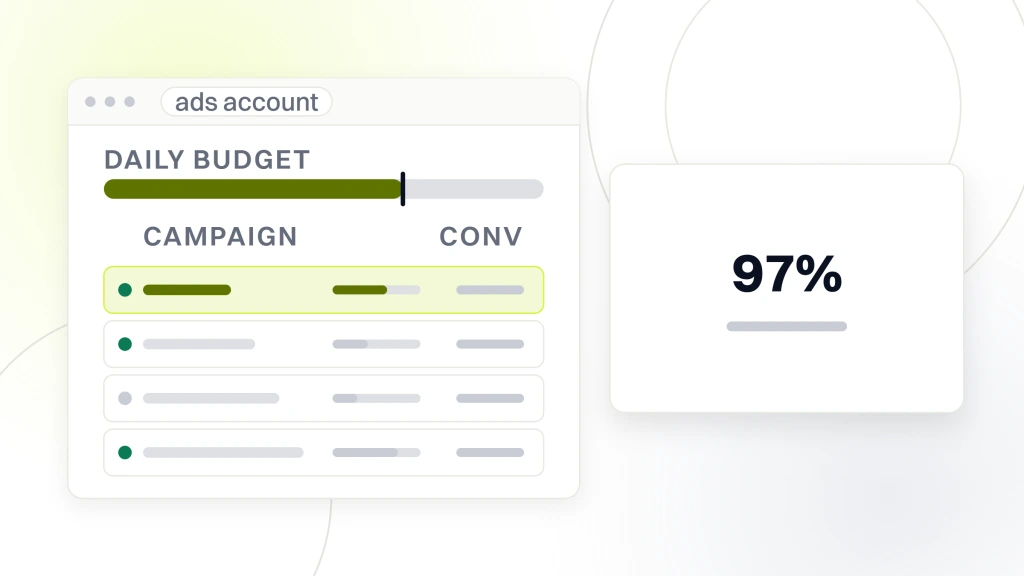
Callout. Cutting cost per lead from $1,936 to $63 is a 97% drop. That is what one funnel gives you when SEO content and PPC bidding are wired together.
We restructured Automation Anywhere’s paid campaigns into goal-split architecture, built per-region landing pages with local proof points, launched a free-trial funnel to match competitor offers, ran a conversion-focused content audit that mapped organic pages to funnel stages, and shifted bid strategy from rank to cost efficiency. 12 months later cost per lead dropped from $1,936 to $63, customer acquisition scaled 100x from 150 per month to almost 8,000 leads monthly, and ad impressions grew 300%. Same total budget. Different wiring.
Scope split that moved Automation Anywhere
Roughly 30% paid restructure, 25% landing page system with localized alignment, 20% conversion-focused content audit and SEO, 15% free-trial offer development, and 10% reporting and CRM attribution. The content audit alone earned back its cost in the first quarter by exposing which organic pages were catching high-intent traffic and sending it to weak CTAs. Fix the destination page and both channels get more efficient at the same time.
Two lessons from the Automation Anywhere rebuild
Lesson 1, running SEO and PPC as separate programs by separate vendors leaves 30 to 50% of the combined efficiency on the table. One team running both closes that gap. Lesson 2, most SaaS founders find half their prior marketing budget was funding poorly attributed junk once real reporting goes in. Painful to see. Cheaper to see it in month 3 than in month 24.
Reporting cadence that keeps SEO and PPC honest
Weekly async paid channel dashboard. Monthly video call covering both channels together with pipeline attribution reconciled. Quarterly business review with the executive team on blended CAC, payback period, and channel mix decisions for the next quarter. That rhythm keeps both channels accountable with no drowning of founders in reports. The mistake is running 2 separate weekly meetings for SEO and PPC. Founders stop attending both within 8 weeks.
One report. Both channels. Same slide. Compare cost per opportunity, opportunity to closed-won rate, and blended CAC across paid and organic every month. Watch the trend line, not the single-month spike. A channel that produces zero opportunities in month 1 and 30 in month 4 is not underperforming. It is compounding. Kill it too early and you never see the compounding. Keep it too long past a real signal that it does not fit your motion and you waste 6 months of runway.
Weekly async plus monthly working session
The weekly async dashboard update runs 15 minutes to read. The monthly video call runs 45 to 60 minutes with the growth team, focused on decisions to make, tests to sign off on, and blockers to unblock. Not a slide show. The founders come with problems. The agency comes with data and recommendations. Meeting ends with action items owned by names. That format produces movement. The format where the agency talks at slides for an hour produces nothing but a monthly bill.
Quarterly business review format
Quarterly reviews reconcile against Salesforce or HubSpot closed-won revenue attributed to marketing sources. Reviews decide next quarter’s channel mix, budget split, and 1 strategic bet across SEO and PPC. Reviews do not relitigate the monthly performance calls. That layer is already handled. Reviews look forward. The trap is spending 40 minutes on the last quarter’s rearview and 5 minutes on the next quarter’s roadmap. Flip the ratio.
Where paid and organic search fight each other
Cannibalization on branded search is real but usually overstated. Running an ad on your own brand name pulls 10 to 30% of clicks away from the organic listing. Some of those clicks would have found you either way. Some would not, since a competitor ad was sitting above your organic listing. The net effect is almost always positive. Founders who kill branded PPC to save $2,000 per month usually watch competitor branded PPC eat their organic traffic within 90 days.
The strangest cannibalization argument we ever heard came from a founder who wanted to pause branded PPC since it was cannibalizing organic. Same month he asked to pause organic content on the category, since paid was covering those keywords. Then wanted to pause paid on category, since organic would eventually rank. Follow that logic to the end and you pause everything and the phone stops ringing. Sometimes running two channels against the same keyword is the point.
Budget competition inside the marketing line item
The real fight is at the budget planning meeting. PPC produces reportable numbers in week 1. SEO produces reportable numbers at month 6 or later. CFOs move budget toward whichever channel produces the visible near-term wins, which is almost always PPC. Founders who let that happen watch SEO underinvestment compound into a $200,000 mistake at Series B. Lock in an SEO floor as a percent of total marketing spend and defend it against every quarterly reshuffling.
Attribution credit fights inside reporting
SEO and PPC teams fight for credit on the same deals. Multi-touch attribution can end the argument, but only if both teams agree on the model up front and the founders back the split. Last-click attribution rewards PPC and starves SEO of visible credit, which is why last-click PPC agencies always fight for last-click reporting. First-touch attribution rewards SEO and starves PPC. Neither model alone is honest. Land on multi-touch and settle the argument for good.
SaaS SEO and PPC integration tactics that pay for themselves
Five integration tactics carry outsized weight. Shared keyword research across both channels. Shared landing pages built for organic first and paid-tested second. Offline conversion imports from CRM into both ad platforms. Retargeting the organic visitor with paid ads on Meta or LinkedIn. Brand defense on your own name and category. Each tactic uses one channel to make the other more efficient, which is where the combined program earns its keep.
- Shared keyword research and prioritization across paid and organic teams
- Shared landing pages built for organic ranking first, A/B tested for paid conversion second
- Offline conversion imports from Salesforce or HubSpot into Google Ads and Meta
- Retargeting organic content visitors with paid ads for a nurture second touch
- Brand defense PPC on your own name and category keywords even when ranking number 1
- Content clusters that support both paid landing page tests and organic authority building
- Weekly sync between SEO and PPC teams on keyword performance and content gaps
Shared keyword research process
Both teams pull from the same keyword research file quarterly. SEO team owns the 6-to-12 month content roadmap. PPC team owns the 30-day paid campaign roadmap. Shared keyword file means both teams see which terms are converting on paid and worth SEO investment, and which terms are ranking organically and worth paid layering. Two teams. One file. 10 hours of coordination per month. Pays for itself in the first quarter.
Offline conversion imports as the shared truth
Import closed-won revenue from your CRM back into Google Ads and Meta as offline conversions. Both platforms then optimize bids toward users who actually generate revenue, not just users who filled forms. That layer works for both paid and organic reporting since both channels feed the same CRM. Truth comes from the CRM, not from the ad platform default reporting. Shops that skip offline conversion imports are running blind on 40% of the attribution.
Cluster content that serves both channels
Build content clusters around 10 to 15 target keywords per quarter. Each cluster has a pillar page plus 6 to 10 supporting articles. The pillar page doubles as a paid landing page for the head keyword. The supporting articles catch long-tail organic queries and feed retargeting audiences. One cluster. Two channels. 12 months of compounding.
Where our team fits on the SaaS paid and organic search stack
Redefine Web runs SEO and PPC as one integrated team, not two vendors. One strategist owns the combined funnel across paid and organic. One dashboard covers both channels with pipeline attribution reconciled monthly. Retainer tiers run $999, $1,499, $2,499, and from $4,500 per month by scope, matched to your stage and target funnel volume. For the parent view, our B2B SaaS Marketing Agency Tied to Pipeline hub covers the full stack.
We publish deliverable lists per tier so you know what lands each month before signing. For deeper detail on the paid side, our SaaS PPC Services: Ad Spend Tied to Pipeline page covers the campaign work. For the generic paid media view outside SaaS, our PPC Management Services covers our full offering. For the Google-specific side, our Google Ads Management Services covers the paid search motion.
Our monthly rhythm across both channels
Week 1 runs the paid channel refresh plus the SEO content publication schedule. Week 2 runs new campaign builds and landing page tests plus content promotion. Week 3 delivers the combined reporting call covering both channels. Week 4 handles CRM integration, offline conversion imports, and attribution reconciliation. That rhythm produces a repeatable pattern the growth team can plan around and gives the strategist room to react when either channel needs adjustment mid-month.
Founders get one point of contact, not 3. One weekly async note, one monthly working session, and one quarterly business review. Every deliverable ties back to pipeline. Every dollar of ad spend gets logged next to closed-won revenue in the CRM every 30 days, so you know what worked, what did not, and where the next $10,000 of budget should go before the quarter closes.
Where we decline the combined work
We decline engagements that want one channel run in isolation, since the compounding math only works when both channels feed each other. We decline shops looking for a $500 per month total budget, since neither channel produces meaningful volume at that spend. We decline pre-revenue SaaS with no CRM in place, since the reporting layer that makes both channels honest needs a working CRM to plug into. The accounts we take are the ones where the combined program can actually move revenue.
Where to start on the combined program
Start with the funnel numbers. Open the CRM. Note the pipeline generated last quarter split by source. Note the closed-won rate by source. Open Google Ads. Note the cost per opportunity by campaign. Open Search Console. Note the top 10 organic queries and the ranking positions. Those 4 data points tell you which channel is underperforming and which is compounding, and where the combined program should start next quarter.
Then run the 30-day PPC keyword test on 20 target keywords to seed the SEO content roadmap. Then build multi-touch attribution across paid and organic. Then set a monthly reporting cadence that covers both channels together, not separately. Then reconcile against closed-won revenue in the CRM every 30 days. For deeper technical detail on paid mechanics, Google’s own Ads support library at support.google.com/google-ads tracks the platform changes month over month.
Quick answers to the questions founders ask most about combining SEO and PPC for SaaS lead generation.