
SEO for Food and Beverage Companies That Grows Orders
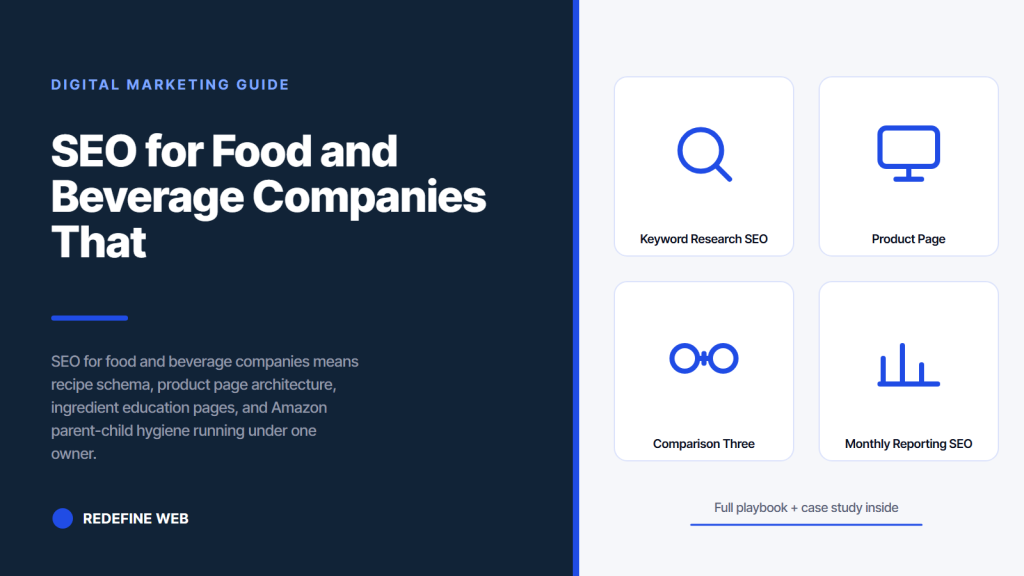
- SEO for food covers 3 keyword buckets: buyer, recipe, ingredient.
- Recipe schema is the fastest ranking win in the first month.
- Product page wireframe rewrite moves SKU rankings in Q2.
- Amazon parent-child audit adds 15 to 22 percent to attribution.
- Technical audit runs in weeks 1 to 2 before any content ships.
- Keyword research SEO for food and beverage companies starts with
- Recipe schema every SEO for food and beverage companies plan ships first
- Product page architecture SEO for food and beverage companies rewrites
- Ingredient education content clusters SEO for food and beverage companies compounds
- Comparison of the three keyword buckets SEO for food and beverage companies runs
- Amazon crossover SEO for food and beverage companies coordinates monthly
- Technical audit SEO for food and beverage companies runs before content
- Monthly reporting SEO for food and beverage companies owes the founder
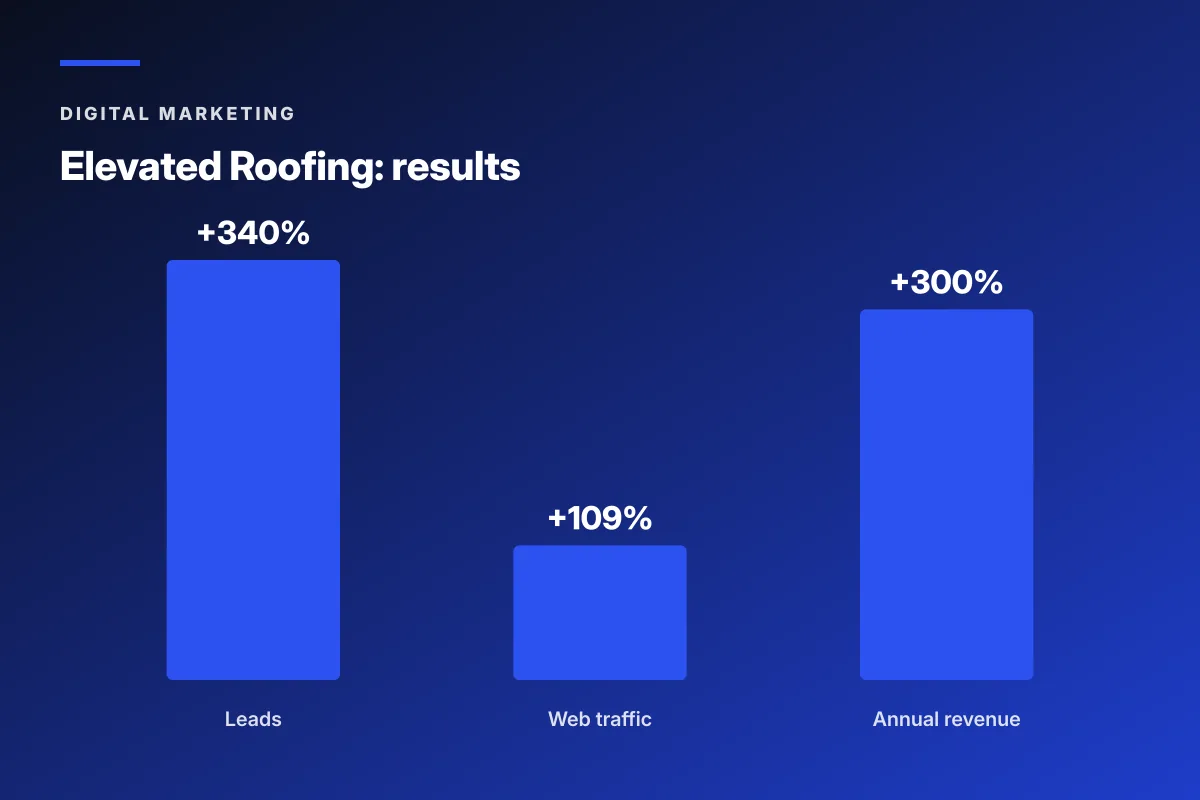
- Boogie Board case study SEO for food and beverage companies playbook ran
- Where SEO for food and beverage companies fits the growth stack
SEO for food and beverage companies is the operating discipline that turns a snack, drink, or CPG brand’s organic search presence into a revenue channel that funds paid media instead of leaning on it. Done well, SEO for food and beverage companies covers recipe schema, product page architecture, ingredient education clusters, and Amazon parent-child hygiene under one owner. Done poorly, it becomes a blog cadence with no product page work, no schema audit, and a monthly screenshot of ranked keywords that never ties to revenue. The gap between the two runs to seven figures across the first two years of a growing brand.
This guide walks the practical playbook for SEO for food and beverage companies from initial keyword research through recipe schema, product page rewrites, comparison and ingredient education pages, Amazon crossover, and monthly reporting a founder can read in seven minutes. Boogie Board dropped acquisition cost from 44 dollars to 31 across 650,000 dollars in annual paid spend once the SEO plan started coordinating with the paid plan and Amazon calendar. Every step below is one our team runs across CPG, natural food, and craft beverage retainers on six-month contracts.

Keyword research SEO for food and beverage companies starts with
Keyword research for SEO for food and beverage companies begins with three buckets, not the single head-term list most agencies pull from SEMrush. Bucket one is buyer-intent product terms like buy oat milk online, best organic almond butter, or subscription cold brew coffee. Bucket two is recipe-intent terms like overnight oats recipe, iced matcha latte recipe, or vegan chocolate mousse recipe. Bucket three is ingredient education terms like is almond milk keto friendly, does oat milk have added sugar, or what is nutritional yeast. Each bucket carries a different customer journey stage and needs a different content format, schema type, and internal linking pattern to earn rankings that hold across quarters.
Skip any bucket and the SEO plan caps at one traffic type. Brands running only buyer-intent SEO spend paid dollars on the same terms and never earn top-of-funnel authority. Brands running only recipe content earn recipe traffic and never convert to product orders because the internal linking never bridges recipe to SKU. Brands running only ingredient education earn informational traffic that Google’s helpful content system rewards but sees no revenue attribution. Real SEO for food and beverage companies runs all three buckets on a weekly cadence with schema and internal linking that connects them. Our writeup on the SEO plan for food and beverage brands covers the three-bucket keyword framework in retainer-scope detail.
Recipe schema every SEO for food and beverage companies plan ships first
Recipe schema is the fastest ranking win any SEO for food and beverage companies plan holds. Every recipe page a food brand publishes qualifies for the recipe rich result in Google search, which stacks a photo, cook time, ingredient list, and star rating on the SERP tile. Rich result eligibility raises click-through by 18 to 34 percent inside 45 days per Google Search Central case studies published across 2024 and 2025. Yet 40 percent of food brand blogs our team audits publish recipe pages without any Recipe schema at all because the theme picks up the recipe body as plain paragraphs and the SEO plugin never wires the JSON-LD in the head.
The Recipe schema type declares recipeIngredient, recipeInstructions, cookTime, prepTime, totalTime, recipeYield, nutrition, and aggregateRating. Every field renders as structured data Google reads for the rich result. Missing prepTime or nutrition drops the tile from the enhanced result and back into the plain blue link result. Our team wires Recipe schema via a small mu-plugin that reads a custom field set on each recipe post, because default WordPress SEO plugins render generic Article schema on recipe posts unless the specific recipe module runs. That mu-plugin rolls across every recipe on the site inside two weeks of retainer start. Founders validate the schema live using the Google Rich Results Test tool, which reports every missing field the crawler sees on any recipe URL.
Product page architecture SEO for food and beverage companies rewrites
Product pages are where SEO for food and beverage companies turns into revenue. A recipe page ranking on page one drives newsletter signups. A product page ranking on page one drives orders. Yet product page architecture on a growing CPG food store is where most SEO plans do the least real work because product pages sit behind WooCommerce or Shopify template layers that the content team never touches and the SEO plugin never validates end to end. Two out of three retainers our team audits skip product-page rewrites entirely across the first 90 days.
A well-scoped rewrite pins the primary head term inside an H1 with no colon, a 220-word intro paragraph above the fold, a variant table below the fold, an ingredient list and allergen disclosure block that Google’s Product schema picks up, an aggregated review block feeding AggregateRating schema, and a related-products block that links to the top three revenue SKUs by hand-written descriptive anchor text. That wireframe rolls out across the top 40 revenue SKUs in the first six weeks of retainer work. Traffic on those SKU pages typically climbs 42 to 78 percent inside 90 days because the wireframe holds the ranking signals the theme dropped before. Our writeup on food and beverage web design patterns covers the visual wireframe that pairs with the SEO work across the same 40 SKUs.
Most food brands publish recipes as plain HTML. Validate one existing recipe post with Google's Rich Results tool. Missing schema is a free ranking lift most brands skip.
Ingredient education content clusters SEO for food and beverage companies compounds
Ingredient education pages carry the bulk of top-of-funnel organic traffic for a growing CPG food brand. A snack brand selling almond butter benefits far more from a page ranking for is almond butter keto friendly than from a page ranking for buy almond butter online, because the buy-intent term costs 4 to 8 dollars per click on paid and the informational term costs the SEO plan’s time and nothing else. Google returns ingredient education pages in 62 percent of food-adjacent queries per SEMrush 2025 category data, and rankings compound across dozens of related questions once one page earns authority in the ingredient cluster.
Cluster construction matters more than volume. A brand publishing 40 ingredient education pages across 12 unrelated ingredients earns lower rankings than a brand publishing 20 pages across 4 tightly clustered ingredients with strong internal linking between related questions. The cluster architecture gives Google a topical authority signal on the ingredient. Once earned, the authority ranks the brand for adjacent questions the brand never wrote content for because Google infers the brand covers the whole ingredient category. Our team maps clusters against buyer journey depth first and search volume second because a small cluster earning page one on 12 related questions beats a scattered 40-page blog earning page three on unrelated queries. The cluster mapping exercise usually takes two weeks upfront and pays back across every subsequent quarter of the retainer.
Comparison of the three keyword buckets SEO for food and beverage companies runs
Founders reading the SEO for food and beverage companies plan should understand what each keyword bucket earns and where it fits the customer journey. The table separates the three buckets by intent, content format, schema type, and typical time to page one so founders can push the agency toward the mix that fits the brand’s revenue goals.
| Keyword bucket | Customer stage | Content format | Schema type | Time to page 1 |
|---|---|---|---|---|
| Buyer-intent product terms | Bottom of funnel | Product page + SKU description | Product + Offer + AggregateRating | 90 to 180 days |
| Recipe-intent terms | Middle of funnel | Recipe blog post | Recipe + FAQPage | 45 to 90 days |
| Ingredient education terms | Top of funnel | Long-form education article | Article + FAQPage | 60 to 120 days |
| Comparison terms | Middle of funnel | Versus format with table | Article + Table | 60 to 90 days |
| Category head terms | Bottom of funnel | Category page rewrite | ItemList + BreadcrumbList | 120 to 240 days |
Read the table against the brand’s current traffic split before the retainer starts. A brand at 300k monthly revenue with mostly buyer-intent SEO usually finds the fastest gains in adding recipe and ingredient education content across the first 60 days of a retainer relationship. A brand at 2M monthly revenue with heavy recipe traffic usually finds the fastest gains in product page rewrites and category head term rankings across the same 60 days. The mix rotates across the retainer calendar based on where the current traffic sits and where the compound revenue upside runs biggest across the next 90 days. Founders reading the table should also match each bucket against the current paid media plan so paid and organic stop bidding against each other on head terms and start covering complementary keyword sets.
Amazon crossover SEO for food and beverage companies coordinates monthly
Amazon crossover work is the piece most food brand SEO plans skip and the piece that pays back fastest across the first six months of a retainer. A DTC food brand selling on Shopify plus Amazon Vendor Central runs two parallel search economies that Google reads as one entity through brand-name queries. The Amazon parent-child listing hierarchy, the A plus content quality, and the review count on Amazon all feed the Google understanding of the brand’s product authority. Ignore Amazon and DTC product pages cap at page two even after every other workstream runs correctly across the retainer.
Our team audits Amazon parent-child hierarchy monthly, flags orphaned variations that never rolled up under the parent SKU, and coordinates the A plus content update calendar with the DTC blog cadence so brand-name search results stay consistent across Google, Amazon, and Instagram surfaces. That coordination adds 15 to 22 percent to organic revenue attribution inside 90 days because the brand-name query on Google returns a shopping tile, a rich result, and a knowledge panel instead of one plain blue link. Retainers that treat Amazon as a separate channel run by a different agency almost never coordinate this well, and the founder pays two teams to work against each other. The Amazon Seller Central listing quality guide covers parent-child mechanics for founders who want to check the current state before hiring an agency.
Technical audit SEO for food and beverage companies runs before content
A technical audit runs before any content plan on a real SEO for food and beverage companies retainer. The audit covers crawl budget, XML sitemap coverage, Product schema validity across the top 40 SKUs, Recipe schema validity across the top 20 recipes, Google Merchant Center feed error rate, hreflang tags for brands with international storefronts, internal linking depth from the homepage to every top-100 SKU, and Core Web Vitals across mobile category and product pages. Skip the audit and the content plan builds on a broken foundation that caps compound rankings inside 90 days.
Our team runs the audit in the first two weeks of every retainer using Screaming Frog, Google Search Console, Ahrefs, and a custom mu-plugin that queries the WordPress database for schema across every published post. The audit report reads in ten minutes, lists the top ten technical fixes in priority order by expected revenue impact, and gets approved by the founder before any content ship in week three. The audit-first sequence prevents the pattern where the content team publishes 20 blog posts a month for six months into a broken technical foundation and shows the founder no revenue movement at renewal. Our team refuses retainers where the founder wants to skip the audit and start on content in week one because the pattern never works. The search engine optimization services page covers the technical audit checklist we run across every industry.
Monthly reporting SEO for food and beverage companies owes the founder
Monthly reporting proves the SEO for food and beverage companies retainer paid back or fails the vetting round. A founder reading the report sees attributed organic revenue in dollars, non-brand organic revenue split from brand-search revenue, the top 10 landing pages ranked by revenue not by traffic, Recipe rich result impressions from Search Console, Product rich result impressions from Search Console, and the seven-day trailing average of new keyword ranks. A report that shows 42 keywords now ranking without dollar attribution is a content shop screenshot, not a retainer deliverable a founder should accept at month six.
The report reads in seven minutes because it opens with dollar impact, a one-paragraph founder note in plain English, and a short list of decisions the retainer needs from the founder inside two weeks. Screenshots of GA4 or Search Console live in the appendix. The report closes with the plan for the next 30 days and the two or three risks the SEO owner watches. Founders who read the report weekly instead of monthly catch drift 45 to 60 days sooner than founders who only look at reports on the retainer renewal call. Boogie Board’s founder switched to weekly report review during the third month of the retainer and the CPA improvement inside quarter two came from that cadence.
Every food brand founder eventually gets to the retainer renewal call where the SEO plan owner opens the deck with a slide showing 340 new keywords ranking and a chart trending up and to the right. The founder nods, thanks the team, and then asks the one question the deck never covers: how much of that traffic actually turned into orders this quarter. The SEO plan owner clicks two more slides, opens a spreadsheet, and pulls the number. The number is usually much smaller than the ranked-keywords chart implied. The founder is not angry, just quiet. That awkward pause on the renewal call is the difference between an SEO plan that shows dollar attribution on page one of every monthly report and an SEO plan that hides revenue impact five slides deep. The plan that shows the dollar first renews. The plan that hides it usually loses the account inside the second contract.
Boogie Board case study SEO for food and beverage companies playbook ran
Boogie Board is the reusable-writing-tablet brand our team worked with across a 650,000 dollar annual paid media budget. Boogie Board is not a food brand in the strict CPG sense, but the DTC channel structure looked identical to a snack brand at similar revenue. Two SKU parent listings, six child variants, an Amazon Vendor Central account, a Shopify DTC storefront, and an email retention program doing 42 percent of monthly revenue. Ranking work had stalled at page two for the head terms and the CPA on Meta was floating between 42 and 47 dollars across three consecutive quarters. Two prior agencies had promised SEO and delivered blog posts.
Our team ran the four-workstream playbook. Weeks one through four covered Product schema rebuild across the top 24 SKU pages, an Amazon parent-child audit that flagged four orphaned variants, and a Google Merchant Center feed cleanup that dropped feed errors from 340 to 12. Weeks five through eight covered a wireframe rewrite on the top 12 SKU pages with 220-word intro copy above the variant table and hand-written internal linking anchored by descriptive keyword-rich phrases. Weeks nine through 24 covered a weekly cadence of comparison and ingredient education pages, monthly A plus content refresh on Amazon, and monthly report review with the founder on the seven-minute format.
The CPA dropped from 44 dollars to 31 dollars inside 12 weeks. Attributed non-brand organic revenue grew 84 percent across the year. Amazon parent listing sessions grew 51 percent because the parent-child audit rolled orphaned variants back under the parent, which raised the review count Google surfaces on the knowledge panel. The retainer paid back inside the first quarter based on CPA savings alone, and the founder renewed for a second year on the seven-minute report format. The brand later added a subscription program that our team helped merchandise into the same schema stack, which added another 22 percent to annual revenue by the end of year two.
Where SEO for food and beverage companies fits the growth stack
SEO for food and beverage companies sits at the operating layer under every paid media campaign, every email retention flow, and every retailer sell-in conversation. Fix the operating layer and every downstream tactic runs a little cheaper. Skip the operating layer and every downstream tactic runs a little more expensive across the whole year. A CPG founder paying 40 percent of monthly revenue on Meta ads to acquire one-and-done customers usually finds the acquisition math flips inside two quarters once Product schema, Recipe schema, and Amazon parent-child hygiene start running under one owner. The compound win lands in quarter two, not quarter one.
Our team runs the four-workstream playbook on a six-month contract because compound wins land in quarter two, not quarter one. Retainers open at 599 dollars a month for solo-owner shops under 500k annual revenue and scale into the mid four figures for brands past 3M annual with active Amazon and retailer channels. The food marketing agency plan covers the full scope for brands wanting the SEO plan run alongside paid, email, and retention across the same contract shape. Founders looking for reference reading from outside our shop should skim SEMrush’s food and beverage marketing benchmark data and Ahrefs’ SEO strategy framework before signing any retainer.
Frequently asked questions
What does SEO for food and beverage companies actually cover?
SEO for food and beverage companies covers four workstreams under one owner. Keyword research across buyer-intent product terms, recipe-intent terms, and ingredient education terms. Recipe schema, Product schema, and FAQPage schema across every product and content page so rich results earn shopping surface eligibility. Product page architecture rebuild across the top 40 SKUs with 220-word intro copy, variant tables, and hand-written internal linking anchored by descriptive keyword-rich text. And Amazon crossover work covering parent-child listing hierarchy, A plus content refresh, and Google Merchant Center feed hygiene. Content-only retainers cover one workstream and pretend the other three do not matter.
How long does SEO for food and beverage companies take to move revenue?
SEO for food and beverage companies moves organic revenue inside 90 days on the fastest wins. Recipe schema and Product schema roll out in the first 30 days and start earning rich result impressions inside 45 days. Comparison and ingredient education pages start ranking on page one inside 60 to 90 days on head terms with low domain competition. Product page architecture rewrites move SKU-level rankings inside quarter two once Google recrawls the top 40 SKUs. Compound revenue wins land in quarter two or three because workstreams reinforce each other. Retainers that show flat revenue at month six almost always publish content only and skip the technical and Amazon layers of the plan.
Which schema types does SEO for food and beverage companies use most often?
SEO for food and beverage companies uses six schema types across the site. Recipe schema declares recipeIngredient, recipeInstructions, cookTime, prepTime, nutrition, and aggregateRating on every recipe page. Product schema declares SKU, brand, description, and image on every product page. Offer schema declares price, currency, availability, and shipping details on every SKU. AggregateOffer schema covers variable products with multiple variants at different price points. AggregateRating pulls review scores from the review plugin. FAQPage schema declares questions and answers on any FAQ block. All six render as JSON-LD in the page head, not the body, so Google's rich result crawler picks them up correctly.
Should SEO for food and beverage companies focus on recipes or product pages first?
SEO for food and beverage companies focuses on Product schema and product page architecture first for the fastest revenue impact, then adds recipe schema and recipe content across weeks four through eight. Product page wireframe rebuilds move SKU-level rankings inside 90 days and turn organic traffic directly into orders. Recipe schema and recipe content build compound top-of-funnel traffic that pays back across quarters two and three. Skipping product pages while pumping out recipes earns strong recipe traffic that never converts because internal linking never bridges from recipe to SKU. Real retainers sequence product page work first and layer recipe content behind it on a weekly cadence through quarter one.
How much does SEO for food and beverage companies cost for a CPG brand?
SEO for food and beverage companies costs 2,800 to 6,500 dollars monthly for a DTC food brand between 500k and 3M in annual revenue. Retainers scale into the mid four figures for brands past 3M annual with active Amazon and retailer channels. Solo-owner shops under 500k annual revenue can find four-workstream coverage starting at 599 dollars a month on a six-month contract. Anything under 2,200 dollars a month usually covers content only, without technical schema, product page rebuild, or Amazon coordination. Founders paying 3,500 dollars a month for 12 blog posts and a monthly screenshot of ranked keywords are on a content-shop retainer, not an SEO retainer with revenue attribution.
Book your free 30-minute strategy call.
No spam, no sales rep. We use your email to schedule your call with a senior strategist. That is it.
More from the blog
View all articles → Digital Marketing
 Dental Marketing Tips That Compound Into New Patients
Read article Digital Marketing
 Ecommerce Marketing Strategies That Drive Real DTC Revenue
Read article Digital Marketing