
SEO for Pet Businesses Across Retail Service and DTC
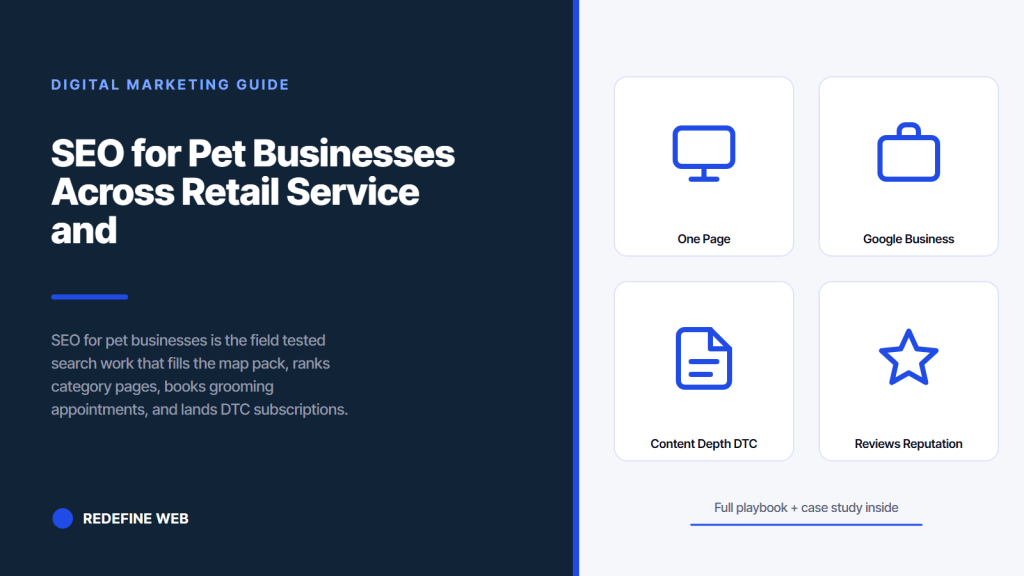
- Every pet business needs four SEO pillars alive at once.
- Google Business Profile is the map pack ranking floor.
- Category and service pages need real depth to rank.
- DTC brands rely on a research content base for topical authority.
- Review cadence beats review totals for map pack ranking.
- SEO for pet businesses in one page
- Google Business Profile is the ranking floor for every location
- Category and product page structure for pet retailers
- Service pages for grooming boarding and daycare
- Content depth for DTC pet brands
- Reviews and reputation across every pet business type
- Technical SEO basics across Shopify WooCommerce and WordPress
- Timeline expectations by pet business type
- How Passion Built maps to seo for pet businesses
- Five numbers to track every month
- Pick the right partner for your business type
SEO for pet businesses is the search work that turns a dog owner typing dog food near me, groomer for a golden retriever, or grain free puppy kibble into a shopper walking into a store, a booked grooming appointment, or a first order on a DTC subscription. Pet businesses split three ways. Retailers sell shelf products. Service businesses cut coats and board dogs. DTC brands ship direct. Every one of them shows up in search, and every one competes on a different mix of local, category, and problem intent every day.
This guide walks the version of seo for pet businesses that Redefine Web runs across the three business types. You will see the shared ranking base, the search stack for retail, the service business appointment playbook, the DTC content depth pattern, and the timelines by business type. Every play is field tested against real client billing and real revenue reporting across multi year engagements. If you sell pet products, cut dog coats for money, or ship kibble on subscription, this is the search plan that pays for itself inside a quarter.
SEO for pet businesses in one page
SEO for pet businesses covers four ranking pillars that every business type shares. A fully optimized Google Business Profile for physical locations. Category and product pages with real depth for stores that sell online. Service pages for grooming, boarding, training, and daycare with breed specific language. A steady content base that captures problem and research intent from pet owners at every life stage. Every pet business needs some mix of the four, and the mix changes with the revenue model.
Retailers lean hardest on the profile and category pages. Service businesses lean hardest on the profile and service pages. DTC brands lean hardest on category, product, and content pages. Every hybrid business, and most pet businesses are hybrids in some way, needs all four pillars alive at once. A retail store with grooming needs a strong profile, category pages for the shelf products, and service pages for the grooming bay. A DTC brand with one flagship SKU still needs a research base to earn the ranking trust for category intent terms.
Redefine Web tracks four numbers monthly for every pet business retainer. Ranking positions on the top 20 target terms. Non branded organic sessions to the pages that own those terms. Booked appointments or online orders attributed to organic search. And new keywords ranking positions 4 to 20 that can be pushed to top 3 with a page level rewrite. If those four numbers move, seo for pet businesses is doing its job. Read the pet products marketing hub for the full retainer scope.
Google Business Profile is the ranking floor for every location
Google Business Profile is the piece of seo for pet businesses that decides whether your shop, grooming salon, or boarding facility ever appears in the map pack. The map pack is the three result box that sits above organic results on almost every local pet query. Rank in it and you capture roughly half of all clicks on the query. Miss it and you catch almost nothing, no matter how much backlink work is happening on the domain.
Four inputs decide the profile. The primary category, set to Pet Store, Pet Supply Store, Pet Groomer, or Dog Day Care depending on the strongest revenue line. Full attributes filled out end to end, including curbside pickup, in store shopping, appointment required, dog friendly, and staff safety training. Photos uploaded weekly, including the storefront, aisles or grooming bays, and the staff and dogs on shift today. Products or services loaded into the profile with prices so shoppers see the offering before they open the site.
The fifth input is Google Posts. Weekly posts announcing new arrivals, this weekend’s grooming openings, upcoming vaccine clinic dates, or a new boarding calendar. Google reads the posting cadence as an activity signal and rewards active profiles with more map pack impressions. A dormant profile with no posts in six months slides down the pack even if reviews stay strong. This is why so many chain locations rank ahead of independents that never touch the profile after the initial claim. See the pet shop marketing playbook for the profile workflow.
Category and product page structure for pet retailers
Category and product page structure is where seo for pet businesses stops being a local play and starts producing online orders. A pet retailer on Shopify or WooCommerce has two rankable page types. Category pages for terms like grain free dog food, cat litter, or freeze dried treats. Product pages for individual SKUs like Orijen Original Puppy 25lb or Weruva Cats in the Kitchen 3.2oz. Both matter to the ranking base. Category pages catch the browse queries. Product pages catch the intent queries.
Category pages need real copy above and below the product grid, not just a grid dumped under an H1. Six hundred to twelve hundred words of buyer language covering what the category is, how to pick within it, and which brands you stock. Filter facets that Google can crawl for size, brand, protein source, and dietary attribute. Internal links out to related categories, like the puppy food page linking to puppy treats and puppy training aids. Compare this to a stock Shopify collection page that ranks for nothing because it has an H1, twelve products, and no copy at all.
Product pages need the buyer question set covered on page. Weight or size options, feeding guide, protein and calorie breakdown, comparable brands, and real photos plus a short video of the product. Reviews with keyword rich text pulled from real buyer language. Schema markup so shopping results show price, availability, and rating. A retailer that ships needs shipping detail on the page, not buried in the footer. See the pet industry SEO company playbook for the DTC extension of this pattern.
Pet parents type golden retriever groomer, not dog groomer. Add 5 breed-specific service pages to your site this week and watch the map pack climb.
Service pages for grooming boarding and daycare
Service pages are the pillar seo for pet businesses builds for grooming, boarding, training, and daycare operators. A single service page for grooming does not rank. A page tree with the parent service plus five to eight breed and cut specific children pages does. Poodle grooming. Doodle haircut. Golden retriever deshedding. Small dog wash. Cat grooming. Each child page is 800 to 1,500 words of specific language for the breed and cut, with real photos of the work, before and afters, and a booking widget above the fold.
Boarding pages need the same tree pattern. Small dog boarding. Large breed boarding. Cat boarding. Holiday boarding rates. Each page carries the specific care detail buyers ask about. Feeding schedule flexibility. Medication administration. Off leash yard time. Kennel size. Vaccine requirements. Owner check in access. Boarding buyers research more before they book than grooming buyers because leaving a pet overnight is an emotional decision. The pages that address the emotional questions rank higher than the pages that only list the price.
Daycare and training pages follow the same tree logic. A daycare page tree covers full day, half day, weekly package, and puppy socialization. A training page tree covers puppy basics, leash reactivity, separation anxiety, and group class. Each service child page needs its own H1, meta description, and structured internal linking pattern. This is why service pet businesses beat retailers on service intent terms. The retailer with a grooming bay in the back rarely builds this page depth. The dedicated groomer always does.
Content depth for DTC pet brands
Content depth is the pillar seo for pet businesses leans on hardest for DTC brands. A DTC pet brand that ships direct with no retail footprint has almost no local intent to catch. Ranking has to come from category pages, product pages, and a research base that convinces Google the domain deserves to rank on grain free puppy food or hip and joint supplement. That research base is 40 to 80 well written pieces per year, not four thin blog posts a month.
The research pieces cover life stage, breed specific, health condition, and behavior questions that pet owners type into Google every day. How much to feed a golden retriever. When to switch from puppy food to adult. Best food for cats with kidney disease. How to introduce a second cat. Each piece is 2,000 to 3,500 words with vet or trainer quotes, real photos, and a content upgrade wired to a welcome sequence. Thin pieces do not rank. Long, well sourced pieces rank and feed the email list at the same time.
The email list is where the DTC brand converts the search traffic. Category and product pages convert around 2 percent of cold search traffic. The email welcome sequence converts 8 to 15 percent of the shoppers who trade an email for a printable feeding guide, weight tracker, or vaccine schedule. This is why DTC pet brands cannot skip the content base and still rank. The research pieces are the top of funnel, and the welcome sequence is where the search work becomes revenue. Read HubSpot’s pet industry marketing overview for the funnel structure.
Reviews and reputation across every pet business type
Reviews and reputation drive map pack ranking harder than any other single input across every pet business type. A profile with 300 recent reviews at 4.7 stars will out rank a profile with 60 reviews at 5.0 stars in almost every metro. Recency matters more than average past a 4.5 floor. A steady flow of one to three reviews per week beats a bulk import of 20 reviews from a marketing campaign that ran two years ago.
The reliable way to keep the volume steady is to build the ask into the daily ritual. Retailers get a review request text at checkout, before the shopper leaves with the bag. Groomers get a review request text when the owner picks up the pet, with a photo of the pet mid session attached. Boarders get a review request text 12 hours after check out, with a Google review link on the first tap. That process gets 20 to 30 percent completion. The mailer or email process gets under 3 percent. Every morning your competition drives past their own dormant profile listing to grab coffee and never once thinks to ask their own customers for a review the same way they ask the barista.
Respond to every review inside 24 hours, positive and negative. Respond by name where you have it. Never argue with a negative review in the reply. A calm factual response to a bad review reads better to the next prospect than the bad review itself. Reputation compounds. The reputation flywheel takes six months to spin up and then never stops paying, as long as the daily ask stays disciplined and the response cadence stays inside 24 hours.
Technical SEO basics across Shopify WooCommerce and WordPress
Technical SEO for pet businesses is not exotic. Five items handle 80 percent of the ranking impact across Shopify, WooCommerce, and WordPress. Speed to first paint under 2.5 seconds on 4G mobile. Clean URL structure on categories, products, and service pages with no session ID clutter. Canonical tags set so the same page does not compete against itself under three URLs. XML sitemap submitted to Search Console with every rankable page included. Structured data on products, breadcrumbs, reviews, and the local business profile.
Shopify handles most of this out of the box but breaks on speed once you install four or five apps. Every app adds JavaScript that fires on every page. Audit apps quarterly and remove any that duplicate function. WooCommerce needs more attention. Choose a lightweight theme, set image sizes correctly, and lean on caching plus a CDN. WordPress on a shared host with 20 plugins is where technical SEO goes to die. Migrate to managed hosting and cull the plugin list first, then worry about the ranking work. The Core Web Vitals reference on web.dev is the source of truth on what the metrics are and how Google grades them.
The last technical item is faceted navigation for retailers with real product catalogs. Filters for brand, protein, size, and life stage should either use a URL parameter that Google can ignore, or a clean folder structure that generates real crawlable pages for the filter combinations that have real search demand. A puppy food filtered by grain free is a real query. A cat food filtered by chicken and salmon and turkey and duck all at once is not. Do not create indexable URLs for combinations no shopper ever searches.
Timeline expectations by pet business type
Timeline expectations for seo for pet businesses follow different curves by business type. A single location retail store or grooming salon sees the map pack move in 2 to 4 months. A retailer with a full ecommerce catalog sees the online order growth on a 4 to 9 month curve. A dedicated service business sees the appointment queries move fastest because service intent terms are less competitive than product terms in most metros. A pure DTC brand sees the ranking curve stretch to 6 to 12 months because content depth takes longer to build authority.
The table below breaks down the typical monthly split by business type. These are field averages across the pet businesses Redefine Web has worked with in the last three years, not a theoretical model. Every range is verified against real client billing and reported outcomes over multi year engagements. Businesses that add multiple revenue lines like a retailer with a grooming bay or a DTC brand with a retail pop up land in the higher end because each line needs its own SEO track.
| Business type | Program cost | Content cadence | Primary focus | Timeline to results |
|---|---|---|---|---|
| Single location retail or service | 599 to 1,200 | 1 piece per month | GBP > reviews > local content | 2 to 4 months |
| Multi location (2 to 5) | 1,200 to 2,500 | 2 to 3 pieces per month | Multi-profile GBP > location pages | 3 to 6 months |
| Retail plus ecommerce | 2,500 to 3,500 | 4 to 6 pieces per month | Categories > products > local | 4 to 9 months |
| DTC pet brand no retail | 3,500 to 4,500 | 6 to 10 pieces per month | Content > technical > PR | 6 to 12 months |
Two cost mistakes to avoid. First, do not underspend on the content side and overspend on link building. Google devalues cheap outreach links and rewards content that answers real buyer questions. Second, do not skip the technical audit at the start. A pet business on a bloated Shopify theme with 12 apps and no image optimization will underperform every category page rewrite until the technical base is clean. Read the pet products marketing retainer starting at 599 dollars per month for the program side base cost.
How Passion Built maps to seo for pet businesses
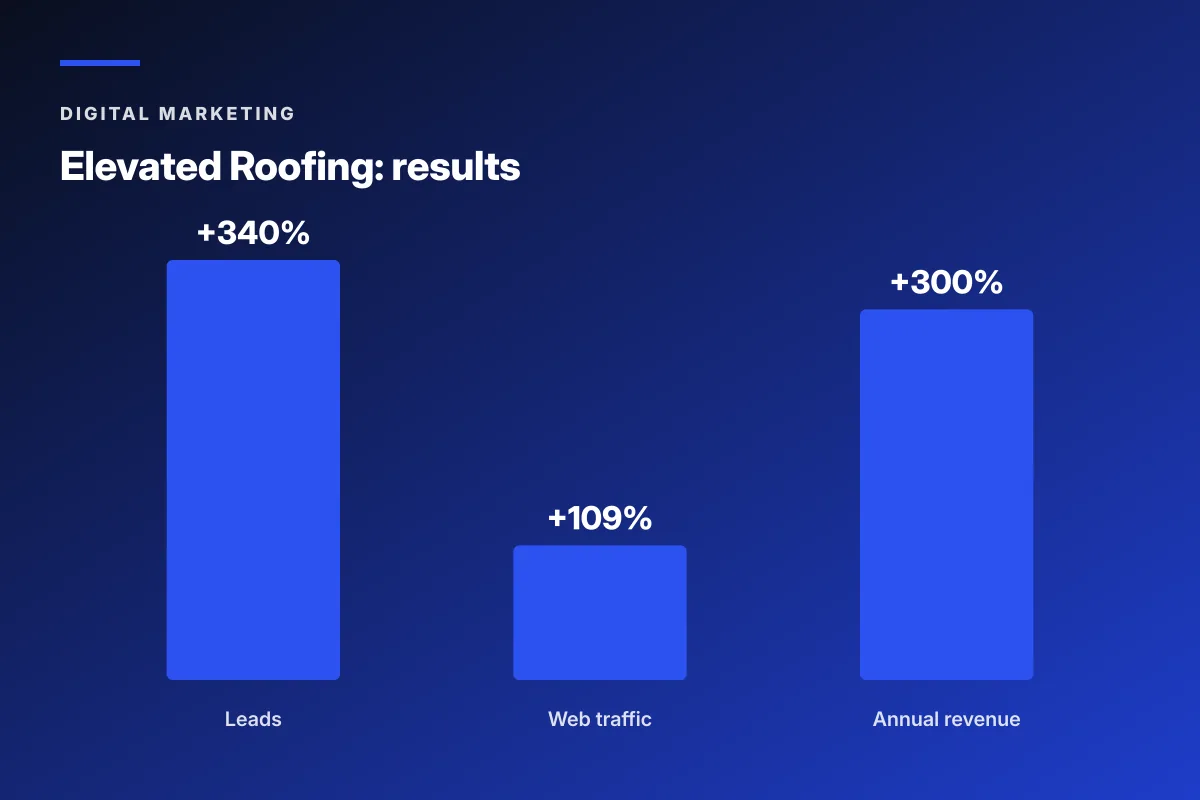
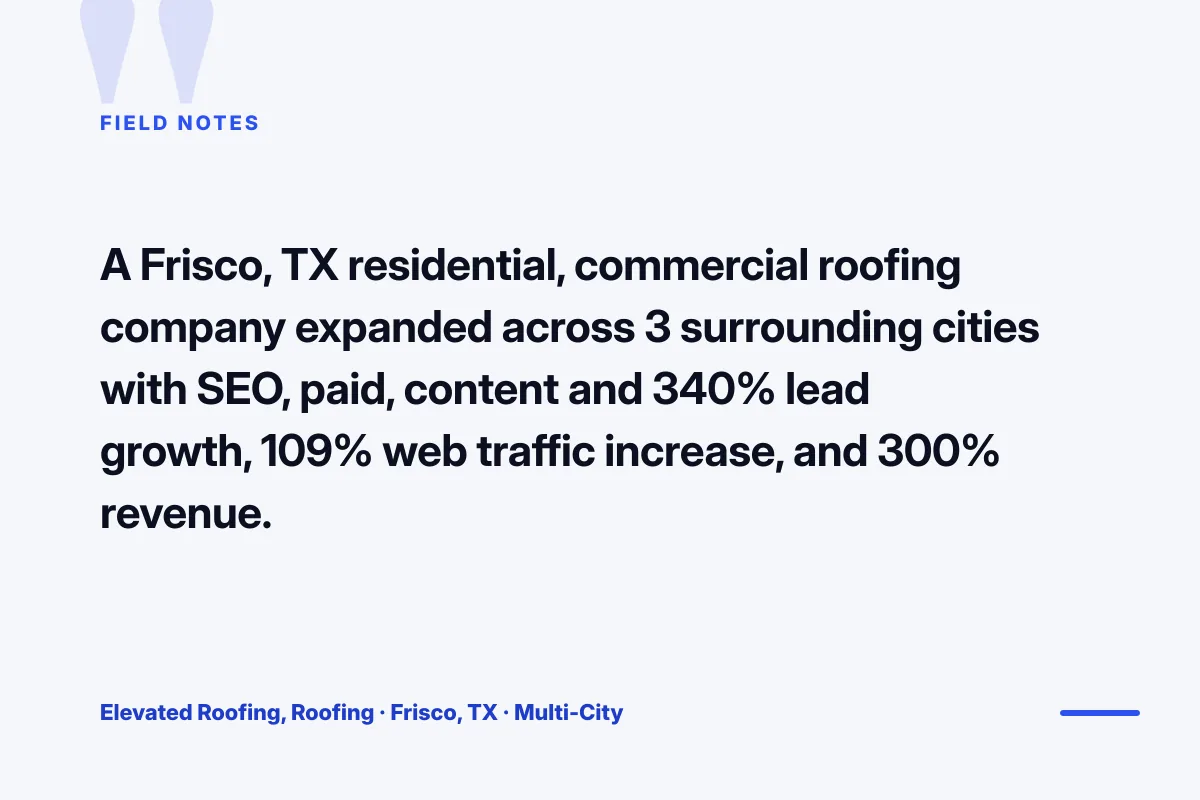
Passion Built is the local retail SEO story that maps cleanly to seo for pet businesses. The Sydney renovation brand came to Redefine Web with two underperforming sites and six ranking keywords, then grew to 300 plus ranking keywords, 10 percent visitor conversion, and $60,000 in bookings inside twelve months.
Every play in that engagement applies to a pet business without modification. Rebuild the Google Business Profile with the correct primary category and full attributes. Publish local content weekly. Build the category, service, and product page tree that catches buyer intent. Instrument every call, form, and checkout so the retainer proves itself in booked appointments and completed orders. Passion Built ran renovation. Pet retailers run kibble. Pet groomers cut coats. The search work is the same shape.
The transfer point for a pet business is timeline. Pet SEO with a service or product depth catalog ranks faster than renovation SEO because pet intent queries are higher volume and less competitive than home service local queries in most metros. A pet business on the Passion Built playbook typically sees the map pack move inside 90 days and the category or service ranking growth inside six months. Every business type moves on a slightly different curve, but the base structure holds across grooming, retail, boarding, and DTC.
Two extra plays make sense for a pet business that a renovation brand did not need. A booking widget wired into the site with real time grooming or boarding availability, so map pack visitors can book from the profile without a phone tag round. A subscription option on the top three consumable SKUs, so a repeat buyer commits to a delivery cadence instead of shopping the ranking every four weeks. Both plays layer on top of the base SEO work and both grow the value of every ranking click by a factor of two to three across the year.
Five numbers to track every month
Track five numbers monthly for seo for pet businesses. Google Business Profile calls plus direction requests. Map pack impressions on the top three category or service terms. Organic sessions to category, product, and service pages. Booked appointments or online orders attributed to organic search. And referring domains growth month over month. Everything else rolls into those five. If the five move, the business is growing. If they do not, the retainer is running blind.
Attach a real dollar value to each. A calling shopper is worth roughly one basket. A direction request is worth roughly one basket. A booked appointment is worth the service ticket. An online order is worth the order value. Once every action carries a dollar figure, the retainer moves from cost center to revenue lever. Reporting that skips the dollar step is the reason so many owners cannot tell if search is working after month three of the engagement.
Set the review cadence on top of that. Weekly review count. Response rate on new reviews. Recency of the last five reviews. All three feed the map pack ranking, and all three sit inside the store or salon manager’s daily work, not a separate SEO task. The reason chain businesses rank well is not budget. It is that every register and every check out asks for a review as a matter of policy. Independent businesses that copy that policy outrank the chains inside a year.
Pick the right partner for your business type
The right partner for seo for pet businesses depends on where the revenue actually comes from today. A single location retail or service business needs a partner strong on Google Business Profile, local content, and review workflow. A retailer with a real ecommerce catalog needs a partner strong on Shopify or WooCommerce category page structure, schema, and technical audits. A DTC pet brand needs a partner strong on content depth, digital PR, and product page conversion.
Three signals separate a real pet SEO partner from a generic search shop. Field tested experience in the vertical, meaning they know the difference between a Pet Store category and a Pet Groomer category on the profile. Business type reporting, meaning they can tell you organic sessions and appointments or orders by business line, not just total sessions across the whole domain. Access transparency, meaning the profile, Search Console, and analytics accounts sit in your name, not theirs.
Where to start this week depends on the state of your map pack and your catalog. If the map pack does not include your business, start with the profile rebuild and a text based review flow. If you rank in the pack but online orders or appointments are flat, start with a page level audit and a technical crawl. Read the Moz SEO learning center for the foundation reference, then map the plays to your own business type.
SEO for pet businesses is a small stack of work run every week. Google Business Profile. Category, product, or service page depth. Local and research content. Reviews at cadence. Technical hygiene. Passion Built grew from 6 ranking keywords to 300 plus on exactly this shape of program. Your pet business can hit the same math once the plan is real and the work happens every week, not in bursts.

Frequently asked questions
What is seo for pet businesses in plain terms?
Seo for pet businesses is the search work that puts a pet retailer, grooming salon, boarding facility, or DTC brand in front of buyers who type product and service queries into Google every day. Four pillars run under it. A fully optimized Google Business Profile for physical locations. Category and product pages with real depth. Service pages for grooming, boarding, training, and daycare. A steady content base for problem and research intent. Every pet business needs some mix of the four, and the mix changes with the revenue model.
How long does seo for pet businesses take to show results?
Google Business Profile impressions move inside two to four weeks once the profile is optimized with the correct primary category, full attributes, and weekly posts. Local pack ranking on the primary category or service term takes 8 to 16 weeks in most metros. Non branded organic traffic on category, product, or service pages compounds over four to nine months. DTC content authority takes 6 to 12 months to compound. Real programs set the retainer at six months minimum and grade the work on appointments, store visits, and online orders, not raw keyword ranks.
How much should a pet business spend on SEO per month?
A single location pet retailer or service business spends 599 to 1,200 dollars per month for the program cost. A multi location business with two to five sites spends 1,200 to 2,500 dollars. A retail plus ecommerce store spends 2,500 to 3,500 dollars. A pure DTC pet brand with no retail spends 3,500 to 4,500 dollars. Ad spend is always separate and rides on top of the program cost. Content cadence, technical work, and reporting depth scale with the budget line, but the base work of profile optimization and review workflow lives at every tier.
Do pet service businesses need product SEO to rank on grooming queries?
A dedicated pet service business does not need product SEO to rank on grooming, boarding, training, or daycare queries. Service pages with breed and cut specific children carry the ranking load. A groomer with a page tree for poodle grooming, doodle haircut, golden retriever deshedding, and small dog wash will rank appointment queries faster than a retailer with a grooming bay and one generic grooming page. The dedicated service business wins the service intent battle every time because the page depth signals expertise Google trusts.
Can a pet retailer skip a blog and still rank?
A pet retailer with a strong Google Business Profile, real category pages, and steady reviews can rank the map pack and category intent terms without a blog. The blog becomes essential when the retailer competes against DTC brands on problem intent queries like best dog food for sensitive stomach. Those queries require long form buying guides with real product recommendations to rank. A retailer that skips the blog cedes problem intent traffic to DTC brands and stays capped at map pack revenue. Adding one buying guide per month closes that gap inside a year.
How does seo for pet businesses differ from other local SEO?
Seo for pet businesses shares the map pack, profile, and review cadence work with any local SEO vertical. The differences are in the search intent mix and the buyer behavior. Pet queries carry more research and problem intent volume than most local verticals because pet owners have ongoing questions across the pet's life. Pet queries also carry higher commercial intent on brand terms because pet food and treats are repeat purchases. Both facts push pet businesses to build deeper content bases and richer product schema than a typical local business.
Book your free 30-minute strategy call.
No spam, no sales rep. We use your email to schedule your call with a senior strategist. That is it.
More from the blog
View all articles → Digital Marketing
 Dental Marketing Tips That Compound Into New Patients
Read article Digital Marketing
 Ecommerce Marketing Strategies That Drive Real DTC Revenue
Read article Digital Marketing