
Social Media Marketing for Fashion Brands Platform Playbook
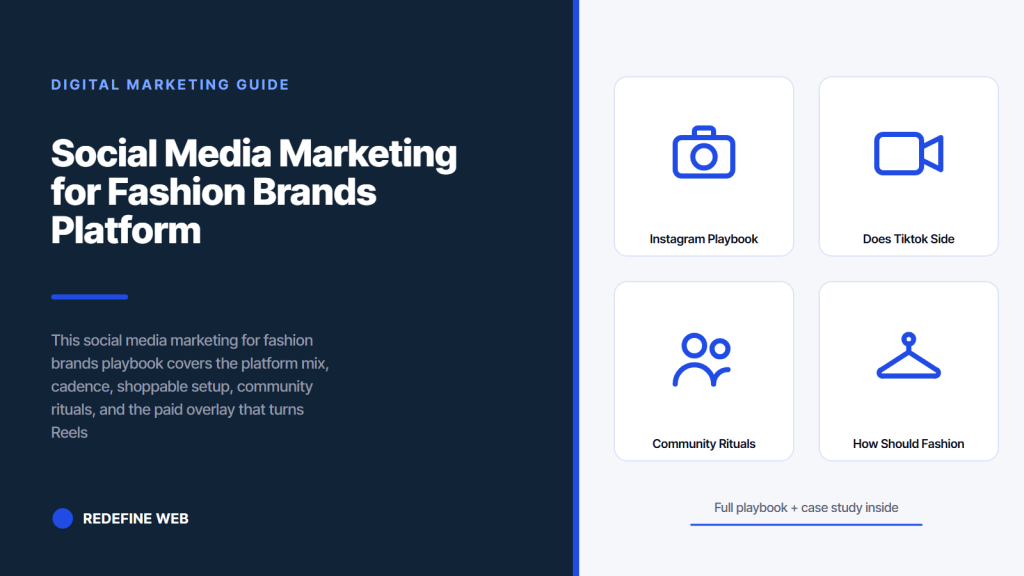
- Instagram plus TikTok plus Pinterest is the DTC apparel core stack.
- Reels and TikTok video drive discovery; carousels drive save rate.
- Pinterest is a search engine for outfits and buying intent.
- Shoppable posts collapse tap to cart to two clicks.
- Community rituals outperform post volume for repeat revenue.
- What social media marketing for fashion brands actually is
- How does social media marketing for fashion brands drive revenue
- The Instagram playbook inside social media marketing for fashion brands
- What does the TikTok side of social media marketing for fashion brands look like
- Pinterest inside social media marketing for fashion brands
- YouTube Shorts and long form for apparel labels
- Community rituals that outperform post volume
- How should fashion brands run the paid social overlay
- The content calendar shape inside social media marketing for fashion brands
- Attribution and measurement for fashion social
- A real social media marketing for fashion brands story
- Where social media marketing for fashion brands fits the stack
Social media marketing for fashion brands is the small stack of platforms and content formats a DTC apparel label runs to turn a Reels view into a checkout cart. Instagram is the identity home. TikTok is the discovery engine. Pinterest is the search engine for outfit ideas that convert weeks later. YouTube houses the long form haul and lookbook content that keeps working for a year. Every platform funnels back to product pages, paid retargeting pools, and email capture. Every post gets graded on tracked link taps, saves, and downstream orders.
This guide is the field tested version of that stack for founders and marketing leads at DTC apparel and accessories brands who want the platform mix right. You’ll see real cadence, real ad budgets, and the actual sequence we ran with Topps Tiles across a six month sprint that mapped cleanly onto DTC ecommerce. Read straight through in ten minutes.
What social media marketing for fashion brands actually is
Social media marketing for fashion brands is a system where every platform does one job. Instagram carries identity and shoppable tags. TikTok drives discovery. Pinterest catches high intent outfit search. YouTube houses long form haul content. Each platform hands the shopper to the next stage of the funnel.
The four jobs the system does
The stack does four jobs in sequence. Discovery on TikTok and Reels for a brand new customer scrolling for entertainment. Consideration on Instagram feed and Pinterest boards where the shopper is comparing looks. Purchase through shoppable posts, TikTok Shop, and the link in bio funnel. Retention through Stories, email captured from bio, and community rituals like drop day reveals. Each job needs its own content format and its own success metric.
Why fashion is different from other DTC categories
Apparel is a taste category. A furniture buyer researches for weeks and buys once. An apparel buyer sees a Reel, saves the outfit, checks the fit guide on a Tuesday, and orders on payday Friday. Attribution windows run 14 to 45 days, not the same day. The shopper needs to see the brand in three to seven touchpoints across two or three platforms before the first order. That is why the stack has to be built as a system where every platform reinforces the others, not as four separate content accounts running in silos.
How does social media marketing for fashion brands drive revenue
Social media marketing for fashion brands drives revenue by moving a shopper across three states. Cold on TikTok and Reels through short video that earns a save. Warm on Pinterest and Instagram grid where the shopper searches outfit ideas. Buying through shoppable tags and paid retargeting that closes the order.
The three state model in numbers
A cold viewer costs 8 to 22 cents per view on organic TikTok. A save costs 4 to 12 cents. A tagged product tap on a Reel runs 40 cents to 1.20 dollars in paid Meta traffic. A first order lands at 22 to 65 dollars in blended customer acquisition cost when the organic feeder is healthy. Brands that run only paid social with no organic content see the cost climb to 45 to 110 dollars per first order inside three months, because the algorithms treat cold traffic without brand context as low intent.
The 3 to 7 touchpoint rule
Apparel shoppers see a brand three to seven times before the first order. That is a real behavioral pattern we’ve measured across DTC labels serving 25 to 44 year old style buyers. The touchpoints do not have to be paid. A Reel, a Pinterest save, a Stories poll, an email capture, and a retargeting ad add up to five touches in 21 days. Our fashion marketing agency writeup covers how the full stack composes across paid, organic, and site.
The Instagram playbook inside social media marketing for fashion brands
Instagram is the identity home. Not the discovery engine anymore. The Reels tab still delivers new eyeballs, but the grid, Stories, and product tags do most of the closing work. Founders who cut Instagram to chase TikTok give up the shoppable surface that Meta has spent five years tuning.
The Reels, carousel, Stories mix
Three to five Reels weekly for reach. One to two carousels weekly for save rate (carousels earn 1.4 to 2.1 times the saves of single image posts on style content). Daily Stories that mix product drop teasers, behind the scenes on the studio, and user generated outfit photos with a poll or a question sticker. Broadcast Channel updates once a week for the top tier followers. The grid stays a curated identity strip, not a promotional feed. Feed the algorithm variety and it feeds you distribution.
Shoppable posts and the checkout
Instagram Shopping syncs to your Shopify or WooCommerce catalog nightly. Tag two to four products per Reel and one to three per carousel. Do not tag every look; over tagged posts underperform reach by 12 to 20 percent because the algorithm reads them as pure product spam. The Instagram Shopping documentation covers the catalog, tagging, and checkout setup that most DTC labels miss on first setup. Tag hygiene is the cheapest win available. Fix it in one afternoon and watch tap through rise the next week.
Instagram gets the credit. Pinterest gets the sale a month later. Check GA4 assisted conversions by source. If Pinterest is under-credited, your split is off.
What does the TikTok side of social media marketing for fashion brands look like
TikTok is the discovery engine. Short video, hook first second, and creator content that feels native to the For You Page. Reach is free for accounts under 100,000 followers because the algorithm still favors content quality over follower count for style verticals in 2026.
The hook, format, and pace stack
Every TikTok opens with a visual hook in the first second and a spoken or on screen text hook in the first three. Formats that work for apparel: outfit change transitions, styling one piece three ways, get ready with me, unboxing a drop, and behind the scenes on the studio. Pace stays tight, 15 to 45 seconds for feed content, 45 to 90 seconds for detailed styling. Aim for three to five posts weekly and let the volume feed the algorithm data. Under two posts weekly and TikTok stops testing your account against new audiences.
TikTok Shop and creator affiliate
TikTok Shop lets US, UK, and Southeast Asia shoppers buy without leaving the app. The average TikTok Shop conversion rate for apparel runs 1.8 to 4.2 percent, roughly double a cold TikTok visitor landing on your Shopify. Creator affiliate through TikTok Shop pays out on a revenue share model, which pulls in mid tier creators (10,000 to 200,000 followers) that would not touch a flat fee brief. The TikTok Shop launch announcement covers the format and the pay model in more depth.
Pinterest inside social media marketing for fashion brands
Pinterest is the highest intent traffic in the entire stack for apparel. Shoppers search Pinterest the way they search Google, but with images. A pin created today keeps earning saves and clicks for 12 to 30 months, which is why every DTC apparel program that stops pinning quietly leaves revenue on the table.
Pinning cadence and evergreen boards
Aim for 10 to 20 fresh pins weekly across evergreen boards organized by outfit occasion, season, and style category. Every product image gets multiple pin variations with different text overlays and different aspect ratios (2:3 and 9:16 both perform). Fresh pins earn distribution; repinning the same image loses traction inside 30 days. Tag every pin to a product URL on your Shopify or WooCommerce store, and enable rich pins so live price and stock show inside the pin card.
| Platform | Primary job | Post cadence | Time to first sale | Attribution window |
|---|---|---|---|---|
| Instagram Reels + grid | Identity + shoppable | 4 to 7 posts weekly | 7 to 21 days | 14 days |
| TikTok | Discovery + creator | 3 to 5 videos weekly | 3 to 14 days | 7 days |
| Search + evergreen | 10 to 20 pins weekly | 21 to 90 days | 30 to 45 days | |
| YouTube Shorts | Cross post + subs | 3 to 5 shorts weekly | 14 to 45 days | 28 days |
| YouTube long form | Lookbook + haul | 1 video every 1 to 2 weeks | 30 to 120 days | 90 days |
Pinterest paid pins and shopping ads
Pinterest Ads run cheaper than Meta on cost per click for apparel, roughly 22 to 65 cents versus 55 cents to 1.40 dollars on Instagram Reels ads. Shopping ads pull directly from your product catalog and appear inside visual search results, which is where the highest intent Pinterest search happens. The Pinterest Ads overview covers targeting and shopping ad setup. Budget 800 to 3,000 dollars monthly on Pinterest Ads once you have 200 plus fresh pins in the account, or the paid layer runs faster than your organic catalog can support.
YouTube Shorts and long form for apparel labels
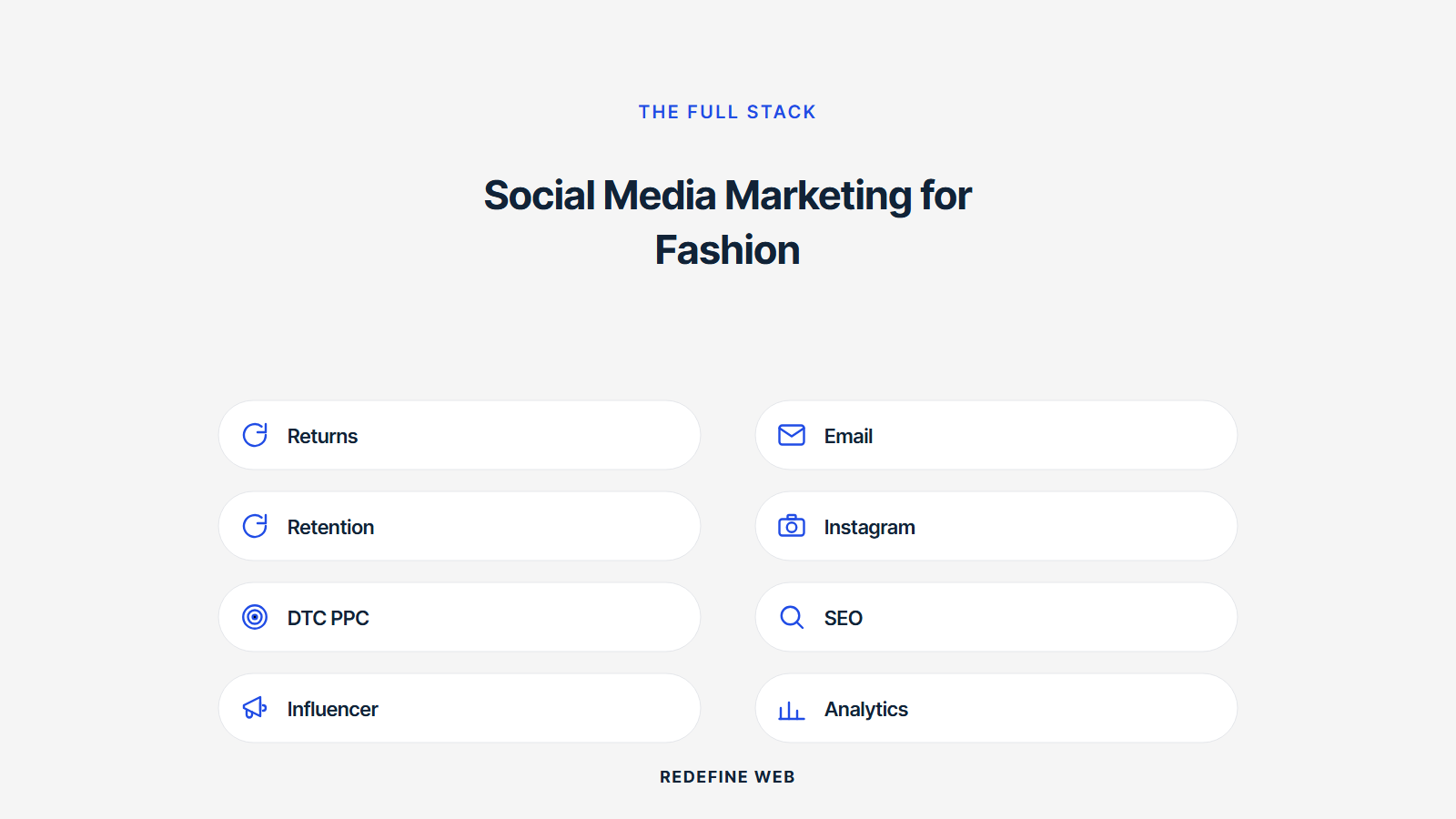
YouTube is the platform apparel brands under invest in most. Long form haul and lookbook videos keep working for 12 to 24 months. Shorts pulls the TikTok content library into a second discovery surface with a different audience skew (25 to 44, higher purchase intent). Every hour of studio content that goes to TikTok should also cut into a YouTube Short and, when possible, a longer haul.
The cross post pattern that saves time
Shoot once, cut three ways. A three minute studio session for a drop produces one TikTok, one Reel, one Pinterest video pin, and one YouTube Short with 90 minutes of edit time total. That cross post pattern is what lets a two person content team hit weekly cadence across four platforms without burning out. Do not cross post the same watermarked video to every platform; each platform’s algorithm penalizes external watermarks. Re export clean and add platform native captions.
Long form and the subscriber base
A long form YouTube haul (12 to 25 minutes) does two jobs. It ranks in YouTube search on evergreen terms like styling a linen dress for summer and grows a subscriber base that becomes an owned distribution channel. Every 1,000 new subscribers on the channel is roughly 40 to 90 email captures over 12 months through the video description link. Post one long form video every one to two weeks, keep the thumbnail bright and readable at small size, and lean on chapter markers so viewers can jump to the outfit they want.
Community rituals that outperform post volume
Community is the retention engine every fashion account eventually discovers after they hit the ceiling on organic reach. A brand posting 30 times a month with a dead comment section gets outperformed by a brand posting 12 times a month with a 500 person Broadcast Channel and a monthly drop day ritual. The math on repeat revenue rewards depth over volume.
Broadcast Channels, Close Friends, and drop day
Instagram Broadcast Channels handle 10 to 50,000 followers with early access to drops, behind the scenes photos, and stock notifications. Close Friends Stories reach the top 500 to 1,500 fans with early product previews and 10 to 15 percent off codes. Drop day rituals (weekly, biweekly, or monthly) create a recurring event that shoppers plan around. Our team ran drop day cadence for a DTC label serving 25 to 34 year old buyers and saw the drop day session count run three times the average Tuesday.
Comments as customer research
Every comment on a Reel or TikTok is unpaid customer research. Which color did she wear on the second look. What’s the price. Does it come in a size 16. Every one of those comments is a product page gap or a paid ad angle you can test next week. Assign one team member to read every comment daily and log the top 10 patterns into a monthly report. Brands that treat comments as noise miss the fastest signal loop available in social.
Every apparel founder eventually asks the content team why the mannequin video with 400,000 views did not sell. The mannequin video was a Reel of a headless dress form rotating slowly. Nobody bought the dress because nobody could see how it fits a human. Somewhere in the archive of every DTC brand there’s a viral Reel of a plastic torso quietly generating more agency meetings than actual customers.
How should fashion brands run the paid social overlay
The paid social overlay rides on top of organic content that already earned traction. Boost the Reels that hit 5 to 15 percent save rate organically. Retarget cart abandoners and view content pixel fires on a seven day window. Run cold prospecting only after the retargeting funnel is full.
The Meta budget split
A working Meta apparel account runs a 40 or 30 or 30 split. 40 percent on cold prospecting to advantage plus audiences with broad interest layers. 30 percent on retargeting from Instagram profile visits, video views over 25 percent, and pixel fires. 30 percent on cart abandonment and website custom audience retargeting with dynamic product ads. Budgets under 3,000 dollars monthly compress into a 60 or 40 prospecting or retargeting split, because the audiences at the low end are too small to slice further.
TikTok Ads and Spark Ads
TikTok Ads work best when they promote creator content or your best organic videos through Spark Ads. Spark Ads run from the creator’s original post, which keeps the native feel and outperforms studio produced ad creative by 30 to 60 percent on click through. Budget 800 to 2,500 dollars monthly for Spark Ads once you have 15 to 25 tested organic videos in the account. Our full ecommerce social media marketing guide covers the paid overlay by channel in more depth.
The content calendar shape inside social media marketing for fashion brands
A working content calendar rides on themes, not slots. Monthly themes anchor the drop, the story, and the campaign. Weekly rhythms fill in evergreen product content. Daily Stories keep the account warm. Every calendar entry has a platform, a format, a hook, and a link destination before the shoot day even starts.
The monthly theme pattern
Every month opens on a drop theme (a new capsule, a color story, a collab). Week one is the tease, week two is the launch, week three is the styling content, week four is the last chance and back in stock. This four beat structure repeats every month with different themes and different products, and it gives the paid team clear windows to swap creative in and out. Founders who plan month to month with no theme end up shooting content on the fly and the paid engine runs cold.
The weekly rhythm inside the theme
- Monday: 1 Reel, 5 Pinterest pins, 1 TikTok reposted from Reel with re-captions.
- Tuesday: 1 carousel showing styling combinations for the drop.
- Wednesday: 1 TikTok native (behind the scenes, GRWM, or creator content).
- Thursday: 1 Reel, 1 Pinterest pin batch, drop day if biweekly cadence.
- Friday: 1 TikTok, Stories highlight of the week’s top content.
- Saturday: 1 Pinterest pin batch, community reply reel to top comment.
- Sunday: Long form YouTube or Shorts cross post, prep for next week.
This weekly rhythm produces 3 to 4 Reels, 3 to 4 TikToks, 15 to 20 Pinterest pins, and 1 long form or Short every week without burning the team. Two people run it comfortably. One person plus a freelance editor runs it tight but doable. The trap is thinking daily posts across every platform is a real strategy. Two well produced Reels beat seven rushed ones every single week.
Attribution and measurement for fashion social
Attribution on social breaks in 2026 because 60 to 75 percent of purchases now happen on a device or session that never sees the ad click. iOS privacy, ad blockers, and cross device browsing kill last click reporting. Every fashion brand that still grades social on last click sessions is grading half the story.
The four number scorecard we actually use
Blended customer acquisition cost, which is total ad spend divided by new customer count that month. Marketing efficiency ratio, which is total new revenue over total ad spend across all channels. Content save rate as an organic health metric (target 2 to 8 percent on Reels for style content). And post purchase survey response asking every buyer how they found you, run through a Fairing or KnoCommerce widget on the thank you page. Those four numbers together tell a truer story than any single last click dashboard.
Testing cadence and creative iteration
Cut one Reel or TikTok concept every week. Test three creative variations on paid Meta and TikTok simultaneously. Kill the two losers, scale the winner, and rebuild the loser into a new hook variation. Founders who wait a month to iterate creative burn budget on tired ads. Founders who cut new creative every seven days ride a fresh testing curve that consistently keeps CPMs 20 to 40 percent below the account average. For paid search that captures the demand social creates, see the fashion PPC agency guide.
A real social media marketing for fashion brands story
Topps Tiles is not an apparel label, but the paid social program we ran for them across a six month sprint mapped directly onto DTC ecommerce and produced numbers a fashion brand at similar spend would recognize. The account rebuild followed the same three state audience model, the same organic feeder, and the same weekly iteration cadence used across our social media marketing for fashion brands engagements.
What the sprint delivered
The six month program at Topps Tiles delivered 5,465 new visitors, 1.3 million additional impressions, a 7 percent click through rate gain, and 33 percent unique visitor share captured in the UK tile market. The engine was quarterly test and learn on paid Meta and paid Google, with the same cannibalization control test and inventory led targeting that apparel brands use to prevent Meta and Google eating each other’s credit inside a single funnel.
What transfers to apparel
The test and learn cadence transfers cleanly. So does the inventory led targeting (only serve ads on styles with real stock). So does the cannibalization control test between paid social and paid search. The one thing that shifts for apparel is the creative volume. Home improvement runs 3 to 6 creative variants monthly. Apparel needs 15 to 30 because the taste category demands fresh looks weekly. The rest of the operating system holds without changes.
Where social media marketing for fashion brands fits the stack
Social sits at the top of the funnel and the bottom, but not the middle. The middle belongs to email, search, and the site itself. Fashion brands that treat social as the whole marketing plan hit a plateau at 200,000 to 500,000 dollars annual revenue and stall.
The channels social feeds
Every social touch should feed the email list. Every Reel bio, every TikTok caption, every Pinterest board description points to a lead magnet, a drop notification signup, or a first order code. The list belongs to you. Every social platform is rented from an algorithm that can change tomorrow. A brand with a 40,000 person email list and a 100,000 follower Instagram is safer than a brand with a 400,000 follower Instagram and no email capture at all.
What sits underneath
A working site, a working email flow, and a clear paid search engine sit under the social layer. Retainer pricing starts at $599 per month for the entry apparel program on a six month contract, and rides higher when the paid budget and creative volume grow. Every layer of the stack carries its own weekly rhythm, success metric, and team lead. The engine only compounds when all four layers run at the same cadence and hand traffic across in the right order.
Social media marketing for fashion brands works when Instagram, TikTok, Pinterest, and YouTube each do a specific job and hand the shopper to the next platform in a real sequence. Cadence matters more than volume. Community rituals outperform post frequency. Paid overlays only pay back when the organic content already earned save rate. When you’re ready to run this playbook across your DTC apparel program, our apparel and fashion marketing retainer covers the full stack starting at $599 per month.
Frequently asked questions
What is social media marketing for fashion brands in plain terms?
Social media marketing for fashion brands is the small stack of platforms and content formats a DTC apparel label runs to turn browsing into buying. Instagram carries brand identity and shoppable product tags. TikTok drives discovery through short video and creator content. Pinterest catches high intent outfit searches that convert weeks later. YouTube houses long form lookbooks and hauls that keep working for a year. Every platform funnels back to product pages and paid retargeting pools, and every post gets graded on tracked link clicks, saves, and downstream orders rather than raw follower counts.
Which platforms should a fashion brand prioritize in 2026?
Instagram, TikTok, and Pinterest carry the load for most apparel labels in 2026. Instagram is the identity home and the product tagging surface. TikTok is the discovery engine, especially for accounts under 100,000 followers where the For You Page still hands out free reach. Pinterest is a search engine for style boards and the highest intent traffic in the stack. YouTube Shorts helps when you already have long form content to slice, and adds a real subscriber base over 12 months. Twitter or X and Threads are optional and only pay back for brands with a clear editorial voice or founder personality.
How many posts per week should a fashion brand publish on each platform?
Aim for three to five Instagram Reels weekly, one to two carousels weekly, and daily Stories that mix product, behind the scenes, and user content. TikTok wants three to five short videos weekly with a heavy hook first second. Pinterest rewards 10 to 20 fresh pins weekly on evergreen product and outfit content. YouTube Shorts follows the TikTok cadence, and long form YouTube stays at one video every one to two weeks. The trap most brands fall into is chasing daily posts across every platform. Two well produced Reels beat seven rushed ones every single week.
How do shoppable posts work for fashion ecommerce?
Shoppable posts let a shopper tap a product tag on an Instagram Reel, TikTok video, or Pinterest pin and land directly on the product page or an in app checkout. Instagram Shopping ties to your Shopify or WooCommerce catalog and syncs stock and price nightly. TikTok Shop keeps the checkout inside the app for the US, UK, and Southeast Asia markets. Pinterest catalogs push product feeds into visual search results. Every shoppable format shortens the path from inspiration to cart by two to three taps, which raises tap through conversion 40 to 90 percent over link in bio.
How much should a fashion brand spend on paid social monthly?
A launch stage DTC label spends 3,000 to 6,000 dollars per month on paid social split across Meta and TikTok. A brand at 100,000 to 500,000 dollars annual revenue spends 8,000 to 20,000 dollars, with 60 percent on Meta and 40 percent on TikTok in most cases. A brand over 1 million dollars annual revenue runs 25,000 to 80,000 dollars per month across Meta, TikTok, Pinterest, and creator partnerships. Ad spend always trails organic content quality by four to six weeks, because the paid engine rides on top of the tested Reels and TikToks that earned organic traction first.
Do fashion brands need a full creative agency or can they run social in house?
A brand doing under 500,000 dollars annual revenue can run social in house with one full time content person plus a freelance video editor and photographer on retainer. Above that mark, the creative volume, paid overlay, and reporting cadence usually overwhelm a solo content lead. Most 1 to 10 million dollar apparel brands run a hybrid with an internal creative director, one to two social producers, and an outside agency partner for paid social, influencer sourcing, and monthly reporting. The retainer at that stage starts around 6,000 dollars monthly and rides at 3 to 8 percent of media spend.
Book your free 30-minute strategy call.
No spam, no sales rep. We use your email to schedule your call with a senior strategist. That is it.
More from the blog
View all articles → Digital Marketing
 Dental Marketing Tips That Compound Into New Patients
Read article Digital Marketing
 Ecommerce Marketing Strategies That Drive Real DTC Revenue
Read article Digital Marketing