
Top Beauty Marketing Agencies for DTC Skincare and Aesthetic Clinics
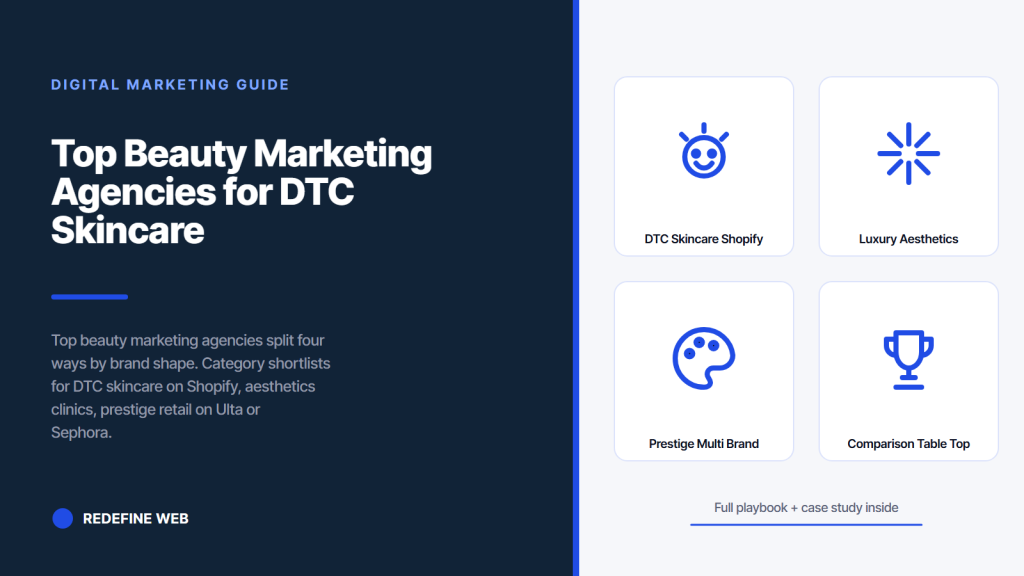
- Top beauty marketing agencies split four ways by brand shape.
- DTC skincare demands Klaviyo revenue share on the dashboard.
- Luxury clinics run on booked consults and consult close rate.
- Salon chains need multi location GBP and booking conversion.
- Ask for account lead tenure over 18 months before signing.
- Top beauty marketing agencies sort four ways by brand shape
- Evaluation criteria the top beauty marketing agencies actually pass
- Top beauty marketing agencies for DTC skincare on Shopify
- Top beauty marketing agencies for luxury aesthetics clinics
- Top beauty marketing agencies for prestige and multi brand retail
- Top beauty marketing agencies for salons spas and multi location chains
- Comparison table of top beauty marketing agencies by category and fit
- Interview questions the top beauty marketing agencies handle without flinching
- Red flags that disqualify from a top beauty marketing agencies shortlist
- Retainer pricing math the top beauty marketing agencies quote
- Case study Beauté Aesthetics New York fits the luxury clinic filter
- Pick the right top beauty marketing agencies partner for your brand shape
The list of top beauty marketing agencies looks different depending on whether you sell a $68 serum on Shopify, run a Manhattan aesthetics clinic booking $4,000 laser packages, or push wholesale skincare across Ulta and Sephora. Every category demands a different marketing stack, a different media mix, and a different creative rhythm. A single roster ranking cannot capture the difference between a founder led clean beauty brand chasing repeat purchase math and a multi location med spa chasing consult chairs. Yet founders keep asking for the roster, so the honest answer is worth writing down.
This guide walks the version of top beauty marketing agencies filtering that Redefine Web uses when a client asks who else to consider, when a brand founder wants a second opinion on a proposal, and when an in house team needs a benchmark. You get category shortlists by brand type, honest evaluation criteria, a comparison table, real named case studies, and the questions that separate a roster listing from an actual partner.
Top beauty marketing agencies sort four ways by brand shape
Top beauty marketing agencies do not fit on one roster because the work splits four different ways depending on the brand shape. A DTC skincare brand needs paid social, influencer, and Klaviyo lifecycle. A multi location med spa or luxury clinic needs Google Ads, GBP, and consult booking landing pages. A prestige beauty brand at Sephora needs retail media, brand campaigns, and content amplification. A salon or spa chain needs local SEO, review generation, and booking widget optimization. Any roster that stacks all four categories together is a directory listing, not an evaluation.
Sort by the outcome you actually need before you shortlist. A DTC founder chasing repeat purchase math needs a partner that reports on 90 day cohort revenue and Klaviyo automation revenue share. A clinic chasing consult chairs needs a partner that reports on cost per booked consult and no show rate. A salon chain chasing booked treatments needs a partner reporting on Google Business Profile actions and booking widget completion rate. Ask the shortlist to walk their client dashboard on a screen share. If the dashboard does not tie to the outcome that pays your rent, they are the wrong partner regardless of case study logos.
Redefine Web works across three of the four brand shapes and points the fourth to specialists when a fit does not exist. Beauty and skincare DTC on Shopify, multi location med spa and aesthetic clinics, and salon or spa chains all land in the sweet spot. Prestige brand campaigns for Sephora and Ulta shelves sit outside the scope. Read the beauty and skincare marketing hub for the full retainer overview.
Evaluation criteria the top beauty marketing agencies actually pass
The criteria that separate top beauty marketing agencies from a generic performance shop come down to five checks. First, category depth on your specific brand shape with three or more current retainers in DTC skincare, aesthetics clinics, or salon chains. Second, a reporting dashboard that ties every media dollar to a booked treatment or a paid order, not a click. Third, in house creative that can turn around a product hero shot, a treatment video, or a founder UGC edit inside a week. Fourth, a media buyer who can name the exact Klaviyo flow or Google Ads bid strategy on the account without opening the platform. Fifth, a monthly QBR that tracks last 90 days cohort revenue, not just monthly spend and clicks.
Two criteria most rosters skip that matter more than trophies. A named account team that stays on the account longer than 12 months. Beauty accounts break when the strategist rotates every quarter, because the creative calibration and audience insight rebuilds from scratch every time. Ask the shortlist for the tenure of the last three account leads on beauty accounts. If the average is under 18 months, the partnership is going to churn just as the media stack starts to compound. Skip the roster listing. Ask for continuity.
The other criterion is data access transparency. The hosting login, the Google Ads MCC, the Meta business manager, the GBP profile, and the analytics property have to sit in your name, not the agency’s. Any partner that holds your ad accounts hostage to keep you on retainer fails the test the moment you consider switching. Read the WARC beauty industry trend report for the current benchmarks on beauty marketing spend allocation.
Top beauty marketing agencies for DTC skincare on Shopify
Top beauty marketing agencies for DTC skincare on Shopify share three habits. They obsess over 60 day repeat purchase rate, not last click ROAS. They run creative testing on Meta and TikTok in weekly sprints, not quarterly refreshes. And they treat Klaviyo lifecycle revenue as the third media channel after paid social and Google, not an afterthought. A brand that skips lifecycle revenue leaves 25 to 40 percent of trailing 90 day revenue on the table.
Redefine Web ran this exact shape of program for a premium Indian skincare D2C brand out of Mumbai. Cruelty free, dermatologically tested, targeting urban women 22 to 35. Before the engagement, organic traffic was flat, paid campaigns ran on broad targets with no return measurement, and Klaviyo automation revenue was zero. Six months in, organic traffic climbed 220 percent, monthly sales moved 3.5 times, and paid ROAS hit 5.2 times on a segmented campaign structure. The playbook was brand repositioning, problem led content, technical and on page SEO, segmented paid and influencer, social rebuild, and email automation running end to end.
Shortlist filter for DTC skincare on Shopify. Do they show a Klaviyo revenue share number on the dashboard. Do they run creative testing in weekly sprints with a named creative strategist. Can they name the three ad accounts and two Klaviyo flows on your account without opening the platform. If yes to all three, they belong on the shortlist. If not, they are running the account like a generic performance shop and the compounding will never happen.
A DTC founder chasing repeat cohorts and a med spa chasing consult chairs need different partners. Write down the ONE metric that matters, then shortlist.
Top beauty marketing agencies for luxury aesthetics clinics
Top beauty marketing agencies for luxury aesthetics clinics work on a different math than DTC. The metric is booked consults per month, cost per booked consult, and consult to treatment close rate. Traffic and impressions matter, but only as far as they push the booked consult number. A clinic doing 40 booked consults per month at $180 cost per consult and 55 percent close rate is doing better than a clinic doing 80 booked consults at $140 cost per consult and 22 percent close rate, because the second clinic wastes half of its consult chairs on tire kickers.
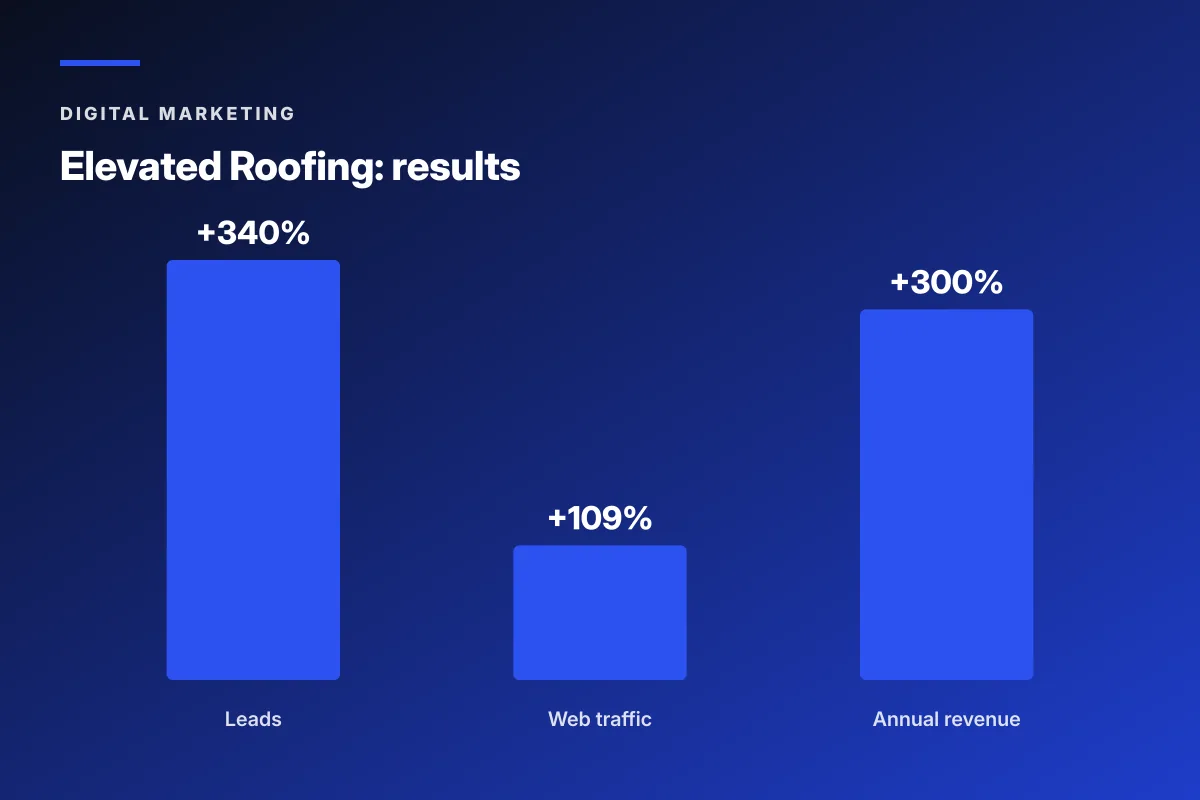
Beauté Aesthetics New York is the Manhattan luxury clinic Redefine Web worked with on exactly this math. The clinic came in with weak digital UX and no clear consult booking funnel. Twelve months in, lead volume grew 166 percent, new users grew 88 percent, and conversion rate on the consult funnel grew 27 percent. The playbook was a polished platform rebuild, tightened consult booking UX, paid Google and Meta focused on medical grade treatments, and a lifecycle sequence for consult follow up. The clinic reads as premium, the funnel books qualified consults, and the treatment mix skews toward high margin injectables and laser packages.
Shortlist filter for luxury clinics. Do they report on cost per booked consult, not cost per lead. Do they have a lifecycle sequence for consult follow up that recovers no shows. Do they design the consult page for phone booking as well as form fill because 40 to 60 percent of luxury clinic bookings come by phone. If yes to all three, they get the shortlist. See the med spa marketing agency hub for the adjacent clinic playbook.
Top beauty marketing agencies for prestige and multi brand retail
Top beauty marketing agencies for prestige and multi brand retail carry a different creative bar and a different media mix. Retail media on Ulta, Sephora, and Amazon Beauty run parallel to DTC. Brand campaigns on video and connected TV drive shelf takeaway. Influencer and creator programs feed the brand story and the retail sell through math at the same time. This is where a specialist beats a generalist by a wide margin. A brand shipping through Ulta needs a partner who can read the Vibenomics data and the Sephora retail media dashboard, not just Meta Ads Manager.
Two Ukraine based Redefine Web wins map to the retail and distributor side of prestige beauty. A natural cosmetics manufacturer running D2C plus wholesale and a professional equipment plus cosmetics distributor both leaned on segmented paid, content depth, and structured brand storytelling to move volume through both channels. The retail sell in requires the same brand consistency the wholesale buyer needs to see across the digital footprint. Any weakness in the DTC digital story creates a hesitation from the retail buyer that costs the shelf slot.
Shortlist filter for prestige and multi brand retail. Do they have three or more current retail media clients on Ulta or Sephora. Can they build a shelf takeaway model that ties DTC brand spend to retail sell through. Do they run a creator program that produces content the retail buyer sees. If any of the three is a no, the partner is a DTC shop dressed in prestige language. Read the Beauty Independent industry publication for the prestige beauty operator perspective.
Top beauty marketing agencies for salons spas and multi location chains
Top beauty marketing agencies for salons, spas, and multi location chains treat local SEO and Google Business Profile as the base layer. Every location needs a distinct GBP with real photos, current hours, and a weekly post cadence. Every location needs a location page on the site with structured data, real reviews pulled from GBP, and a booking widget that opens the correct branch. Every location needs a review generation cadence that pushes new reviews weekly, because GBP position on the map pack correlates with review velocity as much as review count.
The base media stack for a salon or spa chain runs Google Ads on service intent keywords, Meta on brand awareness within a 5 to 10 mile radius, and lifecycle email for rebooking. Booking widget optimization matters more than most agencies admit. A widget that requires two page loads to book a treatment loses 20 to 40 percent of the booking intent between click and confirmation. Redefine Web audits every salon and spa client’s booking widget monthly against the current best practice conversion rate benchmarks.
Shortlist filter for salon and spa chains. Do they run multi location GBP management with a named local SEO lead. Do they publish location specific landing pages, not one page with a location switcher. Do they measure booked treatments per location, not just website sessions. If yes to all three, they are running the account like a chain, not a single location shop.
Comparison table of top beauty marketing agencies by category and fit
The comparison table below sorts top beauty marketing agencies by the brand shape they actually deliver strongest against. Each row is a category with the primary reporting metric that a partner in that category should report on every month, the base retainer floor, and the type of case study to ask for. Use the table as a shortlist filter, not a hire recommendation. Category depth and the specific in house creative bench matter more than the roster listing.
| Category | Primary metric | Retainer floor per month | Case study to ask for |
|---|---|---|---|
| DTC skincare Shopify | 60 day repeat purchase and Klaviyo revenue share | 4,500 to 12,000 | Repeat rate growth with cohort revenue chart |
| Luxury aesthetics clinic | Booked consults and cost per booked consult | 3,500 to 9,500 | Booked consult growth with no show rate |
| Prestige retail Ulta or Sephora | Shelf takeaway and DTC ROAS mix | 8,500 to 25,000 | Retail media dashboard with sell through |
| Salon or spa chain multi location | Booked treatments per location and GBP actions | 2,500 to 6,500 | Per location booking growth report |
Use the table as a filter, then interview two partners per category. The interview is where fit surfaces or disappears. A partner that reads well on the shortlist can fall apart on the first working session if the creative bench is thin, the strategist rotates, or the reporting dashboard cannot answer the right question. Ask to see the live client dashboard on a screen share. Ask to meet the strategist who would run your account, not the sales lead. Ask what the last three retainers looked like at month 12, not month 3. Read the beauty marketing retainer plans for the Redefine Web scope.
Interview questions the top beauty marketing agencies handle without flinching
The interview questions that separate top beauty marketing agencies from a directory listing come down to what the partner has already lived through. Ask about a real crisis on a beauty account. A viral TikTok that broke the fulfillment queue. A dermatologist review that tanked the brand voice on Trust Pilot for a week. A retail buyer pulling the SKU on 24 hours notice. A regulatory letter about an ingredient claim. Every beauty operator with three years of category time has three crisis stories, and how they navigated matters more than the win case study.
Ask about brand voice consistency across DTC, retail media, influencer, and lifecycle email. A partner that runs the brand voice differently in every channel is a partner that will dilute the brand three months in. Ask to see the brand book and the creator brief. If both are one page each and the creator brief is the same one every DTC brand gets, the partner is production, not strategy. If the brand book runs 8 to 20 pages and the creator brief is customized to the specific product and audience, the partner is thinking category strategy first, execution second.
Ask about the retainer math around media buying. A partner that takes a percentage of media spend has a built in incentive to grow spend, not to grow return. A partner on a flat retainer with performance bonus has a built in incentive to grow return. Neither model is perfect, but the incentive alignment matters. Beauty brands with tight margin on $40 to $80 SKUs cannot afford a partner incentive that pushes them to overspend on top of funnel awareness. The founder who tells you they picked their agency on price is the same founder writing you a $40,000 recovery invoice eighteen months later.
Red flags that disqualify from a top beauty marketing agencies shortlist
Red flags on a beauty marketing shortlist are consistent across every category. A partner that only shows case studies more than 24 months old is running on past logos, not current traction. A partner that cannot walk their client dashboard on a screen share is hiding the actual reporting quality. A partner that requires a 12 month lock in with no performance review clause is asking you to underwrite their bench cost, not their outcomes. A partner that takes 4 to 6 weeks to answer a scope question is going to be slower once you are a paying client.
Two red flags specific to beauty. First, a partner with no in house creative that can produce product hero shots and treatment videos. Every beauty account needs 8 to 20 creative assets per month at a minimum, and outsourcing the creative to a third party production shop adds two weeks of turnaround time and a 30 to 60 percent cost premium. Second, a partner that runs influencer as an add on line item on the invoice rather than a first class media channel. Beauty accounts that treat influencer as a first class channel see 15 to 30 percent higher ROAS on the total media mix than accounts that treat it as an afterthought.
The last red flag is a partner that promises specific growth numbers before they audit your accounts. Any partner promising a 3 times ROAS or a 100 percent revenue growth before seeing the current Meta account, the Klaviyo flow revenue, and the site conversion rate is selling on emotion, not math. Real partners audit first, promise a range second, and confirm the range after 60 to 90 days of running the account.
Retainer pricing math the top beauty marketing agencies quote
Top beauty marketing agencies price retainers based on scope, not seat count. A DTC skincare brand needing paid social, Google, Klaviyo, and creative production lands in the $4,500 to $12,000 monthly range depending on media budget and creative volume. A luxury clinic needing paid Google, Meta, GBP, and consult funnel work lands in $3,500 to $9,500 depending on locations. A salon chain needing multi location GBP, local SEO, paid Google, and booking optimization lands in $2,500 to $6,500 per month for a base of 3 to 8 locations. Prestige retail scope carries the highest floor because retail media alone requires a specialist.
Media spend sits on top of retainer. A DTC skincare brand pushing for growth needs a media budget of $25,000 to $150,000 per month across Meta, TikTok, Google, and creator seeding. A luxury clinic in a mid tier metro needs $8,000 to $40,000 per month across Google and Meta. A salon chain per location typically runs $1,500 to $4,500 per month depending on service mix and market density. Any partner that hides the split between retainer and media spend is being unclear on purpose. Real partners show both numbers side by side on the proposal.
Contract structure matters. Redefine Web writes typical retainers as a six month initial term with a performance review at month three and a rolling three month renewal after. That structure gives both sides enough time for the media stack to compound while creating a clean exit if the fit is wrong. Any partner asking for 12 months minimum with no interim review is optimizing for their bench utilization, not your revenue growth. See the Klaviyo beauty ecommerce benchmarks for a lifecycle revenue reference point.
Case study Beauté Aesthetics New York fits the luxury clinic filter
Beauté Aesthetics New York is a Manhattan luxury beauty and aesthetics clinic that ran the top beauty marketing agencies shortlist and picked a partner that could run the consult booking math end to end. Advanced treatments, medical grade cosmetic procedures, wellness services, and a clientele that expected a polished platform. The clinic came in with the reputation but not the digital funnel to convert it. Weak digital UX. A consult booking flow that lost qualified traffic to friction. And a follow up sequence that never recovered the no shows.
The engagement rebuilt the platform on a luxury visual bar, tightened the consult booking funnel down to a three step flow with real time availability, layered paid Google and Meta on high intent treatment keywords, and stood up a lifecycle sequence that recovered 25 percent of the no shows into rebook. Twelve months in, lead volume grew 166 percent, new users grew 88 percent, and the consult conversion rate climbed 27 percent. The treatment mix skewed toward the high margin injectables and laser packages the clinic was best at delivering, which pushed the average consult value up alongside the volume.
The Beauté engagement is the shape a luxury clinic should look for on the top beauty marketing agencies shortlist. Not a roster listing or a trophy case. A partner that reports on booked consults, tracks the consult to treatment close rate, and rebuilds the funnel where the friction actually lives. That is the difference between a directory ranking and a real partnership.
Pick the right top beauty marketing agencies partner for your brand shape
The right top beauty marketing agencies partner for your brand depends on the brand shape, the primary metric, and the retainer scope. A DTC skincare founder chasing repeat purchase compounding needs a partner strong on Klaviyo, Meta creative testing, and cohort reporting. A clinic founder chasing consult chairs needs a partner strong on paid Google, consult funnel design, and lifecycle recovery. A salon chain founder needs a partner strong on multi location GBP, local SEO, and booking widget conversion. A prestige brand founder needs a specialist on retail media and shelf takeaway analytics.
Three moves this week to move from shortlist to signed partner. First, audit your current reporting stack and write down the one metric your business runs on. Second, ask three partners to walk their client dashboard on a screen share and score them on whether the dashboard reports the metric that pays your rent. Third, ask the top scorer for the account team lead’s tenure on beauty accounts. If the average is over 18 months and the dashboard ties to your metric, that is your partner.
Where Redefine Web fits on that filter. Beauty and skincare DTC, luxury aesthetics clinics, and multi location salon chains sit in scope. Prestige retail media specialists get referred out. See the beauty SEO company page for the search side of the retainer.
Top beauty marketing agencies exist across four brand shapes and price ranges. Filter by brand shape and primary metric before the roster listing. Ask for the dashboard walkthrough, the account lead tenure, and a real crisis story. Skip anyone who promises specific numbers before an audit. Every top beauty marketing agencies shortlist that books real treatments and moves real orders passes the same filters. Beauté Aesthetics New York found the fit that grew leads 166 percent. Your brand can find the fit that books the metric paying your rent.

Frequently asked questions
What separates top beauty marketing agencies from directory listings?
Top beauty marketing agencies filter by brand shape first, not roster ranking. A DTC Shopify skincare partner needs a completely different bench than a luxury clinic partner. The shortlist filter that matters is category depth on your specific brand shape with three or more current retainers, a live reporting dashboard that ties every media dollar to a booked treatment or paid order, a named account lead who stays past 18 months on beauty accounts, and an in house creative bench that can turn work in a week.
How much do top beauty marketing agencies charge per month?
DTC skincare Shopify retainers run 4,500 to 12,000 dollars monthly depending on media budget and creative volume. Luxury aesthetics clinic retainers run 3,500 to 9,500 dollars depending on locations and consult funnel complexity. Salon and spa chain retainers run 2,500 to 6,500 dollars for a base of 3 to 8 locations. Prestige retail scope carries the highest floor because retail media specialists cost more than DTC generalists. Media spend sits on top of retainer and the split shows clearly on the proposal.
What red flags disqualify a beauty marketing agency from the shortlist?
Case studies more than 24 months old signal past logos, not current traction. An inability to walk a client dashboard on a screen share hides the reporting quality. A required 12 month lock in with no performance review clause asks you to underwrite their bench cost. No in house creative bench for product shots and treatment videos slows the account by two weeks per creative cycle. Any specific growth promise made before auditing your accounts sells on emotion, not math. Any two of these five is enough to disqualify.
Which beauty marketing agency category fits a luxury Manhattan clinic?
A luxury Manhattan clinic fits the aesthetics clinic category and needs a partner running paid Google on high intent treatment keywords, tight consult booking funnel design with three step booking, GBP optimization, and lifecycle recovery for consult no shows. Beauté Aesthetics New York took this exact playbook to 166 percent lead growth, 88 percent new users, and 27 percent consult conversion growth inside twelve months. The metric that matters is booked consults per month and cost per booked consult, not clicks.
How should a DTC skincare founder evaluate beauty agencies?
A DTC skincare founder should evaluate on Klaviyo revenue share reporting, weekly creative testing sprints on Meta and TikTok with a named creative strategist, and cohort revenue analysis at 60 and 90 day marks. Ask three partners to walk their client dashboard on a screen share and only shortlist the ones whose dashboard already reports on repeat purchase rate and lifecycle revenue share. A partner that treats Klaviyo as an add on line item leaves 25 to 40 percent of trailing 90 day revenue unclaimed.
What does a real top beauty marketing agencies retainer include?
A real retainer includes paid media buying with a named strategist, in house creative production for at least 8 to 20 assets per month, lifecycle email management on Klaviyo or equivalent platform, monthly reporting tied to the primary business metric, and a quarterly business review with cohort revenue analysis. Media spend sits on top of retainer and shows separately on the proposal. Contract structure runs six month initial term with a performance review at month three and rolling three month renewal after.
Book your free 30-minute strategy call.
No spam, no sales rep. We use your email to schedule your call with a senior strategist. That is it.
More from the blog
View all articles → Digital Marketing
 Dental Marketing Tips That Compound Into New Patients
Read article Digital Marketing
 Ecommerce Marketing Strategies That Drive Real DTC Revenue
Read article Digital Marketing