
SEO services are the ongoing work of making a site easier for search engines to crawl, understand and rank, sold in one of three shapes, an audit, a monthly retainer, or a fixed project. What you buy in every case is a set number of hours spent on technical fixes, page optimization, content and links. The hard part is not what they are. It is telling one provider’s month apart from another’s.
The two proposals on your desk almost certainly look identical. Neither says how many pages, how many hours or how many fixes. This article gives you the unit every line has to be counted in, the three published price bands your quotes sit in, and a test you can run in an afternoon. If you are not sure what your site needs yet, start with what an SEO audit covers.
What SEO services are and what you are actually buying
The shape you buy decides almost everything else about the purchase. An audit is a one-time diagnosis. A retainer is a fixed number of hours a month spent on an agreed list of work. A project is a scoped job like a migration, priced once.
What you are actually buying in all three is skilled time. When you pay for search engine optimization SEO services, you are renting the attention of people who know what to change, plus the permission to change it. A provider who can only recommend, because nobody outside your developer queue has write access, produces documents rather than changes.
So the first question on a call is not what the services for SEO include. It is which shape you are being sold, how many hours it contains, and whose hands are on the site. A provider who answers all three in one breath has scoped your site. One who answers with a description of their process has not.
What is included in SEO services, the seven parts every provider sells
Almost every package is assembled from the same seven parts. What varies is how many hours go into each, and whether a person does the work or supervises a tool doing it.
- Technical SEO. Making the site crawlable and indexable. Status codes, redirects, canonicals, sitemaps, robots rules and page speed.
- On-page optimization. Titles, meta descriptions, headings, internal links and the content on the page.
- Keyword research. One primary query mapped to each page, agreed in writing.
- Content. New pages, rewrites of existing pages, and the editing around both.
- Link building and digital PR. Earning or placing links from other sites.
- Local SEO. Your Google Business Profile, map listings, citations and location pages.
- Reporting. The monthly numbers, the commentary, and the call that goes with them.
Reporting is on that list because every provider bills for it, not because it moves rankings, so watch what share of the hours it takes. The other six all produce something you can count. Reporting produces a document about the other six.
SEO audit services and what a real audit hands back
SEO audit services are diagnosis, not treatment, and that distinction is the most common misunderstanding in this purchase. An audit tells you what is wrong. It does not fix anything. Buy website SEO audit services expecting rankings to move on their own and nothing will happen, because nobody has changed the site.
A real audit hands back four things. A list of issues, one row each. A URL or URL pattern on every row, so a developer knows where to go. A severity, so you know the order to work in. And an effort estimate in hours or days, so you can price the fix before you commit.
What a weak SEO audit service hands back is a PDF of tool screenshots, traffic lights in red and green, no URLs, and a line about improving page speed. Nobody can act on that, which is why it usually arrives attached to a proposal for ongoing work.
Technical SEO audit service, the checks that matter
A technical SEO audit service is the part you can check hardest, because its findings are either true of your site or they are not.
- Crawl and index coverage. Which pages the search engine holds, which it skipped, and why.
- Status codes and redirects. Broken links, chains, and redirects that land users on the wrong page.
- Canonicals and duplication. Whether several URLs compete to be the same page.
- Robots rules and sitemaps. Whether anything important is blocked or missing.
- Rendering. Whether content that only exists after JavaScript runs is seen at all.
- Core Web Vitals. Measured on real page loads, not one lab score.
- Structured data. Whether the markup is valid and matches what a visitor sees.
- Internal linking. Whether the pages you care about are reachable in a few clicks.
Any SEO technical audit service that returns a tool score and nothing else has skipped the reading. Every tool in our comparison of website checkers produces a findings list in minutes. The hours you pay a human for are the ones spent deciding which findings matter on your site and which are noise.
SEO optimization services, the on-page work explained
SEO optimization services is the label most providers put on on-page work, which covers everything that happens on the page itself rather than in the server response.
The work is unglamorous and it is where most early movement comes from. Rewriting a title so it matches the query the page is really targeting. Collapsing three pages that compete for one term into the one that should win. Linking to it from the pages that already rank.
An SEO optimization service doing this properly works from a keyword map, one primary query per page, agreed before anything is rewritten. Without that map, two of your pages get optimized for the same term by two writers in the same month, and you have paid to compete with yourself.
Ask how a provider decides a page is finished. The real answer is that the page covers what ranking pages cover and answers the query inside the first screen. The fake one is that a plugin turned green. Our explanation of how SEO ranking actually works sets out what the systems weigh.
SEO marketing services and where SEO sits beside your other channels
SEO marketing services is the broader label, and in practice it means search work plus some mix of paid search, content marketing and email. The bundle is not automatically a bad buy. It is only bad when it hides how many of your hours went to search.
Search is slow and it compounds. Paid is fast and it stops the day you stop paying. The useful question is not which is better but which queries each should own. Paid should carry the terms that convert this week. Search should carry the terms that will still be sending visits in two years.
The real overlap is data. Your paid account already knows which queries produce customers and which produce clicks and nothing else. An SEO marketing service that never opens it is guessing at a question you have already answered with money.
If your provider uses the longer phrasing, nothing about the evaluation changes. Our guide to picking search engine optimization services runs the same checks.
Monthly SEO services, what a retainer actually buys in thirty days
Monthly SEO services are sold by the month and delivered in hours, and nearly every proposal leaves the second half out. Every line item has a unit it can be counted in. If the provider will not put a number against that unit, it is not a deliverable, it is a category heading.
| Line item | Counted in | What to ask |
|---|---|---|
| Technical fixes | Issues closed, not found | How many audit rows close, and who deploys them |
| On-page optimization | Pages retitled or rewritten | Which URLs, named, before the month starts |
| Keyword research | Queries mapped to a page | How many pages get a primary query |
| Content | Pages published, words per page | How many, what length, drafted by whom |
| Link building | Links live, not emails sent | How many live links, and do I approve each site |
| Competitor monitoring | Changes acted on, not charts sent | Which competitors, and what changed because of it |
| Backlink monitoring and disavow | Links a person reviewed. Monthly disavow is usually padding | Why disavow is billed monthly when Google says “most sites will not need to use this tool” |
| Analytics and conversion tracking checks | Forms, calls and goals tested | Which conversions were tested, and what broke |
| Reporting | Hours | How many of my hours build the report |
| Account management | Hours | How many of my hours go to managing me |
| Total | Hours | The monthly total, and what happens to unused hours |
Total the hours and you have the month. Divide the retainer by that total and you have the effective hourly rate, which compares one monthly SEO service against another.
Then run the arithmetic the other way. Ask how many hours go into one page rewrite, one published page, one placed link and one deployed technical fix. Divide each workstream’s hours by the matching answer, and you have the month in counts, in the provider’s own numbers.
Then check the hours add back up. The workstream totals plus reporting and account management should account for the whole retainer, and anything left over is overhead you have not been shown. Where two quotes in the same band produce wildly different counts, one is not counting the same thing.
What SEO services cost, the three price bands and why they differ
There are three published figures in this market you can check yourself, and they describe three different products rather than three prices for one. Bark, the lead marketplace, reports an average of $400 to $1,500 a month for SEO. WebFX publishes a floor of $3,000 a month on its SEO services page, with a six month minimum. Rival Mind, on its SEO pricing page, puts retainers at $1,500 a month to over $7,500.
| Band | Published figure and source | What that band tends to contain |
|---|---|---|
| Marketplace and freelance | Average $400 to $1,500 a month, reported by Bark | A few hours from one person, usually on-page work and a report |
| Agency retainer | $1,500 a month to over $7,500, per Rival Mind | A named team, a work plan, hours split across technical, content and links |
| National agency program | From $3,000 a month, six month minimum, published by WebFX | A larger team, more hours per workstream, a contract term |
WebFX’s published floor sits well above the average Bark reports, and that gap is not a markup on the same month of work. At that floor, the six month minimum means you cannot buy a single month to test the work. A quote near the marketplace average and one at the national agency floor are not one product priced two ways.
How to read an SEO proposal and what to ask before you sign
Put both proposals side by side and read them in this order, not front to back. The front is written to be read. The back is written to be signed.
- The deliverables table. Copy every line into a spreadsheet, with a column for the count and a column for the hours. Most cells will be empty. That is the finding.
- The hours. Total them, split by workstream, and ask what happens to hours you do not use. If there is no total in the document, there is no plan behind it.
- The term. Minimum commitment, notice period, and what happens to work in progress if you leave. Minimums are normal here, WebFX publishes a six month minimum, so a term is not a warning sign, but an undisclosed one is.
- Ownership. Get it in writing. Who holds the analytics property, Search Console access, the content and the links after you cancel.
- The people. Named roles, how many other accounts each role carries, and which of them actually touches your site.
- The first ninety days. What lands in month one, month two and month three, with dates.
- The reporting. What is measured, how often, and whether declines appear.
Then ask the three questions no proposal answers on its own. Which of these line items are tool exports rather than work somebody performs. What would you not do for us, and why not. Can you show me a report you sent a client last month, with the client redacted. The second one carries the most weight. A provider willing to say what they would decline has a point of view rather than a budget to agree with.
Two proposals that both refuse to fill in the count column are not tied. They are failing the same test, so send both providers the same questions and see who answers first.
How to tell a real deliverable from a padded one
Every line on a proposal falls into one of four buckets. Sort the lines into them and the padding identifies itself, without you needing to know any SEO.
- Human output. Somebody made a thing that did not exist before. A rewritten page, a corrected redirect map, a placed link, a published article, a deployed fix.
- Tool output. A crawl, a rank tracking dashboard, a site health score, a keyword export. These cost the provider a subscription and a few minutes of clicking, and several tools in our roundup of free SEO tools compared produce the same exports for nothing.
- Reporting dressed as work. Monthly report, performance review, strategy call, account management. Genuine costs, but overhead rather than work, and they should take a small share of the hours.
- Counted twice. Keyword research in the setup fee and again in the monthly. A technical audit listed as a month one deliverable and again as ongoing technical SEO.
Run the sort, then add up the hours in the first bucket. If human output is not the largest share of the month, you are buying a software subscription and a meeting with a markup on top.
Website and SEO services bundles, when a bundle helps and when it hides the price
Web design SEO services bundle a build with ongoing search work, and website design SEO services packages usually do the same with a monthly fee attached to the site rather than to the hours.
A bundle genuinely helps in one situation, a rebuild. The worst rankings damage your site is ever likely to take happens during a migration, when URLs change and the redirect map is wrong, and one team accountable for both sides removes the argument about whose fault it was.
In every other situation the bundle hides the price. When design SEO services are billed as a single number, you cannot tell how much is hosting, how much is the site and how much is search work.
Ask for any website and SEO services bundle to be split into two priced lines before you sign, build and ongoing, each with its own term. If the provider can produce that split in an hour, the bundle was a convenience. If they cannot, the bundle is the pricing model.
Web SEO services on a small budget, what to cut first
If your budget sits near the marketplace end, web SEO services still work, but only if you spend every hour finishing one thing instead of buying a thin version of all seven components. Cut in this order.
- Cut link building first. It is the most expensive hour on the sheet and the slowest to pay back.
- Cut content volume second. Two good pages beat eight thin ones, and thin pages create the duplication you will pay somebody to unpick later.
- Cut reporting to quarterly. On a small retainer, a monthly report and call can take a meaningful share of the hours you are buying.
- Cut local work if you do not serve customers at an address or inside a defined service area.
- Never cut the technical fix budget. A page that cannot be fetched cannot rank however well it is written, so crawl and index problems stop every other line from paying back.
At the small end, the better buy is usually a one-off audit followed by fixing in severity order, rather than a retainer that finishes none of its seven workstreams.
SEO audit company or full service SEO service provider, which one you need
An SEO audit company sells diagnosis. An SEO service provider sells diagnosis plus the hours to act on it. Which you need comes down to one question, whether anybody on your side can make changes to the site this quarter.
If you have a developer and a content person in house and the real problem is that nobody knows what to do, buy the audit. SEO audit companies are cheaper and faster, and the knowledge stays with your team when the contract ends.
If nothing will happen unless somebody outside does it, buy the retainer. A brilliant audit sitting unread in a shared drive has the same ranking effect as no audit at all.
The two mistakes are buying a retainer from a firm whose only real skill is auditing, and buying an audit from a firm whose actual business is the retainer that follows. Our guide to picking an SEO agency covers the second case, including how to read an audit written to close a sale.
What a professional SEO service reports on every month
A professional SEO service reports on what it changed before it reports on what moved. That order tells you more about the provider than any of the numbers underneath it.
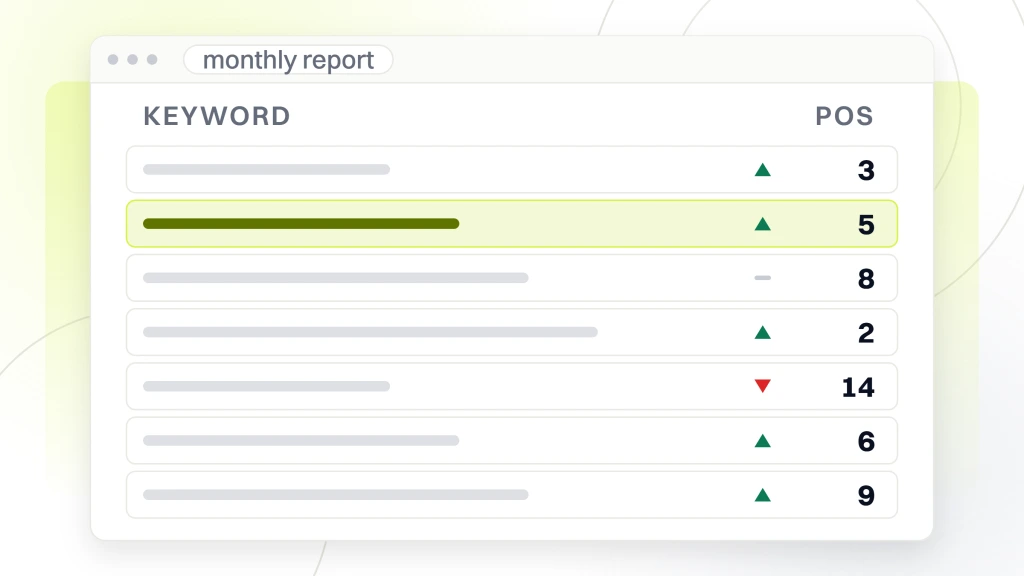
Every monthly report should carry four sections. What was delivered, set against what was promised, with counts on both sides. What changed on the site, listed by URL. What moved, in impressions, clicks, rankings and conversions, with declines shown as plainly as gains. And what happens next month, named before the month begins.
The common failure is a report made entirely of the third section, a wall of charts pointing up with no link to anything a person did. Ask which specific change caused which specific movement, and the answer separates providers within a minute.
We have set out what belongs in a monthly SEO report, including which numbers earn a line and which are decoration. If you would rather see how the work is structured than grade somebody else’s version, our SEO services page sets out the shape we work to.
Red flags, guarantees and the promises nobody can keep
Some claims end the evaluation on their own, and it saves you an afternoon to know which ones.
- A guaranteed ranking position. Nobody controls the ranking system, so the guarantee is either empty or it is being bought with tactics whose risk you inherit.
- A named contact inside the search engine. There is no such relationship on sale.
- Links promised by volume with no sites named. Volume with no names means the links come from places you would not have agreed to individually.
- Results promised in weeks. Crawling, indexing and re-evaluation take time that no budget shortens.
- No counts anywhere, then a discount the moment you hesitate. A price that moves on request was never built up from hours.
- Your accounts held on the provider’s side. Analytics, Search Console and the content management login should be yours from day one.
- Reporting on rankings only, with no impressions, clicks or conversions in the document.
One of these on a proposal is worth a conversation, because it may be sloppy writing rather than intent. Two together is a decision, and the decision is to keep looking.
How long SEO takes before anything moves
SEO takes longer than the sales call implied, and the reason is mechanical rather than commercial. Three things have to happen in order before a change can affect anything you can see. First the page has to actually change. Then it has to be crawled again, on the search engine’s schedule and not yours. Then the systems have to re-evaluate it against everything else competing for that query, which is a judgment formed over repeated visits rather than a switch that flips when you hit publish.
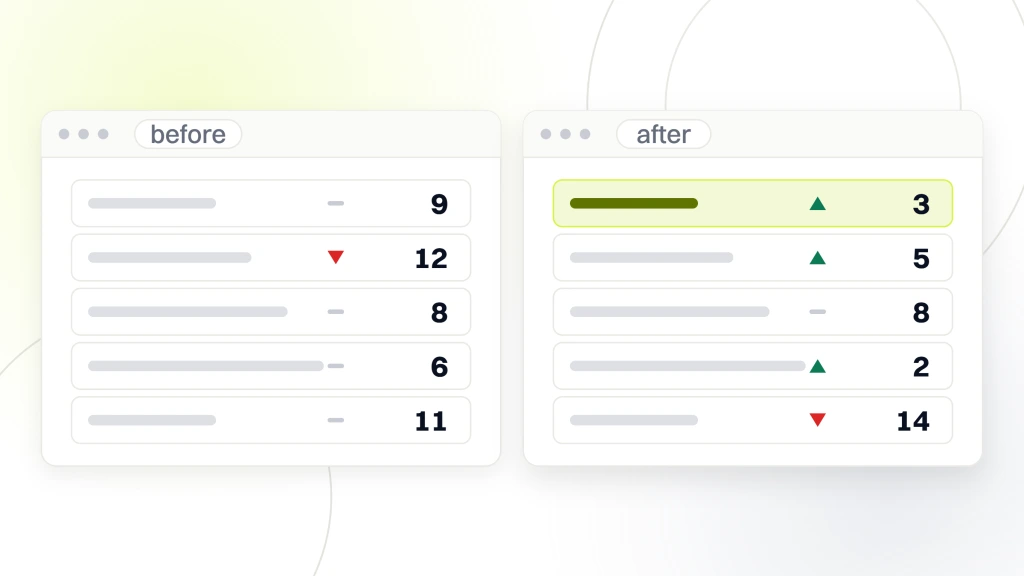
The market prices this in openly. WebFX publishes a six month minimum on its SEO plans, and a seller who will not sell you a single month is not expecting one month to prove anything.
What you can check far earlier is delivery. Was the work in the proposal done in the month it was promised? Grade delivery at thirty and sixty days. Grade outcomes later, against impressions and rankings for the queries you agreed to target rather than against total traffic, which moves for reasons nobody in the room controls.
Is SEO still worth paying for now that AI answers sit above the results
Yes, and the honest answer needs the part about what actually changed. What changed is where the click lands. Questions with a short factual answer are now often resolved on the results page or inside an assistant, and pages that existed only to answer those questions lose the visit.
What did not change is everything underneath. Assistants and search engines read the same web. They fetch pages, they follow links, and they depend on the page being crawlable and the answer being on it. A site with blocked pages, broken canonicals and thin content is invisible in both places.
What a provider should be doing now that they were not two years ago is specific, and you can ask for it by name. Tracking whether AI answers cite your pages, not only where you rank. Structuring pages so the answer is extractable, with the claim stated plainly near the top instead of buried under a preamble. Shifting keyword targets toward queries where somebody still has to compare, choose and buy. And treating referral traffic from assistants as its own channel.
If a provider’s answer to the AI question is that SEO is changing, you have not been told anything. Keep looking.
What to do with the two proposals in front of you
Give each proposal one spreadsheet and one hour. A row per line item, a column for the count, a column for the hours, and a column for which of the four buckets that line falls into. Fill the counts in from the provider’s own hours per unit rather than from anything you have read, place each quote in one of the three published bands, and compare the effective rates instead of the headline prices.
Most of the time one proposal fills the spreadsheet in and the other argues with the spreadsheet. That is your answer, and it cost you an afternoon rather than six months. If both of them fill it in, you have a real decision, and it comes down to the effective rate and to which team you would rather have on a call in month four.
If you would rather start from what your site actually needs before you grade anybody’s plan, run a free website audit and take the findings into both calls.