Skip to content
NOW BOOKING NEW ENGAGEMENTS GET A FREE STRATEGY SESSION ↗
RWREAL ESTATE WEB DESIGN

Real estate website design that turns buyer traffic into booked showings

Real estate website design for brokerages, agent teams, and franchise offices. Every build launches with IDX integration wired to Follow Up Boss or kvCORE, neighborhood pages built to outrank Zillow and Realtor.com on local intent, WCAG 2.1 AA verified, and mobile Core Web Vitals green on day one. Sites average 4.6% visitor-to-lead conversion at launch, tracked in your CRM, not guessed.
40+
BROKERAGE SITES LAUNCHED
4.6%
AVG VISITOR-TO-LEAD RATE
6-8 wks
TO LIVE, IN WRITING
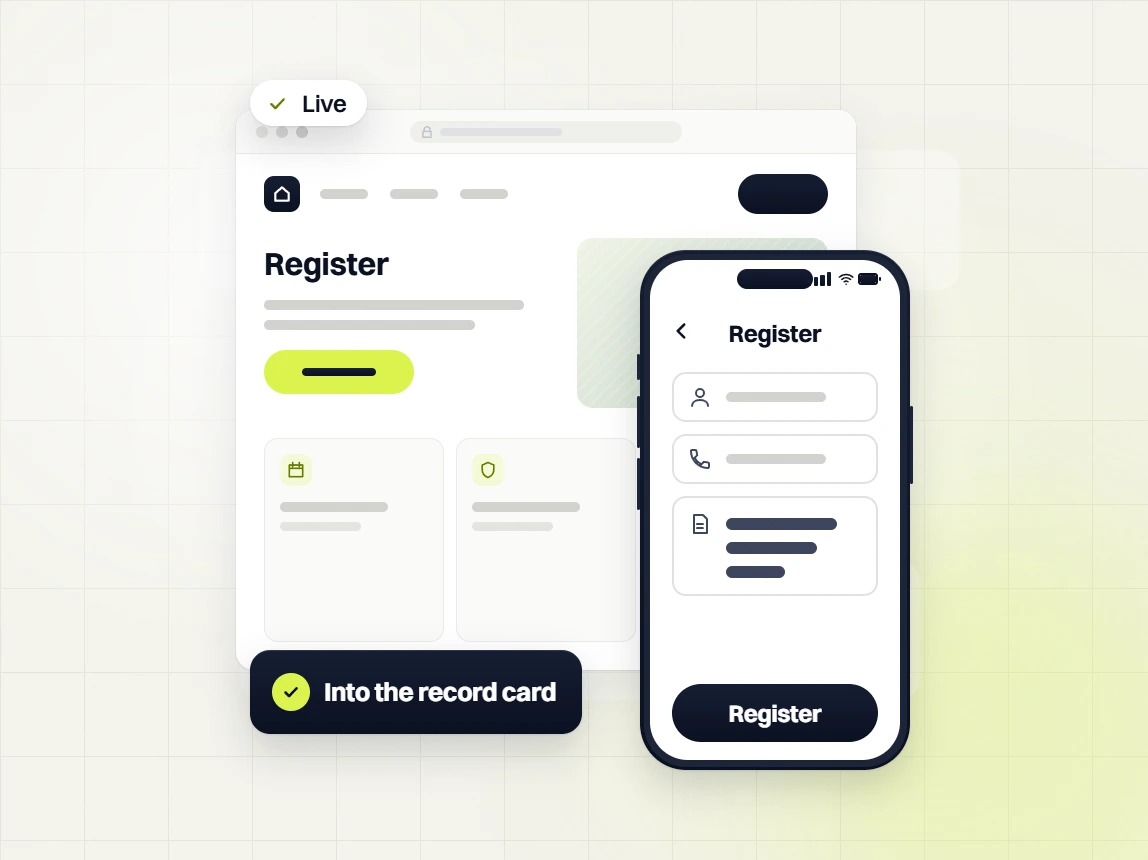
real estate website design dashboard tracking booked outcomes and revenue metrics
IDX + FOLLOW UP BOSS WIRED
+42%
BUYER REGISTRATION RATE · 60 DAYS
Trustpilot 4.7/5 ★★★★★
Clutch 5.0/5 ★★★★★
Google 5.0/5 ★★★★★
DesignRush 4.9/5 ★★★★★
GoodFirms 5.0/5 ★★★★★
F6S 5/5 ★★★★★
4.9 WEIGHTED AVERAGE · VERIFIED BY BROKERS, TEAM LEADS, AND FRANCHISE OWNERS THAT PAID FOR THE WORK
01 THE PROOF

Three ways your real estate website loses buyer and seller leads to the portals

real estate website design challenge card visualizing a common growth blocker
PROBLEM 01 · IDX SEARCH SLOW

IDX map searches drag past 4 seconds and buyers bounce to Zillow before the first listing loads

Most brokerage sites embed an iframe IDX widget that loads a second stylesheet, blocks the main thread, and drags mobile Time to Interactive past 4 seconds. Buyers on a phone at an open house tap the search, wait, and bounce back to Zillow inside 8 seconds. Every dropped session is a buyer registration that never happened and a Follow Up Boss record that never got created. Portal traffic wins by default.

real estate website design challenge card visualizing a common growth blocker
PROBLEM 02 · NEIGHBORHOOD PAGES BURIED

Neighborhood pages sit on page 4 while Zillow, Redfin, and Realtor own the top 3 local slots

Generic real estate templates deliver neighborhood pages that read like a paragraph of filler plus an IDX embed. No school district data, no median-price trend, no local agent quote, no RealEstateAgent schema. Google reads that as thin content and hands the SERP to Zillow, Redfin, and Realtor.com. Your brokerage owns the local reputation but not the local search result.

real estate website design challenge card visualizing a common growth blocker
PROBLEM 03 · MOBILE CWV RED

Mobile Lighthouse under 40 kills local pack rankings and paid landing quality score

Unoptimized HDR listing photos, unlazyloaded map tiles, and a heavy portal-lookalike theme push mobile Lighthouse under 40. Google demotes the site out of the local pack, Google Ads landing page quality drops to below-average, and CPC on buyer keywords like homes-for-sale-brooklyn climbs 30 to 60%. The portal ad spend keeps winning because your landing pages fail the mobile bar.

02 THE OUTCOMES

Three outcomes every real estate web design build produces

Drop an outcome visual
IDX search under 2 seconds keeps buyers on-site

Server-side RESO feed cache, mobile-first pattern, and lazy-loaded map tiles cut LCP under 1.8s so mobile buyers finish the property search on your site.
Drop an outcome visual
Neighborhood pages that outrank Zillow locally

School data, median-price trends, agent quotes, and RealEstateAgent schema push your neighborhood pages above Zillow and Redfin on local buying-intent queries.
Drop an outcome visual
Buyer and seller leads route into your CRM live

Follow Up Boss, kvCORE, and Sierra Interactive webhooks fire on every registration and valuation so your agents work fresh leads inside 5 minutes flat.

03 · HOW IT RUNS

Four stages. Every step ends in a sign-off

Discovery gets the brief, positioning, and information architecture locked in writing on week one. From there, design, engineering, and launch run against a written milestone tracker with owner names and calendar dates. Every sign-off is on the calendar before design work starts.

01 WEEKS 1-2

Discovery, positioning, and IA

Broker interview, top-producer agent interview, and marketing lead interview. Buyer and seller path mapped from Zillow arrival to Follow Up Boss record. IDX feed provider, MLS board, CRM stack, and pixel setup audited. Neighborhood, school-district, and property-type page inventory locked. Buying-intent slug list finalized. Signed brief before design starts.

✓ SIGN-OFF: BRIEF + SITEMAP
02 WEEKS 3-6

Design system, PDP, and neighborhood pattern

Mobile-first design system built in Figma. Listing detail page pattern with HDR photo optimization, virtual tour embed, mortgage calculator, and buyer registration CTA above the fold. Neighborhood page pattern with school-district data, median-price trend chart, and lead-capture form. Agent bio page pattern. Home valuation lead magnet.

✓ SIGN-OFF: DESIGN + PATTERNS
03 WEEKS 7-10

Engineering, IDX, and CRM wiring

WordPress custom theme, Webflow, or Next.js headless build depending on stack. IDX integration wired via Showcase IDX, iHomeFinder, IDX Broker, Realtyna, or RESO Web API. Follow Up Boss, kvCORE, or Sierra Interactive webhook. Lead routing rules. RealEstateAgent and RealEstateListing schema. GA4 conversion events with server-side backup. Consent Mode v2.

✓ SIGN-OFF: STAGING + IDX + CRM
04 WEEKS 11-12

QA, 301 map, and launch

Full 301 redirect map from the existing site so neighborhood and agent bio pages hold rankings. WCAG 2.1 AA verified with Axe DevTools plus manual NVDA and VoiceOver passes. Fair housing disclaimer placement checked. Mobile CWV green in Lighthouse and CrUX. Off-hours DNS cutover with Search Console watched hourly. 30 to 90 days post-launch monitoring.

✓ SIGN-OFF: LIVE + 301S + CWV GREEN
04 DELIVERABLES

What you actually get from our real estate web design services

Five phases, every item listed. Fixed scope, defined deliverable per phase, written sign-off on the calendar for every milestone. Nothing hidden in a change-order backlog.
real estate website design deliverable panel visualizing scope of work

Two weeks. Brief signed by broker, marketing, and top-producer agent

Broker interview, top-producer agent interview, marketing lead interview, technical audit of your current site, IDX feed and CRM inventory, competitor benchmark against Zillow and Realtor.com, and a written brief that gets signed by every stakeholder before design work starts.
BRIEF IDX AUDIT SITEMAP
Book a 30-Min Audit
INCLUDED IN EVERY BUILD
Broker + agent interviews
Three to four working sessions with broker, top-producer agent, and marketing lead. How buyers and sellers currently find you, which neighborhoods drive the most closed deals, and which agents get the most repeat business.
IDX + CRM tech audit
Current site, IDX plugin, MLS board rules, CRM (Follow Up Boss, kvCORE, Sierra Interactive, BoomTown), Zillow and Realtor.com sync, ad accounts, GA4, pixel setup, and performance baseline all mapped before design starts.
3-competitor local benchmark
Side-by-side comparison of Zillow, Redfin, or Realtor.com plus two local brokerages on mobile IDX search, buyer registration flow, neighborhood page depth, and agent bio pattern. Every gap flagged in writing.
MLS + IDX data mapping
MLS board rules per feed (disclosure, branding, refresh cadence, permitted display), IDX plugin choice locked (Showcase IDX, iHomeFinder, IDX Broker, Realtyna, or RESO direct), and lead routing rules mapped by neighborhood, price range, or team assignment.
Sitemap and neighborhood IA
Full page inventory with URL structure. Buying-intent slugs (homes-for-sale-park-slope, condos-for-sale-chelsea, brooklyn-heights-real-estate), agent bio slugs, and neighborhood pages sized against local search volume before build.
Written brief with sign-off
A 20 to 30 page document. Broker, marketing lead, and top-producer agent sign the brief before design work starts. Every scope item lives inside the signed brief.
Book a 30-minute real estate website design audit. Written recap next business day
THREE FIXES YOU CAN APPLY · NO SALES DECK · IDX + CRM CHECK INCLUDED
Request a Free Audit
05 PRICING

Four web design tiers for every stage of growth

Every line item listed. The quote you get is the invoice you pay. Take any tier as a project fee, or split it into the flat monthly plan.

STARTER
$1,500
OR $250/MO · SINGLE DOCTOR

Fast, credible site converting existing reputation.

THE FOUNDATION:
Custom 8-page website build
Contact form + click-to-call
On-page SEO + Maps setup
Hosting + nightly backups
2 content edits per month
Next-business-day support
Get this quote
MOST PRACTICES
GROWTH
$2,500
OR $400/MO · GROWING PRACTICE

Full booking engine: scheduling, checkout, customer reporting.

EVERYTHING IN STARTER, PLUS:
Live scheduling integration
Landing page per revenue
Objection-handling copy
Missed-call auto text-back
Bookings and leads report
4 edits/mo, same-day
Get this quote
MULTI-LOCATION
$3,500
OR $550/MO · 2–5 LOCATIONS

One brand, every office found, location-level tracking.

EVERYTHING IN GROWTH, PLUS:
Landing page + map/location
Per-location call tracking
Per-location review routing
Team member profile pages
Quarterly review call
6 monthly edits (all sites)
Get this quote
enterprise operator / CUSTOM
$5,000+
CUSTOM SCOPE · 6+ LOCATIONS

Design system the whole group launches on. Ops-team-spec integrations.

EVERYTHING IN MULTI, PLUS:
Shared design system
Custom integrations
Rank-safe migrations
Dedicated account lead
Direct Slack access
SLA-backed ticket support
Scope my build
EVERY TIER: MONTHLY PLAN AVAILABLE · 30-DAY LAUNCH · 90-DAY REBUILD GUARANTEE · YOU OWN SITE, DOMAIN + DATA

Every web design feature, tier by tier

HOVER ANY FEATURE FOR A PLAIN-ENGLISH EXPLANATION
Website + design +
FEATURE STARTER GROWTH MULTI-LOCATION ENTERPRISE OPERATOR / CUSTOM
Pages included 81525CUSTOM
Custom design, no tpl
Landing page per revenue
Team member profile pages
Shared design system
Booking + patients +
FEATURE STARTER GROWTH MULTI-LOCATION ENTERPRISE OPERATOR / CUSTOM
Contact form + click-to-call
Live scheduling integration
Objection-handling copy
Missed-call auto text-back
Review automation PER OFFICEPER OFFICE
SEO + visibility +
FEATURE STARTER GROWTH MULTI-LOCATION ENTERPRISE OPERATOR / CUSTOM
On-page SEO + schema
Google map listing SETUPREBUILDPER OFFICEPER OFFICE
Location pages
Rank-safe migration AT SCALE
Copy from interview
Care + support +
FEATURE STARTER GROWTH MULTI-LOCATION ENTERPRISE OPERATOR / CUSTOM
Hosting, SSL + backups
Content edits per month 246CUSTOM
Support response NEXT DAYSAME DAYSAME DAYSLA
Bookings and leads report
Quarterly review call
Dedicated lead + Slack
06 · FAQ

Common real estate website design questions

Straight answers on cost, timeline, IDX platform choice, CRM integration, conversion rate, compliance, redesign risk, and tech stack. Call or email if we missed yours.

STILL DECIDING?
(212) 555-0100
hello@redefineweb.com →

How much does it cost to build a real estate website?

+

Real estate web design at Redefine Web starts at $1,500 on Launch and runs up to $1,999/mo on Enterprise across four fixed-price tiers. Launch is a WordPress build for solo agents with IDX embed, agent bio, and CRM webhook. Growth fits small teams and boutique brokerages with neighborhood-focused conversion pages and Follow Up Boss or kvCORE wiring. Scale fits multi-office brokerages with per-office SEO architecture. Enterprise fits $10M+ brokerages with portfolio brand systems, headless RESO feed, and advanced CRM integration.

Every project is fixed-price, not a monthly bill. Payment runs 40% at kickoff, 40% at design approval, 20% at launch. IDX feed licensing and MLS access fees are billed by your local MLS or IDX provider directly, and NAR and local board rules govern permitted display. Ongoing real estate SEO or PPC retainer is separate and starts at $999/mo. Website maintenance is separate and starts at $199/mo. Custom brokerage builds with headless architecture and deep CRM work start at $18K.

How long does a real estate website design project take?

+

Launch and Growth tier real estate websites go live in 6 to 8 weeks. Scale tier goes live in 8 to 12 weeks. Enterprise ranges 12 to 20 weeks depending on IDX feed integration, multi-office scope, and CRM depth. Every project has a written milestone tracker with owner names and calendar dates from week one, so nothing slips silently and every stakeholder sees where the project sits.

The 6 to 8 week timeline breaks into four phases. Week 1 is discovery, positioning, and information architecture. Weeks 2 and 3 are visual design and content production. Weeks 4 and 5 are development, IDX integration, and CMS build. Weeks 6 to 8 are QA, analytics wiring, and launch. Delays almost always come from client-side content or IDX vendor timing. Agent bios, listing photography, neighborhood content, and IDX feed provisioning are the top four bottlenecks that stall real estate projects, so we schedule those inputs against calendar dates before design starts.

What is the best platform to build a real estate website?

+

The best platform depends on your brokerage size, MLS board, and CRM stack. WordPress with a custom theme is the default for 1 to 20 agent brokerages since it pairs cleanly with IDX plugins (Showcase IDX, iHomeFinder, IDX Broker, Realtyna) and the widest CRM webhook coverage. Webflow works for luxury brokerages with a design-heavy brand and simpler IDX embed needs. Headless Next.js fits 25+ agent multi-office brokerages that need server-side RESO feed cache, native URLs on every listing, and full schema control on every property page.

Placester, Sierra Interactive, and Real Geeks are DIY platforms with locked design systems. They launch fast but cap your SEO and conversion ceiling since you cannot edit the underlying markup or add server-side rendering. If you want to own the code, the SEO surface, and the lead pipeline, custom WordPress or headless Next.js wins on the 3-year cost per lead. We pick the stack based on your MLS board rules, agent count, integration depth, and lead volume.

How to design a real estate website?

+

Design a real estate website by starting with buyer and seller intent, not features. Map both paths. A buyer landing from Zillow or Google Search needs mobile-first IDX property search with a registration CTA above the fold. A seller landing from a home valuation ad needs a three-step address-first form that writes into your CRM tagged as seller intent. Every page pattern serves one of the two paths.

Build a listing detail page with HDR gallery, virtual tour embed, mortgage calculator, and school-district data. Build neighborhood pages with median-price trend charts, walk score, and local agent quotes so Google reads them as authoritative on hyper-local queries. Add RealEstateAgent schema on agent bios and RealEstateListing schema on properties. Verify WCAG 2.1 AA and mobile Core Web Vitals green before launch. Fair Housing disclosure placement and MLS branding rules get audited before design work starts, and every CTA gets tracked in GA4 so the post-launch conversion rate is measurable inside the first 30 days.

What is an IDX website?

+

An IDX website is a real estate site that pulls active MLS listings into your own domain through an IDX (Internet Data Exchange) feed or the newer RESO Web API. Instead of sending buyers to Zillow or Realtor.com, buyer registration, saved searches, and listing views happen on your brokerage domain, so the CRM record and the ad-attribution pixel fire on your property, not the portal. That is the difference between renting portal leads and owning your own lead pipeline.

IDX access is licensed through your local MLS board and delivered by a plugin (Showcase IDX, iHomeFinder, IDX Broker, Realtyna) or the RESO Web API for headless setups. MLS board rules govern refresh cadence, disclosure text, branding, and permitted display. Every IDX property page carries RealEstateListing schema, canonical hygiene against duplicate MLS URLs, and mobile Core Web Vitals green. See the Google real estate listing schema docs for the exact fields required.

How to build an IDX website?

+

Building an IDX website starts with your MLS board approval. Every US MLS has its own IDX rules for who can display listings, how often the feed refreshes, and what branding sits next to each listing. Get MLS board approval, pick an IDX vendor (Showcase IDX, iHomeFinder, IDX Broker, Realtyna, or RESO Web API direct), and license the feed for the boards your brokerage covers.

From there, build a WordPress or headless site with the IDX plugin wired into a listing detail page pattern. Add HDR photo lazy load, virtual tour embed, mortgage calculator, and buyer registration CTA above the fold on mobile. Wire the CRM webhook (Follow Up Boss, kvCORE, Sierra Interactive) so every registration and valuation submission routes to the right agent. Verify Fair Housing disclosure, WCAG 2.1 AA compliance, and mobile Core Web Vitals green before launch. Redefine Web builds all of this fixed-price on the four tiers.

How do I get IDX on my website?

+

Get IDX on your website in three steps. First, confirm your local MLS board membership and request IDX feed approval. Every US MLS board has its own IDX rules and approval process, so factor 2 to 4 weeks for board paperwork. Second, pick an IDX vendor that matches your site stack. Showcase IDX and iHomeFinder are the fastest picks for WordPress brokerages at 1 to 20 agents. IDX Broker has the widest US MLS board coverage. Realtyna covers direct RETS and RESO Web API access when you need headless control.

Third, wire the IDX feed into your site with a plugin (WordPress) or a server-side cache (headless). The IDX vendor supplies the connection credentials, and your developer builds the listing detail page pattern and neighborhood pages that surface the feed. MLS branding, disclosure, and refresh-cadence rules apply on every listing page. Redefine Web handles all three steps inside every real estate web design engagement, from MLS board paperwork to launch.

Do you integrate real estate websites with our IDX feed, CRM, and MLS?

+

Yes. Every real estate web design engagement includes IDX integration with common providers (Showcase IDX, iHomeFinder, IDX Broker, Realtyna, or MLS-direct RETS and RESO Web API feeds), CRM integration with Follow Up Boss, kvCORE, LionDesk, Sierra Interactive, BoomTown, CINC, Real Geeks, or HubSpot, and lead routing to individual agents by neighborhood, price range, or team assignment. Every buyer registration and seller valuation submission writes into the CRM tagged with source, campaign, and intent so agents work fresh leads inside minutes.

Deep integration is included on Growth tier and above. Launch tier includes lightweight integration (IDX embed plus webhook to CRM) to keep the price at $1,500. Scale and Enterprise add server-side tracking with Enhanced Conversions for Google Ads, plus custom lead scoring and drip campaign trigger integration. MLS compliance rules vary by local board. We know the disclosure, branding, and permitted content patterns for major MLS systems and audit every listing page against them before launch.

What conversion rate should we expect from a new real estate website?

+

Well-built real estate websites convert 2 to 6% of qualified traffic on the primary lead-capture CTA (property search registration, home valuation, agent contact). Buyer registration on high-intent property search pages converts higher (4 to 8%) since visitors are already searching for homes. Seller home valuation converts lower (1 to 3%) since the ask is higher-consideration and the seller needs more trust before submitting an address to a brokerage they do not know yet.

Real numbers depend on market, price tier, and traffic source. Cold Meta traffic to a general home page converts 40 to 60% lower than intent-driven Google Search traffic to a neighborhood page. Referral traffic and branded search convert 3 to 5x higher than either. We baseline your current numbers before launch so the post-launch conversion improvement is measurable, not guessed. Every real estate web design build wires GA4 conversion tracking and server-side backup on day one, plus a 30-day post-launch review of the funnel.

Is real estate SEO included in your real estate website design services?

+

SEO foundations are baked into every real estate web design tier. Technical SEO audit, information architecture that supports neighborhood, school-district, and property-type pages, RealEstateAgent and Organization schema, canonical hygiene for IDX-generated listing pages, XML sitemap and robots configuration, mobile Core Web Vitals green on launch (see web.dev/vitals for current thresholds), and Google Business Profile audit for brokerages with physical offices. Every page carries the meta pattern and internal linking Rank Math grades against, plus 301 redirect maps on every redesign.

Ongoing real estate SEO retainer (neighborhood content publishing, link earning, local citation building, review management) is a separate monthly plan starting at $999/mo. That is where compounding organic growth happens across 6 to 12 months of publishing. Redesigns of existing real estate sites always include a full redirect map so ranking pages are preserved. Neighborhood pages, agent bio pages, and city landing pages that already rank get mapped to new equivalents so organic traffic survives the rebuild.

Do you handle Fair Housing, MLS, and ADA compliance for real estate websites?

+

Yes. Growth tier and above include compliance workflow support appropriate to real estate. That means Fair Housing Act compliance with proper disclosure language on every listing and neighborhood page, ADA compliance (WCAG 2.1 AA baseline) that real estate websites face complaints about every year, MLS disclosure and branding compliance for local board rules, and NAR advertising rule compliance across paid campaigns and landing pages. Every disclosure gets placed and verified before launch.

For every real estate site, we implement GDPR-compliant cookie consent (Cookiebot or OneTrust), CCPA compliance for California client bases, and consent-based tracking. IDX-integrated listings comply with MLS terms of service and RESO data standards (attribution, refresh cadence, permitted display). Compliance work complements your broker compliance review and MLS board rules interpretation. A Google Business Profile per office gets verified against local pack requirements documented at Google Business Profile support so every office ranks on branded and near-me searches from day one.

Can you redesign an existing real estate website without losing rankings?

+

Yes. Real estate website redesigns are the majority of our real estate web design agency work. The redesign process starts with a full organic traffic and ranking audit. We identify the top 50 to 200 URLs by organic traffic (usually a mix of neighborhood pages, city pages, and agent bios), map every one to a new equivalent, and lock in a redirect strategy before content or design work starts. Every legacy URL gets a documented target.

Post-launch, we monitor rankings and organic traffic weekly for 90 days and catch any drops before they compound. Most redesigns hold within 5% of pre-launch organic traffic through the transition, and many gain 15 to 40% within 3 months from the new site improved technical SEO and lead capture architecture. Neighborhood content that earned rankings gets flagged for topical preservation before writing starts so the new page keeps the entity signals Google already trusts.

How do I create my own real estate website?

+

You can create your own real estate website with a DIY builder like Placester, Sierra Interactive, Real Geeks, or a WordPress theme paired with an IDX plugin. Solo agents on a small budget can launch a functional site inside 2 to 4 weeks. DIY platforms cap your SEO ceiling, lock the design system, and rent the code, so the total cost per lead climbs across a 3-year window as the platform pricing rises and the design cannot compete with custom brokerage sites.

Custom real estate web design pays back on the 3-year cost per lead when your brokerage runs meaningful ad spend, competes on neighborhood SEO, or has a CRM stack that needs deep integration. If you want to own the code, the SEO surface, and the lead pipeline (with CRM webhooks, RESO feed direct, per-agent lead routing, and full schema on every listing and neighborhood page), a custom Redefine Web build starts at $1,500 Launch tier and scales up to headless Enterprise for $10M+ brokerages.

FREE — 30 MINUTES — NO PITCH

Book a free growth audit.

Walk away with three fixes you can ship the same week — whether or not you hire us.

24-HOUR RESPONSE 300+ AUDITS RUN ZERO OBLIGATION